
Review · ROMANIA
Bucharest: National Museum of Art of Romania Guided Tour
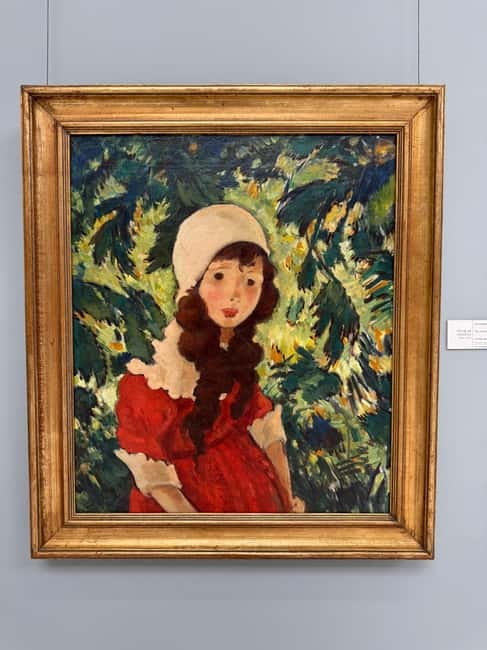
The best thing about this Bucharest tour is its clear focus: modern Romanian art from the 1830s onward, rather than a rushed walk through every room in the National Museum of Art of Romania. You’ll see the polished historical paintings of Teodor Aman, the light-filled work of Nicolae Grigorescu, the emotional paintings of Ștefan Luchian, and sculptures by Constantin Brâncuși.
I like the small group size, limited to 10 people, and the way the guide connects each artist to his or her influences. I also like that guides such as Iana Bradu explain the works with warmth and feeling, not just dates and labels. The main drawback is time: one to 1.5 hours is short for a museum housed in a former Royal Palace, and the tour does not cover every collection.
Key points
- A focused look at Romanian modern art: Follow its development from academic painting in the 1830s to modernist sculpture.
- Major Romanian artists: See works by Teodor Aman, Nicolae Grigorescu, Ștefan Luchian, and Constantin Brâncuși.
- Small-group setting: With no more than 10 participants, you have a better chance to hear explanations and ask questions.
- Guide-led interpretation: Iana Bradu is specifically praised for clear, passionate explanations that make the art easier to understand.
- Convenient museum access: Admission and access to the permanent National Art Gallery exhibitions are included.
- A short, useful introduction: The tour suits a first visit, but you may want extra time afterward for independent viewing.
Why this museum tour works better than wandering alone
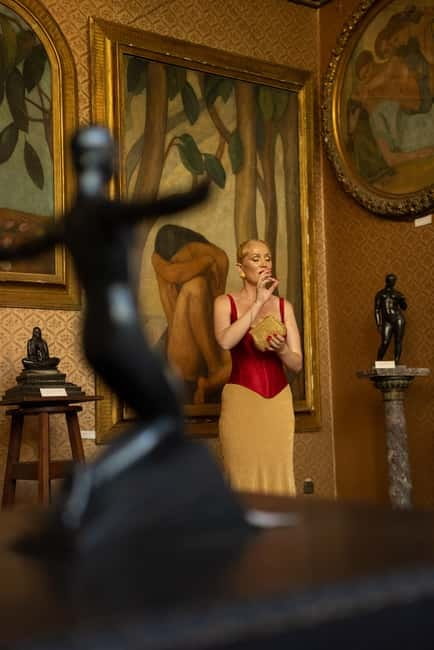
The National Museum of Art of Romania can feel like a lot to take in. It occupies the former Royal Palace, and its collections cover much more than one narrow period. Without a plan, you could spend your visit admiring individual paintings without understanding how Romanian art changed over time.
This tour gives you that plan. Instead of treating the museum as a long list of rooms, the guide builds a story around artistic development. You begin with academic and historical painting, move toward lighter and more personal approaches, and finish with the radical simplicity of Brâncuși.
That structure matters if Romanian art is new to you. The guide explains what you are looking at, why it mattered, and how one generation reacted to the one before it. You are not simply told that an artist was important. You learn what made the work different.
I especially like this approach for anyone who knows the names of French, Italian, or Spanish artists but has little background in Romania’s own art. The tour gives you a working map of the subject in a short time. Afterward, you can return to the galleries with more confidence.
A few more museum visits around the world worth comparing
- Vatican Museums, Sistine Chapel & St Peter’s Basilica Guided Tour
★ 4.5 · 39,149 reviews - Rome: Vatican Museums & Sistine Chapel Guided Tour
★ 4.3 · 12,117 reviews - Louvre Museum Masterpieces Guided Tour with Access
★ 4.5 · 12,023 reviews
Starting at the Romanian Modern Art Gallery
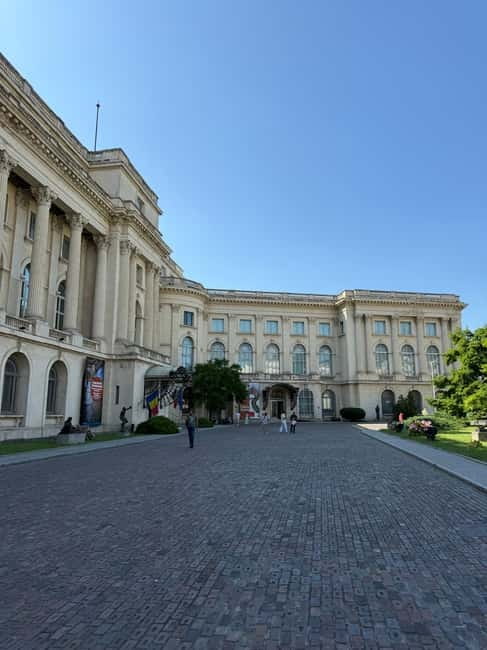
The meeting point is the entrance to the Romanian Modern Art Gallery. Face the museum building and go to the right-hand side. This detail is worth noting because the National Museum of Art has more than one gallery and entrance area, and arriving at the wrong side could cost you valuable minutes.
The tour starts promptly, so arrive about 10 minutes early. You will need to find the correct entrance, get settled, and meet the guide before the group moves into the collection. The tour is offered in Romanian and English.
The small-group limit of 10 is one of the practical strengths here. A large museum group can turn a painting talk into a struggle to hear. With fewer people, the guide can keep the group together and respond to questions without bringing the whole visit to a halt.
You should wear comfortable shoes. The museum visit is not long, but you will be on your feet and moving through gallery spaces. Bring a camera if you like, though photography must be without flash. Food and drinks are not allowed.
Teodor Aman and the polished world of academic painting
The first part of the tour introduces the refined academic tradition through Teodor Aman. His work helps set the scene for the cultural ambitions of modern Romania, when artists were building a national art language while also looking toward established European models.
Academic painting often rewards close attention to technique. Look for the careful finish, controlled composition, and attention to historical or formal subjects. Aman’s work gives the guide a useful starting point because it shows an art world that valued training, order, and polish.
You may find this section more formal than the later galleries. That contrast is part of the point. The tour does not present Romanian art as a single fixed style. It shows how artists moved from carefully arranged academic subjects toward more direct, personal, and modern forms of expression.
A good guide will also add the human side of the story. The tour promises anecdotes about the artists and their inspirations, which can make a period of art that seems distant feel easier to grasp. Iana Bradu is especially praised for turning the material into a journey through time, with explanations that are clear and emotionally engaged.
Nicolae Grigorescu brings light and movement
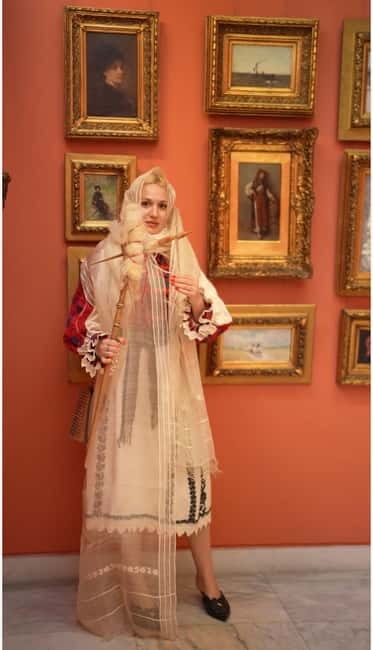
From Aman, the story shifts toward Nicolae Grigorescu and a lighter, more open treatment of the painted world. His work is described as Impressionist in character, with an emphasis on light and atmosphere.
This is where you can feel the change in mood. Instead of focusing only on historical importance or polished technique, the paintings invite you to notice how light affects color and how a scene can feel alive through brushwork. The guide helps you see that shift rather than leaving you to work it out alone.
I like this part of the visit because it gives you a clear visual comparison. You have already seen the academic approach. Now the guide can show how Romanian painting became less rigid and more responsive to everyday impressions.
The tour does not ask you to memorize a long list of movements. It gives you enough context to recognize the change in front of you. That is useful for a short museum visit, especially if you want understanding rather than a string of disconnected facts.
Same city, a completely different collection:
- Vatican: Museums & Sistine Chapel Entrance Ticket
★ 4.5 · 144,003 reviews - Vatican Museums, Sistine Chapel & St. Peter’s Basilica Tour
★ 4.3 · 73,970 reviews - Paris: Louvre Museum Timed-Entrance Ticket
★ 4.6 · 71,977 reviews - Amsterdam: Van Gogh Museum Ticket
★ 4.7 · 52,054 reviews
Ștefan Luchian and the emotional center of the visit
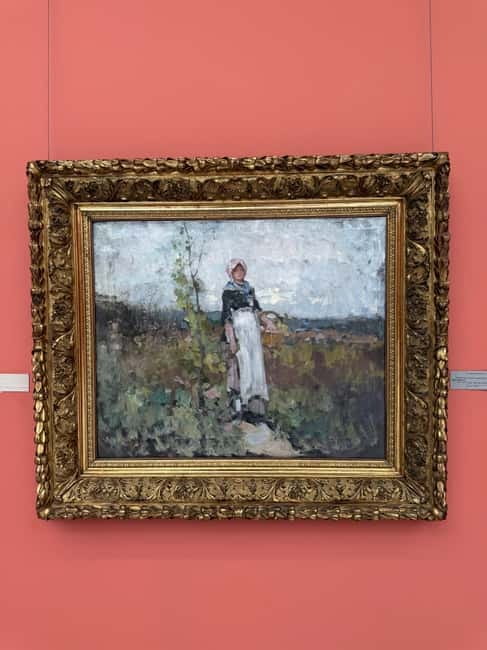
The paintings of Ștefan Luchian bring a more personal and expressive note. His work is presented as deeply emotional, and this section helps show how modern Romanian art could move beyond formal skill into feeling and individual voice.
This is a good moment to slow down. Rather than looking only for the subject of a painting, pay attention to the mood and the way the artist handles color and form. The guide’s role is important here because emotional art can be hard to explain without flattening it into simple labels.
The strongest feedback about this experience centers on the guide’s ability to make the works feel alive. Iana Bradu is repeatedly singled out for clear explanations, warmth, and enthusiasm. One useful benefit of that style is that you can ask questions without feeling you need an art history degree first.
If you prefer art presented with personal context, this may be the most rewarding part of the tour. If you mainly want famous masterpieces and quick photographs, the slower discussion may feel less urgent. The experience is designed for understanding, not for racing through a checklist.
Brâncuși and the leap into modern sculpture
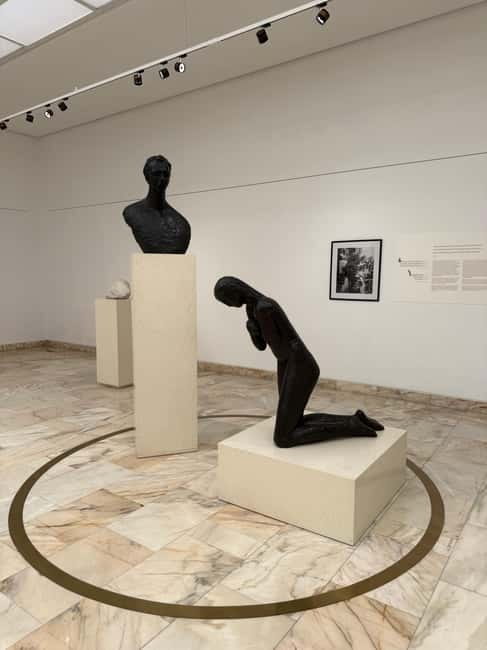
The final major focus is Constantin Brâncuși, one of the most influential sculptors of the 20th century. His work gives the tour a strong ending because it represents a sharp move away from traditional representation.
Brâncuși’s forms are pared back and abstract. Rather than copying the visible details of a person or object, he searched for a simpler essential shape. The guide explains how this approach changed sculpture and influenced artists far beyond Romania.
This section may be the most accessible way to approach Brâncuși if his work has ever seemed puzzling. A minimalist sculpture can look simple at first glance. Context helps you understand that the simplicity is deliberate and that the artistic problem is not merely how to reproduce a subject, but how to reduce it without losing its force.
The contrast with Aman is striking. At the beginning, you see the value placed on academic finish and historical presentation. By the end, you are considering abstraction and reduction. That arc gives the tour its shape and makes the short visit feel purposeful.
What the guide adds to the paintings
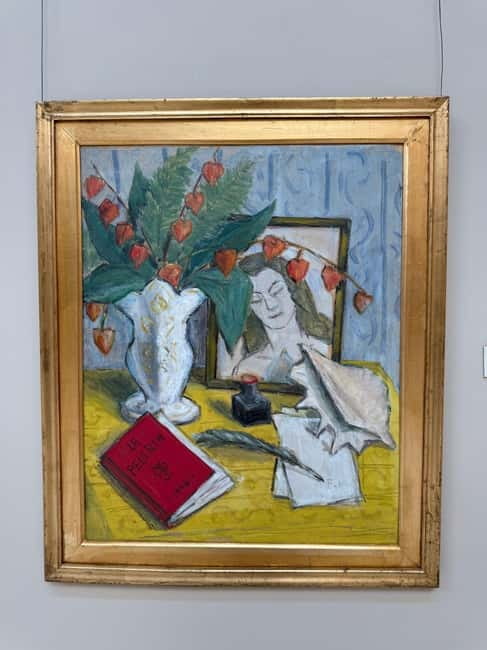
The guide is not there just to point out the next artist. The real value comes from interpretation. You learn about artistic influences, personal inspiration, and the impact each figure had on Romanian art.
Iana Bradu is the guide most closely associated with the experience. Her background in art and her warm presentation are repeatedly highlighted, along with her ability to explain difficult ideas clearly. The language options are Romanian and English, so you can choose the version that suits you when booking.
The small group makes this teaching style more effective. In a group of up to 10, you can usually stay close enough to see the work while listening to the explanation. You also have a better chance to ask about a particular painting or artist.
The tour’s high rating, 5 out of 5 from 13 published ratings, supports the idea that the guide is its strongest feature. I would not book this simply for a fast entrance to the museum. I would book it for the conversation and structure that make the collection easier to understand.
Is $43 a fair price?
At $43 per person, this is not the cheapest way to spend an hour in Bucharest. The price includes an expert guide, admission to the museum, and access to the permanent National Art Gallery exhibitions.
The value depends on how you use the visit. If you already have a strong background in Romanian art and enjoy reading labels on your own, you may prefer to visit independently. If you are unfamiliar with the artists, the guide can save you from spending your entire museum visit trying to work out the larger story.
A private tour would normally offer more personal attention, but this is a small group rather than a one-to-one experience. That keeps the cost below a private visit while avoiding the feel of a large crowd.
The short duration also affects the calculation. You are paying for a focused introduction, not an all-day museum experience. If you treat the tour as your orientation, then stay on afterward to view more of the permanent galleries, the price makes more sense.
Timing, access, and who should book
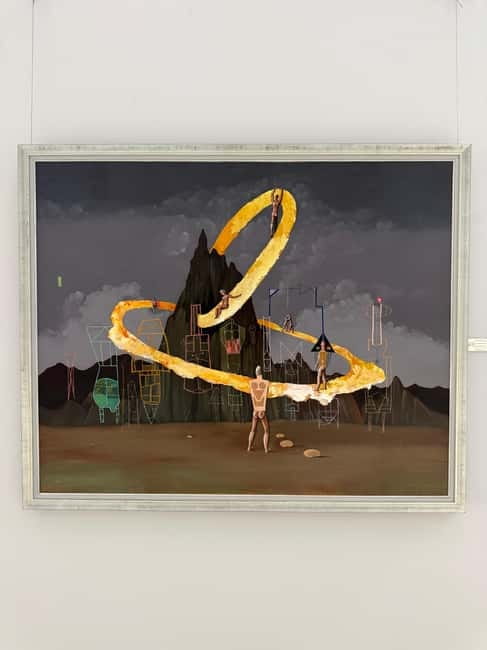
Plan to arrive 10 minutes early at the Romanian Modern Art Gallery entrance. The tour starts on time, and late arrival could mean missing the opening explanation or having trouble joining the group.
The museum is wheelchair accessible in principle, but it is not fully accessible for wheelchair users or people with mobility impairments. If you need full access throughout the building, contact the provider before booking so you can clarify what the route allows.
Children under 12 are not suitable for this activity. The subject matter and the steady, explanation-led pace are better suited to adults and older teenagers.
I would recommend this tour to:
- First-time visitors to Bucharest who want a useful introduction to Romanian art.
- Museum visitors who prefer a clear story over unstructured wandering.
- People interested in Grigorescu, Luchian, Brâncuși, or the development of modern art.
- Anyone who enjoys hearing about artists’ ideas and personal influences.
- Visitors with only a short window for the National Museum of Art.
I would think twice if you want to see every major collection in the building. This tour focuses on Romanian art, and its limited time means you will not receive a full museum survey.
How to make the most of the 1 to 1.5 hours
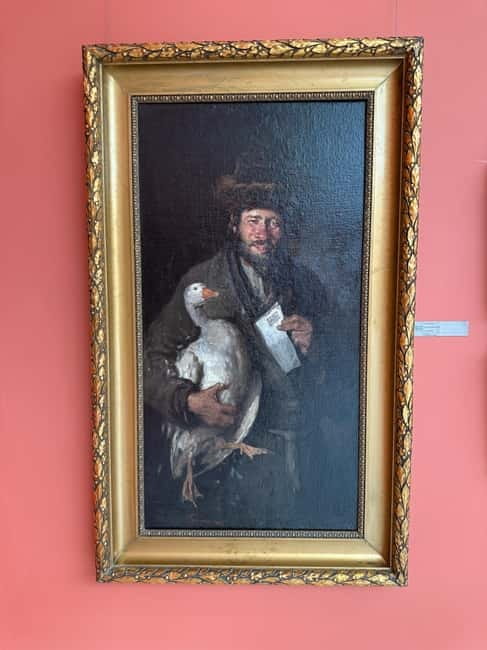
Read a little about the four main artists before arriving if you have time. You do not need a course in art history, but knowing their names will make the movement from Aman to Brâncuși easier to follow.
During the tour, compare the artists rather than judging each work on its own. Ask yourself how the paintings handle history, light, emotion, and form. This turns the visit into a story of change instead of four separate artist profiles.
Take photographs without flash if permitted in the gallery. Since photography rules can vary by room, follow the guide and museum signs. A camera is allowed, but food and drinks are not.
After the guided portion, use any remaining museum time to revisit the works that caught your attention. The guided route gives you the framework. A second look lets you notice details you may have missed while listening.
Free cancellation is available up to 24 hours before the tour for a full refund. You can also reserve now and pay later, which is useful if your Bucharest schedule is still changing.
Should you book this Bucharest art tour?
Book it if you want the National Museum of Art to make sense quickly. The focus on Romanian modern art, the small group, and the guide’s clear explanations give you more than a basic walk past paintings. Iana Bradu is a strong choice if she is available, particularly if you value a warm, personal teaching style.
The best reason to choose it is the connection between artists. Aman, Grigorescu, Luchian, and Brâncuși show four different stages in the development of Romanian art, and the guide helps you see the links.
Skip it if you prefer to explore alone, need a fully accessible museum route, or want a broad tour of every collection. For most first-time museum visitors with an interest in Romania’s art, however, $43 is a fair price for a focused introduction followed by independent time in the galleries.
FAQ
Where does the tour meet?
Meet at the entrance to the Romanian Modern Art Gallery. When facing the museum building, the entrance is on the right-hand side.
How long does the tour last?
The tour lasts between one and 1.5 hours.
What is the price?
The price is $43 per person.
Is museum admission included?
Yes. Admission to the National Museum of Art of Romania and access to the permanent National Art Gallery exhibitions are included.
Which languages are available?
The tour is offered in Romanian and English.
How many people are in the group?
The group is limited to 10 participants.
Who leads the tour?
The experience includes a live expert guide. Iana Bradu is specifically associated with the tour, and guides are available in Romanian and English.
Which artists will I learn about?
The tour focuses on Teodor Aman, Nicolae Grigorescu, Ștefan Luchian, and Constantin Brâncuși.
Can I take photographs?
Photography is allowed without flash. Food and drinks are not allowed inside the activity.
Is the museum fully wheelchair accessible?
No. The museum is not fully accessible for wheelchair users or people with mobility impairments.
Can children join the tour?
The activity is not suitable for children under 12.
What happens if I need to cancel?
You can cancel up to 24 hours in advance for a full refund. Reserve now and pay later is also available.
Just added around the world
- Girona, Figueres, Dalí Museum and Cadaqués Tour from Barcelona★ 4.5 · 36 reviews
- Football Club Barcelona Museum Immersive Tour Guided Visit★ 3.5 · 52 reviews
- Erotic Museum Admission Ticket with Audioguide★ 5.0 · 527 reviews
- Dali Museum and Costa Brava Small Group Day Trip from Barcelona★ 5.0 · 77 reviews
- Madrid by High-Speed Train with Prado Museum Private Tour★ 4.0 · 33 reviews
- Guitar Legends Hall: Entrance to the Immersive Rock Museum★ 5.0 · 25 reviews
- White Rabbit Museum: The Best Immersive Experience in Catalonia★ 5.0 · 538 reviews
- Private Dali Museum, Besalú & Girona Tour from Barcelona★ 5.0 · 15 reviews
Museum Tours in Romania, compared.
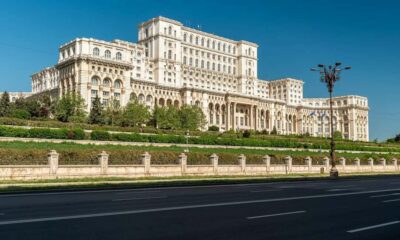
Parliament, Ceausescu House & Village Museum Tour
Read our review →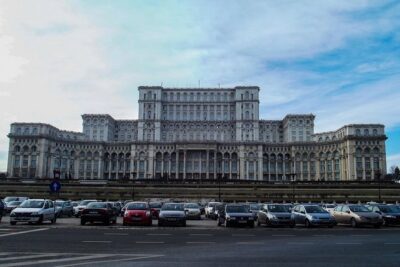
Communism in Bucharest – Landmarks, Museum & Communist Appetizers
Read our review →
Palace of Parliament, Ceausescu House & Village Museum
Read our review →

Museum of Communism Ticket with Communist Coffee
Read our review →
Dinner+Tour at Museum of Communism after closing
Read our review →
Palace of the Parliament, Village Museum & Ceaușescu Mansion
Read our review →Browse the lists this tour appears in