
Review · ROMANIA
Communism in Bucharest – Landmarks, Museum & Communist Appetizers
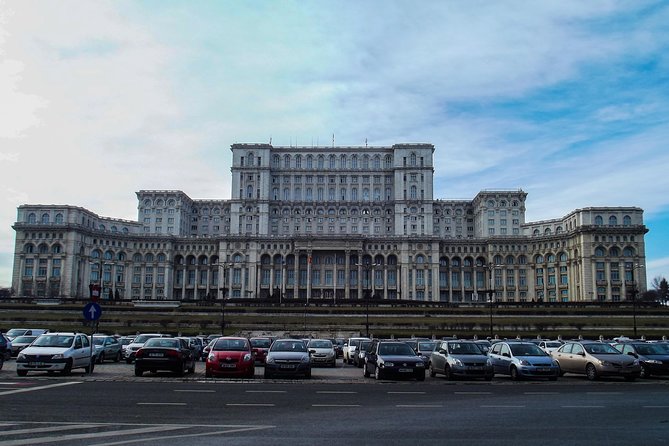
Bucharest’s communist past is easiest to grasp on foot, where grand buildings, demolished neighborhoods, and revolution sites sit close together. This three-hour tour links the Palace of Parliament with Revolution Square, then brings the era down to household size inside a small museum, where you can handle exhibits, try clothing, and eat a period snack.
I like the personal scale and the clear route. The group is advertised as small, and guides including Ali, Maria, and Gabriela have been praised for explaining difficult subjects in a friendly way, including to children. I also like that the museum visit includes communist coffee and a sweet or salty snack, not just another hour of looking at display cases.
The main thing to consider is that you do not enter the Palace of Parliament, so this is an outside-focused history walk rather than a building tour. The experience also requires at least two participants and good weather, and the advertised group-size details vary between up to 15 people and a maximum of 8, so check the final booking information if group size matters to you.
Key points before you book
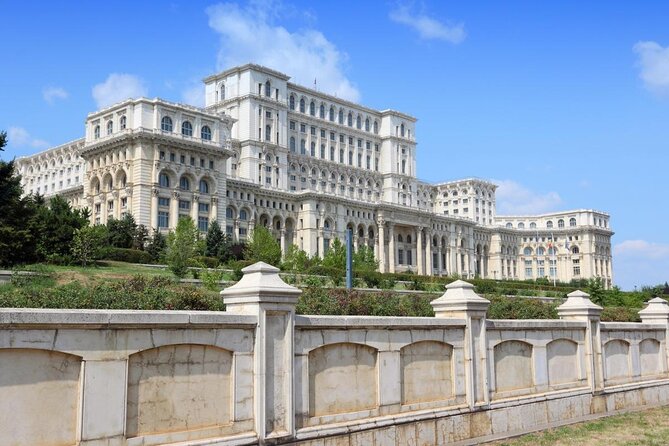
- See the Palace of Parliament from the outside: Learn how Ceaușescu’s enormous project reshaped central Bucharest, without an interior visit.
- Walk through major 1989 sites: Revolution Square and the University of Bucharest help explain the final days of communism and the uprising that followed.
- Visit a hands-on museum: Undeva in Comunism lets you interact with exhibits and try on period clothing.
- Taste a communist-era snack: The tour includes a sweet or salty item, depending on availability, plus communist coffee.
- Hear the story from an English-speaking guide: Ali, Maria, and Gabriela are among the guides named for this experience.
- Plan for a three-hour city walk: The tour starts at 10:00 a.m. on Bulevardul Unirii and finishes at Revolution Square.
Why this walking tour works for Bucharest
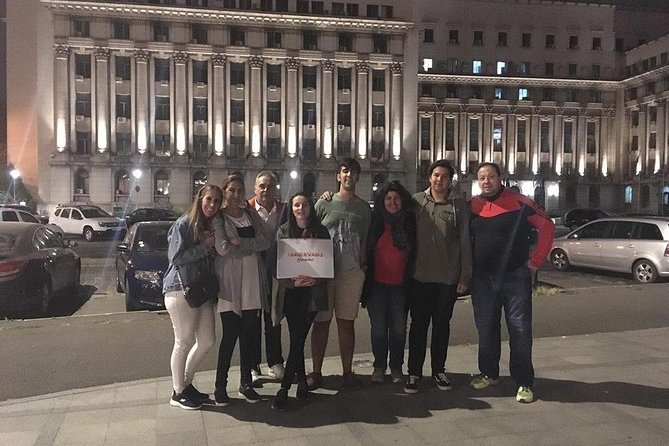
Bucharest can feel hard to read at first. Its streets mix grand 19th-century buildings, broad communist avenues, Orthodox churches, apartment blocks, and modern traffic. A tour about communism gives those contrasts a clear thread.
This route is especially useful because it does not treat communism as a museum subject only. You begin with the scale of the state, then move through places connected to forced urban change, public speeches, protest, and the move toward democracy. The final stop shifts the focus to ordinary domestic life.
That change in scale is the tour’s best idea. At the Palace of Parliament, you are looking at a huge political project. At the museum, you are looking at clothes, food, coffee, and household objects. The combination helps you understand both the public face of the regime and the daily life behind it.
You should expect a serious subject, but not a stiff academic lecture. The guide’s role is important here. The strongest accounts of the experience point to a pace that works well, clear explanations, humor, and personal stories. Gabriela is described as interesting, professional, and fun, while Maria was able to explain the subject in a way that worked for families with children. Ali is also named as a friendly guide who added strong historical detail.
A few more museum visits around the world worth comparing
- Vatican: Museums & Sistine Chapel Entrance Ticket
★ 4.5 · 144,003 reviews - Vatican Museums, Sistine Chapel & St. Peter’s Basilica Tour
★ 4.3 · 73,970 reviews - Paris: Louvre Museum Timed-Entrance Ticket
★ 4.6 · 71,977 reviews
The Palace of Parliament and Ceaușescu’s grand plan
The first stop is the Palace of Parliament, with about 20 minutes devoted to the building and the plans behind it. You learn why it was built, how it was built, and how it fit into Nicolae Ceaușescu’s vision for Bucharest.
The important point is not simply that the building is large. Its size tells you something about power. The palace was created as the center of a new political district, and the boulevard in front of it was part of that plan. To make room, large areas of the existing city were cleared. The tour uses the building and its surroundings to explain that cost.
You will not go inside. That is the clearest limitation of this stop. If you want to see the palace’s interior halls, chandeliers, and grand rooms, you need a separate visit. Here, the value is the guide’s explanation of what the building meant and how it altered Bucharest.
The 20-minute stop is also short enough to keep the tour moving. You get context without spending the whole morning at one site. Bring comfortable shoes and be ready to listen outdoors, since this section takes place around the building rather than inside it.
Antim Monastery and the buildings that escaped demolition
The route continues to Antim Monastery, an 18th-century religious site that survived the demolition carried out during the communist redevelopment of central Bucharest. This stop adds a needed layer to the story.
The Palace and its boulevard can make the period look like one giant construction project. Antim shows what happened to older buildings caught in the way. According to the tour, part of the monastery was moved entirely to meet the dictator’s plans. That detail gives you a more concrete sense of how radical the redevelopment was.
The stop lasts about 15 minutes. It is not presented as a long architectural visit, and admission is included without a separate ticket. Think of it as a sharp historical pause, a place where the guide can show you that communist urban planning affected churches and older neighborhoods as well as government buildings and housing.
Bloc 6 and the boulevard built for power
A brief stop at Bloc 6 focuses on the boulevard built in front of the Palace of Parliament and the secrets connected with it. You spend about 10 minutes here.
This may be the least familiar stop by name, but it helps connect the palace to the city around it. Wide avenues are not just convenient roads. In a capital shaped by a dictatorship, they can also serve ceremonies, official displays, and a carefully controlled view of power.
Because this is a short outdoor stop, you should not expect a large exhibit or a long architectural explanation. Its purpose is to make the boulevard readable. The guide helps you look past traffic and concrete and consider why this particular space was created in this particular way.
Same city, a completely different collection:
- Amsterdam: Van Gogh Museum Ticket
★ 4.7 · 52,054 reviews - Vatican Museums, Sistine Chapel & St Peter’s Basilica Guided Tour
★ 4.5 · 39,149 reviews - NYC: 9/11 Memorial & Museum Timed-Entry Ticket
★ 4.8 · 31,428 reviews - London: Tower of London and Crown Jewels Exhibition Ticket
★ 4.6 · 28,769 reviews
Revolution Square and the final speech
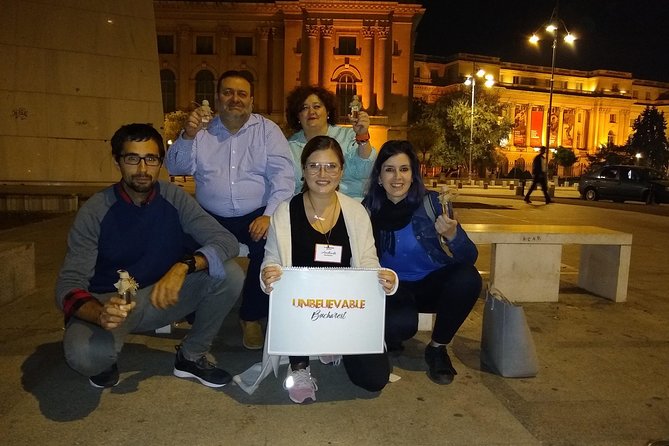
Revolution Square receives about 20 minutes and is one of the emotional centers of the walk. This is where Ceaușescu gave his final public speech, and where the Bucharest revolution began on December 21, 1989.
The square matters because it captures the sudden break between official control and public revolt. A speech meant to display authority became part of the crisis. The tour places that moment in the physical setting, which is far more useful than hearing the date in isolation.
This is a good place to ask questions. The subject can become confusing quickly, especially when the fall of Ceaușescu, the revolution, and the early years after communism are treated as one event. A strong guide can help separate those stages and explain why the square remains central to Bucharest’s modern identity.
You will finish at Revolution Square, so the route has a practical shape. You start near the Palace of Parliament and end in a central part of the city rather than returning to the meeting point. That can work well if you plan to continue sightseeing afterward.
University of Bucharest and the road to democracy
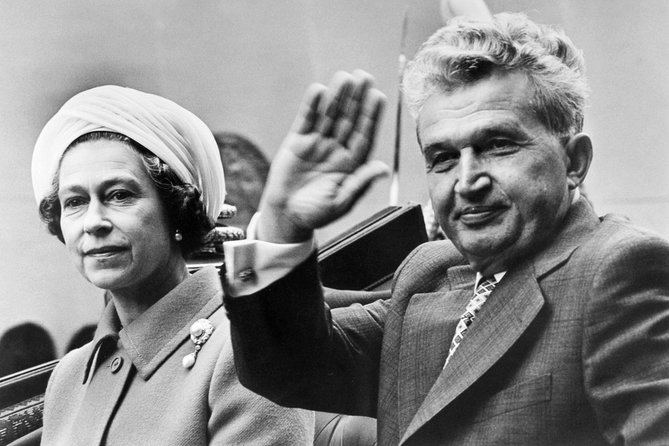
The next stop is the small square beside the University of Bucharest, named for December 21, 1989. About 15 minutes are spent here discussing the main parts of the Romanian revolution and the difficult years that followed.
This stop pushes beyond the fall of one dictator. It addresses post-communist Romania and the mistakes made on the way toward democracy. That is valuable because a short tour can easily end with the old regime collapsing, as if the story finished that day.
Instead, you get a look at the uncertainty that followed. The guide can connect the public spaces you have already seen with the political problems of the transition. The subject is not presented as a simple march from dictatorship to a settled democratic system.
Families may find this part more demanding than the palace or snack stop, since it deals with political change and national memory. Maria’s ability to explain the communist period to children is useful here, but younger children may still get more from the museum’s objects than from the political details.
Undeva in Comunism, a museum you can handle
The 40-minute visit to the Museum of Communism Bucharest, Undeva in Comunism, is the most interactive part of the tour. You can interact with exhibits and try on clothing, then sit inside the museum’s living room for a communist snack.
That setting is a smart contrast to the monumental sites. Instead of looking up at a palace or across a huge boulevard, you consider how the period was experienced at home. The museum visit gives the tour a human scale and a change of pace after several outdoor stops.
The included food is either sweet or salty, depending on availability. Communist coffee is also included. Other drinks are not part of the price, so you should not expect a full café stop or a choice of beverages.
Food cannot explain an entire political system, of course. It can, however, make the discussion more memorable. A snack served in a recreated living-room setting gives the guide a natural way to talk about ordinary routines, shortages, habits, and the objects people knew from daily life. The clothing and interactive exhibits should help children and adults stay involved.
The museum is also where the tour earns much of its price. Entry is included, and you do not need to arrange a separate museum visit. If you prefer active exhibits to long stretches of listening outdoors, this will probably be your favorite stop.
Guide style and group size
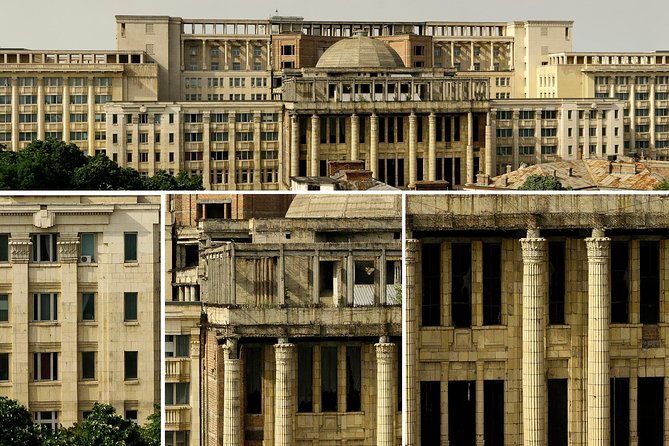
The guide can make or break a tour about political history. You need someone who can explain names, dates, and buildings without turning the walk into a lecture. The experience includes an English-speaking guide, and Ali, Maria, and Gabriela are named in the information for the tour.
The strongest qualities to look for are clear pacing and the ability to tell personal stories without losing the wider facts. The supplied comments describe a pace that felt right, friendly and professional delivery, and stories from the guide that added a personal touch. Those qualities matter in Romania, where the recent past is still close enough to be remembered by family members.
The group is intended to be small. The main description says 15 people or fewer, while the additional details give a maximum of 8. Since those figures do not match, check the booking confirmation if a very small group is essential to you. Either way, this is designed as a more personal walk rather than a large coach excursion.
The tour runs with a minimum of two participants. You need to book at least 12 hours ahead, though booking earlier is sensible because the experience is booked an average of 56 days in advance. That advance-booking figure suggests that popular dates can fill well before arrival.
Is $48.37 a fair price?
At $48.37 per person, this is not the cheapest way to walk around central Bucharest. The value depends on how you use it.
You are paying for roughly three hours of guided history, a route connecting several communist landmarks, entry to the Museum of Communism Bucharest, an included snack, communist coffee, and all listed taxes and fees. You also get a guide who can link the sites rather than leaving you to piece together their meaning from separate signs.
The price is easier to justify if you want context. Visiting the Palace of Parliament from outside costs nothing, and the squares and streets are public. The paid element is the organization, explanation, museum admission, and food experience. If you already know Romanian communist history well and only want photographs of the palace, this may feel expensive.
I see stronger value for first-time visitors to Bucharest, families, and anyone who wants a focused introduction to the Ceaușescu period. You can also use the end point to continue exploring on your own, which saves you from losing the rest of the morning to transport back across the city.
Group discounts may be available, so check the option that applies to your party. Hotel pickup and drop-off are not included unless you select that option, and gratuities are separate.
Practical details for a smooth morning
The meeting point is Bulevardul Unirii 1-3 in Bucharest, with a 10:00 a.m. start. The tour finishes at Revolution Square, not at the starting point. That makes the route useful for a day of central sightseeing, but plan your next stop from the finish rather than from Bulevardul Unirii.
The experience takes place on foot and uses public urban spaces. Most people can participate, and service animals are allowed. Since several stops are outdoors, good weather is required. If poor weather cancels the tour, you are offered another date or a full refund.
Wear shoes suited to three hours of walking. The itinerary includes short stops of 10 to 20 minutes, followed by the longer 40-minute museum visit. The rhythm should feel varied, but you will still spend much of the morning walking and standing.
The tour is offered in English. Confirmation is provided at booking, and free cancellation is available up to 24 hours before the start time. Cancellations made less than 24 hours ahead are not refunded, and changes inside that period are not accepted.
Who should book this experience?
I would choose this tour if you want a clear introduction to Bucharest’s communist period without committing to a full-day program. It suits first-time visitors who want the big landmarks explained, families who need something more active than a conventional museum, and history-minded visitors who want to understand the 1989 revolution at the actual sites.
It is also a good choice if you value a guide’s personal stories. Gabriela’s informal approach, Maria’s family-friendly explanations, and Ali’s friendly, well-paced delivery point to the sort of human connection that can make a difficult topic easier to follow.
You may want another option if your main goal is to visit the inside of the Palace of Parliament. This tour does not include that admission. You should also think twice if you dislike outdoor walking, prefer a private experience, or want a long and highly detailed study of Romanian politics after 1989.
My verdict on Communism in Bucharest
I would book this tour for a first visit to Bucharest when I wanted the communist era explained in a compact, well-planned morning. The route connects the Palace of Parliament, Antim Monastery, Bloc 6, Revolution Square, and the University of Bucharest, then ends with the hands-on museum and its snack and coffee.
Its best feature is the balance between public power and private life. You see the buildings created for a dictator’s vision, then handle the clothing and objects linked to ordinary homes. Just remember the key limitation: the palace is viewed from outside. At $48.37, the tour is worthwhile for its guide, museum entry, food, and context, especially if this is your first serious look at Bucharest’s communist past.
FAQ
How long does the Communism in Bucharest tour last?
The tour lasts approximately three hours.
Where does the tour start?
It starts at Bulevardul Unirii 1-3, Bucharest, Romania, at 10:00 a.m.
Where does the tour finish?
The tour finishes at Revolution Square, also called Piața Revoluției, in Bucharest.
Does the tour enter the Palace of Parliament?
No. The Palace of Parliament is viewed from outside, and the guide explains why and how it was built.
Is museum admission included?
Yes. Admission to the Museum of Communism Bucharest, Undeva in Comunism, is included, with skip-the-line entry listed as part of the tour.
What food and drinks are included?
The tour includes one communist snack, either sweet or salty depending on availability, and communist coffee. Other drinks are not included.
Just added around the world
- Girona, Figueres, Dalí Museum and Cadaqués Tour from Barcelona★ 4.5 · 36 reviews
- Football Club Barcelona Museum Immersive Tour Guided Visit★ 3.5 · 52 reviews
- Erotic Museum Admission Ticket with Audioguide★ 5.0 · 527 reviews
- Dali Museum and Costa Brava Small Group Day Trip from Barcelona★ 5.0 · 77 reviews
- White Rabbit Museum: The Best Immersive Experience in Catalonia★ 5.0 · 538 reviews
- Madrid by High-Speed Train with Prado Museum Private Tour★ 4.0 · 33 reviews
- Guitar Legends Hall: Entrance to the Immersive Rock Museum★ 5.0 · 25 reviews
- Private Dali Museum, Besalú & Girona Tour from Barcelona★ 5.0 · 15 reviews
Museum Tours in Romania, compared.
Parliament, Ceausescu House & Village Museum Tour
Read our review →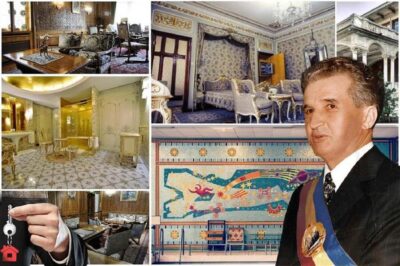
Palace of Parliament, Ceausescu House & Village Museum
Read our review →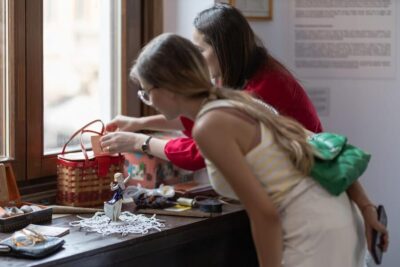

Museum of Communism Ticket with Communist Coffee
Read our review →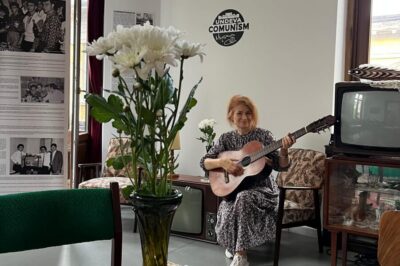
Dinner+Tour at Museum of Communism after closing
Read our review →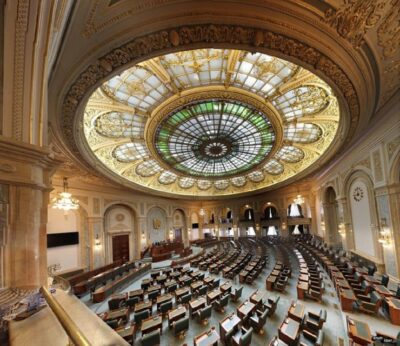
Palace of the Parliament, Village Museum & Ceaușescu Mansion
Read our review →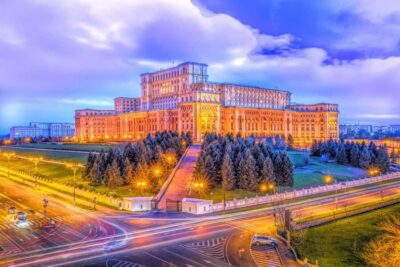
Browse the lists this tour appears in