
Review · ISTANBUL
Istanbul Hodjapasha Whirling Dervishes Show & Exhibition
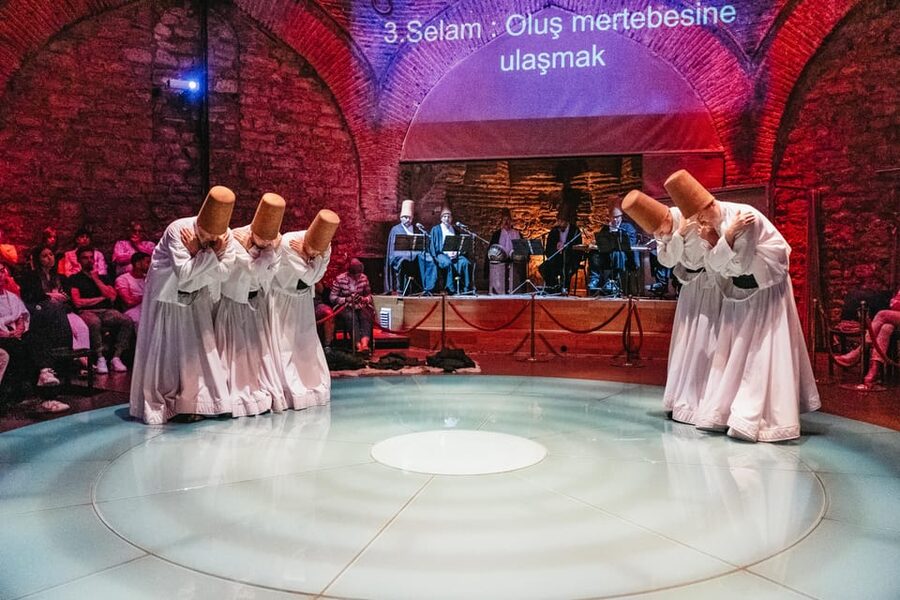
The most important thing to understand about the Hodjapasha Whirling Dervishes experience is that it is a religious ceremony, not a stage dance show. The dervishes move slowly through a formal sequence of bows, music, prayer, and whirling, creating a quiet, reflective hour rather than an evening of entertainment.
I like the small venue, where you can sit close enough to notice each movement and expression. I also like the exhibition before the ceremony, which explains Rumi, Sufism, and the meaning of the ritual. The main drawback is simple: if you need constant action, the repeated movements and solemn mood may feel slow.
Istanbul Hodjapasha Whirling Dervishes Show Review
- A one-hour Mevlevi ceremony: Expect prayer, bows, traditional music, chanting, and extended whirling.
- The exhibition matters: Arrive early to read about Rumi, Sufi beliefs, and the stages of the ritual.
- Small, intimate setting: Seating is close to the performance area, with assigned seats.
- Quiet audience rules: Photography, video, and applause are not allowed during the ceremony.
- Central location: Hodjapasha is near public transportation, restaurants, cafés, and the Spice Market.
- Best for curious adults: Children aged seven and older may attend, but the slow pace may not suit every child.
What Happens Inside the Hodjapasha Ceremony
The experience takes place at Hodjapasha Cultural Centre in Fatih, in a converted historic bath area near Ankara Caddesi. You return to the same location at the end, so there is no complicated route or second meeting point to manage.
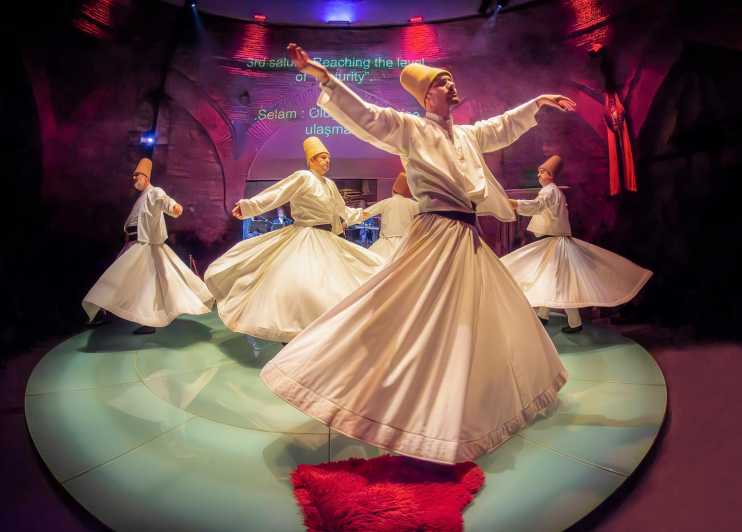
The ceremony lasts about one hour. You will see musicians and singers begin the program, followed by a carefully ordered series of bows, prayers, and movements. The whirling does not begin right away, so do not arrive expecting an hour of continuous spinning.
That slower opening is important. It gives you a chance to understand the ceremony as a form of devotion rather than a circus trick. The dervishes wear traditional clothing and move with striking control, but the point is not athletic display. The turning represents a spiritual practice connected with Sufi Islam and the teachings of the poet and mystic Jalal al-Din Rumi.
Explanatory text or projected information helps identify the different stages. This is useful because the ceremony can look mysterious if you know nothing about it. I recommend reading the material before taking your seat, rather than trying to work out the meaning in the dark.
Why the Exhibition Deserves Extra Time
The exhibition is one of the strongest parts of the visit, yet it is easy to treat it as a waiting area. Give it at least 20 minutes if you can.
You will find information about Rumi, the dervishes, Sufi traditions, and the origins of the ceremony. Poems and explanatory panels provide a better frame for what follows. Without that background, you may see a group of people turning in circles for a long time. With it, the same movements become part of a disciplined religious practice.
I especially like the way this preparation changes your expectations. You are less likely to judge the event as a conventional dance performance and more likely to notice the concentration, repetition, and quiet structure. The exhibition also helps explain why the ceremony is performed with such seriousness.
The information is available in a multi-national booklet as well. Bottled water is included, though food is not. The nearby streets make it easy to eat before or after the ceremony.
More Museum Tours in Istanbul
- Istanbul: Hagia Sophia Skip-the-Line Ticket & Museum Option
★ 3.7 · 4,958 reviews - Istanbul: Hodjapasha Whirling Dervishes Show & Exhibition
★ 4.4 · 4,790 reviews - Istanbul: Topkapi Palace & Harem Museum Ticket & Audio Guide
★ 4.1 · 3,977 reviews
The Music, Movement, and Meaning
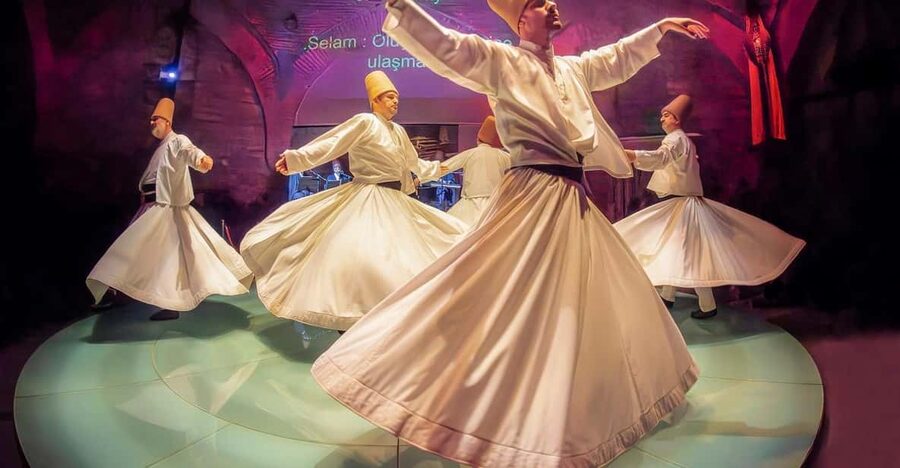
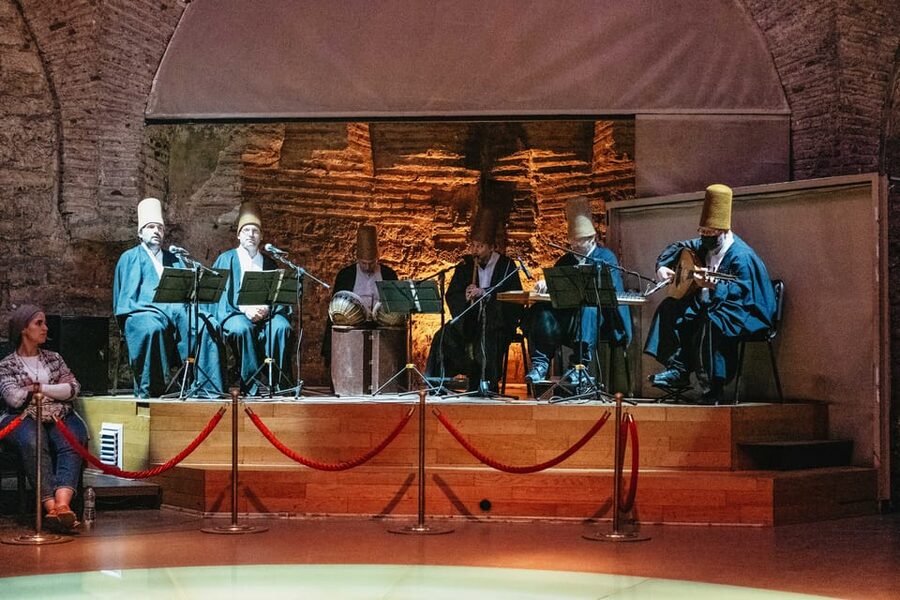
Live traditional music gives the ceremony much of its atmosphere. The sound of strings, singing, and chanting can be soft and hypnotic, especially in the low-lit hall. You may find the music more immediately engaging than the whirling itself.
The ritual includes repeated bows and a long period of spinning with arms raised. The movement is controlled and steady. For some people, that focus is the heart of the experience. For others, the repetition becomes tedious.
That split is worth considering before you book. I find the repetition meaningful because it gives the ritual its meditative quality. You are watching discipline rather than choreography designed to produce frequent surprises. If you prefer a lively folk performance, this may not be the right choice.
The ceremony is also deliberately quiet. You are asked not to take photographs, record video, or applaud. That rule can feel unusual at first, especially if you have attended many cultural performances in Istanbul. Here, it protects the solemn mood and keeps the audience from turning a religious act into a photo opportunity.
You should treat the hour with the same care you would bring to a place of worship. The experience is open to people of different faiths and to those with no religious belief, but respect is essential.
A Small Venue With Close Seating
The venue is described as small, and that works in its favor. Some seating is close to the performance area, allowing you to see the dervishes clearly rather than watching tiny figures from the back of a large theater.
Seats are assigned before the ceremony. You do not need to compete for a place once inside, though it still makes sense to arrive with enough time to find the entrance, visit the exhibition, and settle down.
The close arrangement makes the ritual feel personal. You can see the concentration in the performers’ faces and the details of each bow. It also means the audience is part of the atmosphere. Whispering, phone use, photography, or applause would be especially distracting in such a compact room.
Some people may find the low light and soft music soothing enough to become sleepy. That is not necessarily a criticism. The mood is intentionally calm and contemplative, but it does explain why the ceremony will not suit anyone looking for a quick burst of energy.
Finding Hodjapasha Without Stress
The official address is Hodjapasha, Hoca Paşa Mahallesi, Ankara Caddesi, Hoca Paşa, Hocapaşa Hamamı Sokak No. 3, in Istanbul’s Fatih district.
The center is near public transportation and in a useful part of the city for an evening outing. Restaurants and cafés are nearby, and the Spice Market is close enough to visit on foot or by tram. That makes the ceremony easy to pair with dinner or a visit to the market.
The entrance is on a smaller side street, so allow extra time if you are unfamiliar with the area. A practical detail: taxis may stop on the main street rather than directly beside the venue. If you are using a taxi, expect to walk the final stretch.
I would not plan a rushed arrival from the other side of Istanbul. The address is central, but Istanbul’s traffic can be unpredictable. Public transportation and walking may be simpler, depending on where you are staying.
A few more museum visits around Turkey worth comparing
- Seville: Puro Flamenco Show with Optional Museum Ticket
★ 4.8 · 6,088 reviews - Authentic Flamenco Show Barcelona : Intimate Casa Sors Experience
★ 5.0 · 809 reviews - Rome: Gladiator Show and Museum Tickets
★ 4.5 · 237 reviews - Intimate Authentic Flamenco Show in Barcelona at Casa Sors
★ 4.9 · 125 reviews
Is $32 a Fair Price?
At $32 per person, this is a reasonably priced cultural experience for Istanbul, especially if you value the exhibition and the live music as part of the visit. You are paying for admission to a formal one-hour ceremony in a historic cultural center, not for a meal, guide, or hotel transfer.
The value depends heavily on your expectations. If you want a polished entertainment program with changing scenery, comedy, or several dance styles, $32 may feel less satisfying. The performance is restrained, and the central movement is repeated for a long time.
If you want a focused introduction to Mevlevi tradition, the price is easier to justify. You receive the ceremony, exhibition access, booklet, and bottled water. The central location also saves you from arranging a separate cultural outing across town.
Prebooking is useful because entry is guaranteed once your reservation is confirmed. The venue can accommodate up to 170 people, though the room may feel much smaller depending on the seating arrangement. Confirmation arrives at booking time, and free cancellation is available up to 24 hours before the start time.
Who Will Enjoy This Experience Most
I would recommend Hodjapasha to adults who enjoy cultural traditions, religious art, music, and quiet observation. It also suits anyone who has read a little about Rumi or Sufism and wants to see how those ideas appear in ceremony.
You do not need to share the faith to appreciate the performance. The ritual offers a look at Turkish religious culture through sound, movement, and silence. People with different religious backgrounds can find meaning in its discipline and beauty, as long as they approach it respectfully.
The minimum age is seven. That makes it possible for families to attend, but I would think carefully before bringing a young child. The ceremony is slow, quiet, and repetitive. Older children who enjoy music, history, or unusual cultural experiences may manage well. A child who needs constant activity may struggle.
I would also recommend it to first-time visitors who want something different from mosques, palaces, markets, and food tours. It is a distinct part of Istanbul’s cultural life, but it requires patience.
Who May Want to Skip It
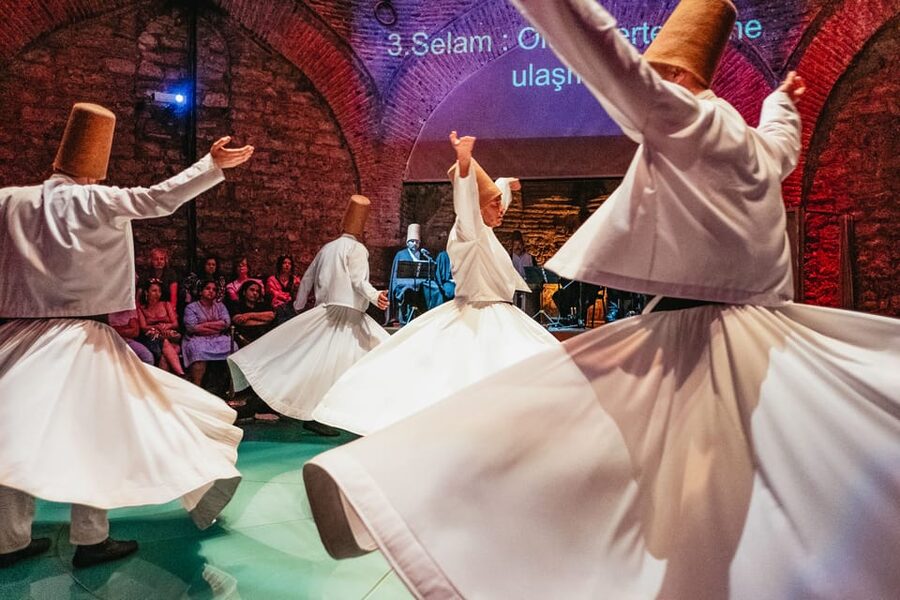
Skip this experience if you expect a theatrical dance production. The dervishes do not perform a changing series of routines, and the whirling may not begin until partway through the hour.
You may also want to skip it if you dislike religious ceremonies or sitting quietly for an extended period. The event is not framed as a casual cultural spectacle. Its solemn character is the point.
Photography rules may be another concern. You cannot take pictures or video during the ceremony, and applause is not allowed. If documenting every stop is central to your Istanbul visit, this restriction may frustrate you.
On the other hand, that same rule is one reason the event can feel more thoughtful than a standard tourist performance. You are asked to watch, listen, and let the ceremony unfold without a phone in front of your face.
How to Plan the Evening
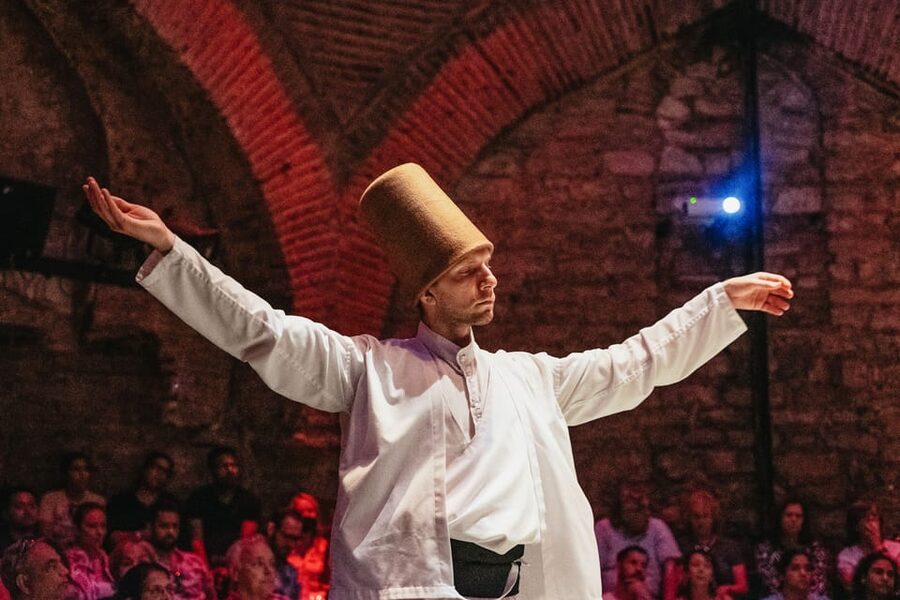
Plan to arrive early enough for the exhibition. I would allow at least 20 minutes before the ceremony if possible, particularly if you want to read the panels and poems instead of simply walking through the room.
Do not schedule a meal during the one-hour program. Food is not included, but the surrounding area has restaurants and cafés for before or after. The nearby Spice Market gives you another easy option for a walk after the ceremony.
Keep your phone put away once the ritual begins. The no-photo rule is clear, and the close seating makes a glowing screen particularly disruptive.
Wear something comfortable for an hour of seated viewing. No special equipment is required. The booking provides a mobile ticket, and confirmation is issued at the time of booking.
The activity is offered in English through the written information and booking details, but no named live guide is provided. This is largely a self-directed visit, with the exhibition and projected explanations doing much of the teaching.
My Take on the Ceremony’s Authenticity
You will find different ways to describe this experience. It is staged for a public audience at a cultural center, so it is not the same as attending a private religious gathering. At the same time, the structure, music, dress, movements, and solemn rules present the ceremony as a serious representation of Mevlevi practice.
That distinction matters. I would not book it expecting to observe an ordinary worship service with no public presentation. I would book it as a respectful cultural performance rooted in religious tradition.
The strongest part is the balance between access and restraint. You can learn the basic background, sit close to the performers, and watch the ritual in a controlled setting. You are not asked to pretend it is something else.
Should You Book Hodjapasha?
Book it if you want a calm, unusual look at Sufi traditions and are willing to treat the hour as a ceremony. Arrive early for the exhibition, read about Rumi, and expect live music, bows, chanting, and repeated whirling rather than a fast-moving dance program.
Skip it if you need comedy, variety, or constant motion. For the right audience, the $32 price offers a memorable cultural hour in a central Istanbul location. For the wrong audience, the same hour may feel repetitive.
My advice is simple: learn a little before you go, keep your camera away, and let the quiet pace guide your expectations. Then Hodjapasha can become one of Istanbul’s more thoughtful evening experiences.
FAQ
How long does the Hodjapasha Whirling Dervishes experience last?
The ceremony lasts approximately one hour.
Where does the experience begin and end?
It begins at Hodjapasha Cultural Centre in Istanbul’s Fatih district and ends back at the same meeting point.
What is the address of Hodjapasha?
The address is Hoca Paşa Mahallesi Ankara Caddesi, Hoca Paşa, Hocapaşa Hamamı Sokak No. 3, 34110 Fatih, Istanbul, Türkiye.
What is included in the ticket?
The experience includes admission to the ceremony, a multi-national booklet, and bottled water.
Is food included?
No. Food is not included, but restaurants and cafés are located near the venue.
Is hotel pickup and drop-off provided?
No. Hotel pickup and drop-off are not included.
Can children attend?
The minimum age is seven. The ceremony is quiet and repetitive, so it may not suit every child.
Are photographs or videos allowed?
No. Photography and video are not allowed during the ceremony, and applause is also not permitted.
Can I cancel for a refund?
Yes. You can cancel up to 24 hours before the experience start time for a full refund. Changes or cancellations made less than 24 hours before the start time are not accepted for a refund.
Just added around Turkey
- Antalya Sand Sculpture Museum Admission Ticket★ 3.5 · 38 reviews
- Selfie Park Antalya the Biggest Selfie Museum in Europe★ 4.5 · 35 reviews
- Half Day Antalya Aquarium Tour And Wax Museum★ 5.0 · 12 reviews
- Antalya: Aquarium, Wax Museum & Combo Package Options★ 4.5 · 35 reviews
- Antalya Aquarium and Face to Face Wax Museum Private Transfer★ 4.5 · 12 reviews
- Istanbul: Topkapi Palace and Harem Museum Tour with Ticket★ 4.8 · 307 reviews
- Side: Scuba Diving & Under Water Museum with Hotel Transfer★ 4.2 · 18 reviews
- Side: Scuba Diving, Underwater Museum, 2 Dives incl. Lunch★ 4.3 · 146 reviews
Museum Tours in Istanbul, compared.
Hagia Sophia Skip-the-Line Ticket & Museum Option
Read our review →
Hodjapasha Whirling Dervishes Show & Exhibition
Read our review →
Topkapi Palace & Harem Museum Ticket & Audio Guide
Read our review →
Topkapi Palace and Harem Museum Tour with Ticket
Read our review →
Hagia Sophia Mosque and Museum Skip-The-Line Combo
Read our review →
Hagia Sophia History Museum Entry with Audio Guide
Read our review →

Istanbul Archaeological Museums Entry Ticket & Audio Guide
Read our review →Browse the lists this tour appears in