
Review · ISTANBUL
Istanbul: Hodjapasha Whirling Dervishes Show & Exhibition
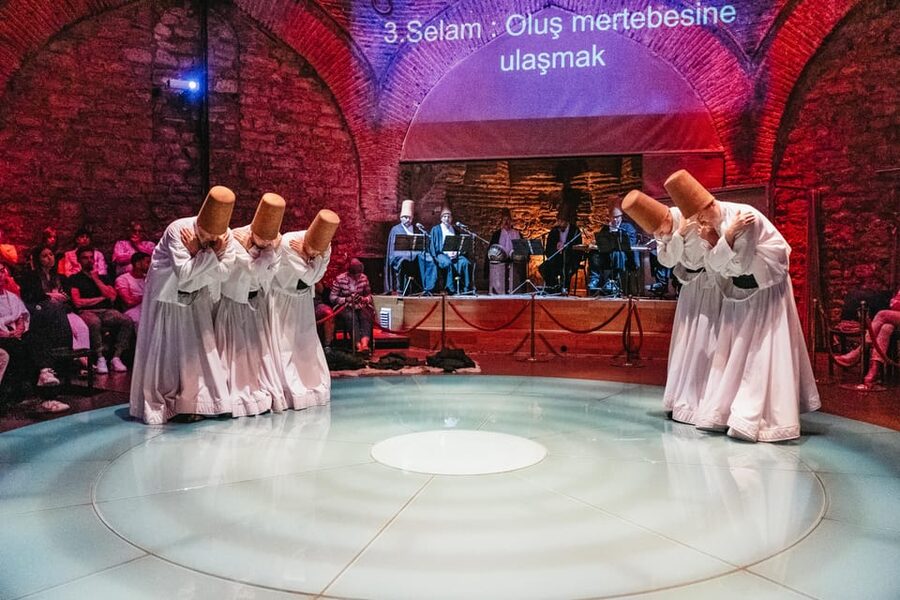
The most striking part of this Istanbul experience is its setting: a 550-year-old Ottoman Turkish bath in the Sirkeci district, with a domed performance space where music and movement carry the ceremony. This is not a fast-moving stage act. It is a quiet religious ritual, shaped by centuries of Sufi tradition.
I like the live Turkish music, with instruments such as the ney, oud, kanun, and traditional percussion. I also like the small exhibition, which gives you useful background before the ceremony begins. The main thing to consider is that the hour can feel slow or repetitive if you are expecting a theatrical dance performance. Silence, no applause, and no photography are required.
Key points to know before booking
- The ceremony takes place in a restored 550-year-old Ottoman bath, not in a modern theater.
- Live music comes first, followed by chanting and the seven-part Sema ceremony.
- The whirling has religious meaning, representing the spiritual journey of humanity rather than simple entertainment.
- Arrive early for the exhibition, since the displays help explain Sufism and the movements you are about to see.
- Seats are assigned by booking order, so reserving early may help you get a better position.
- Children under seven and wheelchair users cannot attend, and no talking, clapping, or photography is allowed inside.
Entering the old Ottoman bath near Sirkeci
The HodjaPasha Culture Center is about 100 meters from the Sirkeci Tram Stop, making this one of the easier cultural activities to fit into an Istanbul day. You do not need a long transfer or a complicated meeting point. From the tram, look for Hocapaşa Culture Center and allow time to find the entrance and climb the stairs to the performance area.
The building is part of the appeal. This is a restored Ottoman bath, with the kind of domed interior that gives the ceremony a close, hushed feeling. The space is not huge, and that works in its favor. You are near enough to see the dervishes’ controlled movements and to hear the music clearly.
There are stairs to the venue, so this is not suitable for wheelchair users. Seating can also feel tight. A few seats are placed close together, and the chairs are not designed for lounging. Since the ceremony lasts about an hour, this is manageable, but anyone who values generous legroom should set expectations accordingly.
Seats are assigned according to the order in which bookings are made. If your position matters, book early rather than assuming you can choose once you arrive. Early arrival also helps with the entrance process and gives you time to see the exhibition.
More Museum Tours in Istanbul
- Istanbul: Hagia Sophia Skip-the-Line Ticket & Museum Option
★ 3.7 · 4,958 reviews - Istanbul: Topkapi Palace & Harem Museum Ticket & Audio Guide
★ 4.1 · 3,977 reviews - Istanbul Hodjapasha Whirling Dervishes Show & Exhibition
★ 4.0 · 503 reviews
Read the exhibition before the music begins
The foyer display is modest, but it adds real value. Panels and artifacts explain the history and meaning of the Whirling Dervishes, the Mevlevi tradition, and the Sema ceremony. A program booklet is also provided, giving you a basic guide to the order of events.
I recommend arriving early enough to read this material without rushing. If you walk straight into the hall and know nothing about the ritual, the turning can seem like a beautiful but puzzling dance. A few minutes with the displays gives you a better sense of why the dervishes move in a set pattern and why the ceremony is treated with such respect.
This is also the point where you should adjust your expectations. The performance is a religious ceremony presented for the public, not a concert with a host explaining every stage. There is no guide named in the program information, and no spoken tour appears to accompany the event. The exhibition and booklet do most of the explaining.
That arrangement suits visitors who enjoy learning quietly and making their own connections. If you want a personal lecture about Sufi Islam, you may find the background material a little brief.
The opening Turkish music concert
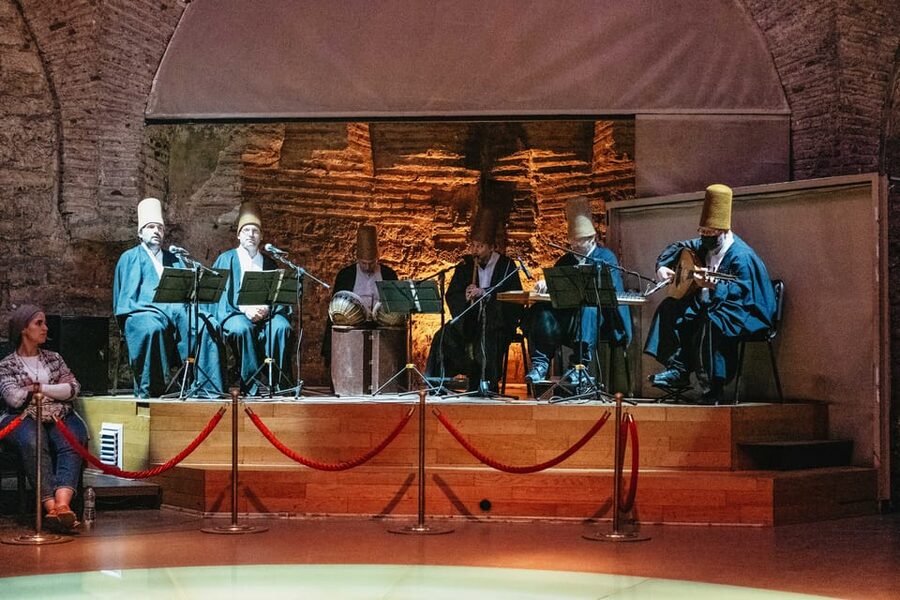
The program begins with classical Turkish music. This part is not filler before the main event. It establishes the mood and introduces the musical language of the ceremony.
The instruments can include the ney, a reed flute with a breathy, haunting sound, along with the oud, kanun, vocals, and Ottoman-era percussion. The music makes good use of the old bath’s acoustics. Notes linger under the dome, and the sound gives the room a calm, inward quality.
You will hear composed passages as well as sections shaped by traditional modes and improvisation. One detailed account of the music noted Peşrev compositions, ney and kanun improvisations, recitation, and singing. The full musical structure is presented in a shortened one-hour format, so some repeated sections may be left out to keep the program moving.
This opening section is especially worthwhile if you have an interest in Turkish music. If you are focused only on the spinning, remember that the musicians are central to the ceremony. The music sets the pace, signals changes, and gives the dervishes a frame for their movements.
Bottled water is included, and complimentary drinks are available during the experience. Keep them discreet and avoid anything that might create noise during the quiet passages.
Watching the dervishes take their places
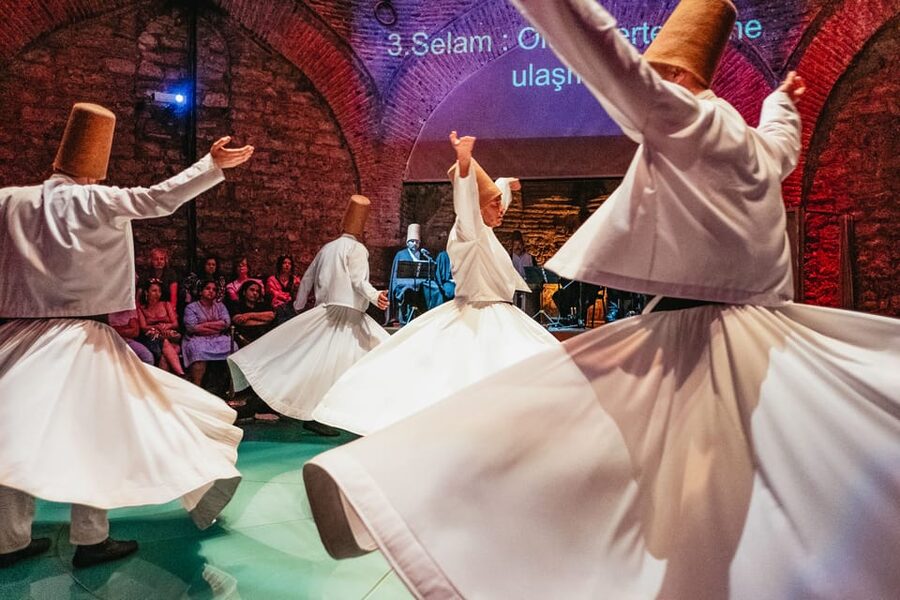
After the opening music, the dervishes and the sheikh enter the ceremonial space. The ceremony includes praise for the Prophet Mohammed, recitation, and a drum passage before the whirling begins.
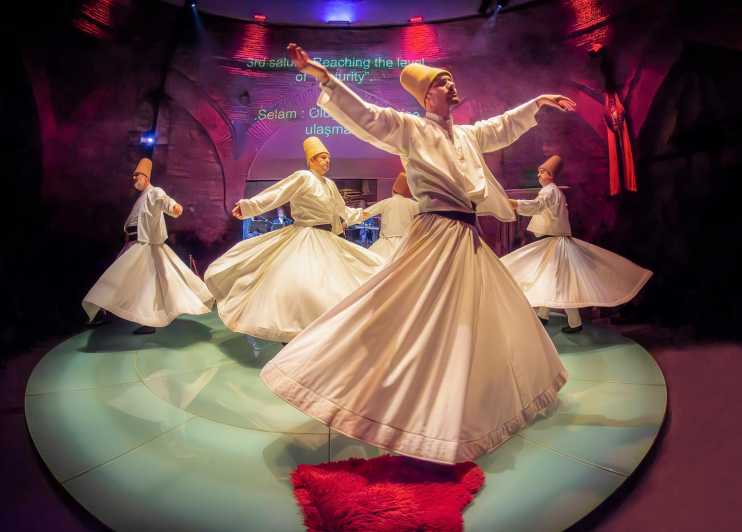
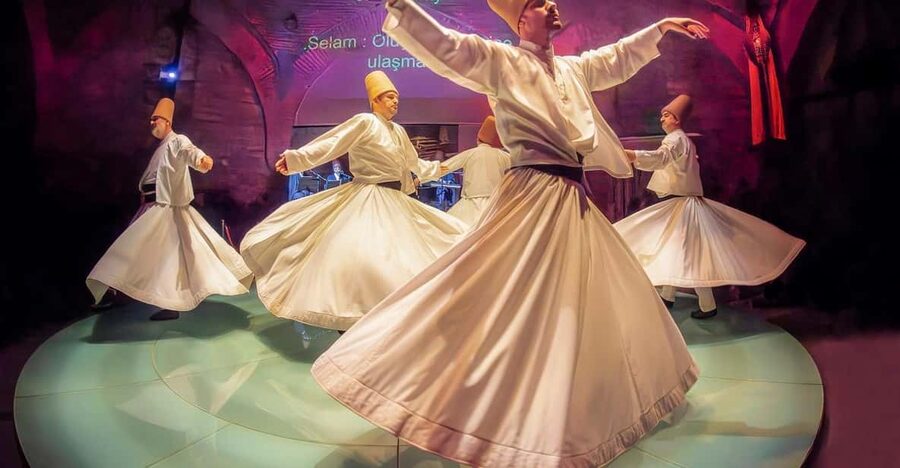
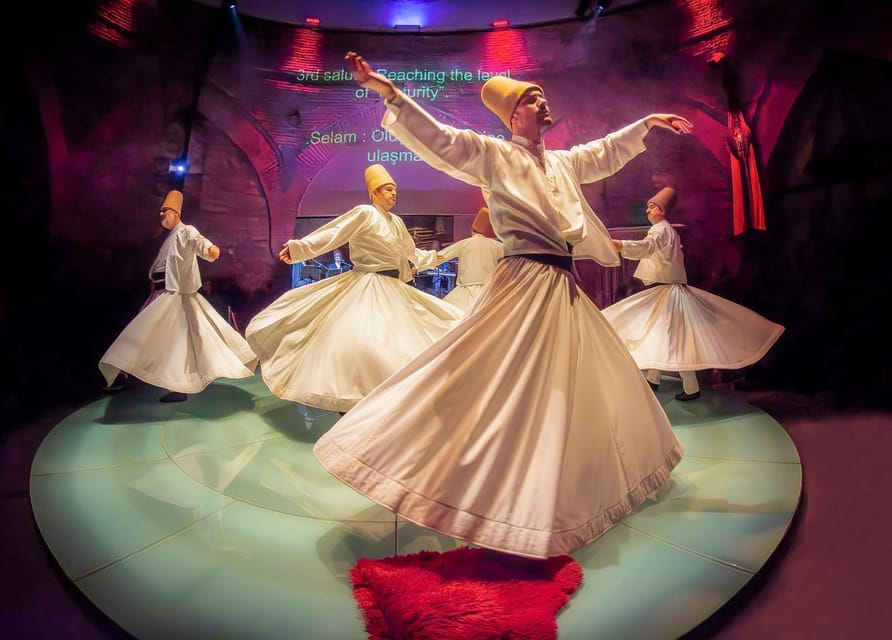
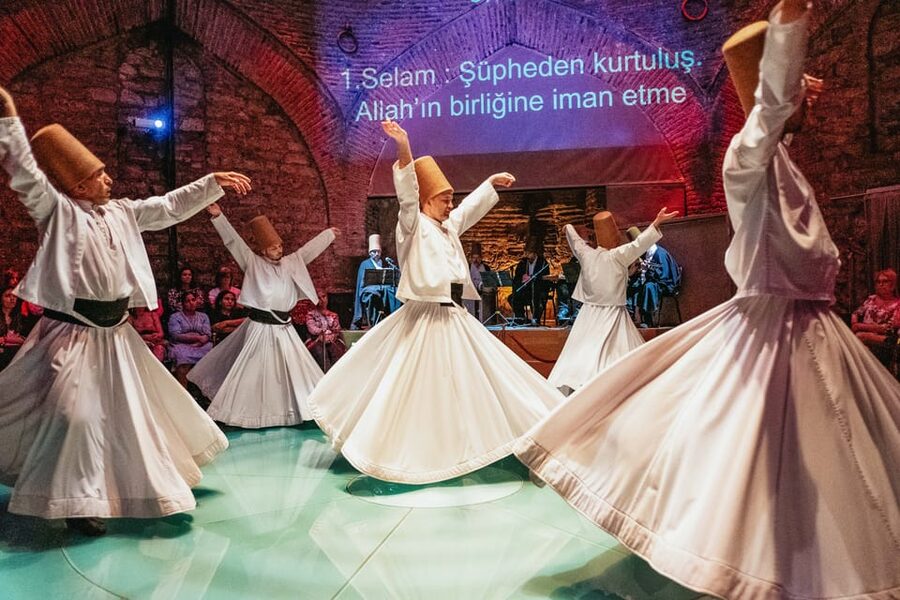
The movement is controlled and deliberate. The dervishes wear long white robes, and their turning creates a visual rhythm that can feel almost weightless under the central dome. The aim is not acrobatics. The spinning represents a spiritual ascent through thought and love, and the seven-part Sema traces the birth and spiritual development of humanity.
You may see several dervishes turning together, with each maintaining a steady path while rotating around a larger circle. The effect is more peaceful than flashy. There are no costume changes, dramatic lighting effects, or comic moments to break the mood.
This is why the no-photography rule makes sense, even if you find it frustrating. Phones and camera screens would pull attention away from the ceremony, and the ritual itself calls for silence. No talking or applause is allowed during the performance. You are expected to sit quietly and let the music and movement unfold.
The same rule means late arrivals are noticeable. Arriving 10 or 15 minutes after the start can interrupt people who are already concentrating. Plan to be inside before the music begins.
A few more museum visits around Turkey worth comparing
- Seville: Puro Flamenco Show with Optional Museum Ticket
★ 4.8 · 6,088 reviews - Authentic Flamenco Show Barcelona : Intimate Casa Sors Experience
★ 5.0 · 809 reviews - Rome: Gladiator Show and Museum Tickets
★ 4.5 · 237 reviews - Intimate Authentic Flamenco Show in Barcelona at Casa Sors
★ 4.9 · 125 reviews
Understanding the seven-part Sema ceremony
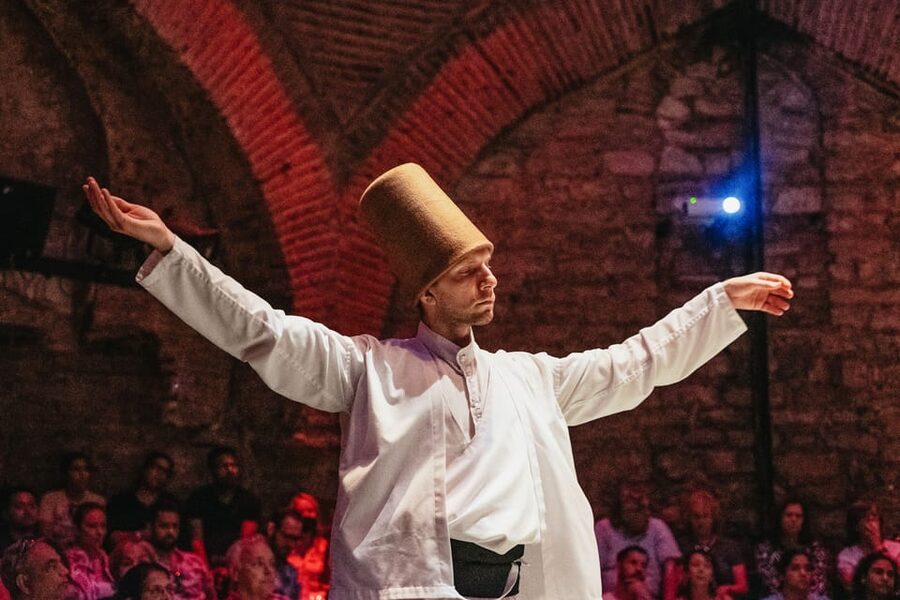
The Sema is best approached as a sequence, not as one long period of spinning. The drum, chant, music, and movement mark changes in the ceremony. The dervishes turn as part of a spiritual practice, and the repeated motion is meant to focus the mind rather than entertain through variety.
The program booklet helps, but you should not expect a detailed explanation during the ritual. The ceremony asks you to watch and listen. For some people, the stillness is the point. The room gradually becomes quiet enough that the sound of the ney, drum, and robes moving through the air takes on unusual force.
The spinning can last for a substantial part of the ceremony. Anyone prone to motion discomfort may find it visually intense, though the dervishes stop with remarkable control. Their ability to begin and end each section without losing balance is one of the most impressive physical details of the ritual.
Still, the effect depends on your interest. If you are curious about Sufi practice, the ceremony may feel moving and contemplative. If you prefer a dance with changing scenes, it may seem repetitive after a while. That is not a flaw in the ceremony, but it is an important distinction when deciding how to spend your evening.
Why the atmosphere matters more than spectacle
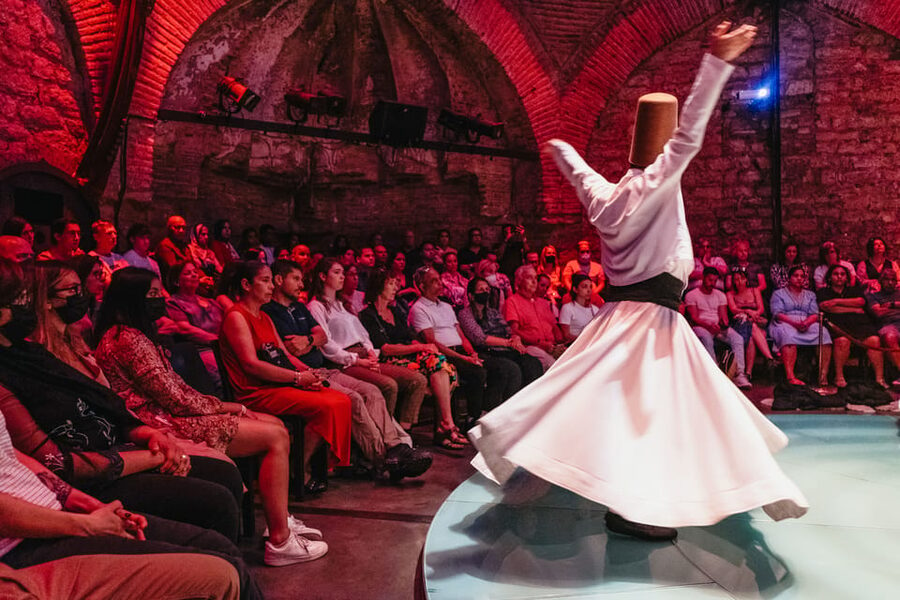
The strongest feature here is the combination of place, sound, and restraint. The old bath gives the performance physical character. The live musicians give it warmth. The ban on applause and photography allows the mood to remain serious.
You might notice the air moving as the skirts turn, especially from a front-row seat. You will also hear the building itself, with sound echoing through the stone and dome. These small details matter because the ceremony is not built around large visual effects.
The experience is also a useful introduction to a spiritual side of Islam that many visitors do not encounter elsewhere in Istanbul. You are not simply watching a traditional dance. You are seeing a religious form with its own symbols, prayers, music, and discipline.
That distinction deserves respect. Calling it only a dance show misses much of what you are seeing. At the same time, this is a presentation intended for visitors, so you should think of it as an accessible public ceremony rather than a private religious gathering.
Price, timing, and overall value
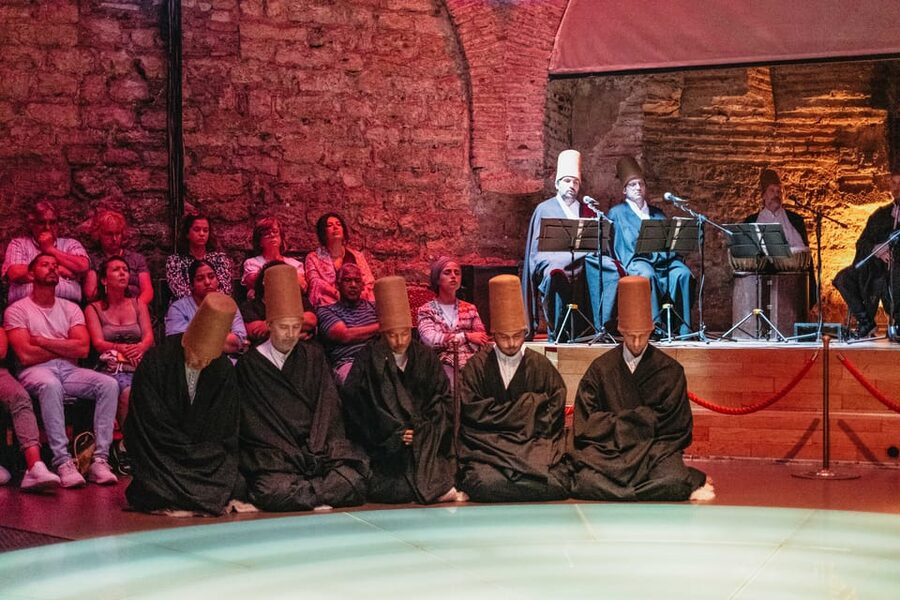
At $32 per person for about one hour, this is not Istanbul’s cheapest cultural activity. You are paying for a ticketed ceremony in a historic building, live musicians, the exhibition, and a program booklet, rather than for a full evening of entertainment.
I think the price is fair if you value cultural context and a distinctive setting. The building alone gives the hour more character than a standard theater performance. The live music also adds substance, especially for anyone interested in Turkish instruments and vocal traditions.
The value is less clear if you measure activities by length or variety. The program lasts only an hour, and the central movement remains intentionally similar from one section to the next. You are not getting a long guided tour, a meal, or a large-scale production.
Free cancellation up to 24 hours before the start and a reserve-now, pay-later option make it easier to fit into an uncertain Istanbul schedule. Check the available starting time when booking, since the exact time can affect how well it fits with visits to nearby Sultanahmet and Sirkeci sights.
Who will appreciate this ceremony most
I would recommend this to adults and older children who can sit quietly for an hour and are curious about religion, music, history, or traditional performance. It suits someone who wants a reflective break from Istanbul’s busy streets.
It is also a good choice if you have already seen the major mosques and museums and want a different kind of cultural experience. The exhibition provides enough background to make the evening more meaningful without turning it into a lecture.
You may want to skip it if you need constant action, dislike sitting close to other people, or expect permission to photograph the performers. Families with children under seven cannot attend, and anyone using a wheelchair will face access problems because of the stairs.
Dress is not specifically stated in the activity information, but respectful behavior is essential. Keep your phone silent, do not speak during the ceremony, and save questions for after the program.
Practical tips for a better visit
- Arrive early, ideally with enough time to read the foyer panels before taking your seat.
- Book ahead if you want a better chance of receiving a favorable seat assignment.
- Use the restroom and settle in before the music starts, since leaving or entering can disturb the ceremony.
- Bring water or use the provided bottled water, especially if you are prone to coughing during quiet music.
- Turn off your phone completely rather than relying only on silent mode.
- Do not plan on photographs or video. The rule applies inside the performance space.
- Treat the hour as a ceremony, not a standard dance performance. That mindset will make the experience easier to appreciate.
Should you book the HodjaPasha Sema ceremony?
Book it if you want to see a solemn Mevlevi ceremony in a historic Ottoman setting, with live Turkish music and enough background material to understand the basic meaning. The intimate hall, echoes under the dome, and disciplined turning create a memorable hour without resorting to touristy tricks.
Think twice if your main goal is an energetic stage show, comfortable spacious seating, or a photo opportunity. The ceremony is quiet, repetitive by design, and strict about audience behavior.
For most culturally curious visitors, I think it earns a place in an Istanbul itinerary. Arrive early, read the exhibition, choose your seat carefully by booking ahead, and give the ritual your full attention. That is when the $32 ticket makes the most sense.
FAQ
How long does the HodjaPasha Whirling Dervishes ceremony last?
The experience lasts about one hour.
Where does the ceremony take place?
It takes place at the Hocapaşa Culture Center near the Sirkeci Tram Stop in central Istanbul, inside a restored 550-year-old Ottoman Turkish bath.
What is included in the ticket?
The ticket includes entry to the Mevlevi Sema ceremony, a program booklet, and bottled drinking water. Complimentary drinks are also available during the experience.
Can I take photographs or record video?
No. Photography is not permitted inside, and talking and applause are also prohibited during the ceremony.
Are children allowed to attend?
Children under the age of seven are not permitted.
Are seats chosen at the venue?
Seats are allocated according to the order in which bookings are made. Booking earlier may improve your chance of receiving a better seat.
Can wheelchair users attend?
The activity is not suitable for wheelchair users. There are stairs to the venue.
Just added around Turkey
- Selfie Park Antalya the Biggest Selfie Museum in Europe★ 4.5 · 35 reviews
- Antalya Sand Sculpture Museum Admission Ticket★ 3.5 · 38 reviews
- Half Day Antalya Aquarium Tour And Wax Museum★ 5.0 · 12 reviews
- Antalya: Aquarium, Wax Museum & Combo Package Options★ 4.5 · 35 reviews
- Antalya Aquarium and Face to Face Wax Museum Private Transfer★ 4.5 · 12 reviews
- Istanbul: Topkapi Palace and Harem Museum Tour with Ticket★ 4.8 · 307 reviews
- Side: Scuba Diving & Under Water Museum with Hotel Transfer★ 4.2 · 18 reviews
- Side: Scuba Diving, Underwater Museum, 2 Dives incl. Lunch★ 4.3 · 146 reviews
Museum Tours in Istanbul, compared.
Hagia Sophia Skip-the-Line Ticket & Museum Option
Read our review →
Topkapi Palace & Harem Museum Ticket & Audio Guide
Read our review →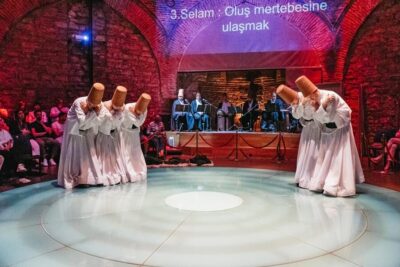
Istanbul Hodjapasha Whirling Dervishes Show & Exhibition
Read our review →
Topkapi Palace and Harem Museum Tour with Ticket
Read our review →
Hagia Sophia Mosque and Museum Skip-The-Line Combo
Read our review →
Hagia Sophia History Museum Entry with Audio Guide
Read our review →
Istanbul Archaeological Museums Entry Ticket & Audio Guide
Read our review →Browse the lists this tour appears in