
Review · ROME
Rome: Gladiator Show and Museum Tickets
Rome: Gladiator Show and Museum Tickets
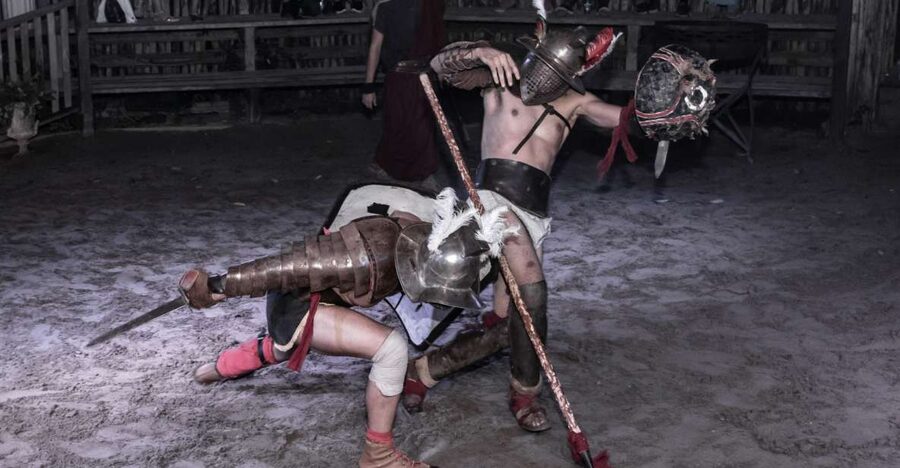
A sword fight under lights, Roman music in the background, and a presenter drawing the audience into the action make this more than a quick museum visit. At the Gruppo Storico Romano arena, historical reenactors use real weapons and armor in a theatrical show about gladiators, Roman customs, and public spectacle.
I like two things right away: the evening has more variety than its name suggests, and the cast makes an effort to involve you rather than leaving you in the dark as a passive spectator. You get museum displays, Roman food and drink, dancing, rituals, comedy, training, and combat in one 90-minute visit.
The main drawback is the location. It is only about 3.5 kilometers from the Colosseum, but it is not in the center of ancient Rome, and public transport may be limited after the 10 p.m. finish. Plan your return before you arrive.
Key points to know before booking
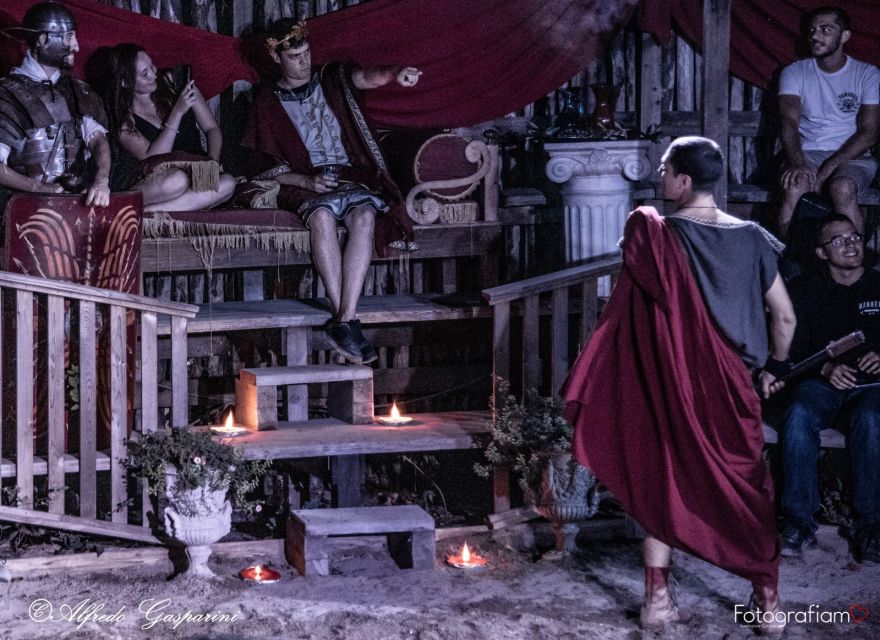
- A 90-minute Roman evening: Expect a museum visit, snacks, a drink, ancient dances, rituals, comedy, and gladiator combat rather than a fight-only performance.
- Real weapons and armor: The reenactors use period-style equipment, so the combat looks forceful and can feel surprisingly intense.
- Audience participation: You may be asked to join in, pose for photos, try on armor, or take part in small activities during the evening.
- A short ride from the Colosseum: The arena is nearby in distance but not in the middle of the tourist center, so the return journey needs thought.
- Best for families and playful history fans: Children often enjoy the action, while adults should expect entertainment and reenactment rather than a formal academic lecture.
- Seasonal scheduling: Performances take place from May through September, including the listed 2026 dates.
What the Rome Gladiator Show really is
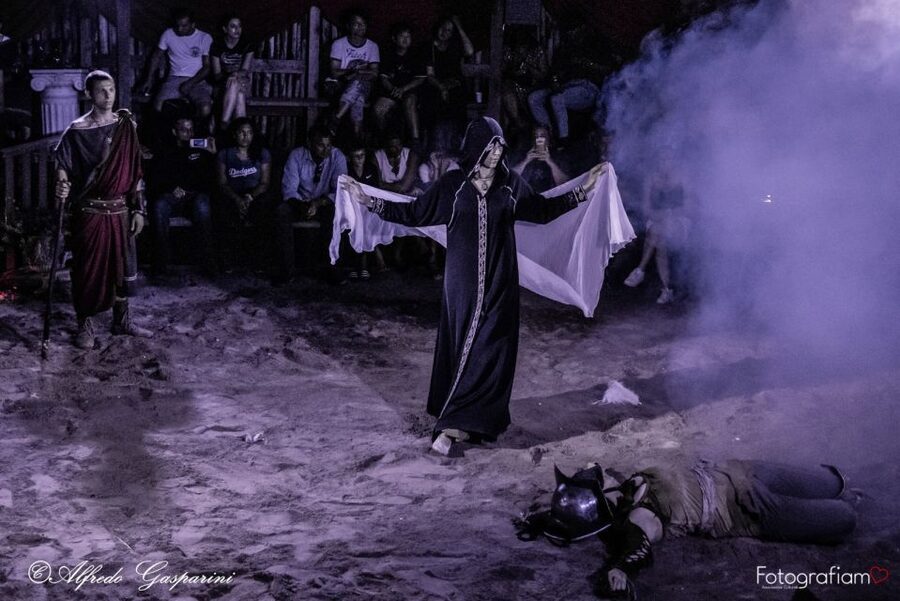
This is a historical reenactment staged at the headquarters of the Gruppo Storico Romano, not a surviving Roman arena and not a modern theater production with elaborate scenery. The setting is an equipped arena with music, lighting, and visual effects, designed to create the feeling of an ancient Roman performance.
That distinction matters. If you want a quiet, scholarly examination of gladiatorial combat, this is not the right choice. If you want to see Roman clothing, weapons, rituals, fighting styles, and public entertainment brought together in a lively evening, the format works well.
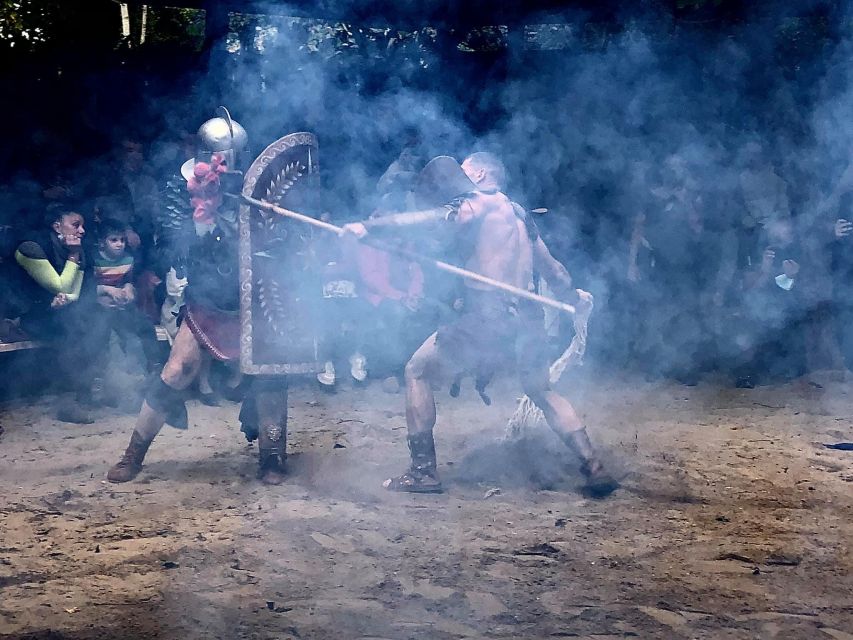
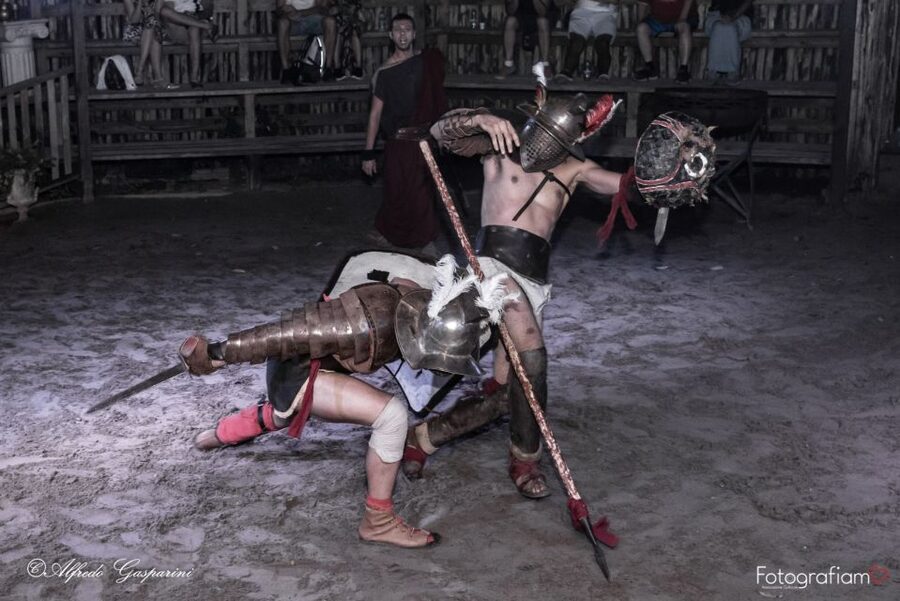
The performers use real weapons and armor, but the fights are staged. The action is quick and dramatic, and the presentation is intentionally broad. At times it may feel cheesy, especially during the comic sections, but that is part of the evening’s appeal. You are being invited to have fun with Roman spectacle, not to sit through a dry lesson.
The event begins at about 8:45 p.m. and finishes around 10 p.m. That timing gives you a useful option after a day of sightseeing, when you may want something social and light rather than another major church or museum.
More Museum Tours in Rome
- Vatican Museums, Sistine Chapel & St. Peter’s Basilica Tour
★ 4.3 · 73,970 reviews - Vatican Museums, Sistine Chapel & St Peter’s Basilica Guided Tour
★ 4.5 · 39,149 reviews - Rome: Vatican Museums, Sistine Chapel and Basilica Tour
★ 4.3 · 16,039 reviews
The museum visit and Roman welcome
The first part takes place around the small Museo storico-didattico del legionario romano, or historical and educational museum of the Roman legionary. Do not picture the Colosseum’s museum facilities or a large national collection. This is a compact display connected to the reenactment group, and its strength is the direct link between the objects and the performance that follows.
You can see gladiator weapons, armor, and Roman military items before watching them used in the arena. Some visitors have also been able to try on pieces of armor and handle the setting more directly. That hands-on quality is especially useful for children, who may understand the weight and shape of Roman equipment better by seeing it up close than by reading a label.
The welcome sets the tone. Roman music and incense help create an old-world atmosphere, while a presenter introduces the evening and explains what you are about to see. One description specifically praised the guide Dafydd for his energy and storytelling, though the presenter may vary by date.
You may also have time for photos with the cast. The performers are generally approachable before and after the show, and this gives the evening a friendly, informal feel. If you are visiting with children, this early contact can help them feel part of the event rather than intimidated by the armor and weapons.
The museum section can become crowded when the group is large. You may need to move through it quickly, and there is not always room to inspect every display at leisure. I would treat it as an introduction to the show, not as the main museum visit of your Rome trip.
Roman snacks, wine, and the armory
A small refreshment service is included before or around the performance. You can expect simple Roman-style snacks and a drink, with descriptions of wine served with honey, a combination associated with ancient Roman tastes.
This is not dinner. One useful detail to keep in mind is that the food is described as an appetizer, not a full meal. If you arrive hungry, eat beforehand or plan a meal elsewhere. The area around the venue does not offer many services within easy walking distance, so do not assume you can find a nearby restaurant after the show.
The included food adds value because it gives the evening a social beginning. Instead of walking straight into seats, you have a chance to look around, take photos, talk with the performers, and settle into the Roman theme. The drink and snacks are modest, but they fit the setting and help make the event feel like a full night out rather than a single staged fight.
The armory is another useful part of the visit. Seeing the equipment before the combat helps you notice the details later. You can understand why a shield, helmet, or particular sword changes the way a fighter moves, even if the presentation does not explore every weapon in technical detail.
The performance: dance, ritual, comedy, and combat
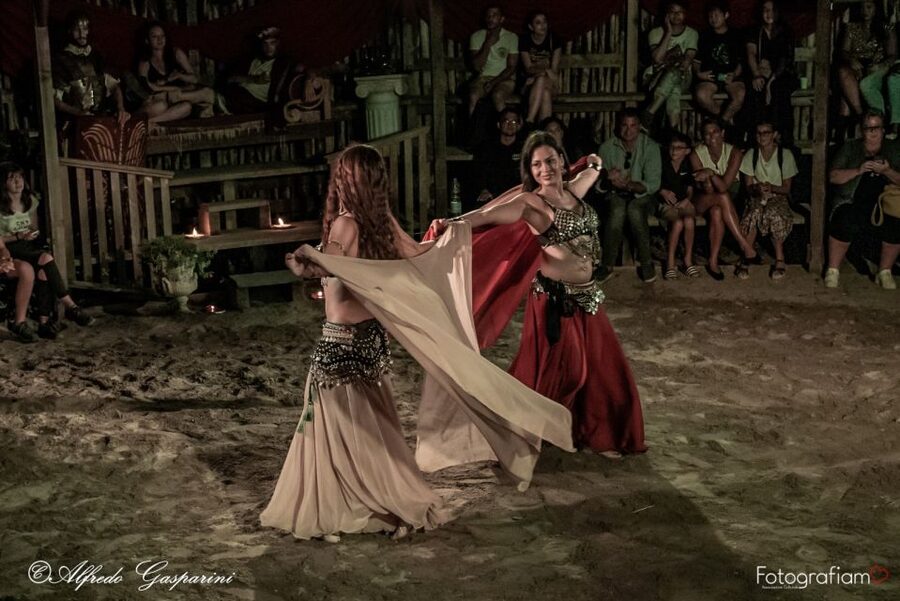
The show offers several types of entertainment. Ancient dances and Vestal rites bring a ceremonial side to the evening, while pantomime and comedy provide lighter moments between the fights. This variety is one of the strongest reasons to choose this experience instead of a simple staged battle.
The dances and rituals help show that Roman public life was not only about combat. Music, religion, ceremony, food, and performance all played a part in how ancient people gathered and entertained themselves. You will not receive a long academic explanation of each custom, but the visual scenes give you a broad sense of the world the organizers are trying to recreate.
The comedy can be deliberately over the top. That may work wonderfully for families and groups who want a relaxed night, while people looking for strict historical realism may find it a little silly. I would set your expectations accordingly: this is educational entertainment with a strong theatrical streak.
The gladiator fights are the main event. The performers wear convincing costumes and armor, and their fast swordplay can look forceful enough to make you wonder, for a moment, how much is staged. The use of real equipment adds weight and sound to the action, but you should remember that the performers are trained reenactors presenting a choreographed spectacle.
The presenter keeps the audience involved and explains or frames the action. That interaction appears to be a major part of the experience. You may be encouraged to respond, take part in a small activity, or join a scene. The result is less formal than a theater performance and more like a lively Roman-themed gathering.
A few more museum visits around Rome worth comparing
- Seville: Puro Flamenco Show with Optional Museum Ticket
★ 4.8 · 6,088 reviews - Istanbul: Hodjapasha Whirling Dervishes Show & Exhibition
★ 4.4 · 4,790 reviews - Authentic Flamenco Show Barcelona : Intimate Casa Sors Experience
★ 5.0 · 809 reviews - Istanbul Hodjapasha Whirling Dervishes Show & Exhibition
★ 4.0 · 503 reviews
Why the audience participation matters
Audience participation can be a strength or a weakness, depending on your personality. If you enjoy being called into the action, the evening feels much more memorable. If you prefer to watch quietly, the involvement may make you slightly uncomfortable.
The participation is not the entire show, so you can still enjoy the performance without wanting to go on stage. Photos with the cast, armor demonstrations, and group reactions are usually enough to make the evening feel personal. Children in particular may enjoy the chance to see the performers up close rather than only from a distance.
The cast’s attitude matters here. The event works best when the performers are enthusiastic and generous with their time. The available comments repeatedly point to friendly staff, cast members willing to answer questions, and help with photos and transportation after the performance.
That personal touch also helps if English is not your first language. The show relies heavily on gesture, movement, music, and visual action, so you do not need to follow every spoken explanation to understand the basic story.
Getting there and getting back after 10 p.m.
The meeting point is the Rome Gladiator School, identified with the Gruppo Storico Romano. It is about 3.5 kilometers from the Colosseum, but the distance should not be confused with central-city convenience.
Buses including routes 118 and 218 have been used to reach the area, with a walk of roughly five minutes from the stop. The exact service you can use depends on the date and time, so check the evening schedule before setting out.
The return trip deserves more attention. The show ends around 10 p.m., when some bus services may no longer be running. Several people have used taxis or arranged one through the organizers, and the staff may help call a taxi at the end. That assistance is useful, but I would still arrange your return plan before the lights go down.
Do not walk there from Termini unless you have checked the route carefully and are comfortable with a long journey. One account described an hour-long walk and limited sidewalks in places. A taxi or a well-planned bus connection is the more sensible choice for most visitors.
There are few nearby services, so combine the show with dinner earlier in the evening rather than expecting to eat afterward. You can arrive with enough time to find the entrance, look around, and enjoy the refreshments without rushing.
Is $29 good value?
At $29 per person, the experience offers a fair amount for an evening activity. You receive entry to the small museum, the full show, and included snacks and drinks. You also get roughly 90 minutes of organized entertainment, plus the chance to take photos and interact with the performers.
The value is strongest if you want variety. A fight alone might feel short, but the addition of dancing, rituals, comedy, museum displays, and audience participation gives the evening more shape. Families can also avoid paying for several separate activities to keep children interested.
The value is weaker if you expect a polished theater production or a major archaeological collection. This is a small-scale event, and the museum is limited. A large group may make that part feel crowded, while the show itself can be intentionally theatrical rather than historically exact in every detail.
I would compare it with the cost of a standard evening attraction in Rome. For a reasonable price, you get something different from the usual monuments, and it can be a welcome change after several days of churches, ruins, and formal museums.
Who will enjoy this most?
I would recommend the show to families, first-time visitors who want a playful introduction to Roman life, and adults who enjoy live performance with a little audience involvement. It also suits solo visitors because the cast and presenter create a social atmosphere rather than leaving you to observe quietly.
Children can follow the action even if they do not understand every explanation. The weapons, armor, movement, costumes, and comedy provide plenty to watch. Some scenes may look intense, so parents should decide if staged combat is suitable for their children.
History fans may enjoy the chance to see equipment and customs presented in action, but should keep the academic limits in mind. The show gives you atmosphere and broad context rather than a detailed study of gladiator training, social class, or the daily operation of the Colosseum.
The activity is wheelchair accessible, which is an important practical benefit. Still, because the event involves a compact museum and an arena setting, you may want to confirm the exact seating and route details when booking.
The show runs from May through September, so it is mainly a warm-season option. If you are visiting Rome outside those months, you will need another evening plan.
Small details that improve the evening
Arrive ready to take part. You do not need to volunteer for every activity, but the event is more enjoyable when you respond to the presenter and treat it as live entertainment.
Wear shoes suitable for moving around an arena and museum area. The available information does not specify the full surface or seating arrangement, so practical footwear is a safe choice.
Eat a proper meal beforehand if you need one. The refreshments are a pleasant extra, but they are not intended to replace dinner.
Keep some time after the show for the journey home. If you are staying in central Rome, booking a taxi or asking the organizers for help can save you a frustrating wait at a quiet bus stop.
Bring a camera, since photos with the costumed cast and the armor displays are part of the fun. The performers welcome photos, and the setting is built for memorable family pictures.
Should you book the gladiator evening?
Book it if you want a lively, unusual Rome night that combines Roman costume, combat, ritual, food, and comedy. At $29, it is a sensible choice for families and for anyone who wants a break from formal sightseeing.
Skip it if you want a quiet museum, a serious lecture, or an event directly beside the Colosseum. The venue is a little isolated, the museum is small, and the comedy can feel cheesy. But if you arrive expecting a friendly reenactment rather than a perfect archaeological reconstruction, the mix of action and audience involvement makes this a strong-value evening.
Reserve with the transport plan in mind. Free cancellation is available up to 24 hours before the activity, and you can reserve now and pay later, which helps if your Rome schedule is still changing.
FAQ
How long does the Rome Gladiator Show and Museum experience last?
The full event lasts about one and a half hours. Entry is listed at 8:45 p.m., and the show finishes at around 10 p.m.
Where does the gladiator show take place?
It takes place at the Rome Gladiator School, the headquarters of the Gruppo Storico Romano, in an equipped arena about 3.5 kilometers from the Colosseum.
What is included in the ticket?
The ticket includes the museum visit and the gladiator show. Snacks and drinks are also described as part of the evening experience.
Is this a real gladiator fight?
No. The performers are historical reenactors presenting staged combat. They use real weapons and armor, but the fights are performed as part of a theatrical show.
Does the experience run all year?
No. Shows take place from May through September, including the listed 2026 dates.
Is the activity wheelchair accessible?
Yes. The activity is listed as wheelchair accessible.
Just added around Rome
- Vatican City: Sistine Chapel, Museums, Basilica Private Tour★ 4.8 · 158 reviews
- Rome: Hop-on Hop-off Bus & Vatican Museums Ticket★ 3.5 · 41 reviews
- Rome: Vatican Museums, Sistine Chapel, and St. Peter’s Tour★ 4.5 · 49 reviews
- Skip-The-Ticket Line-Vatican Museum & Sistine Chapel★ 3.9 · 383 reviews
- Skip the line Vatican Museum Sistine & St.Peter Private Tour★ 4.7 · 40 reviews
- Skip-the-Line Vatican Museums and Sistine Chapel Guided Tour★ 4.3 · 130 reviews
- Skip-the-Line Tickets: Vatican Museum and Sistine Chapel★ 3.5 · 114 reviews
- MAXXI – Museum of Contemporary Art of 21st century★ 4.0 · 91 reviews
Museum Tours in Rome, compared.
Vatican Museums, Sistine Chapel & St. Peter’s Basilica Tour
Read our review →
Vatican Museums, Sistine Chapel & St Peter’s Basilica Guided Tour
Read our review →
Vatican Museums, Sistine Chapel and Basilica Tour
Read our review →
Vatican Museums & Sistine Chapel Skip-the-Line Entry Ticket
Read our review →
Vatican Museums, Sistine Chapel & Basilica Tour
Read our review →
Vatican Museums & Sistine Chapel Guided Tour
Read our review →
Vatican Museums & Sistine Chapel Skip-the-Ticket-Line Tour
Read our review →
Vatican Museums, Sistine Chapel and St. Peter’s Basilica Tour
Read our review →Browse the lists this tour appears in