
Review · CHICAGO
Field Museum of Natural History Admission Tickets
SUE, the Field Museum’s famous T. Rex, is the star here, but she is only the beginning. The museum takes you from Ice Age mammoth hunters to Egyptian mummies, Inca temples, Chinese jade, giant sloths, and live reptiles under one grand roof.
I like the freedom to set your own pace, and I like the free daily docent tours that add useful context without another charge. The biggest drawback is size: four hours gives you a good visit, but not enough time for every hall, screen, and special exhibit.
- SUE the T. Rex: See the largest and most complete T. Rex fossil ever discovered.
- 13,000 years of human history: Travel from Ice Age hunters to the Incas and Aztecs.
- Egyptian mummies: Visit a display with 23 mummies and 5,000-year-old hieroglyphics.
- A museum for mixed interests: Dinosaurs, animals, gems, jade, cultures, and hands-on exhibits share the building.
- Useful rainy-day plan: The indoor museum works well in Chicago’s cold, wet, or very hot weather.
- Extra exhibits cost more: General admission includes ticketed exhibits, but 3D films and some upgraded installations require an additional fee.
Why SUE deserves the first look

The Field Museum sits on Chicago’s Museum Campus, with Lake Michigan on one side and the downtown skyline behind you. Take a moment outside before entering. That view gives the visit a distinctly Chicago setting, rather than making the museum feel like an isolated indoor attraction.
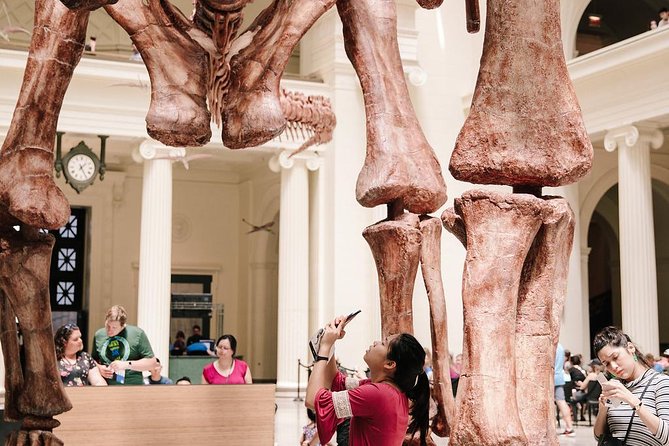
Inside, head toward SUE early if dinosaurs are your main reason for coming. SUE is the largest and most complete T. Rex skeleton ever discovered, with the bones arranged so you can grasp the scale of the animal. The fossil was found in 1978 and later reconstructed in full, giving the dinosaur a powerful presence rather than the feel of a few scattered bones in a case.
I like this as an opening stop because it gives children and adults an immediate anchor. You can see the whole skeleton first, then spend more time with the details and nearby dinosaur displays. If you arrive later in the day, the museum still works, but you may need to choose carefully because the building is much larger than a quick dinosaur stop suggests.
The Dinosaur Hall turns fossils into a story
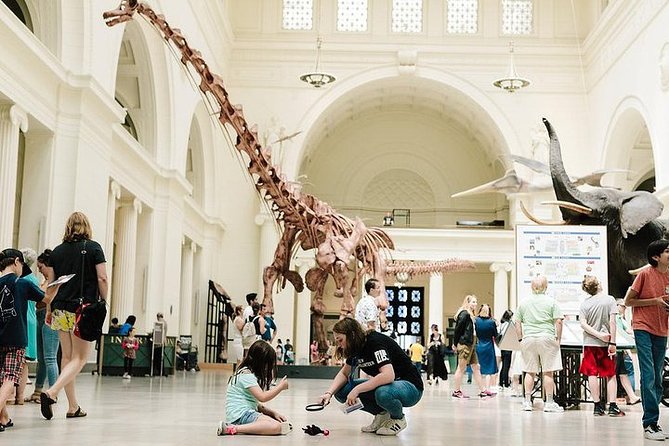
The renovated Dinosaur Hall, Evolving Planet, brings together dinosaurs, woolly mammoths, and giant sloths. That mix helps you see ancient life as a long sequence of change, rather than a single room devoted only to T. Rex.
You can expect plenty of bones and skeletons, but the appeal comes from the timeline and the variety. A child who comes for SUE may pause at a mammoth. An adult interested in natural history may spend more time comparing animal forms and reading the displays.
Interactive screens provide short explanations and allow you to explore more detail. You do not need to read every panel to enjoy the hall, but the extra information is there if you want a slower, more thoughtful visit.
The museum’s size is the main issue. You can spend three hours and cover only two of the three floors, especially if you stop often. Wear comfortable shoes. The walking is not difficult, but the amount of it can catch you off guard.
More Museum Tours in Chicago
- Medieval Torture Museum Ticket with Audio Guide and Ghost Hunting
★ 5.0 · 962 reviews - Chicago: Field Museum of Natural History Ticket or VIP Tour
★ 4.7 · 717 reviews - Museum of Ice Cream Chicago Admission Ticket
★ 3.5 · 396 reviews
Ancient Egypt offers more than a mummy display
Inside Ancient Egypt is one of the museum’s most memorable cultural history sections. You will see 23 Egyptian mummies, along with hieroglyphics that are about 5,000 years old.
The value here is the chance to connect human lives with objects, writing, burial customs, and belief. The mummies draw the eye, but the surrounding displays help explain the society that created them. If you are visiting with children, this area can spark plenty of questions. If you prefer natural history, it gives the museum a welcome change of pace from animal skeletons and fossils.
I recommend allowing time for both the headline objects and the smaller artifacts. The Field Museum is at its best when you stop treating it as a checklist. One room may hold a famous specimen, while the next explains the people and ideas behind it.
Ancient Americas links mammoth hunters to empires
The Ancient Americas galleries cover 13,000 years, beginning with Ice Age mammoth hunters and continuing to the temple builders of the Incas and Aztecs.
This long timeline gives you a useful sense of scale. Instead of seeing the Incas and Aztecs as isolated subjects, you can follow major changes in human life across thousands of years. The displays include artifacts from different cultures and periods, so you can compare how people built, worked, worshipped, and organized their communities.
This section suits anyone who wants more than dinosaurs. It also makes a good second choice after SUE, since it changes the subject from prehistoric animals to human achievement.
You might find the amount of material demanding if you try to read everything. I suggest picking a few objects that catch your attention, then using the display text and touch screens to go further. That approach keeps the visit lively without turning it into a school assignment.
Chinese jade and precious stones add color and detail

The Hall of Jades contains one of the largest collections of Chinese jade in North America. Nearby, the Grainger Hall of precious stones offers a close look at minerals, jewelry, and natural forms.
These rooms provide a quiet contrast to the dinosaur halls. You are looking at small objects and fine workmanship instead of giant skeletons. The jade displays are especially useful for showing how a material can carry artistic, cultural, and practical meaning.
The precious stone hall works well for families because the objects are visually immediate. You do not need a specialist background to appreciate unusual colors, shapes, and craftsmanship. It also gives adults a slower stop after the more crowded dinosaur displays.
Some parts of the collection may feel less dramatic than SUE or the mummies. That is not a flaw, but it does mean your enjoyment depends on whether you like close-looking and object detail. Give these halls a few minutes rather than rushing past them.
More natural history museums in the USA:
- New York City: American Museum of Natural History Ticket
★ 4.5 · 15,447 reviews - American Museum of Natural History Admission Ticket
★ 4.0 · 1,931 reviews - Los Angeles: Natural History Museum of LA Entry Ticket
★ 4.7 · 457 reviews - Smithsonian Museum of Natural History – Exclusive Guided Tour
★ 5.0 · 446 reviews
Underground Adventure changes your point of view
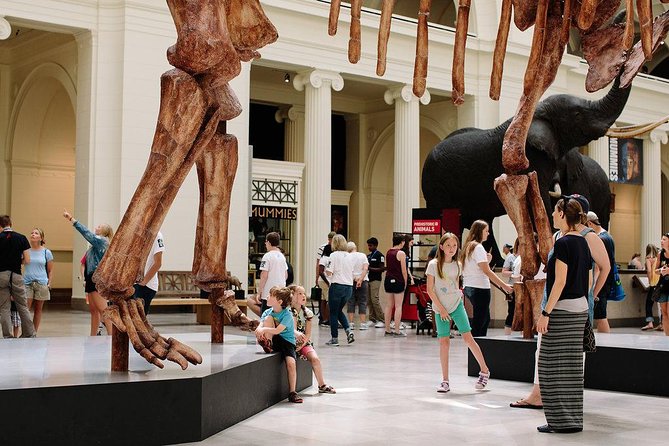
Underground Adventure presents a playful idea: you become one hundredth of your natural size and explore a subterranean world.
This exhibit is a useful break from standard cases and labels. The scale shift helps younger visitors understand that the ground beneath our feet is full of life and activity. It is also one of the museum’s more unusual stops, so I would include it if you are visiting with a child or want something less traditional.
The hands-on and interactive parts help keep the visit moving. You should not expect the same type of display as the Egyptian or dinosaur halls. Instead, think of it as a change in scale and mood, with the underground setting providing the central idea.
Animal displays bring a different kind of realism

The Field Museum includes animal specimens from around the world, including the famous Tsavo lions. Skeletons and preserved animals let you study body structure in a way that is difficult to see in a zoo.
The lion displays can be a strong stop for anyone interested in wildlife. Other animal halls help you compare size, posture, teeth, and bone structure across species. A live reptile exhibit adds movement to an otherwise fossil and specimen-heavy museum.
This style of presentation is not for everyone. If you prefer interactive science centers, some cases of preserved animals may feel old-fashioned. If you enjoy natural history, the displays offer a direct look at anatomy and adaptation.
Plan four hours, but do not force the whole building

The listed visit length is about four hours, and that is a sensible target for a first visit. You can see major highlights in that time, especially if you decide in advance which halls matter most.
You will not see everything at a relaxed pace in four hours. The museum has more than 35 exhibitions, three floors, dining facilities, two 3D theaters, and special installations. Some people can spend most of a day here and still leave areas for another visit.
I would choose three priorities:
- SUE and Evolving Planet
- Ancient Egypt
- Ancient Americas, the Hall of Jades, or Underground Adventure
Then add the precious stones, animal displays, and any special exhibit that matches your interests. This plan keeps you from spending all your energy in the first two rooms.
Free docent-led tours run daily and are included with admission. I like this option because a docent can help you notice details you might otherwise miss. Check the schedule after you enter, then fit a tour into your route if the subject interests you.
What the $29 admission includes
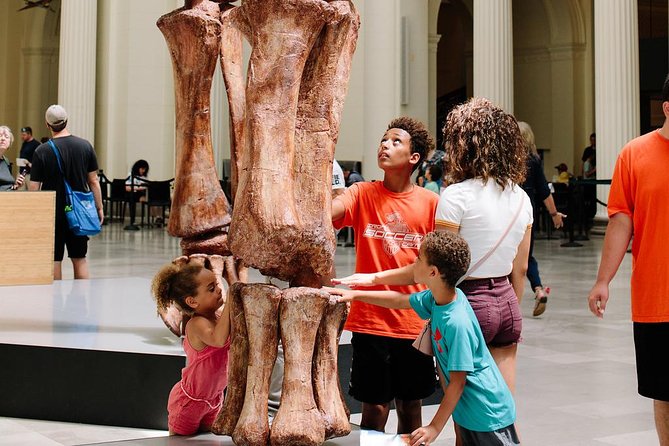
At $29 per person, the ticket is reasonable if you plan to spend several hours in the museum. You are paying for general admission to a very large collection, access to ticketed exhibits included with the admission, and the option to join free docent tours.
The value improves for families or anyone who enjoys several subjects. One person can focus on dinosaurs, another can spend time with Egyptian artifacts or jade, and children can use the interactive exhibits. You are not limited to a single themed attraction.
The price feels less attractive if you only want to see SUE and leave. In that case, the museum’s scale works against you. The ticket makes more sense when you use the building as a half-day or full-day indoor plan.
Special installations may require an upgraded ticket. A family visit that includes an exhibit such as After the Dinosaurs can cost more, but the added content may be worthwhile if you want extra detail and a stronger focus on one subject. The two 3D theaters also cost extra and depend on availability.
Practical timing, tickets, and comfort
The museum is open from 9 a.m. to 5 p.m. General admission ends at 4 p.m., while the final admission to special exhibitions is at 3:30 p.m. Arrive earlier if you want a 3D film, since reserving a time between 9 a.m. and noon is recommended.
Booking ahead guarantees your admission and can make your day easier, especially when you have a fixed Chicago schedule. Keep your confirmation number available. If an email fails to arrive, the museum can look up the ticket by confirmation number, but it is better not to rely on that rescue.
Museum maps are available in English, Spanish, French, German, Italian, Mandarin Chinese, Japanese, Korean, Polish, and Portuguese. Service animals are allowed, and the museum is near public transportation. Most people can participate, though the sheer amount of walking makes comfortable shoes a smart choice.
Food and drinks are not included. Dining facilities are available, but plan your meal budget separately. Restrooms are well located, which matters during a long family visit.
Who will enjoy the Field Museum most
I would recommend this experience to families, students, dinosaur fans, nature lovers, and anyone who likes museums with several subjects under one roof. It is also a strong choice for a wet, cold, or very hot Chicago day.
You will get the most from it if you enjoy setting your own route. There is no single short path that covers the best of the museum. Instead, you choose between prehistoric life, ancient cultures, animals, stones, interactive exhibits, and special installations.
The museum may not suit you if you want a small, quick attraction or prefer modern science demonstrations. Some displays focus on preserved specimens and artifacts behind glass. That style can feel quiet and traditional compared with Chicago’s more hands-on science museums.
Should you book this Field Museum ticket?
Book it if you want a flexible half-day at one of Chicago’s major museums, especially if SUE, ancient cultures, or natural history appeal to you. The $29 price is fair when you stay three to five hours and use the included exhibitions and free docent tours.
Plan your priorities before arriving, wear walking shoes, and arrive early if you want a 3D film or special exhibit. Skip it only if you have little interest in fossils, artifacts, animals, or cultural history. For everyone else, the Field Museum offers enough variety to make the admission worthwhile, with SUE providing the unforgettable first stop.
FAQ
How long should I plan to spend at the Field Museum?
Plan for about four hours, though you can stay longer. The museum is large, and seeing all three floors and every exhibition may require more than one day.
What is included with the admission ticket?
Admission to the Field Museum and its ticketed exhibits is included. Free daily docent-led tours are also included.
Is SUE the T. Rex included?
Yes. SUE, described as the largest and most complete T. Rex fossil ever discovered, is part of the Field Museum visit.
Do 3D movies cost extra?
Yes. The 3D movies are not included in the admission price, cost extra, and depend on availability. Arriving between 9 a.m. and noon is recommended if you want to reserve a time.
What are the museum’s opening hours?
The museum is open from 9 a.m. to 5 p.m. Last admission to special exhibitions is at 3:30 p.m., and last general admission is at 4 p.m.
Are food and drinks included?
No. Food and drinks are not included, though the museum has dining facilities.
Are maps available in languages other than English?
Yes. Maps are available in Spanish, French, German, Italian, Mandarin Chinese, Japanese, Korean, Polish, and Portuguese, as well as English.
Can I cancel the ticket for a refund?
You can cancel for a full refund up to 24 hours before the experience start time. Cancellations or changes made within 24 hours are not refunded or accepted.
More Historical Tours in the USA
- Guided African American History Tour with Reserved Museum Entry
★ 4.5 · 1,180 reviews - African American History Tour with Museum of African American History Ticket
★ 4.5 · 390 reviews - Washington, DC: African American History Tour & Museum Entry
★ 4.9 · 312 reviews - Smithsonian National Museum of Natural History Guided Tour
★ 4.1 · 159 reviews
Just added around the USA
- Museum of Ice Cream Austin★ 3.5 · 85 reviews
- Admission to Richard Nixon Presidential Library and Museum Ticket★ 5.0 · 123 reviews
- The Turquoise Museum Curator’s Tour★ 5.0 · 12 reviews
- Turquoise Museum Visit★ 4.5 · 194 reviews
- Orlando: Titanic Artifact Exhibition Ticket★ 4.5 · 246 reviews
- The St. Augustine Old Jail Museum Guided Tour★ 4.6 · 68 reviews
- San Diego: San Diego Natural History Museum Ticket★ 4.7 · 33 reviews
- The Museum of Fine Arts, Houston Entry Ticket★ 4.6 · 82 reviews
Museum Tours in Chicago, compared.

Medieval Torture Museum Ticket with Audio Guide and Ghost Hunting
Read our review →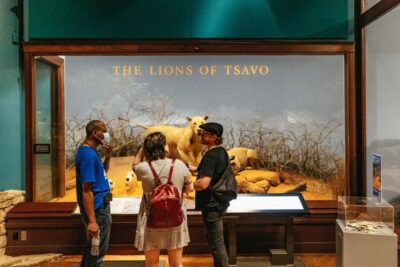
Field Museum of Natural History Ticket or VIP Tour
Read our review →





American Writers Museum Flexible Date Entry Ticket
Read our review →Browse the lists this tour appears in