
Review · SPAIN
Private Guided Visit to the Alicante Bullring and Museum
Alicante’s bullring reveals far more than the arena you see from the street. This private visit takes you through the main gate, seating areas, chapel, bullpens, museum displays, and behind-the-scenes rooms, with a guide explaining the customs, families, art, and daily life tied to bullfighting. The chance to step into the center of the arena gives the tour its strongest moment.
I like the private format because you can stop and ask questions instead of following a fixed group script. I also like the mix of old posters, paintings, sculptures, costumes, videos, and virtual games, which gives the visit more range than a simple building tour. The main consideration is the subject itself: if bullfighting makes you uncomfortable, the displays and videos may not suit you.
Key points at a glance
- Private access to the bullring: Your group visits with its own guide and can enter areas not included in a standard look around.
- A 90-minute route: The visit covers the arena, seating areas, chapel, bullpens, museum rooms, and other working spaces.
- Personal guides make the difference: Guides such as Veronica, Julia, Joel, and Maria explain traditions, local stories, and the people connected with the ring.
- More than old photographs: Expect paintings, sculptures, posters, costumes, videos, and interactive virtual displays.
- Hands-on finishing touches: You may practice with the same style of capes used by matadors or pose in the middle of the arena.
- Good value for a private visit: At $36.14 per person, the price is easier to justify when you want time for questions and access to private areas.
What makes Alicante’s bullring worth seeing
A bullring can look like a simple circular stadium from outside. Inside, it is a place of ceremony, performance, faith, family tradition, and careful preparation. This visit gives you the chance to see those layers in one compact stop.
The Alicante bullring, at Plaça d’Espanya, 7, is visited as both an active cultural site and a museum. You do not simply walk into the seating area, take a photograph, and leave. The guide leads you through parts of the building that explain how the event is prepared and how the people involved use the space.
The private setup matters here. A public group tour often has to keep moving, but your guide can pause when you want to ask about a costume, a poster, a religious ritual, or a room that catches your eye. Guides named Veronica, Julia, Joel, and Maria have all been praised for bringing personal stories and clear explanations to the visit.
More private museum tours in Spain:
- Bilbao: Private & Exclusive Guggenheim Museum Guided Tour
★ 4.8 · 296 reviews - Madrid: Prado Museum 3-Hour Private Tour
★ 5.0 · 129 reviews - Madrid: Private Prado Museum Masterpieces Tour
★ 4.8 · 75 reviews
Entering through the main gate and seating areas
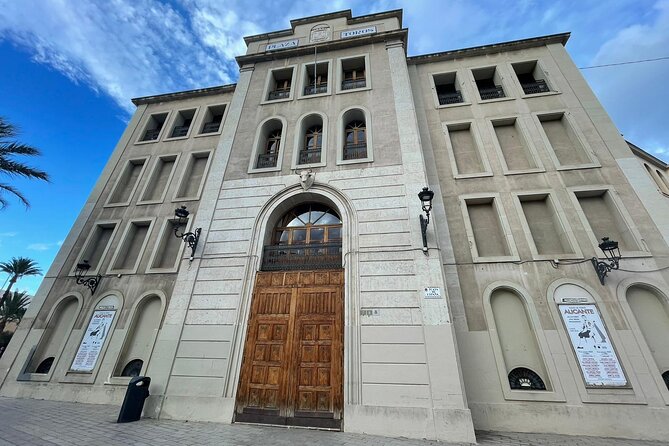
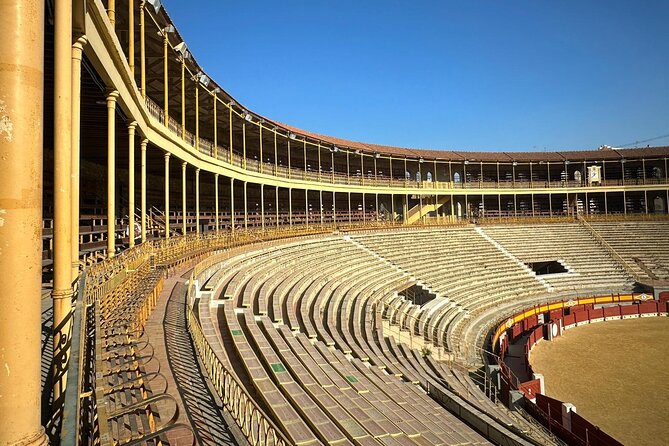
The tour begins at the main entrance, where the building’s public face gives way to its working interior. From there, you visit the tendidos, the seating sections around the arena. This is a useful place to understand how the building is arranged and how different parts of the audience relate to the action below.
Your guide explains the terms, customs, and role of the ring as you move around it. That context helps if you know little about bullfighting. You do not need a background in Spanish traditions to follow the visit, since the guide’s role is to explain both the obvious features and the details you might otherwise miss.
The seating areas also help you see the bullring as a social space. The building is not only about the contest in the sand. It includes ceremony, public display, family connections, and strict traditions that have developed over time.
Standing in the arena
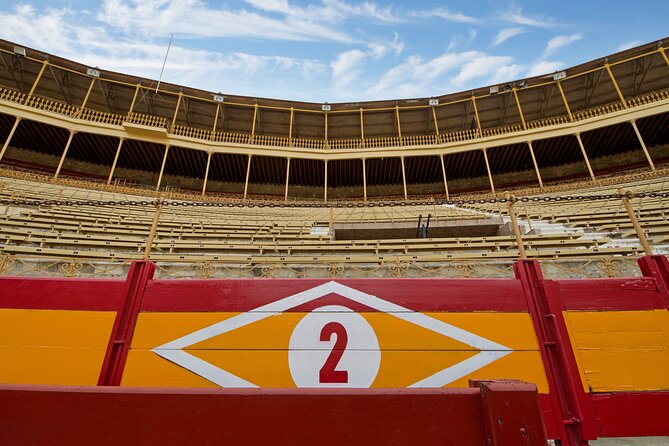
The arena is the emotional center of the visit. You can step down from the audience area and see the ring from the ground, an angle that changes the scale of the whole building. One memorable option is simply to stand in the middle and look up at the surrounding seats.
The visit also gives you a chance to handle or practice with capes of the type used by matadors. This is a playful part of the tour, but it also helps you understand the movement and control involved in the performance. You can take the activity seriously or just enjoy a theatrical moment for the camera.
I would allow a few minutes here rather than rushing through. The arena is one of the places where the private format pays off, since you can ask questions and take in the space without feeling pushed along by a large crowd.
The chapel, altar, and private rooms
The chapel adds a more solemn side to the building. Participants traditionally pray before entering the arena, and the altar helps explain the religious customs connected with the event. You may find this section especially useful if you want to understand bullfighting as a ritual rather than only a sport or show.
The route can also include private boxes and other spaces behind the public seating. These areas show how the bullring works beyond the central ring. The private boxes, in particular, help you picture the social side of an event, where location and tradition matter as much as the view.
One of the more unusual rooms is the old surgical theatre. Its presence makes clear that bullfighting has always involved real physical risk. The guide can connect this room to the practical concerns of the people who took part, giving the building a human dimension that photographs alone cannot provide.
A few more museum visits around Spain worth comparing
- Barcelona: Picasso Museum Skip-the-Line Guided Tour
★ 4.5 · 3,355 reviews - Madrid: Prado Museum Guided Tour with Skip-the-Line Ticket
★ 4.5 · 2,018 reviews - Madrid: Prado Museum Guided Tour With Fast Access
★ 4.8 · 1,785 reviews - Royal Palace & Prado Museum Skip the Line Guided Tour
★ 4.5 · 1,347 reviews
Bullpens and the working side of the ring
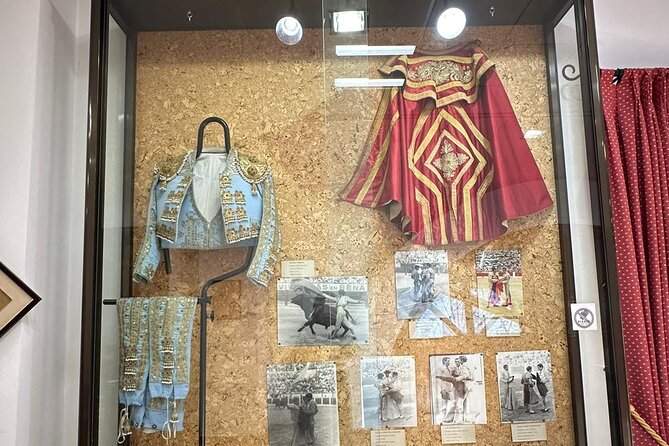
The bullpens are among the areas you would not normally see by simply attending an event. This is where the building’s behind-the-scenes function becomes easier to understand. The guide explains the route through the working parts of the ring and the role these spaces play before the action reaches the arena.
The tour also touches on the families and houses involved in raising prize bulls. That subject may appeal to anyone interested in horse racing, livestock, rural customs, or traditional Spanish land management. You are not only learning about the matador. You are learning about the wider system of people, animals, land, and long-standing practice behind the spectacle.
Some details are likely to interest visitors who enjoy folklore. Stories about local traditions, family links, and superstition give the tour a personal quality. Ask questions here, since the private format allows the guide to spend more time on the subjects that catch your attention.
Museum displays: costumes, posters, and art
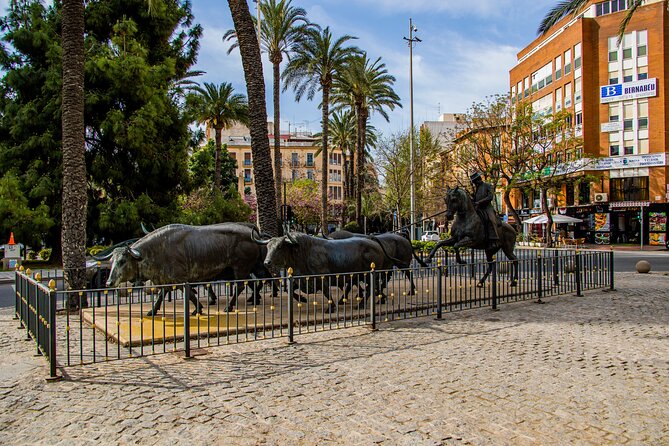
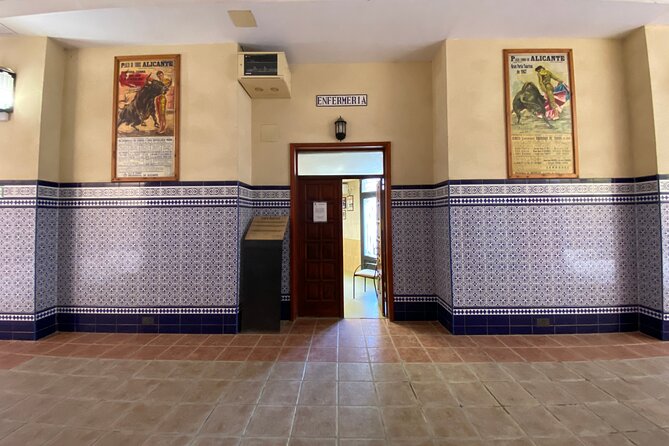
The museum section broadens the visit beyond the building itself. You see historic costumes, photographs, posters, paintings, and sculptures connected with bullfighting. The clothing is especially striking, since the formal outfits are highly decorative and carry strong visual links to the performers who wore them.
Old posters help place the bullring in its public setting. They show how events were promoted and how famous matadors became part of popular culture. Paintings and sculptures give you another way to read the subject, through the artistic styles used to represent movement, danger, ceremony, and the animals in the ring.
This is also where a good guide can make a real difference. Without explanation, a collection of costumes and posters can feel like a series of attractive objects. With context, you can understand who the figures were, what the clothing signified, and why certain scenes appear again and again in Spanish art.
Joel has been especially praised for explaining the displays with energy and clear communication. Maria has also been noted for making the history, customs, and families connected with the ring easy to follow. Guides can vary, but the private arrangement gives you a direct person to ask when a display raises a question.
Videos and virtual activities
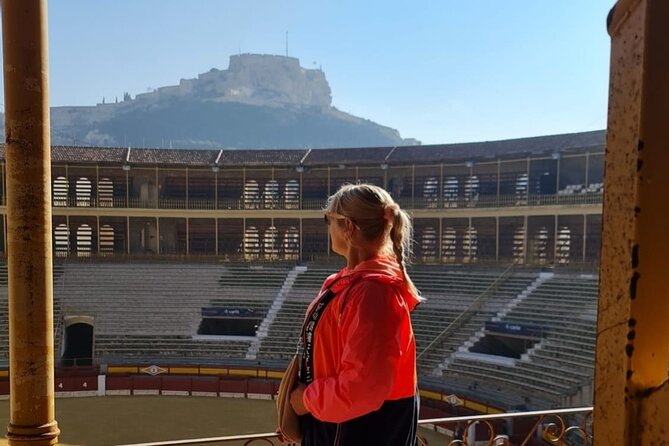
The tour includes videos and virtual games, which give the visit a more modern finish. These features are useful if you are new to bullfighting because they show movement and atmosphere in ways that static objects cannot.
Virtual reality displays can provide a fly-by view of the bullring, helping you see the building from a different position. The videos may include actual fights, so consider your comfort level before booking. The subject is presented as part of the site’s cultural story, but it is not sanitized into a purely decorative museum visit.
The interactive elements also help families and younger visitors stay involved. They break up the historical explanation and offer something to do after the more formal rooms. Still, I would treat them as an addition rather than the main reason to book. The chapel, arena, bullpens, and guide-led storytelling carry most of the value.
How the private format changes the experience
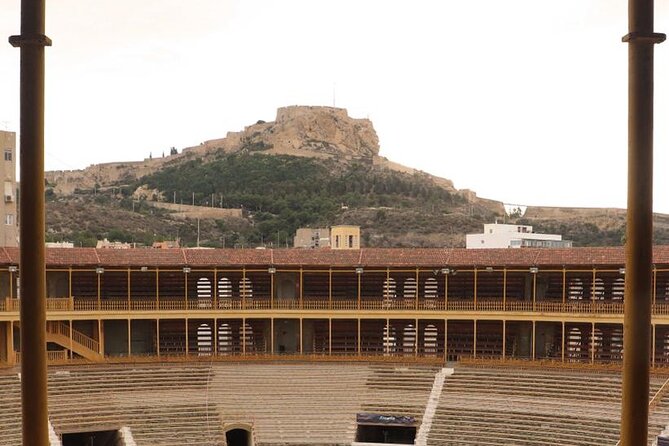
A private tour means only your group takes part. That is important in a building with many small details and unfamiliar terms. You can ask a basic question without holding up a large group, and you can spend longer with the sections that interest you.
The guides work in several languages, including English, Spanish, French, and Polish. The experience is offered in English, so confirm your preferred language when booking if your group needs another option.
The private format is also useful for mixed-interest groups. Someone fascinated by architecture can ask about the original tiles and layout. Another person can focus on costumes, local folklore, or the lives of matadors. A third might care most about the practical work in the bullpens and surgical theatre.
There is a small trade-off. A private tour depends more on the quality and style of the guide on the day. Names associated with the visit include Veronica, Julia, Joel, and Maria, and each has been praised for warm, personal explanations. The exact guide is not guaranteed in the details provided, so book for the access and format rather than for one specific person.
Price, timing, and practical value
The listed price is $36.14 per person, with group discounts available. For a 90-minute private visit, that is not the cheapest museum stop in Alicante, but it offers more than a basic admission ticket. You are paying for a guide, access to areas normally closed to casual sightseers, and time to ask questions.
I consider the price fair if you have a real interest in Spanish customs, architecture, museum displays, or the social history of bullfighting. It is less compelling if you only want a quick photograph from the outside. The tour is short enough to fit into a wider day in Alicante, while still covering a good number of rooms and subjects.
The activity starts and ends at Plaça de Bous d’Alacant, Plaça d’Espanya, 7, in central Alicante. It is near public transportation, and most people can take part. Service animals are allowed. You receive a mobile ticket, and booking confirmation is provided at the time of booking.
The tour is often reserved about 32 days ahead, which suggests that you should not leave it until the last moment if your Alicante dates are fixed. Free cancellation is available up to 24 hours before the start time. Changes or cancellations made inside that window are not refunded.
Who should book this Alicante experience
I would recommend the tour to you if you want a guided look at a major part of Spanish culture but do not plan to attend a bullfight. It offers access to the building, its rituals, and its art without requiring you to buy a ticket for an event.
It also suits visitors who prefer a personal guide to a self-guided museum. The terms and traditions can be unfamiliar, and the best parts of the visit are often the small explanations about families, superstition, preparation, and local customs.
The tour can work well for couples, families, and small groups. The virtual activities and cape practice add a light touch, while the chapel, surgical theatre, and bullpens provide more serious historical and practical detail.
I would think twice if you strongly dislike bullfighting imagery or do not want to see videos of actual fights. The tour does not hide the subject. It presents the art and tradition around it, but the animal and human risks remain part of the story.
Should you book the private bullring visit?
Book it if you want access behind the public seating, a guide who can answer personal questions, and a compact introduction to Alicante’s bullfighting culture. The arena, chapel, bullpens, costumes, old posters, and virtual displays give the 90 minutes a good range.
Skip it if your main aim is a general city walk or if you are looking only for free sights. At $36.14 per person, the tour makes the most sense when you value personal interpretation and rooms you cannot see on a casual visit.
For many people, the strongest reason to go is simple: you get to stand in the arena and then learn what happens around it. That combination of place, story, and hands-on activity gives you a clearer understanding of Alicante than a quick photograph ever could.
FAQ
How long does the private bullring tour last?
The visit lasts approximately 1 hour and 30 minutes.
Where does the tour start and end?
It starts at Plaça de Bous d’Alacant, Plaça d’Espanya, 7, 03004 Alacant, Alicante, Spain. The activity ends back at the same meeting point.
Is the tour private?
Yes. Only your group takes part in the private activity.
Is the tour offered in English?
Yes. The experience is offered in English. Private guides may also be available in Spanish, French, and Polish.
What does the visit include?
The route includes the main gate, seating areas, arena, chapel, bullpens, and other restricted areas. You also see paintings, sculptures, old posters, costumes, and other bullfighting displays, with videos and virtual games included.
Can I cancel for a full refund?
Yes. You can cancel at least 24 hours before the local start time for a full refund. Cancellations or changes made less than 24 hours before the start time are not refunded.
Just added around Spain
- Girona, Figueres, Dalí Museum and Cadaqués Tour from Barcelona★ 4.5 · 36 reviews
- Football Club Barcelona Museum Immersive Tour Guided Visit★ 3.5 · 52 reviews
- Erotic Museum Admission Ticket with Audioguide★ 5.0 · 527 reviews
- Dali Museum and Costa Brava Small Group Day Trip from Barcelona★ 5.0 · 77 reviews
- Madrid by High-Speed Train with Prado Museum Private Tour★ 4.0 · 33 reviews
- Guitar Legends Hall: Entrance to the Immersive Rock Museum★ 5.0 · 25 reviews
- White Rabbit Museum: The Best Immersive Experience in Catalonia★ 5.0 · 538 reviews
- Private Dali Museum, Besalú & Girona Tour from Barcelona★ 5.0 · 15 reviews
Museum Tours in Spain, compared.
Park Güell and Gaudí House Museum Entry Ticket
Read our review →
Puro Flamenco Show with Optional Museum Ticket
Read our review →
Moco Museum Barcelona: Modern & Contemporary Art
Read our review →
Girona & Dali Museum Small Group Tour with Pick-up from Barcelona
Read our review →
Valencia: Oceanogràfic, Hemisfèric & Science Museum Combo
Read our review →Browse the lists this tour appears in