
Review · FRANCE
Ticket to Musée National du Sport
The Musée National du Sport turns sporting achievement into a story about people, effort, rivalry, teamwork, and risk. Its collection covers far more than trophies, with displays arranged around four challenges: personal sports, one-on-one contests, team games, and feats that push beyond normal limits. You can also see the museum’s full collection of Olympic torches, a strong reason to visit for anyone interested in the Games.
I like the freedom of the self-guided format, since you can move at your own speed and pause at the objects that catch your eye. I also like the broad range of sports, from cycling and swimming to boxing, rugby, solo sailing, and extreme climbing. The main drawback is that this is not a guided tour, so visitors looking for a detailed explanation of every object will need to read the displays themselves. One recent visit also found the stadium tour and early closing time disappointing, so check the day’s hours and plan your time carefully.
Key points to know
- Four clear themes: Follow personal challenge, one-on-one challenge, collective challenge, and challenges beyond the limits.
- Olympic torches: The museum displays all the Olympic torches, making this one of the most distinctive parts of the visit.
- A large sports collection: The museum holds one of the world’s largest collections devoted to sport and society.
- Good value for families: Admission is about $9 per person, and children under 18 qualify for free admission under the stated rules.
- Flexible pacing: Your ticket is valid for one day, so you can take your time rather than rush through the displays.
- Accessible visit: The museum is wheelchair accessible and has been described as suitable for children and people with limited mobility.
Why the Musée National du Sport is more than a trophy room
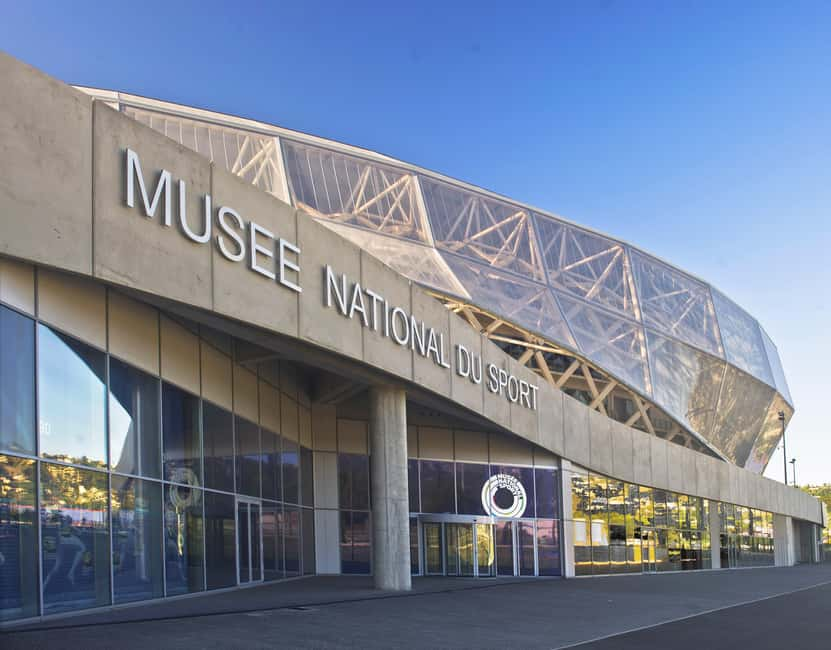
Sport museums can sometimes feel like long rows of medals and old shirts. This one takes a broader view. The Musée National du Sport presents sport as part of everyday life and public culture, showing how competition shapes memories, identities, and ideas about achievement.
The main route is built around the word challenge. That gives the museum a simple structure, even when the collection itself covers many eras and activities. You move from the challenge of improving your own performance to the pressure of facing another person, then to the demands of working in a team. The final section looks at people who test physical and mental limits in dangerous or unusual settings.
I find this approach useful because you do not need to be a specialist in sport to follow the visit. You can enter through the sport you already like, then make connections to activities you know less about. A football fan may spend time in the collective section, while a cyclist or skier may prefer the personal challenge displays.
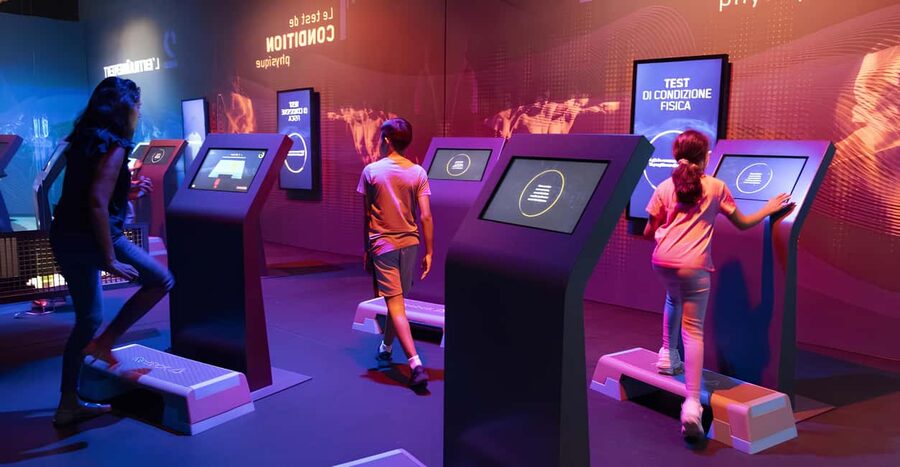
The collection can also work for children. Some objects may feel abstract if you expect only famous jerseys and equipment, but the themes give younger visitors a way to understand what they are seeing. The interactive presentation and visual displays help keep the visit from becoming a silent catalogue of objects.
A few more museum visits around France worth comparing
- Paris: Louvre Museum Timed-Entrance Ticket
★ 4.6 · 71,977 reviews - Paris: Orsay Museum Entry Ticket
★ 4.7 · 25,647 reviews - Paris: Louvre Museum Entry Ticket With Host and River Cruise
★ 4.6 · 9,926 reviews
Four stages built around the idea of challenge
The museum’s permanent visit is organized into four parts. Each section has its own character, and the sequence gives your visit a natural rhythm.
Personal challenge: athletics, cycling, swimming, skiing, and riding
The first stage focuses on the athlete against a clock, a distance, a slope, or a personal target. Athletics, cycling, swimming, skiing, and riding all fit this idea. These sports may involve competition, but the central struggle is often with your own limits.
This section is a good starting point because it makes the basic idea of sport easy to grasp. You can think about training, balance, endurance, speed, and technique. A bicycle, ski, or riding item is not just a piece of equipment. It represents the way athletes use tools, bodies, and practice together.
You might find this area especially appealing if you enjoy the physical side of sport. It is also a useful place for children to begin, since the activities are familiar and easy to identify. The displays encourage you to think about what makes one person faster, stronger, or more precise than another.
Do not expect a full technical lesson in every sport. Since the visit is self-guided, the amount of detail you get depends on the display text and on how long you choose to stay. If you want a personal explanation, there is no guide included with this ticket.
One-on-one challenge: boxing, tennis, martial arts, and fencing
The second stage changes the mood. Here, another person is directly in front of you. Boxing, tennis, martial arts, and fencing all require skill, timing, nerve, and close attention to an opponent.
This part can be more dramatic than the personal challenge section because the outcome depends on two people reacting to each other. A tennis player has to read a serve. A boxer must judge distance. A fencer needs speed and control. Martial arts add another layer, with rules that shape how strength and movement can be used.
I like this section for the way it shows that sport is not simply about force. Technique and judgment matter just as much. It gives you a chance to compare very different activities that share the same basic pressure: you must make a decision while another person is trying to stop you.
For families, this is likely one of the easiest areas to discuss together. You can ask children which sport looks hardest, which requires the quickest reaction, or which equipment seems most protective. The museum does not need to turn every display into a lesson. The objects themselves provide plenty of conversation.
Same city, a completely different collection:
- Louvre Museum Masterpieces Guided Tour with Access
★ 4.5 · 12,023 reviews - Les Invalides: Napoleon’s Tomb & Army Museum Entry
★ 4.6 · 9,185 reviews - Mona Lisa & Louvre Masterpieces Tour with Reserved Access
★ 4.6 · 6,812 reviews - Paris: Musée de l’Orangerie Reserved Entrance Ticket
★ 4.7 · 6,529 reviews
Collective challenge: football, rugby, handball, volleyball, and basketball
The third stage moves from individual contests to shared effort. Football, rugby, handball, volleyball, and basketball all depend on communication and coordinated movement. Even the most gifted player cannot control the whole match alone.
This is the section to seek out if team sport is your main reason for visiting. It gives you a chance to think about formations, roles, trust, and the way a group responds under pressure. A team may have outstanding individuals, but success still depends on how those people work together.
The social side of sport is important here. These games are watched by large audiences, linked to local pride, and remembered as shared events. That helps explain why a sports museum can be called a museum of society. The subject is not only the athlete. It is also the crowd, the club, the country, and the memory attached to a match.
The drawback is that no guided commentary is included, so the meaning of some displays may not be obvious at first glance. Give yourself time to read, especially if you are interested in how sport connects with public life rather than just famous results.
Challenges beyond the limits: climbing, sailing, and the skies
The final stage looks at extreme achievement. It includes extreme climbing, solo sailing, and the conquest of the skies. These activities push sport toward exploration, danger, isolation, and endurance.
This area offers a strong finish because the idea of challenge becomes larger than winning a match. A climber may face rock, weather, and exhaustion. A solo sailor may spend long periods without help. Aviation brings the desire to leave the ground and do something that once seemed impossible.
You may find this section more thought-provoking than familiar team sports. It asks where sport ends and adventure begins. It also raises questions about risk. How much danger is part of the achievement? What does preparation mean when conditions cannot be fully controlled?
The museum keeps the theme broad, so do not expect a single extreme-sports attraction. This is a museum display about the people, objects, and ideas connected with those challenges. Its value comes from the range of examples and from the way they complete the museum’s four-part structure.
The Olympic torches are a major reason to visit
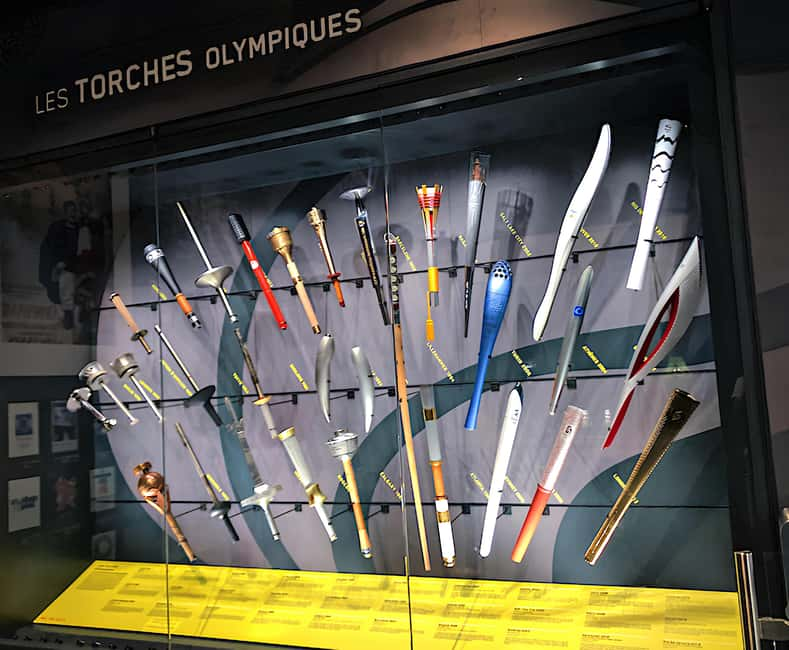
The collection of Olympic torches is one of the clearest highlights. Seeing all the Olympic torches in one place gives the museum a special focus, even for people who are only casually interested in sport.
A torch is a small object, but it carries a large story. It connects a sporting event with ceremony, travel, design, and national memory. You can compare the shapes and styles across different Games and think about how each host city wanted to present itself.
This display also gives the visit a useful visual anchor. If you have limited time, make a point of seeing the torches before moving through the wider collection. They are among the museum’s most distinctive objects and are easy to appreciate without specialist knowledge.
Temporary exhibitions add a second layer
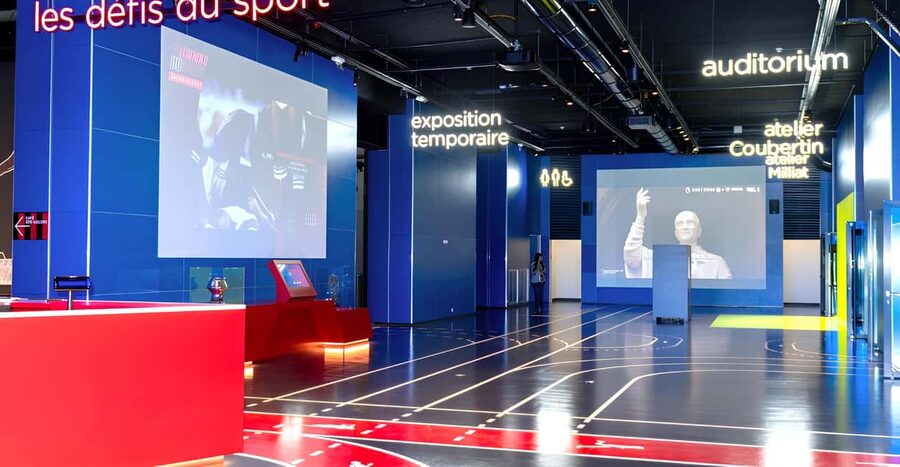
Alongside the permanent displays, the museum has more than 500 square meters devoted to temporary exhibitions. These shows focus on a particular theme or current subject, so the exact content changes over time.
That changing program is important if you are visiting the area more than once. It also means you should check the museum’s current exhibition details before setting out. The temporary section may be the part that most changes the length and character of your visit.
I would treat the temporary galleries as a bonus rather than the only reason to buy the ticket. The permanent route already gives you the main structure, while the temporary displays can add a more focused subject. Since the current topic is not specified here, check what is showing on the museum website before you go.
How long should you allow?
The ticket is valid for one day, and you can explore at your own pace. That does not mean you need to spend the whole day inside. One family allowed about two hours and found that worthwhile for the price, which is a sensible planning figure for a normal visit.
Allow more time if you read every panel, have children with you, or want to see the temporary exhibitions carefully. The flexible ticket is helpful because you do not have to race from one section to the next. You can spend extra time with the sports you care about and move faster through the rest.
Be careful with the closing time. One recent visit was frustrated by the museum closing earlier than expected, with the stadium tour also unavailable as hoped. I would check the opening hours on the date you plan to go and arrive with enough time for the permanent collection, rather than leaving it until late afternoon.
The ticket covers museum admission only. It does not include a guide, and the museum visit is not a guided tour. If you want a structured explanation, you will need to rely on the written displays and your own route through the galleries.
Is the $9 price good value?
At about $9 per person, the ticket is a reasonable buy if you have even a moderate interest in sport, design, social history, or the Olympic Games. The collection is broad, the visit can last around two hours or longer, and the four-part layout gives you more substance than a small display of memorabilia.
The value is even better for families if you qualify for the free-admission rules. Children under 18, disabled persons, Pass Education holders, unemployed persons, ICOM members, and journalists are listed as eligible for free admission. Free entry also applies during the Night of Museums, Heritage Days, and on the first Sunday of each month from October through March.
Do not assume every visitor will find the same value. If you want a large spectacle or a guided stadium experience, this ticket may feel limited. One recent visit found the museum itself less compelling than the stadium tour and felt the early closing time reduced the value of the outing.
For a self-guided museum visit, though, the price is modest. You are paying for access to a large collection and the freedom to decide how much time each part deserves. That makes it a good choice for a relaxed morning or afternoon, especially if you are already nearby.
Family visits, access, and practical rules

The museum is wheelchair accessible, and the displays are suitable for people with limited mobility. A family-friendly approach is another strength. Children can identify sports, compare equipment, and follow the four challenge themes without needing a long background lecture.
Food and drinks are not allowed inside, and flash photography is prohibited. A small shop sells drinks, according to one recent visit, and free parking is available directly in front of the museum according to that same practical account. Since parking and shop details can change, treat them as useful possibilities and confirm current arrangements before you go.
Plan for a calm visit rather than a quick photo stop. The museum rewards people who read, compare, and talk about what they see. If you rush, the collection may feel like a series of unrelated sports. If you follow the four challenges, it becomes easier to see the larger idea tying the visit together.
Who should book this ticket?
I would choose this museum for families, sports fans, Olympic enthusiasts, and anyone looking for an indoor activity in southern France. It also suits visitors who prefer setting their own pace and do not want to join a fixed group.
The ticket is less suitable if you need a guide, want a highly theatrical attraction, or are visiting mainly for a stadium tour. The museum and stadium experience should not be treated as the same thing. Confirm exactly what your selected option includes before paying, since the meeting point may vary by option.
Book it if the four themes sound appealing and you can spare around two hours. Give extra weight to the Olympic torch display and the temporary exhibitions. Skip it if your interest in sport is very low and your schedule is tight, especially if the current hours leave you with little time inside.
FAQ
Is the Musée National du Sport guided?
No. The ticket is for museum entrance, and no guide is included. You explore the displays independently.
How much does admission cost?
The stated price is about $9 per person. Prices may depend on the booking option selected.
How long is the ticket valid?
The ticket is valid for one day. You can spend as much time as you like inside during that validity period, subject to the museum’s opening hours.
Are children admitted free?
Children under 18 are listed for free admission. Other free-admission categories include disabled persons, Pass Education holders, unemployed persons, ICOM members, and journalists.
Is the museum wheelchair accessible?
Yes. The museum is wheelchair accessible.
What is not allowed inside?
Food, drinks, and flash photography are not allowed inside the museum.
Just added around France
- Rodin Museum Masterpieces – Guided Tour up to 8 guests★ 4.9 · 13 reviews
- Louvre Museum: Skip-the-Line Guided Tour★ 4.6 · 98 reviews
- Invalides Museum – WWI & WWII – Guided Tour up to 8 guests★ 5.0 · 32 reviews
- Skip the Line Guided Tour of Louvre Museum Highlights★ 5.0 · 49 reviews
- Rouen : Museum Immersive Viking Experience★ 4.2 · 47 reviews
- Paris: Louvre Museum Highlights Small-Group Guided Tour★ 4.8 · 157 reviews
- From Paris: Private Trip to Giverny, Monet’s House & Museum★ 4.5 · 13 reviews
- Paris: Street Art Open-Air Museum Bike Tour★ 4.8 · 51 reviews
Museum Tours in France, compared.

Louvre Museum Masterpieces Guided Tour with Access
Read our review →
Louvre Museum Entry Ticket With Host and River Cruise
Read our review →
Les Invalides: Napoleon’s Tomb & Army Museum Entry
Read our review →
Mona Lisa & Louvre Masterpieces Tour with Reserved Access
Read our review →
Musée de l’Orangerie Reserved Entrance Ticket
Read our review →
Louvre Museum – Exclusive Guided Tour (Entry Included)
Read our review →Browse the lists this tour appears in