
Review · PARIS
Invalides Museum – WWI & WWII – Guided Tour up to 8 guests
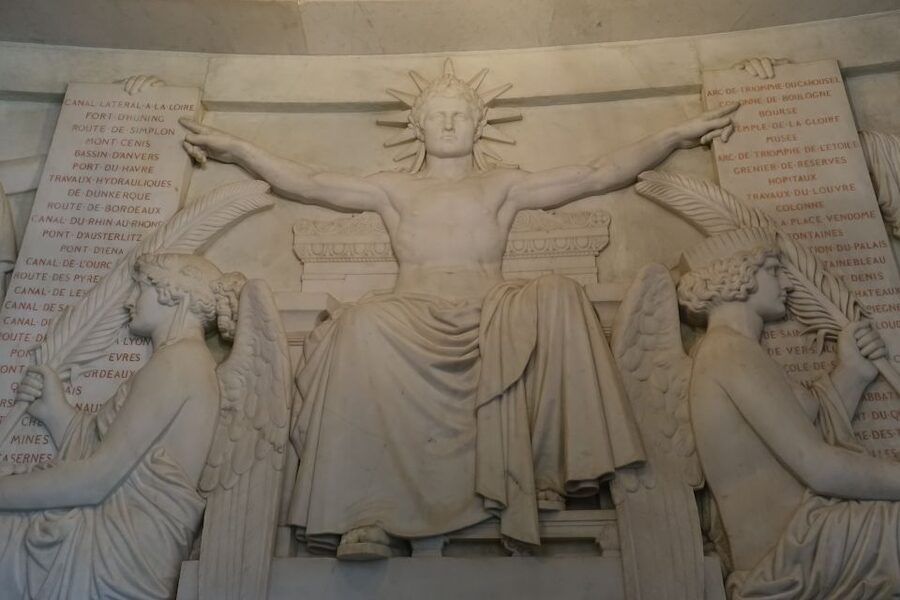
Les Invalides is where French military history becomes wonderfully personal. You walk through Louis XIV’s vast veteran hospital, enter the church built for his former soldiers, then stand above Napoleon Bonaparte’s enormous tomb beneath the gold dome. I like the clear two-hour route and the small groups, capped at eight people, which give your guide room to answer real questions. I also like that the visit connects grand events to objects, maps, graves, and buildings you can actually see.
The main consideration is the price: $156 per person is a serious outlay for two hours. The value depends on how much you want expert interpretation, since the Invalides complex is large enough to reward several hours on your own. You should also expect a moderate amount of walking, and the semi-private option is not suitable for wheelchair users or people with walking disabilities.
Key points at a glance
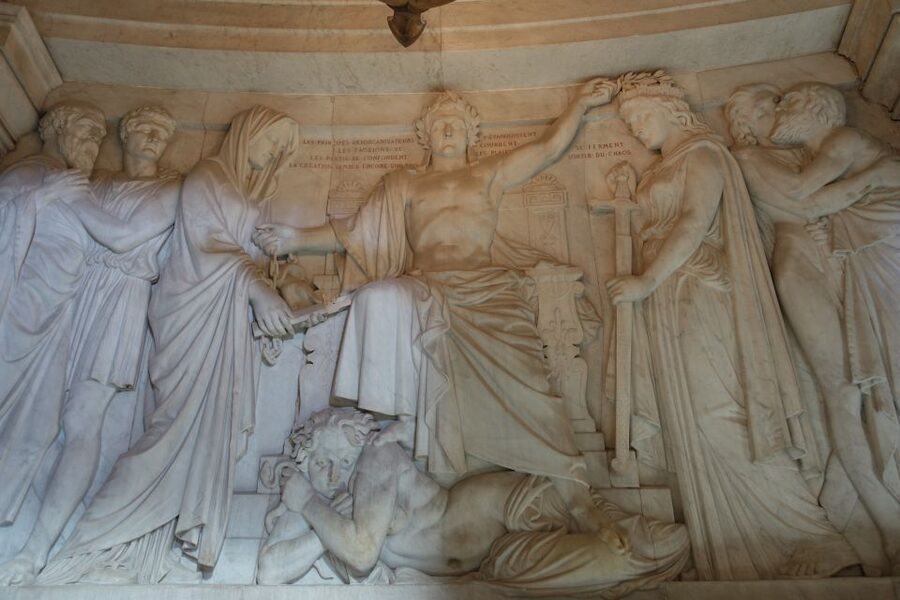
- Napoleon’s tomb beneath the gold dome: See the emperor’s burial place, along with tombs connected to his family and inner circle.
- A 17th-century military setting: Learn how Louis XIV created a hospital and home for soldiers returning from war.
- A focused two-hour route: Your guide helps you make sense of a vast museum without wandering past the most important rooms.
- Small groups of up to eight: The format allows questions and a more personal pace than a large museum crowd.
- Military maps and artifacts: Go beyond Napoleon’s legend through objects, reconstructions, victories, and defeats.
- Strong guide reputation: Florent, Emilie, Mathieu, Anatole, Tobias, and others have been praised for clear storytelling and lively answers.
Why Les Invalides is more than Napoleon’s tomb

Many people arrive at Les Invalides thinking only about Napoleon. That is understandable. His tomb is the visual climax, and the gold dome is one of the most striking sights in Paris.
Yet the building began with a different purpose. Louis XIV created Les Invalides in the 17th century as a place where veterans could receive care and shelter after military service. That fact changes the way you see the complex. It is not only a monument to a famous ruler. It is also a statement about how the French state cared for, honored, and controlled its army.
Your guide starts in the broad courtyard, where the scale of the complex becomes clear. The courtyard is a useful opening because it gives you the building’s basic story before you enter the more decorated spaces. You learn about Louis XIV, his military ambitions, and the role of the Sun King in shaping France’s armed forces.
I like this beginning because it gives Napoleon a proper setting. Without it, the emperor can seem like an isolated celebrity. With it, you see him as part of a longer French military tradition.
More Museum Tours in Paris
- Paris: Louvre Museum Timed-Entrance Ticket
★ 4.6 · 71,977 reviews - Paris: Orsay Museum Entry Ticket
★ 4.7 · 25,647 reviews - Louvre Museum Masterpieces Guided Tour with Access
★ 4.5 · 12,023 reviews
The church built for Louis XIV’s soldiers
The church at Les Invalides was built for the former troops who lived at the complex. Its purpose was practical as well as religious: soldiers could worship without leaving the institution that housed them.
As you move inside, the tone shifts from the open courtyard to ceremony and memorial. The decoration serves a clear political purpose. France is presenting military service as part of the nation’s identity, while also placing its rulers at the center of that story.
The church has two connected parts, one associated with the soldiers and another with the royal and imperial memorial spaces. The tour focuses on the church Louis XIV built for his veterans and on the grand setting that later became Napoleon’s burial place.
You will want to look up as much as you look down. The dome draws your eye upward, while the tombs and floor-level memorials bring the story back to individual people. That contrast is one reason a guide helps here. It is easy to admire the gold and marble without understanding who is being honored and why.
Napoleon’s tomb and the family around it
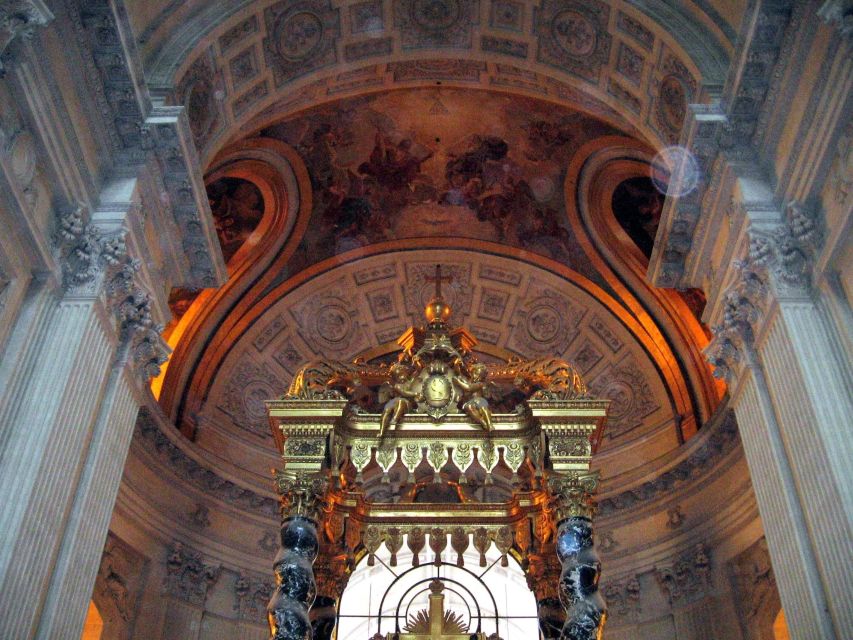
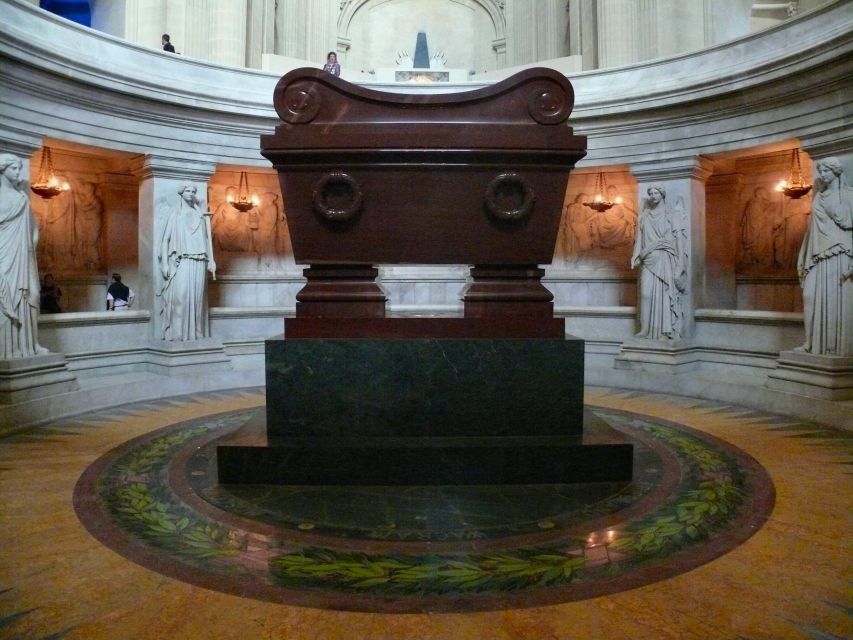
Napoleon’s tomb is the emotional center of the visit. His remains are housed beneath the magnificent dome, surrounded by an elaborate memorial to the former emperor.
The setting reflects Napoleon’s image: grand, theatrical, and carefully arranged. He died in exile after his military ambitions went too far, yet his remains were later brought back to France and placed in one of the country’s most important military monuments. That contrast gives the tomb its power. The man who ended his life far from Paris received a burial designed to keep him at the heart of French national memory.
You will also see the tombs of people close to him. These add useful context because Napoleon’s story was never only about one man. His family, advisers, commanders, and political allies helped build the empire and shaped what came afterward.
Guides such as Emilie have explained Napoleon I, Napoleon II, and Napoleon III together, which is especially useful if those names blur together. A good guide can separate the three figures and show how the Bonaparte legacy continued after the first Napoleon.
Do not rush this part. The tomb is easy to photograph and easy to reduce to a single impressive view. Give yourself time to notice the artistic gravestones, smaller memorials, and the way the room frames Napoleon’s resting place.
The museum galleries put the legend under pressure
After the church, you spend time in the museum. This is where the visit moves beyond the familiar picture of Napoleon as a brilliant general and audacious emperor.
Military artifacts, recreations, and maps help explain both his victories and his defeats. Maps are particularly useful because Napoleon’s campaigns covered large areas and involved movements that are hard to follow from a short spoken explanation. Seeing the geography laid out can make the scale of his decisions more understandable.
The collection is large. One guide, Anatole, was praised for identifying the galleries and objects most worth seeing within the available time. That is an important service. You could spend multiple days at Les Invalides, but this tour gives you only two hours, so selection matters.
The museum also places Napoleon within the wider development of the French military. The experience is not limited to imperial glamour. Depending on the route and current museum displays, you may encounter material connected to different periods of French warfare, including the collections associated with the First and Second World Wars.
Temporary exhibitions are not included, so do not book this tour expecting every special display to be part of the visit. The permanent museum collections and main historical areas are the focus.
A few more museum visits around Paris worth comparing
- Louvre Museum – Exclusive Guided Tour (Entry Included)
★ 5.0 · 6,296 reviews - Louvre Priority Access with Mona Lisa Escort or Guided Option
★ 4.0 · 4,420 reviews - Louvre Museum: Skip-the-Line Small Group Guided Tour
★ 4.6 · 4,268 reviews - Louvre Museum Paris Essential Guided Tour Semi-Private 6ppl Max
★ 5.0 · 3,807 reviews
Why the guide matters here
A self-guided visit gives you access to the buildings and objects. A guided visit gives you a chain of meaning.
That difference is most useful in a place like Les Invalides, where the museum can feel enormous and the names can pile up quickly. Your guide can explain why Louis XIV matters before Napoleon appears, then connect Napoleon’s campaigns to the later memorial culture of France.
The strongest praise has gone to guides who tell stories rather than recite dates. Florent has been singled out for making the subject fun and engaging. Mathieu worked especially well for a family with a 13-year-old who had a strong interest in history, answering questions carefully and keeping the visit personal. Tobias was noted for making the subject interesting, while Michelle brought clear enthusiasm to Napoleon’s story.
That does not mean every guide will use the same route or tell the same anecdotes. It does mean the tour is designed around live explanation, not an audio guide played at a fixed pace. If you have a particular interest, such as Napoleon’s campaigns, French kings, World War history, architecture, or military objects, tell the guide early.
The language choice is also useful. Tours are available in English, French, Italian, German, Russian, and Spanish. Check the option you select carefully, since the language and group format can vary.
A small group makes two hours work better
The maximum group size is eight people per guide. That is a strong feature in a museum where a large group could become slow and hard to hear.
With eight or fewer, you can ask why a particular object matters or pause briefly at a tomb without losing the whole group. The guide can also adjust the amount of detail. Families and visitors with a specific interest will get more from this format than from a large general tour.
The semi-private tour needs at least two participants to operate. If that minimum is not reached, an alternative date or a full refund is offered. Private options are also available for people who want the guide’s attention reserved for their own party.
The tour lasts two hours, so you should treat it as a focused introduction rather than a complete survey. If you want to explore every military gallery, read every label, and linger over each period, plan additional museum time separately.
Walking, bags, and timing
This is a walking tour inside a large complex. You will move through the courtyard, church, tomb area, and museum spaces, so comfortable shoes make sense. The amount of walking is described as moderate.
Large bags and luggage are not allowed. Do not arrive with a suitcase and assume you can bring it inside. You should carry a passport or other ID card, and you need to provide a working mobile number and email address for the booking.
The meeting point can vary by the option you book. Read the instructions for your specific departure rather than relying on a general map pin.
Museum management can occasionally close areas without warning. If the opening time is delayed by more than an hour, an appropriate alternative is provided, but the operator does not promise a refund or discount in that situation. Some rooms also require quiet or restrict speaking, and collections can change during the year. These rules are normal for a major museum, but they can affect the exact flow of the visit.
Wheelchair tours are available only on request, while the semi-private tour is not available for wheelchair users or people with walking disabilities. Ask before booking if accessibility is essential.
Is $156 per person fair?
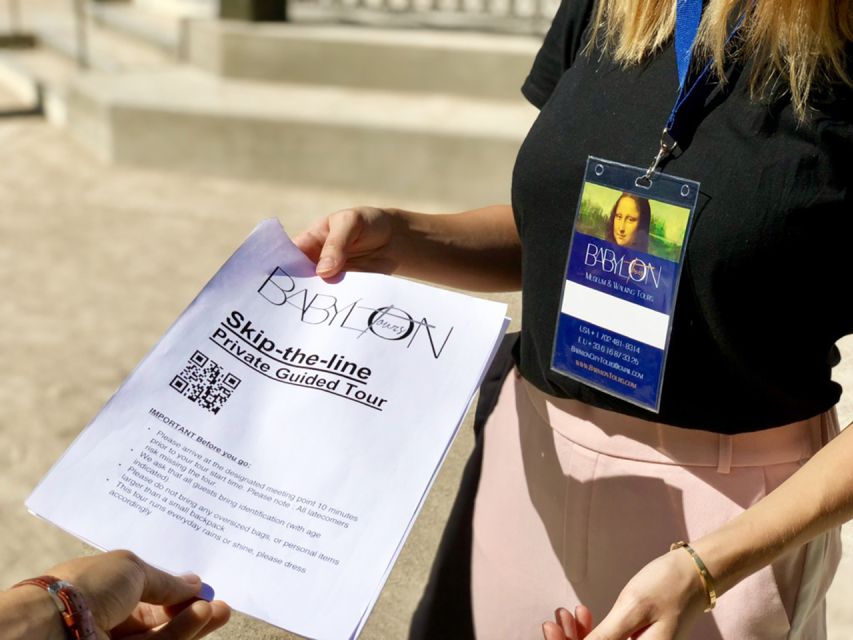
At $156 per person, this is not a budget museum visit. The price includes admission, skip-the-line access, and a professional art historian guide. You are paying mainly for the guide’s time and for a short route through a very large institution.
I think the price makes more sense in three situations. First, you have limited time in Paris and want a clear two-hour visit. Second, you care about Napoleon or French military history and want more than labels can give you. Third, you prefer a private or very small group where you can ask questions.
The value is weaker if you enjoy wandering slowly, already know the subject well, or plan to spend most of the day at Les Invalides. In those cases, you may prefer a regular admission ticket and your own pace.
The skip-the-line access also matters most when the museum is busy. It saves waiting, but it cannot remove the need to walk, follow museum rules, or accept that some rooms may be closed.
Who will get the most from this visit?

I would point this tour toward first-time visitors who want the big picture without getting lost. It is also a good fit for families with older children and teenagers who ask questions and enjoy military stories. The experience held particular appeal for a 13-year-old history fan because the guide could respond directly rather than deliver a fixed speech.
Napoleon fans will get the clearest payoff from the church, tomb, and military maps. People interested in architecture and royal France will appreciate the Louis XIV opening. Anyone hoping for a broad World War I and World War II tour should check the exact route when booking, since the stated experience gives especially strong attention to Les Invalides, Napoleon, and the museum’s military collections.
I would not choose it for a visitor who dislikes walking, cannot carry a small amount of personal gear, or wants a completely self-directed museum day.
Small practical touches
The tour does not include hotel pickup, meals, drinks, or temporary exhibitions. That keeps the offer focused, but you need to reach Les Invalides on your own and budget for food separately.
A useful extra tip from guide Florent was a recommendation for Angelina’s hot chocolate. It is not part of the tour, but it gives you a pleasant plan for afterward if you want to continue the Paris history-and-café day.
The cancellation terms are flexible: you can cancel up to 24 hours before the start for a full refund, and you can reserve now while paying later. Still, read the final meeting instructions and accessibility notes before confirming.
Should you book the Invalides tour?
Book it if Napoleon, French military history, or guided museum visits are high on your Paris list. The two-hour format, small group size, and strong guide lineup make the complex easier to understand and help you see the main spaces without spending a full day sorting it out alone.
Skip it if $156 feels too steep for a short museum visit or if you prefer to explore at your own speed. Les Invalides is large enough to reward independent visitors, but this tour earns its price when you want a sharp route, clear context, and a guide who can turn a grand tomb and crowded military galleries into a connected story.
FAQ
How long does the Invalides tour last?
The tour lasts two hours. That is enough for a focused visit to the courtyard, church, Napoleon’s tomb, and selected museum galleries, but not enough to inspect every collection in the complex.
How many people can join the tour?
The maximum is eight guests per guide. Private and small group options are available.
Which languages are offered?
The live guide may lead the tour in English, French, Italian, German, Russian, or Spanish. Check the language option when booking.
Is Napoleon’s tomb included?
Yes. The tour includes a visit to Napoleon’s tomb beneath the gold dome, along with tombs connected to people close to him.
Can I bring a suitcase or large bag?
No. Luggage and large bags are not allowed inside the museum. Bring a passport or ID card as well.
Is the tour suitable for wheelchair users?
Wheelchair tours are available only on request. The semi-private tour is not suitable for wheelchair users or people with walking disabilities, and moderate walking is involved.
Just added around Paris
- Rodin Museum Masterpieces – Guided Tour up to 8 guests★ 4.9 · 13 reviews
- Skip the Line Guided Tour of Louvre Museum Highlights★ 5.0 · 49 reviews
- Paris: Louvre Museum Highlights Small-Group Guided Tour★ 4.8 · 157 reviews
- From Paris: Private Trip to Giverny, Monet’s House & Museum★ 4.5 · 13 reviews
- Paris: Street Art Open-Air Museum Bike Tour★ 4.8 · 51 reviews
- Paris: Rodin Museum Ticket & Optional Digital AudioGuide App★ 4.7 · 56 reviews
- Paris: The Rodin Museum and Seine River Cruise★ 4.6 · 45 reviews
- Paris: Rodin Museum Entry Ticket★ 4.5 · 220 reviews
Museum Tours in Paris, compared.

Louvre Museum Masterpieces Guided Tour with Access
Read our review →
Louvre Museum Entry Ticket With Host and River Cruise
Read our review →
Les Invalides: Napoleon’s Tomb & Army Museum Entry
Read our review →
Mona Lisa & Louvre Masterpieces Tour with Reserved Access
Read our review →
Louvre Museum – Exclusive Guided Tour (Entry Included)
Read our review →
Louvre Museum Hosted Entry and Mona Lisa Audioguide
Read our review →Browse the lists this tour appears in