
Review · FRANCE
Louvre Museum: Skip-the-Line Guided Tour
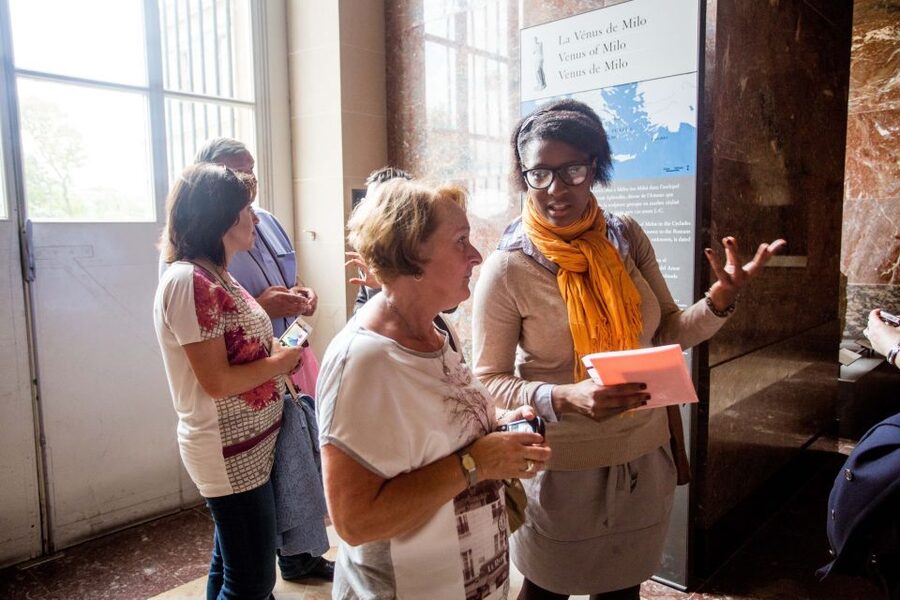
The Louvre is too large to tackle casually, especially when you have only a few hours in Paris. This two-hour guided tour gets you through the entrance quickly and leads you to the museum’s famous works, from the Mona Lisa to the Nike of Samothrace. I like the clear focus, and I like that you can stay inside and explore alone after the tour. The main catch is the price: at $146 per person, you pay a large premium over visiting independently.
I also like the small-group and private options. Guides such as Julie, Anne, Emmanuel, Olivia, and Olivier have been praised for clear explanations, warm personalities, and good crowd management. Still, the Louvre can be very crowded, and two hours only covers a small slice of this enormous museum.
Key points at a glance
- Fast-track entry saves precious time: Your guide helps you get inside without waiting in the standard ticket line.
- The route covers Louvre essentials: Expect the Mona Lisa, Venus de Milo, Nike of Samothrace, and major ancient collections.
- Small groups make questions easier: Private and small-group formats are available, with some groups as small as five or six people.
- Guides make the art easier to read: Past guides including Julie, Anne, Emmanuel, Olivia, and Olivier have been praised for strong art knowledge and engaging explanations.
- You can continue alone afterward: The guided portion ends after two hours, but you may keep exploring the museum.
- Pack light: Bags over 55 by 35 by 20 centimeters are not allowed, and the tour is not suitable for wheelchair users.
Why a guide helps inside the Louvre
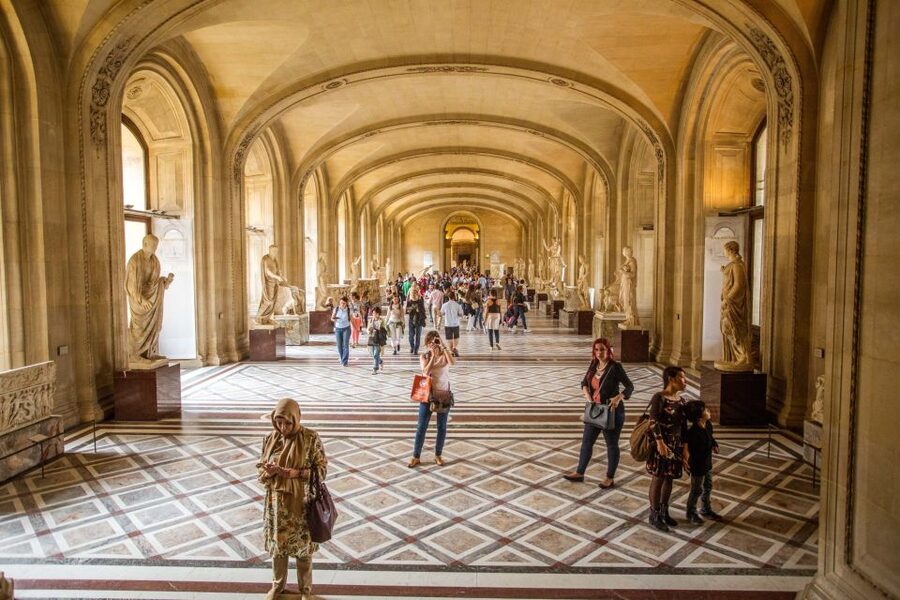
The Louvre is not simply a large museum. It is a former fortress, a royal palace, and a collection of galleries spread across an enormous building. It opened as a museum in 1793, after the royal collections had already been displayed there for more than a century.
That scale creates the central problem: you can spend an hour finding one famous room, then lose another hour trying to reach the next one. A guide gives your visit a firm shape. Instead of wandering through corridors and hoping you are heading toward the Mona Lisa, you follow a planned route through some of the museum’s best-known rooms.
I find this especially useful for a first visit. You get a basic map of the Louvre in your head, learn why the major works matter, and avoid using your limited Paris time on navigation. The tour is not designed to show every department. That would be impossible in two hours. It is designed to give you a strong first look at the museum’s major sights.
The best guides also help you notice details that are easy to miss. Olivia, for example, was praised for explaining how particular works changed the course of art history. Olivier was valued for pairing facts about the works with details about their meaning. That sort of commentary gives you more than a checklist of famous names.
More Louvre tours and timed tickets:
- Paris: Louvre Museum Timed-Entrance Ticket
★ 4.6 · 71,977 reviews - Louvre Museum Masterpieces Guided Tour with Access
★ 4.5 · 12,023 reviews - Paris: Louvre Museum Entry Ticket With Host and River Cruise
★ 4.6 · 9,926 reviews
Getting inside with fast-track entry
Fast-track entry is the practical heart of this experience. The Louvre is one of Paris’s busiest sights, and time spent in the entry queue is time you cannot spend with the art.
The exact meeting point can vary by the option you book, so check your confirmation carefully. Bring a passport or ID card, and avoid arriving with luggage. Items larger than 55 by 35 by 20 centimeters are not permitted in the museum. Large bags can cause trouble before the tour even begins.
Once inside, your guide handles the route and helps the group stay together. One guide, Julie, was specifically praised for getting a small group inside quickly on a day when there were disruptions. That is a good reason to value a guide beyond the commentary: someone familiar with the museum can react when entry conditions are less than smooth.
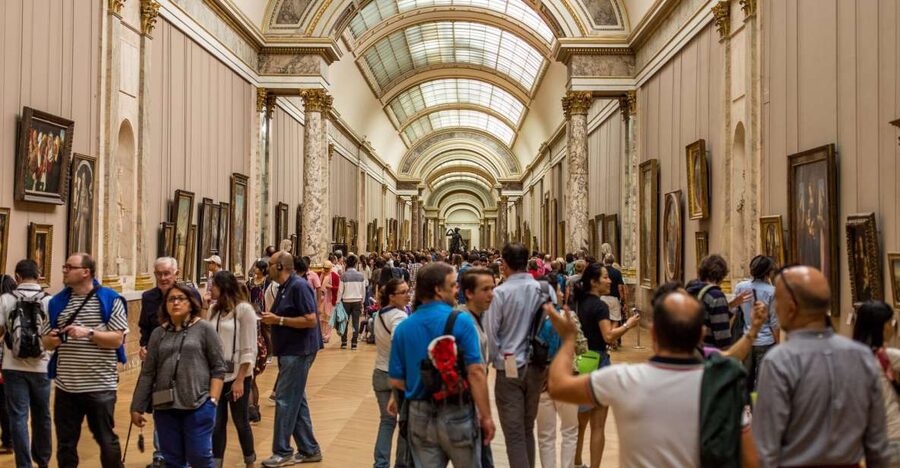
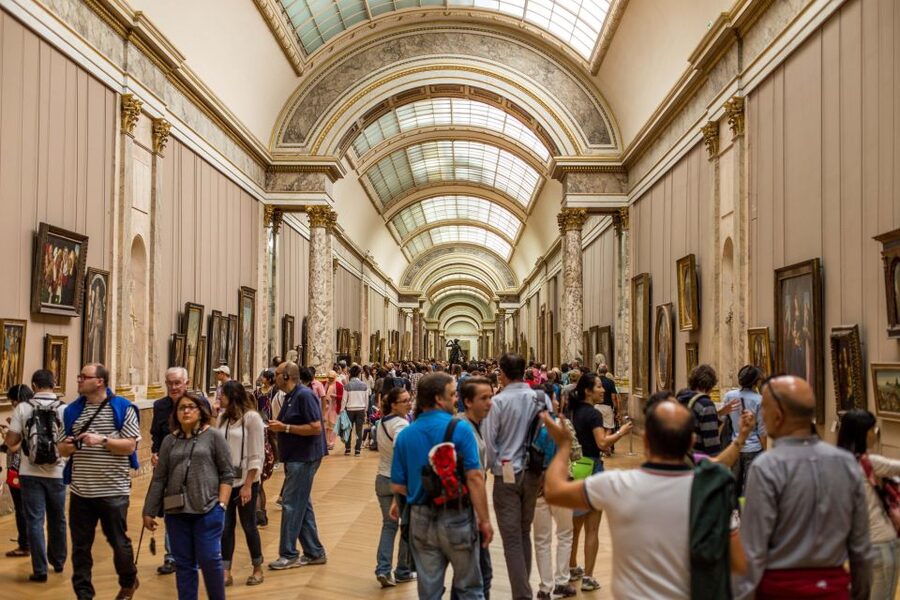
Fast-track entry does not mean the galleries will be empty. The Mona Lisa room and the main sculpture halls can still be crowded. You should think of this benefit as saved entry time, not a private museum experience.
The Mona Lisa and the Italian masterpieces
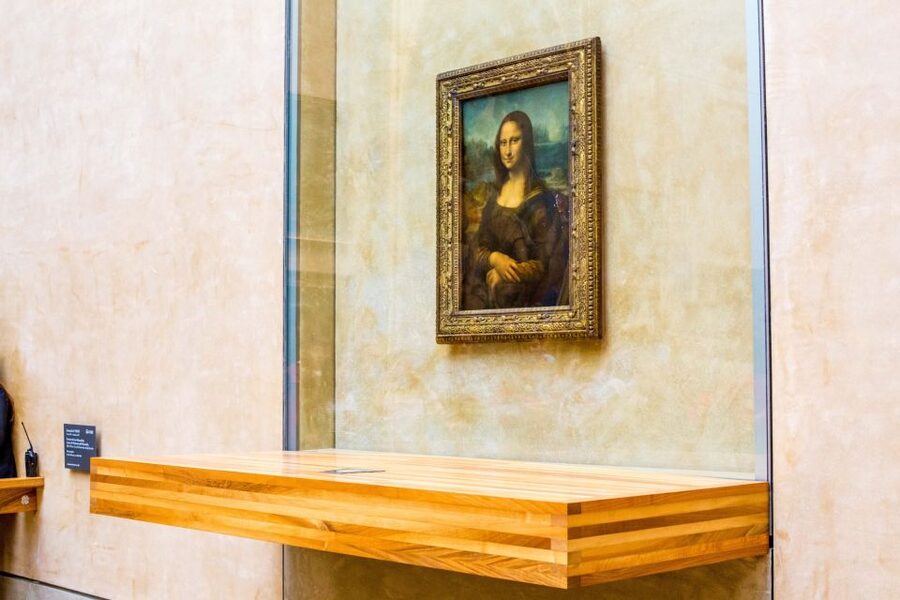
Leonardo da Vinci’s Mona Lisa is the usual emotional center of a first Louvre visit. The painting is smaller than many people expect, and the room can be packed. Your guide helps you reach it without wasting time and gives you a useful way to look beyond the famous smile.
The value here is context. Without a guide, you may get a quick view, take a photograph, and move on with little sense of why the painting became so important. A guide can point out Leonardo’s treatment of expression, landscape, and atmosphere, then connect the painting to the wider Italian collection.
The route also includes works associated with Raphael, Michelangelo, Leonardo da Vinci, and other major artists. The supplied information describes French and Italian works, including impressionist pieces, along with thousands of other paintings in the museum’s collection. You will not see all 6,000 paintings in two hours, but the guided route gives you a sensible introduction to the artistic heart of the Louvre.
Expect a moving, commentary-led visit rather than long stretches of quiet viewing. Guides may use headsets, which can help when the room is noisy or the group is spread across a gallery. Anne’s group found the headsets worked well, and that matters in a museum where a few steps can separate you from the person speaking.
Venus de Milo and the Greek sculpture halls
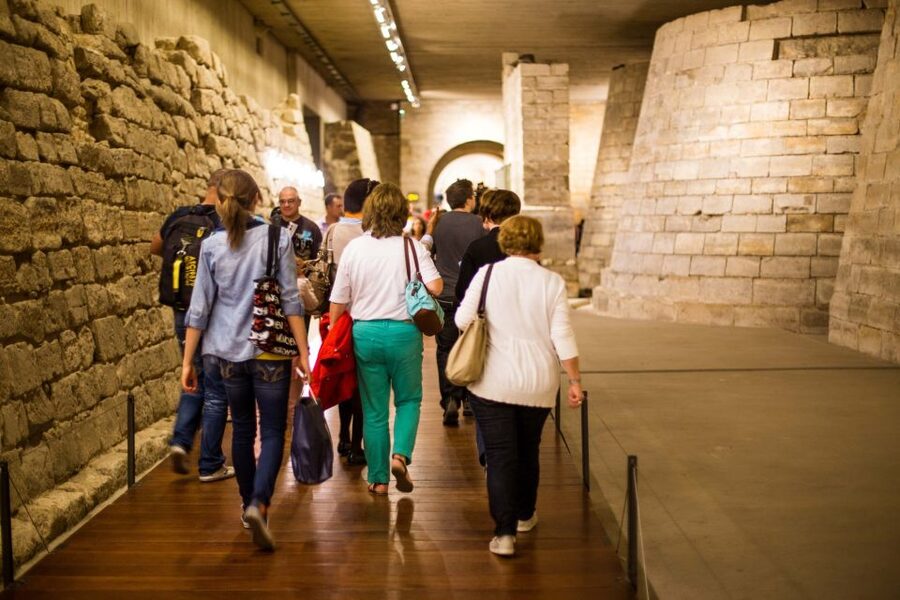
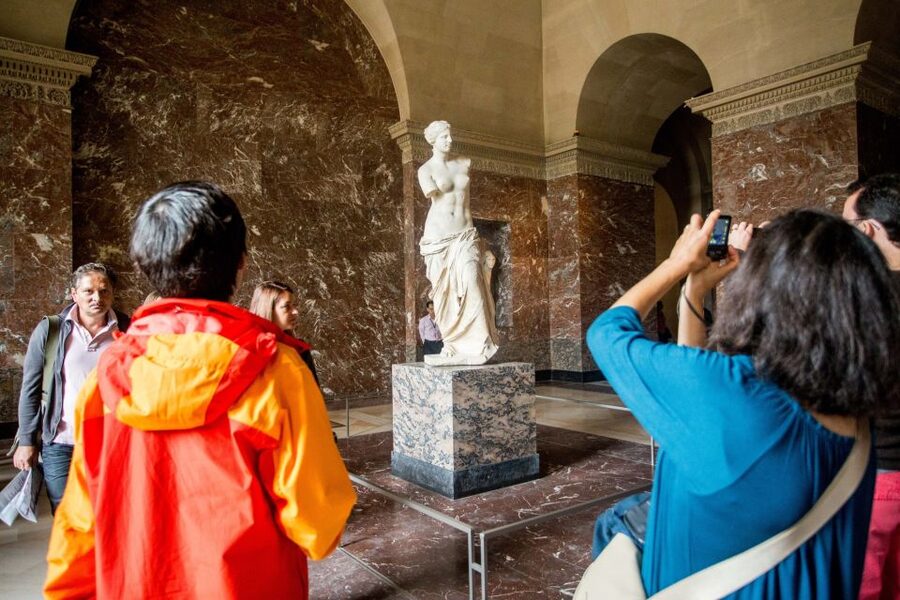
The Venus de Milo is one of the Louvre’s most recognizable sculptures. Its missing arms are part of its mystery, but the greater pleasure is seeing how the figure’s posture, drapery, and balance work from different angles.
Your guide can give you a short explanation of the statue and place it within the museum’s Greek collection. This is helpful because the Louvre’s sculpture galleries can feel like a series of grand rooms rather than a connected story. A guide supplies that thread.
You should expect other Greek, Etruscan, and Roman relics along the way. The two-hour format means the stops are selected, not exhaustive. If ancient art is your main interest, you may want to pay close attention during the tour and then use the remaining time to return to the sculpture halls on your own.
That option is one of the tour’s best features. You are not rushed out when the guided commentary ends. You can revisit the Venus de Milo, look for additional classical works, or change direction toward another department.
More skip-the-line museum tickets in France:
- Louvre Museum: Skip-the-Line Small Group Guided Tour
★ 4.6 · 4,268 reviews - Paris: Skip-the-Line Louvre Museum & Mona Lisa Guided Tour
★ 4.6 · 1,442 reviews - Paris: Musée d’Orsay Skip-the-Line Tour with Expert Guide
★ 4.5 · 1,145 reviews - Louvre Museum Skip the Line Entry with Introduction to Mona Lisa
★ 3.0 · 576 reviews
The Nike of Samothrace and the Louvre’s grand spaces
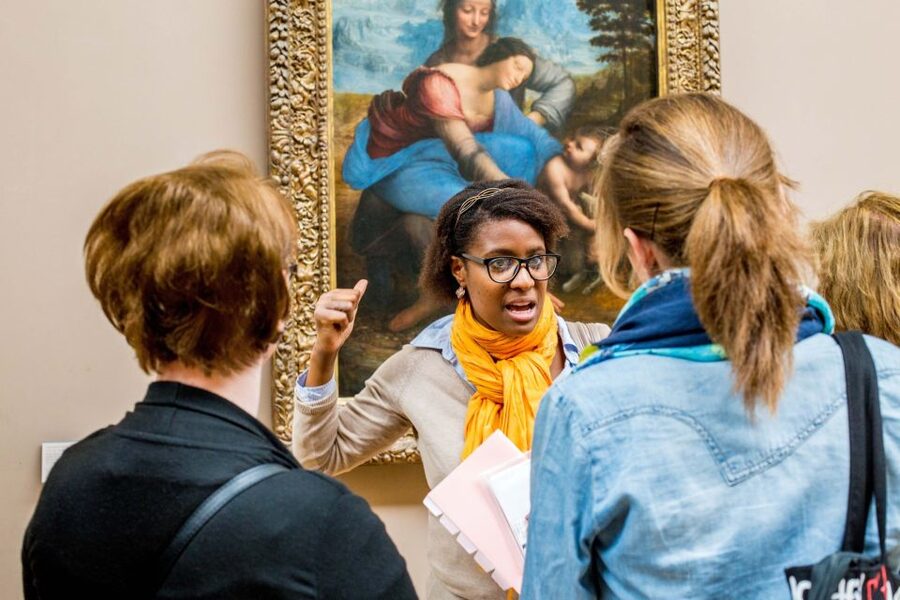
The Nike of Samothrace is a powerful stop even before you study the sculpture closely. Set at the top of a monumental staircase, the winged figure seems to move forward on the prow of a ship. The setting is part of the experience.
This is a good example of what a guide adds. You can admire the statue on your own, but a guide can direct your attention to the posture, the wind-swept clothing, and the way the sculpture was designed to be approached from below. The work is not just an isolated object in a case. Its placement gives it force.
The surrounding architecture also helps you understand the Louvre as a former palace. The building itself is part of the visit, with broad stairways, ceremonial rooms, and long routes between collections. I would allow time to look up and around, even when the guide is moving the group onward.
Crowds are the drawback. The main staircase and famous galleries can feel congested, especially during busy periods. Your guide’s job is less about finding an empty room than keeping the group together and making sure you see the important works without losing your place.
Egyptian and Near Eastern antiquities
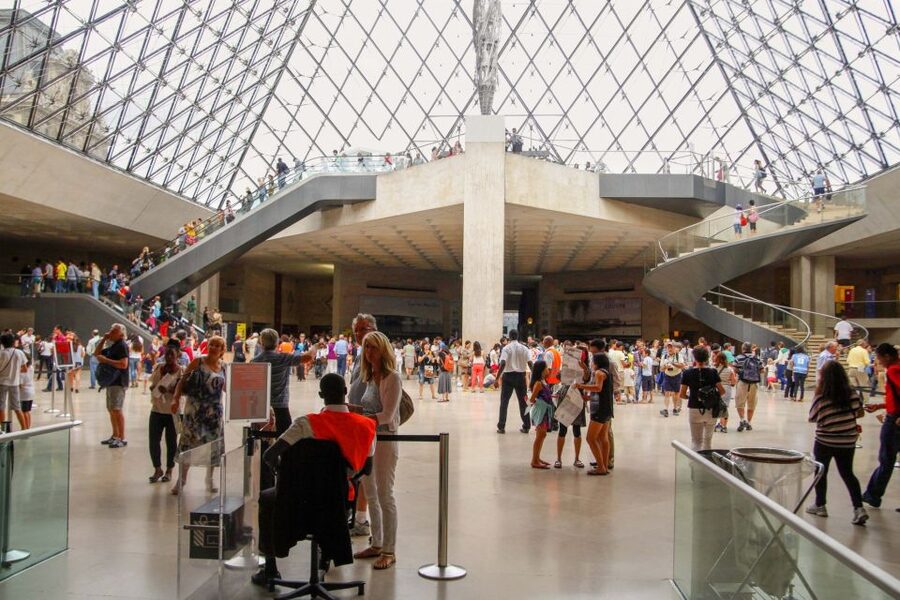
The ancient collections give the tour a different pace. Egyptian and Near Eastern objects date back as far as 4000 BC, offering a look at cultures far older than the museum building itself.
This section is valuable for anyone who wants more than the standard Mona Lisa visit. You might see sculpture, objects, and artifacts that show how people in the ancient world recorded beliefs, rulers, daily life, and death. Since the Louvre contains far more material than a two-hour route can cover, your guide’s selections matter.
I would listen for the links between objects rather than trying to remember every name and date. A good explanation can turn a case of unfamiliar artifacts into a readable story. It also helps you decide what to revisit later.
The Near Eastern and Egyptian departments are a useful counterweight to the famous European paintings. They show that the Louvre is not just a home for Leonardo and Raphael. It is a museum of world art across thousands of years.
What the two-hour pace feels like
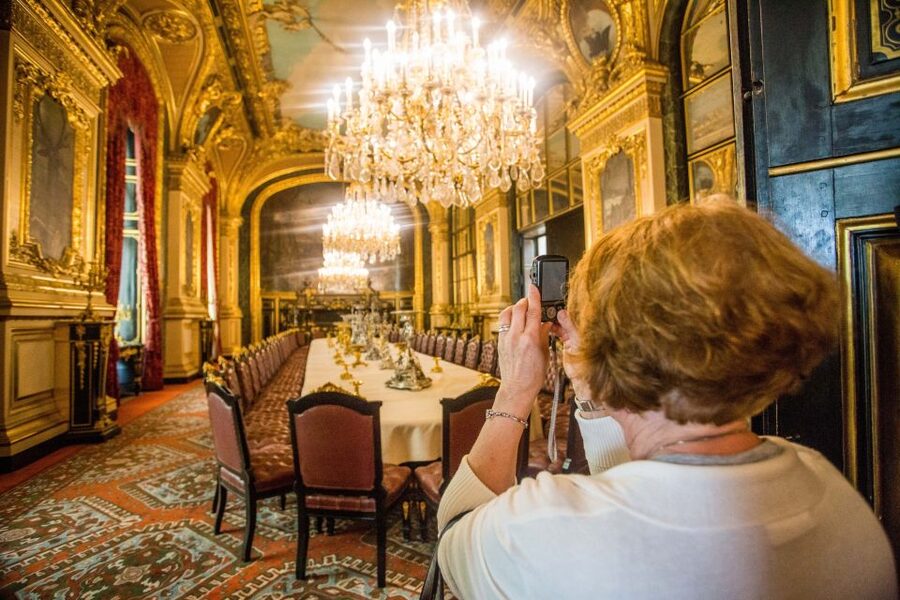
Two hours sounds generous until you see the size of the Louvre. In practice, the tour keeps moving. You will stop at major works, hear explanations, and walk between departments. There is little time for sitting quietly in front of one painting for twenty minutes.
That pace suits me for a first visit because it prevents the museum from becoming overwhelming. It also works well for people who are interested in art but do not want a full-day museum program. One visitor who was not especially focused on art found that two hours covering the main works was just right.
Families should consider the format carefully. Anne kept a nine-year-old engaged by asking questions and adjusting the pace. A private tour can also be useful if one child needs more breaks or a slower walk. One family appreciated that their guide slowed down for a daughter with an injured foot.
The tour is less suited to someone who wants a quiet, self-directed study of a single collection. You may feel hurried if your main goal is to spend a long time with one artist or period. In that case, use the guided route as an orientation, then stay afterward for your own visit.
Private or small group: which works best
The group format can change the feel of the experience. A small group makes it easier to hear the guide, ask questions, and stay together in crowded rooms. Groups of five or six have been reported, and that is a comfortable size for a major museum.
A private option costs more, but it gives the guide room to adjust. Families with children, mixed-interest groups, or anyone with mobility concerns may value that flexibility. It also lets you ask more questions without holding up a large party.
A standard small group is the better value if you mainly want fast entry, a planned route, and clear explanations. At $146 per person, the tour is already a premium purchase. The private option makes the most sense when the group’s needs are unusual or when personalized attention matters more than keeping costs down.
The English-language guide is a firm part of the offering. If you want another language, this experience is not the right match based on the information provided.
Is $146 a fair price?
The price is high compared with entering the Louvre on your own. One practical way to judge it is to ask how much you value time, navigation, and interpretation.
For a first-time visit, the price pays for three useful things: a licensed guide, fast-track entry, and a clear route through a huge museum. If you are in Paris for a short stay, avoiding a long queue and finding the key works quickly can justify part of the premium.
The price is harder to defend if you already know the Louvre well, prefer wandering alone, or plan to spend most of the day in one department. Independent entry will cost less, and you can study the museum at your own pace.
The ability to remain inside after the guided portion improves the value. You can use the two hours to get oriented, then continue alone. I would plan the rest of your visit before booking, since the tour can serve as the first part of a longer Louvre day.
Practical details before you book
Food and drinks are not included, and there is no drop-off at the end. Plan your route after the tour yourself.
Toilets are limited in parts of the museum. One guide ended the guided portion near restrooms, which was useful. I would handle bathroom needs before the tour starts when possible, then ask the guide about facilities if needed.
Bring identification and pack light. Do not bring oversized luggage, and remember the 55 by 35 by 20 centimeter limit. The experience is not suitable for wheelchair users, so anyone requiring wheelchair access should choose another option.
You can cancel up to 24 hours before the activity for a full refund, and you can reserve now while paying later. Starting times depend on availability, so check the date and hour that suit your Paris plans.
Should you book the Louvre guided tour?
Book it if this is your first Louvre visit, your time in Paris is limited, or the idea of finding the Mona Lisa and major sculptures alone feels stressful. I especially recommend the small-group version for families and first-time museum visitors who want a clear route without committing to a full day.
The strongest reason to book is not simply the famous artwork. It is the combination of fast entry, navigation, and explanation inside a museum that can easily swallow half a day. Guides such as Julie, Anne, Emmanuel, Olivia, and Olivier have been praised for keeping the experience organized and engaging.
Skip it if you are comfortable navigating independently, want the lowest possible price, or prefer to spend long periods with a narrow set of works. At $146, this is a convenience and interpretation purchase, not a budget museum ticket.
For most first-time visitors, I would book the small-group option, arrive with only essentials, and keep the rest of the day open so you can explore after the guide leaves.
FAQ
How long is the Louvre guided tour?
The guided tour lasts two hours. You can continue exploring the Louvre on your own after the guided portion ends.
Does the tour include fast-track entry?
Yes. Entrance to the Louvre, a licensed guide, and fast-track entrance are included.
Which Louvre highlights does the tour visit?
The route includes the Mona Lisa, Venus de Milo, Nike of Samothrace, Greek, Etruscan, and Roman relics, plus Egyptian and Near Eastern antiquities.
Is the tour offered in English?
Yes. The live tour guide speaks English.
Can I bring a large bag or suitcase?
No. Luggage and large bags are not allowed. Any item larger than 55 by 35 by 20 centimeters is not permitted in the museum.
Is the tour suitable for wheelchair users?
No. The activity is listed as not suitable for wheelchair users.
Just added around France
- Ticket to Musée National du Sport★ 4.4 · 32 reviews
- Rodin Museum Masterpieces – Guided Tour up to 8 guests★ 4.9 · 13 reviews
- Invalides Museum – WWI & WWII – Guided Tour up to 8 guests★ 5.0 · 32 reviews
- Skip the Line Guided Tour of Louvre Museum Highlights★ 5.0 · 49 reviews
- Rouen : Museum Immersive Viking Experience★ 4.2 · 47 reviews
- Paris: Louvre Museum Highlights Small-Group Guided Tour★ 4.8 · 157 reviews
- From Paris: Private Trip to Giverny, Monet’s House & Museum★ 4.5 · 13 reviews
- Paris: Street Art Open-Air Museum Bike Tour★ 4.8 · 51 reviews
Museum Tours in France, compared.


Louvre Museum Masterpieces Guided Tour with Access
Read our review →
Louvre Museum Entry Ticket With Host and River Cruise
Read our review →
Les Invalides: Napoleon’s Tomb & Army Museum Entry
Read our review →
Mona Lisa & Louvre Masterpieces Tour with Reserved Access
Read our review →
Musée de l’Orangerie Reserved Entrance Ticket
Read our review →
Louvre Museum – Exclusive Guided Tour (Entry Included)
Read our review →Browse the lists this tour appears in