
Review · PARIS
Paris: Musée de Montmartre and Gardens Entry Ticket
Montmartre’s best story is not only found around Sacré-Cœur or the Moulin Rouge. At Musée de Montmartre, you enter a seventeenth-century house tied to the artists, cabarets, and studios that shaped the district. The museum gives you a calmer, more personal look at Montmartre than a walk through its crowded postcard streets.
I like the way the audio guide connects art with place, explaining how Montmartre changed after its annexation to Paris and why artists began moving there in the 1870s. I also like the Renoir Gardens, a quiet break with flowers, greenery, and views toward the Montmartre vineyard.
The main thing to consider is size. This is a relatively small museum, not a full-day blockbuster. You can spend a pleasant few hours here, but some rooms are easy to miss, and the café may occasionally close for a private event. The route up through Montmartre can also feel like a trek.
Key points to know before you go
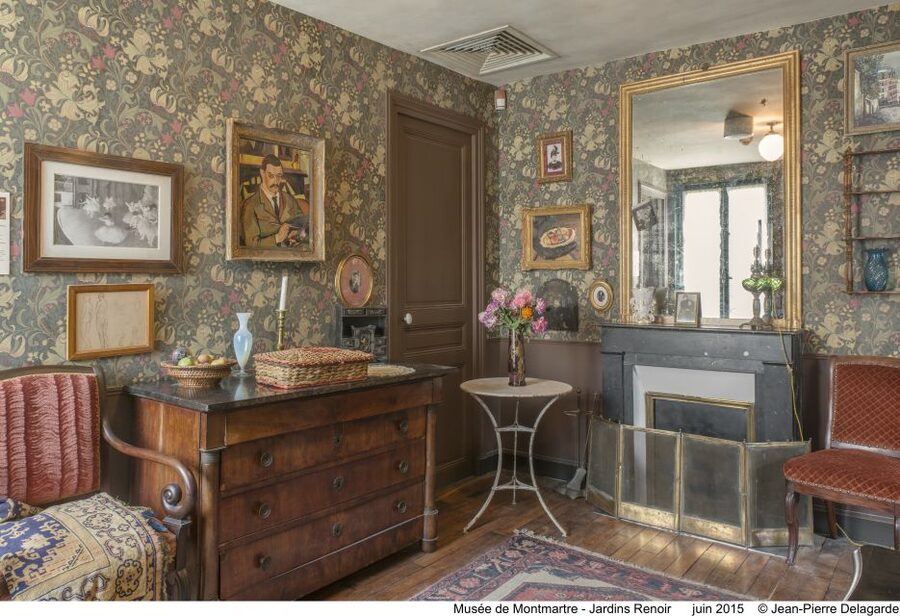
- The oldest building in Montmartre: Bel Air House dates to the seventeenth century and forms the setting for the museum.
- A 90-minute audio guide: Learn about cabarets, artists, studios, and Montmartre’s shift from countryside to Paris district.
- The Renoir Gardens are part of the ticket: Plan time for the garden rather than treating it as a quick extra.
- The collection covers more than painters: Expect material on mills, photographs, theatre, music, dance, and the Chat Noir cabaret.
- Temporary exhibitions add variety: Past displays have included artists such as Maximilien Luce and Herbin.
- Good value at $16: The ticket covers permanent and temporary exhibitions, gardens, café access, and the audio guide for one day.
Entering a seventeenth-century Montmartre house
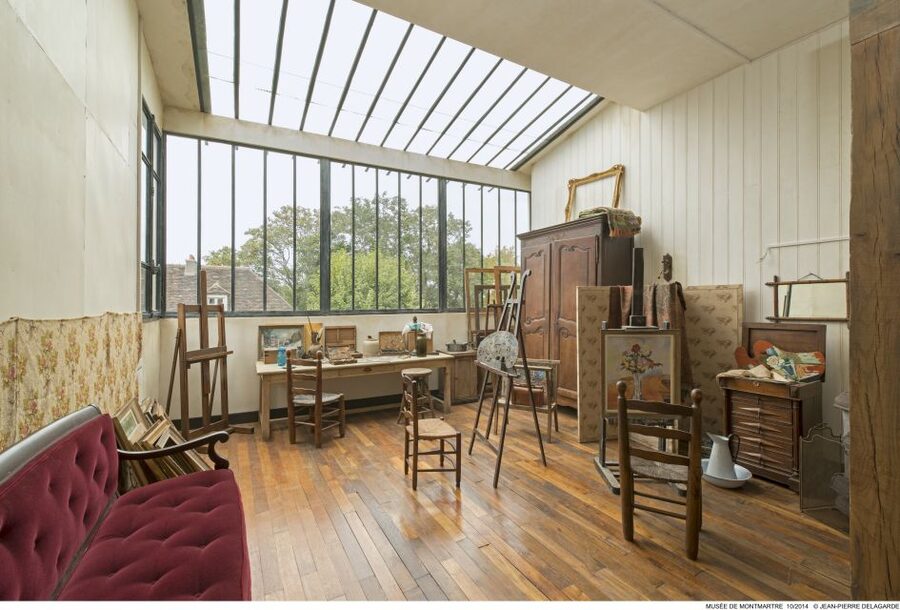
The museum’s setting does much of the work before you see a single painting. Bel Air House is described as the oldest building in Montmartre, and its rooms give the visit a domestic feel. This was not simply a gallery built for tourists. The house served as a meeting point and residence for artists, and the connection between building and collection is central to the experience.
You show your voucher at the entrance and go inside without waiting in the regular ticket line. That does not mean every visit will be instant, but it removes one small bit of Paris friction. The museum is open from 10:00 in the morning until 7:00 in the evening, with final entry 45 minutes before closing.
I would not rush straight through the first rooms. The appeal here comes from seeing Montmartre as a place where people lived, worked, argued, performed, and painted. The museum feels more intimate than grand, which suits the subject.
Some spaces require attention. One visitor found that rooms were easy to miss because of the signage and because part of the route passes through the café. Keep an eye on the layout rather than assuming the first gallery is the whole museum.
More Museum Tours in Paris
- Paris: Louvre Museum Timed-Entrance Ticket
★ 4.6 · 71,977 reviews - Paris: Orsay Museum Entry Ticket
★ 4.7 · 25,647 reviews - Louvre Museum Masterpieces Guided Tour with Access
★ 4.5 · 12,023 reviews
Following Montmartre from countryside to city
The audio guide lasts about 90 minutes and gives your visit a clear structure. It begins with Montmartre before the district became part of Paris, then follows the changes after annexation in the nineteenth century. At that point, city life began pressing into what had been a more rural setting.
That shift helps explain the character of Montmartre. The district was not just an artists’ quarter by accident. Its changing social and physical setting created room for cafés, cabarets, studios, performers, and people looking for a less formal artistic life.
Artists began arriving in the 1870s. By the 1880s, cafés and cabarets were multiplying, and Montmartre had developed its bohemian identity. The audio guide lets you place the paintings and photographs within that setting rather than treating them as isolated objects.
You can listen at the suggested pace or use the 90 minutes as a framework and stay longer where something catches your attention. There is no live guide included, so you are not tied to a group schedule. That is useful if you want to linger over a painting or move quickly through a section that interests you less.
Cabarets, shadow theatre, and the Chat Noir
One of the strongest parts of the museum is its attention to performance. Montmartre’s creative life was not limited to easels and canvases. Theatre, music, circus, and dance all played a role in the district’s identity.
The Chat Noir cabaret is a particular focus. It welcomed performances of shadow theatre, an art form created in 1866 by Henri Rivière and Henry Somm. The subject gives the museum a sense of movement and sound, even though the exhibits themselves are necessarily still.
You also learn about performers such as Aristide Bruant and Yvette Guilbert, whose spoken texts and songs drew audiences from across Paris. Dancers connected with the Moulin Rouge, including La Goulue, La Môme Fromage, and Grille d’Egouts, are part of this story too.
Toulouse-Lautrec repeatedly represented these performances, making his work an important link between the museum and the better-known cabaret image of Montmartre. If your picture of the district begins and ends with the Moulin Rouge sign, this section gives it useful context.
The museum does not treat cabaret as mere nightlife decoration. It shows how performance became part of Montmartre’s artistic output and how painters, dancers, writers, musicians, and theatre makers worked within the same small world.
The artists’ studios at 12 Cortot
The address 12 Cortot is one of the museum’s most evocative subjects. The studios saw several artists pass through, and many painted or recorded the rooms where they lived and worked.
That detail matters because it brings the artistic story down to human scale. You are not only looking at famous names and finished works. You are also considering cramped studios, shared connections, and the everyday setting behind the paintings.
The building helps you picture Montmartre as a working district rather than a museum label. Artists were not simply visiting for inspiration. They were living there, creating there, and turning their surroundings into subject matter.
I find this more rewarding than a collection arranged only by artist or date. The museum’s story is about relationships between place, people, and performance. You come away with a clearer idea of why Montmartre attracted so many creative figures.
A few more museum visits around Paris worth comparing
- Paris: Louvre Museum Entry Ticket With Host and River Cruise
★ 4.6 · 9,926 reviews - Paris: Grévin Wax Museum Ticket
★ 4.5 · 4,654 reviews - Paris: Orsay Museum Entry Ticket and Digital Audio Guide App
★ 4.4 · 3,170 reviews - Louvre Museum and Seine River Cruise Tickets by e-mail
★ 3.0 · 1,315 reviews
The permanent collection and temporary exhibitions
The permanent collection covers the history of Montmartre through paintings, photographs, and material connected with the district’s mills, cabarets, performers, and artists. The range is important. You might arrive expecting only works by people who lived in the area, then discover that the museum is also telling the story of the neighborhood itself.
The temporary exhibition space gives repeat visitors a reason to return. Recent displays have included work associated with Maximilien Luce and Herbin. A temporary exhibition on Herbin was praised for showing how his style changed over the course of his life, while a Maximilien Luce exhibition added another strong reason to spend time here.
Exhibitions change, so the exact artistic focus will depend on your date. The permanent galleries remain the dependable core, but the temporary show can affect how long you need. If you are interested in art rather than only local history, allow more than the basic audio-guide time.
One practical caution: a floor or room may occasionally be closed. That happened during one visit described in the supplied information, so do not assume every part of the building will always be open. Even with a closure, the temporary exhibitions and garden can still make the visit worthwhile.
Renoir Gardens and the Montmartre vineyard
The gardens are not an afterthought. They are one of the clearest reasons to add this museum to a Montmartre day.
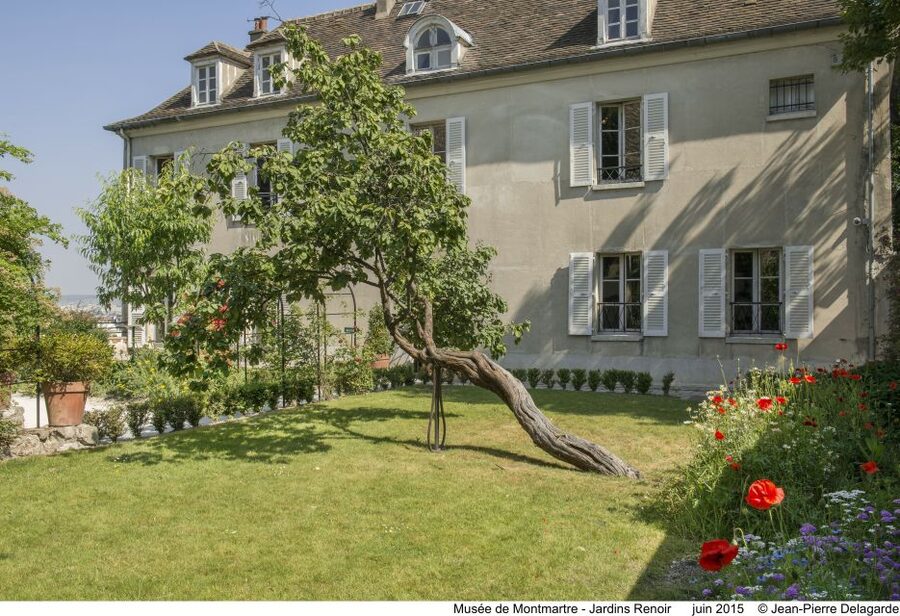
The Renoir Gardens contain luxuriant plant life and provide a peaceful place to pause after the galleries. Their name connects them with the artistic history of the house, but the immediate pleasure is simple: greenery, fresh air, and a quieter pace than the surrounding streets.
The Montmartre vineyard adds another layer to the visit. It reminds you that the district still carries traces of its older countryside character, even after becoming part of Paris. You do not need to be a garden expert or wine enthusiast to appreciate the contrast between the museum’s urban artistic story and its cultivated outdoor setting.
The gardens have appeal in every season. They can be attractive even in rainy weather, and winter does not erase their value. In warmer months, give yourself enough time to sit and look around instead of treating the garden as a path between rooms.
This is also where the museum earns its reputation as a place of calm. If you have spent the morning walking steep streets and crowded squares, the garden provides a welcome reset.
Café Renoir and the pace of your visit
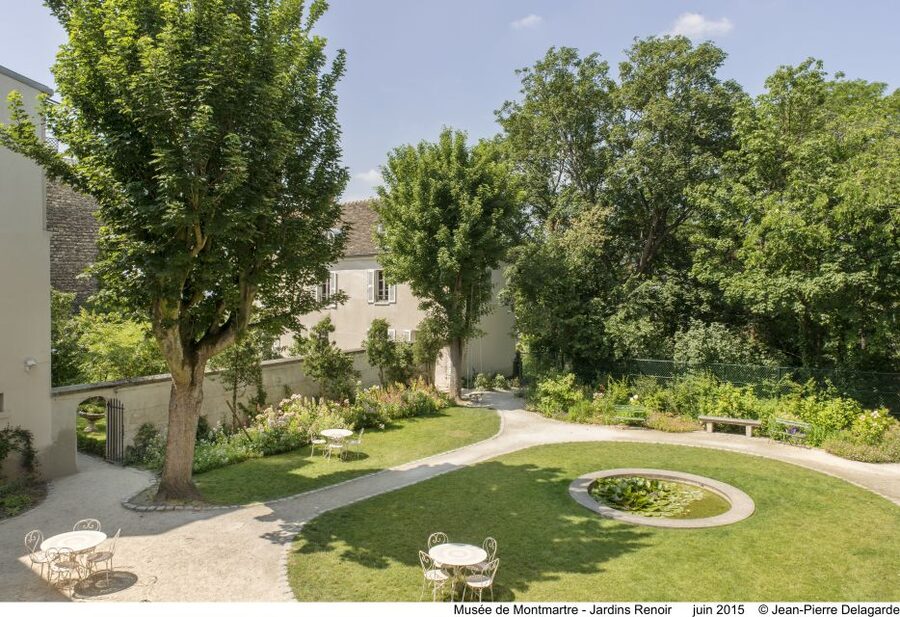
Café Renoir is open from 11:00 in the morning until 6:00 in the evening. Access to the café is included with the museum ticket, and the garden setting makes it a sensible place for a drink or light meal before or after the galleries.
Do not build your entire meal plan around it. The café has closed for a private event, and one family found the food options less useful for picky children. Treat it as a pleasant bonus rather than a guaranteed restaurant stop.
When it is open, the café can make the museum feel like a proper pause in your day. A relaxed lunch in the garden fits the mood better than a rushed snack between major attractions. One small detail worth noting: the chocolate has received special praise.
The café also affects the museum route. Since some areas are reached through or near the café, pay attention to signs and ask staff if you are unsure where the next room is. A slow visit works better than a quick glance.
How much time should you allow?
The audio tour itself takes about 90 minutes. I would allow at least two hours if you want to see the permanent collection, temporary exhibition, and gardens without hurrying.
Add more time if you plan to use the café or if a temporary exhibition interests you. The museum is valid for one day, so you can leave and return during that period if the ticket conditions at booking remain the same, but most people will find it easier to plan one continuous visit.
The museum works well as part of a wider Montmartre outing. You can approach it while exploring the district’s shops and cafés, then use the museum and gardens as a slower middle section. The walk up can be tiring, so comfortable shoes and realistic timing matter.
The quiet setting is part of the value. You are not buying a long list of major rooms. You are buying access to a focused museum, a historic house, a garden, and a particular piece of Montmartre that can be hard to sense from the main tourist routes.
Is $16 good value?
At $16 per person, this is a fair Paris museum ticket, especially because it includes both permanent and temporary exhibitions, the gardens, the Renoir private garden, the café area, and the audio guide.
The value is strongest if you care about Montmartre’s artistic and social story. You get much more than a small collection of paintings, since the visit covers cabarets, shadow theatre, performers, studios, photography, and the district’s move from countryside to city.
It is less compelling if you want a large national collection or famous masterpieces in every room. This is a focused local museum. Its strength is atmosphere and context rather than scale.
The skip-the-line entry adds modest practical value, particularly during busy periods. The free cancellation up to 24 hours before the visit and reserve-now, pay-later option also make the booking flexible, though you should check the exact terms when selecting your date.
Who will enjoy this museum most?
I would recommend Musée de Montmartre to you if you want to understand why the district became associated with art, nightlife, and unconventional creative life. It is especially useful for people interested in Toulouse-Lautrec, cabaret culture, Impressionist-era artists, photography, or the history of Paris neighborhoods.
It also suits anyone who wants a break from crowded attractions. The gardens are a major part of the experience, and the museum’s relaxed pace works well for a quiet afternoon.
Families can manage the visit, but the café may not suit children with narrow food preferences. Young children may also have limited patience for the historical material, while older children and teenagers interested in theatre, artists, or Paris life may find the cabaret story more engaging.
The museum is wheelchair accessible. Since the route includes several spaces and the building is historic, you may still want to confirm current access details if you have specific mobility needs.
Final verdict: book it if you want Montmartre with more substance
Book this ticket if you want Montmartre explained through the people who lived, painted, performed, and worked there. The strongest combination is the historic house, the audio guide, and the Renoir Gardens. Together, they give you both the story and a place to rest.
Skip it if your priority is a huge art collection or a guided walking tour led by a person. No live guide is included, and the museum can feel small if you expect several hours of major galleries.
For most visitors with an interest in Paris art and local history, $16 is sensible. Arrive with time for the garden, follow the signs carefully, and do not count on the café as your only food option. That approach lets you enjoy the museum at its best: intimate, informative, and removed from the louder side of Montmartre.
FAQ
How long does the audio guide take?
The audio guide lasts about 90 minutes. You are welcome to stay longer and explore the museum at your own pace.
What does the $16 ticket include?
It includes entry to the permanent and temporary exhibitions, access to the museum gardens and Café Renoir, the Renoir private garden, and an audio guide.
Is a live guide included?
No. The ticket includes an audio guide, but not a live guide.
What are the museum’s opening hours?
The museum is open from 10:00 AM to 7:00 PM. Last entry is 45 minutes before the halls close.
When is Café Renoir open?
Café Renoir is open from 11:00 AM to 6:00 PM.
Can I see the Montmartre vineyard?
Yes. The museum gardens include access to the area around the Montmartre vineyard.
Is the museum wheelchair accessible?
Yes, the activity information states that the museum is wheelchair accessible.
Can I cancel my booking?
Yes. You can cancel up to 24 hours in advance for a full refund. A reserve-now, pay-later option is also available.
Just added around Paris
- Rodin Museum Masterpieces – Guided Tour up to 8 guests★ 4.9 · 13 reviews
- Invalides Museum – WWI & WWII – Guided Tour up to 8 guests★ 5.0 · 32 reviews
- Skip the Line Guided Tour of Louvre Museum Highlights★ 5.0 · 49 reviews
- Paris: Louvre Museum Highlights Small-Group Guided Tour★ 4.8 · 157 reviews
- From Paris: Private Trip to Giverny, Monet’s House & Museum★ 4.5 · 13 reviews
- Paris: Street Art Open-Air Museum Bike Tour★ 4.8 · 51 reviews
- Paris: The Rodin Museum and Seine River Cruise★ 4.6 · 45 reviews
- Paris: Rodin Museum Ticket & Optional Digital AudioGuide App★ 4.7 · 56 reviews
Museum Tours in Paris, compared.

Louvre Museum Masterpieces Guided Tour with Access
Read our review →
Louvre Museum Entry Ticket With Host and River Cruise
Read our review →
Les Invalides: Napoleon’s Tomb & Army Museum Entry
Read our review →
Mona Lisa & Louvre Masterpieces Tour with Reserved Access
Read our review →
Louvre Museum – Exclusive Guided Tour (Entry Included)
Read our review →
Louvre Museum Hosted Entry and Mona Lisa Audioguide
Read our review →Browse the lists this tour appears in