

Review · PARIS
Les Invalides: Napoleon’s Tomb & Army Museum Entry
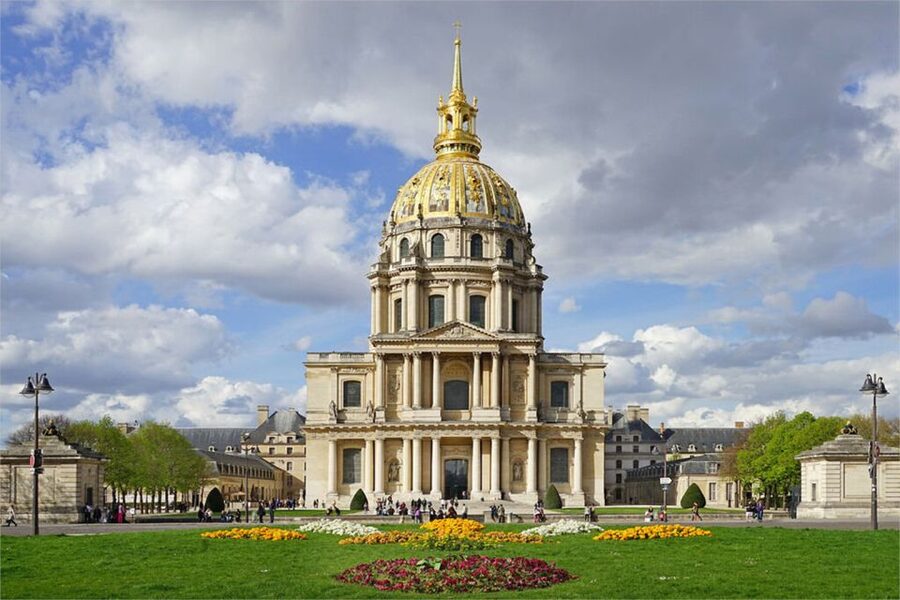
Napoleon’s enormous red porphyry tomb is the star here, but it is only one room in a vast Paris complex. Les Invalides combines a gilded church, royal armor, battlefield art, resistance stories, World War exhibits, and centuries of French military history under one roof.
I like the freedom to visit any time between 10 AM and 6 PM, and I like the sheer variety. You can spend an hour admiring the Dome, or settle in for most of a day with the armor, weapons, films, and interactive displays. The catch is simple: this is much bigger than it looks, and two or three hours may leave important sections unseen.
Key points to know before you go
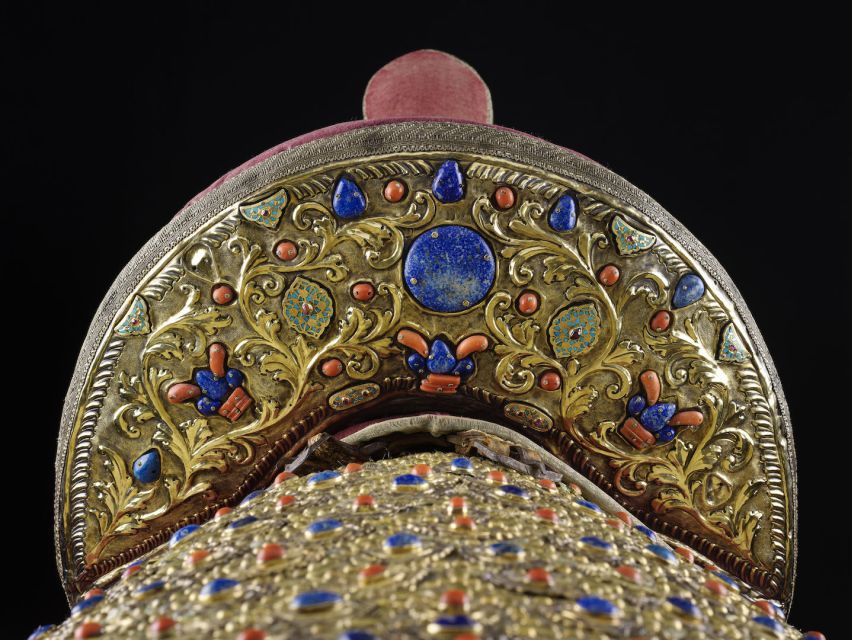
- Napoleon’s Tomb: See the emperor’s monumental sarcophagus beneath the famous golden Dome Church.
- A museum built for serious browsing: More than 500,000 objects cover the Middle Ages through the modern era.
- Several museums in one visit: Your ticket includes the Army Museum, Plans-Reliefs, Order of the Liberation, temporary exhibitions, and the Dome Church.
- Allow more time than you expect: Three hours covers highlights, but four to five hours or a full day gives the collection room to breathe.
- Flexible entry: Access is available from 10 AM to 6 PM through the Esplanade des Invalides, with Place Vauban open from 2 PM to 6 PM.
- Useful extras cost more: A multimedia guide is available for €5, and weekend family activities cost €7 per child.
Why Les Invalides is more than Napoleon’s Tomb

Many people arrive at Les Invalides thinking they are visiting a single monument. I understand the mistake. The golden Dome catches your eye from a distance, and Napoleon’s Tomb is the most famous feature.
But the Hôtel National des Invalides is also a huge military museum. Louis XIV created the complex to house veterans and wounded soldiers. Today, its rooms trace French military life from medieval armor to the two world wars and the French Resistance.
That range gives the visit real weight. You are not looking at one isolated monument. You are moving through the changing tools, uniforms, symbols, and stories of French warfare across several centuries.
I especially like the way the site mixes grand architecture with small personal objects. A cannon or suit of armor makes an immediate visual impression, while a uniform, photograph, or personal belonging gives the history a human scale.
The museum is also useful if your interests are specific. You can focus on Napoleon, medieval arms, World War I, World War II, or the Resistance without needing to treat every room equally.
More Museum Tours in Paris
- Paris: Louvre Museum Timed-Entrance Ticket
★ 4.6 · 71,977 reviews - Paris: Orsay Museum Entry Ticket
★ 4.7 · 25,647 reviews - Louvre Museum Masterpieces Guided Tour with Access
★ 4.5 · 12,023 reviews
Entering the Dome Church and Napoleon’s Tomb
Begin with the Dome Church if Napoleon is your main reason for coming. The interior is one of the most beautiful spaces in the complex, with elaborate decoration and a strong sense of ceremony.
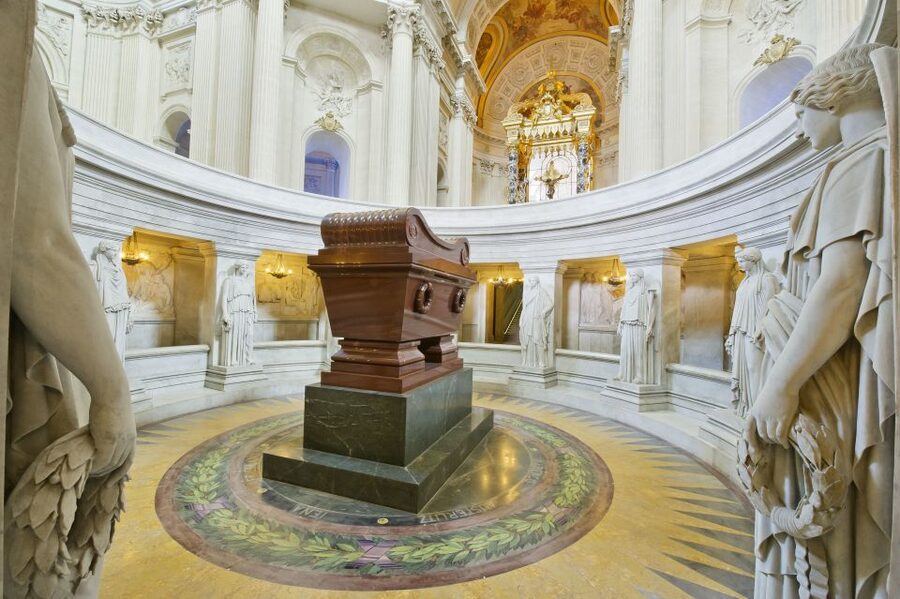
Napoleon’s tomb sits below the dome, surrounded by the architecture designed to make the visitor look, quite literally, toward a larger-than-life ruler. The scale is deliberate. You are not seeing a modest grave, but a grand imperial memorial.
The tomb alone can justify the $20 admission for many visitors. It is especially worthwhile if you care about Napoleon, French political history, or monumental architecture. Even if you know little about him, the room explains how France chose to remember one of its most powerful figures.
There is also a useful contrast here. The Dome Church feels formal and theatrical, while the museum galleries are more focused on objects and events. I like having both experiences in one visit.
Give yourself time to look upward as well as downward. The dome, decoration, and surrounding architecture are part of the attraction, not merely a backdrop for the sarcophagus.
Keep your ticket with you after entering. Les Invalides contains several museum areas, and you may need to show or scan the ticket again as you move between sections. This can feel repetitive, but it is important if you plan to see more than the tomb.
The armor and weapons galleries
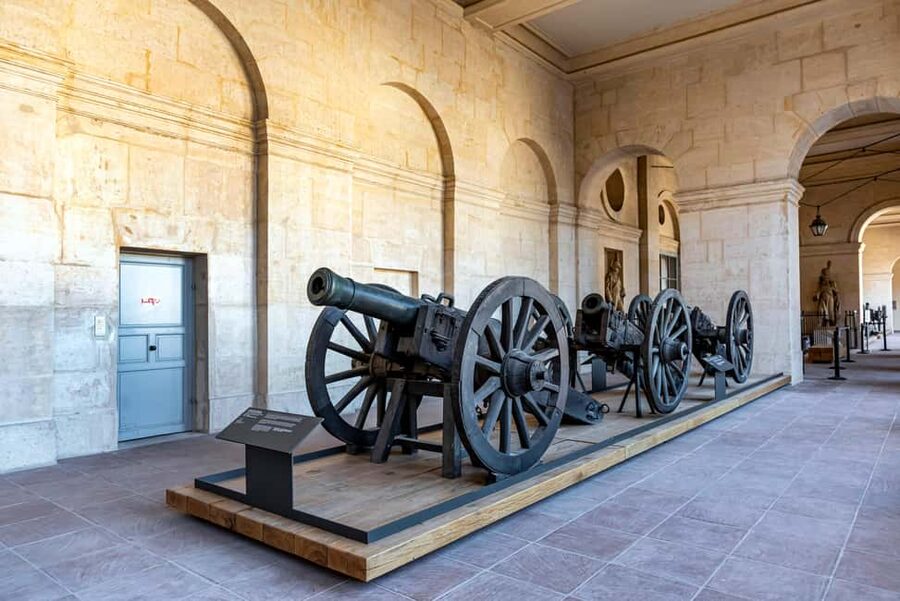
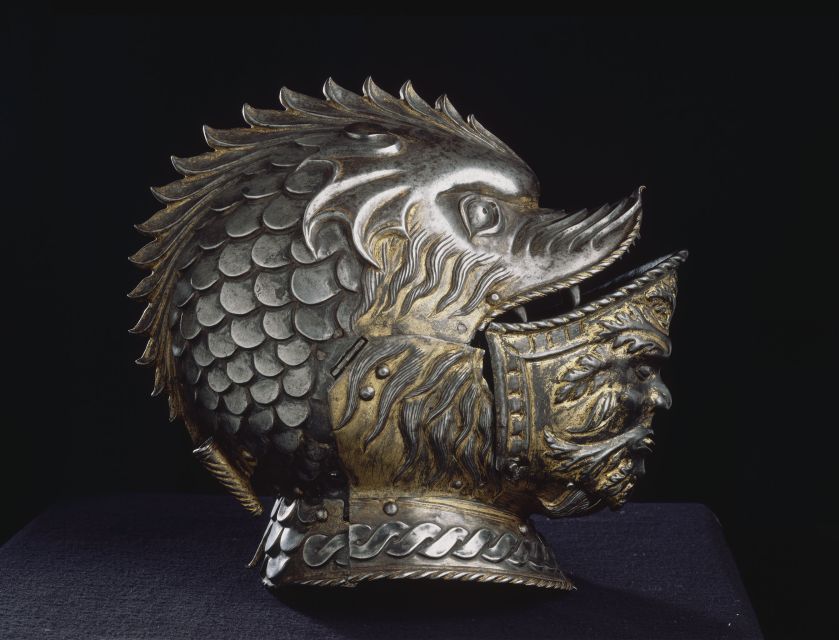
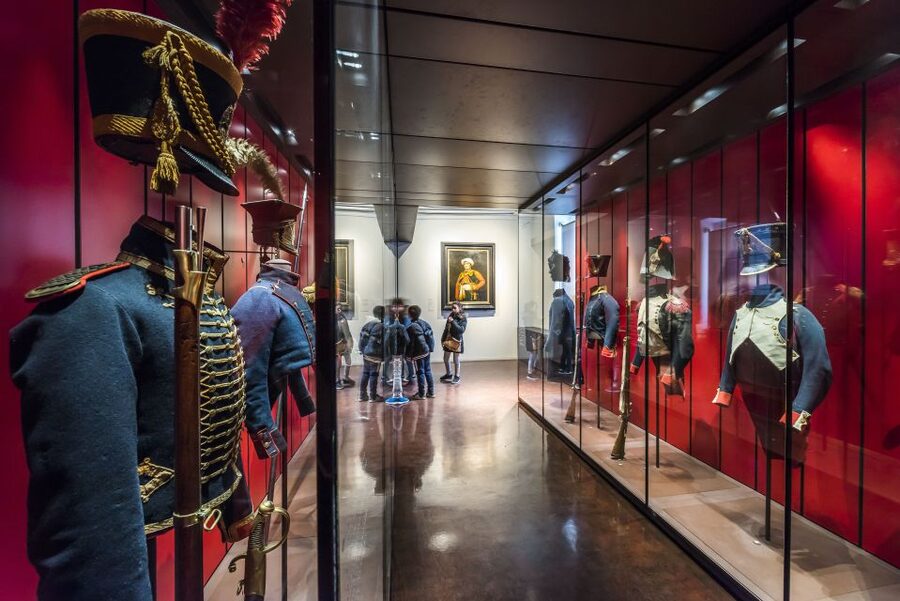
The arms and armor collection is one of the strongest reasons to visit with children, teenagers, or anyone who prefers objects over long written panels. You will see weapons and protective gear associated with French kings and soldiers, along with cannons, swords, and other military equipment.
Armor works well as museum material because it is immediate. A suit of armor tells you something about technology, status, danger, and appearance before you read a single label.
I would not rush these rooms. Look for changes in shape and design as warfare developed. The collection helps you see that military history is not only a sequence of battles. It is also a story of materials, craftsmanship, rank, and changing ideas about how soldiers should fight.
The galleries are visually strong, but the total amount of material can become tiring. If you have limited time, choose a few sections and enjoy them properly rather than trying to inspect every case.
Families should find plenty to hold a young visitor’s attention, especially the armor and weapons. Weekend family activities are offered at 11 AM and 2:30 PM in French, subject to availability. They cost €7 per child and are paid for on site.
From medieval warfare to Napoleon’s empire

The permanent collections carry you from the Middle Ages through the reigns of French kings and into the Napoleonic period. Paintings, uniforms, weapons, battle objects, and personal belongings help connect military events with the people who shaped them.
This section is strongest when you give yourself permission to slow down. The displays are not simply a parade of famous names. They show how France’s armies were organized, equipped, and represented over time.
Napoleon remains the central figure for many people, but the museum gives you a broader setting for his career. His campaigns make more sense when you have seen the royal weapons, military traditions, and earlier conflicts that came before him.
The signs are available in French and English, which helps international visitors follow the main story. If you want more explanation, a multimedia guide can be purchased on site for €5. It is not included in the entry ticket.
The museum also uses digital and interactive material to explain battles and major turning points. These features can help if you find dates and campaign names hard to organize. They are particularly useful when a map or moving display shows how a battle developed.
A few more museum visits around Paris worth comparing
- Paris: Louvre Museum Entry Ticket With Host and River Cruise
★ 4.6 · 9,926 reviews - Louvre Museum – Exclusive Guided Tour (Entry Included)
★ 5.0 · 6,296 reviews - Paris: Louvre Museum Hosted Entry and Mona Lisa Audioguide
★ 4.6 · 5,235 reviews - Paris: Grévin Wax Museum Ticket
★ 4.5 · 4,654 reviews
World War I, World War II, and the French Resistance
Set aside serious time for the modern sections. The World War I and World War II displays contain artifacts, films, photographs, and explanatory material. You may find these galleries more demanding than the armor rooms because they deal with mass warfare, occupation, resistance, and civilian suffering.
The World War exhibits are a strong choice if you have only part of a day. They provide a concentrated look at events that still shape Europe, and the films and interactive material make the displays easier to follow.
The French Resistance section is also important. It explains how resistance networks helped challenge the occupation and how their efforts affected the course of World War II. The role of women receives notable attention, an aspect that can be missed in more traditional military displays.
I would choose this area if you are visiting with older children or teenagers who are studying the world wars. The subject matter is serious, but the combination of objects, images, and film gives it structure.
Do not assume the modern galleries will be a quick add-on after Napoleon’s Tomb. They can take hours by themselves. If you want to see both the Dome and the world wars properly, plan a half-day at minimum.
Plans-Reliefs and the Order of the Liberation
Your ticket also includes the Museum of Plans-Reliefs. The name refers to detailed three-dimensional models used to represent fortified towns and military positions.
These models reward patience. They are not the kind of exhibit you glance at while walking between larger rooms. Take time to examine how towns, walls, roads, and surrounding ground were represented for military planning.
The Museum of the Order of the Liberation offers another change of focus. It deals with the people and stories connected to the liberation of France, giving the modern history sections a more personal and political dimension.
Along with the permanent collections, temporary exhibitions are included. Their subject matter can change, so check what is showing on the day of your visit if a special exhibition matters to your plans.
The variety is a major strength, but it also creates the main practical problem: you need to make choices. The site is not difficult because of complicated transport or timed admission. It is difficult because there is simply so much to see.
How long should you spend at Les Invalides?

The official ticket is valid for one day, and that is useful. You can enter, take a break, and return later during the same day. This is a better plan than trying to force the entire museum into one continuous march.
For a quick visit, allow around two hours for the Dome Church, Napoleon’s Tomb, and a few selected galleries. That gives you the headline sights but not a full understanding of the complex.
Three hours lets you see the tomb, armor, and one modern history section at a reasonable pace. Many people will still find that they have skipped several galleries.
Four to five hours is more comfortable if you want to take your time. A full day makes sense for serious military history fans, anyone interested in both Napoleon and the world wars, or visitors who prefer reading labels and watching films.
There are seats throughout the museum, which helps if you need regular breaks or are visiting with children. Cloakrooms are available, and snacks can be purchased. I would still carry water, especially in warm weather.
The building can feel tiring simply because of its size. Wear comfortable shoes and avoid scheduling another major museum immediately afterward.
The $20 ticket and what it includes
At $20 per person, the ticket is a strong value if you plan to see more than Napoleon’s Tomb. The admission covers the permanent collections, Dome Church, Museum of Plans-Reliefs, Museum of the Order of the Liberation, temporary exhibitions, and the museum’s many military galleries.
The value is less obvious if you only want a quick look at the tomb. In that case, you are paying for access to a much larger institution than you may have time to explore.
There is no guided tour included. You can purchase the multimedia guide on site for €5, or simply follow the French and English signs and use the interactive displays.
The ticket is also useful for a flexible day because you do not need to commit to a specific visit time. Entry is available from 10 AM to 6 PM through the Esplanade des Invalides. Place Vauban opens for access from 2 PM to 6 PM.
The ticket desk closes 30 minutes before the museum itself. The site is closed January 1, May 1, and December 25.
Visitors under 18 enter free, as do European Union citizens under 26, but they still need an access ticket. That pass must be collected from the museum office before entering.
Practical access and movement inside the complex
The attraction is wheelchair accessible, though the layout is not completely easy for every visitor. The site has made useful efforts, but some areas may still require extra planning for people with mobility limitations.
You enter the Invalides complex and then show your ticket for the museum areas. Since the site contains several sections, keep the ticket until you finish. You may need it again at another entrance.
The entrance process can be confusing because people waiting to buy tickets and people who already have tickets may not always be clearly separated. If you already booked, look for the entry point rather than automatically joining the cash desk line.
The complex sits in central Paris and works well with other nearby sightseeing. Still, I would avoid treating it as a quick stop between tightly scheduled appointments. The distance between sections, repeated ticket checks, and the number of displays can eat up time.
Who will enjoy this visit most?
I would recommend Les Invalides to anyone interested in Napoleon, French history, military technology, World War I, World War II, architecture, or large museum collections.
It is particularly good for families with school-age children who enjoy armor, weapons, models, and films. The range of exhibits means different members of a group can choose different sections instead of following one narrow subject.
It also suits independent visitors. You can build your own route, skip galleries that do not interest you, return later in the day, and spend extra time with the objects that catch your attention.
I would be more cautious if you dislike military history or want a quiet, short monument visit. The Dome Church is beautiful, but the full ticket leads into a major museum with serious subjects and a lot of walking.
Should you book Les Invalides?
Yes, if you want more than a photograph of Napoleon’s Tomb. The $20 ticket gives you access to one of Paris’s most impressive interiors and a large set of military collections, with enough flexibility to visit at your own pace.
Book it if you can spare at least half a day, and choose a full day if you want the world wars, Resistance, armor, Plans-Reliefs, and temporary exhibitions. Go early if you want a calmer start, and keep your ticket handy as you move through the complex.
Skip it only if your schedule is so tight that you can see the Dome for a few minutes and nothing else. In that case, the museum’s scale will work against you. For most history-minded visitors, though, Les Invalides is one of the better-value major sights in Paris.
FAQ
How much does entry to Les Invalides cost?
The listed price is $20 per person.
How long is the ticket valid?
The ticket is valid for one day.
What does the ticket include?
It includes the permanent collections, Dome Church and Napoleon’s Tomb, Museum of Plans-Reliefs, Museum of the Order of the Liberation, temporary exhibitions, and access to the museum galleries.
Is a guided tour included?
No. A guided tour is not included.
Is a multimedia guide available?
Yes. A multimedia guide can be purchased on site for €5.
Can children enter for free?
Visitors under 18 can enter free, but they still need an access ticket collected from the museum office.
Can European Union citizens under 26 enter free?
Yes. EU citizens under 26 can enter free, but they need to collect an access pass from the museum office before entering.
When can I enter through the Esplanade des Invalides?
Access through the Esplanade des Invalides is available from 10 AM to 6 PM.
Is the museum wheelchair accessible?
Yes, the experience is listed as wheelchair accessible, though some areas may not be fully easy for every visitor.
When is Les Invalides closed?
The site is closed on January 1, May 1, and December 25.
Just added around Paris
- Rodin Museum Masterpieces – Guided Tour up to 8 guests★ 4.9 · 13 reviews
- Invalides Museum – WWI & WWII – Guided Tour up to 8 guests★ 5.0 · 32 reviews
- Skip the Line Guided Tour of Louvre Museum Highlights★ 5.0 · 49 reviews
- Paris: Louvre Museum Highlights Small-Group Guided Tour★ 4.8 · 157 reviews
- From Paris: Private Trip to Giverny, Monet’s House & Museum★ 4.5 · 13 reviews
- Paris: Street Art Open-Air Museum Bike Tour★ 4.8 · 51 reviews
- Paris: Rodin Museum Ticket & Optional Digital AudioGuide App★ 4.7 · 56 reviews
- Paris: The Rodin Museum and Seine River Cruise★ 4.6 · 45 reviews
Museum Tours in Paris, compared.

Louvre Museum Masterpieces Guided Tour with Access
Read our review →
Louvre Museum Entry Ticket With Host and River Cruise
Read our review →
Mona Lisa & Louvre Masterpieces Tour with Reserved Access
Read our review →
Louvre Museum – Exclusive Guided Tour (Entry Included)
Read our review →
Louvre Museum Hosted Entry and Mona Lisa Audioguide
Read our review →
Browse the lists this tour appears in