

Review · FRANCE
Nîmes: Musée de la Romanité Skip-the-Line Entrance Ticket
The best part of Musée de la Romanité is the way it connects ordinary life with grand Roman history. You move from a reconstructed Gallic house to Roman homes, town planning, mosaics, and daily objects, then see how the city changed during the medieval period. The Pentheus mosaic and the reconstructed Domus Villa are the big visual rewards.
I like the skip-the-line entrance, especially when you have limited time in Nîmes, and I like the museum’s mix of artifacts with augmented reality and large audiovisual displays. The museum also gives you more than indoor cases: a Mediterranean garden, a restaurant, and a rooftop with a 360-degree view. One drawback is that some of the digital displays may not be immediately obvious to operate, so you may need to ask a staff member for help.
Key points to know before you go
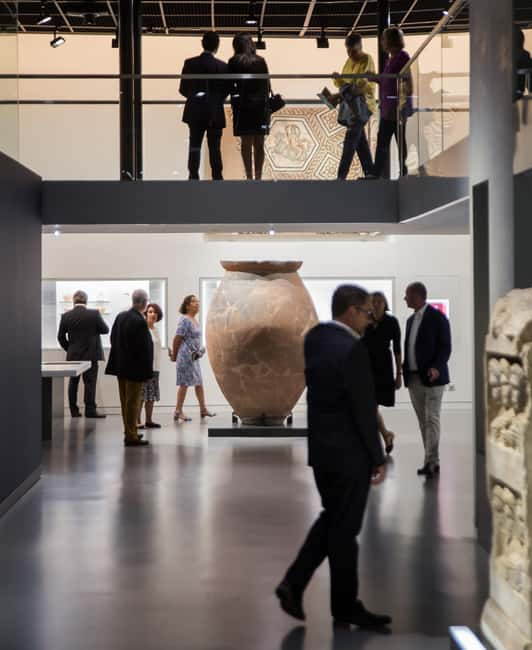
- Roman life, not just Roman emperors: The displays focus on housing, food, decoration, town planning, and everyday objects.
- Three clear historical periods: The visit moves through the pre-Roman, Roman, and medieval eras of Nîmes.
- The Pentheus mosaic is a highlight: This large and striking work helps show the skill and wealth behind Roman domestic decoration.
- Useful for families: A digital game for children gives younger visitors something active to do as they learn.
- The rooftop adds real value: You get a 360-degree panoramic view of Nîmes after seeing the ancient city indoors.
- Plan for the optional audio guide: Adult and child versions are available, but the guide costs an additional €4.
Why this museum makes sense in Nîmes
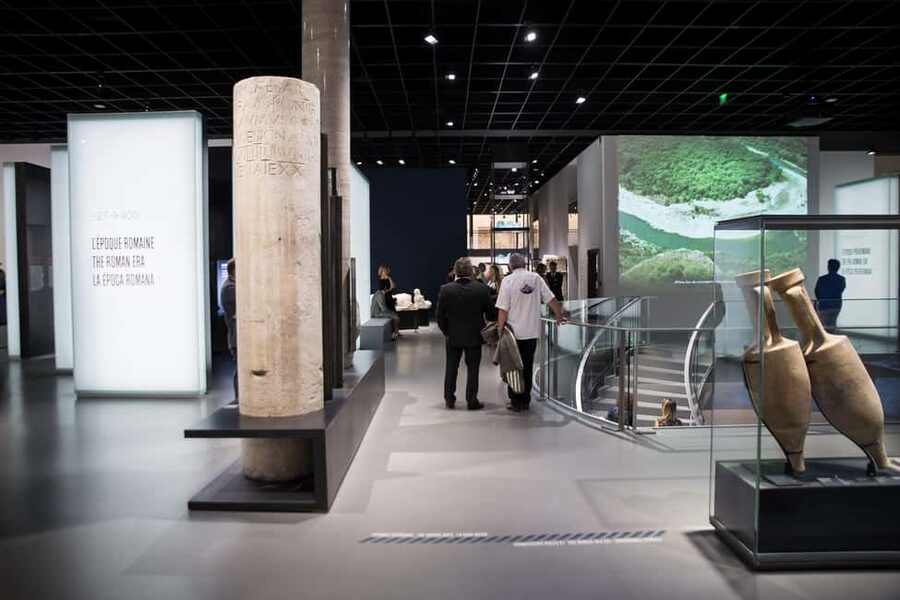
Nîmes is famous for its Roman remains, and the Musée de la Romanité gives those remains a wider setting. You do not simply look at isolated stones and try to imagine the past. The museum explains how people lived, how homes were decorated, how cities were organized, and how old buildings were reused as the city changed.
Its location at 16 boulevard des Arènes is especially handy because it puts you right beside one of Nîmes’ most important ancient monuments, the Roman arena. The museum and arena form a natural pair. The arena shows Roman public spectacle and engineering from the outside and inside, while the museum explains the private and civic world around it.
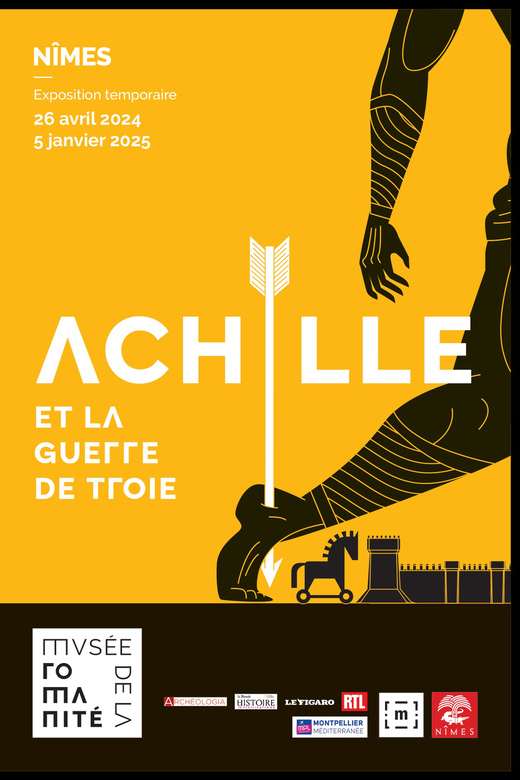
At about $10 per person, the ticket is fairly easy to justify if you have an interest in Roman archaeology. The price includes entry to the permanent museum and the temporary exhibition, so you are paying for more than a quick look at a few famous objects. The priority entrance matters most during busy periods, when saving time can be worth as much as the admission itself.
You can use the ticket during one day, with available starting times shown when you check. This is not a guided walking tour, so you can set your own pace. That flexibility works well if you are combining the museum with the arena, the old center, or a meal nearby.
More skip-the-line museum tickets in France:
- Louvre Museum: Skip-the-Line Small Group Guided Tour
★ 4.6 · 4,268 reviews - Paris: Skip-the-Line Louvre Museum & Mona Lisa Guided Tour
★ 4.6 · 1,442 reviews - Paris: Musée d’Orsay Skip-the-Line Tour with Expert Guide
★ 4.5 · 1,145 reviews
Start with the pre-Roman world
The first section takes you back before Roman rule. Its most useful feature is a fully reconstructed Gallic house, which gives you a physical sense of domestic life rather than presenting the pre-Roman period as a list of dates.
I find reconstructed spaces helpful because they answer basic questions quickly. What did a home look like? How were rooms arranged? What kind of objects belonged in daily life? A few artifacts in a glass case can be valuable, but a complete reconstruction helps you picture how people occupied their surroundings.
The museum’s presentation uses multimedia installations and augmented reality along with traditional objects. These tools can make the early section easier to follow, particularly if you are new to Roman history or visiting with children. Still, the technology is not always self-explanatory. Take a moment to look for instructions, and ask the staff if a display does not respond as expected.
This section is also a useful reminder that Roman Nîmes did not begin with Rome. The city had an earlier local identity, and the Roman period built on that foundation. That context makes the later galleries more meaningful.
Follow Roman life through objects and images
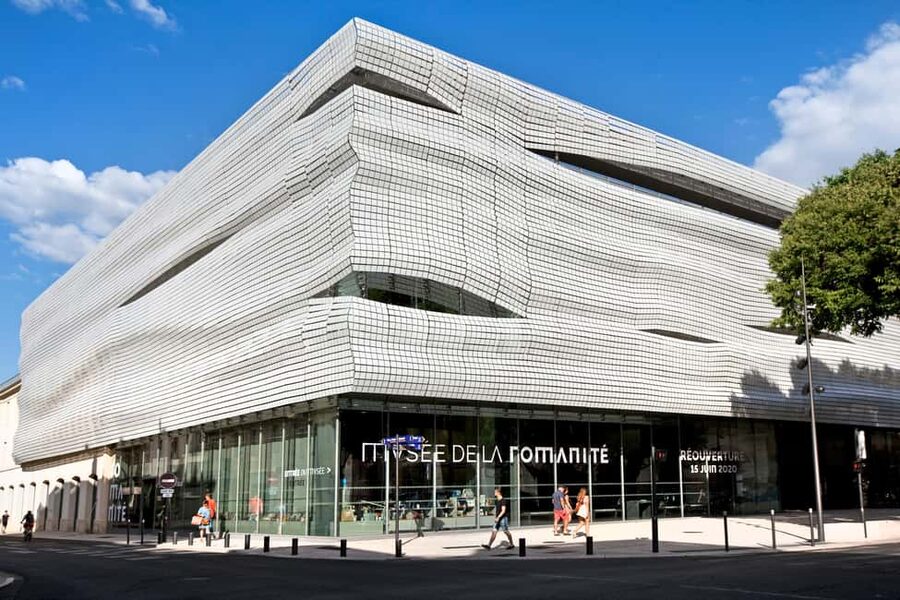
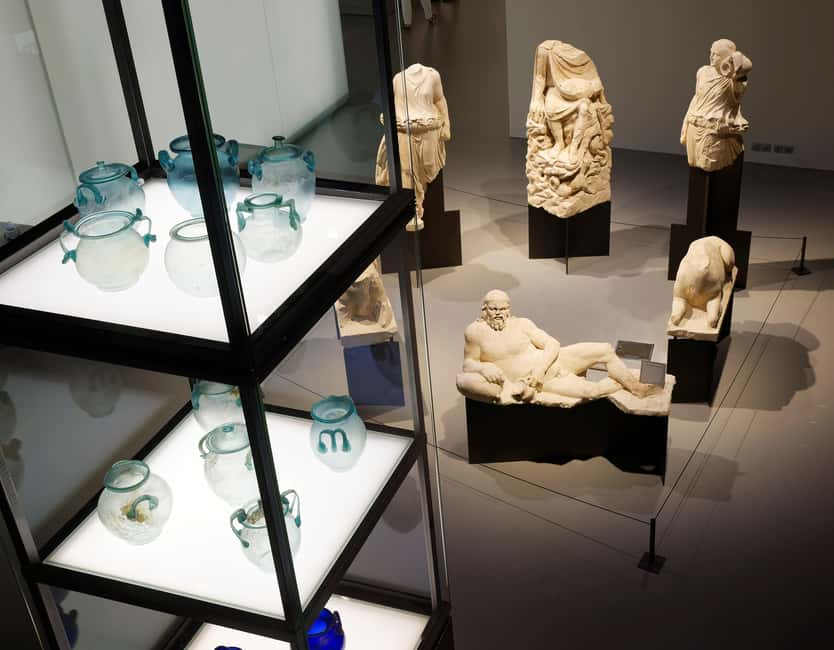
The Roman section is the heart of the museum. Here, you find a broad collection of archaeological objects linked to town planning, homes, habits, and decoration. The stated collection includes more than 2,000 artifacts, giving the visit enough range to show how Roman society worked at several levels.
The strength of this section is its attention to practical life. You are not limited to military history or imperial portraits. You see the kinds of objects that help explain cooking, storage, personal habits, housing, and interior decoration. These small pieces may not look dramatic at first, but they give the ancient city its human scale.
The museum’s explanations are designed to be clear and concise. That helps when you want to learn without reading a wall of text at every stop. If you already know Roman history, the displays still give you a chance to focus on material details and visual evidence.
You should allow time for the Pentheus mosaic. It is one of the museum’s most spectacular pieces and a good example of how Roman art could transform a floor into a major decorative feature. Look at it as both artwork and evidence of a household’s wealth, taste, and connection to wider stories from the ancient world.
The reconstructed Domus Villa is another key stop. A domus was a Roman town house, and this reconstruction helps you understand how rooms, decoration, and household life fitted together. It gives the Roman section a sense of place, balancing the smaller objects displayed nearby.
The museum does not treat Roman culture as something confined to monuments. Instead, it shows how the city worked at street level. That makes the visit a good companion to Nîmes’ arena, where the scale is huge and the purpose is public. Here, the focus is closer to home.
See Nîmes change in the medieval period
The medieval section shows a city that had contracted after the Roman period. Ancient buildings were buried, adapted, or reused, and the Roman arena became a fortified enclosure with homes and places of worship inside.
This is an important part of the visit because it prevents a common mistake: imagining that Roman monuments simply survived untouched into modern times. Cities change. Their residents use old walls for new purposes, and a building made for public entertainment can become part of a defensive settlement.
The medieval story is less immediately flashy than the mosaic or the digital technology, but it adds depth to your understanding of Nîmes. It explains why ancient remains can look altered and why the arena’s later history matters.
You may find this section particularly useful if you plan to visit the arena afterward. The museum gives you a framework for noticing how Roman structures were preserved, changed, or absorbed into later urban life.
A few more museum visits around France worth comparing
- Paris: Louvre Museum Timed-Entrance Ticket
★ 4.6 · 71,977 reviews - Paris: Orsay Museum Entry Ticket
★ 4.7 · 25,647 reviews - Paris: Louvre Museum Entry Ticket With Host and River Cruise
★ 4.6 · 9,926 reviews - Paris: Musée de l’Orangerie Reserved Entrance Ticket
★ 4.7 · 6,529 reviews
How the multimedia displays work
Musée de la Romanité uses augmented reality and monumental audiovisual technology to bring history into the galleries. The aim is not simply to decorate the visit with screens. These tools can help you picture buildings, routines, and settings that no longer survive in full.
For children, the digital game is a practical advantage. It gives them a task to follow and can make a long museum visit feel less passive. The museum also offers different audio guides for adults and children, according to the available visitor information. The audio guide costs an extra €4, so add that to your budget if you want a narrated visit.
The technology does have a small learning curve. Some information sources are not obvious to activate, and you may need assistance. Staff are available to help, which reduces the problem, but it is worth keeping expectations realistic. This is not a completely effortless, walk-in-and-everything-works experience.
I would not let that stop you from booking. Just treat the digital material as an extra layer, not the sole reason to visit. The archaeological collection, reconstructed spaces, mosaic, and architecture give the museum substance even if you skip a few interactive features.
Take time for the building, garden, and rooftop
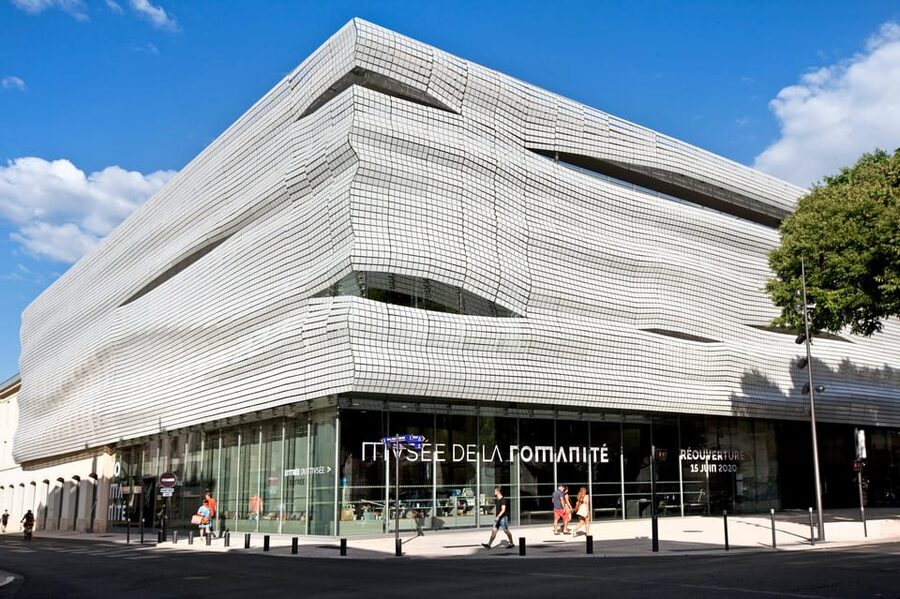
The museum building is part of the experience. Its modern architecture creates a deliberate contrast with the ancient arena next door. From inside and outside, you get a conversation between old stone and new design, which makes the location feel carefully chosen rather than accidental.
After the galleries, go to the rooftop if conditions allow. The 360-degree panorama gives you a broad view over Nîmes and helps you understand the city’s relationship with its Roman center. You have just seen models, objects, and reconstructions indoors. From above, you can connect them to the real urban setting.
The rooftop also makes the museum feel like more than a standard archaeological collection. You can pause, reset, and look across the city before moving on. If you are visiting in the afternoon, this is a sensible place to slow the pace rather than rush straight back into sightseeing.
The Mediterranean garden offers another quiet break. The information does not specify its size or planting details, so do not plan your day around a major garden visit. Think of it as a pleasant place to relax between the exhibits and the rooftop.
There is also a museum restaurant on the rooftop. It may suit you if you want to make the museum part of an afternoon rather than a quick cultural stop. The restaurant adds convenience, though the ticket itself does not include a meal.
How long to spend inside
The ticket is valid for one day, but no fixed visit length is provided. Your timing will depend on how closely you read the displays, how much you use the multimedia features, and whether you stop at the garden, restaurant, and rooftop.
A fast visit could focus on the three historical periods, the Pentheus mosaic, the Domus Villa, and the panoramic view. A slower visit gives you time to examine the everyday objects and try more of the augmented displays.
I would avoid squeezing the museum into a rushed gap between several other sights. The collection covers a long span of history, and the museum’s teaching approach works best when you give it room to breathe. If you are traveling with children, allow extra time for the digital game and for pauses.
The skip-the-line entry helps at the door, but it does not mean every part of the museum will be instant. You still need time to look, read, and operate the displays. The value is in getting inside more efficiently, not in turning the museum into a ten-minute stop.
Who will get the most from this ticket
This experience suits you if Roman archaeology is a major reason for visiting Nîmes. It is also a good choice if you want a clear introduction before seeing the city’s ancient monuments in person.
Families have a useful reason to consider it. The children’s digital game and child audio guide can give younger visitors a better way into the subject. The reconstructed house and domus also provide more visual interest than a museum made up only of small objects.
The museum works for independent visitors because there is no required group schedule or guide-led route. You can read everything, choose only the displays that interest you, or move quickly toward the highlights.
It may be less suitable if you want a short, purely atmospheric visit. The museum is educational by design, and you get the most from it by engaging with the explanations and reconstructions. If your only goal is to see the Roman arena, spend your time and money on the arena itself instead.
Access, booking, and useful practical details
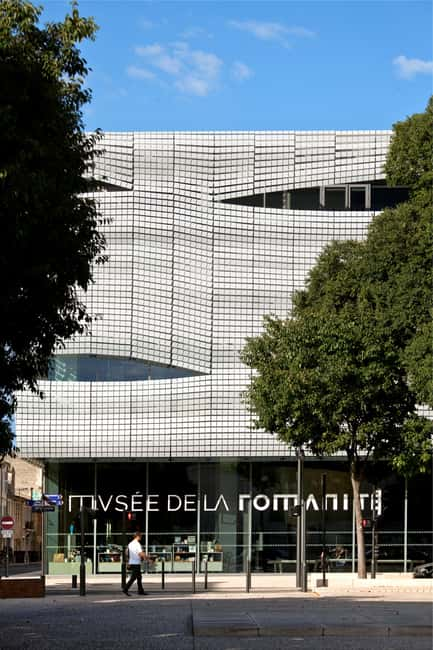
The museum is wheelchair accessible, which makes it a practical choice for many visitors with mobility needs. The entrance is at Musée de la Romanité, 16 boulevard des Arènes, 30000 Nîmes, France.
The skip-the-ticket-line option uses a separate entrance. Check the available starting times when booking, since the ticket is described as valid for one day rather than as an open-ended entry at any hour.
You can cancel up to 24 hours in advance for a full refund. A reserve-now-and-pay-later option is also available, which helps if your South of France plans are still changing.
Children aged 0 to 7 enter free, but you need to request the free ticket at the entrance. Do not assume that a paid booking automatically covers the child without this step.
Touching the exhibits is not allowed. That sounds obvious, but it matters in a museum with interactive features and reconstructed environments. Use the screens and displays as directed, and keep hands off the archaeological objects.
Should you book Musée de la Romanité?
I would book this ticket if you want more than a quick look at Nîmes’ Roman arena. The museum gives you context, household details, ancient decoration, a medieval sequel, and a rooftop view that ties the whole city together.
The strongest reasons are the Pentheus mosaic, the Domus Villa reconstruction, and the museum’s clear movement through three historical periods. Families gain extra value from the digital game, while independent visitors benefit from the flexible one-day entry.
The main caution is simple: some multimedia features take a little figuring out, and the audio guide costs another €4. Even so, the roughly $10 admission is good value for a museum that combines more than 2,000 artifacts, temporary exhibition access, modern presentation, and a panoramic rooftop.
If your time in Nîmes is tight, use the priority entrance and head first to the Roman galleries, then finish with the rooftop. If you have an afternoon, slow down, try the digital displays, visit the garden, and consider the restaurant. That is when this museum feels like a full part of your day rather than an item to check off.
FAQ
Where is Musée de la Romanité located?
The museum is at 16 boulevard des Arènes, 30000 Nîmes, France.
How much does the entrance ticket cost?
The listed price is $10 per person.
How long is the ticket valid?
The ticket is valid for one day. Available starting times can be checked when booking.
Does the ticket include skip-the-line entry?
Yes. The ticket provides priority entry through a separate entrance.
Is the temporary exhibition included?
Yes. Entry to the museum and the temporary exhibition is included.
Is an audio guide included?
No. The audio guide costs an additional €4.
Are there audio guides for children?
Yes. Different audio guides are available for adults and children.
Do children aged 0 to 7 need a ticket?
Children aged 0 to 7 enter free, but the free ticket must be requested at the entrance.
Is the museum wheelchair accessible?
Yes. The museum is wheelchair accessible.
Just added around France
- Ticket to Musée National du Sport★ 4.4 · 32 reviews
- Rodin Museum Masterpieces – Guided Tour up to 8 guests★ 4.9 · 13 reviews
- Louvre Museum: Skip-the-Line Guided Tour★ 4.6 · 98 reviews
- Invalides Museum – WWI & WWII – Guided Tour up to 8 guests★ 5.0 · 32 reviews
- Skip the Line Guided Tour of Louvre Museum Highlights★ 5.0 · 49 reviews
- Rouen : Museum Immersive Viking Experience★ 4.2 · 47 reviews
- Paris: Louvre Museum Highlights Small-Group Guided Tour★ 4.8 · 157 reviews
- From Paris: Private Trip to Giverny, Monet’s House & Museum★ 4.5 · 13 reviews
Museum Tours in France, compared.

Louvre Museum Masterpieces Guided Tour with Access
Read our review →
Louvre Museum Entry Ticket With Host and River Cruise
Read our review →
Les Invalides: Napoleon’s Tomb & Army Museum Entry
Read our review →
Mona Lisa & Louvre Masterpieces Tour with Reserved Access
Read our review →
Musée de l’Orangerie Reserved Entrance Ticket
Read our review →
Louvre Museum – Exclusive Guided Tour (Entry Included)
Read our review →Browse the lists this tour appears in