
Review · REYKJAVIK
Reykjavík: National Museum of Iceland Entry Ticket
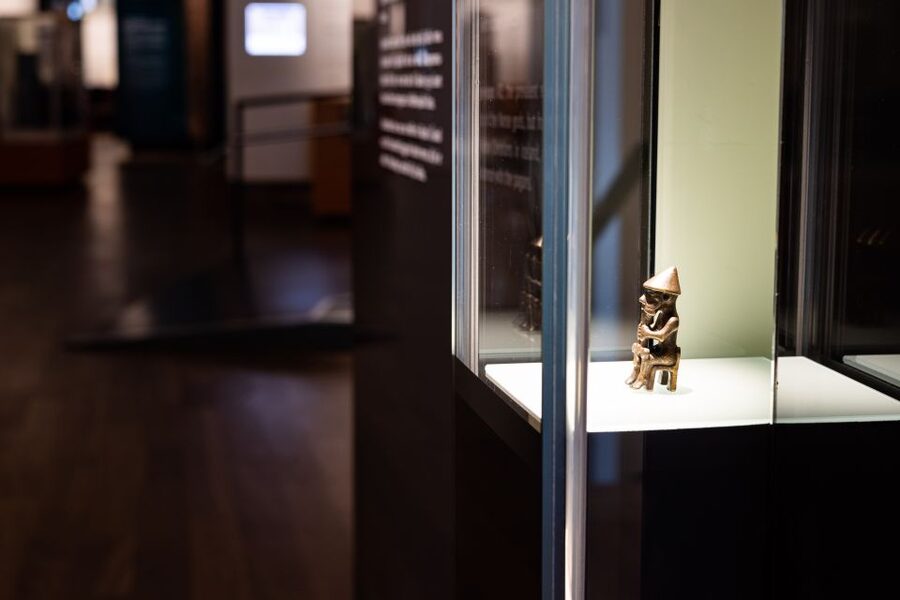
Iceland’s story begins with a ship crossing the North Atlantic and ends at a modern airport. In between, this museum uses about 2,000 artifacts to show how an isolated island became a modern nation. I especially like the year-1000 figure of Thor and the chance to see Iceland’s first printed Bible, alongside beautiful medieval church pieces.
I also like the 365-day ticket validity, which gives you unusual freedom if your plans change or you return to Reykjavík. The main thing to consider is the museum’s scale and layout: some displays can feel spread out, and individual objects may not always have as much explanation as you expect.
Key points to know before you go
- See Thor from around the year 1000, one of the museum’s most memorable objects.
- Follow Iceland from settlement to modern life, with the exhibition framed around the question of what makes a nation.
- Browse about 2,000 artifacts, including medieval church art, photographs, and Iceland’s first printed Bible.
- Use the audio guide in 10 languages, including English, French, Spanish, Italian, Chinese, and Icelandic.
- Visit temporary exhibitions at no extra entry cost, since your ticket covers all museum exhibitions.
- Plan around the no-large-bags rule, as luggage and large bags are not allowed.
A clear story of Iceland, from ship to airport
The National Museum’s permanent exhibition is built as a journey through time. It opens with the ship that carried medieval settlers across the ocean and closes with the airport, Iceland’s modern link to the wider world.
That structure gives your visit a useful sense of direction. You are not simply walking past unrelated old objects. You are watching a society form, adapt, and change. The central question, what makes a nation, connects household life, religion, work, politics, technology, and contact with other countries.
You can expect the exhibition to cover Iceland from the Settlement Age through the present day. That broad span is one of its main strengths. You get the Viking era, medieval Christianity, printed culture, traditional life, and modern Iceland in one place.
The approach also suits a first visit to Iceland. If you know little about the country beyond its volcanoes and sagas, the museum supplies the human story behind the scenery. It explains how people lived on a remote island and how their links to the outside world changed over time.
More Museum Tours in Reykjavik
- Reykjavik: Perlan Museum Wonders of Iceland Entrance Ticket
★ 4.7 · 2,575 reviews - Reykjavík: Hop-On Hop-Off Bus and Perlan Museum Entry Ticket
★ 4.3 · 719 reviews - Reykjavik: Whales of Iceland Museum Entrance Ticket
★ 4.4 · 493 reviews
The Settlement Age and Iceland’s Viking story
The early section is the main draw for anyone interested in the Viking period. Iceland was settled by people who crossed the North Atlantic, and the exhibition uses artifacts to make that movement feel more concrete.
The ship at the start is important for that reason. It is not only an image of travel. It suggests the risk, skill, and planning needed to reach a new home across difficult seas. You begin to see settlement as a human undertaking rather than a simple date in a textbook.
The famous Thor figure, dated from around the year 1000, is another major highlight. Its date places it at a turning point in Icelandic culture, when older Norse beliefs and Christianity existed close together. For you, this is one of the objects worth seeking out early in the visit.
The museum’s early artifacts are especially useful when paired with a visit to Reykjavík’s Settlement Exhibition or another site focused on the first settlers. The National Museum gives you the wider national story, while a settlement-focused museum can offer a more concentrated look at the earliest period.
The early galleries may appeal most to adults and older children who already have an interest in Viking history. For younger children, the material can require patience, especially if they are not drawn to objects in display cases.
Medieval churches and the spread of Christianity

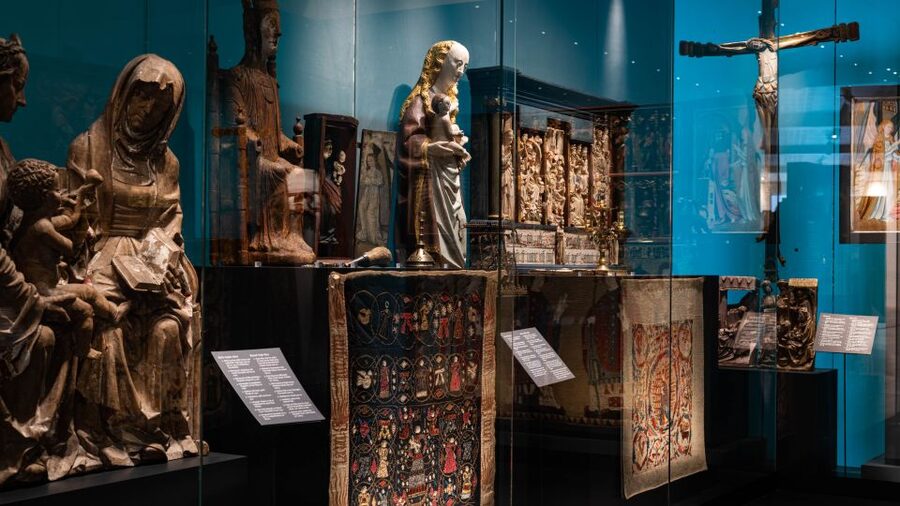
Iceland’s conversion to Christianity changed more than religious practice. It affected art, writing, buildings, objects, and connections with Europe. The museum shows some of that change through artifacts from medieval churches.
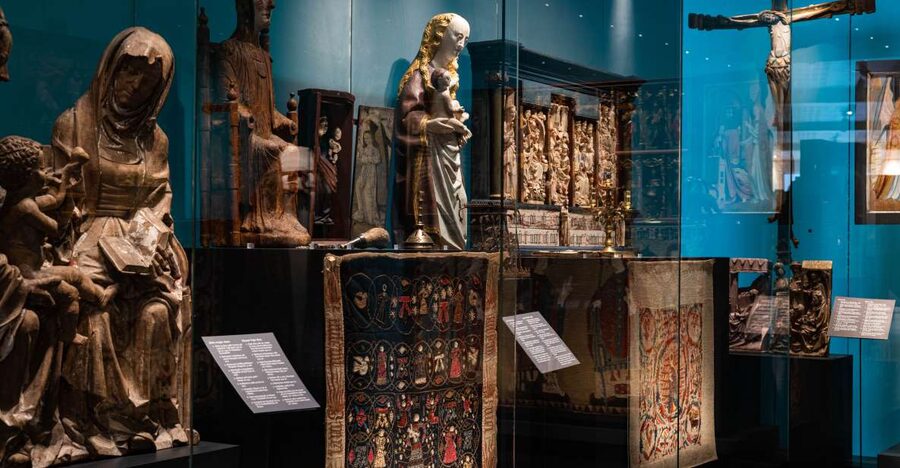
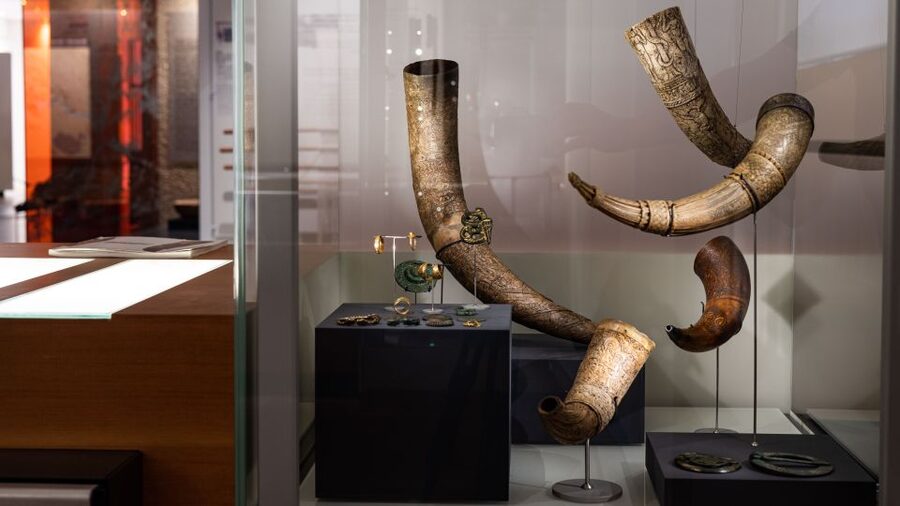
The church pieces are among the most visually appealing parts of the collection. Triptychs and other religious objects help you picture the interiors of medieval churches, where color, carved forms, and devotional images played a major role.
You will also see Iceland’s first Bible printed in the 16th century. It is still regarded as one of the country’s most beautiful printed works. This object matters not only as a religious book, but also as evidence of the role of printing in preserving language and spreading ideas.
The contrast between the Thor figure and the printed Bible is particularly effective. One points to older Norse beliefs. The other shows a society shaped by Christian institutions, literacy, and new technology. The museum is at its best when it lets you make those connections between objects.
Some pieces may have less detailed labeling than you would like. If you want background on every item, use the audio guide rather than relying only on the case text. The layout can also feel less than perfectly sequential, so take your time and check the section headings as you go.
Daily life beyond the famous objects
The museum is not only about Viking warriors, religious art, or important books. Its larger purpose is to show how Icelanders lived across many centuries.
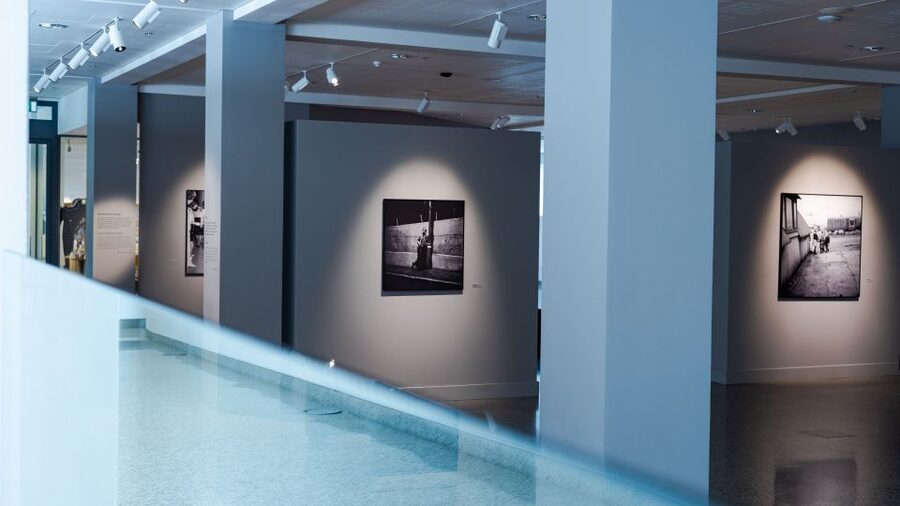
The collection covers ordinary life as well as national milestones. You can expect objects connected with work, home life, belief, and social change, along with photographs from the 20th century. Those later images help bring the more recent sections into focus.
This balance is valuable. A museum about Iceland can easily become a parade of sagas and Vikings. Here, the story continues into modern life, showing that the country’s identity was shaped by more than its early settlers.
The photographs offer a different kind of evidence from the older objects. A medieval artifact may tell you about religious practice or craft. A 20th-century photograph can show clothing, family life, work, or the way Iceland changed within living memory.
If you have already spent time seeing Iceland’s natural sights, this section can change how you read the country. You begin to notice the people, institutions, and traditions behind the scenery. That is a good reason to visit even if Viking history is not your main interest.
A few more museum visits around the world worth comparing
- Vatican: Museums & Sistine Chapel Entrance Ticket
★ 4.5 · 144,003 reviews - Paris: Louvre Museum Timed-Entrance Ticket
★ 4.6 · 71,977 reviews - Amsterdam: Van Gogh Museum Ticket
★ 4.7 · 52,054 reviews - NYC: 9/11 Memorial & Museum Timed-Entry Ticket
★ 4.8 · 31,428 reviews
How much time should you allow?
There is no fixed visit length. One visitor spent about an hour and a half, which is a sensible target for a first visit if you want to read labels and use the audio guide.
You can make the museum shorter or longer depending on your interests. A quick visit can focus on Thor, the Bible, medieval church art, and the main timeline. A slower visit gives you more time with the photographs and modern sections.
The ticket is valid for 365 days, so you do not need to force the entire museum into one afternoon. That is unusual value for a single museum ticket. If you have a longer stay in Reykjavík, you could visit once for an overview and return later for temporary exhibitions or sections you rushed through.
The long validity also helps if you are building a flexible schedule around weather. A rainy day is a natural time to visit, and the museum gives you a useful indoor activity without requiring a tightly timed tour.
There are no transportation services included, so you need to make your own way to the museum. At the entrance, show your ticket at the reception desk. The ticket allows you to skip the ticket line, though you should still expect to check in at reception.
Audio guide, labels, and finding your way around
An audio guide is included in the ticket, with options in English, Danish, French, Polish, Spanish, Dutch, Swedish, Icelandic, Italian, and Chinese. That makes the museum easier to use if you want more context than the display labels provide.
I would use the audio guide selectively rather than listening to every stop. Start with the key objects, then move through the exhibition at your own pace. This keeps the visit from becoming a long sequence of recordings.
The layout is not always perfectly easy to follow. Some displays may seem spread out, and the numbering does not always create a clear sequence. If you prefer a strict timeline, look for the section headings and keep the main Settlement Age to present-day structure in mind.
The museum also includes interactive elements, which can make the visit more approachable for families and people who prefer something beyond case displays. Still, the subject matter is fairly information-heavy, so small children may lose interest sooner than older children or adults.
If you prefer personal conversation, staff may be able to add useful context when available. One especially positive experience involved a staff member discussing selected objects and related subjects in person. That kind of exchange can make the collection more engaging than audio alone, though it should not be treated as a guaranteed guided tour.
Temporary exhibitions and the museum shop
Your ticket includes temporary exhibitions as well as the permanent collection. Their subjects change, but they generally reflect Icelandic culture.
This gives the museum more value than a one-time look at the permanent displays. If you return during your 365-day ticket period, a temporary exhibition may give you a fresh reason to come back. Check what is showing before your visit if a special subject matters to you.
The museum shop sells exclusive replicas of archaeological finds. It is a practical stop if you want a souvenir connected to Iceland’s past rather than a generic gift. A replica can also help you remember an object that caught your attention in the galleries.
The shop is particularly useful after you have seen the early collection. You can compare the modern replica with what you encountered in the exhibition and take home something tied to the museum’s archaeological material.
Is the $20 ticket good value?
At $20 per person, this is not Reykjavík’s cheapest indoor stop. The value depends on how seriously you plan to engage with the museum.
For a quick 30-minute visit, the price may feel high. For roughly 90 minutes or more, with the permanent collection, temporary exhibitions, audio guide, WiFi, and the option to return within 365 days, the cost is easier to justify.
The ticket works best for you if you care about context. Iceland’s natural attractions are the main reason many people visit, but the museum explains the society that built homes, churches, farms, institutions, and a modern nation on the island.
The flexible validity is a major advantage. You can visit on a rainy day, return later, or fit the museum around a changing Reykjavík schedule. There is no transportation included, so remember that the $20 covers entry rather than a complete sightseeing package.
Who will enjoy this museum most?
I would recommend it most strongly to adults, older children, history fans, and anyone who wants more than a quick introduction to Iceland’s Viking past.
It is also a good choice for a first Reykjavík visit. The permanent exhibition gives you a broad timeline, so you do not need much prior knowledge to follow the main story.
Families can enjoy the interactive elements and striking objects, but small children may find the amount of information demanding. If your group includes young children, plan a shorter visit and focus on the most memorable pieces.
The museum also suits repeat visitors. You may understand Iceland’s culture differently after seeing more of the country, and the temporary exhibitions give you a reason to return.
Consider pairing it with a settlement-focused museum if your main interest is the Viking age. If you prefer modern Iceland, a maritime museum can complement this visit, especially if you want to learn more about seafaring and the cod wars.
Practical details before entering
Large bags and luggage are not allowed. Do not treat the museum as a place to store your suitcase between travel connections.
The building is wheelchair accessible. WiFi is included, and the audio guide covers 10 languages. Free cancellation is available up to 24 hours before the visit, and you can reserve now and pay later if you want to keep your plans flexible.
Your ticket is shown at the reception desk. Transportation is not included, so plan your route separately.
Should you book the National Museum of Iceland?
Book it if you want a solid introduction to Iceland’s people, culture, and history, not just its natural sights. The year-1000 Thor figure, first printed Bible, medieval church objects, photographs, and long timeline give you plenty to see for the price.
I would be more cautious if you want a small, highly focused museum with detailed explanations for every object. The layout can be a little hard to follow, and some pieces may not have as much depth in their labels as you expect.
For most visitors with an interest in Iceland, it is a worthwhile Reykjavík stop. Plan for about 90 minutes, use the audio guide for the key displays, and take advantage of the 365-day validity if your schedule allows a return visit.
FAQ
How much does entry to the National Museum of Iceland cost?
The entry ticket costs $20 per person.
How long is the ticket valid?
The ticket is valid for 365 days.
What time period does the museum cover?
The permanent exhibition covers Icelandic history from the Settlement Age to the present day.
How many artifacts are on display?
The permanent exhibition includes about 2,000 artifacts, along with photographs from the 20th century.
Is an audio guide included?
Yes. An audio guide is included with entry.
Which languages are available for the audio guide?
The audio guide is available in English, Danish, French, Polish, Spanish, Dutch, Swedish, Icelandic, Italian, and Chinese.
Does the ticket include temporary exhibitions?
Yes. The ticket grants access to all exhibitions at the museum, including temporary exhibitions.
Is the museum wheelchair accessible?
Yes. The museum is wheelchair accessible.
Can I bring luggage or a large bag?
No. Luggage and large bags are not allowed.
Is transportation included with the ticket?
No. Transportation to the National Museum of Iceland is not included.
Just added around the world
- Girona, Figueres, Dalí Museum and Cadaqués Tour from Barcelona★ 4.5 · 36 reviews
- Football Club Barcelona Museum Immersive Tour Guided Visit★ 3.5 · 52 reviews
- Erotic Museum Admission Ticket with Audioguide★ 5.0 · 527 reviews
- Dali Museum and Costa Brava Small Group Day Trip from Barcelona★ 5.0 · 77 reviews
- Madrid by High-Speed Train with Prado Museum Private Tour★ 4.0 · 33 reviews
- Guitar Legends Hall: Entrance to the Immersive Rock Museum★ 5.0 · 25 reviews
- White Rabbit Museum: The Best Immersive Experience in Catalonia★ 5.0 · 538 reviews
- Private Dali Museum, Besalú & Girona Tour from Barcelona★ 5.0 · 15 reviews
Museum Tours in Reykjavik, compared.

Perlan Museum Wonders of Iceland Entrance Ticket
Read our review →

Reykjavík: Hop-On Hop-Off Bus and Perlan Museum Entry Ticket
Read our review →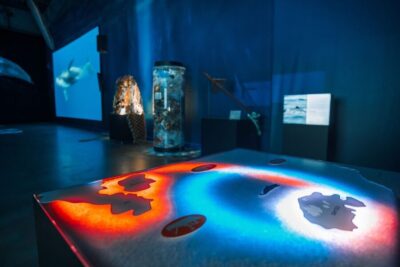


Whale Watching Tour, Whales of Iceland Exhibition
Read our review →

Browse the lists this tour appears in