
Review · REYKJAVIK
Reykjavik: Saga Museum Entry Ticket
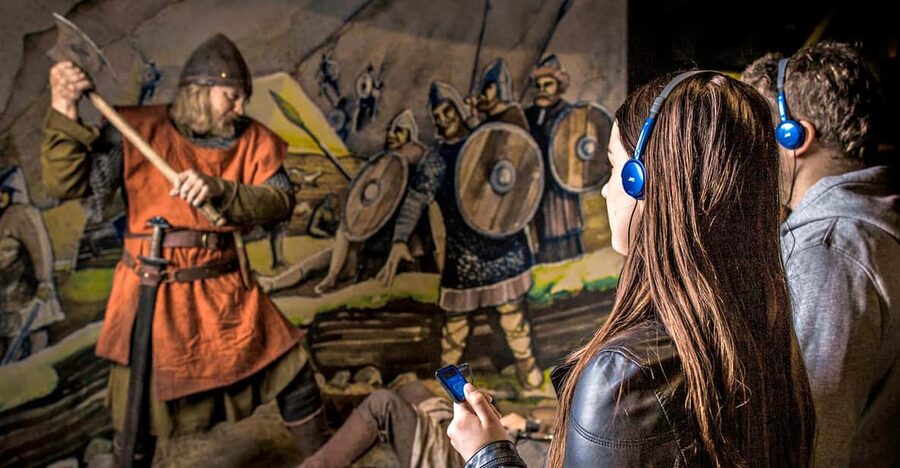
Iceland’s Saga Museum turns early Icelandic history into a walk through lifelike wax scenes. You follow the island’s story from the Papar and the first Viking settlers to Leif the Lucky, the founding of the Parliament, the civil war, and the Reformation.
I like the 35-minute audio tour, which gives the exhibits a clear order and keeps the stories tied to specific moments. I also like the costume area at the end, where you can dress as a Viking with period-style clothes and weapons. The main drawback is size: at $33 per person, the museum can feel expensive for a fairly compact visit, and one part of the tour may involve waiting for the next section to open.
Key points to know before you go
- Twenty wax scenes tell Iceland’s story: The exhibits cover major figures and events from the first settlement through the last Catholic bishop.
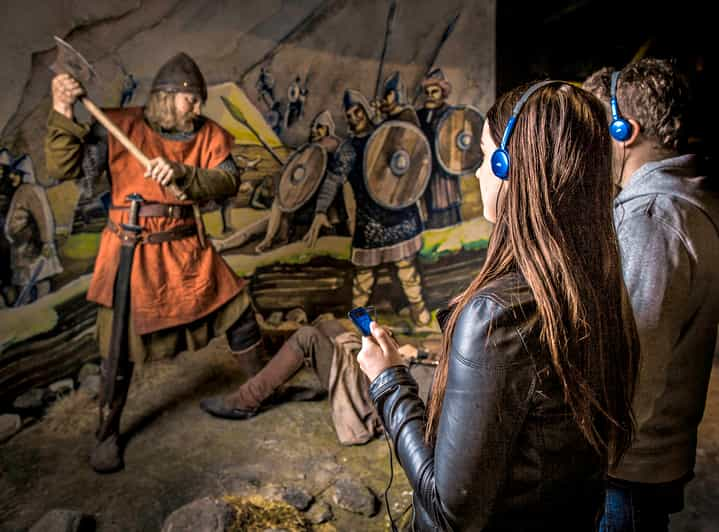
- The audio guide controls the pace: You listen through a headset in one of seven languages, then move through the museum in sequence.
- Leif the Lucky gets a place in the story: The route includes the Norse discovery of America as part of Iceland’s wider saga tradition.
- The costume area is part of the ticket: You can put on Viking clothing and handle authentic-style weapons for photos and fun.
- The museum is small but focused: It suits a short cultural stop, not a full morning of exhibits.
- Practical extras are included: Parking and lockers are available, and the museum is wheelchair accessible.
Entering the Saga Museum at Grandagarður 2
The museum is at Grandagarður 2 in Reykjavik’s Capital Region. Look for the white building with a statue of a Viking on horseback in front. The museum shares an entrance with the restaurant Matur og Drykkur, so the restaurant name is a useful landmark if you are checking your location.
There is no hotel pickup or drop-off. You make your own way to the museum, and parking is included. Lockers are also available, which helps if you are carrying coats, bags, or other items during the costume section.
The ticket is valid for one day from first activation. That wording matters if you are fitting the museum into a day around Reykjavik. You do not need to treat it as an all-day attraction, but you have flexibility to visit during its operating period rather than being tied to a separate transport schedule.
The entrance is wheelchair accessible. Families should note that the museum may not suit sensitive children, and children under four are not admitted. The subject matter includes war, death, and difficult parts of Iceland’s past, so parents should consider the child’s age and temperament before booking.
More Museum Tours in Reykjavik
- Reykjavik: Perlan Museum Wonders of Iceland Entrance Ticket
★ 4.7 · 2,575 reviews - Reykjavík: Hop-On Hop-Off Bus and Perlan Museum Entry Ticket
★ 4.3 · 719 reviews - Reykjavik: Whales of Iceland Museum Entrance Ticket
★ 4.4 · 493 reviews
How the 35-minute audio tour works
The core visit lasts about 35 minutes and uses an audio guide with a headset. English, German, French, Spanish, Russian, Swedish, and Icelandic are available. Written guides are offered in Polish and Italian.
This is not a museum where you simply wander from case to case and read labels. The audio track gives you the sequence, explains what you are seeing, and connects the scenes to the Icelandic sagas. That makes the visit easier for first-time learners, especially if you do not already know the names and events that shape Icelandic history.
The guided format also has one practical weakness. You may need to pause while the next section becomes available. If you prefer to move at your own speed, this can feel slow, particularly because the museum itself is small. Give yourself patience rather than expecting a fast, free-flowing gallery visit.
On the other hand, the controlled order helps the story make sense. Icelandic history can seem like a long list of names, settlements, feuds, and church changes. Here, each scene gives the next part of the story a physical setting and a face.
The Papar and the first settlers
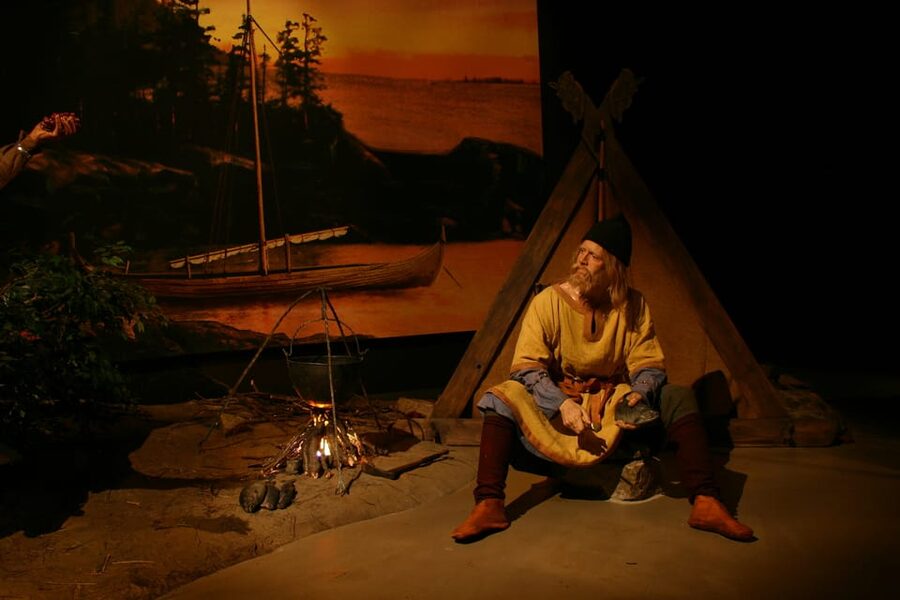
The first part introduces the Papar, described as early Christian visitors to Iceland, followed by the first Vikings who settled on the island. You also learn how Reykjavik got its name.
This opening section gives useful context before the famous saga figures appear. Iceland was not simply discovered and immediately filled with farms. The museum presents the earliest stages of settlement as a process, beginning with the people who came before the main Norse settlement and continuing with the Viking community that took root there.
For me, this is one of the better reasons to visit early in your Iceland trip. You begin to understand that Iceland’s story is shaped by migration, isolation, and the need to build a working society in a remote place. The wax figures help make that idea concrete without requiring a long lecture.
The scenes are designed to be lifelike. Lighting, clothing, facial expressions, and arrangements place the figures in specific moments rather than presenting them as anonymous statues. You should expect a dramatic presentation, not a quiet collection of archaeological objects.
Leif the Lucky and the founding of Parliament
The route then moves to Leif the Lucky and the Norse discovery of America. This section connects Icelandic saga tradition with one of the most famous Viking stories.
The museum does not treat Iceland as an isolated footnote. Instead, it shows how people from this small North Atlantic community were part of much wider voyages and settlements. Leif’s story gives the visit a clear point of excitement, especially if you know little about the connections between Iceland, Greenland, and North America.
You also learn about the founding of the Parliament. This is an important shift in the tour because the story moves from settlement to government. Communities needed rules, assemblies, and ways to settle disputes, and the Parliament became a defining part of Iceland’s political identity.
The audio narration is useful here because it gives the scenes a reason to exist. You are not just looking at figures in Viking clothes. You are following the growth of a society, from separate settlers to a community with shared institutions.
A few more museum visits around the world worth comparing
- Vatican: Museums & Sistine Chapel Entrance Ticket
★ 4.5 · 144,003 reviews - Paris: Louvre Museum Timed-Entrance Ticket
★ 4.6 · 71,977 reviews - Amsterdam: Van Gogh Museum Ticket
★ 4.7 · 52,054 reviews - NYC: 9/11 Memorial & Museum Timed-Entry Ticket
★ 4.8 · 31,428 reviews
The Saga Age and Iceland’s civil war
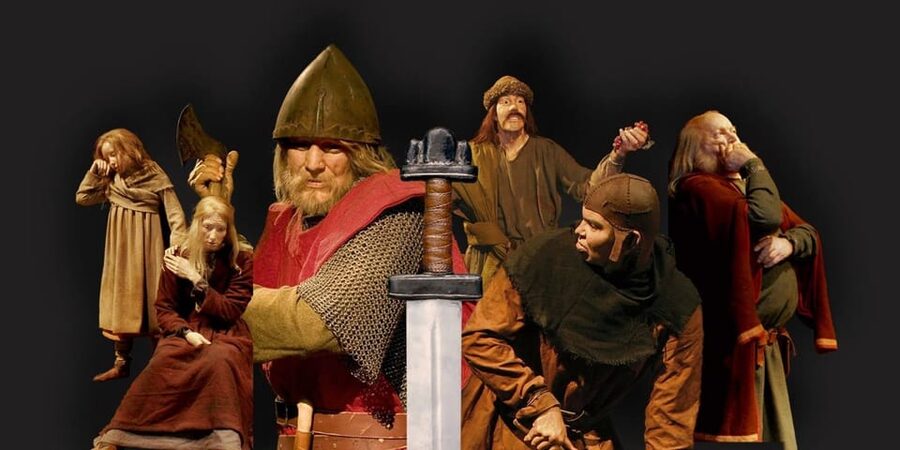
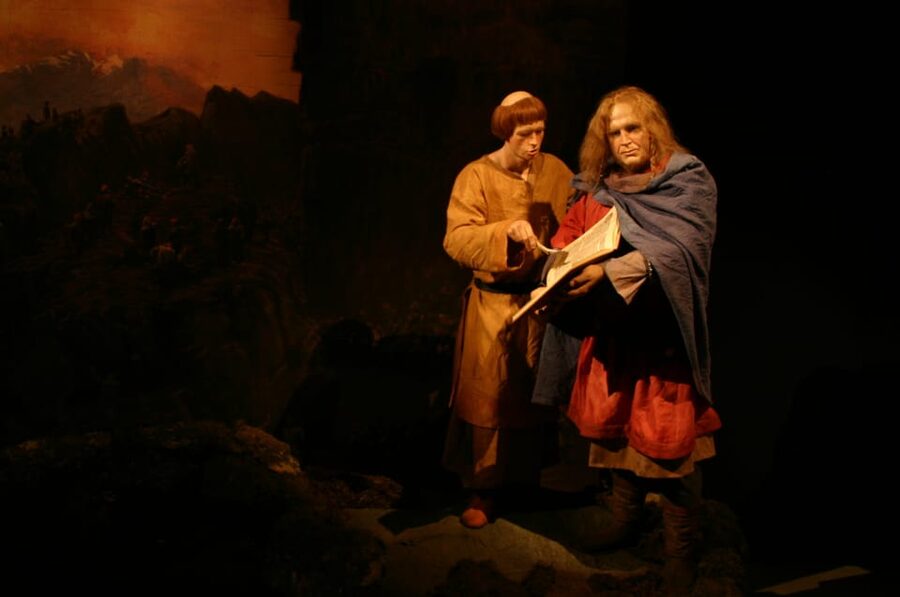
Next comes the Saga age, when the stories were written down. This part explains why the sagas matter beyond their dramatic plots. They preserve accounts of families, rivalries, power struggles, and social rules that still shape how Iceland presents its past.
The tour then reaches the civil war in Iceland. This is where the story becomes less tidy. Iceland’s early society was not only about heroic voyages and brave explorers. Rival groups competed for influence, alliances shifted, and conflict could threaten the whole system.
I appreciate that the museum includes this harder material. A Viking display can easily become a costume show full of ships, weapons, and bold characters. Here, the story also includes political tension and violence. That gives you a more useful sense of the period, even if some children may find the scenes unsettling.
The waxwork format is especially effective for major dramatic moments. Facial expressions and body positions create an instant sense of tension. You can see who is confronting whom, rather than trying to picture the event from a block of text.
Still, keep your expectations realistic. The museum gives you an introduction, not a university course. If the civil war section sparks your interest, you will need a book or a separate history resource to explore the events in detail.
The Reformation and Iceland’s last Catholic bishop
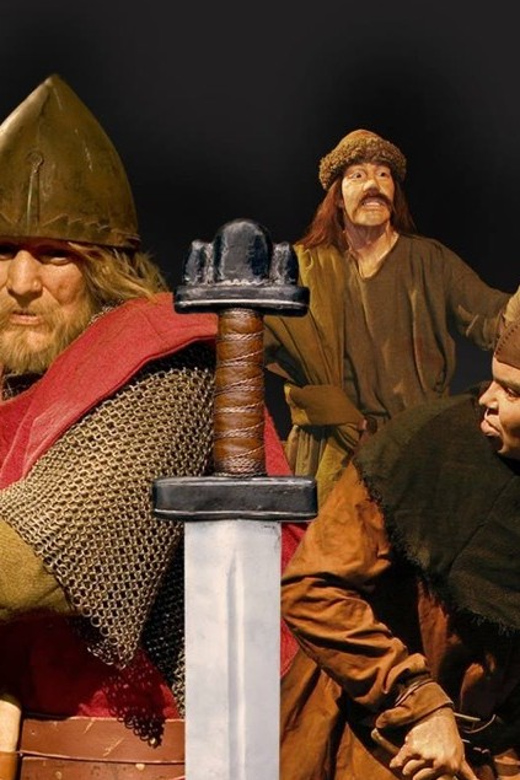
The final historical part moves toward the Reformation and the last Catholic bishop in Iceland. This gives the visit a later chapter and shows how religious change affected the country.
The subject helps prevent the museum from becoming a display only about the earliest Vikings. Iceland’s story continued through major changes in religion, authority, and daily life. By ending with the Reformation, the route takes you from first settlement to a turning point in the country’s Christian history.
This section may appeal most to visitors who like social and religious history. It is less about adventure and more about how institutions change. The audio guide is important here because the figures alone may not explain why the bishop and the Reformation matter.
Because the whole museum takes around 35 minutes, the narrative moves quickly. You receive the main outline rather than every date and name. I would treat the visit as a useful introduction before exploring other historic sites in Reykjavik and beyond.
The Viking costume area
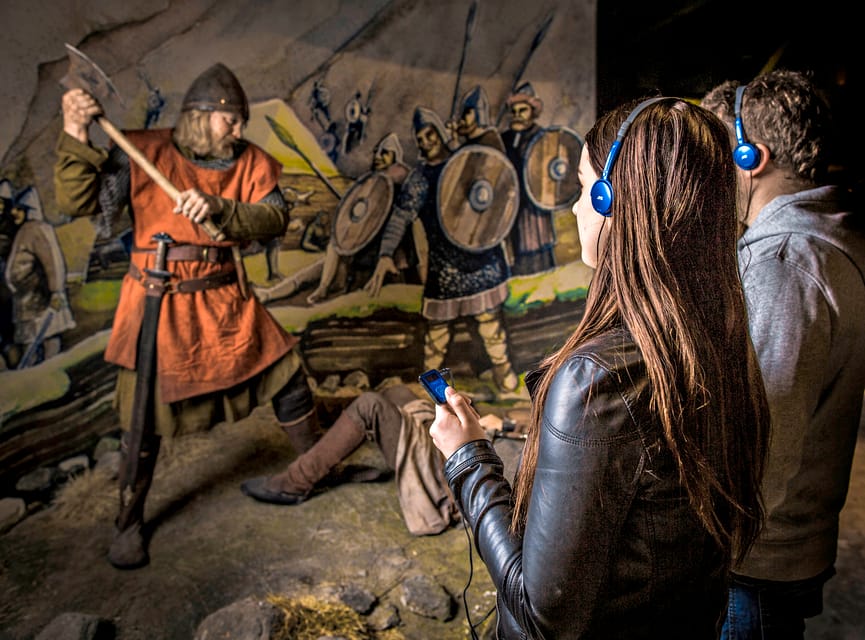
After the historical portion, you can unleash your inner Viking in the costume area. Authentic-style clothing and weapons are provided, so you can dress up and take photos.
This is more than a small extra for families. It changes the tone after the serious scenes and gives children and adults a chance to participate. If you have been listening quietly through the audio guide, the costume area offers a playful finish.
The available information does not specify exactly how many costumes or weapons there are, so I would not plan a full photo session around it. Think of it as a fun final activity included with the museum visit.
It is also a good reason to leave a little time after the audio portion rather than rushing straight out. The historical tour may be short, but the costume experience can make the stop feel more personal and memorable.
How much value do you get for $33?
The price is $33 per person. For Iceland, that is not unusual, but it is still a significant cost for a museum that takes roughly 35 minutes to tour.
The value depends on what you want. If you are looking for a quick, structured introduction to Iceland’s early settlers, Viking society, the sagas, and the Reformation, the ticket gives you a clear story with audio support and lifelike scenes. Parking, lockers, and the costume area add practical and recreational value.
If you measure value by the number of galleries or hours inside, the museum may disappoint. One visitor found it nice but very small and not especially interesting, and that is a fair warning for anyone expecting a major national museum.
I would compare it with the price of other paid stops in Reykjavik rather than with a free city walk. You are paying for a theatrical presentation and a fixed narrative. That suits you if you learn best through scenes and spoken storytelling. It suits you less if you prefer original objects, long written explanations, or a large collection.
The overall score is 4.3 out of 5 from 53 ratings, which fits the experience well: strong appeal for many people, but not a perfect match for every interest or budget.
Who will enjoy this museum most?
I would recommend the Saga Museum to you if you want a short cultural stop that explains the basic arc of Icelandic history. It is particularly useful at the start of a Reykjavik visit, when you are still learning the names and events that appear throughout Iceland.
Families with older children may enjoy the wax figures and costume area, though parents should remember the warning about sensitive children. Children under four cannot enter.
The museum also works for visitors with limited time. A 35-minute audio tour can fit before a meal, between other central activities, or during a wet-weather afternoon. You do not need to reserve an entire half-day.
History fans should decide how much detail they need. The museum gives you atmosphere, chronology, and a few major figures. It does not replace a serious history museum or a guided tour focused on archaeology.
Languages, access, and booking flexibility
The audio guide is available in English, French, German, Icelandic, Russian, Spanish, and Swedish. Polish and Italian are covered by text guides instead.
You can cancel up to 24 hours in advance for a full refund. A reserve-now-and-pay-later option is also available, useful if your Iceland schedule may change because of weather or transport.
The ticket is valid for one day from first activation. It includes admission, the audio guide, parking, and lockers. Food and drinks are not included, and the museum shares its door with Matur og Drykkur, so you can pair the visit with a meal if that fits your plan, though the meal itself is separate.
Should you book the Saga Museum?
Book it if you want a short, visual introduction to Iceland’s past, especially one that includes the Papar, Viking settlement, Leif the Lucky, Parliament, the civil war, and the Reformation in one ordered visit. The realistic figures and costume area give the experience more life than a standard room of labels.
Skip it if $33 feels high for 35 minutes, or if you want original artifacts and a larger collection. The museum is compact, and the audio format may feel slow when you are waiting for the next stage.
For the right visitor, it is a practical Reykjavik stop: focused, easy to understand, and playful at the end. Just go in knowing that you are paying for a theatrical history lesson, not an all-day museum.
FAQ
Where is the Saga Museum located?
The museum is at Grandagarður 2 in Reykjavik’s Capital Region. Look for the white building with a Viking statue on horseback in front. It shares its entrance with the restaurant Matur og Drykkur.
How long does the Saga Museum visit take?
The audio-guided tour lasts about 35 minutes. You may need extra time afterward for the Viking costume area.
What does the ticket include?
The ticket includes admission, an audio guide, parking, and lockers. Food and drinks are not included.
Which languages are available for the audio guide?
Audio guides are available in English, French, German, Icelandic, Russian, Spanish, and Swedish.
Are written guides available in other languages?
Text guides are available in Polish and Italian.
Is the museum wheelchair accessible?
Yes, the museum is wheelchair accessible.
Can children visit the Saga Museum?
Children under four are not permitted. The museum may also be unsuitable for sensitive children because of its historical scenes and subject matter.
Can I dress as a Viking?
Yes. After the historical tour, you can use the costume area to dress as a Viking with clothing and weapons.
Can I cancel my booking?
Yes. You can cancel up to 24 hours in advance for a full refund. A reserve-now-and-pay-later option is also available.
Just added around the world
- Girona, Figueres, Dalí Museum and Cadaqués Tour from Barcelona★ 4.5 · 36 reviews
- Football Club Barcelona Museum Immersive Tour Guided Visit★ 3.5 · 52 reviews
- Erotic Museum Admission Ticket with Audioguide★ 5.0 · 527 reviews
- Dali Museum and Costa Brava Small Group Day Trip from Barcelona★ 5.0 · 77 reviews
- Madrid by High-Speed Train with Prado Museum Private Tour★ 4.0 · 33 reviews
- Guitar Legends Hall: Entrance to the Immersive Rock Museum★ 5.0 · 25 reviews
- White Rabbit Museum: The Best Immersive Experience in Catalonia★ 5.0 · 538 reviews
- Private Dali Museum, Besalú & Girona Tour from Barcelona★ 5.0 · 15 reviews
Museum Tours in Reykjavik, compared.

Perlan Museum Wonders of Iceland Entrance Ticket
Read our review →

Reykjavík: Hop-On Hop-Off Bus and Perlan Museum Entry Ticket
Read our review →
Reykjavík: National Museum of Iceland Entry Ticket
Read our review →

Whale Watching Tour, Whales of Iceland Exhibition
Read our review →
Browse the lists this tour appears in