
Review · STOCKHOLM
Stockholm: ABBA The Museum Entrance Ticket
ABBA The Museum turns a pop archive into a hands-on music playground. You can inspect original costumes and gold records, then sing, dance, mix music, and join the group on a virtual stage. The best parts are the personal audio stories from all four members and the chance to become ABBA’s so-called fifth member.
I like the mix of serious memorabilia and silly fun. Seeing the band’s instruments, awards, and stage clothes gives the place real weight, while the karaoke booths, silent disco, quizzes, and virtual costumes keep it from feeling like a glass-case museum. The main drawback is crowding, especially at popular interactive stations, and the $28 ticket feels less attractive if you are only mildly interested in ABBA.
Key Points
- Join ABBA on a virtual stage: Use the interactive stage and 3D avatars to appear alongside the band.
- Hear the story from the band: Audio material features Agnetha, Benny, Björn, and Frida recalling their careers and memories.
- See genuine stage history: Original outfits, instruments, gold records, awards, memorabilia, and the helicopter from Arrival are on display.
- Allow more than two hours if you like to play: The visit is estimated at 1.5 to 2 hours, but many people spend three hours or more.
- Book a timed ticket: Pre-booked entry can save you from a long wait, especially during busy periods.
- Bring a payment card and headphones: Cash is not accepted, and headphones make the phone-based audio content easier to hear.
Why ABBA The Museum feels more like a recording studio than a gallery
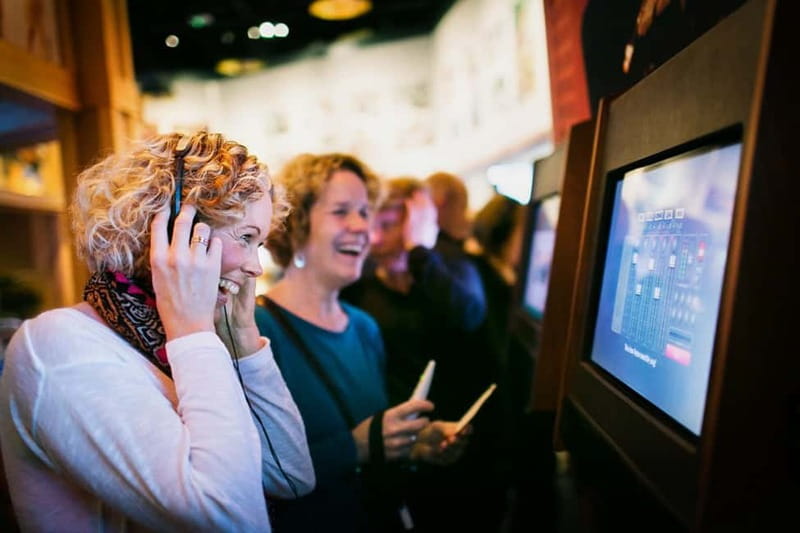
ABBA The Museum is not built around quiet observation alone. You move through the band’s story, but the museum keeps asking you to take part. One station may show a famous outfit, while the next lets you sing, answer a quiz, create music, or pose with the group.
That design works especially well for families and mixed-age groups. A serious ABBA fan can spend time studying the original objects, while someone who knows only the biggest songs can still have fun with the interactive displays.
I like that the museum gives the band’s career some context before turning up the playful side. You see how ABBA developed from earlier musical work, followed their Eurovision success with Waterloo, and became one of the world’s best-known pop groups. The exhibits also give attention to the four individual members, not only the group as a single unit.
The museum is located on Stockholm’s island of Djurgården. Look for the yellow building marked ABBA The Museum. A timed ticket is useful here because the attraction can become very busy, and advance-booked ticket holders have a separate advantage over people waiting for entry.
More Museum Tours in Stockholm
- Stockholm: Skansen Open-Air Museum Admission Ticket
★ 4.5 · 3,427 reviews - Stockholm: Paradox Museum Entry Ticket
★ 4.2 · 3,031 reviews - Stockholm Pass: Save up to 50% – Includes Vasa Museum Ticket
★ 4.1 · 2,392 reviews
Entering the yellow building on Djurgården
Your visit begins with a simple check-in at the yellow ABBA building. You need your ticket for the chosen date and time, and entry is for one visit only. Children up to age six can enter free, but you need to collect a child ticket at the check-in counter.
The advertised visit takes about two hours, with an estimated range of 1.5 to 2 hours. I would treat that as a minimum if you plan to use the interactive stations. A quick museum visit is possible, but you will get more from the ticket if you allow time to listen, sing, take part in the games, and wait your turn at popular displays.
The timed system matters. During busy periods, the line can become long, and one visitor reported being able to pass the waiting crowd with a pre-booked ticket. That makes the $28 price easier to accept if your Stockholm schedule is tight.
Try not to arrive with a large bag. Luggage and large bags are not allowed, and baby strollers are also listed as prohibited. Food and drinks are not allowed inside the exhibition, and you must leave the camera flash and video recording switched off.
From early music to Eurovision and global fame
The museum’s main story follows ABBA’s rise and later retirement from public stardom. The displays connect the four members as a group while also helping you understand their separate personalities and musical roles.
The material is particularly useful if you know the songs but not the story behind them. Original objects and films help show how the band moved from earlier music-making into the polished international act recognized around the world.
The Eurovision section is an obvious highlight. Waterloo is presented as a major turning point, and the museum gives you the chance to see the performance and its place in ABBA’s career. This section works best when you take time to look at the details rather than rushing toward the interactive stations.
You will also see gold records and awards. There are enough of them to make the scale of the band’s success clear without needing a long explanation. The awards are not just decoration. They show how a Swedish group became a major international recording act.
I appreciate the way the museum uses original objects to ground the experience. The costumes may attract the most attention, but the instruments, records, awards, and personal memorabilia give the visit more substance than a simple tribute show.
Original costumes, instruments, and the famous Arrival helicopter
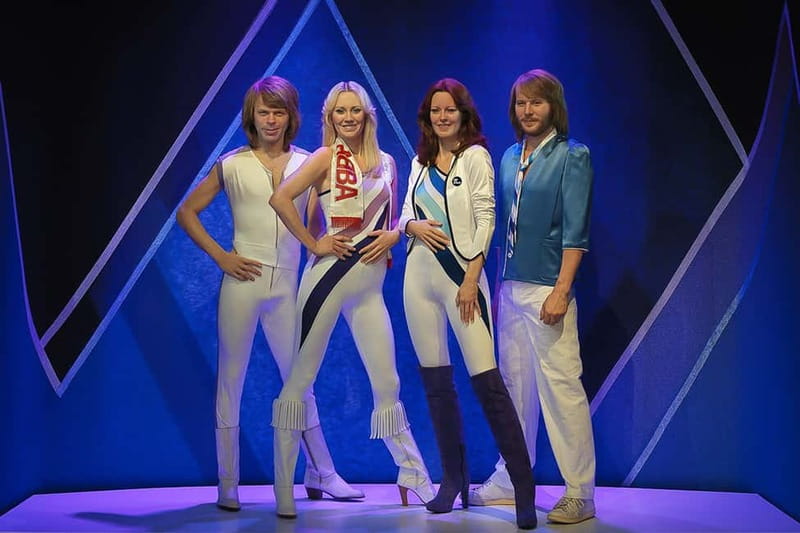
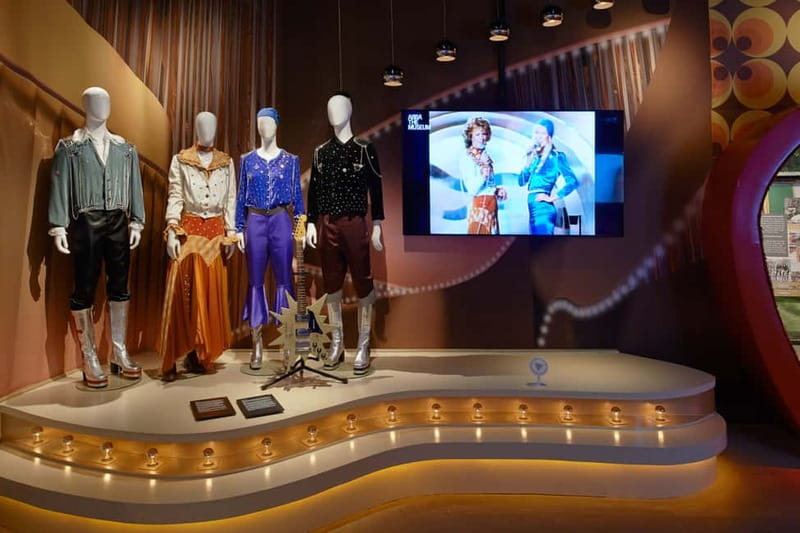
The costumes are among the strongest parts of the museum. ABBA’s stage clothing was bold, theatrical, and closely tied to the band’s public image. Seeing the real garments helps you understand how much the visual presentation mattered alongside the music.
You can also see original instruments and other items connected with the group’s career. These displays suit visitors who prefer traditional museum material. You can stop, look closely, and follow the story without needing to perform at every station.
A memorable object is the small helicopter linked to Arrival. It is fun to see in person, especially if that album or its imagery is important to you. The compact size also gives the exhibit a slightly comic quality when you imagine four performers trying to fit inside.
Photography is restricted. You cannot film or photograph the whole exhibition, though some interactive areas provide opportunities for selfies and posed pictures. That rule can be frustrating if you want to document every costume, but it also keeps the displays from becoming one large camera queue.
A few more museum visits around Stockholm worth comparing
- Stockholm: Nobel Prize Museum and Exhibition Entry Ticket
★ 4.3 · 994 reviews - Stockholm: Fotografiska Museum Entrance Ticket
★ 4.5 · 702 reviews - Stockholm: Vasa Museum Tour with Entry Ticket & Guide
★ 5.0 · 537 reviews - Stockholm: Entry Ticket to Junibacken Children’s Museum
★ 4.5 · 275 reviews
Hear Agnetha, Benny, Björn, and Frida tell the story
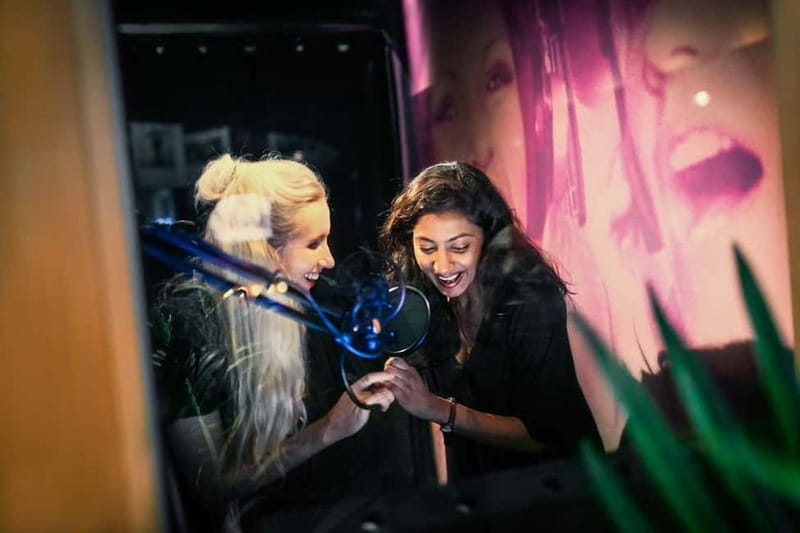
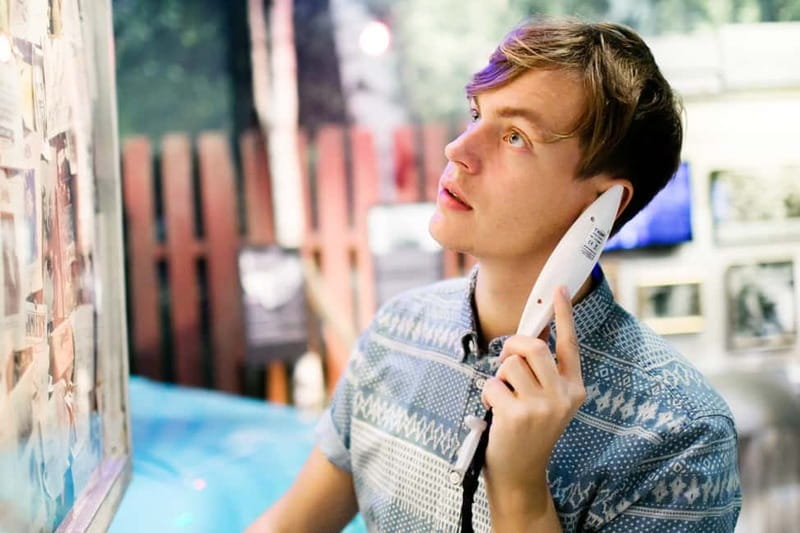
The audio material adds a personal layer to the exhibits. Agnetha Fältskog, Benny Andersson, Björn Ulvaeus, and Anni-Frid Lyngstad share memories and stories from their careers, giving you a direct connection to the people behind the stage image.
The supplied information is not fully consistent about access. The ticket description says the audio guide can be bought at the museum, while some recent visitors describe listening through a phone without a separate charge. I would check the current arrangement before you go rather than assume it is included in the basic ticket.
If you use the phone-based version, bring headphones. One visitor found the background noise made the audio difficult to hear, and another specifically recommended bringing your own headphones. Without them, you may spend much of the visit holding your phone close to your ear at roughly 18 audio stations.
The audio content is worth making time for. It gives the clothing and objects a human voice, and it helps explain the band’s career in a way that wall labels alone cannot. If the museum is crowded, headphones also give you a more focused experience.
Become ABBA’s fifth member
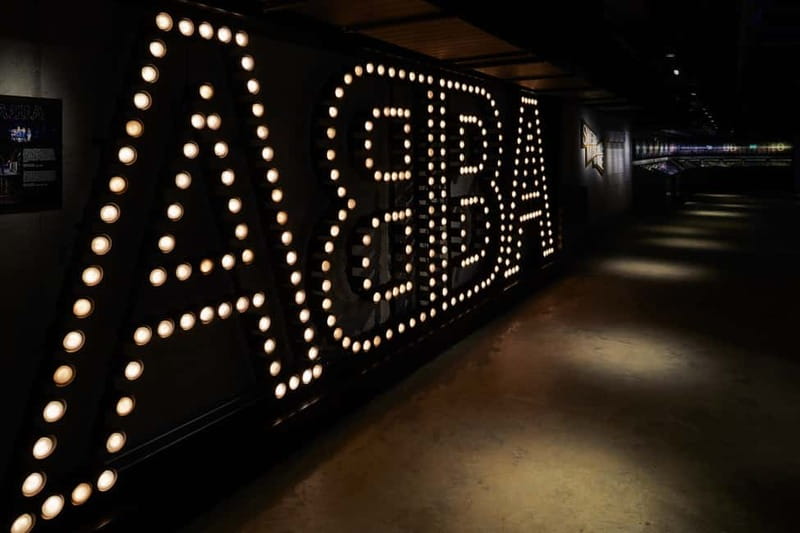
The museum’s signature idea is that you are not only looking at ABBA. You become part of the group’s story. The fifth-member features are the reason this attraction feels different from a standard music museum.
Virtual costumes let you see yourself styled in the band’s famous stage clothing without handling the original garments. Interactive screens and displays add a playful element, particularly for children and visitors who enjoy taking photos.
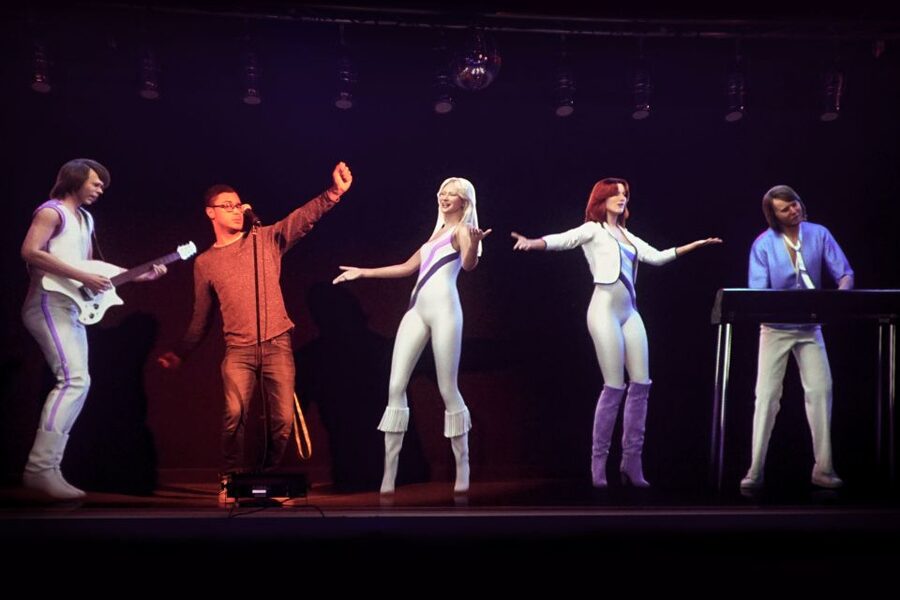
The stage experience is the big payoff. You can appear alongside 3D ABBA avatars and perform with the group. You do not need to be a confident singer or dancer to enjoy it, but you should expect a little public silliness. If you are visiting with friends or family, this is the moment that often turns the museum into a shared memory.
Another station lets you audition for the band. You may also find music quizzes, music-mixing activities, and a digital poster or avatar feature. These elements are not all equally important, but together they stop the visit from becoming a straight walk through a timeline.
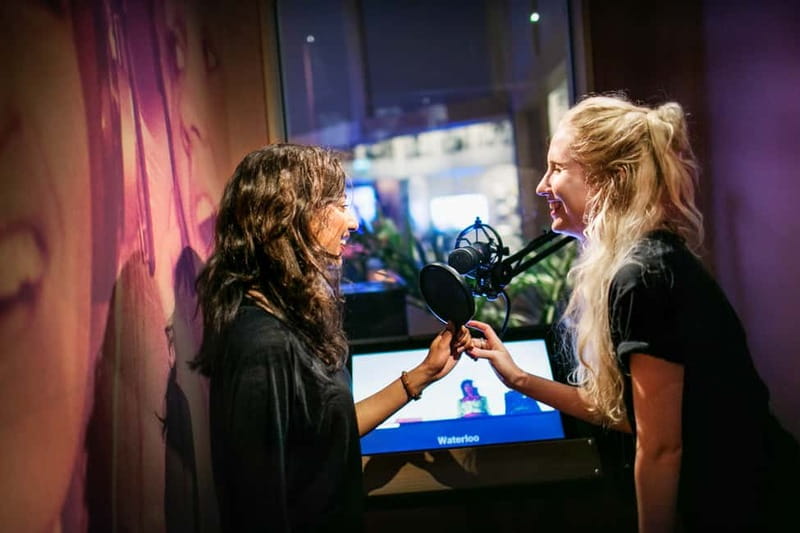
The karaoke area is another popular stop. You can sing familiar ABBA songs, including Waterloo. Equipment may not always work perfectly, so allow for a little patience if a microphone or booth needs attention.
Polar Studio, silent disco, and hands-on music
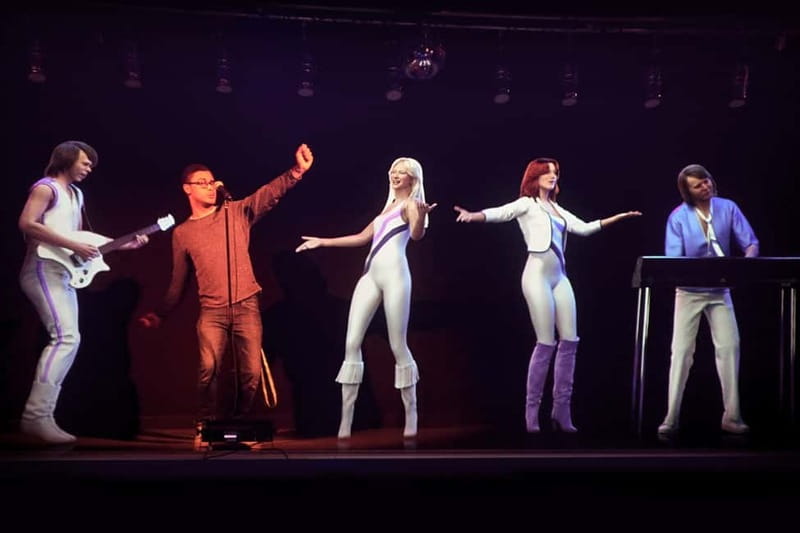
The Polar Studio section connects the museum to the practical work of making records. The studio was formed by ABBA members Björn Ulvaeus and Benny Andersson, and the displays show the recording side of the band’s career.
The chance to sing in a studio-style setting is one of the more distinctive parts of the visit. It gives you something to do with the music rather than simply listen to it. If you are visiting alone, you can still use the interactive features, though group visits make the singing and stage activities more social.
The silent disco is another unusual touch. You put on headphones and listen privately, creating a lively experience without filling the whole gallery with competing music. It is a good example of how the museum uses technology to keep the focus on participation.
These attractions can create bottlenecks. Popular booths may have a short wait, and the museum can feel crowded around the most entertaining stations. If you want a quieter experience, arriving early is sensible. Crowds may thin out later, but there is no guarantee that every activity will be free when you reach it.
How long to stay, and when the ticket earns its price
At $28 per person, this is not a cheap museum stop. The value depends heavily on your interest in ABBA and on how much of the interactive side you use.
For a committed fan, the price is easier to justify. You can spend time with the original outfits, awards, instruments, recordings, audio stories, karaoke, virtual stage, and other activities. A stay of three hours makes the cost feel more reasonable, particularly if you treat the museum as one of the main events of your day on Djurgården.
For a casual listener, the calculation is less clear. The exhibits are well presented and the interactive features are entertaining, but much of the emotional reward comes from recognizing songs, costumes, and moments from ABBA’s career. If you mainly want a quick look at the group’s outfits, two hours may feel like a lot of time and money.
I would not rush this attraction. The estimated duration is 1.5 to 2 hours, yet some visits last 3 to 3.5 hours because there is so much to do. You may want to sing more than once, replay an exhibit, wait for a stage station, or spend extra time with the original objects.
The café, grill, cocktail bar, and gift shop add to the stop, though the shop and restaurant can feel expensive. They are useful if you want to extend the visit, but they should not be part of your value calculation unless you already plan to buy food or souvenirs.
Crowds, comfort, and wheelchair access
The museum is adapted for wheelchair use, and a wheelchair may be available to borrow on request. That is helpful for anyone who cannot comfortably manage a 1.5 to 2 hour visit on foot.
Crowding can make movement harder, especially for wheelchair users. The problem is not a lack of access so much as the number of people gathered around interactive displays. Arriving early may help, though busy days can still feel tight.
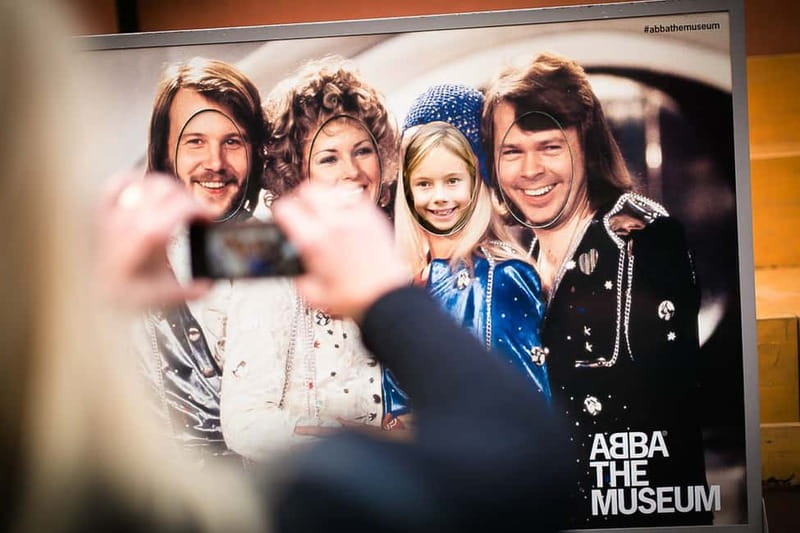
You may need to wait outside before your entry time. In cold or windy weather, that can be uncomfortable, especially if you arrive much earlier than scheduled. There are photo cut-outs near the entrance, which offer a small distraction while you wait, but I would not arrive hours ahead.
Cash is not accepted, so bring a credit or debit card. Keep your belongings light, and remember that food, drinks, large bags, luggage, baby strollers, flash photography, and video recording are not allowed.
The museum is accessible, but the experience is not always calm. If you need extra space or a slower pace, allow more time and consider visiting at the earliest available slot.
Who will enjoy ABBA The Museum most
I would choose this attraction for:
- Dedicated ABBA fans who want original objects and career context.
- People who grew up with the band and want a strong dose of musical nostalgia.
- Families with children old enough to use the interactive stations.
- Friends who enjoy singing, dancing, quizzes, and taking photos.
- Visitors who want a music museum that feels active rather than formal.
- Solo visitors who are comfortable using digital displays independently.
I would think twice if you dislike interactive exhibits or have only a passing interest in ABBA. The museum is not only a display of costumes and records. Its main appeal comes from taking part.
The experience also suits mixed groups better than many specialist museums. A serious fan can listen to the audio stories and study the awards, while everyone else can try the stage, karaoke, silent disco, or virtual costume activities.
Practical ways to make the visit better
Book your time slot in advance, particularly during busy periods. A pre-booked entry ticket can help you avoid a long general line and gives your Stockholm day a firmer shape.
Bring headphones for the audio guide. This is one of the simplest ways to improve the visit, since the museum can become noisy and you may want to hear the band members clearly.
Arrive with a card, not cash. Also leave large luggage and food behind, since they are not allowed inside.
Set aside at least two hours, and more if you want to use every activity. If you are keen on karaoke or the virtual stage, do not plan another tightly timed attraction immediately afterward.
Take your time with the traditional displays before racing to the interactive features. The costumes, instruments, awards, and memorabilia give the playful stations their meaning. Without that context, the visit can feel like a collection of fun screens. With it, the museum becomes a fuller story about four musicians, their creative work, and their remarkable run of success.
Should you book ABBA The Museum?
I would book it if ABBA is an important part of your musical life, or if you want a lighthearted Stockholm attraction that works for several generations. The original costumes, awards, instruments, band-narrated audio content, studio activities, virtual stage, and fifth-member concept give you plenty to do for the price.
I would skip it if you are only mildly curious and have a packed schedule. Crowds can slow the interactive parts, the ticket is not cheap, and the museum rewards people who are willing to spend more than a quick hour.
For most ABBA fans, I think the ticket is worthwhile. Book a timed entry, bring headphones, keep your bag small, and give yourself room to sing badly with confidence.
FAQ
Where is ABBA The Museum located?
ABBA The Museum is on Djurgården island in Stockholm County. Look for the yellow building marked ABBA The Museum.
How much does admission cost?
The listed price is $28 per person.
How long does a visit take?
The estimated visit lasts 1.5 to 2 hours. You may spend around three hours or more if you take part in the interactive activities and listen to the audio content.
Do I need to book a time slot?
The ticket uses a pre-booked date and time. Booking ahead can help you skip the ticket line, especially when the museum is busy.
Is the museum wheelchair accessible?
Yes. The museum is adapted for wheelchair use. A wheelchair may also be available to borrow, subject to availability.
Can children enter for free?
Children up to six years old can enter free. You need to collect a child ticket at the check-in counter.
Is the audio guide included?
The supplied ticket information says the audio guide can be bought at the museum. Some recent visit details describe using a phone-based audio guide, so confirm the current arrangement before arrival.
Who narrates the audio guide?
The audio content features Agnetha, Benny, Björn, and Frida sharing personal memories and stories from ABBA’s career.
Can I take photos and videos inside?
Flash photography and video recording are not allowed. Some areas provide opportunities for selfies and photos with interactive displays.
Can I pay with cash?
No. Cash payments are not accepted, so bring a credit or debit card.
Can I bring food, drinks, luggage, or a stroller?
Food and drinks, luggage, large bags, and baby strollers are not allowed inside the museum.
What can I do besides view the exhibits?
You can try virtual costumes, sing karaoke, play quizzes, mix original music, use the interactive stage with ABBA avatars, visit the Polar Studio displays, and take part in a silent disco.
Just added around Stockholm
- Stockholm: The Viking Museum Exhibition and Viking Ride★ 4.5 · 667 reviews
- Stockholm: Old Town Walking Tour w/ Vasa Museum & Boat Ride★ 4.7 · 37 reviews
- Stockholm: Vasa Museum Tour with Entry Ticket & Guide★ 5.0 · 537 reviews
- Stockholm Royal Palace Museums Gamla Stan Skip-the-line Tour★ 4.8 · 18 reviews
- Stockholm: Old Town & Vasa Museum Skip-the-Line Private Tour★ 4.9 · 279 reviews
- Stockholm Must See: City Hall, Gamla Stan and Vasa Museum★ 4.9 · 73 reviews
- Stockholm: Private Guided Car Tour and Vasa Museum Entry★ 5.0 · 26 reviews
- Stockholm: Entry Ticket to Junibacken Children’s Museum★ 4.5 · 275 reviews
Museum Tours in Stockholm, compared.


Stockholm Pass: Save up to 50% – Includes Vasa Museum Ticket
Read our review →
Vasa Museum and Vrak Museum of Wrecks Combo Entry
Read our review →

Browse the lists this tour appears in