
Review · STOCKHOLM
Millesgården Museum: sculpture park and art galllery
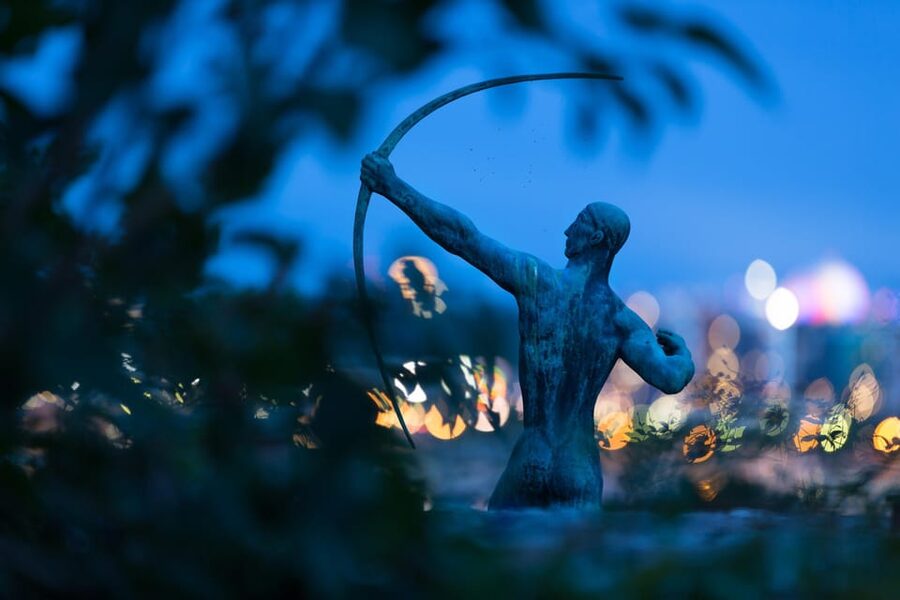
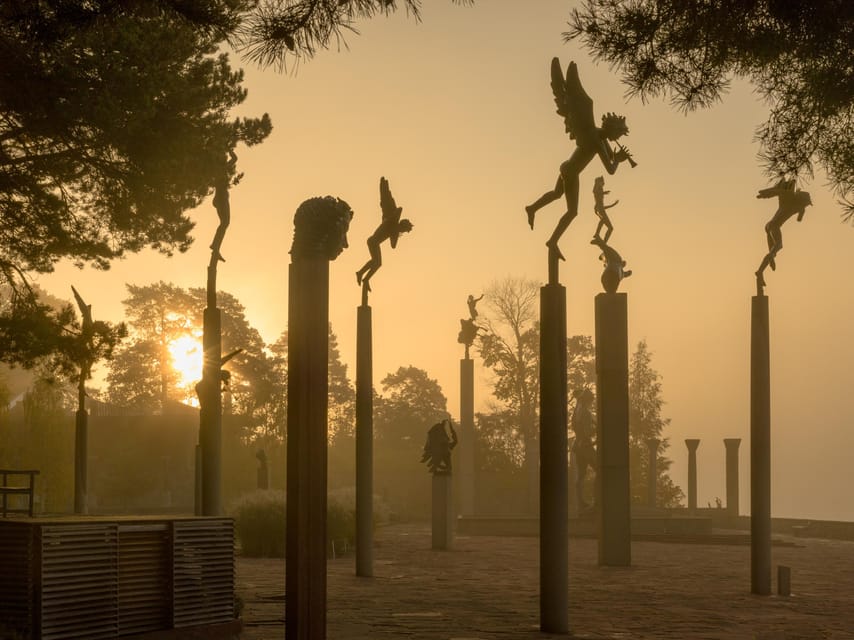
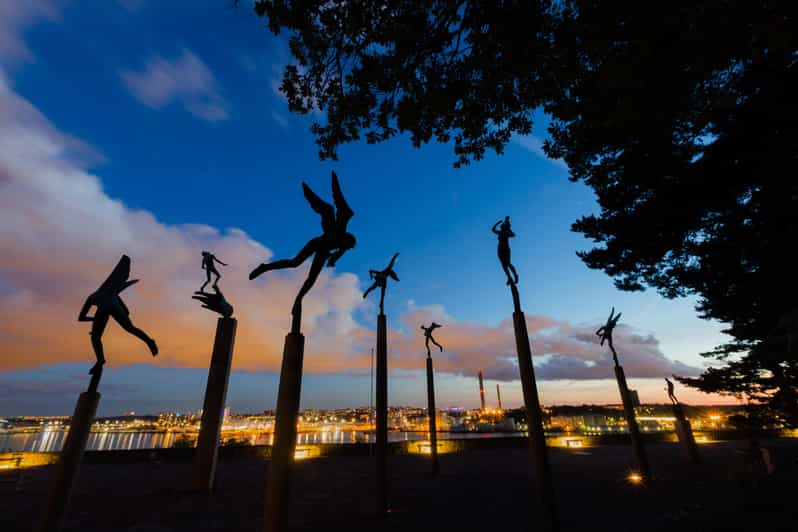
Millesgården is the sort of place that makes you slow down. Carl Milles’s sculptures rise among flowers, terraces, and bubbling fountains, with broad views toward Stockholm. The setting is as important as the art, and the combination of garden and museum gives you far more than a standard gallery visit.
I especially like the sculpture-filled terraces, where you can see roughly 100 works in the open air, and the artist’s home, with its large studio, blue Dutch-tile breakfast room, and Pompeii-inspired gallery. Anne’s House adds another strong stop, decorated by Estrid Ericson and Josef Frank of Svenskt Tenn. The main consideration is timing: the art gallery may be changing exhibitions, and the audio guide link is not always obvious at first.
Key points at a glance
- About 100 Carl Milles sculptures: See around ten large fountain groups along with smaller works in the garden.
- A genuine artist’s home: Walk through Carl and Olga Milles’s rooms, studios, and collection of classical sculptures and objects.
- Anne’s House by Svenskt Tenn: See interiors decorated by Estrid Ericson and Josef Frank.
- A calm view over Stockholm: The terraces combine flowers, water, sculpture, and open views.
- Easy from central Stockholm: The journey takes about 20 minutes by public transport to Lidingö.
- Useful practical setup: The museum is wheelchair accessible, cash-free, and offers Swedish and English audio guides.
Why Millesgården feels different from a normal museum
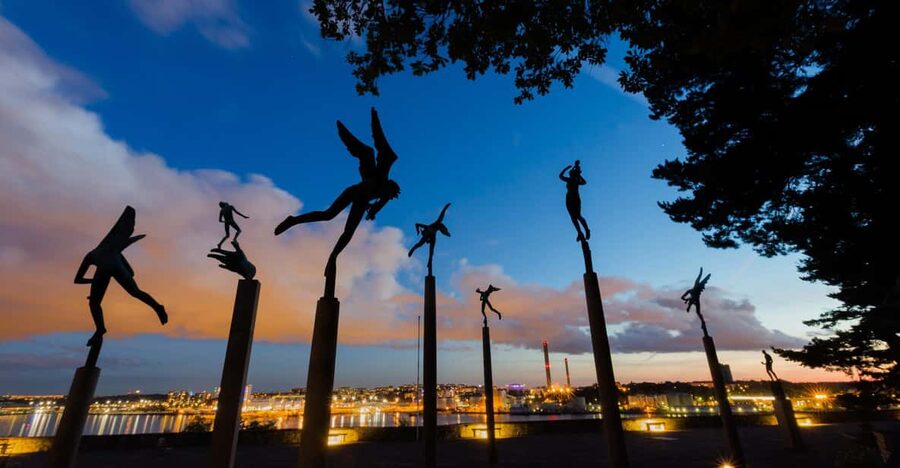
Many art museums ask you to move from room to room under even lighting. Millesgården gives you a more varied day. You pass from flowers and fountains into studios, from a private home into a gallery, then back outside for views over Stockholm.
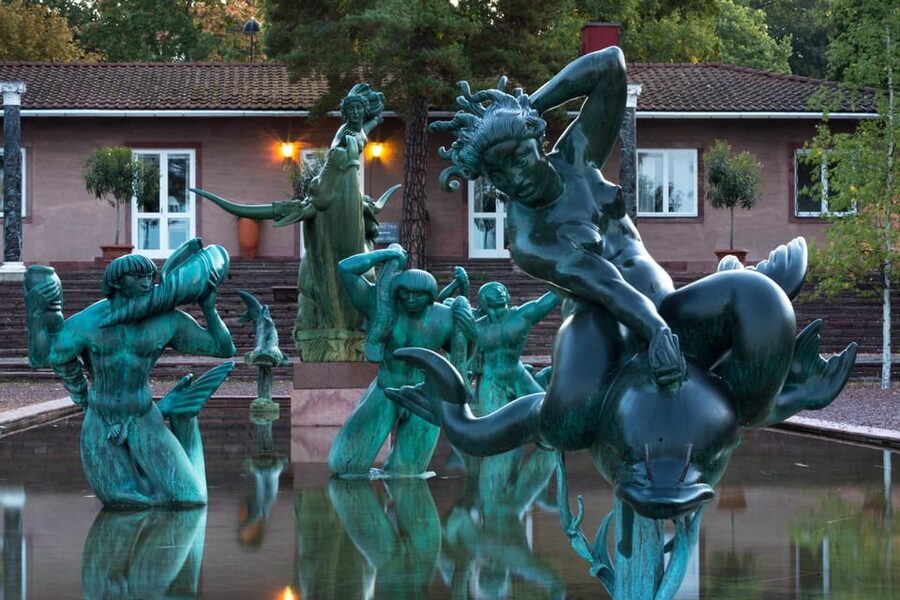
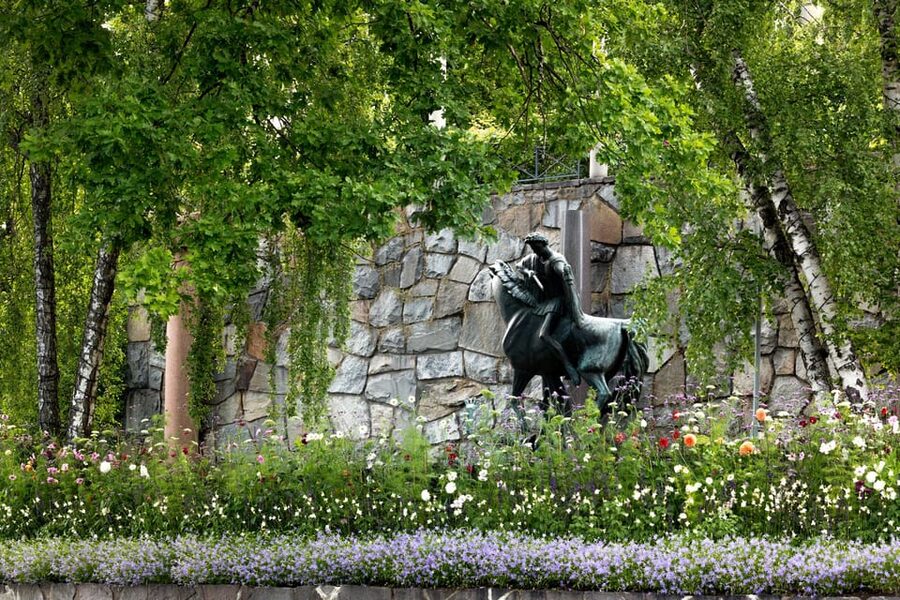
The sculpture park is the heart of the visit. Carl Milles’s work is placed along terraces and pathways rather than lined up in a single indoor hall. Water is part of the display, especially around the larger fountain groups. The sound of moving water helps the park feel peaceful, even when you are actively looking at the sculptures.
I like this arrangement because it gives you room to form your own response to the art. You can look closely at a figure, step back to see how it fits the garden, then continue toward another terrace. The setting also makes the visit appealing to people who might not normally plan a full museum day.
The site is in Lidingö, just outside central Stockholm, but it does not feel difficult to reach. It is a cultural outing with a clear change of pace from the city center, without requiring a long trip.
More Museum Tours in Stockholm
- Stockholm: ABBA The Museum Entrance Ticket
★ 4.7 · 11,280 reviews - Stockholm: Skansen Open-Air Museum Admission Ticket
★ 4.5 · 3,427 reviews - Stockholm: Paradox Museum Entry Ticket
★ 4.2 · 3,031 reviews
The sculpture park and its ten large fountain groups
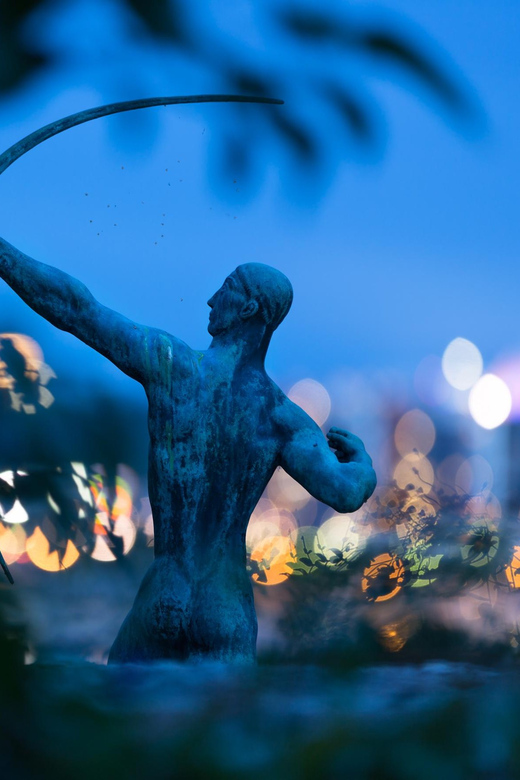
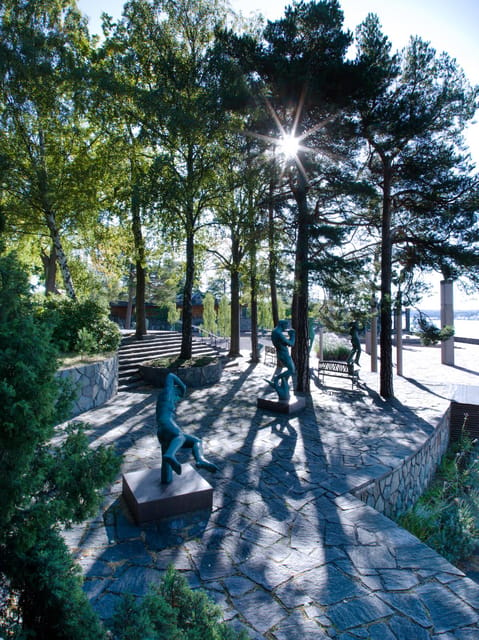
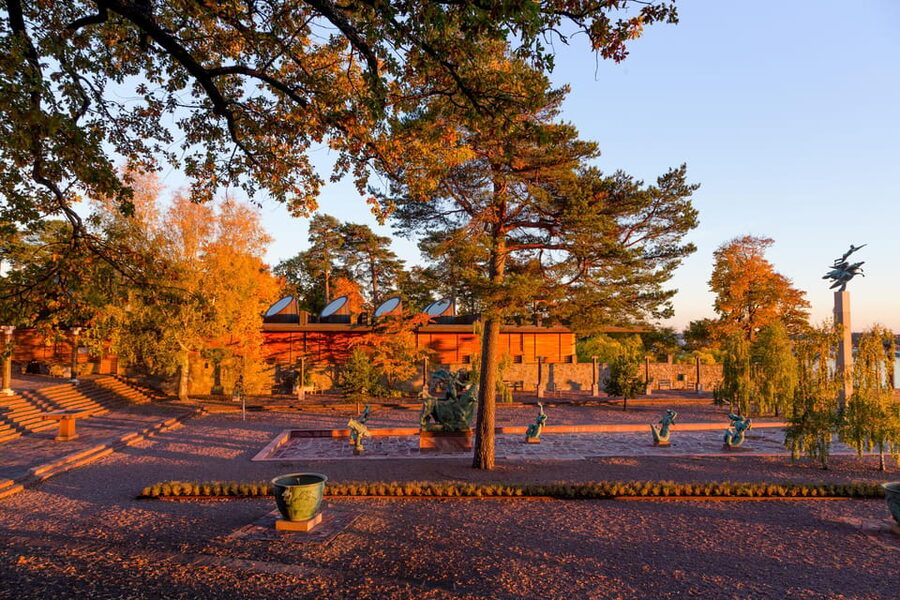
Start outside if the weather is reasonable. The park is where Millesgården makes its first strong impression, with flower-adorned terraces, sculptures, fountains, and views toward Stockholm.
You can expect around 100 sculptures by Carl Milles across the grounds. About ten are larger fountain groups, so water is not just a decorative extra. It is part of the way the works are presented.
Take your time on the terraces. Some people will want to identify individual figures and study the details. I prefer to pause at several wider viewpoints, where the sculptures, planting, and water come together. You get a better sense of the full design when you do not rush from one object to the next.
The park is also the best part of Millesgården for a short visit. If your schedule is tight, the outdoor setting gives you a worthwhile taste of the museum even before you enter the buildings. If you have the full day, stay longer and use the home and gallery to add context.
The paths and terraces are a key part of the visit, so comfortable shoes are sensible. The museum is wheelchair accessible, but the park includes different outdoor areas and routes. If you need a specific access detail, ask at reception when you arrive.
Inside Carl and Olga Milles’s artist home
The Artist’s Home gives the sculpture park a personal center. This is not simply another white-walled exhibition room. You are seeing the home of Carl and Olga Milles, along with rooms connected to their creative lives and collections.
The Large Studio is one of the most important stops. Carl created his large sculptures there, and the room helps you understand the scale and physical work behind the pieces displayed outside. After seeing a sculpture in the garden, coming into the studio gives you a useful change of scale.
The breakfast room, clad in blue Dutch tiles, is another memorable detail. It has a distinct character and breaks up the sequence of studios and display areas. The Pompeii-inspired Gallery adds yet another mood, showing how varied the home’s interiors are.
You will also see Carl’s collection of classical sculptures and objects. This matters because it places his own work alongside the art and objects that interested him. Rather than treating the artist as an isolated figure, the home shows the surroundings and collections that shaped his working world.
I would allow enough time here to look up, not just straight ahead. Rooms with strong decoration can be easy to hurry through when you are focused on sculpture, but the interiors are part of what makes Millesgården special.
Anne’s House and the Svenskt Tenn interiors
Anne’s House offers a different kind of pleasure. Instead of focusing on Carl Milles’s sculpture, it presents a carefully decorated interior associated with Estrid Ericson and Josef Frank of Svenskt Tenn.
This stop is useful for anyone interested in Swedish design, furnishings, and interiors. It also gives the visit some variety. After the stone, bronze, fountains, and studio spaces, you enter a more domestic setting where color, pattern, and room decoration take the lead.
Do not treat Anne’s House as a quick side room. Its value comes from seeing how the decoration works as a complete interior rather than as isolated objects in a display case. If you already know Svenskt Tenn, this may be one of the places you most want to study. If you do not, it still gives you a clear contrast with the sculpture park.
The supplied details do not identify Anne’s House as a guided stop, so ask at reception about the best order for seeing it and the other buildings. A little planning can help you avoid arriving just as a space is closing or an exhibition area is changing.
A few more museum visits around Stockholm worth comparing
- Stockholm Pass: Save up to 50% – Includes Vasa Museum Ticket
★ 4.1 · 2,392 reviews - Stockholm: Vasa Museum and Vrak Museum of Wrecks Combo Entry
★ 4.7 · 2,131 reviews - Stockholm: Nobel Prize Museum and Exhibition Entry Ticket
★ 4.3 · 994 reviews - Stockholm: Fotografiska Museum Entrance Ticket
★ 4.5 · 702 reviews
The art gallery and changing exhibitions
The Art Gallery completes the visit with temporary or changing exhibitions. The exact exhibition matters, so check what is showing before you go if the gallery is a major reason for your visit.
One recent visit found the exhibition area in the middle of a change, which meant the overall museum experience felt incomplete. That is a useful warning, not a reason to skip Millesgården. The sculpture park, home, studios, and Anne’s House remain the main fixed parts of the visit, but the gallery can add a strong extra layer when an exhibition is fully open.
I would plan to visit the gallery after the Artist’s Home and Anne’s House. By then, you will have seen the permanent setting and can give the changing exhibition your full attention. The museum shop is a natural final stop, especially if you want something small connected to the visit.
Audio guide details worth knowing
An audio guide is included in Swedish and English. It can help you notice details in the home, studios, and sculpture park that you might otherwise pass by.
There is one practical wrinkle. The audio link may be found on a wall in the studio rather than being clearly explained at the information desk. I recommend asking at reception about the audio guide before you set off. That simple question can save you from starting the route without it.
If the audio guide is not working immediately, do not let it spoil the visit. The park is easy to appreciate visually, and you can still return to the relevant areas once you have found the link. Still, clear instructions at the start would make the experience easier, especially for a first-time visitor.
No guide’s name is provided for this experience. If you have booked a guided visit, ask at reception for the guide and meeting instructions.
Lunch, coffee, and the museum shop

Millesgården Lanthandel gives you a place to stop for lunch or afternoon coffee. That matters because this is best treated as a relaxed half-day or full-day outing rather than a quick photo stop.
The food details are not specified, so do not visit expecting a particular menu item. Use the restaurant as a convenient pause between the outdoor park and the indoor buildings. A break can also help you keep the day comfortable if you are visiting slowly.
The museum shop is at the end of the visit. It is worth leaving a few minutes for it instead of rushing out after the gallery. Since the museum is cash-free, you can pay by debit or credit card in the shop and restaurant.
Large bags and oversize luggage are not allowed. Avoid arriving with a suitcase or large day bag, as the restriction can affect how easily you enter and move through the museum.
Getting to Millesgården from central Stockholm
Public transport is straightforward. Take the subway to Ropsten, then continue by bus 201, 202, 204, 206, 211, 212, or 221 to Torsviks Torg. From the bus stop, it is about a seven-minute walk to Millesgården, following the signs.
You can also take the Lidingöbanan local tram from Ropsten to Torsvik or Baggeby. Millesgården is between those stations, and the walk from either station takes about seven minutes.
The journey from T-Centralen takes about 20 minutes, though you should check current departures at SL before leaving. That short travel time is one of the strongest reasons to add Millesgården to a Stockholm itinerary. You get a distinct setting without spending most of the day in transit.
Drivers have free parking at Herserudsvägen 32, just outside the main entrance. Cyclists can use the cycle path over the Lidingö bridge. These choices make the museum practical for more than just visitors staying in central Stockholm.
Is the $19 admission good value?
At about $19 per person, Millesgården offers good value if you plan to see the park, Artist’s Home, Anne’s House, and Art Gallery rather than only making a short outdoor stop.
The price covers several different experiences in one admission: the sculpture park, the artist’s home, the antiques collection, Anne’s House, and the art gallery. The included audio guide in Swedish or English adds useful context without a separate charge.
The value is strongest for people who enjoy variety. You are not paying only for a collection of sculptures or only for a historic house. You are getting an outdoor art setting, decorated interiors, working studios, classical objects, changing exhibitions, and a view over Stockholm.
The value is less certain if you want a guaranteed special exhibition. Gallery displays can change, and an exhibition change may temporarily limit what you see. In that case, check the current program before booking.
The ticket is valid for one day, and the museum is open Tuesday through Sunday from 11:00 to 17:00 all year. The combination of a full day of validity and several areas to explore makes it easy to visit at your own pace.
Who should visit Millesgården?
I would recommend Millesgården to anyone who likes sculpture, gardens, Swedish design, or historic homes. It also works well for couples, families with an interest in art, and visitors who want a quieter cultural outing outside the center.
The park is a strong choice if you prefer art with room to breathe. You can focus closely on individual sculptures, or simply enjoy the terraces, flowers, fountains, and views. The home and Anne’s House suit people who want interiors and personal surroundings rather than a standard gallery alone.
It may be less suitable if you have heavy luggage, want a late-evening activity, or need a fast indoor museum near central Stockholm. The site closes at 17:00 and is closed Mondays, so check the day before you go.
For wheelchair users, the museum is listed as accessible. Because the visit includes outdoor terraces and several buildings, ask reception about the best route for your needs.
Should you book Millesgården?
Book it if you want a peaceful, art-focused day that combines sculpture, fountains, a private home, Swedish interiors, and Stockholm views. The short journey from T-Centralen and the roughly $19 price make it an easy addition to a city visit.
I would be especially keen to go when the Art Gallery has an exhibition you want to see. If the gallery is changing displays, adjust your expectations and treat the sculpture park, Artist’s Home, and Anne’s House as the main event.
Arrive with manageable bags, confirm the audio guide instructions at reception, and allow enough time for the outdoor terraces. Do that, and Millesgården offers a thoughtful change of pace from central Stockholm.
FAQ
How long is the Millesgården experience?
Your admission is valid for one day. The museum is open from 11:00 to 17:00, Tuesday through Sunday, all year round.
How much does admission cost?
The listed price is $19 per person.
What does the admission include?
Admission includes the Art Gallery, Artist’s Home, antiques collection, sculpture park, and Anne’s House.
Is an audio guide available?
Yes. An audio guide is included in Swedish and English.
How do I reach Millesgården by public transport?
Take the subway to Ropsten, then use bus 201, 202, 204, 206, 211, 212, or 221 to Torsviks Torg. The walk from there takes about seven minutes. You can also take the Lidingöbanan tram from Ropsten to Torsvik or Baggeby.
Is parking available?
Yes. Free parking is available at Herserudsvägen 32, just outside the main entrance.
Is Millesgården wheelchair accessible?
Yes, the museum is wheelchair accessible.
Can I pay with cash?
No. Millesgården is cash-free. You can pay by credit or debit card in the museum shop and restaurant.
Just added around Stockholm
- Stockholm: The Viking Museum Exhibition and Viking Ride★ 4.5 · 667 reviews
- Stockholm: Old Town Walking Tour w/ Vasa Museum & Boat Ride★ 4.7 · 37 reviews
- Stockholm: Vasa Museum Tour with Entry Ticket & Guide★ 5.0 · 537 reviews
- Stockholm Must See: City Hall, Gamla Stan and Vasa Museum★ 4.9 · 73 reviews
- Stockholm Royal Palace Museums Gamla Stan Skip-the-line Tour★ 4.8 · 18 reviews
- Stockholm: Old Town & Vasa Museum Skip-the-Line Private Tour★ 4.9 · 279 reviews
- Stockholm: Private Guided Car Tour and Vasa Museum Entry★ 5.0 · 26 reviews
- Stockholm: Entry Ticket to Junibacken Children’s Museum★ 4.5 · 275 reviews
Museum Tours in Stockholm, compared.




Stockholm Pass: Save up to 50% – Includes Vasa Museum Ticket
Read our review →
Vasa Museum and Vrak Museum of Wrecks Combo Entry
Read our review →


Browse the lists this tour appears in