
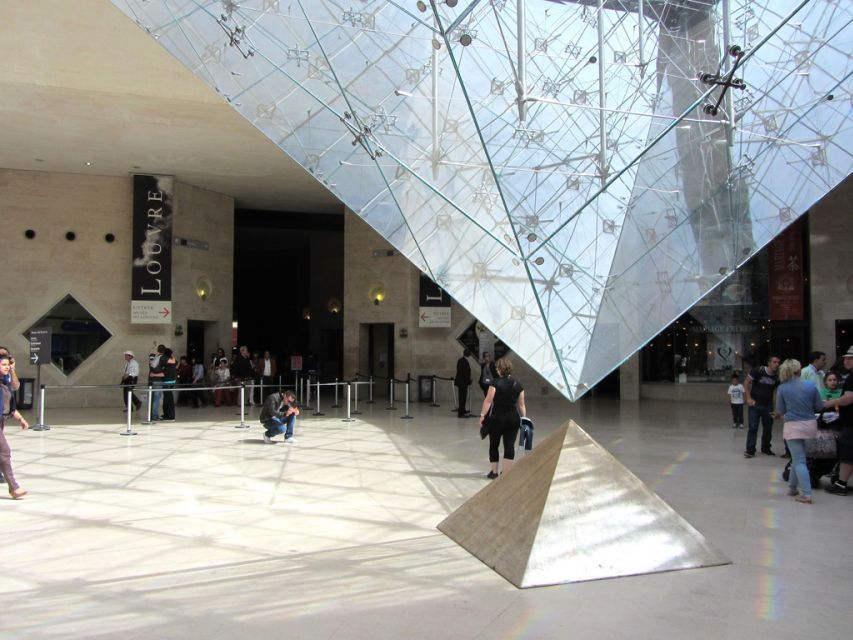
Review · PARIS
Paris: Louvre Museum Skip-The-Line Tour
The Louvre can feel like an art city with poor street signs. This private two-hour tour gives you a guide, a clear route, and a useful story linking the Renaissance, Neoclassicism, and Romanticism. You will see major works, including the Nike of Samothrace, Mona Lisa, and Liberty Leading the People, without trying to plan the museum alone.
I like the way the tour places familiar stars beside less obvious works, such as Botticelli frescoes and Mantegna’s Saint Sebastian. I also like the chance to shape the visit around your interests, a point praised by James, who found the guide’s custom approach especially helpful. The main drawback is time: two hours is enough for a sharp introduction, not a full Louvre visit.
Key points to know
- A focused route through three art periods: Renaissance, Neoclassicism, and Romanticism give the visit a clear thread.
- Important works beyond the Mona Lisa: You will see Botticelli, Mantegna, Bellini, Veronese, David, Ingres, Gericault, and Delacroix.
- Private group format: Your guide can respond to your questions and adjust the emphasis to your interests.
- Boris has received special praise: His discussion of how artists used sun and light gave one visitor a memorable way to read the collection.
- Meet at the Arc de Triomphe du Carrousel: Look for the guide carrying a red canvas tote bag.
- Pack light: Bags larger than 55 by 35 by 20 centimeters are not allowed inside the museum.
Why this Louvre visit works in only two hours
The Louvre is too large to understand in one short visit. That is not a criticism of the museum. It is simply the scale of the place. A private guide helps you spend your time on a chosen set of rooms rather than wandering through corridors and hoping you find the famous works.
This tour uses art history as its organizing tool. You move from the early Renaissance and its shift away from medieval traditions toward Humanism, then into the grand order of Neoclassicism and the emotion of Romanticism. That structure gives the paintings and statues a place in a larger story.
You will not see every major gallery. You should not expect to. The point is to come away with a better sense of how European art changed, along with a handful of memorable works to revisit later.
The private format matters here. If you are traveling with children, teenagers, or relatives with different interests, you can ask for more time with painting, sculpture, history, or technique. Jen’s family managed the museum with two teenage boys, and the guide adjusted well to the group. That kind of flexibility is harder to get in a large public group.
More Museum Tours in Paris
- Paris: Louvre Museum Timed-Entrance Ticket
★ 4.6 · 71,977 reviews - Paris: Orsay Museum Entry Ticket
★ 4.7 · 25,647 reviews - Louvre Museum Masterpieces Guided Tour with Access
★ 4.5 · 12,023 reviews
Meeting at the Arc de Triomphe du Carrousel
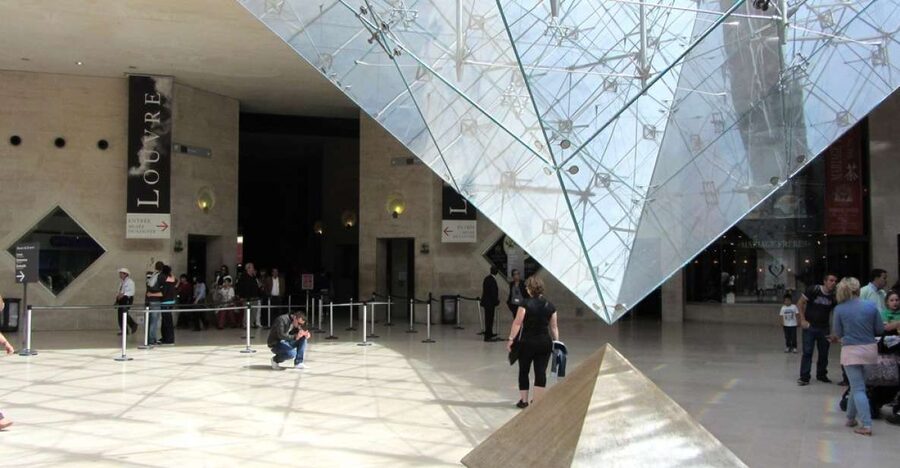
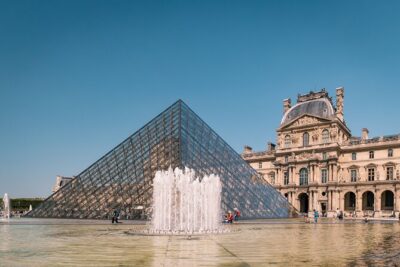
Your meeting point is the Arc de Triomphe du Carrousel, a practical location near the Louvre. The guide carries a red canvas tote bag, which gives you a simple way to identify the right person in a busy part of central Paris.
Arrive with your group ready to enter. The tour includes a skip-the-ticket-line entrance, but you still need to meet the guide and pass through museum security. A small bag is the sensible choice. Items over 55 by 35 by 20 centimeters are not allowed, and oversize luggage is not permitted.
The tour runs in rain or shine. Since much of the experience takes place indoors, bad weather does not cancel the museum visit, but comfortable shoes still make sense. The Louvre requires plenty of walking, and a two-hour route can cover a surprising amount of ground.
The tour is wheelchair accessible, according to the supplied details. If someone in your group needs a particular arrangement, raise it when booking so the guide can plan the route as well as possible.
Botticelli and the early Renaissance
One of the more unusual highlights is Botticelli’s fresco, Venus and the Three Graces Presenting Gifts to a Young Woman. Botticelli is often associated with Florence and the graceful figures of The Birth of Venus, but this Louvre work gives you another way to understand his style.
The early Renaissance section helps explain a major change in European art. Medieval religious traditions remained important, yet artists began showing greater interest in the human figure, the natural world, classical ideas, and individual identity. This shift toward Humanism is easier to grasp when a guide points out what changed in posture, facial expression, space, and subject matter.
This is one reason a guided visit can be more useful than a list of famous names. You are not only being told that a work is old or important. You are given a way to look at it. Boris, one of the named guides, has been particularly effective at using light and the sun as a thread through different periods. That approach can turn a broad art lesson into something you can actually spot in the paintings.
Mantegna, Bellini, and the changing Renaissance
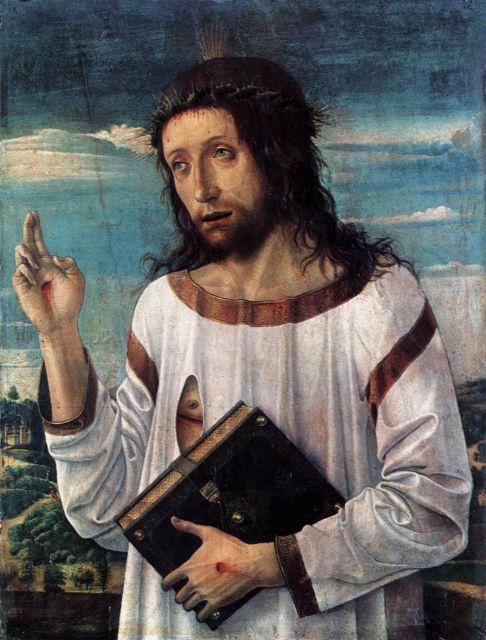
Mantegna’s Saint Sebastian is another key Renaissance stop. The work represents early Florentine art in the route described for this visit, and it helps place the Renaissance in motion rather than treating it as one single style.
You will also see Venetian painting by Bellini. The contrast between Florentine and Venetian approaches is useful: one tradition is often discussed through drawing, structure, and the human figure, while Venetian art is closely linked with color and the handling of light. Your guide can help you notice those differences rather than leaving you with a blur of Italian names.
The exact amount of time spent at each work depends on your group. That is a strength of a private visit, but it also means you should tell the guide early if one artist matters most to you. If your priority is Leonardo, sculpture, or French painting, say so at the start.
More Louvre tours and timed tickets:
- Paris: Louvre Museum Entry Ticket With Host and River Cruise
★ 4.6 · 9,926 reviews - Mona Lisa & Louvre Masterpieces Tour with Reserved Access
★ 4.6 · 6,812 reviews - Louvre Museum – Exclusive Guided Tour (Entry Included)
★ 5.0 · 6,296 reviews - Paris: Louvre Museum Hosted Entry and Mona Lisa Audioguide
★ 4.6 · 5,235 reviews
Leonardo, the Mona Lisa, and Veronese’s vast canvas
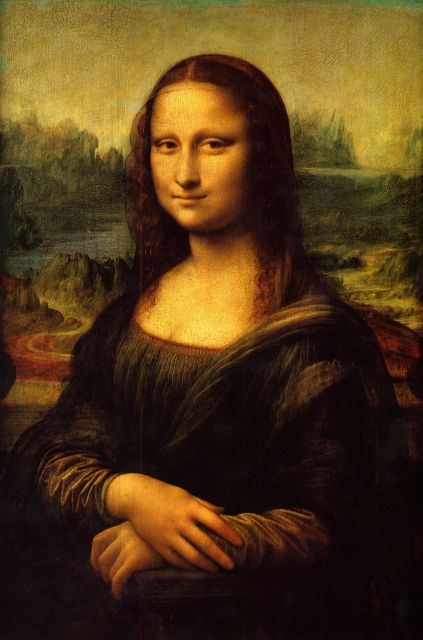
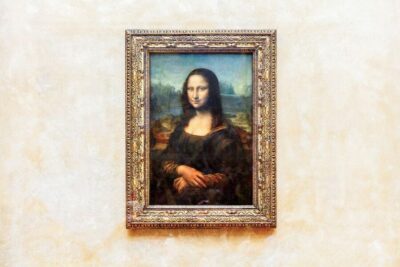
Leonardo da Vinci is represented by paintings including the Mona Lisa. The portrait is one of the Louvre’s biggest draws, and the room can be a high-pressure part of any visit. Your guide can provide context and help you fit it into the larger Renaissance story, but you should not expect a quiet, private encounter with the painting.
The tour also includes Veronese’s The Marriage at Cana, described as the largest painting in the Louvre. Its huge scale changes the way you experience it. Rather than looking only at a face or a small detail, you have to take in the full arrangement of figures, architecture, color, and movement.
This pairing is useful. The Mona Lisa is famous for its concentrated presence and mystery. The Marriage at Cana works through scale and spectacle. Seeing both in one route shows how varied Renaissance painting could be.
A two-hour tour cannot offer unlimited time at either work. If the Mona Lisa is your main reason for coming, keep your expectations sensible. This experience gives you a guided visit with the portrait included, not a long study session focused on one painting.
Neoclassical drama: David and Ingres
The route then moves toward Neoclassicism, a style that looked back to ancient Greece and Rome for order, clarity, and moral seriousness. Jacques-Louis David’s The Oath of the Horatii is a strong example. Its firm lines and carefully arranged figures make the subject feel like a public lesson about duty and sacrifice.
David’s The Crowning of Napoleon brings the same taste for ceremony into a political setting. The painting is large, formal, and packed with people whose positions and gestures matter. A guide can help you read the composition and understand how art served power, public image, and national identity.
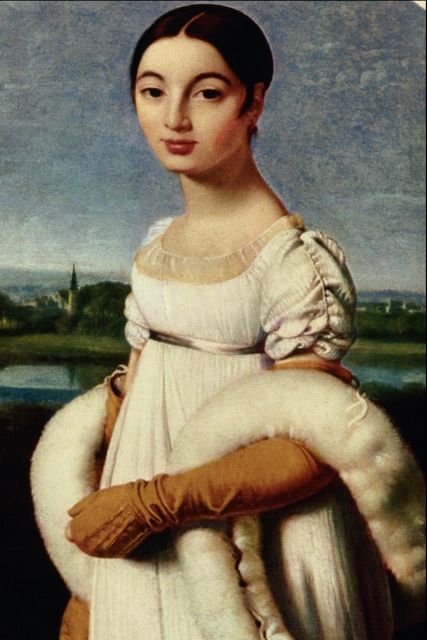
Ingres’ Une Odalisque gives you a different Neoclassical mood. The sinuous nude is less about a public event and more about the idealized figure and the painter’s control of line. It is a useful stop because it shows that Neoclassicism was not only grand history painting.
These works reward explanation. Without context, the figures and poses can look stiff or theatrical. With a guide, you can see how the style was built to make an argument about beauty, discipline, authority, and the past.
Romanticism, storms, and revolution
The tour’s Romantic section brings a sharp change in feeling. Gericault’s The Raft of the Medusa is a vast, troubling painting based on a disaster at sea. Its figures are caught between despair and hope, and the scale pulls you into the crisis rather than letting you treat it as a small historical scene.
This is not polished court art. It is emotional, physical, and politically charged. The guide can help you understand why the painting mattered in its own time and why its dramatic arrangement still holds attention.
Delacroix’s Liberty Leading the People commemorates the July Revolution of 1830. The figure of Liberty moves forward over the fallen, carrying the French tricolor. It is one of the Louvre’s strongest examples of art used to express political upheaval and collective identity.
Placed after David and Ingres, Delacroix shows how painting can loosen its rules. Neoclassical order gives way to movement, urgency, and emotional force. That progression is one of the best reasons to follow the tour’s three-period design.
What the guides add to the experience
The guide is the main reason to choose this tour over simply buying museum admission. The Louvre provides the objects. Your guide provides selection, sequence, and explanation.
Boris has been singled out for his historical perspective and his discussion of the ways artists depicted sun and light across the ages. That is a useful theme because light links very different works without forcing them into the same style.
The tour is offered in English, French, and Serbo-Croatian. If you need a particular language, confirm availability for your chosen time. The guide’s role is not limited to reciting dates. You can ask questions, request more attention for a particular period, or ask for help navigating the museum’s vast collection.
The private format also suits families. A guide can keep younger visitors involved by focusing on stories, unusual details, or the drama of a painting. Jen’s group included two teenage boys, and the tour still worked well for them. That is a useful sign for parents who worry that the Louvre may be too much for a short attention span.
The $294 price and who gets good value
At $294 per person, this is an expensive museum visit. The price makes the most sense for people who value a private guide, a planned route, and the chance to ask questions. It is less attractive if you mainly want admission and time to wander on your own.
The tour includes the Louvre entrance ticket and the guide. Food and drinks are not included, though that is hardly a concern for a two-hour museum visit. You can eat before or after in the surrounding area, but no meal forms part of the experience.
Think of the fee as paying for time saved and interpretation. The Louvre’s scale can eat up a morning before you find the works you came to see. A private guide helps you get to important rooms and puts the art into an understandable order.
The value improves if you are a first-time visitor, have limited time in Paris, or are traveling with a mixed-interest group. It is harder to justify if you are an experienced museum visitor who prefers to read labels, set your own pace, and spend an hour with one painting.
The operator, Paris in person private tours, was selected among the top 10 small tour operators in Europe from a field of 26,000 companies in a 2025 industry award. That does not guarantee that every guide or time slot will suit every person, but it does provide useful context when comparing a private tour at this price.
Practical limits to keep in mind
Two hours passes quickly in the Louvre. The route includes a strong list of works, but you should treat it as an introduction rather than a complete museum tour.
The museum is large, and the visit involves walking. Bring only what you need, since bags larger than 55 by 35 by 20 centimeters are not accepted. Oversize luggage is also forbidden.
The tour operates in all weather, and the meeting point is outdoors at the Arc de Triomphe du Carrousel. Give yourself enough time to arrive and find the red tote bag. The supplied details do not include a hotel pickup or transportation, so plan to reach the meeting point yourself.
The activity allows cancellation up to 24 hours in advance for a full refund. You can also reserve now and pay later, which helps if your Paris schedule is still taking shape.
Who should book this Louvre tour?
Book it if you want the major works explained rather than simply photographed. It is especially well suited to first-time Louvre visitors, families, private groups, and anyone who wants Renaissance, Neoclassical, and Romantic art connected into one readable story.
It is also a good choice if you want flexibility. The guide can respond to your interests, and Boris has shown that a thoughtful theme such as light can make a long museum visit easier to follow.
Skip it if your main goal is a slow, independent day in the galleries. You may prefer a basic admission ticket and several hours to explore alone. Also think twice if $294 per person feels too high for a two-hour visit.
For most people choosing between getting lost in the Louvre and seeing a carefully selected group of masterpieces, this tour offers the more efficient introduction. Just pack light, arrive at the Arc de Triomphe du Carrousel on time, and decide in advance which artists matter most to you.
FAQ
How long does the Louvre tour last?
The tour lasts two hours.
What does the price include?
The price includes a skip-the-ticket-line entrance ticket to the Louvre and a guide.
Is food or drink included?
No. Food and beverages are not included.
Where do I meet the guide?
Meet at the Arc de Triomphe du Carrousel. The guide will carry a red canvas tote bag.
Which languages are available?
The tour is offered in English, French, and Serbo-Croatian.
Is the tour private?
Yes. It operates as a private group.
Can I bring a large suitcase or bag?
No. Oversize luggage is not allowed, and items larger than 55 by 35 by 20 centimeters cannot enter the museum.
Can I cancel the booking?
Yes. You can cancel up to 24 hours in advance for a full refund.
More Skip-the-Line Tickets in Paris
- Louvre Museum: Skip-the-Line Small Group Guided Tour
★ 4.6 · 4,268 reviews - Paris: Skip-the-Line Louvre Museum & Mona Lisa Guided Tour
★ 4.6 · 1,442 reviews - Paris: Musée d’Orsay Skip-the-Line Tour with Expert Guide
★ 4.5 · 1,145 reviews - Louvre Museum Skip the Line Entry with Introduction to Mona Lisa
★ 3.0 · 576 reviews
Just added around Paris
- Rodin Museum Masterpieces – Guided Tour up to 8 guests★ 4.9 · 13 reviews
- Invalides Museum – WWI & WWII – Guided Tour up to 8 guests★ 5.0 · 32 reviews
- Skip the Line Guided Tour of Louvre Museum Highlights★ 5.0 · 49 reviews
- Paris: Louvre Museum Highlights Small-Group Guided Tour★ 4.8 · 157 reviews
- From Paris: Private Trip to Giverny, Monet’s House & Museum★ 4.5 · 13 reviews
- Paris: Street Art Open-Air Museum Bike Tour★ 4.8 · 51 reviews
- Paris: The Rodin Museum and Seine River Cruise★ 4.6 · 45 reviews
- Paris: Rodin Museum Ticket & Optional Digital AudioGuide App★ 4.7 · 56 reviews
Museum Tours in Paris, compared.
Louvre Museum Masterpieces Guided Tour with Access
Read our review →
Louvre Museum Entry Ticket With Host and River Cruise
Read our review →
Les Invalides: Napoleon’s Tomb & Army Museum Entry
Read our review →
Mona Lisa & Louvre Masterpieces Tour with Reserved Access
Read our review →
Louvre Museum – Exclusive Guided Tour (Entry Included)
Read our review →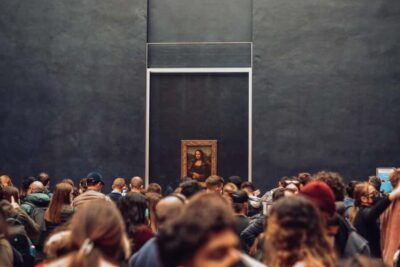
Louvre Museum Hosted Entry and Mona Lisa Audioguide
Read our review →Browse the lists this tour appears in