
Review · LONDON
London: Jack the Ripper Museum Tickets
The Jack the Ripper Museum takes you through six floors of Victorian crime, from a recreated murder scene to a cramped East End bedroom and a chilling morgue. It is part history lesson, part theatrical set, and part true-crime exhibit, all inside a building that looks surprisingly much like an ordinary house from the street. The focus on the victims gives the experience more weight than a simple hunt for the killer’s identity.
I like the strong atmosphere, especially the sound effects and the haunting singing in Mary Jane Kelly’s attic room. I also like the police evidence room, where you can inspect reproductions and historic objects tied to the investigation, including the From Hell and Dear Boss letters. The main caution is size: many people finish in about 45 minutes, while a careful visit takes closer to an hour and a half, so this is not an all-day museum.
Key points to know before you go
- Six floors in a compact East London building: Expect a self-guided route through themed rooms rather than a large conventional museum.
- A victim-focused account: The displays explain how the murdered women lived, not just how they died.
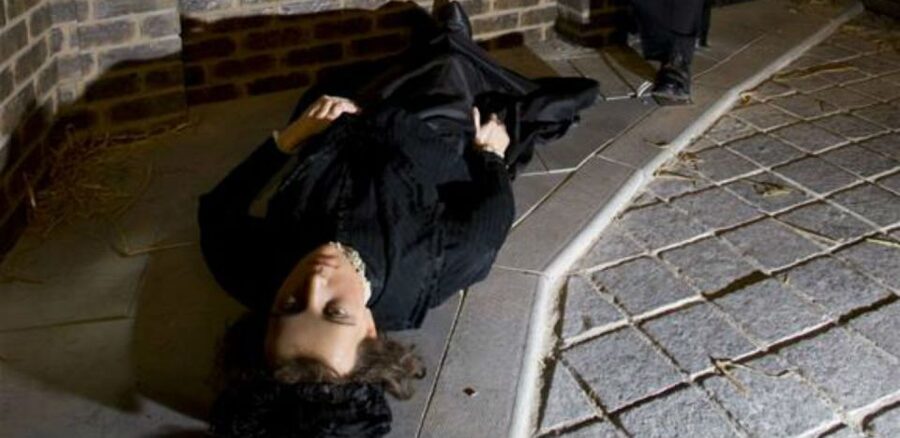
- Recreated crime scenes: Mitre Square and Mary Jane Kelly’s bedroom are presented with wax figures, props, and sound.
- Police evidence and documents: See crime boards, newspapers, letters, and items associated with P. C. Watkins.
- A graphic final room: The morgue includes actual autopsy photographs and reports, so this is not suitable for everyone.
- Flexible one-day admission: The ticket costs about $18.86 per person, with cancellation up to 24 hours before the visit.
Entering 1888 Whitechapel on Cable Street
The museum is at 12 Cable Street in London’s East End, near Tower Gateway, Tower Hill, and Aldgate East stations. You make your own way there, and the visit finishes at the same address. Since transportation is not included, plan this as a stop within your East London sightseeing rather than as a guided excursion from central London.
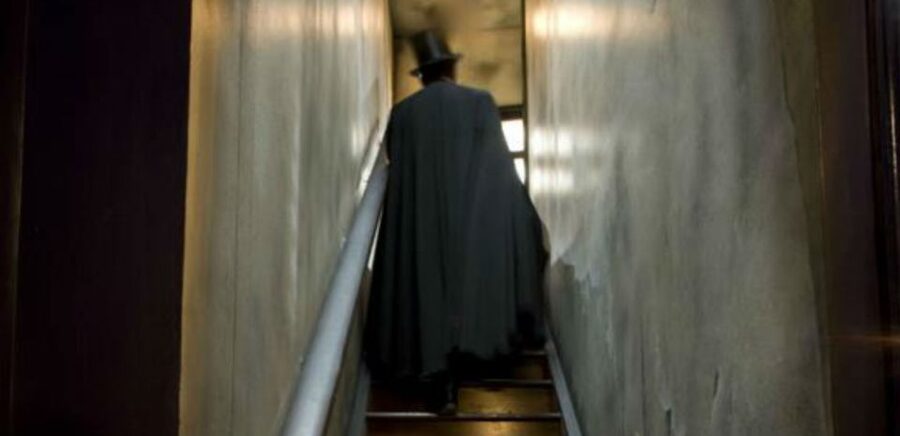
The building can be easy to miss at first. From outside, it may look more like a house than a major attraction. Inside, the tone changes quickly. The rooms use dim lighting, period-style settings, wax figures, printed information, sound effects, and wall displays to create a Victorian crime museum with a theatrical edge.
That mix will suit you if you enjoy history with a little fright. If you prefer original objects in glass cases and a quiet academic presentation, some of the staged scenes may feel overdone. The museum is not pretending to be a neutral archive. It uses atmosphere to help you picture the streets, rooms, police work, and poverty surrounding the murders.
You can move at your own pace. There is no transport between stops and no fixed walking group to keep up with. Museum staff explain the best route around the rooms, and occasional guides have included Jasony and George. The standard format, however, is a self-guided visit, so you should be ready to read the panels and follow the story yourself.
More Museum Tours in London
- Tower of London and Crown Jewels Exhibition Ticket
★ 4.5 · 6,677 reviews - London: Chelsea Football Club Stadium and Museum Tour
★ 4.8 · 4,576 reviews - Chelsea FC Stadium Tours and Museum
★ 5.0 · 1,908 reviews
Mitre Square and the first shock of the museum
One of the early highlights is a recreation of Mitre Square. You see a waxwork scene showing P. C. Watkins discovering the body of Catherine Eddowes. It is designed to be disturbing, and the presentation makes the moment of discovery feel immediate rather than distant.
This scene gives the investigation a human scale. Instead of beginning with a list of dates and suspects, the museum places you beside the police officer who found the body. The effect is unsettling, but it also makes clear that the story is about a real woman and a real investigation, not only a famous criminal mystery.
The wax figures are not subtle. Some people will appreciate the clear visual storytelling, while others may find the display too theatrical. You can read the information and move through at your own speed, which helps if you want to spend less time with the more graphic scenes.
Sound plays a large role here and elsewhere. It is not just background music. Doors, voices, and other effects help link the rooms together. The sounds add tension, though they can make the museum feel more like a horror attraction than a traditional historical collection.
Jack the Ripper’s room, filled with clues and theories
The next section presents a sitting room associated with Jack the Ripper. It includes medical instruments, books, maps, letters, and Victorian Ripper memorabilia. The setting invites you to consider the theories about who the killer might have been, but it does not solve the mystery.
A notable item is a drawing of a woman’s body on a metal bed, signed in red ink and connected in the display to Walter Sickert, one of the names often discussed in Ripper theories. The museum presents it as a major piece of its collection. You should treat this section as an account of the suspects and theories, not as final proof of the killer’s identity.
That distinction matters. Jack the Ripper remains unidentified, and the museum’s appeal comes partly from the unanswered questions. The room lets you examine the objects and consider the atmosphere of the case, but it cannot offer a confirmed answer.
The setting also gives you a glimpse of the era’s fascination with anatomy, medicine, newspapers, and sensational crime. It is a useful bridge between the physical murder scenes and the police investigation that follows.
Whitechapel Police Station and the evidence boards
The recreation of Whitechapel Police Station is one of the most informative parts of the visit. Here, the story shifts from fear and speculation to the difficult work of gathering evidence in 1888.
Crime scene boards lay out information about the murders. You can inspect the From Hell and Dear Boss letters, original newspapers, and police artifacts. These displays show how the case grew through reports, press coverage, public panic, and uncertain evidence.
The museum also displays a whistle used by P. C. Watkins to call for help after finding the body in Mitre Square. Nearby are his notebook, handcuffs, and truncheon. The objects are small, but that is part of their power. A whistle and notebook seem ordinary until you connect them with the moment a police officer discovered a murder and tried to summon assistance.
This room is especially useful if you want more than a fright. It explains how police work looked before modern forensic methods and how much depended on written notes, witness accounts, patrols, newspapers, and physical objects. The material linked to Scotland Yard’s private Crime Museum is presented as particularly significant Ripper-related evidence.
You may spend longer here than expected. The panels contain a lot of information, and the case involves several women, dates, locations, and competing ideas. Read the boards in sequence if you want the clearest account. If you are visiting with children or friends who prefer a quicker stop, this is an easy room to skim.
A few more museum visits around London worth comparing
- Official tickets: Moco Modern & Contemporary Art Museum
★ 4.5 · 1,157 reviews - London: British Museum Guided Tour with Entrance Tickets
★ 4.9 · 748 reviews - London: British Museum Audio Tour & Priority Entrance Ticket
★ 4.5 · 631 reviews - London: Paradox Museum Entry Ticket
★ 3.9 · 441 reviews
Mary Jane Kelly’s bedroom and the women behind the case
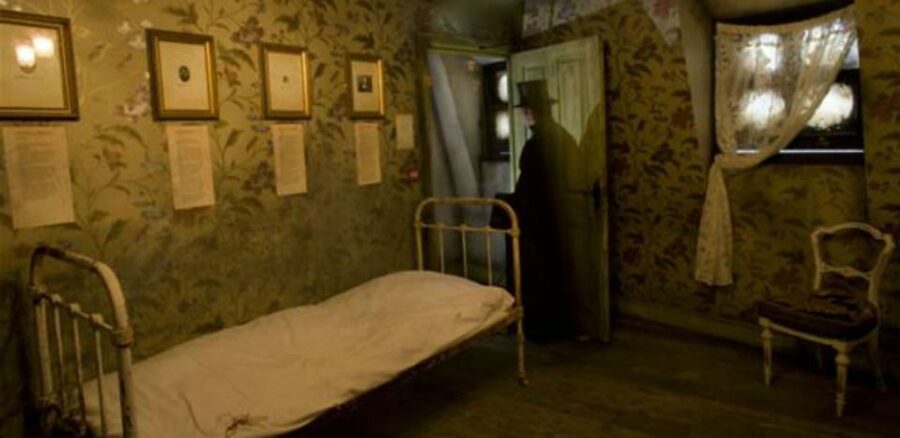
In the attic, the museum recreates Mary Jane Kelly’s bedroom. The room is associated with the most horrific murder in the case, but it also tries to show how the women of the East End lived.
You see a metal-framed bed with a straw mattress, domestic photographs, boots, bonnets, and the modest possessions of poor Victorian women. The display is deliberately plain. There is no polished period luxury here, only a small room and a few everyday belongings.
This section is where the museum becomes more than a crime attraction. You get information about the women’s lives and families, and the displays remind you that they were not simply names in a murder timeline. The emphasis helps correct the usual true-crime habit of making the killer the main character.
The sound design is particularly effective in the attic. A woman’s singing comes through a speaker, creating a sad and eerie mood. It is one of the museum’s most memorable touches, though the atmosphere may feel emotionally heavy rather than entertaining.
Take your time in this room. Look at the photographs and possessions before moving on. If you race through the museum, you can miss the part that gives the story its human meaning.
The morgue: the point to consider carefully
The final section is a morgue room with actual autopsy photographs and reports concerning the nine women presented as victims of the Ripper’s knife. This is the most graphic part of the museum, and the material can be upsetting.
The photographs are not waxwork scenes or movie props. They are medical and forensic images connected to the murders. That gives the room historical value, but it also means you should think carefully before entering, particularly if you are visiting with children or anyone sensitive to images of violence.
The museum does not require you to linger. You can move through the room quickly or decide not to study every image. The reports show how the bodies were examined and recorded at the time, offering a grim look at Victorian medical investigation.
For some visitors, this room provides the strongest link to the real case. For others, it crosses a line from historical education into graphic spectacle. That is the clearest point at which to make your own choice.
How long to allow, and what the ticket is worth
The ticket price is about $18.86 per person. At that price, I would judge the museum by the quality of the atmosphere, the amount of time you spend inside, and your interest in the subject rather than by its physical size.
A quick visit may take around 45 minutes. If you read the panels, study the police material, and spend time in the victim rooms, allow about 90 minutes. The building is small, so you will not get a full-day museum experience. The value improves if you approach it as a focused East London stop before or after other sightseeing.
I think the price is fair for someone who enjoys Victorian crime, horror, or unusual London museums. It is less convincing if you are only mildly curious about Jack the Ripper and expect a major national collection. The experience depends on themed rooms and presentation more than on a large number of rare objects.
The one-day validity gives you useful flexibility. You can fit it around your London plans rather than building a whole day around the museum. Reserve now and pay later is available, and you can cancel up to 24 hours ahead for a full refund. The museum closes on Christmas Day.
Who will enjoy this museum most
I would recommend it to adults and older children interested in:
- Victorian London and East End social history
- Unsolved crimes and police investigations
- Horror settings and theatrical museum design
- The lives of the women connected to the case
- A short indoor attraction near Tower Hill and Aldgate
Families should use their judgment. Some younger visitors may enjoy the wax figures, sounds, and mystery, but the morgue contains real autopsy photographs. The graphic material makes this a poor choice for children who are easily frightened or upset.
The museum can also work well for fans of horror games and true crime. Its recreated rooms and basement figures give it a spooky edge, while the police station and newspapers offer enough historical material to keep the visit from being only a scare show.
I would not choose it as a substitute for a broader museum about London. You will not get a full survey of Victorian life, crime, medicine, or policing. You will get a tightly focused account of one notorious case, presented through atmosphere, documents, objects, and recreated spaces.
Practical tips for making the most of your visit
Start with enough time to read. The museum is compact, but the information is spread across walls, boards, letters, and room displays. A rushed walk-through can make the experience feel thin.
Pay special attention to the police station and the attic bedroom. The police room explains the investigation, while the bedroom puts the victims back into the story. Together, they provide the best balance between mystery, history, and human context.
If you dislike graphic images, ask staff about the route before entering the final room. The morgue is not essential to understanding the entire museum, and you can decide how much of it you want to see.
Use the nearby stations as your arrival points: Tower Gateway, Tower Hill, or Aldgate East. No transportation is included, so check your route before setting out. The location makes the museum easy to pair with other East London plans, though no travel time between the station and museum is specified here.
The person accompanying a disabled visitor receives free entrance. If this applies to you, confirm the arrangement when booking or at the entrance.
Should you book the Jack the Ripper Museum?
Book it if you want a short, atmospheric London experience that combines crime history with recreated rooms and unsettling sound design. The best parts are the police evidence room, the attention given to the murdered women, and the careful period details in Mary Jane Kelly’s bedroom.
Skip it if you want a large museum, a fully guided walking tour, or a presentation without graphic material. The museum is small, theatrical, and sometimes grim. At about $18.86, it offers reasonable value for true-crime fans and history-minded visitors who take their time, but less value for anyone looking for a broad London attraction.
FAQ
Where is the Jack the Ripper Museum?
The museum is at 12 Cable Street, London E1 8JG, in Greater London. The nearest underground and train stations are Tower Gateway, Tower Hill, and Aldgate East.
How long is admission valid?
The ticket is valid for one day. You should check availability for the current starting times.
How long does a visit take?
Many visitors finish in about 45 minutes. If you read the displays carefully and take your time, the visit can last about an hour and a half.
Is transportation included?
No. Transportation is not included, and you make your own way to the museum. The activity ends back at the museum entrance.
Does the museum show graphic material?
Yes. The morgue room includes actual autopsy photographs and reports about the nine women presented as victims of the Ripper. The museum also includes recreated murder scenes and wax figures.
Can I cancel or pay later?
You can cancel up to 24 hours in advance for a full refund. Reserve now and pay later is also available.
Just added around London
- Westminster and National Gallery 3.5-Hour Tour in Italian★ 4.9 · 28 reviews
- British Museum & Camden Town – Private Tour in Italian★ 4.8 · 26 reviews
- London: British Museum Highlights Guided Small Group Tour★ 4.9 · 113 reviews
- London: Westminster Abbey & Jubilee Galleries Guided Tour★ 4.9 · 56 reviews
- London: Sherlock Holmes Museum & Westminster Walking Tour★ 4.4 · 13 reviews
- London: Royal Museums Greenwich Day Pass★ 4.5 · 309 reviews
- London: Tickets for Moco Modern & Contemporary Art Museum★ 4.7 · 391 reviews
- London: The Courtauld Gallery at Somerset House Entry Ticket★ 4.6 · 126 reviews
Museum Tours in London, compared.
Tower of London and Crown Jewels Exhibition Ticket
Read our review →
Chelsea Football Club Stadium and Museum Tour
Read our review →

Official tickets: Moco Modern & Contemporary Art Museum
Read our review →
British Museum London Guided Tour Semi-Private 8ppl Max
Read our review →
British Museum Guided Tour with Entrance Tickets
Read our review →
Browse the lists this tour appears in