
Review · LONDON
London: British Museum Tour with Archaeologist Guide
The best thing about this British Museum tour is its sense of direction. In 2.5 hours, an archaeologist such as Rossa Minogue guides you through major treasures instead of leaving you to wander a huge building with a map and tired feet. I like the strong storytelling, especially around the Rosetta Stone, Sutton Hoo, and the Lewis Chessmen. I also like that the guide adds selected personal favorites, not just the standard headline objects.
The main drawback is simple: you cannot see everything. Some explanations run long, and the museum can be crowded, so this suits you if you prefer a thoughtful look at important pieces over a fast march through every gallery.
Key points at a glance
- Start at Russell Square: Meet your guide outside Russell Square Station, then walk about five minutes to the museum.
- See the major treasures: The route includes the Rosetta Stone, Ramses II, Assyrian palace remains, Parthenon Marbles, Lewis Chessmen, and Sutton Hoo.
- Get archaeology, not just labels: Rossa connects objects with the people who made, found, used, and studied them.
- A useful first visit: The tour gives you a clear framework for returning to the museum on your own.
- Good for families: Children and teenagers can follow the stories more easily than a wall of dates and names.
- Plan for a prompt start: You must leave Russell Square at 9:45 a.m. to meet the museum entry slot.
Why the British Museum needs a guide
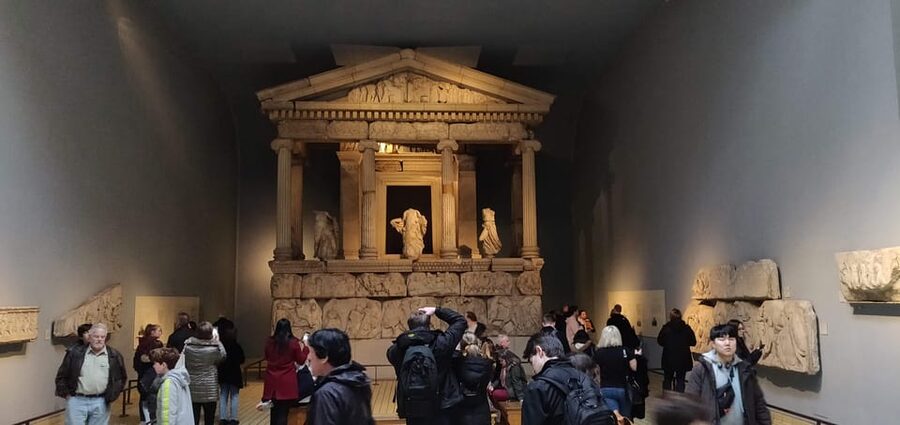
The British Museum is not difficult because it lacks things to see. It is difficult because it has too many. Ancient Egypt, Assyria, Greece, Rome, the Viking world, Easter Island, the Aztec Empire, and Anglo-Saxon England all compete for your attention.
You can certainly visit on your own. The trouble is knowing what deserves ten minutes, what deserves thirty seconds, and what deserves a second look after you understand the story. This tour solves that problem by choosing a manageable set of objects and giving each one a reason to matter.
I like this approach for a first visit. You are not simply shown a famous stone and told its name. You hear how the Rosetta Stone helped scholars read Egyptian hieroglyphs, why a colossal statue of Ramses II matters, and how large imperial buildings once expressed Assyrian power.
The guide also helps you connect distant periods. A Viking chess piece and an Anglo-Saxon burial hoard may seem unrelated at first. With the right explanation, both become evidence of trade, belief, status, craftsmanship, and the way people wanted to be remembered.
More Museum Tours in London
- Tower of London and Crown Jewels Exhibition Ticket
★ 4.5 · 6,677 reviews - London: Chelsea Football Club Stadium and Museum Tour
★ 4.8 · 4,576 reviews - Chelsea FC Stadium Tours and Museum
★ 5.0 · 1,908 reviews
Meeting at Russell Square at 9:45 a.m.
Your guide meets you at the entrance to Russell Square Station. Look for a tablet displaying Spirit of Discovery. This is a practical meeting point, but the timing matters more than usual.
The group leaves promptly at 9:45 a.m. for the five-minute walk to the British Museum. The guide cannot wait for late arrivals because the museum entry slot is fixed. If you are running behind, call the tour provider so you can be directed to the group.
I would arrive early. Russell Square is easy to reach, but London transport delays can turn a comfortable morning into a sprint. Bring comfortable shoes and water. Large bags and luggage are not allowed, and weapons or sharp objects are prohibited.
The museum entrance is handled through a separate entry route, which helps avoid the worst of the general line. This does not mean the galleries will be empty. The British Museum can be crowded, and one reviewer specifically found the number of tourists made it harder to move and concentrate.
Inside the museum: a focused route through world history
Once inside, the tour moves through several periods and cultures rather than staying in one department. That wide scope is the appeal. In a single morning, you can move from Egyptian writing to Greek sculpture, Assyrian empire building, Viking games, and Anglo-Saxon burial customs.
The pace is not designed for a quick checklist. Rossa has been praised for spending more time on selected important pieces, explaining their setting and the people connected with their discovery. That means you may not see every object you hoped for, but the ones you do see should make more sense.
A good guide also gives you permission not to read every label. You can listen, ask questions, look closely, and save the museum’s other rooms for after the tour. Several past participants appreciated being left with suggestions for what to explore independently once the guided portion ended.
The Rosetta Stone and the power of written evidence
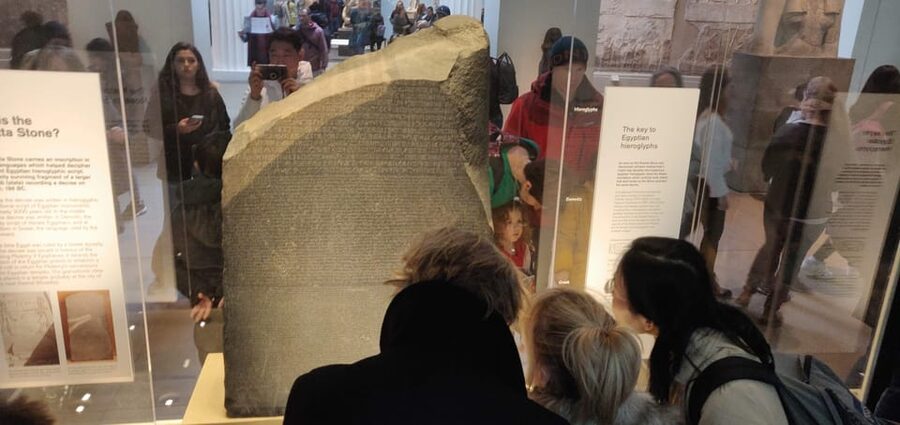
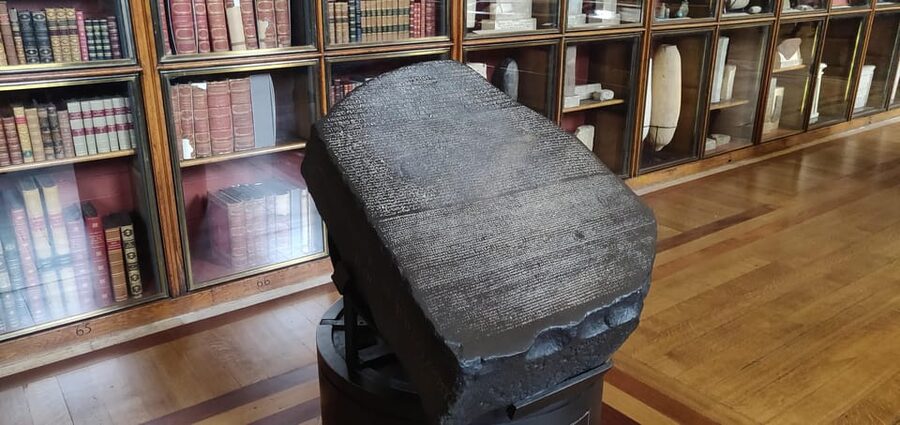
The Rosetta Stone is one of the obvious highlights, but it earns its fame. The stone carries the same decree in three forms of writing, including Egyptian hieroglyphs. That combination gave scholars the comparisons needed to make progress with a writing system that had long resisted interpretation.
The value of seeing it with an archaeologist is the setting around the object. You learn not only what is carved into the stone, but why it mattered to the study of ancient Egypt and how a single artifact changed the way people could approach Egyptian texts.
This is the kind of stop where a label can tell you the basic facts, but a guide can supply the human drama. The museum is full of objects that look quiet behind glass. Their importance often comes from the problem they solved or the question they raised.
More British Museum tours:
- London: British Museum Guided Tour
★ 4.3 · 1,182 reviews - British Museum London Guided Tour Semi-Private 8ppl Max
★ 5.0 · 984 reviews - London: British Museum Guided Tour with Entrance Tickets
★ 4.9 · 748 reviews - London: Tour of the British Museum
★ 4.1 · 678 reviews
Ramses II and the scale of ancient Egypt
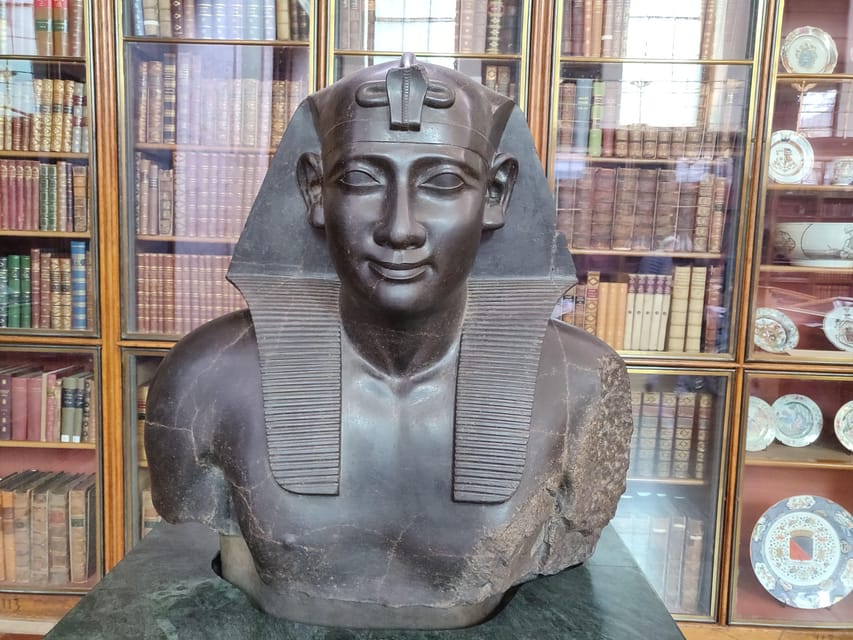
The colossal statue of Pharaoh Ramses II gives you a different kind of evidence. The Rosetta Stone depends on writing and comparison. Ramses depends on scale, image, and power.
A statue this large was not made as casual decoration. It tells you how rulers presented themselves and how art could support authority. The guide places the object within ancient Egyptian civilization, giving you more than a name and a date.
This is also a useful contrast for families. Younger visitors may respond first to size and appearance, while adults may focus on kingship, religion, or production. A good explanation gives both groups something to follow without turning the stop into a lecture.
Assyrian palaces and the art of empire
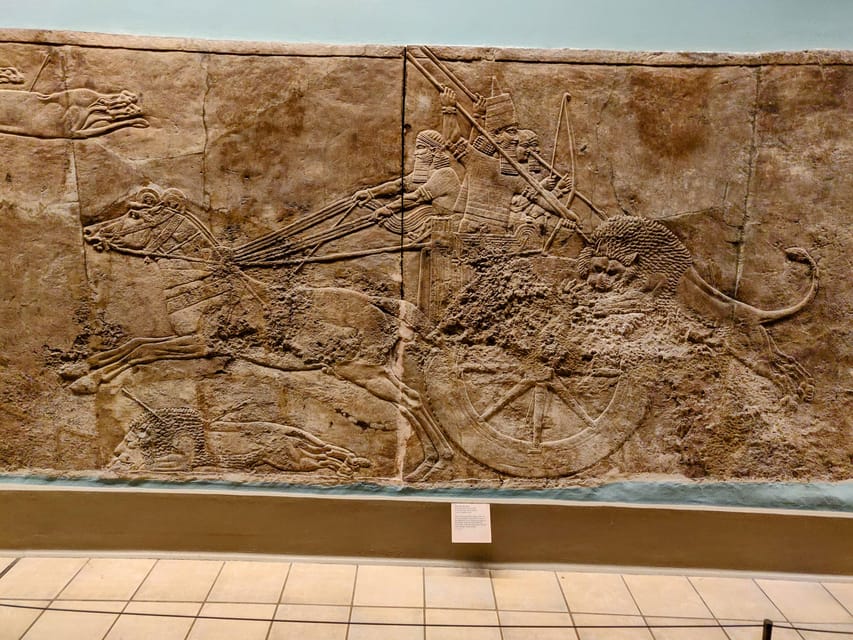
The Assyrian galleries bring another kind of spectacle: monumental palace decoration and the visual language of empire. Here, the museum’s scale works in your favor. Large reliefs and palace remains can make ancient power feel physical rather than abstract.
The tour uses these displays to discuss the Assyrian Empire and the people behind its buildings. You get a sense of how rulers used architecture and images to communicate strength, control, and military success.
This part may appeal most to adults who enjoy political and military history, but the visual detail gives younger visitors something to examine too. Do not rush past the walls. The size is impressive, but the smaller carved details reward attention.
The Parthenon Marbles and a difficult museum conversation
The Parthenon Marbles are among the British Museum’s most famous holdings. They offer a chance to look closely at ancient Greek sculpture and to consider how the objects were made, displayed, and later brought to Britain.
A useful guide does more than admire the craftsmanship. The story of the marbles also raises questions about ownership, removal, museums, and cultural heritage. The provided tour information identifies them as a central highlight, but the exact time spent there can vary with the group and the guide’s pacing.
I appreciate that a tour of this sort can keep the focus on the objects while still acknowledging the complicated issues around them. If you want an extended debate about the marbles’ legal and political history, you may need to return on your own. The tour has a much wider route to cover.
From the Aztec Empire to Easter Island
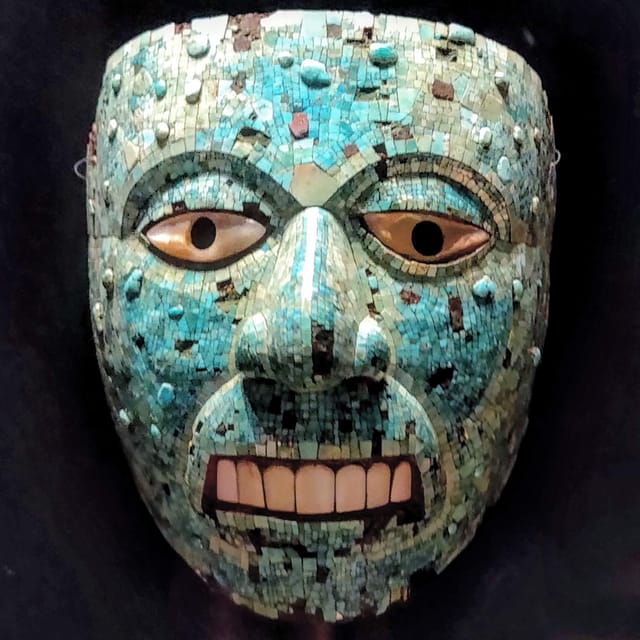
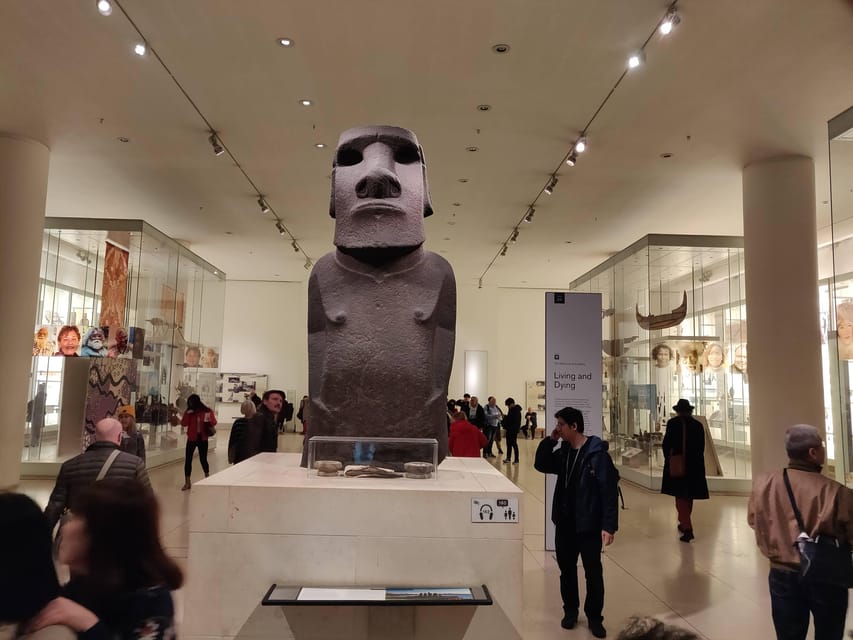
The route also reaches outside Europe and the Mediterranean. You may see objects described as the crown jewels of the Aztec Empire and hear about the enigmatic Moai statues of Easter Island.
These stops broaden the tour beyond the familiar ancient civilizations. They remind you that the museum’s collection covers many societies with their own systems of belief, power, art, and memory.
The guide’s role is especially useful here because a short display can tempt you into quick conclusions. Stories about the people who made and used these objects help place them in human settings rather than treating them as isolated curiosities.
Still, the exact time available is limited. These sections are part of a broad highlights route, not a full study of Aztec or Polynesian archaeology. If one of these areas matters most to you, tell the guide early and ask how much time the route allows.
The Lewis Chessmen and a more personal side of history
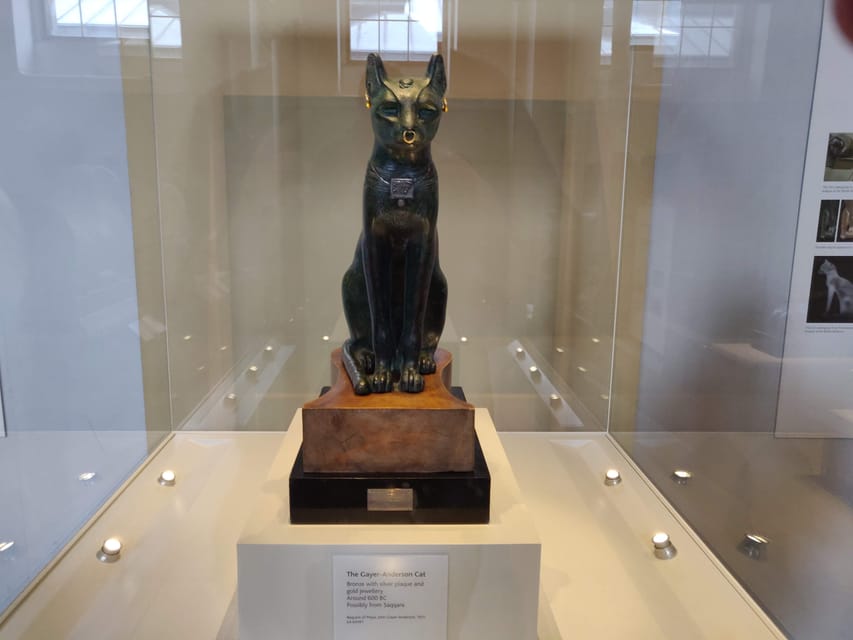
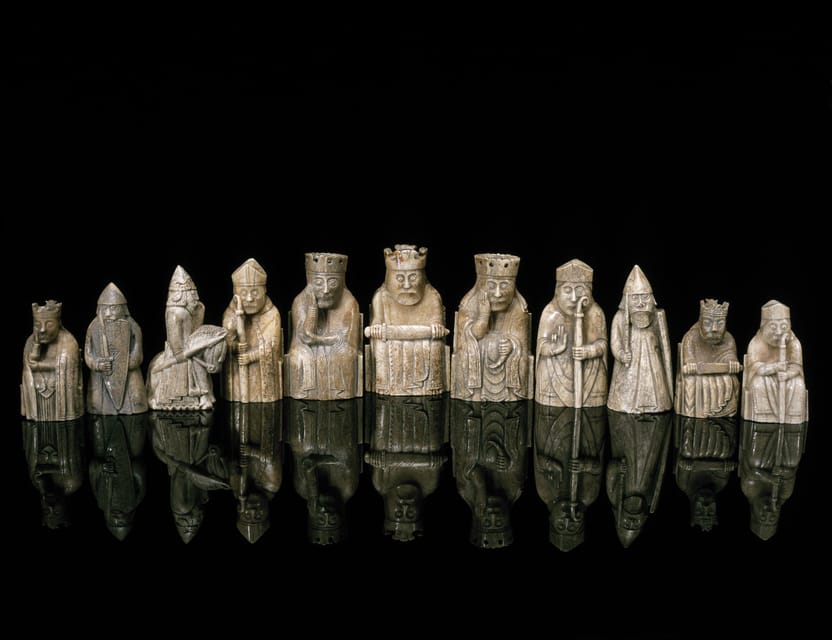
The Lewis Chessmen are among the most memorable objects on the tour. These small carved figures are often linked with the Viking Age, and they show how a familiar game can open a window onto medieval life, craft, trade, and status.
One of the tour’s strengths is its willingness to move from grand monuments to objects you can hold in your imagination. The chess pieces are not monumental like Ramses II or the Assyrian palace remains. Their appeal comes from expression, detail, and the questions surrounding their story.
A guide can make this stop work for children and adults alike. You may find yourself thinking about who owned the pieces, where they were going, and why they were buried or lost. That is a better museum experience than simply noting their approximate age and walking on.
Sutton Hoo and the world of King Raedwald
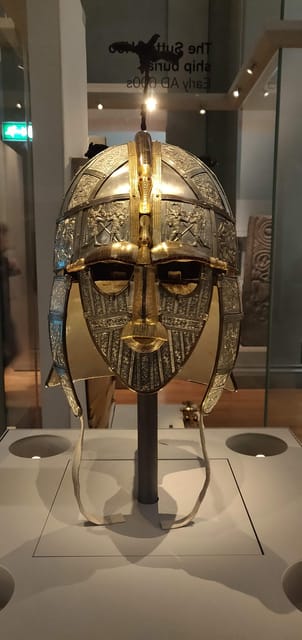
The Sutton Hoo hoard provides the tour’s main window into the early medieval period, sometimes called the Dark Ages. The treasure offers a rare look at elite Anglo-Saxon culture and is connected with the mysterious King Raedwald.
This is one of the most rewarding stops because burial objects can tell several stories at once. They show wealth, craftsmanship, belief, connections between regions, and ideas about rank. They also leave room for uncertainty. Archaeology often gives you strong evidence without giving you every answer.
The tour presents Sutton Hoo as a spectacular treasure hoard, but the important point is not simply that the objects are valuable. They help you picture a society that left fewer written records than ancient Egypt or Greece. Here, material evidence has to carry more of the story.
What makes the guide worth the price
The cost is $58 per person, including museum entry, the guided tour, and an archaeologist guide. The British Museum itself can take a full day, so the price is not just paying for access. You are paying for selection, explanation, and a plan.
I see the value most clearly if you have only one London morning or if museums usually leave you cold. A guide who can connect artifacts across centuries saves you from spending the first hour figuring out the building and the last hour wondering what you missed.
The guide’s training also matters. Participants repeatedly praised Rossa Minogue’s command of archaeology and history, his clear speaking voice, and his ability to tell stories without losing the main point. One retired history teacher found the tour especially strong, while families with teenagers appreciated that the stories kept younger minds involved.
The price is less compelling if you already know exactly which galleries you want and prefer to move at your own speed. You may also find the explanations too long if your goal is to see the maximum number of objects. This is a quality-over-quantity tour.
Who should book this experience?
I would choose this tour for a first visit to the British Museum, a short London stay, or a family that wants more than a silent walk past display cases. It also suits anyone who enjoys archaeology but does not want to prepare a reading list before arriving.
Families with children around the early teenage years should find the storytelling helpful. The tour has kept 12 and 14-year-olds engaged, and the mix of statues, treasure, writing, palaces, and chess pieces gives the guide several ways to hold attention.
It is also a good match for visitors who want to return to the museum later. The guided route gives you a basic map of the collection, then the rest of the day is yours to revisit a favorite gallery or follow another region.
I would hesitate if you dislike fixed schedules, crowded rooms, or standing while listening. The route is on foot, the museum may be noisy, and the group must move at a set time to meet its entry slot.
Practical details before you book
The tour lasts 2.5 hours and ends at the British Museum, so you can continue exploring afterward. Food and drinks are not included, and you should carry water rather than expect a meal break during the guided route.
The experience is offered in English with a live guide. It is wheelchair accessible, though the busy galleries may still affect how easily you move and hear. A strong speaking voice helps, and Rossa has been praised for being easy to hear in noisy rooms.
You can cancel up to 24 hours in advance for a full refund, and you can reserve now and pay later. Those options help if your London plans are still shifting, but the morning meeting time remains firm once you book.
Should you book the British Museum archaeologist tour?
Book it if you want the museum’s greatest hits explained by someone who can connect objects to people, power, belief, and discovery. At $58, I consider it fair value for a focused 2.5-hour introduction, especially when your time in London is limited.
Skip it if you want a slow, self-directed study of one department or if you already have a detailed museum plan. For most first-time visitors, though, the British Museum is easier to appreciate with a guide who knows when to stop, what to explain, and which stories are worth carrying home.
FAQ
Where does the British Museum tour meet?
Your guide meets you at the entrance of Russell Square Station. The guide holds a tablet displaying Spirit of Discovery.
What time does the tour begin?
The group leaves Russell Square promptly at 9:45 a.m. to reach the museum entry slot.
How far is the British Museum from Russell Square Station?
The walk from Russell Square Station to the British Museum takes about five minutes.
How long does the guided tour last?
The guided tour lasts 2.5 hours.
Where does the tour finish?
The tour finishes at the British Museum.
Is admission to the British Museum included?
Yes. Museum entry and the guided tour are included in the price.
Who leads the tour?
The experience includes an archaeologist guide. Rossa Minogue is named as the guide in the supplied tour feedback.
What language is the tour in?
The live guided tour is conducted in English.
Is the tour wheelchair accessible?
Yes, the activity is listed as wheelchair accessible.
What should I bring, and what cannot I bring?
Wear comfortable shoes and bring water. Weapons, sharp objects, luggage, and large bags are not allowed.
Can I cancel the booking?
Yes. You can cancel up to 24 hours in advance for a full refund.
Can I pay later?
Yes. The reserve-now, pay-later option allows you to hold a place without paying immediately.
Just added around London
- Westminster and National Gallery 3.5-Hour Tour in Italian★ 4.9 · 28 reviews
- British Museum & Camden Town – Private Tour in Italian★ 4.8 · 26 reviews
- London: British Museum Highlights Guided Small Group Tour★ 4.9 · 113 reviews
- London: Westminster Abbey & Jubilee Galleries Guided Tour★ 4.9 · 56 reviews
- London: Sherlock Holmes Museum & Westminster Walking Tour★ 4.4 · 13 reviews
- London: Royal Museums Greenwich Day Pass★ 4.5 · 309 reviews
- London: Tickets for Moco Modern & Contemporary Art Museum★ 4.7 · 391 reviews
- London: Twist Museum Ticket★ 4.4 · 66 reviews
Museum Tours in London, compared.

Tower of London and Crown Jewels Exhibition Ticket
Read our review →
Chelsea Football Club Stadium and Museum Tour
Read our review →


Official tickets: Moco Modern & Contemporary Art Museum
Read our review →
British Museum London Guided Tour Semi-Private 8ppl Max
Read our review →
British Museum Guided Tour with Entrance Tickets
Read our review →Browse the lists this tour appears in