
Review · LONDON
London: British Museum Guided Tour with Priority Timeslots
The British Museum can swallow a whole day before you have even found the Rosetta Stone. This two-hour tour gives you a brisk route through the museum’s greatest hits, from the Great Court’s glass roof to Egyptian mummies, the Parthenon Sculptures, and the Sutton Hoo treasures.
I like the priority timeslot and guided route, which save you from wandering through 70-plus galleries without a plan. I also like the headsets. In a crowded room, you can keep looking at an object while still hearing the guide clearly. The trade-off is simple: two hours is only an introduction, and some stops may feel rushed.
Key points at a glance
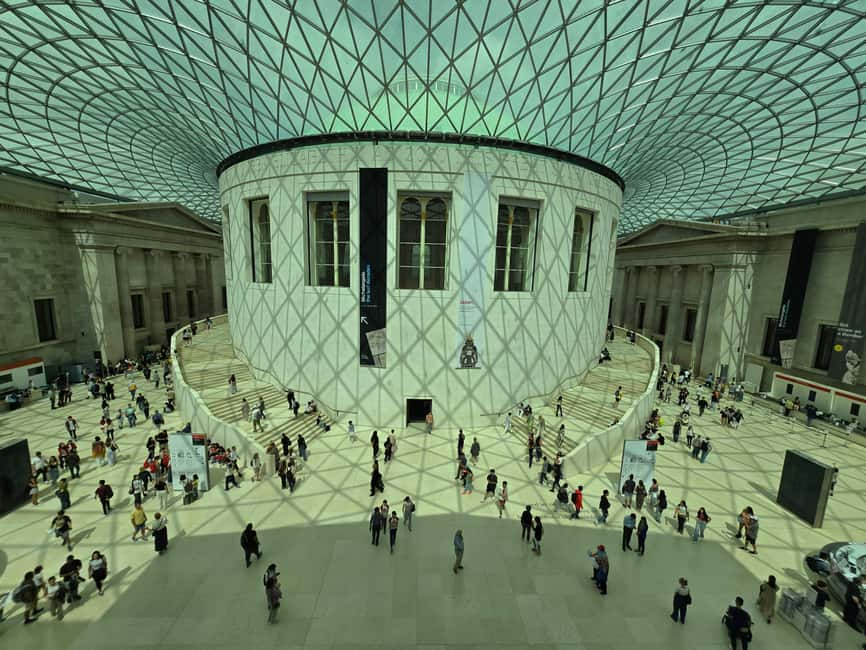
- Great Court first: Begin beneath the British Museum’s striking glass roof, which gives you an instant sense of the building’s scale.
- Big names in a short time: See the Rosetta Stone, Parthenon Sculptures, Egyptian mummies, Sutton Hoo objects, and more.
- Clear headset commentary: Listen while moving around the displays instead of standing shoulder to shoulder with the guide.
- Guides shape the experience: James, Daniel, Antonio, Tony, Tara, Joey, and other guides have led tours, with particular praise for clear explanations and good pacing.
- English or Italian: The live tour is offered in either language, depending on the selected departure.
- Plan extra museum time: The tour ends back at the starting point, but you may want to stay and revisit galleries on your own.
Why a guided introduction helps at the British Museum
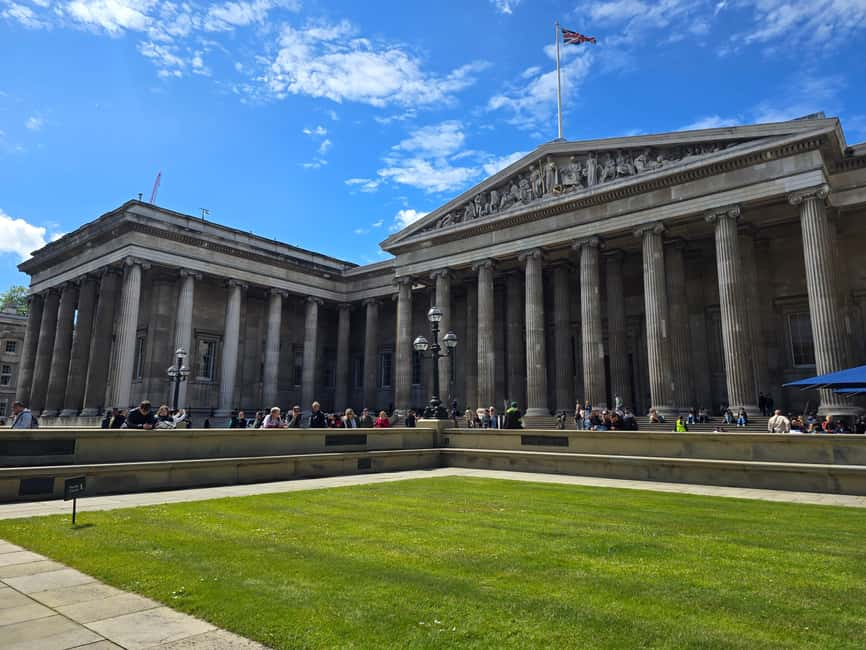
The British Museum holds more than 8 million objects, displayed across more than 70 galleries. That number is not just marketing puffery. It tells you why a first visit can become a slow march from one crowded room to another, with little idea of what deserves your attention.
A guide gives the visit a shape. Instead of trying to read every label, you get stories, dates, connections, and a reason to stop at particular objects. The route crosses several cultures and periods, so you get an overview rather than a single specialist subject.
That broad approach suits a first visit. You can see ancient Greece, Egypt, China, Southeast Asia, the Enlightenment period, and Anglo-Saxon England in a single morning or afternoon. You will not master any one collection in two hours, but you will leave knowing where you want to return.
The guiding style appears to vary by person. James has been praised for clear explanations and calm headset delivery, while Daniel has been noted for balancing efficient movement with interesting detail. Antonio has led tours that put major objects into wider world-history context. Other named guides include Joey, Tony, Tara, Giovanni, Lucy, Alex, Mira, and Rebekka.
That variety matters. Your guide is part teacher, part traffic manager, and part storyteller. A strong guide helps you keep up with the group, find the important objects, and make sense of displays that can otherwise feel disconnected.
More Museum Tours in London
- Tower of London and Crown Jewels Exhibition Ticket
★ 4.5 · 6,677 reviews - London: Chelsea Football Club Stadium and Museum Tour
★ 4.8 · 4,576 reviews - Chelsea FC Stadium Tours and Museum
★ 5.0 · 1,908 reviews
Meeting inside the museum at 52 Great Russell Street
The listed starting point is 52 Great Russell Street, but the actual meeting point is inside the museum. Go to the right side of the information desk, next to the column. The guide is due to arrive five to ten minutes before the start and should carry a yellow flag.
This detail deserves attention. The British Museum can be busy, and a meeting point inside a large public building is not always instantly obvious. Allow time to get through the entrance and find the desk. Some tour participants have found the meeting instructions less clear than they would like, so read the directions carefully before you arrive.
The tour includes entry through the main entrance with a priority timeslot and access through a separate entrance intended to help you skip the regular line. That can be useful at busy times, though the exact pace at the entrance can depend on museum conditions.
There is no transport, food, or drink included. Plan your route to the museum separately, and do not expect a café break during the two-hour walk. The tour returns to 52 Great Russell Street, giving you a clear point from which to continue exploring.
The Great Court and the museum’s grand opening scene
The tour starts with one of the museum’s best visual moments: the Great Court. Its sweeping glass roof turns the central space into an airy hall of light and steel, and it is a work of art in its own right.
This is a smart place to begin. Before you study a single ancient object, you get a sense of the museum’s size and purpose. The architecture also helps orient you, since the Great Court acts as a central reference point during a visit.
Your guide may use this opening section to explain the museum and set the route. One important practical point is that introductory talk can take time. If you want maximum minutes with the objects, listen closely but keep in mind that the first room or opening explanation may feel longer than expected.
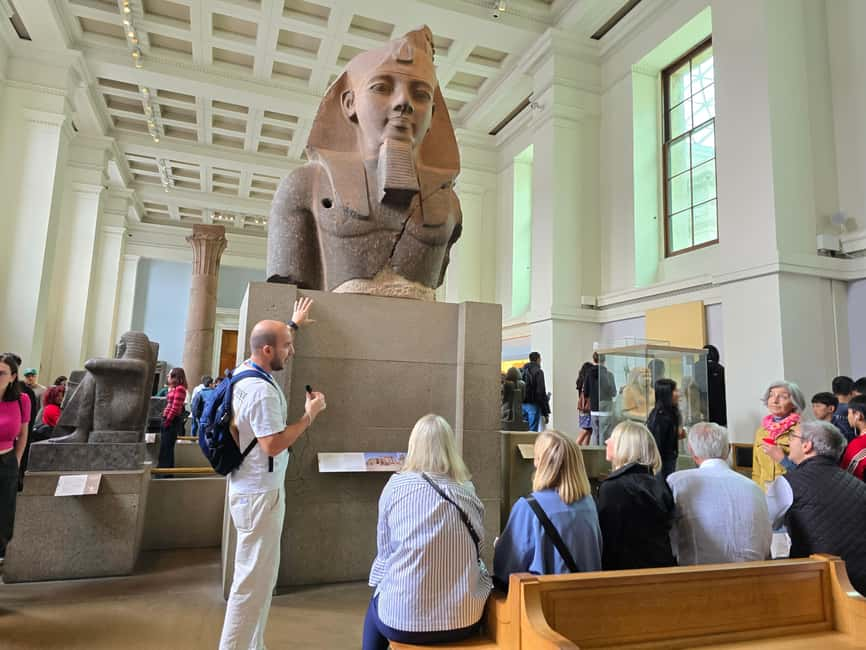
The headsets become useful almost immediately. You can move a little to view an object from a better angle while keeping the guide’s commentary in your ear. This is especially helpful when other groups are gathered nearby or when the museum’s general noise makes normal conversation difficult.
Greek sculpture and the Parthenon Sculptures
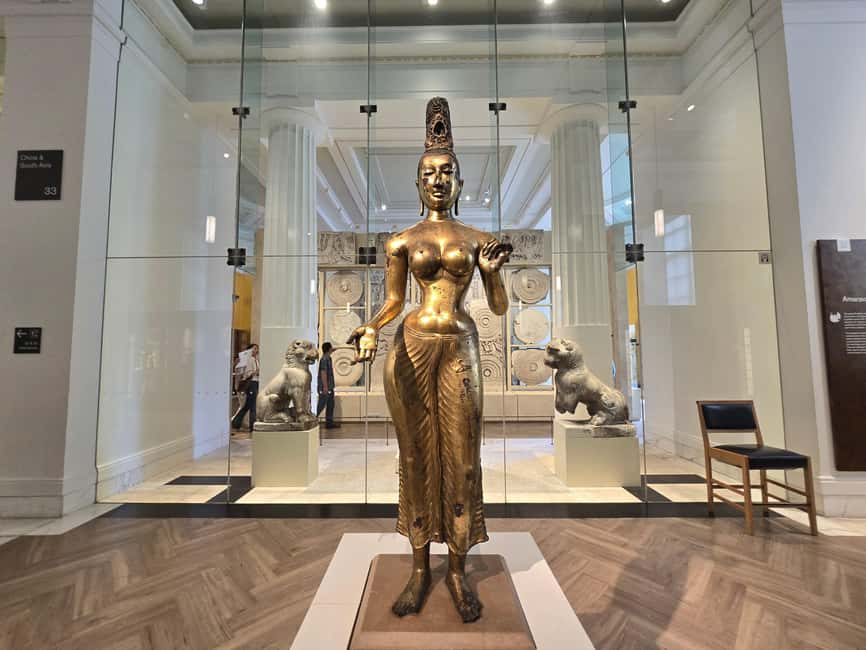
The Parthenon Sculptures, also called the Elgin Marbles, are among the tour’s major stops. The guide places these classical works within the myths and artistic traditions of ancient Greece, giving you more to consider than the surface beauty of carved stone.
This part of the route is valuable because the sculptures can look deceptively easy to understand. A guide can point out details, explain what the figures represent, and connect the pieces to the wider story of the Parthenon.
You should also expect crowds. Major objects draw attention, and two hours leaves little time to linger in every gallery. The benefit is that you get to see the famous works without having to locate them yourself. The cost is that your viewing time may be shorter than you would prefer.
If Greek art is your main reason for visiting, treat this tour as a first look. You will see the major highlight, but the schedule is designed to cover many parts of the museum rather than give ancient Greece a full session.
More British Museum tours:
- London: British Museum Guided Tour
★ 4.3 · 1,182 reviews - British Museum London Guided Tour Semi-Private 8ppl Max
★ 5.0 · 984 reviews - London: British Museum Guided Tour with Entrance Tickets
★ 4.9 · 748 reviews - London: Tour of the British Museum
★ 4.1 · 678 reviews
Egypt, mummies, and the Rosetta Stone
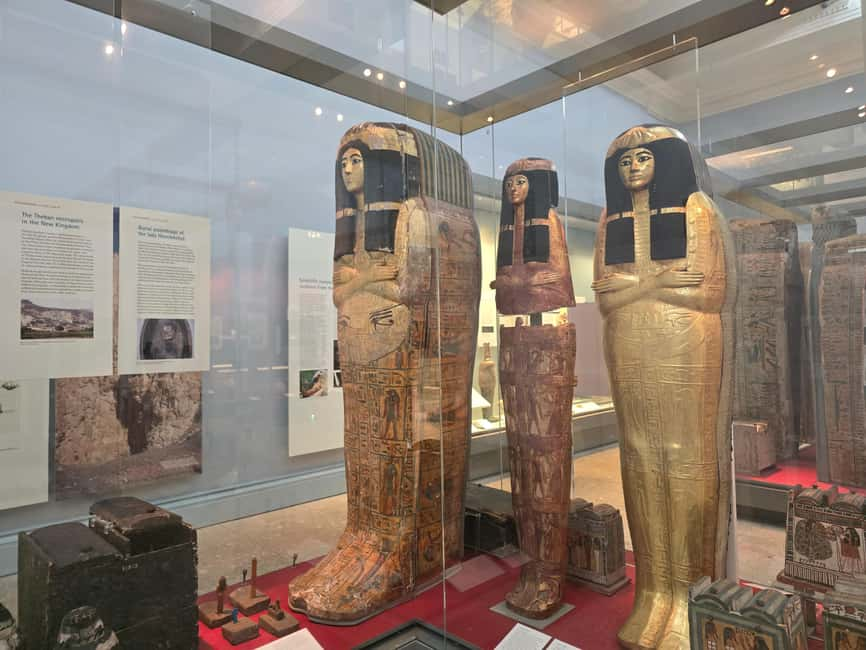
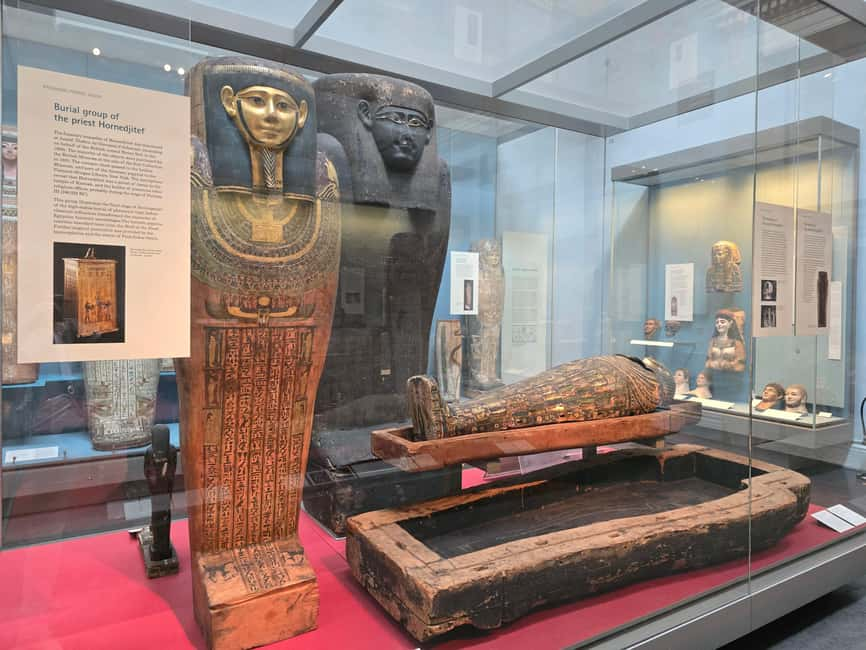
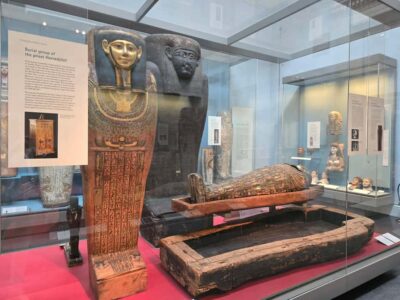
The Egyptian section brings several familiar names into one stretch of the route: mummies, the Book of the Dead, the bust of Ramesses II, and the Rosetta Stone.
The guide explains burial customs and religious beliefs, helping you see the objects as part of a society rather than as isolated curiosities. The mummies can be striking, but the surrounding context is what makes this stop worthwhile. You get a sense of how writing, ritual, royal power, and death were connected.
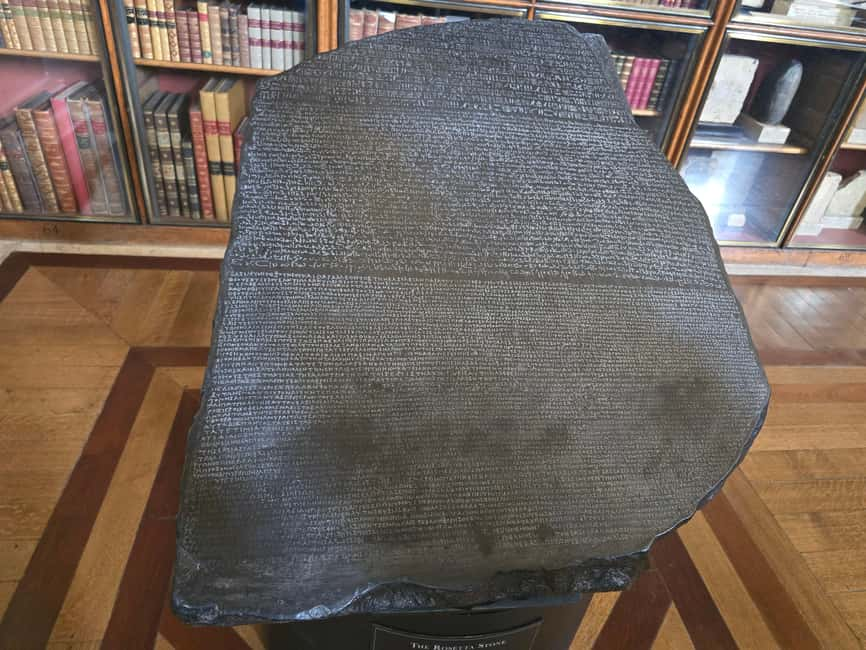
The Rosetta Stone is a natural centerpiece. It is famous because its inscriptions helped scholars understand Egyptian hieroglyphs, but a guide can make the story easier to grasp than a quick glance at the case. You also learn why a single stone has such importance in the study of ancient languages.
There is one point to watch. The advertised route includes Egypt, but the exact balance may vary with the guide and the group. One guide was praised for focusing heavily on the early Egyptian dynasties while moving quickly through other areas. If you want a broad survey, ask your guide early about the planned balance.
Two hours cannot give the Egyptian collection its due. Think of this as a well-chosen sample, not a complete Egyptian tour.
The Enlightenment Room and the age of collecting
The Enlightenment Room shifts the tone. Instead of temples, royal tombs, and ancient sculpture, you encounter the intellectual world of the 18th century.
The room brings together objects linked to scientific study, collecting, classification, and the period’s hunger for knowledge. It offers a useful bridge between ancient cultures and the modern museum itself. You begin to see how people in Europe tried to organize the world through books, specimens, instruments, and artefacts.
This stop may be especially rewarding if you like the story of museums as much as the objects they contain. It also breaks up the sequence of famous ancient works with a look at ideas and scientific progress.
As with every stop, listen for the guide’s selection. You will not study every display. The value comes from understanding why this room matters and how it fits into the museum’s wider collection.
Chinese and Southeast Asian collections
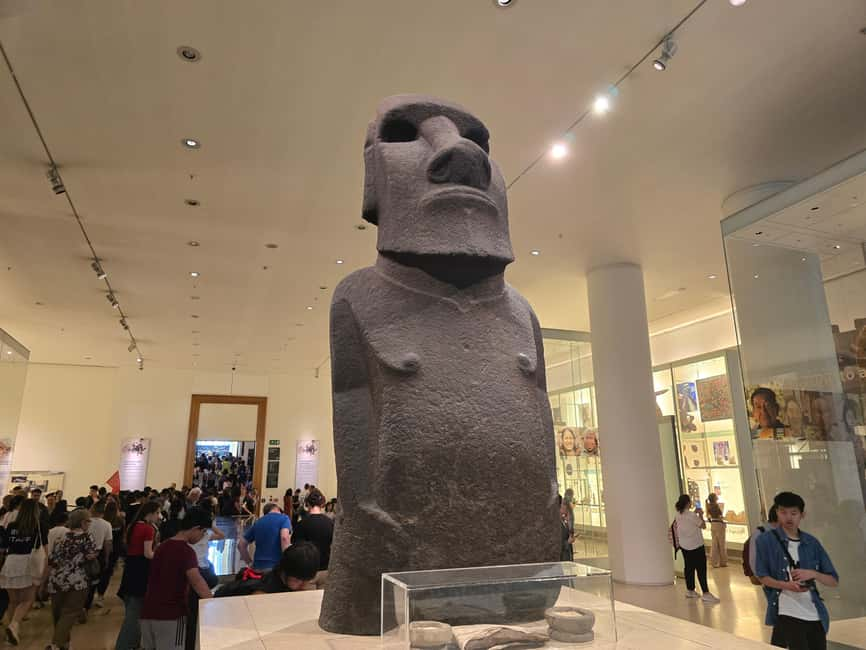
The tour also includes Chinese and Southeast Asian objects. This is important because a short museum route can easily focus too heavily on Greece, Rome, and Egypt.
Here you encounter finely made objects connected with the artistic traditions and histories of Asia. The guide provides a starting point for understanding the collections, but the amount of time available will be limited.
I like this section as a reminder that the British Museum is not simply a gallery of European antiquity. Its collections span continents, and this part of the tour gives you a wider view of human creativity and exchange.
If Asian art is high on your list, take note of the rooms you pass through. You may want to return after the tour, when you can move at your own speed instead of following the group’s schedule.
Sutton Hoo and Anglo-Saxon England
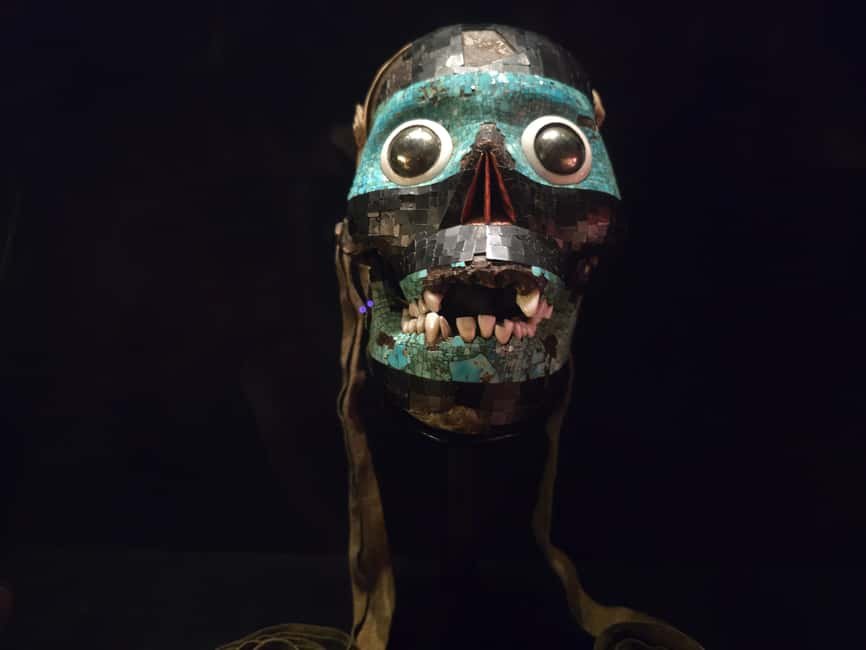
The Sutton Hoo ship burial brings the route into early medieval England. The helmet, shield, and other burial objects reveal the craftsmanship and status of Anglo-Saxon society.
This section gives the tour a useful local connection. After seeing objects from Egypt, Greece, China, and Southeast Asia, you finish with a major discovery from England’s own past. The objects are visually memorable, especially the helmet, but the wider story is just as important: a ship burial, elite power, craftsmanship, and the links between burial customs and social rank.
The guide can help you read the objects as evidence. A shield is not merely a shield, and a helmet is not merely protective gear. Together, the finds show how people expressed identity and authority.
Sutton Hoo also makes a good final stop because it is easy to remember. You leave with one of the museum’s strongest visual images, rather than a blur of labels and dates.
Two hours, headsets, and the pace of the route
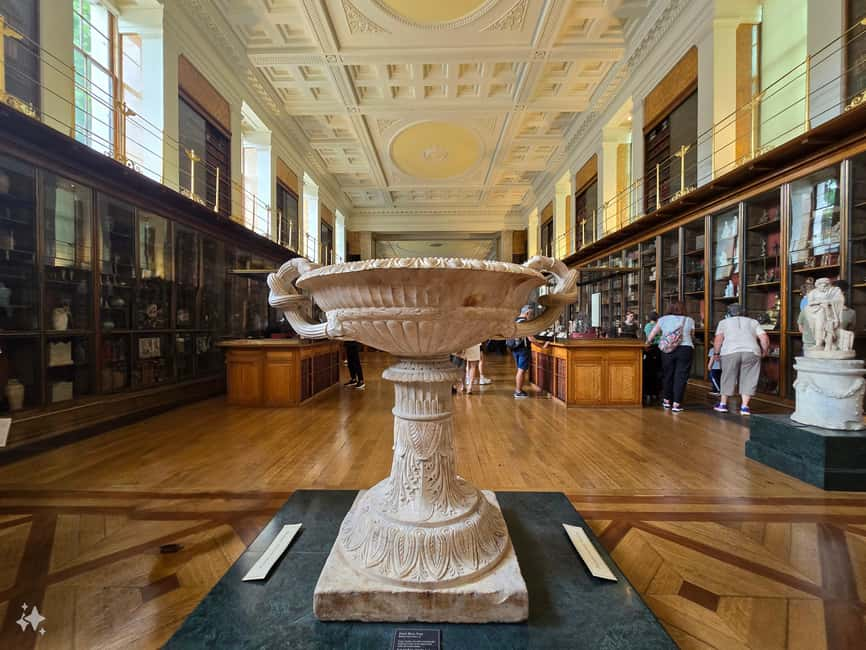
The tour lasts two hours, and that is both its strength and its limit. It is long enough to cover the key objects without demanding an entire day of close attention. It is short enough to fit into a packed London schedule.
The pace is purposeful. You may move between galleries quickly, pause for an explanation, then continue before the next group arrives. The guide’s knowledge of the museum and usual visitor flow can reduce wasted time.
Headsets are one of the practical strengths. You can hear the guide’s voice and inflection clearly, even while looking around or standing slightly away from the group. This also lets you examine nearby displays during the explanation, though you still need to stay close enough to follow the route.
The main drawback is the amount of ground covered. Several people have wanted three hours instead, particularly when they found a gallery they wished to explore. If you like slow looking, sketching, reading every panel, or photographing details, plan to remain afterward.
Flash photography is not allowed. Bring your camera if you wish, but use it without flash and do not let photography take over the short tour.
Guide quality and the human side of the experience
The strongest part of this experience is the guide. The most praised qualities are clear speech, strong command of the museum, good humor, patient answers, and the ability to keep a group moving without making the visit feel mechanical.
James has been especially praised for his audio equipment and clear delivery. Daniel has been described as both personable and well informed, with a good eye for choosing objects. Antonio has been singled out for answering questions and placing artefacts into a wider historical setting.
The named guides do not all use exactly the same route or emphasis. That is worth remembering when booking. You are buying the structure and service of a guided introduction, not a fixed lecture delivered word for word.
Some participants have found a guide difficult to understand, even with headphones. The tour is offered in English or Italian, and fluency or accent may vary by guide. If you need very slow, simple spoken English, consider this point carefully.
The tour is not suitable for people with mobility impairments, wheelchair users, babies under one year, or people with hearing impairments. The headset system helps many listeners, but it does not make the experience suitable for every hearing need.
Is $53 good value?
At $53 per person, the price is reasonable if you want a focused first visit and value expert explanation. Your ticket includes the guided museum tour, entrance, and a priority timeslot. You are paying not only for access, but also for route planning and two hours of live interpretation.
The value is strongest for first-time visitors with limited time in London. If you have only one afternoon and want to see the museum’s major names without spending hours planning, the cost can make sense.
The value is weaker if you are comfortable navigating museums alone or already know which galleries you want to visit. The British Museum offers an enormous amount to see, and a self-guided visit gives you control over every pause and detour.
You also need to account for what the price does not include. Transport, food, and drinks are separate. The tour is not private by default, though one booking became a solo experience when no other participants joined. Group size can therefore affect how personal the visit feels.
Free cancellation up to 24 hours before the start and a reserve-now, pay-later option add useful flexibility. Still, check your selected time and language before paying.
Who should book this British Museum tour?
I would recommend it to a first-time visitor who wants a clear overview, enjoys stories more than silent label reading, or has only two hours available. It also suits couples and families with older children who may lose patience in a huge museum without a route.
It is a good choice if you want the Rosetta Stone, Egyptian highlights, Parthenon Sculptures, and Sutton Hoo in one organized visit. It is also useful if crowds make you nervous, since the guide helps with direction and the headsets reduce the need to stand beside the guide at every stop.
I would hesitate if you use a wheelchair, have a mobility impairment, have a hearing impairment, or need a very slow pace. I would also choose a longer or more specialized visit if Egypt, Greece, or Asian art is your main goal.
Should you book it?
Book this tour if you want to get your bearings fast and see the museum’s headline objects with a guide who can explain why they matter. The priority entry, headsets, and strong record of guides such as James, Daniel, and Antonio make it a practical first visit.
Skip it if you prefer complete independence, long pauses, or a specialist route. For most first-time visitors, though, two hours with a good guide is a sensible beginning. Stay afterward, revisit the galleries that caught your eye, and let the museum become your own discovery.
FAQ
How long does the British Museum guided tour last?
The guided tour lasts two hours.
Where is the meeting point?
Meet inside the British Museum, on the right side of the information desk next to the column. The guide should arrive five to ten minutes before the start and carry a yellow flag.
What does the tour price include?
The price includes the guided British Museum visit, entrance through the main entrance with a priority timeslot, and live commentary in English or Italian. Headsets are available.
Is transportation included?
No. Transportation to and from the British Museum is not included.
Are food and drinks included?
No. Food and drinks are not included.
Which languages are available?
The live tour is available in English or Italian.
Is the tour suitable for wheelchair users?
No. The activity is listed as unsuitable for wheelchair users and people with mobility impairments.
Can I take photographs?
Photography is allowed subject to museum rules, but flash photography is not allowed.
Can I cancel for a refund?
Yes. You can cancel up to 24 hours in advance for a full refund. A reserve-now, pay-later option is also available.
Just added around London
- Westminster and National Gallery 3.5-Hour Tour in Italian★ 4.9 · 28 reviews
- British Museum & Camden Town – Private Tour in Italian★ 4.8 · 26 reviews
- London: British Museum Highlights Guided Small Group Tour★ 4.9 · 113 reviews
- London: Westminster Abbey & Jubilee Galleries Guided Tour★ 4.9 · 56 reviews
- London: Sherlock Holmes Museum & Westminster Walking Tour★ 4.4 · 13 reviews
- London: Royal Museums Greenwich Day Pass★ 4.5 · 309 reviews
- London: Tickets for Moco Modern & Contemporary Art Museum★ 4.7 · 391 reviews
- London: The Courtauld Gallery at Somerset House Entry Ticket★ 4.6 · 126 reviews
Museum Tours in London, compared.
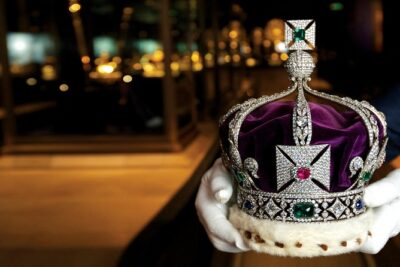
Tower of London and Crown Jewels Exhibition Ticket
Read our review →
Chelsea Football Club Stadium and Museum Tour
Read our review →


Official tickets: Moco Modern & Contemporary Art Museum
Read our review →
British Museum London Guided Tour Semi-Private 8ppl Max
Read our review →
British Museum Guided Tour with Entrance Tickets
Read our review →Browse the lists this tour appears in