
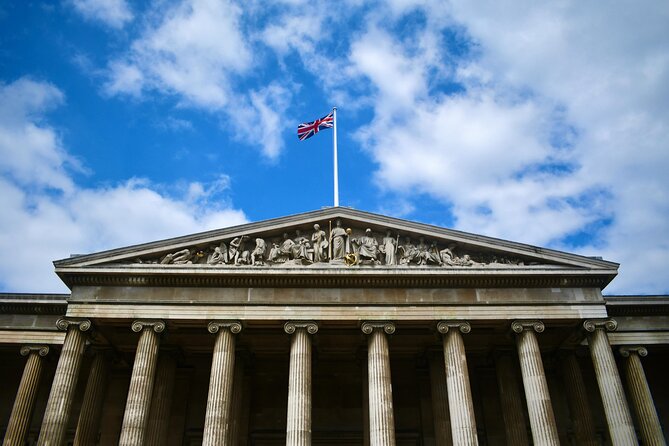
Review · LONDON
London: British Museum Guided Tour
The Rosetta Stone and Parthenon Sculptures are only the beginning at the British Museum. This two-hour guided visit gives you a clear path through a collection so large that wandering alone can mean missing the most important rooms, or spending half your time staring at a map.
I like the way the tour links objects from Egypt, Greece, Rome, Assyria, and Anglo-Saxon England into one story about human culture. I also like the guides’ flexible style: Joe, Paul, Denise, Filomena, and others are repeatedly praised for lively explanations, clear communication, and adapting their pace to families and questions. The main drawback is time. Two hours is enough for a strong introduction, not a full museum visit.
Key points at a glance
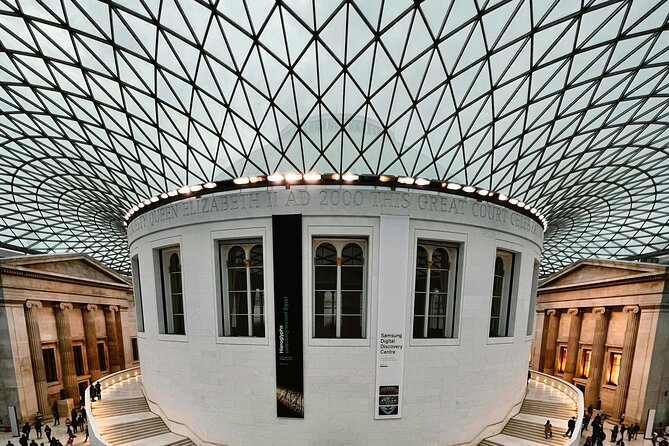
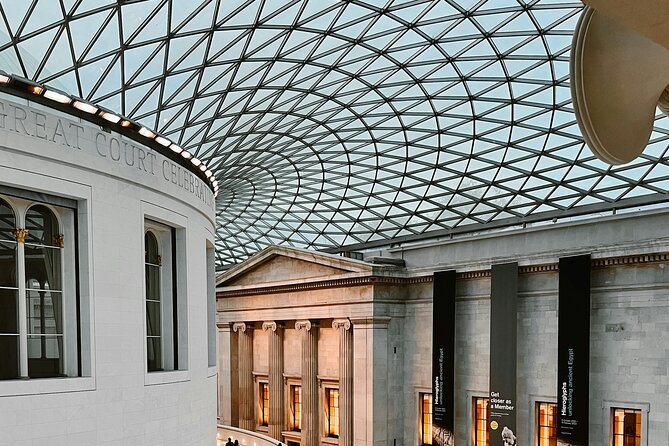
- See the Great Court first: The glass roof and famous Reading Room offer an impressive opening view before the object-by-object tour begins.
- Stand before the Rosetta Stone: Learn how this inscribed stone helped scholars read Egyptian hieroglyphics.
- Confront the Parthenon debate: The Elgin Marbles, also called the Parthenon Sculptures, bring questions of ownership and imperial collecting into the tour.
- Visit several major collections: The route includes Egyptian mummies, Sutton Hoo burial objects, and the Winged Bulls from Khorsabad.
- Let the guide make choices for you: The museum is vast, so a good guide helps you spend your limited time on important pieces.
- Expect practical flexibility: Headsets are provided for groups larger than six, and the museum is wheelchair accessible.
Why a guide helps in a museum this large
The British Museum is not a place you casually finish. Its rooms cover thousands of years and many parts of the world, so even a careful visitor can feel pulled in too many directions. A guided tour gives you a route and, just as important, a reason to care about what you are seeing.
The strongest part of this experience is the interpretation. A label can tell you an object’s date and origin. A good guide explains why it mattered, how it was found, and what questions it raises today. The best guides reported for this tour, including Joe, Paul, Denise, and Filomena, use stories, humor, and repeated themes to keep the collection from becoming a blur of names and dates.
That matters most during a two-hour visit. You are not trying to inspect every case. You are building a mental map of the museum, then deciding what deserves a longer return visit. One guide, Joe, was praised for connecting separate museum sections into a single story. That is exactly the service you want here.
The tour is also useful for families and mixed-interest groups. Some guides have adjusted explanations for children and teenagers, and one tour reportedly turned a reluctant teenage museum visitor into someone eager to see more museums. Still, very young children may tire during long explanations. A child who enjoys history, mummies, gods, battles, or unusual objects is more likely to stay engaged than one who prefers active attractions.
More Museum Tours in London
- Tower of London and Crown Jewels Exhibition Ticket
★ 4.5 · 6,677 reviews - London: Chelsea Football Club Stadium and Museum Tour
★ 4.8 · 4,576 reviews - Chelsea FC Stadium Tours and Museum
★ 5.0 · 1,908 reviews
Starting beneath the Great Court roof
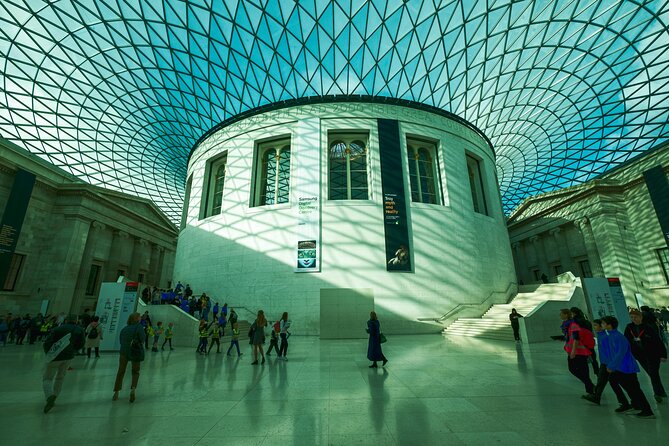
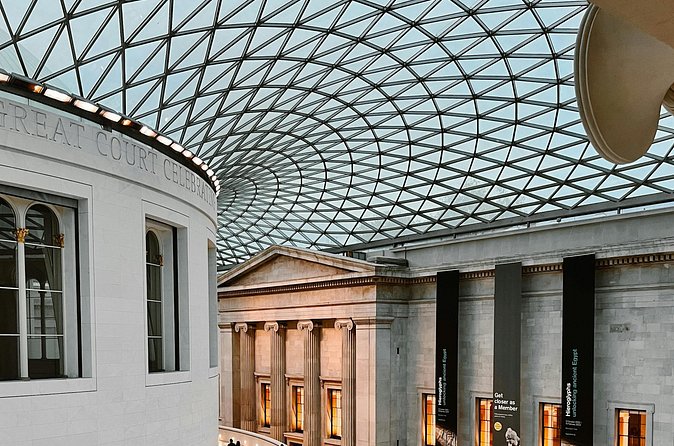
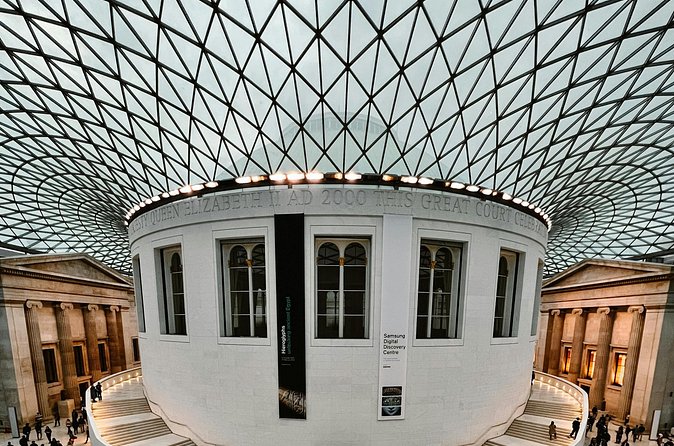
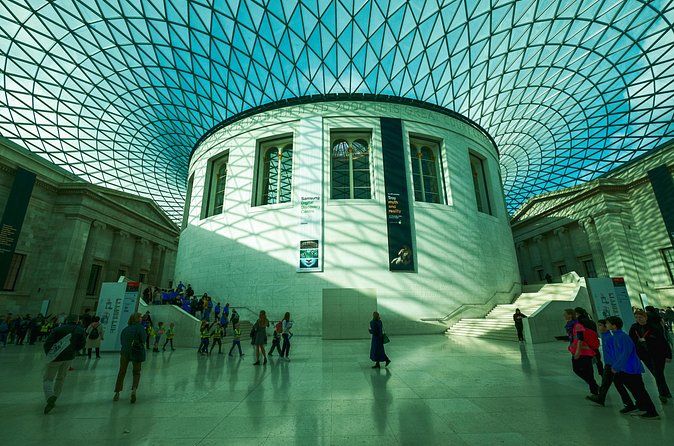
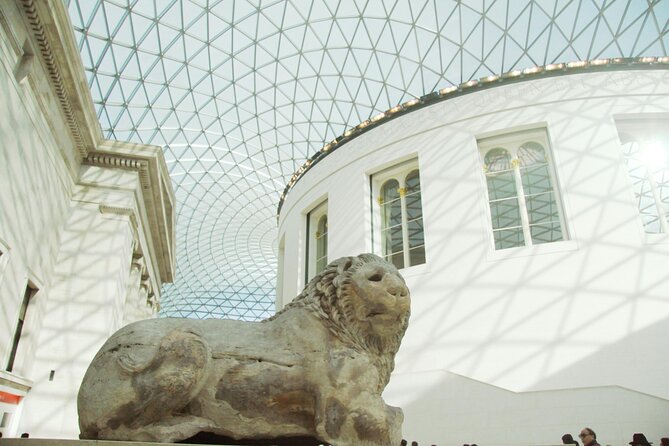
The Great Court is a natural starting point. Its sweeping glass ceiling gives you an immediate sense of the British Museum’s scale, while the central Reading Room adds a grand architectural focus. Even before the ancient objects appear, you get a reminder that this is both a working public museum and a landmark building.
The opening view helps orient you. Instead of beginning in an anonymous gallery, you start with a place you can picture again when you return on your own. Your guide can also explain how to think about the building and its collections before leading you into the galleries.
Do not expect a long architectural tour. The Great Court is mainly the stage for the museum’s larger story. The appeal is visual, and it helps settle the group before the faster sequence of major objects begins.
A small but important point: the meeting arrangement can vary with the option you book. The entrance and queue have caused confusion for some people, especially on opening time tours. Read the meeting instructions carefully, arrive with enough time for security, and do not assume that a stated meeting point means you can walk straight inside without waiting.
The Rosetta Stone and the work of reading Egypt
The Rosetta Stone is one of the tour’s essential stops. Its importance is not simply that it is famous. The stone carries the same decree in three scripts, including Greek and Egyptian forms, giving scholars the comparison needed to make progress with Egyptian hieroglyphics.
Your guide turns a crowded display into a moment with a clear purpose. You learn why the stone became a key to an ancient writing system and why translating it changed the study of Egypt. This is a good example of what the guide adds: you see one object, but you leave with an idea that explains an entire field of study.
The area around famous objects can be busy. You may not get a long, silent look at the stone, and two hours does not allow much time for lingering. If the Rosetta Stone is a personal priority, tell your guide early or return after the tour for a slower look.
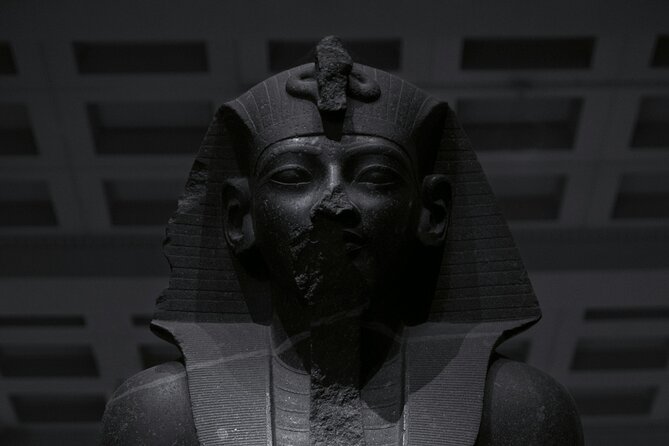
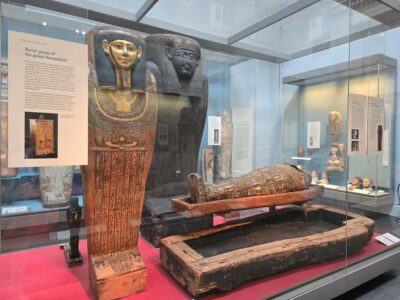
The Egyptian galleries usually provide some of the tour’s most memorable sights. The collection includes mummies, and one review particularly noted that a 5,000-year-old body made a strong impression on children. The subject can be unsettling, so families should judge their children’s comfort. For many people, the mummies make ancient Egypt feel immediate in a way that painted timelines cannot.
The Parthenon Sculptures and a difficult museum question
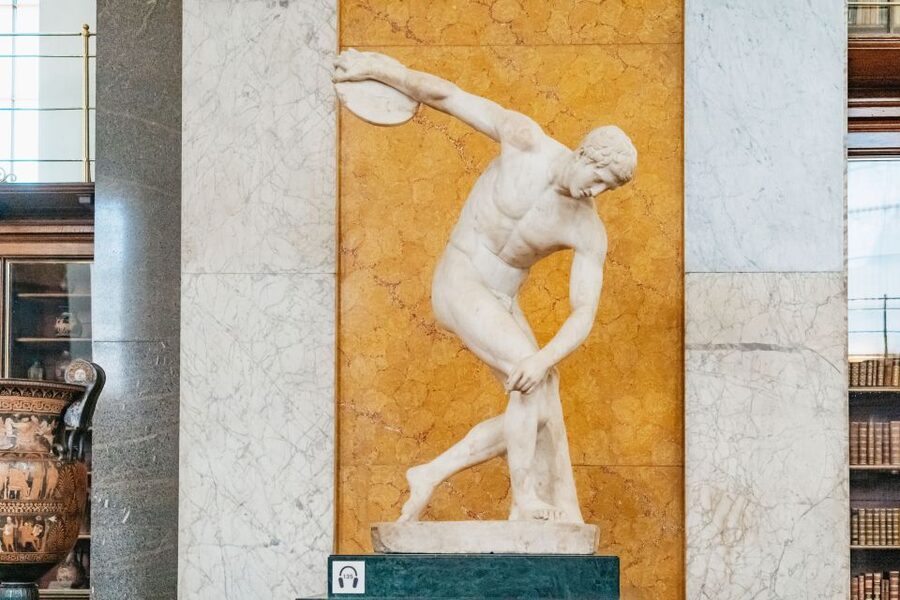
The Parthenon Sculptures are visually powerful and politically complicated. They were taken from the Parthenon in Athens by Lord Elgin, who served as the British ambassador to the Ottoman Empire. The pieces are often called the Elgin Marbles, though Parthenon Sculptures is the more current term used by many institutions and writers.
A worthwhile guide should not reduce this to a simple story of beautiful statues. The display also raises questions about removal, ownership, imperial power, and where cultural objects should be kept. This is one reason the stop is valuable: it gives you a chance to look at the sculpture while thinking about the museum itself and the history behind its collections.
The sculptures are among the tour’s headline attractions, but do not expect a complete account of every argument surrounding them in just a few minutes. The guide’s job is to give you useful context, not settle a debate that continues today. If this topic matters greatly to you, plan extra time after the tour for a closer look and further reading in the gallery.
More British Museum tours:
- British Museum London Guided Tour Semi-Private 8ppl Max
★ 5.0 · 984 reviews - London: British Museum Guided Tour with Entrance Tickets
★ 4.9 · 748 reviews - London: Tour of the British Museum
★ 4.1 · 678 reviews - London: British Museum Audio Tour & Priority Entrance Ticket
★ 4.5 · 631 reviews
Rome, Assyria, and the scale of ancient power
The route also includes relics from Ancient Rome and the Assyrian Winged Bulls from Khorsabad. These stops broaden the tour beyond the most famous Egyptian and Greek pieces.
Roman objects can help you see how an empire expressed power, belief, and daily life. Your guide may use them to connect political history with the people who lived under Roman rule. The value here is comparison: after seeing Egyptian funerary objects and Greek sculpture, you get another way to understand how societies represented gods, rulers, and protection.
The Winged Bulls make an especially strong visual impression. These colossal guardian figures from Khorsabad were designed to protect an Assyrian royal setting. Their size and hybrid form are easy to remember, which makes them a useful anchor for the museum’s ancient Near Eastern galleries.
You will not study every Roman or Assyrian room. That is a feature of the format, not a flaw. The tour selects memorable examples and keeps moving. If you already have a special interest in Assyria or Rome, ask where to return after the group finishes.
Sutton Hoo and Britain’s own ancient story
Sutton Hoo adds an important change of pace. The burial objects come from Anglo-Saxon England, so the tour moves from famous Mediterranean and Egyptian civilizations to a major archaeological discovery from Britain.
This section helps correct a common assumption about the museum. It is not only a place for celebrated objects from Greece and Egypt. Sutton Hoo shows the skill, trade links, beliefs, and social structure of early medieval England through burial goods and associated finds.
For you, the stop also makes the tour feel less predictable. The collection becomes a connected record of people, rather than a parade of the same kind of monument. A guide can explain why a burial site matters and how objects found together tell a different story from a single statue or inscription.
The tour may not spend as much time here as you would on a dedicated archaeology visit. If Sutton Hoo is your main reason for coming, check the route with the guide and save time afterward for the display.
The guide makes or breaks the two-hour route
The experience depends heavily on the individual guide. The strongest praise centers on clear speech, enthusiasm, humor, and the ability to adapt. Joe is often singled out for his command of Greek and Egyptian material, his storytelling, and his calm handling of group logistics. Paul is praised for friendly explanations, flexibility when rooms were closed, and helping people find sections they had missed. Denise is described as warm, funny, and especially good at bringing objects to life.
Filomena has also been praised for making space for a visitor using a cane, finding places to sit while she explained the collection. That is a useful reminder that pace matters. A good tour is not simply a race from one famous object to another.
The group size can vary. One especially successful visit had six people, which made it easier to hear the guide and cover ground without losing the group. You should not assume every departure will be that small, but headsets are provided for groups of more than six.
The listed live guide languages are English and Italian. The activity information also mentions commentary in German, French, Spanish, Italian, Russian, Portuguese, and English, so check the exact option when booking if language is important to you. The supplied information is not fully consistent on this point.
Two hours, $23, and what you are really buying
At $23 per person, the tour is priced as a low-cost introduction rather than a full private museum lesson. The British Museum itself is a public museum, so the financial value is not about paying for access to every room. You are paying for direction, interpretation, and time saved.
I think that is fair value if this is your first visit or if you have only one short window in London. Without a guide, you can spend a surprising amount of time choosing a gallery, finding the next major object, and trying to understand why it matters. The tour turns that uncertainty into a planned sequence.
The value drops if you already know the museum well or want to spend twenty minutes with one object. A group schedule cannot give you complete freedom. Two hours can also feel short, especially if you want Egypt, Greece, Rome, Assyria, and Sutton Hoo in depth.
The best plan is to treat the tour as your orientation. After it ends, stay in the museum and revisit the rooms that caught your attention. Several guides have offered to point people toward missed sections, and some have spent extra time directing visitors to the Egyptian galleries. Do not build your whole day around seeing everything in one visit.
Practical details that affect your day
Transportation is not included, so you make your own way to the museum. The meeting point may change depending on the option booked. Pay close attention to the exact instructions, since some visitors have found the entrance queue and meeting location confusing.
Security and timed-entry arrangements can create a delay. One early tour had a stated arrival time before the museum opened, which made the instruction difficult to follow. Another visitor waited in a long entrance line while the guide stayed in contact. The practical lesson is simple: allow extra time, carry your booking details, and make sure you can receive messages or connect to Wi-Fi if your mobile plan does not work in the United Kingdom.
The museum is wheelchair accessible, and the guides have shown care with mobility needs. Still, the tour involves moving through a large building and stopping in busy galleries, so mention any pace or seating needs when you meet the guide.
Cancellation terms need checking at the time you book. The supplied information gives both 24 hours and 72 hours as cutoffs for a penalty-free cancellation. Since those statements conflict, rely on the terms attached to your selected departure rather than assuming one rule applies to every option.
Who should book this British Museum tour?
I would choose it for a first-time visitor, a family with a history-minded child, or anyone who feels daunted by the museum’s size. It is also a smart choice when you have only two or three hours and want to see major highlights without wasting time on route planning.
It suits people who enjoy stories and context more than silent, self-directed inspection. The guide can connect the Rosetta Stone to written language, the Parthenon Sculptures to cultural ownership, and Sutton Hoo to Britain’s early medieval past. That makes the collection easier to remember.
I would skip it if your main goal is a slow study of one department. You may prefer to enter independently, choose a single gallery, and set your own pace. The same is true if you dislike group tours or need complete control over stops and timing.
Should you book it?
Book this tour if you want a focused first look at one of London’s biggest museums for $23. The best guides, including Joe, Paul, Denise, and Filomena, add the structure and human stories that make a vast collection manageable.
Just set the right expectation. This is not a complete British Museum visit, and two hours will leave plenty unseen. Use it to get your bearings fast, then stay on for a self-guided second round through the rooms that interest you most.
FAQ
How long does the British Museum guided tour last?
The tour lasts two hours. Starting times vary, so check availability for the date you want.
What objects and galleries are included?
The tour is designed to include the Great Court, the Rosetta Stone, the Parthenon Sculptures, Ancient Egyptian mummies, Sutton Hoo burial relics, and the Winged Bulls from Khorsabad. It also includes relics from Ancient Rome.
Is transportation included?
No. You are responsible for getting to the British Museum. The meeting point can vary by booking option.
What languages are available?
The listed live guide languages are English and Italian. The activity information also lists commentary in German, French, Spanish, Italian, Russian, Portuguese, and English. Check the exact option before booking if you need a specific language.
Are headsets provided?
Headsets are provided for groups of more than six people.
Is the tour wheelchair accessible?
Yes, the activity is listed as wheelchair accessible.
Can I cancel for a refund?
The booking information says cancellation up to 24 hours in advance can qualify for a full refund, while another instruction gives 72 hours as the penalty-free cutoff. Check the cancellation terms for your exact booking before paying.
Just added around London
- Westminster and National Gallery 3.5-Hour Tour in Italian★ 4.9 · 28 reviews
- British Museum & Camden Town – Private Tour in Italian★ 4.8 · 26 reviews
- London: British Museum Highlights Guided Small Group Tour★ 4.9 · 113 reviews
- London: Westminster Abbey & Jubilee Galleries Guided Tour★ 4.9 · 56 reviews
- London: Sherlock Holmes Museum & Westminster Walking Tour★ 4.4 · 13 reviews
- London: Royal Museums Greenwich Day Pass★ 4.5 · 309 reviews
- London: Tickets for Moco Modern & Contemporary Art Museum★ 4.7 · 391 reviews
- London: The Courtauld Gallery at Somerset House Entry Ticket★ 4.6 · 126 reviews
Museum Tours in London, compared.

Tower of London and Crown Jewels Exhibition Ticket
Read our review →
Chelsea Football Club Stadium and Museum Tour
Read our review →

Official tickets: Moco Modern & Contemporary Art Museum
Read our review →
British Museum London Guided Tour Semi-Private 8ppl Max
Read our review →
British Museum Guided Tour with Entrance Tickets
Read our review →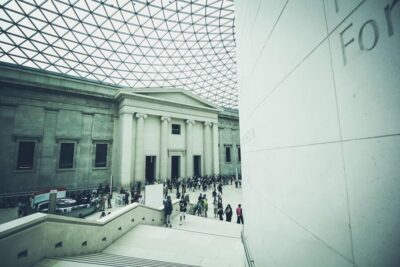
Browse the lists this tour appears in