
Review · LONDON
London: British Museum Guided Tour
The British Museum is so large that a first visit can feel like opening ten history books at once. This two-hour guided tour gives you a clear route through Egypt, Greece, Rome, Sutton Hoo, Easter Island, and other major collections without leaving you to guess which rooms matter most.
I like the sharp focus and the human stories behind the objects. I also like that guides such as Filomena and Stuart have been praised for making the museum easier to navigate, explaining disputed objects plainly, and adjusting their approach for families and visitors who speak English as a second language.
The main drawback is the building itself: noise and crowds can make a soft-spoken guide hard to hear. The tour may also be delivered in two languages at once, depending on demand, so ask about this when you arrive.
Key points to know before you book
- The Rosetta Stone anchors the Egyptian section, showing how scholars deciphered hieroglyphics.
- Parthenon sculptures and the Elgin Marbles bring art and ownership questions together, not just ancient Greek beauty.
- Sutton Hoo offers a close look at early English life through Anglo-Saxon treasures.
- Hoa Hakananai’a, a moai from Easter Island, adds a striking Pacific perspective to the museum route.
- The guide is the real value, especially when a strong leader such as Filomena, Stuart, Tara, or Maya turns a huge collection into a readable story.
- Two hours is enough for highlights, not everything, so plan to return if you want time with individual galleries.
Why a guide helps in this enormous museum
The British Museum is free to enter, which makes the $39 tour price worth examining closely. You are not paying for a famous attraction ticket. You are paying for a licensed guide who can select the important objects, connect them across time, and keep you moving through a building that can easily consume half a day.
That matters most on a first visit. You may recognize the Rosetta Stone or the Parthenon sculptures, but recognition is not the same as understanding. A guide can explain why an object matters, what it tells us about its makers, and why some displays remain politically sensitive.
I would not choose this tour if your idea of a museum visit is slow wandering with a sketchbook. The pace is designed to cover major sights in two hours. You will see more of the museum than you would by stopping at every label, but you will not have time to read every inscription or study every case.
The strongest guides appear to bring warmth as well as facts. Filomena has been praised for her enthusiasm, patience, and ability to make visitors feel at ease. Stuart has earned praise for detailed explanations, dry humor, and thoughtful treatment of objects connected to colonial collecting. Maya was specifically noted for engaging both children and adults.
More Museum Tours in London
- Tower of London and Crown Jewels Exhibition Ticket
★ 4.5 · 6,677 reviews - London: Chelsea Football Club Stadium and Museum Tour
★ 4.8 · 4,576 reviews - Chelsea FC Stadium Tours and Museum
★ 5.0 · 1,908 reviews
Meeting your guide inside the British Museum
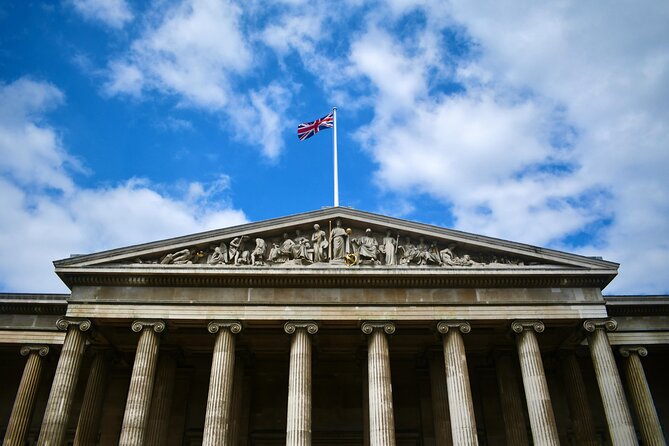
The meeting point is easy to misunderstand, so pay attention to the wording. Go through security first, then meet your guide in front of the British Museum portals, on the stairs near the pillars. This is inside the gates, not outside on the street.
Entry tickets are supplied through WhatsApp about one to two hours before the tour when needed. If you do not use WhatsApp, contact the provider by email so the tickets can be sent that way. Keep an eye on your phone before setting out, since this last-minute ticket delivery is part of the practical arrangement.
The tour includes the guide but not transportation. You need to make your own way to the museum. Comfortable shoes are a wise choice, and weather-appropriate clothing matters because you may wait or walk outside before security.
The museum offers an express security check for the tour. That can save some time, though security still means a little planning. Arrive with enough breathing room to find the entrance, pass through checks, and locate the pillars.
Egypt and the Rosetta Stone
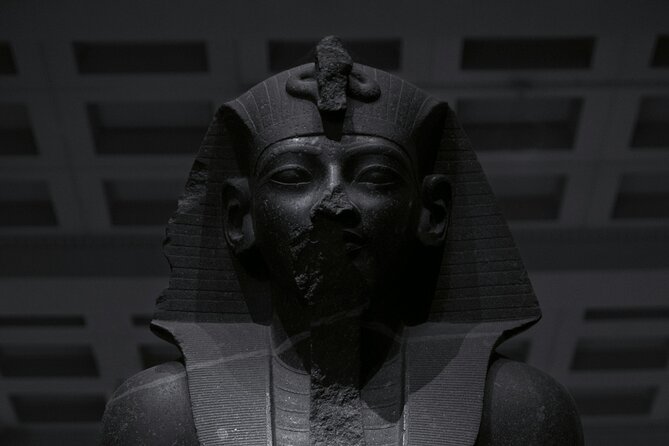
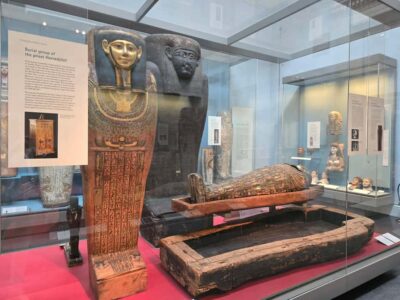
The route begins with ancient Egypt, a sensible choice because the collection provides an immediate lesson in how museums preserve and interpret the past. You can expect to see relics connected with pharaohs and Egyptian religious life before reaching the Rosetta Stone.
The stone is famous for a practical reason. Its inscriptions in different scripts helped scholars work out Egyptian hieroglyphics. A guide can turn this familiar object into a clear explanation of how language, comparison, and careful scholarship brought a lost writing system back into wider understanding.
This is also a good place to listen rather than rush ahead. Egyptian galleries can be packed with statues, cases, and labels. A guide helps you decide which details deserve your attention, from symbols and inscriptions to the purpose of the objects on display.
Do not expect a full survey of Egypt in this short visit. The collection is far too large. Think of this stop as a framework, giving you enough context to return later with a better idea of what you want to see.
Ancient Greece and the Parthenon sculptures
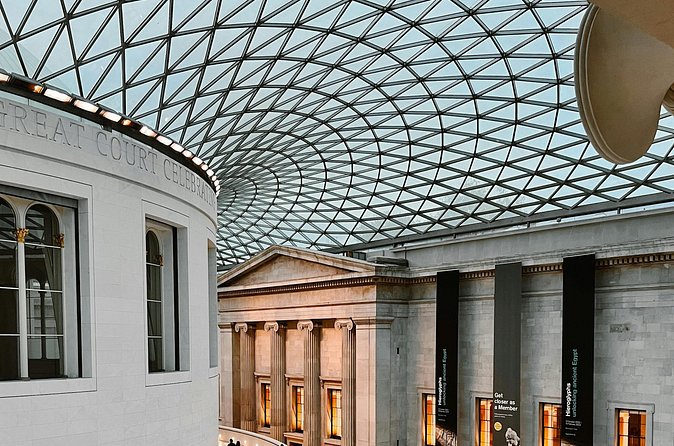
The Greek section brings the tour to one of the museum’s most famous and contested groups of objects: sculptures from the Parthenon, often called the Elgin Marbles. You will see carved figures and architectural pieces that once formed part of an important Athenian monument.
The visual appeal is obvious, but the ownership question is just as important. The sculptures are tied to long-running debate over removal, cultural property, and the right place for ancient works. One useful feature of a guided visit is that the subject can be addressed directly instead of being left to a small label that you might miss.
The Greek galleries also offer a chance to connect art with ideas. The tour description points to philosophical inscriptions and the growth of art and philosophy in ancient Greece. That connection helps explain why these objects continue to shape how many people think about Western art and thought.
Crowds are a concern here. The museum can be noisy, and one visitor found it difficult to hear because of the room, general visitor noise, and a guide who did not speak loudly enough. Stay close, position yourself where you can see the guide, and politely ask for repetition if needed.
More British Museum tours:
- London: British Museum Guided Tour
★ 4.3 · 1,182 reviews - British Museum London Guided Tour Semi-Private 8ppl Max
★ 5.0 · 984 reviews - London: British Museum Guided Tour with Entrance Tickets
★ 4.9 · 748 reviews - London: Tour of the British Museum
★ 4.1 · 678 reviews
Rome, mosaics, gods, and engineering
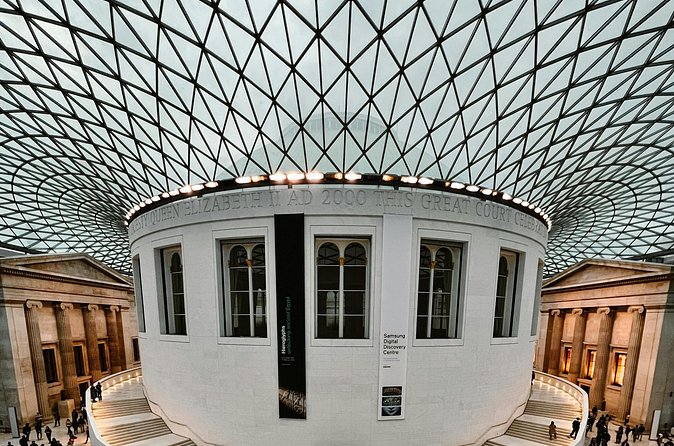
The Roman section shifts the story from Greek ideals to an empire built through government, military power, architecture, and engineering. You can expect statues of gods and heroes, intricate mosaics, and objects that show how Roman culture borrowed from and reshaped earlier traditions.
This part works best when the guide makes connections. Roman art did not develop in isolation, and the tour can show how Greek forms and myths continued under Roman rule. You may also get a sense of how images of emperors and gods helped communicate authority across a vast empire.
The mosaics reward a close look, but two hours does not allow for every pattern and figure. Let the guide choose a few strong examples. You will get more from understanding what a mosaic was used to show, and who could see it, than from trying to photograph every tile.
The route through Rome also adds variety. After the stillness of marble sculpture, mosaics bring color and detail. That change keeps the tour moving and prevents the visit from becoming a long chain of similar statues.
Sutton Hoo and early English life
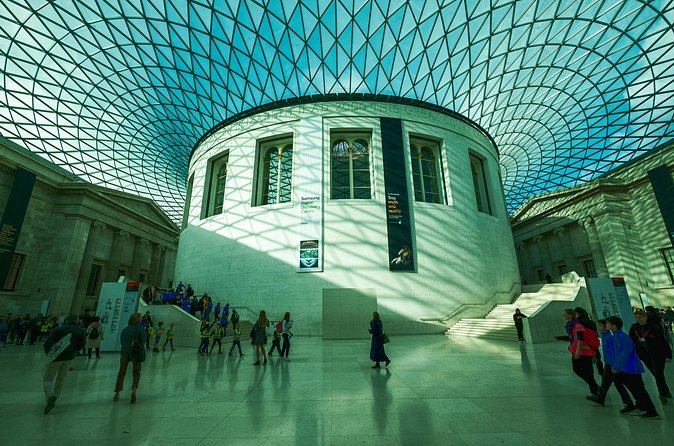
Sutton Hoo provides one of the tour’s most useful changes of subject. The Anglo-Saxon treasures offer clues about early English life, burial customs, craftsmanship, status, and contact with the wider world.
This section can be especially valuable if you know little about England before the Norman Conquest. Instead of treating British history as beginning with medieval castles, the objects point to an earlier society with its own social order, artistic skill, and links beyond England.
The strength of a guide is clear here because the objects may not be as instantly familiar as the Rosetta Stone or Parthenon sculptures. A good explanation gives the display a place in the larger story. Stuart, in particular, has been praised for showing both famous exhibits and less visited objects, which suits this part of the tour.
You should expect an overview rather than a close study of every Sutton Hoo piece. If this section catches your interest, note the gallery and return after the tour, when you can spend time with the details.
Hoa Hakananai’a and a wider view of humanity
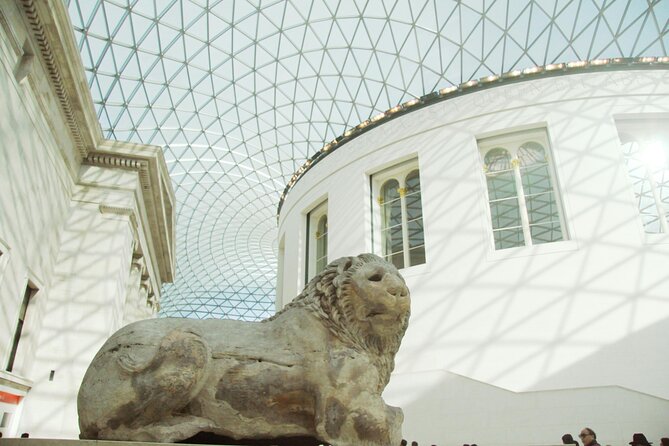
Hoa Hakananai’a, a moai from Easter Island, gives the tour a powerful Pacific stop. The figure represents the spiritual life and artistic traditions of a distant civilization, and its presence broadens the route beyond the familiar history of Europe and Egypt.
This is one of the objects that helps prevent the tour from becoming a simple march through Western art. The museum’s collections reach across the world, and Hoa Hakananai’a reminds you that human history has many centers, traditions, and ways of representing power and belief.
As with the Parthenon sculptures, the object also raises questions about how museums acquired major works from other cultures. The tour may give you a chance to consider those issues alongside the art itself. That balance is useful: you can appreciate the object while still asking how it came to London.
The stop is brief, but it adds a memorable final note before the tour opens out to objects from other regions. You leave with a broader sense of the museum’s purpose, as well as its complicated past.
What the two-hour pace feels like
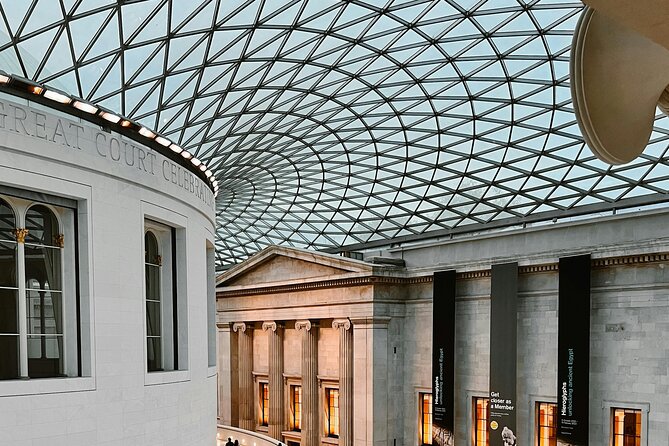
Two hours sounds generous until you see the size of the collection. In practice, the route is a highlights tour with enough explanation to make the objects meaningful. You will move between major galleries, pause for selected pieces, and hear a connected story rather than a list of dates.
That pace suits you if you want to see the museum’s major sights efficiently. One visitor described the tour as a good choice for someone who wants the most important objects in the least amount of time. That is exactly the bargain here.
It suits families, first-time visitors, and people who feel overwhelmed by large museums. Maya’s ability to engage children and adults is a useful reminder that the experience need not be a lecture for specialists. Guides have also adapted explanations for visitors whose English is not strong.
The pace is less suitable if you want long stretches of quiet looking. You may leave with a list of galleries to revisit, which is not a failure. It is one of the more useful results of a short museum tour.
Some small groups have turned into almost private tours when other participants did not arrive. That can create a relaxed, personal experience, but you should not book assuming you will have the guide to yourself. Group size is not specified, and the language mix may change with demand.
The guide makes or breaks the experience
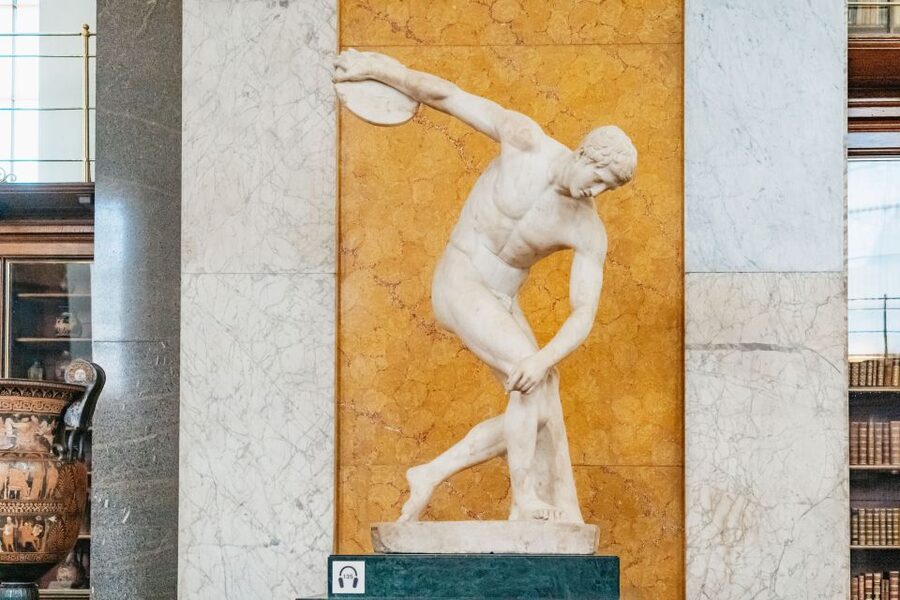
The most praised part of this tour is the guide. Filomena has been described as attentive, inspiring, enthusiastic, and especially good at making people comfortable. Stuart has been praised for his detailed object descriptions, humor, and care when discussing disputed works. Tara was credited with offering a full route and pointing out what to see next.
Those differences matter because guiding a major museum is not only about memorizing facts. The guide must choose what to leave out, explain without rushing, answer questions, and keep the group together. The strongest feedback points to guides who do all four.
There is one practical weakness to keep in mind: sound. The British Museum can be noisy, and not every guide may have a microphone or voice that carries well. Move close to the guide, avoid standing behind a large group, and speak up early if you are missing explanations.
Tours are offered in English, French, and Italian. Depending on demand, the tour may use two languages at the same time. If you need one language for clear understanding, check the arrangement before the tour begins.
Is $39 a fair price?
At $39 per person, the tour is not the cheapest way into the British Museum, since the public museum itself is free. The real question is how much you value time and direction.
For a first visit, I think the price can be fair. You get two hours of focused guiding through some of the museum’s most important rooms, including objects that are hard to place without context. You also avoid spending your first hour trying to understand the floor plan and deciding where to start.
The value drops if you already know exactly what you want to see. A self-guided visit lets you linger, return to a favorite gallery, and avoid a fixed route. It is also the better choice for anyone who prefers silence and slow observation.
A useful plan is to take the tour first, then return independently if your admission arrangement allows and you have time. The guide gives you a map in your head. You can then spend longer with the Rosetta Stone, Sutton Hoo, or the Parthenon sculptures instead of wandering without a plan.
Free cancellation up to 24 hours before the start and reserve-now, pay-later booking add flexibility. The tour lasts two hours, with starting times depending on availability.
Who should book this British Museum tour?
I would choose this tour if you are visiting London for the first time, have limited time, or feel uneasy about tackling a giant museum alone. It is also a good fit for families who want a guide to keep the visit active and for adults who prefer stories and context over wall labels.
It is particularly useful for anyone interested in the controversial side of museum collections. The Parthenon sculptures, Benin Bronzes, and other disputed objects can be hard to understand from a quick glance. A thoughtful guide can explain why they matter without pretending the questions are simple.
I would skip it if you want to spend an entire afternoon in one collection, read every label, or work at your own pace. You may also want to reconsider if hearing every word is vital and you are not comfortable asking a guide to repeat information in a crowded room.
The museum is wheelchair accessible. Transportation is not included, so plan your route to the British Museum separately.
Should you book it?
Book this tour if you want a clear introduction to the British Museum and its headline objects in two hours. The strongest reason to go is not the free entry or the famous building. It is the chance to have someone like Filomena or Stuart turn a huge, scattered collection into a story you can follow.
Go in expecting highlights, not total coverage. Wear comfortable shoes, watch for your ticket message, meet inside after security, and stay close enough to hear. If you accept the brisk pace and possible crowd noise, $39 can buy you a much better first orientation than wandering in cold.
FAQ
How long is the British Museum guided tour?
The tour lasts two hours.
How much does the tour cost?
The listed price is $39 per person.
Is transportation included?
No. Transportation is not included, so you must make your own way to the British Museum.
Where do I meet the guide?
Meet the guide in front of the British Museum portals, on the stairs near the pillars, after passing the security check. The meeting point is inside the gates, not outside.
How are admission tickets provided?
Tickets are supplied about one to two hours before the tour when needed, usually through WhatsApp. If you do not have WhatsApp, contact the provider by email to receive the tickets there.
What languages are available?
The tour is offered in English, French, and Italian. Depending on demand, two languages may be used during the same tour.
Can wheelchair users join the tour?
Yes. The activity is listed as wheelchair accessible.
What should I bring?
Bring comfortable shoes and clothing suited to the weather.
Can I cancel for a refund?
Yes. You can cancel up to 24 hours in advance for a full refund.
Can I reserve now and pay later?
Yes. The booking option allows you to reserve your place and pay later, keeping your plans flexible.
Just added around London
- Westminster and National Gallery 3.5-Hour Tour in Italian★ 4.9 · 28 reviews
- British Museum & Camden Town – Private Tour in Italian★ 4.8 · 26 reviews
- London: British Museum Highlights Guided Small Group Tour★ 4.9 · 113 reviews
- London: Westminster Abbey & Jubilee Galleries Guided Tour★ 4.9 · 56 reviews
- London: Sherlock Holmes Museum & Westminster Walking Tour★ 4.4 · 13 reviews
- London: Royal Museums Greenwich Day Pass★ 4.5 · 309 reviews
- London: Tickets for Moco Modern & Contemporary Art Museum★ 4.7 · 391 reviews
- London: The Courtauld Gallery at Somerset House Entry Ticket★ 4.6 · 126 reviews
Museum Tours in London, compared.

Tower of London and Crown Jewels Exhibition Ticket
Read our review →
Chelsea Football Club Stadium and Museum Tour
Read our review →


Official tickets: Moco Modern & Contemporary Art Museum
Read our review →
British Museum London Guided Tour Semi-Private 8ppl Max
Read our review →
British Museum Guided Tour with Entrance Tickets
Read our review →Browse the lists this tour appears in