
Review · LONDON
London: British Museum Archaeology Course and Guided Tour
The clever thing about this British Museum archaeology course is that it is not simply a march past famous objects. You follow the story of human civilization, from early tools and the first cities to Egypt, Assyria, Greece, Rome, the Vikings, and the Aztecs. Along the way, archaeologist Rossa explains how scholars know what they know, including how hieroglyphs and cuneiform were read again.
I like the strong sense of order and the practical archaeology. You are not just told that an object is old. You learn how sites become buried, how objects are dated, and why some mysteries remain. I also like the human touch, especially the chance to play the ancient Royal Game of Ur.
The main drawback is the length. Five and a half hours is a serious museum session, with plenty of standing and walking. Lunch is not included, and the course leaves you with only a small taste of a museum that can easily fill several more visits.
Key points to know before booking
- A human story rather than a quick highlights tour: Follow civilization from early African origins through the great ancient empires and into later cultures.
- Archaeologist Rossa leads the experience: His lively storytelling and broad subject knowledge are central to the tour.
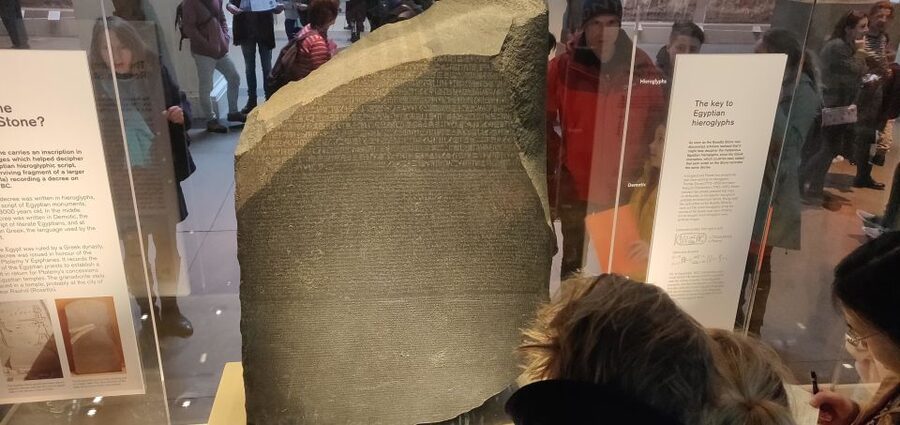
- Famous objects anchor the lessons: See the Rosetta Stone, Parthenon Marbles, Sutton Hoo Helmet, Lewis Chessmen, and more.
- Ancient writing becomes a puzzle to solve: Learn how Egyptian hieroglyphs and Sumerian cuneiform were deciphered.
- The five-and-a-half-hour schedule needs stamina: Bring comfortable shoes, water, and either a packed lunch or money for food at the museum.
- A useful first visit for curious families: Children around the age of 13 have been able to stay engaged, especially when the guide adds games and stories.
Why this British Museum tour feels different
The British Museum is packed with famous names, but fame alone does not explain why an object matters. A label may tell you when something was made and where it was found. This course goes one step further by showing how archaeologists build a picture of the past from broken pottery, tools, buildings, inscriptions, burial sites, and chance discoveries.
That approach gives the museum a clear thread. Instead of jumping from one spectacular case to another, you move through the development of human societies. You begin with early human origins in Africa, then consider Neanderthal tools, the first cities in Mesopotamia, the growth of writing, and the rise of Egypt, Assyria, Greece, and Rome.
The course also keeps asking useful questions. How did a site end up buried? How can a specialist work out an object’s age? What happens when an ancient language cannot be read? These questions make the museum feel less like a storehouse and more like a working investigation.
Rossa is a qualified archaeologist, and the tone is built around explanation rather than a memorized list of dates. His ability to tell stories is a major part of the appeal. Several people who joined with teenagers found that the mix of history, folklore, archaeology, and hands-on activities held their attention for the whole session.
More Museum Tours in London
- Tower of London and Crown Jewels Exhibition Ticket
★ 4.5 · 6,677 reviews - London: Chelsea Football Club Stadium and Museum Tour
★ 4.8 · 4,576 reviews - Chelsea FC Stadium Tours and Museum
★ 5.0 · 1,908 reviews
Meeting at Russell Square Station
You meet outside Russell Square Station, where your guide holds an iPad displaying the local partner’s name. Arrive 10 minutes early. From there, the group walks for about five minutes to the British Museum.
This is a simple start, but it matters in central London. Russell Square is easy to reach, and the short walk avoids a complicated transfer or a long approach. Still, do not treat the meeting point as the museum entrance. Give yourself enough time to find the correct station exit and locate the guide before the start.
The tour finishes inside the British Museum, so you do not return to Russell Square. That makes it easy to continue looking around afterward, provided the museum is still open and you have enough energy left.
From Stone Age tools to the first cities
The opening section sets up the entire course. You begin with the origins of humankind and early tools, then move toward the first settled communities and cities. This is useful context for the objects that follow, since the museum’s collections span huge stretches of time and can otherwise feel disconnected.
You will hear about the growth of early civilization in Mesopotamia and the development of writing. The shift from small communities to organized cities is one of the key ideas in the course. It helps you see ancient objects as evidence of changing social systems, not just as old things behind glass.
This part may suit serious history fans best, but families can also get a lot from it. The guide’s storytelling keeps the material moving, and the chronological order gives younger listeners a basic map of human history. You do not need specialist preparation, though anyone expecting only quick facts about the museum’s prettiest objects may find the first section more academic than expected.
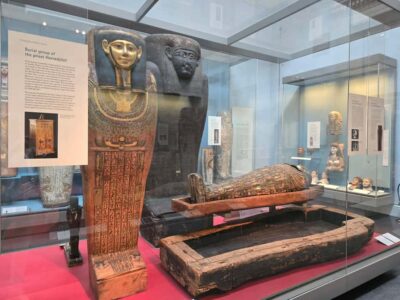
Egyptian hieroglyphs and the Rosetta Stone
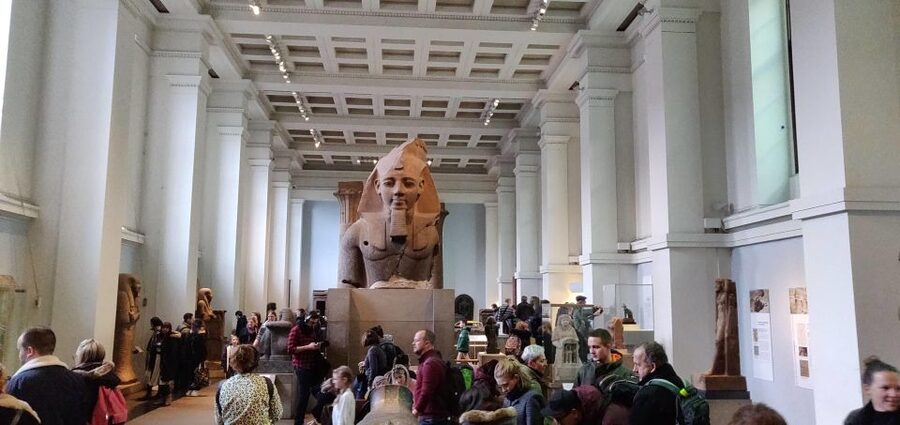
Ancient Egypt gets special attention, including the famous Rosetta Stone. The important point is not simply that you see the stone. You learn why it mattered and how it helped scholars read Egyptian hieroglyphs.
That turns a familiar object into a real piece of detective work. The course explains the effort involved in decoding ancient languages, rather than treating written symbols as decoration. You also hear about the people whose persistence made these texts readable again.
The Egyptian galleries can be busy, so the quality of the explanation matters. A guide with a strong voice is helpful when other groups are nearby. One practical detail from the day is that sitting may not always be available in front of every display, so take advantage of any chance to rest.
More British Museum tours:
- London: British Museum Guided Tour
★ 4.3 · 1,182 reviews - British Museum London Guided Tour Semi-Private 8ppl Max
★ 5.0 · 984 reviews - London: British Museum Guided Tour with Entrance Tickets
★ 4.9 · 748 reviews - London: Tour of the British Museum
★ 4.1 · 678 reviews
Mesopotamia, cuneiform, and the Royal Game of Ur
The Mesopotamian section introduces Sumerian cuneiform, often described as the world’s earliest written language. The course looks at how these wedge-shaped marks were deciphered and what writing reveals about the societies that created it.
This is one of the most rewarding parts for anyone who likes the mechanics of archaeology. You are not only looking at inscriptions. You are considering how researchers interpret them and how much information can survive in a small clay tablet.
Then comes one of the tour’s best breaks from passive looking: you get to play the Royal Game of Ur. British Museum scholars reconstructed its rules, allowing you to try a board game that is thousands of years old. It is a small activity, but it gives the ancient world a direct, memorable connection. Children and adults can enjoy it for different reasons, and it prevents the long course from becoming a steady stream of lectures.
Egypt, Assyria, Greece, and Rome
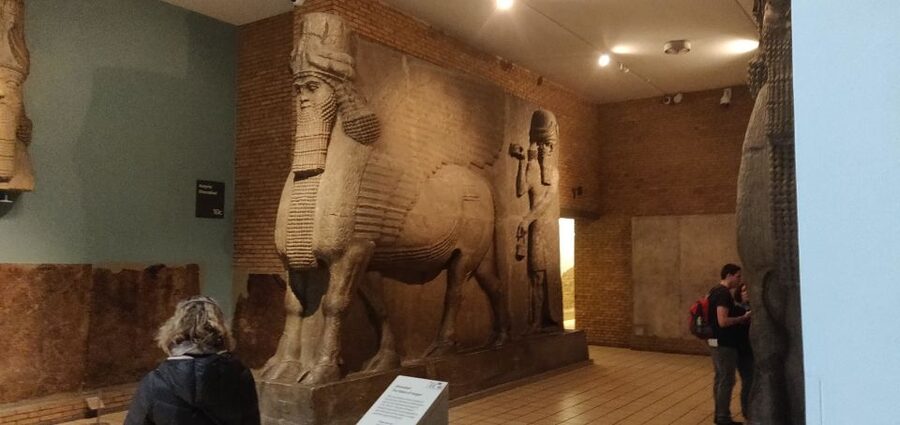
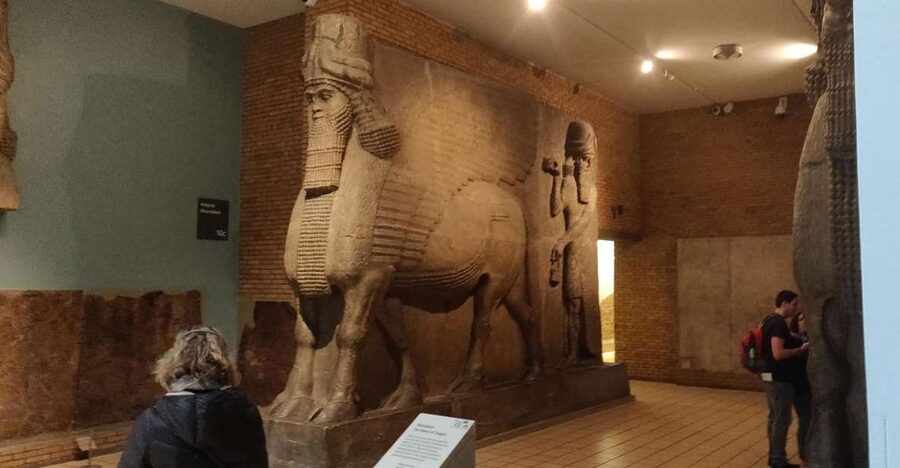
The route continues through the major ancient empires. In the Assyrian galleries, you consider the power and reach of one of the ancient Near East’s great states. In the Greek and Roman collections, the focus shifts again, showing how art, politics, warfare, belief, and daily life changed across the Mediterranean world.
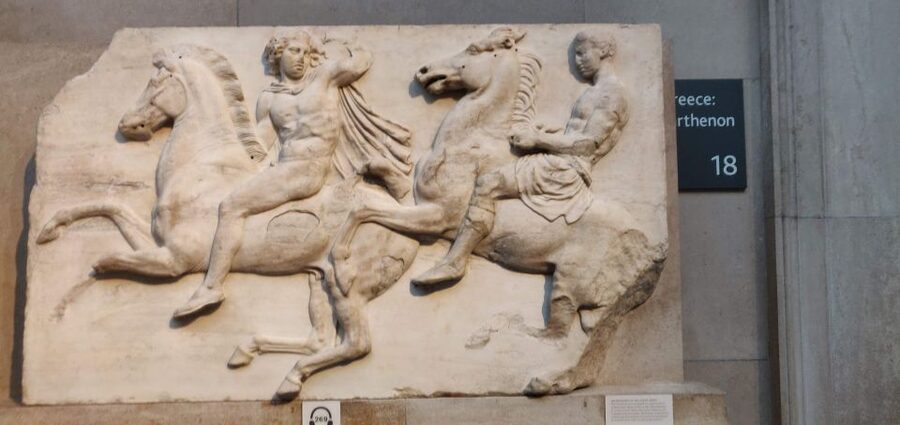
The Parthenon Marbles are among the most famous objects on the route. The guide places them within the wider story of ancient Greece rather than treating them as isolated sculptures. That broader context is helpful because the museum’s collections can otherwise encourage you to focus only on individual masterpieces.
The Roman material also serves as a turning point. You look at what happened after Rome’s power weakened and collapsed, rather than stopping at the usual ancient-world finish line. That keeps the course focused on change over time. You are following the movement of ideas, people, and technologies, not simply ticking off empires.
Vikings, Aztecs, and the wider human story
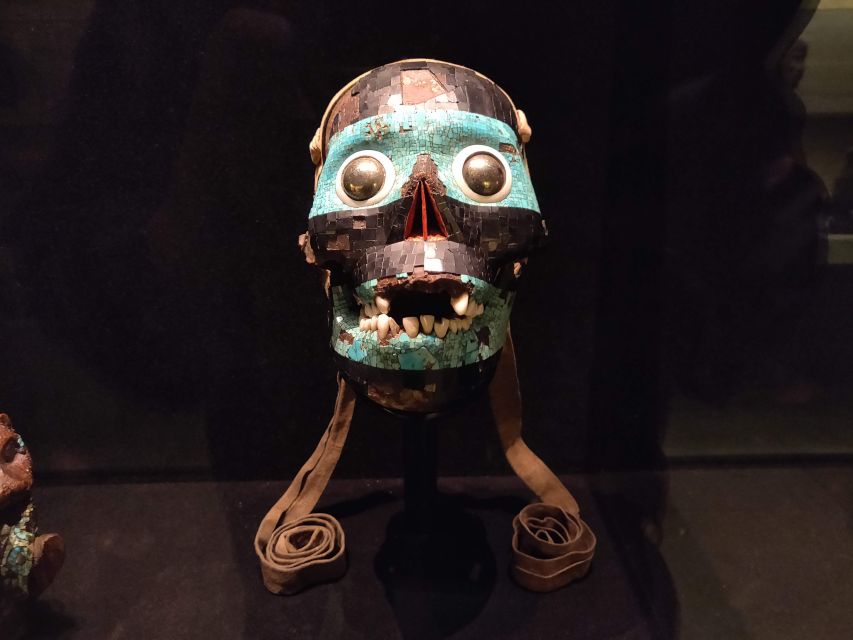
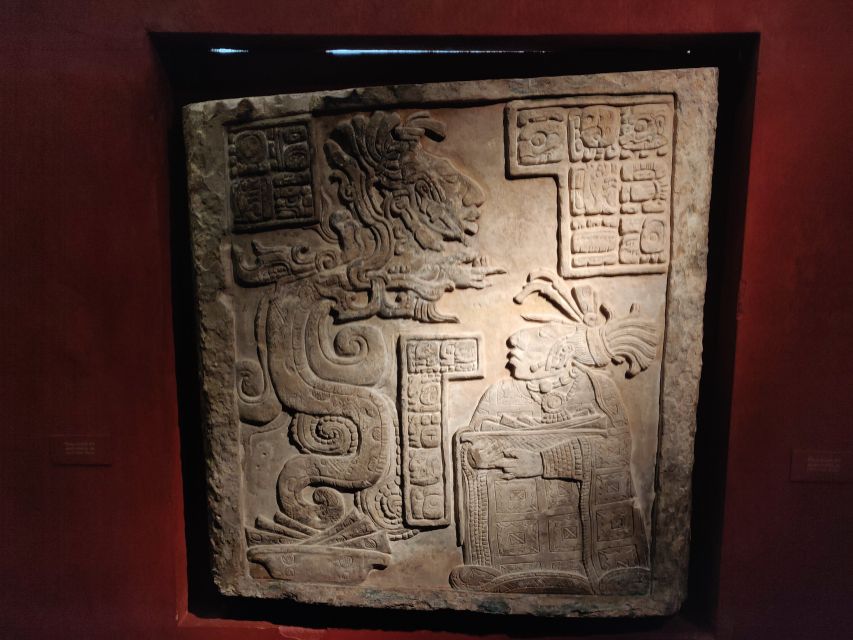
The later galleries bring in the Vikings and the Aztecs, extending the course beyond the classical civilizations that often dominate museum tours. Objects such as the Sutton Hoo Helmet and the Lewis Chessmen help show the variety of cultures represented in the building.
The Sutton Hoo material is especially useful for understanding how archaeology can reshape the story of a society. The Lewis Chessmen, meanwhile, offer an approachable way to think about medieval life, craft, trade, and entertainment.
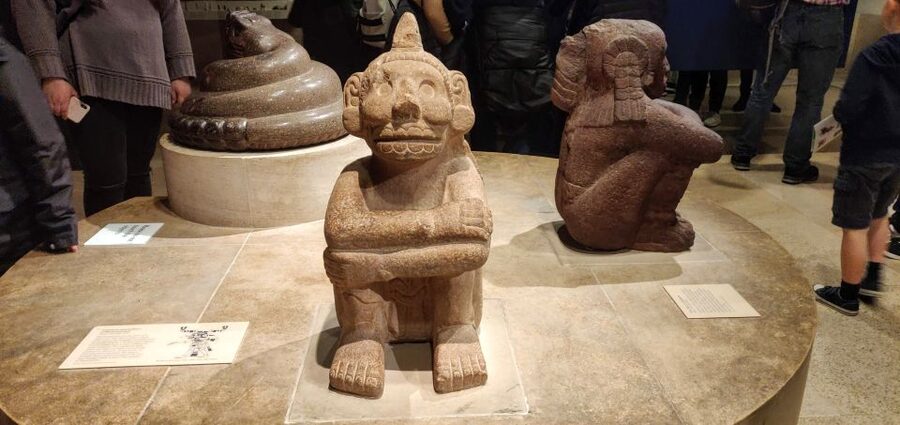
The Aztec section adds another cultural and geographic direction. It reminds you that human history did not move along one single European or Mediterranean path. The museum is strongest when the guide connects these galleries to the wider development of societies, belief systems, and technology.
You should not expect an equal-length lesson on every civilization in the museum. Five and a half hours cannot cover everything. The guide has to choose objects that support the human-history framework, so some galleries receive only a short treatment.
How archaeology dates objects and reconstructs the past
The final part looks at the science behind archaeology. You learn how objects and sites become buried, how relics are dated, and how researchers make sense of incomplete evidence.
This is valuable because it puts limits on certainty. Archaeology often involves clues, comparisons, and educated conclusions. Some questions remain open, and the course does not pretend that every object comes with a perfect explanation.
For me, this is the section that makes the whole visit more useful. After hearing how dating works and how ancient writing was decoded, you can return to the galleries later with a better sense of what you are seeing. You begin to notice not only the object itself, but also the evidence used to place it in time and explain its purpose.
The five-and-a-half-hour pace
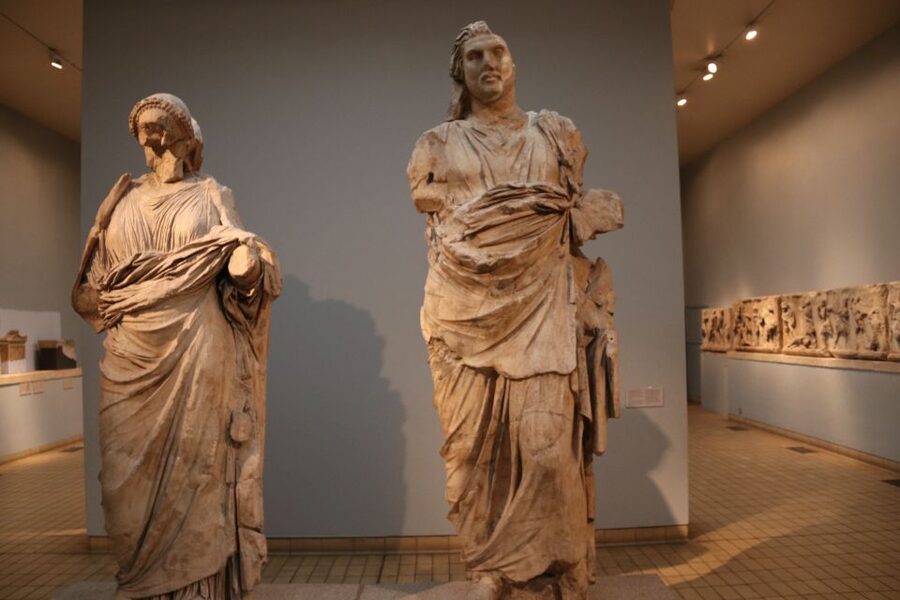
The published duration is 5.5 hours, including a break. That is long for any guided museum visit, but the schedule is designed as a full class and tour rather than a quick orientation.
The time is broken up by changes in subject, movement between galleries, questions, and the Royal Game of Ur. Still, you should expect an intensive day of history. Some people find the hours pass quickly because the guide keeps the story moving. Others may find the amount of information tiring, especially if they are not used to long museum sessions.
Wear comfortable shoes. Bring water. A folding stool can be picked up at the entrance, which is a very useful tip if standing for long periods is difficult. A day pack has been acceptable, but large bags and luggage are not allowed.
Lunch is not included. You have a 40-minute break, so bring a packed lunch or plan to buy food at one of the museum’s outlets. That break is not generous, and stopping for a full meal outside the museum would not suit the schedule.
Cost, access, and practical value
At $81 per person, this is not a cheap museum visit, especially since general entrance to the British Museum is free. You are paying for the qualified archaeologist, the planned five-and-a-half-hour structure, the guided route, and the teaching that connects objects across the galleries.
The value is strongest if you want more than a list of highlights. An audio guide or self-guided visit costs less, but it will not give you the same live explanation, questions, or shared activity. You also avoid the work of planning a route through a huge collection.
The separate entrance is listed as a skip-the-line benefit. That can save useful time, though it does not mean the museum will feel empty once you are inside. Popular galleries can still be busy, especially at weekends.
The tour is wheelchair accessible and suitable for people with limited mobility, but the length and amount of walking or standing still matter. Contact the operator in advance if you have special requirements. The museum has portable stools, but you should not assume that a seat will always be available exactly where you want one.
English is the only tour language listed. Cancellation is free up to 24 hours before the start, and you can reserve now and pay later, which helps if your London plans are still shifting.
Who should book this experience?
I would recommend it first to first-time British Museum visitors who want a clear route and a strong explanation of what they are seeing. It is also a good fit for history students, archaeology fans, and families with older children or teenagers who can handle a long session.
The course works particularly well for curious people who ask how we know something. If you want to understand dating methods, ancient writing, excavation, and interpretation, you will get more from this than from a simple highlights walk.
I would hesitate if you prefer to wander alone, read labels at your own speed, or focus on one narrow collection. You will have less freedom during the guided portion. The route also moves quickly compared with the size of the museum, so you may want to return another day for Egypt, Greece, or the medieval collections at your own pace.
Should you book the British Museum archaeology course?
Book it if you want the British Museum to make sense as a story of human civilization, not just a collection of spectacular rooms. Rossa’s engaging delivery, the chronological route, the ancient board game, and the lessons on deciphering languages give this experience more substance than a standard sightseeing tour.
Skip it if five and a half hours sounds too long or if you mainly want free time with the objects. For everyone else, $81 is a fair price for a full teaching session with a qualified archaeologist, especially when the museum’s size would make planning a similar route on your own difficult.
FAQ
Where does the British Museum archaeology tour begin?
Meet your guide outside Russell Square Station. The guide will hold an iPad showing the local partner’s name. Arrive 10 minutes before the start time.
How long does the experience last?
The course and guided museum visit last 5.5 hours, including a break. The walking transfer from Russell Square Station to the British Museum takes about five minutes.
Who leads the tour?
A qualified archaeologist leads the tour. The guide named in the experience information and praised throughout the supplied feedback is Rossa.
What language is the tour conducted in?
The live tour is conducted in English.
Is entrance to the British Museum included?
Yes. Museum entrance and the guided tour are included. General museum admission is free, but the paid experience covers the guided archaeology course and tour.
Is lunch included?
No. Lunch is not included. You can bring a packed lunch or buy food at one of the British Museum’s food outlets during the break.
Is the tour suitable for people with limited mobility?
Yes, the activity is wheelchair accessible and suitable for people with limited mobility. Contact the operator in advance if you have special requirements, and consider using one of the folding stools available at the museum entrance.
Just added around London
- Westminster and National Gallery 3.5-Hour Tour in Italian★ 4.9 · 28 reviews
- British Museum & Camden Town – Private Tour in Italian★ 4.8 · 26 reviews
- London: British Museum Highlights Guided Small Group Tour★ 4.9 · 113 reviews
- London: Westminster Abbey & Jubilee Galleries Guided Tour★ 4.9 · 56 reviews
- London: Sherlock Holmes Museum & Westminster Walking Tour★ 4.4 · 13 reviews
- London: Royal Museums Greenwich Day Pass★ 4.5 · 309 reviews
- London: Tickets for Moco Modern & Contemporary Art Museum★ 4.7 · 391 reviews
- London: The Courtauld Gallery at Somerset House Entry Ticket★ 4.6 · 126 reviews
Museum Tours in London, compared.
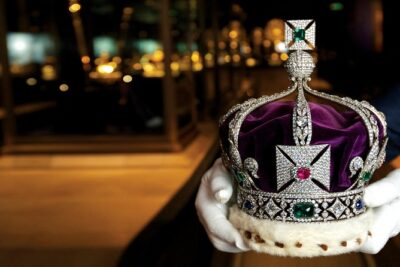
Tower of London and Crown Jewels Exhibition Ticket
Read our review →
Chelsea Football Club Stadium and Museum Tour
Read our review →

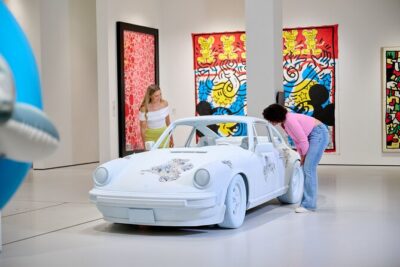
Official tickets: Moco Modern & Contemporary Art Museum
Read our review →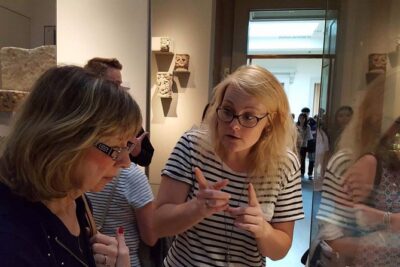
British Museum London Guided Tour Semi-Private 8ppl Max
Read our review →
British Museum Guided Tour with Entrance Tickets
Read our review →Browse the lists this tour appears in