
Review · LISBON
Lisbon: National Tile Museum Entry Ticket
The National Tile Museum is much more than a room full of blue-and-white squares. Inside the former Madre de Deus Convent, you’ll find centuries of Portuguese design, a beautiful church, a mannerist cloister, painted ceilings, and a grand tile panorama of Lisbon. The collection begins in the 15th century and continues to modern work.
I especially like the chronological layout, which lets you see how tile styles and techniques changed over time, and the way the museum uses its old religious setting as part of the experience. The main drawback is that the building can feel warm and poorly ventilated on hot days, and this ticket is specifically not sold as skip-the-line admission.
Key points
- See five centuries of azulejos: The collection runs from the second half of the 15th century to the present.
- Explore a former convent: The church, cloister, sacristy, high choir, and Chapel of Saint Anthony are part of the visit.
- Follow the making process: The opening display introduces tile materials and techniques before the chronological galleries.
- Allow about 90 minutes: You can move at a relaxed pace, with extra time for the church, café, and garden.
- Look for the Lisbon panorama: The large city scene on the upper floor is one of the museum’s most memorable displays.
- Buy with realistic expectations: The $11 price is good value, but the ticket does not officially include skip-the-line access.
Why Lisbon’s Tile Museum Is Worth Your Time
Portugal’s azulejos are not just decoration. They cover churches, convents, railway stations, homes, and public buildings across the country. At this museum, you can see how that tradition developed instead of encountering tiles as isolated pretty surfaces around Lisbon.
The collection begins with examples dating from the second half of the 15th century. From there, the route moves forward in time, showing changes in color, pattern, subject, and production methods. The chronological order gives your visit a clear shape. You are not simply walking from one attractive wall to another. You are watching an art form change across centuries.
That makes this a useful stop even if you know little about ceramics. The first section introduces the materials and methods used to make tiles. It is a short but helpful orientation before you reach the more elaborate displays.
The museum also includes ceramics, porcelain, and faience from the 17th through the 21st century. So you get a broader look at Portuguese decorative arts, not only wall tiles.
More Museum Tours in Lisbon
- Lisbon: Luz Stadium Tour & SL Benfica Museum Entry
★ 4.7 · 4,102 reviews - Lisbon: MAAT Gallery and MAAT Central Entry Tickets
★ 4.0 · 559 reviews - Lisbon: Banksy Museum Permanent Exhibition Entry Ticket
★ 4.7 · 506 reviews
Entering the Madre de Deus Convent
The setting is half the reason to come. The museum occupies the former Convent of Madre de Deus, founded by Queen Leonor in 1509. Its many building changes left a layered complex, so the visit feels like a walk through a historic religious site as much as an art museum.
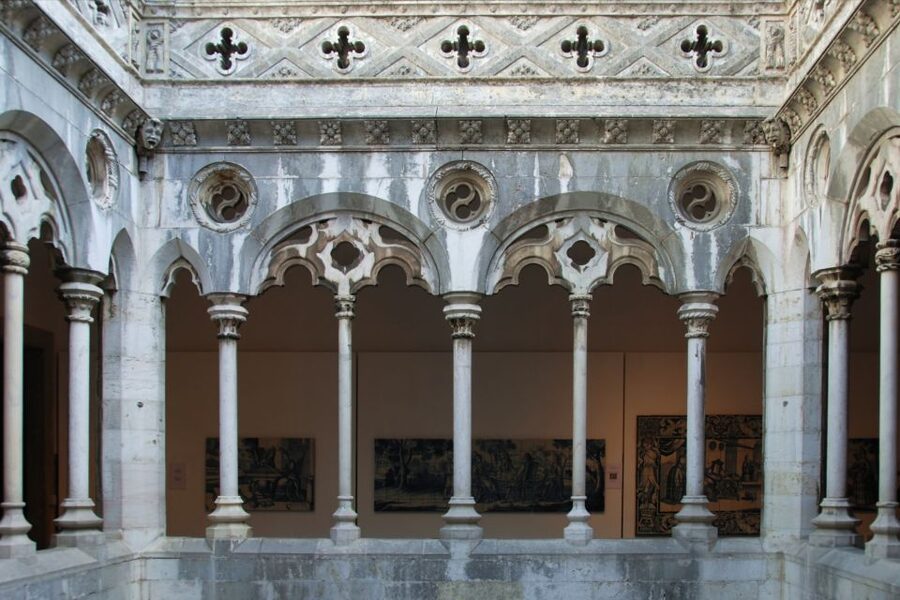
The 16th-century mannerist cloister gives you a calm first sense of the building. Its proportions and religious details provide a useful contrast to the more crowded tile displays. Take a moment here rather than rushing straight to the next gallery.
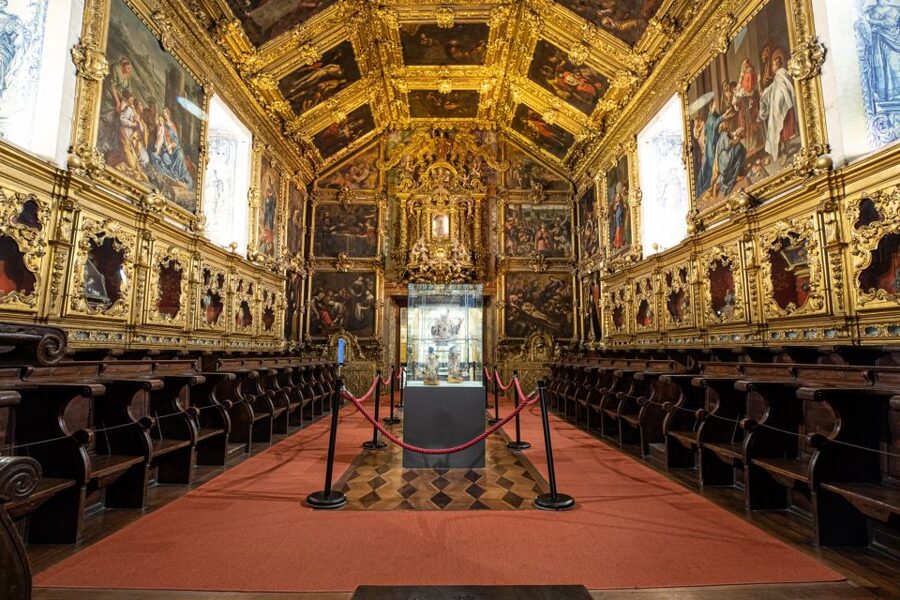
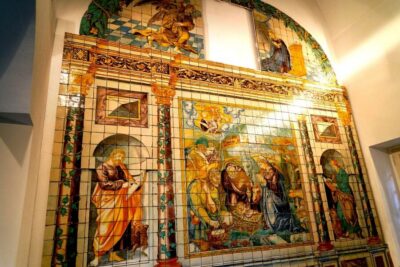
The church is another major stop. It contains extensive tile decoration and notable paintings, with carved and gilded woodwork adding to the effect. The setting can feel solemn and slightly unusual, especially when you move from an explanatory gallery into a former sacred space covered with ornament.
The high choir has particularly elaborate carved giltwood decoration. The Chapel of Saint Anthony brings in an 18th-century Baroque style, along with a significant group of paintings by André Gonçalves.
The sacristy adds another change of mood. Look for the Brazilian wood display cabinet and carved wooden frames holding paintings. These rooms help explain why the museum feels larger and more varied than its name suggests.
Following Portuguese Tiles from the 15th Century Onward
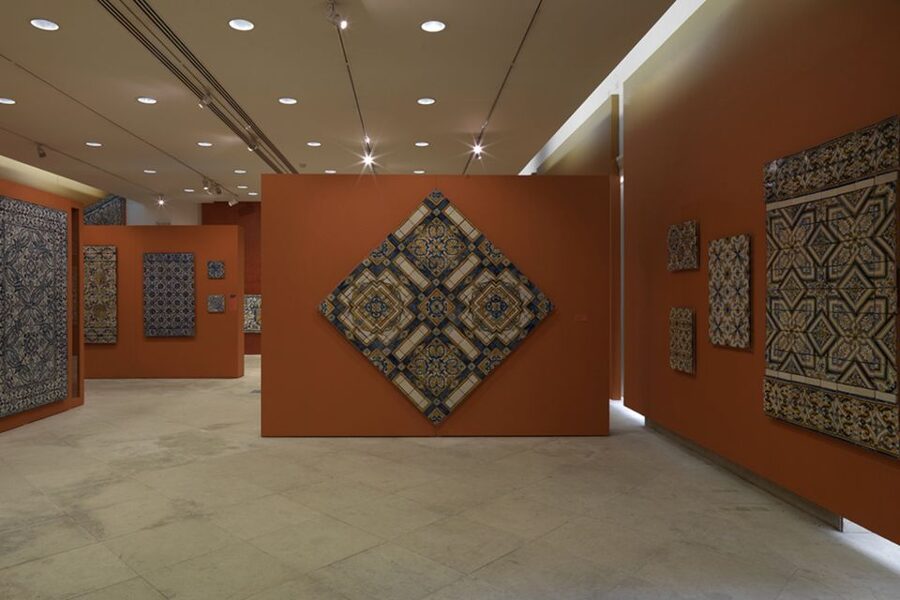
The permanent exhibition begins with technique. You see the basic materials and methods used to manufacture tiles, then follow the display in chronological order.
This arrangement is one of the museum’s strongest features. It lets you compare earlier and later work without needing a guide to explain every change. You can watch the designs become more elaborate, notice shifts in color, and see how tiles moved between religious and decorative uses.
The collection includes traditional examples as well as contemporary work. That final stretch matters because it keeps Portuguese tile art from feeling like a closed chapter. The museum presents azulejos as a living tradition that continued into the modern period.
Some pieces have limited detail beside them, so visitors who want a full explanation may prefer an audio tour. The audio option requires an app and your own headphones. Bring those only if you already plan to use that format, since the standard entry ticket is mainly about access rather than guided interpretation.
I would also bring your own camera. Photography helps you remember patterns and scenes that can blend together after several rooms, though you should follow any signs inside the museum.
The Church, Chapels, and Decorative Woodwork
If you are mainly coming for tiles, do not treat the church and chapels as side rooms. They are some of the most impressive parts of the visit because they show how tiles worked with painting, carved wood, and architecture.
The church’s tile panels create a very different experience from the museum’s chronological displays. Here, the tiles are part of a complete interior rather than separate historical objects. Paintings and woodwork frame the decoration, giving you a better sense of how Portuguese religious spaces were designed.
The Chapel of Saint Anthony is especially useful for seeing an 18th-century Baroque interior. The canvases by André Gonçalves add a visual layer beyond ceramic work. You might not recognize every religious subject, but the combination of materials is easy to appreciate.
The high choir and sacristy reward a slower pace. The carved giltwood details can be easy to overlook if you focus only on the blue-and-white surfaces. This is a place where looking up and checking the edges of each room pays off.
Some displays may feel strange or unexpected, particularly religious objects and saint-related pieces in the cloister. That is part of the museum’s character. It is not a polished modern gallery with every room made to look alike. You are moving through an old convent that has been adapted over time.
A few more museum visits around Portugal worth comparing
- Lisbon: 3D Fun Art Museum Admission Ticket
★ 4.6 · 401 reviews - Porto: 3D Fun Art Museum Porto Entry Ticket
★ 4.6 · 302 reviews - Lisbon: Royal Treasure Museum Entry Ticket
★ 4.3 · 123 reviews - Lisbon: National Tile Museum E-Ticket & Audio Guide
★ 4.3 · 121 reviews
The Lisbon Panorama on the Upper Floor
One of the most memorable displays is a large tile panorama of Lisbon. It gives you a chance to step back from individual patterns and see tiles used for a broad city scene.
This display is a good reason to keep going even if you feel you have already seen enough decorative panels. The scale changes your view of the material. Instead of examining small motifs, you are reading a city in ceramic form.
The upper-floor location also gives the visit a natural late highlight. By this point, you have seen the materials, the historical sequence, and the religious interiors. The panorama brings those ideas together in one large visual statement.
Do not rush past it. It is one of the displays that makes the museum feel like an important part of understanding Lisbon itself, rather than a specialist stop for art collectors.
How Long to Spend Inside
Plan on about 90 minutes for a normal visit. That gives you enough time for the chronological collection, church, cloister, chapel, and Lisbon panorama without examining every object at length.
You can stretch the visit closer to two hours if you enjoy art, architecture, or Portuguese history. The building rewards slow looking, especially in the church and decorated rooms.
The museum is open Tuesday through Sunday from 10:00 a.m. to 1:00 p.m., then from 2:00 p.m. to 6:00 p.m. Last entry is at 5:30 p.m. The midday closure matters, so do not arrive shortly before 1:00 p.m. expecting to continue straight through.
It is closed on January 1, Easter Sunday, May 1, June 13, and December 25. Check the date carefully before buying, since the ticket is non-refundable.
Is the $11 Ticket Good Value?
At $11 per person, this is a strong value if you want more than a quick gallery visit. You are paying for access to a substantial collection plus a historic convent complex with a church, cloister, chapels, paintings, and carved woodwork.
The price is particularly fair for art lovers, architecture fans, and anyone curious about Portugal’s most recognizable decorative tradition. It also works well for families because the subject is visual and varied. Even teenagers who are not eager to visit a tile museum may find the changing styles, large scenes, and unusual old rooms easier to enjoy than a conventional history display.
The main limitation is that the ticket does not officially provide skip-the-line entry. The activity information specifically says it is not a skip-the-line ticket, so you should not buy it assuming priority access.
Some ticket holders have found that booking ahead helped them avoid a queue, but that is not a promise you should rely on. Treat online purchase as a way to have your admission ready, not as a guarantee that you can walk past everyone waiting.
Café, Garden, and Planning Your Visit
The museum has a café with garden seating. It is a practical place to pause after the galleries, and you can make your visit feel like a relaxed couple of hours rather than a quick indoor stop.
One useful tactic is to check the café before entering the collection if it is busy. It can fill up, particularly when several people arrive at once. The garden also gives you a welcome break after time inside the convent.
Wear comfortable shoes. The visit involves moving through several rooms and historic sections, and the floor surfaces may not feel as easy as those in a modern museum. Comfortable clothing and water are sensible, especially during warm weather.
Ventilation can be limited inside, and the museum may feel hot on a summer afternoon. If you are sensitive to heat, use the midday closure to your advantage and choose a morning or later afternoon visit.
The museum is wheelchair accessible. You should still allow extra time because the complex has an older layout and multiple historic spaces.
The meeting point is simple: enter through the main entrance and show your ticket on arrival. The visit ends back at the museum, with no guided route or transport included.
Pairing It With Other Lisbon Sights
The museum is not described as a full-day experience. For most people, 90 minutes to two hours is enough, which makes it easy to pair with another Lisbon stop.
The Lisbon Aquarium is mentioned as a possible companion, reachable by a short Uber ride. That combination can fill much of a day, especially if you have children or want to mix art with a different type of attraction.
I would avoid cramming the museum between several timed activities. The opening hours split at 1:00 p.m., and rushing through the church or panorama would miss much of what makes the visit worthwhile.
The best pairing is one that gives you flexibility before or after. The café and garden make it easy to slow down, while the historical rooms provide shelter on a rainy day.
Who Should Buy This Ticket?
I would recommend it most strongly if you like decorative arts, churches, historic buildings, or seeing how a national style developed over time. You do not need prior knowledge of azulejos. The chronological route gives you enough structure to make sense of the collection.
Families may also find it a good choice because the museum has plenty of visual variety. It is not only text panels and small objects. You get large tile scenes, dramatic interiors, gilded woodwork, paintings, and a garden café.
It is less suitable if you want a short, highly interactive attraction or a guided explanation at every stop. The ticket gives you entry, not a named guide. If detailed commentary matters, consider the audio tour, remembering that you need the app and your own headphones.
Should You Book the National Tile Museum?
Book it if you want to understand why tiles matter so much in Portugal, not merely photograph a few blue-and-white walls. The former convent setting, church, cloister, Baroque chapel, and Lisbon panorama give the visit much more range than the low price suggests.
I would skip it only if your Lisbon schedule is extremely tight or if you dislike art museums and historic religious interiors. For most visitors, the $11 ticket offers an easy, reasonably short stop with real substance.
Buy with the correct expectation: this is a self-guided museum entry ticket, not a guided tour and not officially a priority-access pass. Arrive during the posted hours, allow about 90 minutes, and save time for the café and garden. That is the formula for getting the most from this often-overlooked Lisbon museum.
FAQ
How much does the National Tile Museum ticket cost?
The ticket costs $11 per person.
How long is the ticket valid?
The ticket is valid for one day. Check availability for the starting times offered when you book.
Is this a skip-the-line ticket?
No. The activity information specifically says this is not a skip-the-line entry ticket.
What are the museum’s opening hours?
The museum is open Tuesday through Sunday from 10:00 a.m. to 1:00 p.m. and from 2:00 p.m. to 6:00 p.m. Last entry is at 5:30 p.m.
When is the National Tile Museum closed?
It is closed on January 1, Easter Sunday, May 1, June 13, and December 25.
How long should I plan for the visit?
Plan about 90 minutes for a relaxed visit. You may want closer to two hours if you spend extra time with the church, historic rooms, and Lisbon panorama.
Is the museum wheelchair accessible?
Yes, the activity information lists the museum as wheelchair accessible.
What should I bring?
Bring your passport or ID card, comfortable shoes, water, comfortable clothing, and a camera. If you want to use the audio tour, you will also need the required app and your own headphones.
Just added around Portugal
- Museum Heist Escape Game★ 5.0 · 28 reviews
- Tavira Total Tuk Tuk Tour: Tavira Tour & Tuna Museum Visit★ 4.9 · 21 reviews
- Lisbon: Benfica Museum Tour with Souvenir Scarf★ 4.8 · 27 reviews
- Madeira: Signature Wine Tasting, Skywalk & Nature Expedition★ 4.7 · 49 reviews
- Porto: Cork Museum: Immersive and Perfect for Families★ 4.2 · 54 reviews
- Porto: Taylor’s Port Cellar Tour & WOW Museum Pack★ 4.7 · 24 reviews
- Porto Region Museum: a Thousand Years Of History★ 4.2 · 22 reviews
- Porto: National Museum Soares dos Reis E-Ticket & City Tour★ 4.0 · 18 reviews
Museum Tours in Lisbon, compared.


Banksy Museum Permanent Exhibition Entry Ticket
Read our review →
Belem, Jeronimos Monastery, and Coach Museum Tour
Read our review →

Paint your tile and create your unique piece in an art gallery in Lisbon
Read our review →Browse the lists this tour appears in