
Review · FRANCE
Antibes: Picasso Museum Drawing Tour Led by Local Artist
Picasso’s old studio, now the Picasso Museum in Antibes, makes a fine starting point for an art lesson that quickly leaves the gallery behind. Local artist Nicola Powys guides you through the museum, then helps you turn the town’s light, walls, and old streets into your own artwork outdoors.
I like the way the tour joins serious art history with hands-on making, and I like that beginners are treated as artists rather than spectators. The small private-group format also lets Nicola adjust the pace for children and adults together. The one drawback is simple: if you want a long, detailed museum tour, one hour inside may feel brief.
Key points to know
- Picasso Museum first: Spend about an hour looking at Picasso’s work with an artist who explains his methods and ideas in plain language.
- Outdoor art workshop: Use the streets, views, and historic setting of Antibes as your subject for a personal souvenir.
- Nicola Powys leads the activity: Her teaching style works well for mixed ages, including families with children over six.
- Private group setting: The guide can adjust the discussion and drawing exercises to suit your group.
- Materials and museum entry included: Sketching and writing supplies are provided, as is the €12 museum admission.
- Two hours, English-language: Plan to meet at the top of the ramp leading to the museum entrance.
Why this Antibes art tour works so well
Many museum visits end when you walk back into the street. This one treats the street as the second half of the museum experience.
You begin with Picasso, looking at how an artist notices shapes, movement, faces, light, and place. Then you use your own eyes and hands to make something. That change matters. You are not simply collecting facts about Picasso. You are trying a few of the habits that shaped his work: observation, play, simplification, and a willingness to make marks without worrying too much about getting them perfect.
Nicola Powys is both a professional artist and an experienced teacher. Her role is not to produce polished artists in two hours. It is to help you stop judging every line before you have drawn it. That makes the activity suitable for people who say they cannot draw, as well as for anyone already comfortable with a sketchbook.
The experience lasts two hours and is offered in English for a private group. That is a useful arrangement for families or friends who want an activity that feels personal rather than like a standard museum walk-through.
More Picasso museum visits:
- Paris: Picasso Museum Ticket & Optional Seine River Cruise
★ 4.7 · 277 reviews - Barcelona: Picasso Museum Skip-the-Line Guided Tour
★ 4.5 · 3,355 reviews - Picasso Museum Skip-the-Line Guided Tour
★ 4.5 · 1,079 reviews
Starting at the ramparts and museum entrance
The meeting point is at the top of the ramp leading to the Picasso Museum entrance. This is worth noting because Antibes has several lanes, ramps, and nearby points of interest. Give yourself enough time to find the museum rather than arriving at the last minute.
The first part includes a stroll along the ramparts toward the museum, with an introduction to Antibes along the way. The setting does some of the teaching for you. The old defensive walls open to broad views, and the town’s position beside the water helps explain why the light here has attracted artists.
You do not need to prepare for a strenuous walk. The activity is designed for a wide range of ages and abilities, apart from very young children. Still, comfortable shoes are sensible because the route includes the ramparts and old-town streets.
The outdoor setting is more than a pleasant backdrop. It gives you a subject before you ever pick up a pencil. You can look at the strong shapes of the fortifications, the contrast between old stone and open sky, and the changing lines of the town. Nicola uses these surroundings to get you thinking like an artist rather than simply pointing out landmarks.
One hour inside the Picasso Museum
The museum visit lasts about an hour and is led by Nicola. This is a good length for a family activity. You have enough time to focus on selected works, but not so much time that younger children are expected to remain attentive through a full morning of formal art history.
Nicola explains Picasso’s work from an artist’s point of view. You learn to look at composition, technique, and the choices behind an image. The emphasis is on how Picasso saw and worked, not just on memorizing dates or titles.
That approach can be especially helpful if Picasso’s art has always seemed difficult or strange. Instead of asking you to like every work, Nicola gives you ways to inspect it. What has been simplified? What has been distorted? How does a childlike mark differ from a careless one? Why might an artist choose an unusual angle or exaggerated shape?
The tour also connects the museum to Antibes itself. Picasso worked in the town, and the place around you becomes part of the story. You can enjoy the museum terrace views while considering how the setting may have affected the artist’s attention to light, place, and daily life.
One important point: this is not a silent, self-guided museum visit with a few added comments. The value comes from discussion. Nicola encourages questions and adjusts her explanations to the group. Adults can follow the art ideas while children receive explanations they can grasp.
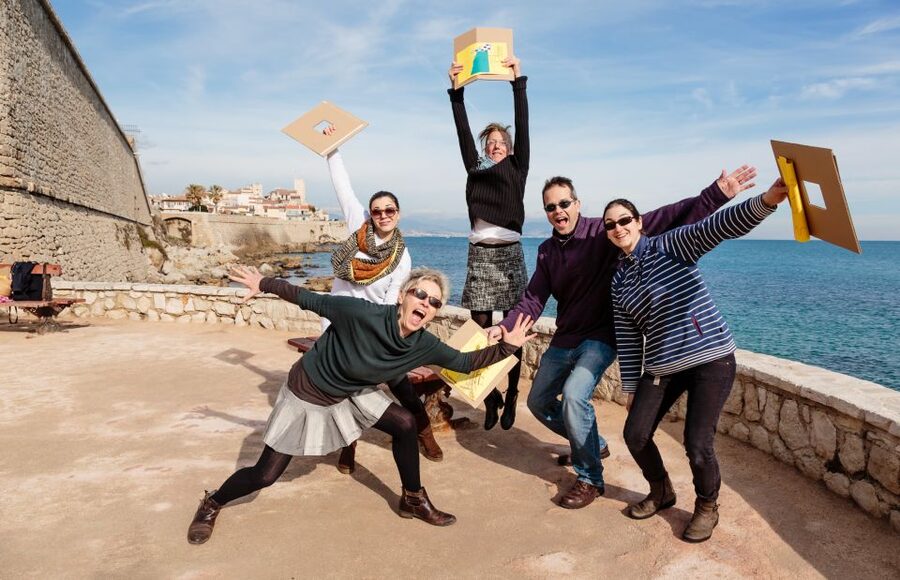
Families have found this balance particularly useful. Children aged seven, nine, ten, eleven, twelve, thirteen, and fourteen have all been specifically described as engaged during the activity. That does not mean every child will enjoy every museum, but the hands-on second half gives younger participants a reason to pay attention at the start.
Turning Picasso’s ideas into your own artwork
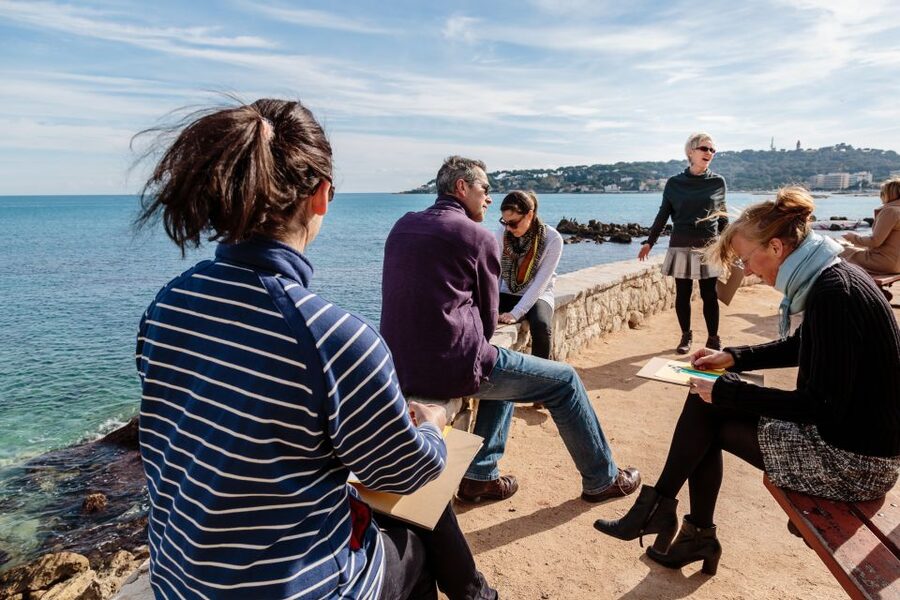
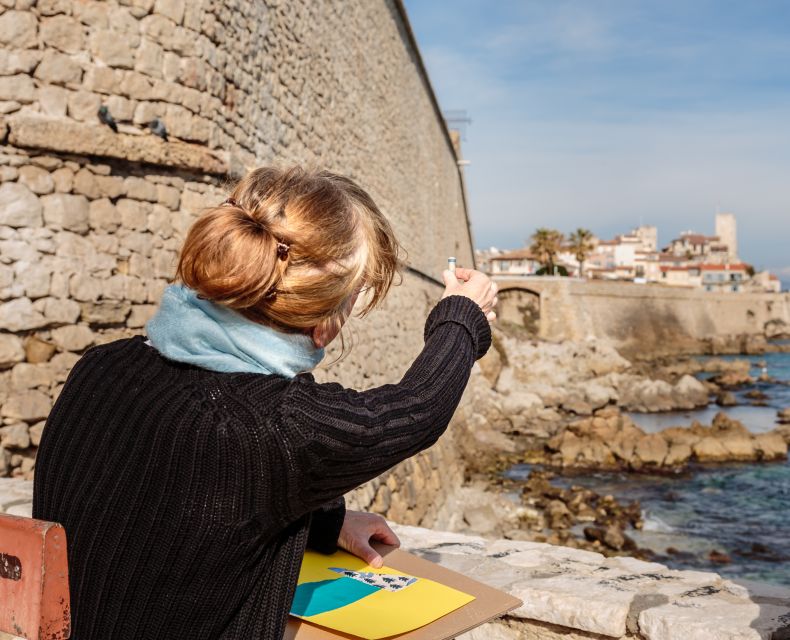
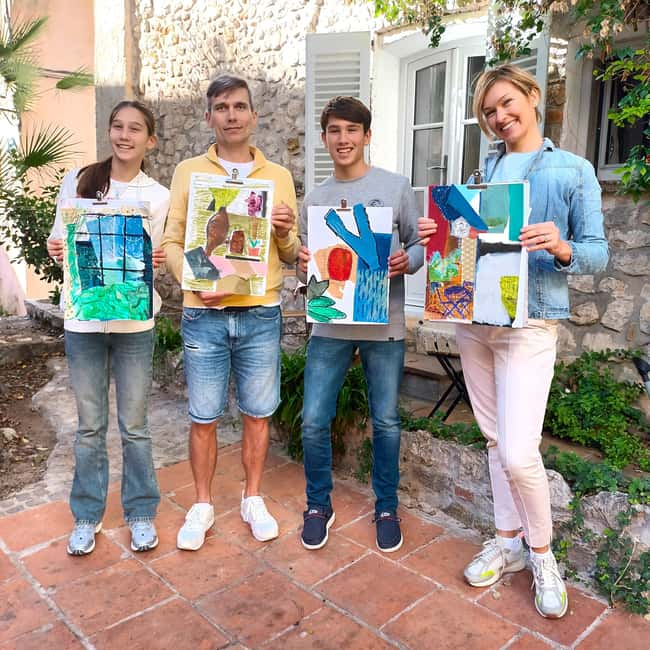
After the museum, you move outdoors to make art in Antibes. The supplied information describes the session as taking place on the streets of town, while past groups have also worked in a quiet, shaded square or on the ramparts outside the museum. The exact spot can vary, but the point remains the same: you create in the place you have just been studying.
Nicola provides sketching and writing materials. You do not need to pack a full art kit, and you do not need to bring a finished idea. She guides you through observation and making exercises inspired by Picasso’s approach.
The workshop focuses on capturing the light and character of Antibes through marks, shapes, and composition. You might look closely at the details around you, then decide what to leave out. The goal is not a photographic copy. It is to make an image that reflects how you experienced the town.
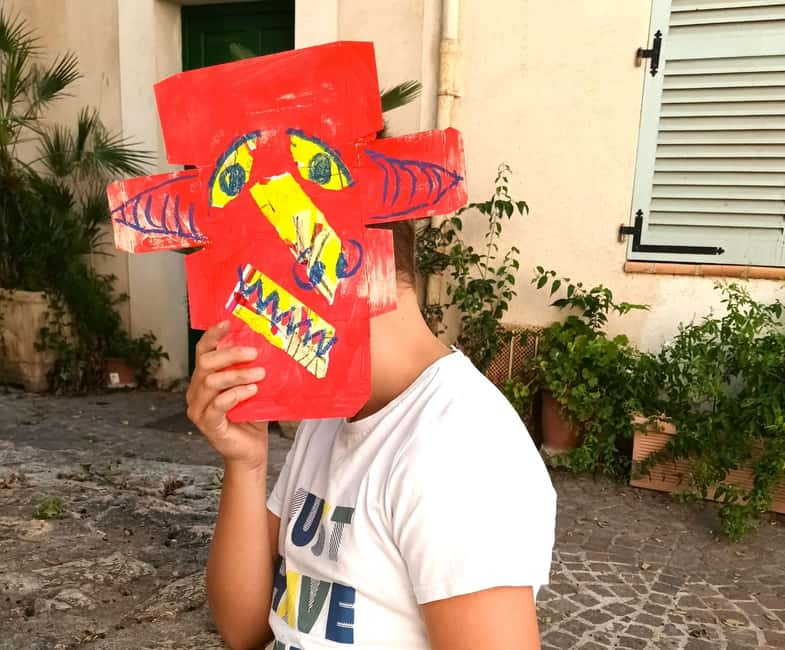
Picasso famously admired the uninhibited marks made by children. The useful lesson here is not simply to draw like a child. It is to recover some of the freedom children have before they start worrying about correct proportions or other people’s opinions. Nicola then helps you bring adult observation and decision-making back into the picture.
That combination makes the souvenir personal. You are not buying a print from a shop. You are taking home something connected to the exact place, weather, conversation, and afternoon when you made it.
A few more museum visits around France worth comparing
- Paris: Louvre Museum Timed-Entrance Ticket
★ 4.6 · 71,977 reviews - Paris: Orsay Museum Entry Ticket
★ 4.7 · 25,647 reviews - Louvre Museum Masterpieces Guided Tour with Access
★ 4.5 · 12,023 reviews - Paris: Louvre Museum Entry Ticket With Host and River Cruise
★ 4.6 · 9,926 reviews
What Nicola Powys adds as an artist and teacher
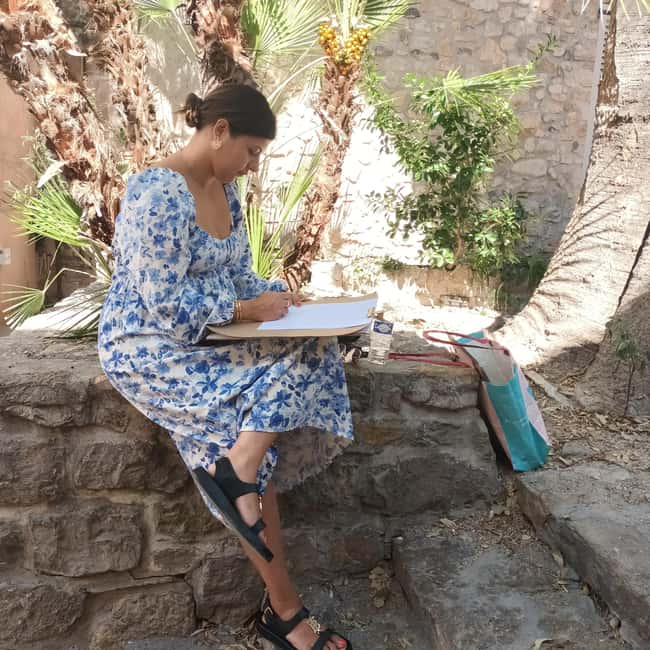
The guide is central to this activity. Nicola is described as personable, passionate about Picasso, and able to explain why his work matters without making the museum feel like a lecture.
Her teaching style also seems to be a strong fit for mixed groups. She can give adults more detail about technique and composition while keeping children involved with questions and practical tasks. Families with children as young as seven have found the two-hour format manageable, and one family with a nine-year-old and an adult found that the experience worked well for both at once.
That flexibility is important. An art lesson can become uncomfortable if the teacher assumes everyone has the same skill level. Here, Nicola’s job is to encourage you, not to judge the finished work.
She also helps with the emotional side of drawing. Beginners often spend the first few minutes apologizing for their lines. A supportive guide can make the difference between a stiff exercise and a relaxed one. The best part of this format is that you get permission to experiment while still receiving practical direction.
The experience has also worked well for children who need a calmer, more positive way to engage with art. One family described the workshop as especially enjoyable for an autistic child. That is not a guarantee that every child will respond in the same way, but it suggests that the gentle, adaptable teaching style can suit different needs.
Is €82 a fair price?
The listed price is $82 per person, with the museum entry of €12 included. You also receive art materials and professional tuition.
That makes the value easier to judge than the price alone suggests. You are paying for three linked elements: a guided museum visit, a private art lesson, and the guide’s local and professional experience. If you would otherwise enter the museum on your own, pay admission, and buy materials separately, the extra cost is paying for interpretation and personal instruction.
For a family, the value is strongest when you want one activity that works for adults and children. You avoid booking a separate museum tour and a separate workshop. You also take home a physical reminder of Antibes that you made yourself.
It may feel less worthwhile if you only want a quick look at Picasso’s work or if you prefer to explore museums alone. The museum portion is about an hour, so art specialists seeking a full lecture may want more time inside. In that case, consider visiting the museum independently as well, if your schedule allows.
For most people, the real question is not the cost of admission. It is whether you want a passive visit or a guided experience that asks you to participate. If you choose the second, the price is reasonable for a private, two-hour activity with materials and tuition included.
Who will enjoy this most?
I would recommend this for families with children over six, couples who want a creative break, and adults who usually avoid art classes because they believe they are not artistic.
It suits people who want to understand Picasso through seeing and doing. It also suits anyone who likes a town more once they have made a connection with it. Drawing forces you to notice details you might otherwise pass by.
The activity is appropriate for all ages and abilities except very young children. Still, keep the group’s interests in mind. Someone who dislikes museums, discussion, or making things with their hands may not enjoy the full two hours.
Children under six should not attend. Older children seem to benefit from the clear structure: museum first, art-making second. The drawing session also gives them a chance to move from listening to action.
This is not a formal art-school course, and you should not expect technical training in painting or advanced drawing. It is a guided introduction to looking, thinking, and making. That is precisely why it works for beginners.
Practical details before you book
The tour is conducted in English. It lasts two hours, and the starting time depends on availability when you book.
Meet at the top of the ramp to the museum entrance. Since this is also the starting point for the museum visit, do not wait elsewhere in the old town.
Museum admission and sketching or writing materials are included. Food and drink are not included, so plan a snack or meal before or after the activity if your group needs one.
The group is private, which means you are not sharing the guide with a large public crowd. If you are traveling with family or friends, that gives you room to ask questions, work at different speeds, and let children participate without feeling watched by strangers.
You can cancel up to 24 hours before the activity for a full refund. A reserve-now, pay-later option is also available, which helps if your South of France plans are still changing.
Because the workshop takes place outdoors, consider the day’s weather when choosing clothing. The provided information does not list a specific indoor backup plan, so it is sensible to confirm any weather concerns before the start.
Should you book the Picasso drawing tour?
Book it if you want more than a quick museum visit. Nicola Powys brings art knowledge, teaching skill, and a warm manner to a format that gives you something to do with what you have seen. The strongest reason to choose it is the connection between Picasso’s work and your own handmade souvenir.
I would especially choose this for a family with children over six, since the museum and workshop balance each other well. I would also recommend it to adults who feel nervous about drawing. You are not expected to produce a masterpiece. You are given a way to look more closely at Antibes and enjoy the act of making.
Skip it if your main aim is a long, specialist-level study of the Picasso Museum, or if you would rather spend your time visiting galleries without a group activity. For everyone else, this is a thoughtful two-hour way to see Antibes, understand Picasso from an artist’s perspective, and leave with a memory you created yourself.
FAQ
How long does the Picasso drawing tour last?
The activity lasts two hours. It includes about one hour in the Picasso Museum and a second part devoted to outdoor drawing and art-making in Antibes.
Who leads the experience?
Local professional artist and teacher Nicola Powys leads the museum visit and the outdoor art session.
Where is the meeting point?
Meet your guide at the top of the ramp leading to the entrance of the Picasso Museum.
Is museum admission included?
Yes. The €12 Picasso Museum entry fee per person is included.
Are drawing supplies provided?
Yes. Sketching and writing materials are included.
Is the tour suitable for children?
The activity is suitable for all ages and abilities except very young children. Children under six are not permitted, while older children have taken part successfully.
What language is the tour in?
The live tour guide conducts the experience in English.
Is food or drink included?
No. Food and drink are not included in the activity price.
Just added around France
- Ticket to Musée National du Sport★ 4.4 · 32 reviews
- Rodin Museum Masterpieces – Guided Tour up to 8 guests★ 4.9 · 13 reviews
- Louvre Museum: Skip-the-Line Guided Tour★ 4.6 · 98 reviews
- Invalides Museum – WWI & WWII – Guided Tour up to 8 guests★ 5.0 · 32 reviews
- Skip the Line Guided Tour of Louvre Museum Highlights★ 5.0 · 49 reviews
- Rouen : Museum Immersive Viking Experience★ 4.2 · 47 reviews
- Paris: Louvre Museum Highlights Small-Group Guided Tour★ 4.8 · 157 reviews
- From Paris: Private Trip to Giverny, Monet’s House & Museum★ 4.5 · 13 reviews
Museum Tours in France, compared.
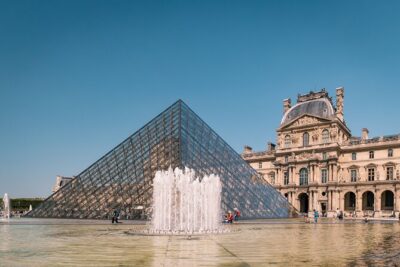
Louvre Museum Masterpieces Guided Tour with Access
Read our review →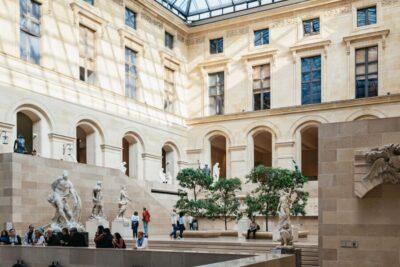
Louvre Museum Entry Ticket With Host and River Cruise
Read our review →
Les Invalides: Napoleon’s Tomb & Army Museum Entry
Read our review →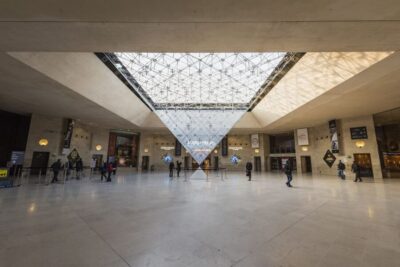
Mona Lisa & Louvre Masterpieces Tour with Reserved Access
Read our review →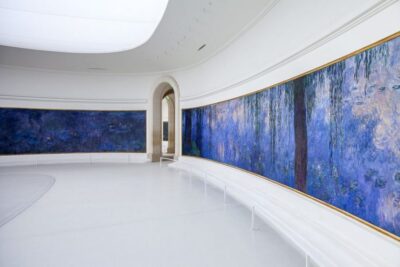
Musée de l’Orangerie Reserved Entrance Ticket
Read our review →
Louvre Museum – Exclusive Guided Tour (Entry Included)
Read our review →Browse the lists this tour appears in