

Review · JOHANNESBURG
Soweto: Hop-On Hop-Off Bus, City Tour and Apartheid Museum
Soweto gives this day its real force. You pass Mandela House, Desmond Tutu House, Orlando Towers, Hector Pieterson, and Chris Hani Baragwanath Hospital with a local guide, then use an open-top bus to connect Johannesburg’s major sites. I like the honest mix of history and daily life, and I like the freedom to get off at places such as Constitution Hill and the Apartheid Museum. The catch is time: trying to fit Soweto, a museum, and several bus stops into one day requires an early start and careful planning.
I also like the easy connection from Rosebank and Sandton, including the free shuttle to the bus office. The audio guide is offered in eight languages, and the route gives you a useful first look at a city that can be hard to navigate on your own. Just remember that entrance fees are not included, and the Soweto portion can feel rushed if you want long visits inside Mandela House or the Apartheid Museum.
Key points to know before booking
- Soweto is the heart of the day: A two-hour guided drive and walking tour covers Vilakazi Street, Mandela House, Hector Pieterson, Orlando Stadium, and the Orlando Towers.
- The open-top bus fills in the city: You can see Melrose Arch, Constitution Hill, the Mining District, Newtown, Johannesburg Zoo, and other key stops at your own pace.
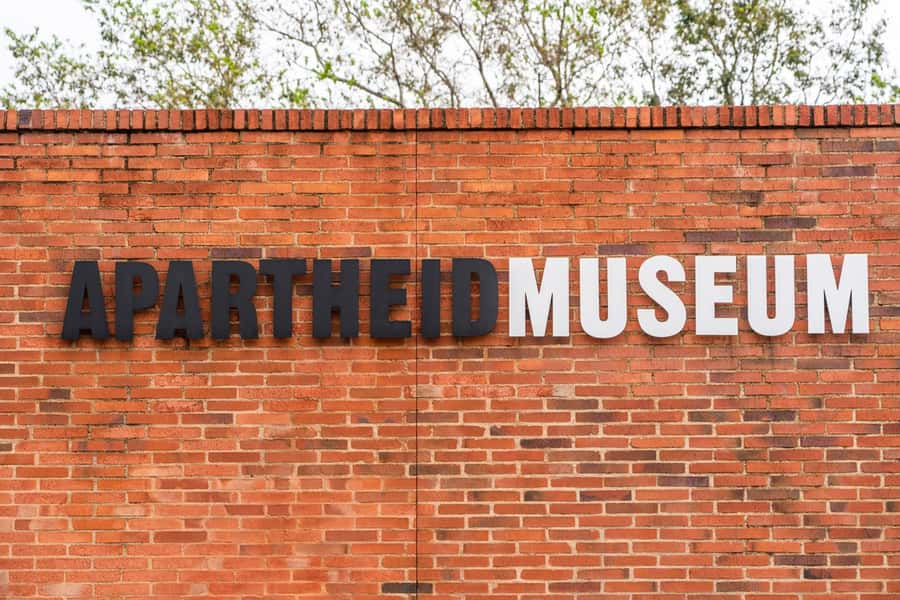
- Museum time needs planning: The bus stops at the Apartheid Museum, but admission costs extra and a serious visit can take around three hours.
- Local guides add context: Guides named DT, KG, Nicholas, and DJ have been singled out for clear, engaging tours, though the guide assigned to you can vary.
- Transport is simple: Start at the City Sightseeing office in Rosebank, use the free Sandton shuttle, drive, or arrive by Gautrain.
- The best value comes from an early start: One day works for highlights, but two days would suit you better if you want several long stops.
Why Soweto gives this tour its meaning
Johannesburg can feel sprawling and difficult to read from a car window. Soweto helps put the city’s political story into human terms. This is where Nelson Mandela lived, where Archbishop Desmond Tutu had a home, and where the 1976 student uprising became a defining moment in South Africa’s struggle against apartheid.
The two-hour Soweto tour is led by a resident guide and combines driving with short stops. You pass ordinary neighborhoods, markets, memorabilia stalls, sports grounds, and places tied to the freedom struggle. That mix matters. Soweto is not only a collection of political landmarks. It is a living township where thousands of people work, shop, worship, and raise families.
The route includes Soccer City, also known as FNB Stadium, on the edge of Soweto. You also pass the Welcome to Soweto sign, Diep Kloof, Chris Hani Baragwanath Hospital, Orlando Stadium, and the Orlando Towers. Each stop gives you a different angle on the area, from major national events to everyday life.
Some portions are viewed from the vehicle, so do not expect a long, unstructured walk through the township. The most time is usually spent at the main cultural sites. One past visitor found the tour hurried and wished for more time outside the vehicle. That is a fair warning, especially if you want to browse shops or sit down for a meal.
More Museum Tours in Johannesburg
- Soweto /Johannesburg and Apartheid Museum Guided Full Day Tour
★ 5.0 · 932 reviews - Jo’berg in 1 Day: Soweto, Apartheid Museum & City Tour
★ 4.8 · 524 reviews - Johannesburg: Full-Day Tour with Soweto and Apartheid Museum
★ 4.8 · 478 reviews
Vilakazi Street and Mandela House
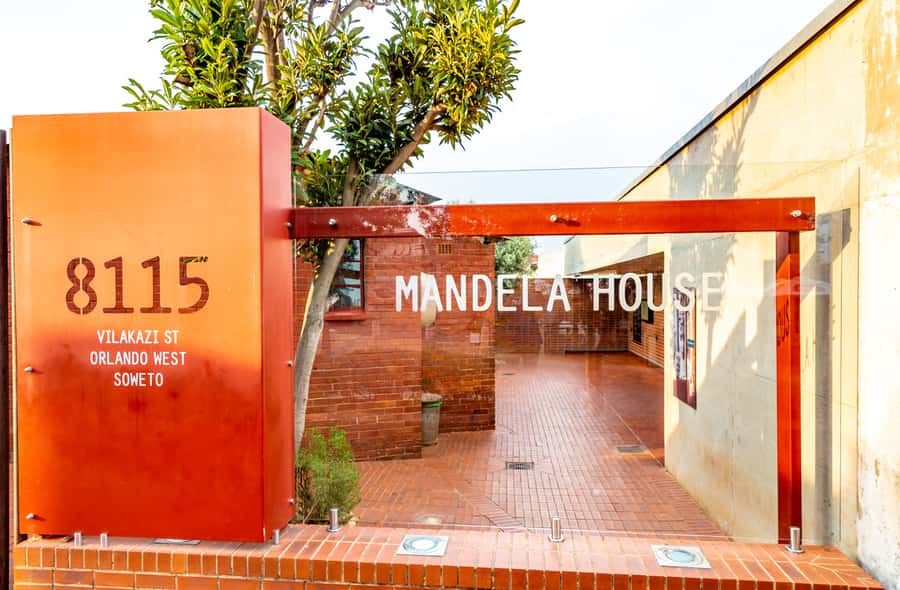
Vilakazi Street is the emotional center of the Soweto portion. It is famous for being associated with both Nelson Mandela and Desmond Tutu, two Nobel Peace Prize winners who lived close to each other. You pass Mandela House at number 8115, a small, single-story matchbox-style home that is now a museum.
The house connects Mandela’s public life with the ordinary setting where his family lived. It is not a grand presidential residence, and that is precisely why the visit can feel so direct. You see the modest scale of the home and gain a clearer sense of the conditions around Mandela’s early political life.
The tour schedule may allow only a short stop. One visitor had about five minutes at Mandela House, while another wanted more time to go inside. Since entrance tickets are not part of the $50 price, check the timing and admission arrangements before counting on a full museum visit.
A short distance away is Tutu House, the former home of Archbishop Emeritus Desmond Tutu. The tour may show you the exterior and explain its importance, but the published route does not promise an extended interior visit. If Mandela House is a major reason for booking, ask the operator about the day’s exact schedule.
Vilakazi Street also gives you a chance to see the commercial side of Soweto. There are markets, food options, memorabilia stands, and places to pause for coffee or a drink. If your guide allows spare time here, use it. This is one of the few parts of the day where you can experience the area at a slower pace.
Hector Pieterson and the memory of 1976
The Hector Pieterson Memorial is one of the most important stops. It commemorates the schoolchild whose death became a powerful symbol of the 1976 Soweto uprising. The nearby museum and memorial explain how student protests over Afrikaans-language education escalated into a national confrontation with the apartheid state.
Expect a serious visit rather than a light sightseeing stop. The site uses photographs, artworks, and historical displays to tell the story. The supplied route describes unique works of art at the memorial, so you get more than a simple plaque and photo opportunity.
This stop is also where the quality of the guide matters most. A local guide can explain the setting and help connect the events to the streets around you. One guide named DT has been praised for making township life and history clear while keeping the group engaged. KG has also been singled out for a strong Soweto tour. Your assigned guide may differ, but the local perspective is one of the strongest reasons to choose this package.
Allow yourself a little quiet time here. The schedule can move quickly, and the subject deserves more than a hurried photograph.
Orlando Towers, stadiums, and township life
The Orlando Towers are among the easiest landmarks to recognize. Their painted cooling towers rise above the area and have become a major Soweto image. The tour passes the site of the world’s highest Suspended Catch Air Device, a freefall attraction attached between the towers.
You may also stop near Chaf Pozi, a shisa nyama and shebeen where you can find braised meat and a drink. This is a useful reminder that Soweto is not presented only as a historical backdrop. Food, music, sport, and social life remain part of the area’s identity.
Orlando Stadium has its own importance. It was the first sports facility built for Black South Africans in a residential area. The stadium connects sport with the political and social limits imposed under apartheid, when public facilities were divided by race.
The route also passes Chris Hani Baragwanath Hospital, described as the world’s largest hospital in 1997. You may not spend much time there, but its scale helps explain the size and importance of Soweto.
The tour visits FNB Stadium, the Welcome to Soweto sign, Diep Kloof, and several other landmarks. Some are brief photo stops. Others are viewed while driving. That variety keeps the tour moving, but it also means you should not expect to explore every location on foot.
More apartheid history tours:
- Full-Day Soweto, Apartheid Museum and Lunch Tour
★ 5.0 · 410 reviews - Johannesburg: Soweto & Apartheid Museum Half-Day Tour
★ 4.9 · 99 reviews - From Johannesburg: Pretoria, Soweto & Apartheid Museum Tour
★ 4.8 · 48 reviews - Soweto & Johannesburg and Apartheid Museum
★ 4.7 · 41 reviews
Seeing Johannesburg from the red bus
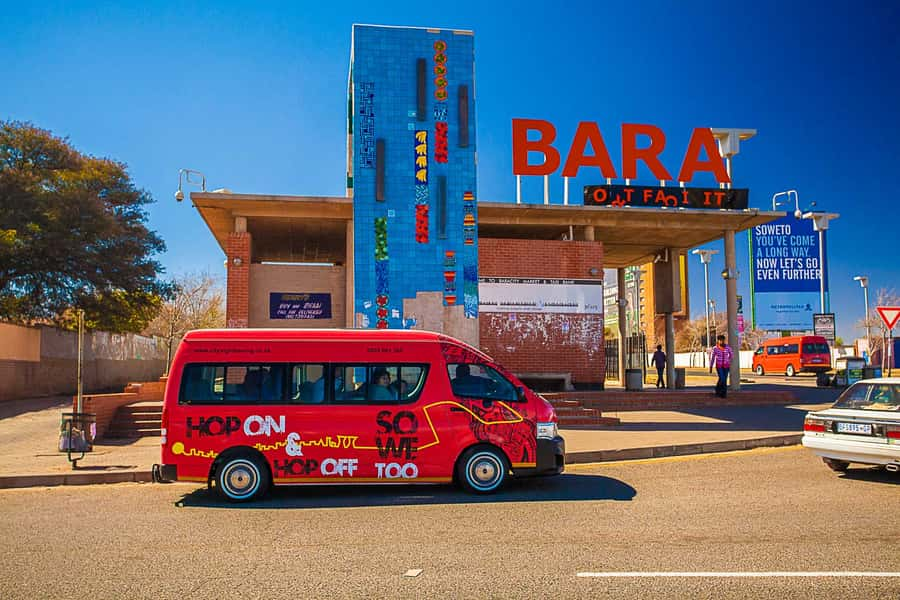
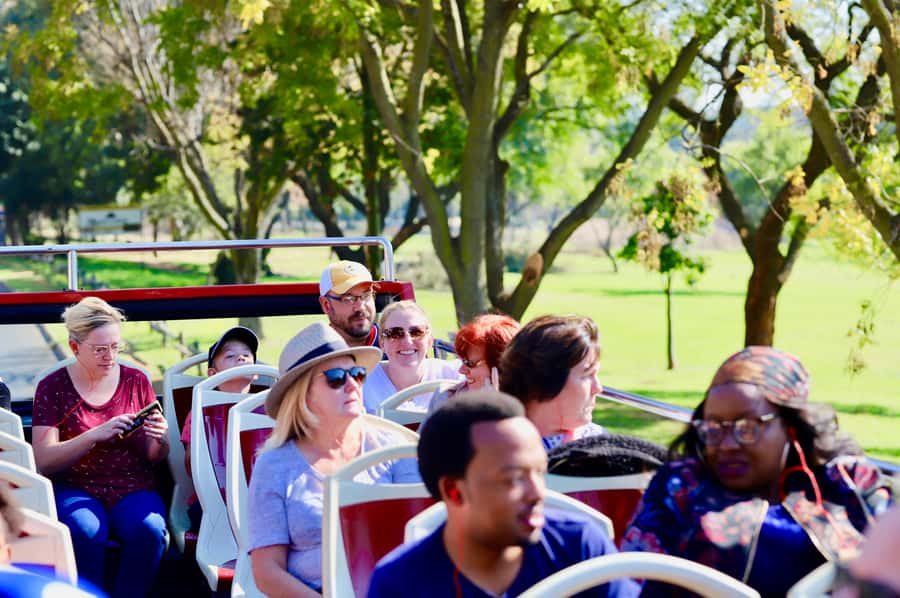
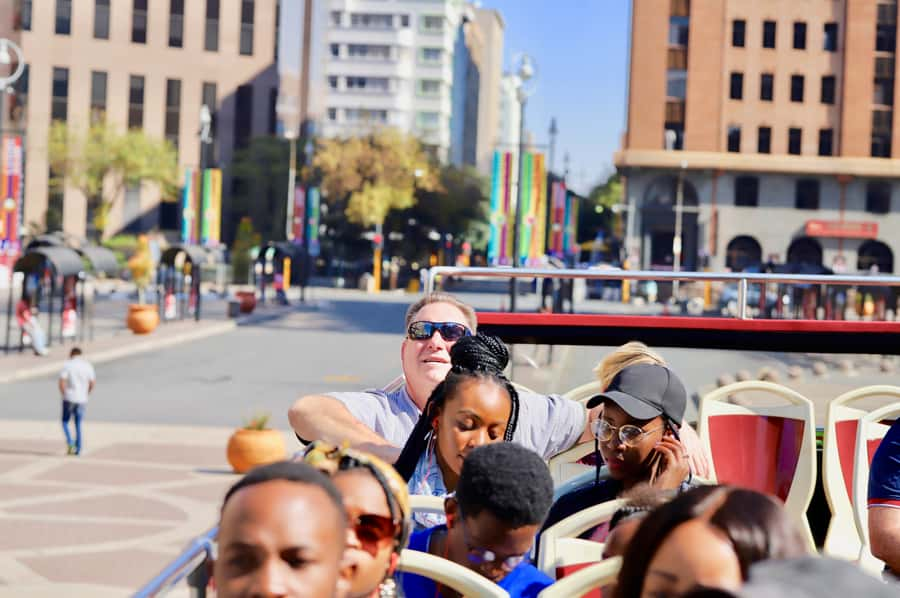
The open-top double-deck bus gives you an efficient introduction to Johannesburg. Sit upstairs when the weather is good. You get better views and a stronger sense of the distance between neighborhoods, though sun and wind can make the ride cold. Bring a layer, especially if the day is rainy.
The recorded commentary is available in English, German, French, Portuguese, Japanese, Zulu, Italian, and Spanish. It explains the city’s development and points out sites linked to the apartheid era, mining, politics, and urban growth.
The route includes:
- Melrose Arch
- Mandela Foundation
- Mandela’s former homes in Houghton
- Munroe Drive for a scenic photo stop
- Constitution Hill
- The Mining District
- Gold Reef City Casino Hotel
- Apartheid Museum
- Newtown
- Neighbourgoods Market on Saturdays
- Johannesburg Zoo
- Military Museum
The main strength of the bus is control. You can stay on for a broad city overview or get off at selected stops. Constitution Hill and the Apartheid Museum are the two most useful choices for history. Newtown and Neighbourgoods Market offer a different feel, although the market stop operates on Saturdays only.
The weakness is the waiting time between buses. One stop may not justify a 40-minute wait, particularly if you are trying to fit Soweto into the same day. The full route works better when you choose two or three priorities rather than trying to see everything.
Constitution Hill and the Apartheid Museum
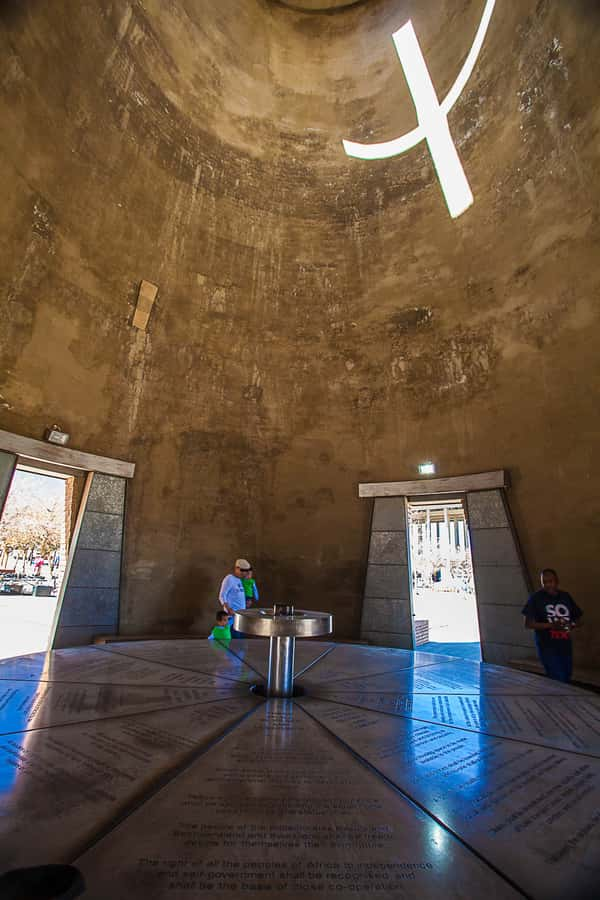
Constitution Hill occupies the former prison complex where political prisoners were held. Its importance comes from the contrast between the old prison buildings and South Africa’s modern constitutional ideals. It is one of the more worthwhile stops on the route if you want historical context before or after Soweto.
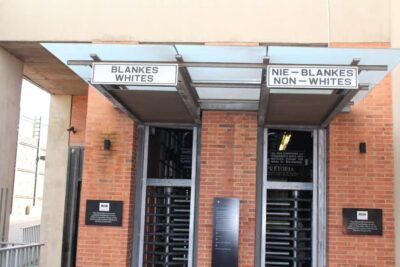
The Apartheid Museum is the major museum stop. It presents the apartheid system, the resistance to it, and the political changes that led to democracy. Plan for at least two hours if you want a solid visit. Three hours is realistic for a slower look at the material.
Do not assume that the $50 package covers admission. Entrance tickets are specifically excluded. The bus stops at the museum on the way back from the Soweto tour, so you can combine both experiences, but the available time depends on bus schedules and your starting hour.
One practical route is to take an early bus, complete the Soweto tour, then spend the remaining time at the museum. Another is to get off at Constitution Hill first, continue to the Soweto connection, and return to the museum later. The right choice depends on opening times and how long you want inside each site.
The museum can be emotionally demanding. Give yourself enough time and avoid cramming it into the last few minutes before the final bus.
How to make the one-day schedule work
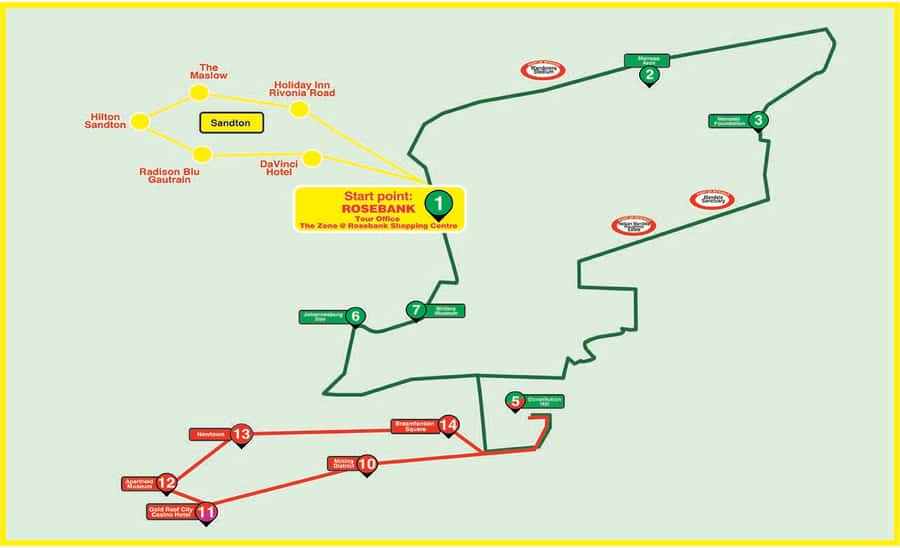
The day is most useful as a highlights tour, not a complete Johannesburg visit. Start early. The free shuttle leaves Sandton hotels at roughly these times:
- Southern Sun Sandton at 9:00
- The Maslow at 9:08
- Sandton Hilton at 9:12
- Radisson Blu Gautrain at 9:18
- Da Vinci Hotel at 9:25
A shuttle also serves Melrose Arch outside Fire & Ice at about 9:12. The stated return shuttle from Rosebank to Sandton is at 17:25.
The main tour office is in the Zone Shopping Center pedestrian mall on Oxford Road in Rosebank, near Hamley’s Toys and between the Rosebank Holiday Inn and the toy store. You can also drive and use the center’s underground parking. By Gautrain, exit at Rosebank station using the North Exit, take the lift to street level, and walk toward the pedestrian mall.
Build in time for the transfer between the city bus and the Soweto vehicle. The Soweto connection takes place at Gold Reef City Casino Hotel. The operator says each Soweto tour connects with a bus returning to Rosebank, stopping at the Apartheid Museum along the way.
If the museum is your top priority, check the exact departure times before you leave. If Soweto matters most, protect the two-hour township tour and treat the city loop as a shorter overview. If you try to stop at every attraction, you will likely spend the day watching the clock.
What $50 gets you
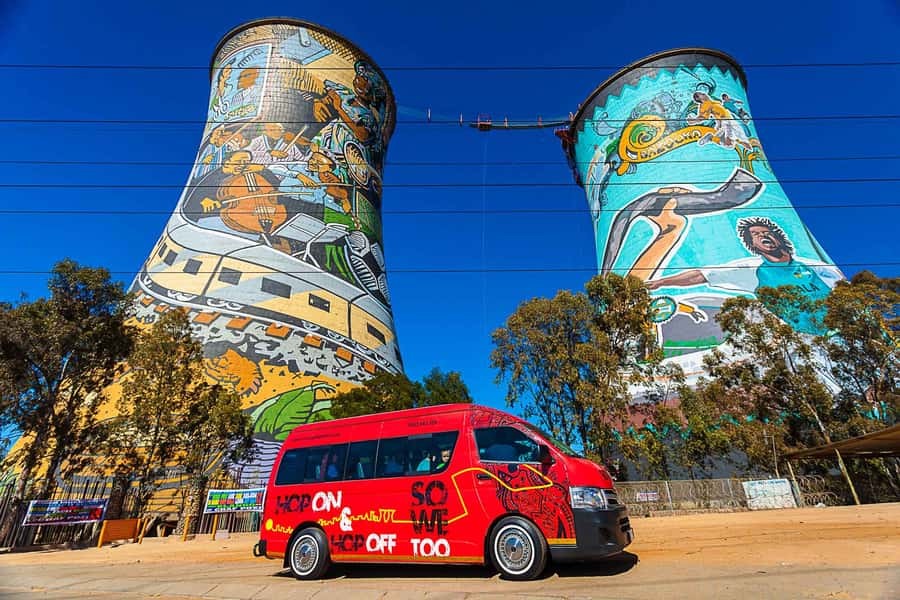
At $50 per person, the package offers good value if you want both Johannesburg and Soweto in one organized day. You receive the hop-on hop-off ticket and the guided Soweto tour, plus transport between the main parts of the route. That removes much of the planning burden in a large city.
The value drops if you only want to visit one museum. Admission is extra, and the bus schedule may limit how long you can stay. A separate city bus ticket could make more sense for a relaxed day, while a dedicated Soweto tour could suit you better if the township is your only priority.
For a first visit, I think the combination earns its price because the two parts complement each other. The bus shows the scale and contrasts of Johannesburg. Soweto gives the political story a physical setting and a local voice.
Who should book this experience
Book it if you have one full day, want a structured introduction, and prefer not to arrange separate transport to Soweto. It suits first-time visitors, history-minded visitors, and anyone staying around Sandton or Rosebank.
It also works well if you want a broad city overview before deciding where to return. The audio commentary helps you identify places that deserve more time later.
Choose another plan if you dislike fixed schedules, want long museum visits, or hope to wander freely through Soweto. The tour is organized and informative, but it is not an unhurried township walk.
The experience is wheelchair accessible, and the cancellation policy allows a full refund when you cancel at least 24 hours ahead. Reserve and pay later is available, which helps when your Johannesburg schedule is still moving.
My verdict on the Soweto and Johannesburg combination
I would book this for a first Johannesburg visit, especially with only one day available. The best parts are the local Soweto guide, the emotional weight of Hector Pieterson and Mandela House, and the simple city transport provided by the red bus.
Start early, choose your priority stops, carry a light jacket, and budget separately for museum admissions. If you want to do justice to the Apartheid Museum, Constitution Hill, and Mandela House, book two days if available. If one day is all you have, accept the brisk pace and use this as a strong first look at Johannesburg and Soweto.
FAQ
Does the $50 price include entrance to the Apartheid Museum?
No. The hop-on hop-off bus ticket and guided Soweto tour are included, but entrance tickets are not.
How long is the Soweto portion?
The guided Soweto tour lasts about two hours.
Which Soweto landmarks are included?
The route includes FNB Stadium, the Welcome to Soweto sign, Chris Hani Baragwanath Hospital, the Orlando Towers, Orlando Stadium, Hector Pieterson, Mandela House, and Soweto Brewery Ubuntu Kraal.
Where does the tour begin?
The main City Sightseeing office is in the Zone Shopping Center pedestrian mall on Oxford Road in Rosebank. You can arrive by free shuttle from listed Sandton hotels, car, or Gautrain.
Is an audio guide available in languages other than English?
Yes. Audio commentary is available in German, French, Portuguese, Japanese, Zulu, Italian, and Spanish, as well as English.
Can I cancel the booking?
Yes. You can cancel up to 24 hours in advance for a full refund. Reserve and pay later is also available.
Just added around Johannesburg
- Soweto & Johannesburg and Apartheid Museum★ 4.7 · 41 reviews
- Private Soweto,Mandela House,Apartheid Museum,Constitution★ 4.6 · 15 reviews
- Johannesburg: Soweto & Apartheid Museum Half-Day Tour★ 4.9 · 99 reviews
- Soweto and Apartheid Museum Tour★ 4.4 · 38 reviews
- Private Rhino and Lion Park, Cradle Caves or Maropeng Museum★ 4.6 · 25 reviews
- Half Day Private Soweto and Apartheid Museum tour★ 4.6 · 14 reviews
- From Johannesburg: Pretoria, Soweto & Apartheid Museum Tour★ 4.8 · 48 reviews
- Apartheid Museum & Soweto Tour with Hotel Pickup★ 4.8 · 17 reviews
Museum Tours in Johannesburg, compared.
Soweto /Johannesburg and Apartheid Museum Guided Full Day Tour
Read our review →
Jo’berg in 1 Day: Soweto, Apartheid Museum & City Tour
Read our review →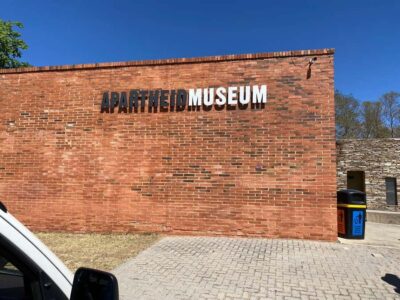
Full-Day Tour with Soweto and Apartheid Museum
Read our review →
Full-Day Soweto, Apartheid Museum and Lunch Tour
Read our review →
Browse the lists this tour appears in