
Review · JOHANNESBURG
From Johannesburg: Pretoria, Soweto & Apartheid Museum Tour
The most powerful part of this tour is the way it links Pretoria’s political monuments with Soweto’s personal stories and the Apartheid Museum’s wider account. You move from Afrikaner history at the Voortrekker Monument to the 1976 student uprising, Mandela’s former home, and the policies that shaped modern South Africa.
I like two things here: the small group size, limited to 15 people, and the guide-led commentary that ties each stop together. Guides such as Marvin, Ali, Nic and John have been praised for their history knowledge, careful driving, patience with photo stops, and ability to adjust the day to a visitor’s interests.
The trade-off is time. This is a lot of ground for seven hours, and the Apartheid Museum deserves more than a hurried visit. Lunch lasts about 30 minutes, and drives between Pretoria, Soweto and Johannesburg leave little room for lingering.
Key points to know before you book
- Three major areas in one day: Pretoria, Soweto and central Johannesburg are combined into one historical route.
- The Voortrekker Monument comes first: Allow about 50 minutes for a guided look at Afrikaner history and symbolism.
- Soweto is more than a drive-by: You visit the Hector Pieterson Museum, Mandela House, Vilakazi Street and the Soweto Towers.
- The Apartheid Museum gets about two hours: This is the day’s most detailed stop, but you may still want a return visit.
- Small group, English guide: The group is limited to 15, with an English-speaking guide and English audio support.
- Entry fees and water are included: Snacks, bottled water, transport, a driver, guide and admissions are part of the $186 price.
Why this route works for a first visit
South Africa’s past can feel scattered across several places. Pretoria tells one part of the story, Soweto gives it a human scale, and the Apartheid Museum brings the political and social pieces together. This route gives you all three in a single day.
That makes it especially useful if you have only a short stay in Gauteng. You do not need to arrange separate transport between Johannesburg, Pretoria and Soweto, and you avoid spending your first day trying to work out which sites belong together.
The day is also more than a parade of photo stops. At the Voortrekker Monument, you examine how Afrikaner settlers remembered their past. At the Union Buildings, you see the seat of South Africa’s national government. In Soweto, you encounter the youth uprising of 1976 and Nelson Mandela’s former home.
I would not choose this route if you prefer a slow museum day or long meals. It is a brisk overview, with a guide explaining the connections as you go.
More Museum Tours in Johannesburg
- Soweto /Johannesburg and Apartheid Museum Guided Full Day Tour
★ 5.0 · 932 reviews - Jo’berg in 1 Day: Soweto, Apartheid Museum & City Tour
★ 4.8 · 524 reviews - Johannesburg: Full-Day Tour with Soweto and Apartheid Museum
★ 4.8 · 478 reviews
From Johannesburg to Pretoria by van
Pickup is offered from Johannesburg, Sandton, Pretoria and East Rand locations, with accommodation pickup specifically noted for Johannesburg or Sandton. Confirm your exact pickup point when booking, especially if you are staying outside those central areas.
The drive to Pretoria takes about 50 minutes, depending on traffic. That transfer matters because it lets the guide begin explaining the region before the first monument, rather than leaving you to navigate between distant sites on your own.
Transport is by van, and the group is capped at 15 people. That is a useful middle ground. You get a more personal setting than a large coach, while still paying less than you usually would for a fully private tour.
Bring comfortable shoes, sunglasses and a camera. There is walking at the monuments and museums, and the open views around the Union Buildings can be bright.
The Voortrekker Monument and Afrikaner memory
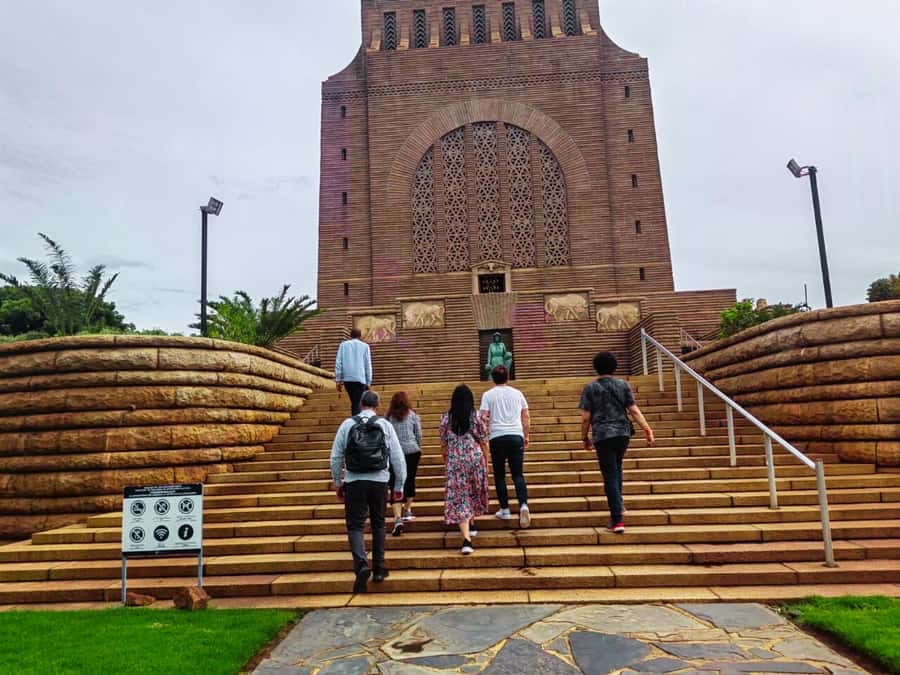
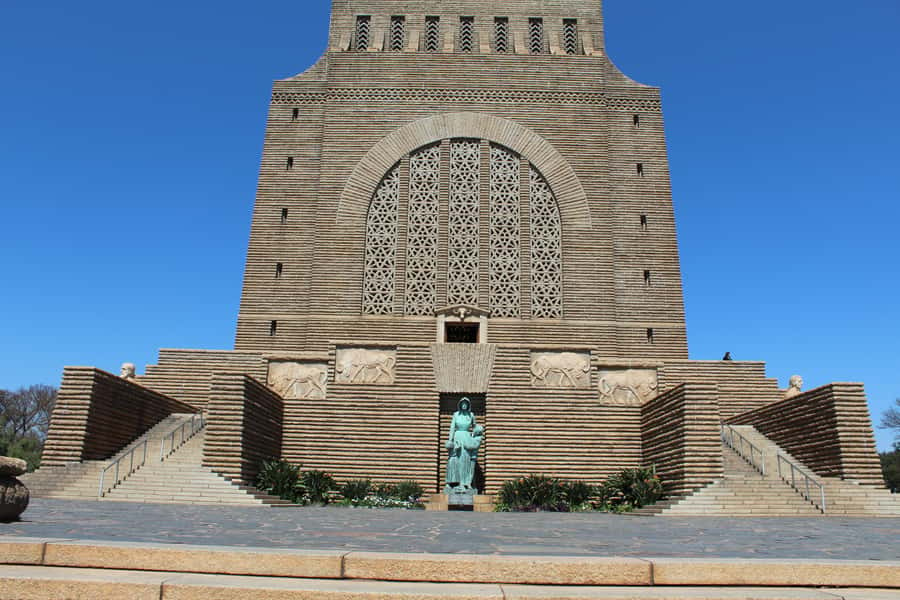
The first major stop is the Voortrekker Monument, with about 50 minutes for a guided visit. The monument presents the story of the Voortrekkers, the Afrikaner settlers who moved inland during the nineteenth century.
The building’s design is not a minor detail. Its scale, carved decoration and memorial style reflect the way Afrikaner identity was shaped and presented. Your guide explains why it was built as it was, which is much more useful than simply taking a picture outside.
This stop can feel politically and emotionally different from the Soweto sites later in the day. That contrast is important. South African history is not one simple narrative, and the tour gives you an early look at how different communities have remembered the country’s past.
The scheduled visit is long enough for a proper introduction, but not for every corner of the site. If monuments and architectural symbolism interest you, you may wish you had extra time here. One earlier itinerary account allowed roughly an hour, which gives you a sense of the pace.
Kruger Museum and central Pretoria
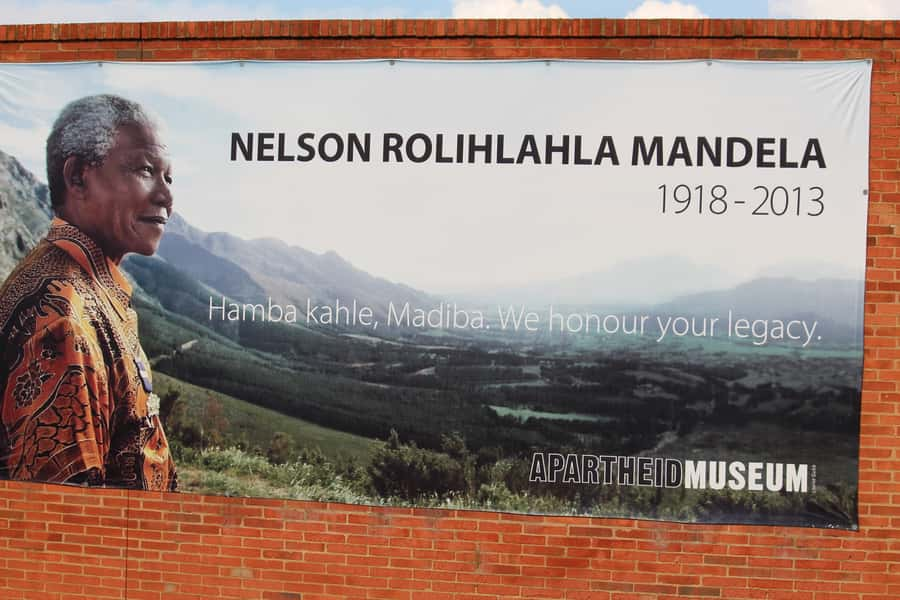
The route continues to the Kruger Museum, where you have about 30 minutes with a guide. This stop adds another angle to Pretoria’s political history and helps place the city’s public monuments in a more personal setting.
After that comes Church Square, with about 10 minutes. This is a short guided look rather than a full visit, so treat it as a quick orientation to central Pretoria. You will get context and a chance to take in the setting, but you should not expect a long exploration of the surrounding buildings.
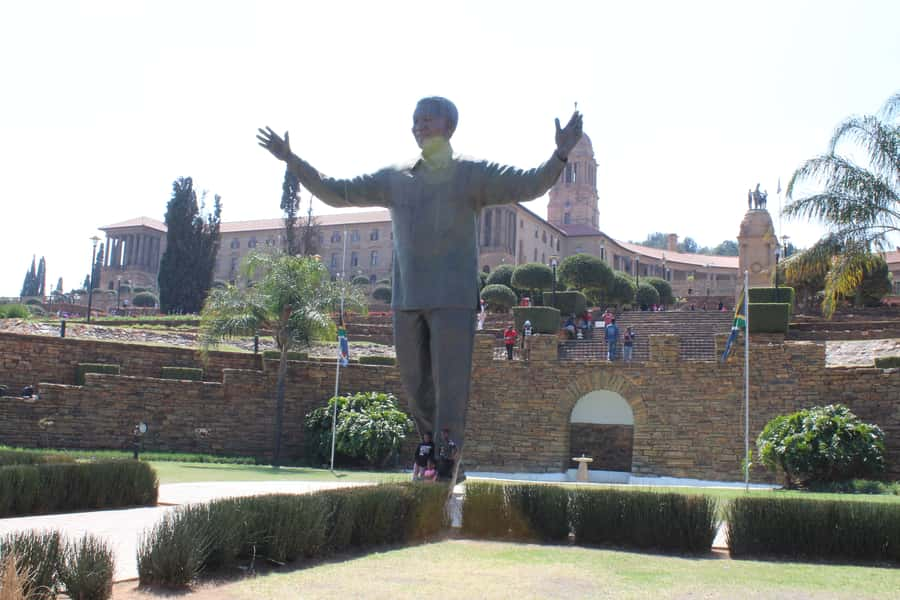
The same is true of the Union Buildings, where the planned guided portion is about 10 minutes. The Union Buildings house the president of South Africa and offer broad views across Pretoria. The main value here is the setting, the government connection and the chance to take photographs.
I like that Pretoria is not reduced to one monument. You see memorial architecture, a historic museum, a civic square and the seat of government. The downside is that the shorter stops can feel like brief introductions rather than complete visits.
More apartheid history tours:
- Full-Day Soweto, Apartheid Museum and Lunch Tour
★ 5.0 · 410 reviews - Soweto: Hop-On Hop-Off Bus, City Tour and Apartheid Museum
★ 4.5 · 250 reviews - Johannesburg: Soweto & Apartheid Museum Half-Day Tour
★ 4.9 · 99 reviews - Soweto & Johannesburg and Apartheid Museum
★ 4.7 · 41 reviews
Hector Pieterson Museum and the 1976 uprising
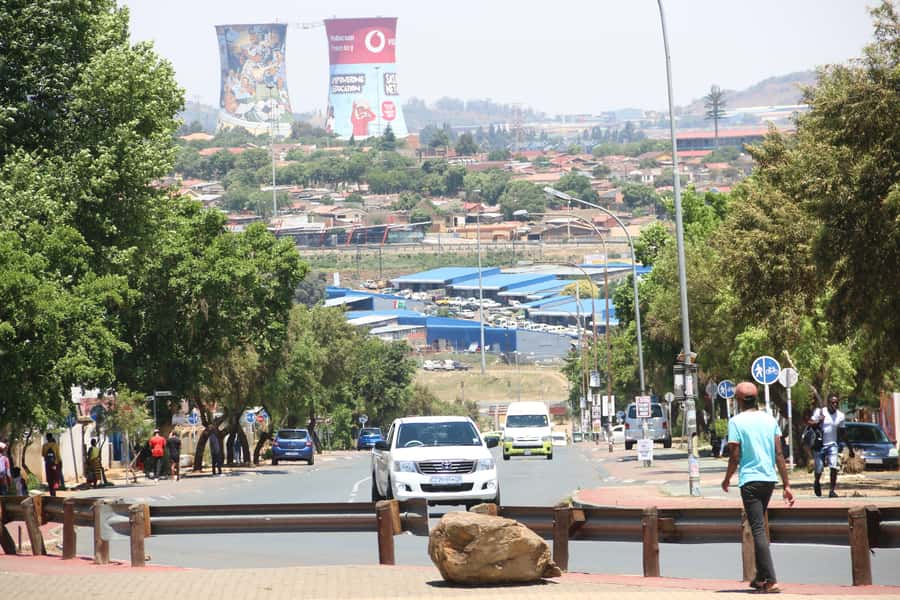
The drive from Pretoria to Soweto takes about 50 minutes. This is where the tone of the day changes.
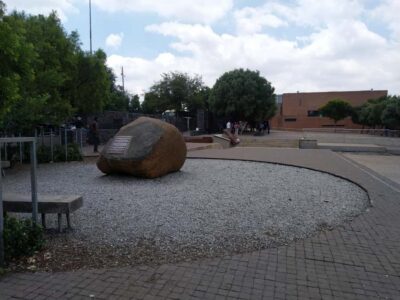
At the Hector Pieterson Museum, you spend about 20 minutes with a guide learning about the 1976 youth uprising. The museum is named for Hector Pieterson, whose death became one of the defining images of the student protests against the apartheid education system.
Twenty minutes is enough for a clear explanation and a focused look, but it is not generous. This is one of the places where I would pay close attention to the guide and use any free time to read the displays yourself.
The stop has special value because it connects national policy with young people and families. The subject is painful, and the tour does not treat it as a decorative history lesson. Expect serious material and give yourself a little quiet time afterward.
Vilakazi Street and Mandela House
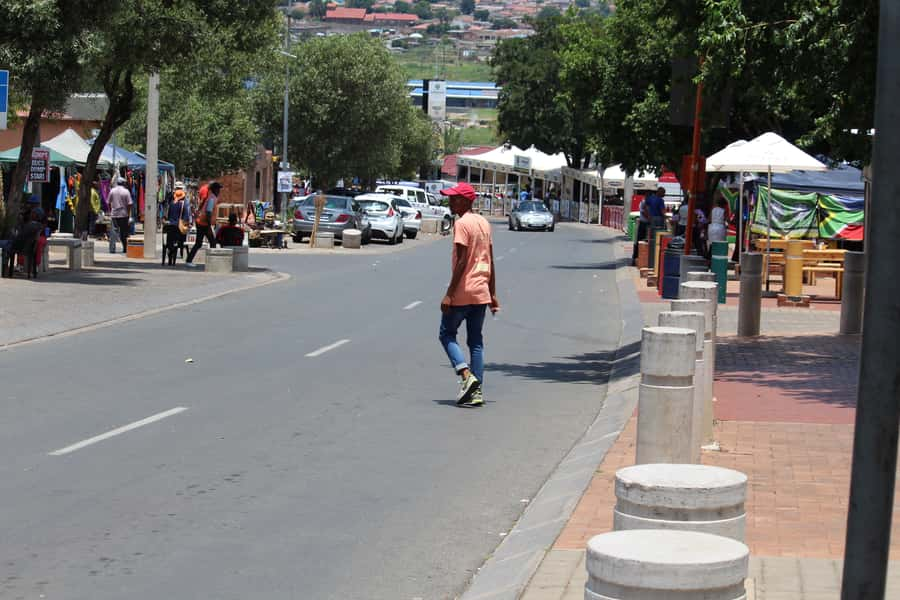
The route then reaches Vilakazi Street in Orlando West, with a short guided stop of about 10 minutes before visiting Mandela House.
Vilakazi Street is closely associated with Nelson Mandela and Archbishop Desmond Tutu, and the tour uses it as a bridge between the wider Soweto community and Mandela’s personal story. The schedule gives you only a brief look at the street, so the house is the main focus.
Mandela House is scheduled for about 40 minutes. The property has been arranged to reflect its original setting from the period after Mandela left prison. That detail makes the visit more personal than a standard monument. Instead of seeing only a statue or formal memorial, you get a sense of the domestic place connected to his life.
This is also a good point to ask your guide questions. The strongest guides on this route have been praised for patience and for shaping their explanations around individual interests. Marvin, Ali, Nic and John are among the guides associated with positive days on this itinerary, though the specific guide depends on the date.
Lunch, Soweto Towers and local context
Lunch takes about 30 minutes at a local restaurant. The meal is not listed as a separate included feature, so check what you order and budget for drinks. Alcoholic drinks are not included.
Half an hour is practical rather than leisurely. You get a chance to eat and reset, but this is not the place for a long, relaxed lunch. If you need a slower meal, the tight schedule may be frustrating.
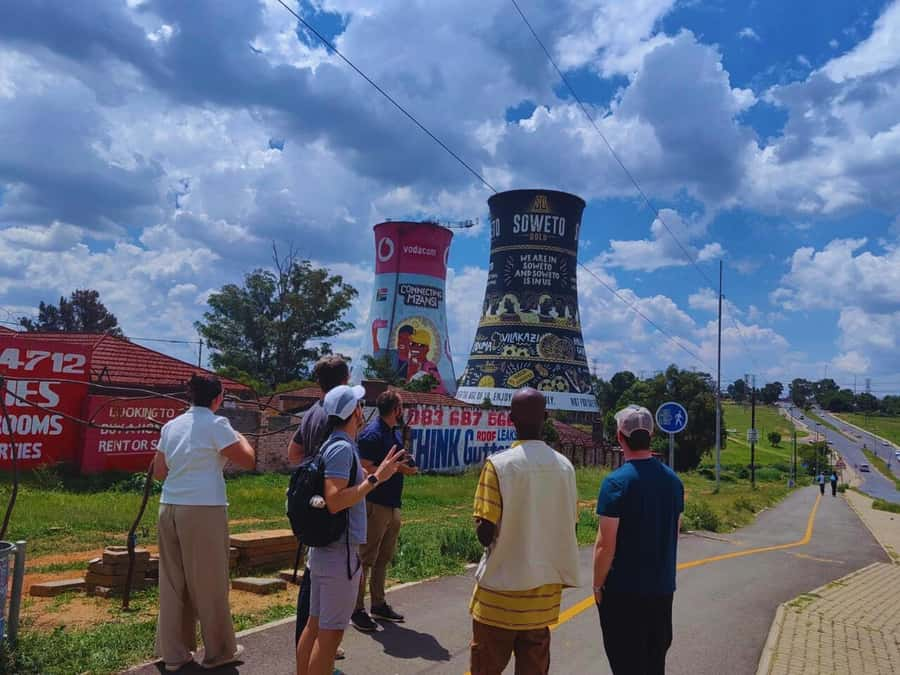
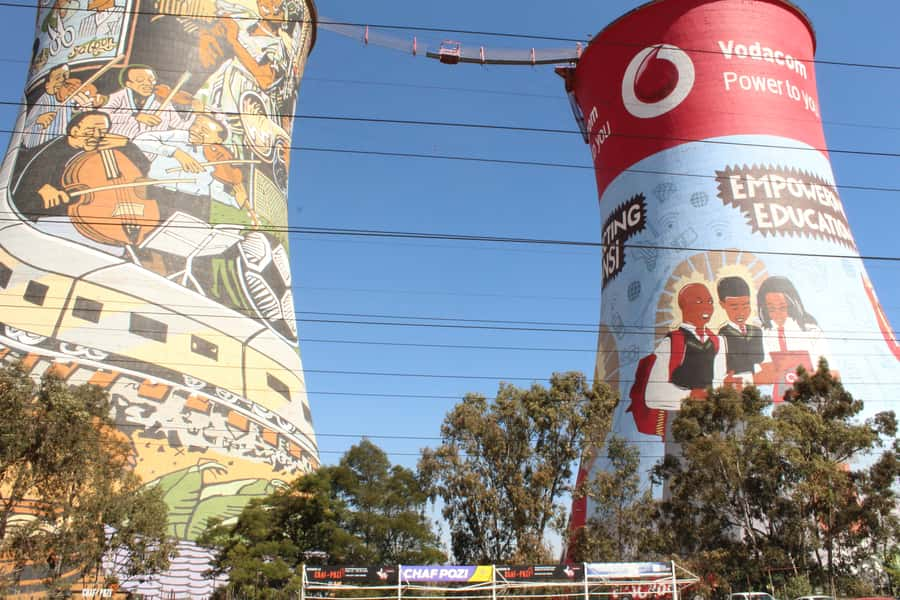
The Soweto Towers follow, with about 10 minutes for a guided look. The towers are a recognizable part of Soweto’s modern identity and provide a contrast to the museums and memorial sites. As with Church Square and the Union Buildings, this is a short stop designed to give you orientation and photographs.
Together, the street visit, lunch and towers help prevent the Soweto portion from becoming only a sequence of apartheid-era sites. You see a place with present-day life as well as difficult memories.
Two hours inside the Apartheid Museum
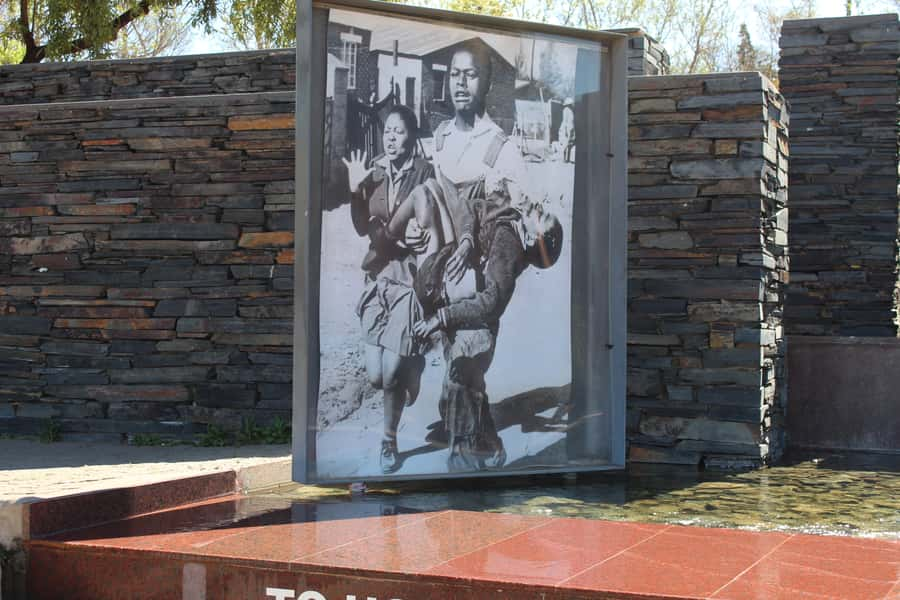
The final major visit is the Apartheid Museum, scheduled for about two hours. This is the longest single stop and the place where the day’s earlier subjects are brought together.
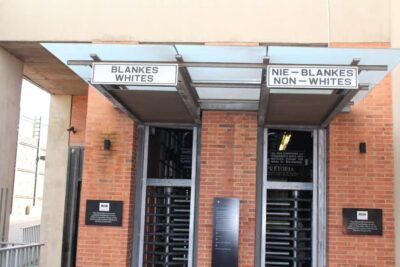
The museum explains apartheid in detail, including the systems, laws and social divisions that shaped daily life. I would treat the visit as the central learning session of the tour, not as a quick final attraction before the drive back.
Two hours gives you enough time to understand the main sequence and read selected displays. It is not enough to absorb every exhibit at a slow pace. One earlier version of this day allowed much less time here, so the current two-hour allocation is a real improvement, but anyone especially interested in twentieth-century South African history may still want to return independently.
The museum can be emotional and sobering. That is part of its value, but it also means you may feel mentally tired by the end. The guide’s earlier explanations help you recognize names, events and themes that might otherwise blur together.
After the museum, the van passes through Johannesburg on the way back to your drop-off point. Return locations include Johannesburg, Sandton, Pretoria and East Rand.
What the $186 price includes
At $186 per person, this is not the cheapest way to see Pretoria and Soweto. The value depends on how much independent planning and transport you would otherwise need.
The price includes the driver, guide, van transport, entrance fees, snacks and bottled water. Those admissions matter because the route includes several paid sites, including the Voortrekker Monument, museums, Mandela House and the Apartheid Museum.
You also pay for the convenience of connecting three areas in one day. Public transport or separate taxis would require more planning, and a private vehicle would likely cost more. The small group limit gives the tour a more personal feel without making it a private excursion.
The price is harder to justify if you already have transport, have visited some of the museums, or prefer to spend half a day in one place. In that case, an individual visit to the Apartheid Museum may give you more time for your money.
Guide quality makes the difference
This route depends heavily on the guide. The best days are not simply about being driven from one site to the next. They depend on clear explanations, good timing and the ability to answer questions without turning the day into a lecture.
Marvin has been praised for detailed historical explanations, careful driving and patience when stopping for photographs. Ali has been described as attentive and kind, explaining the tour from start to finish. Nic has led days with a strong mix of historical detail and friendly conversation, while John has been noted for objective explanations of a complicated past.
The guide may also be able to adjust the experience. One booking was changed because of rain and modified because the visitor had already seen some attractions. Do not assume every request can be accommodated, but it is worth asking the operator early if your schedule or interests require a change.
Who should book this day
I would recommend this tour to a first-time visitor who wants a clear introduction to Gauteng’s history and has only one free day. It is also a good fit if you want hotel pickup, included admissions and a small group rather than managing several separate visits.
History-minded visitors will get the most from it, especially those interested in the relationship between Afrikaner memory, apartheid policy, student protest and Mandela’s life. The guide’s explanations are a major part of the experience, so stay engaged during the drives and short stops.
I would be more cautious if you are pregnant, since the activity is specifically listed as unsuitable for pregnant women. I would also think twice if you dislike a packed schedule, need a long lunch or want to spend an entire afternoon in the Apartheid Museum.
The tour runs for seven hours, uses English, and includes an English audio guide. Free cancellation is available up to 24 hours before departure, and you can reserve now and pay later, which helps if your Gauteng plans are still shifting.
Should you book it?
Book this tour if you want the main historical landmarks of Pretoria, Soweto and Johannesburg connected by one guide and one efficient route. The best reasons are the small group, included entrance fees, hotel pickup options and the strong guide-led context reported with names such as Marvin, Ali, Nic and John.
Do not book it expecting a slow, reflective museum tour. The day moves quickly, several stops last only 10 or 20 minutes, and the Apartheid Museum may leave you wanting more time. For a well-organized first look at South Africa’s recent past, though, the $186 cost is reasonable, especially when you value transport and explanation as much as the sights themselves.
FAQ
How long does the tour last?
The tour lasts seven hours, including transport between Pretoria, Soweto and Johannesburg.
What places are visited?
The route includes the Voortrekker Monument, Kruger Museum, Church Square, Pretoria Union Buildings, Hector Pieterson Museum, Vilakazi Street, Mandela House, Soweto Towers and the Apartheid Museum.
Is hotel pickup included?
Pickup is included from accommodation in Johannesburg or Sandton. The listed pickup areas also include Pretoria and East Rand, so confirm your exact location before booking.
Are entrance fees included?
Yes. Entrance fees, the driver, guide, snacks and bottled water are included. Alcoholic drinks and souvenirs are not included.
What language is the tour conducted in?
The live tour guide and audio guide are in English.
How large is the group?
The tour is described as a small-group experience limited to 15 participants.
Just added around Johannesburg
- Soweto & Johannesburg and Apartheid Museum★ 4.7 · 41 reviews
- Private Soweto,Mandela House,Apartheid Museum,Constitution★ 4.6 · 15 reviews
- Johannesburg: Soweto & Apartheid Museum Half-Day Tour★ 4.9 · 99 reviews
- Soweto and Apartheid Museum Tour★ 4.4 · 38 reviews
- Soweto: Hop-On Hop-Off Bus, City Tour and Apartheid Museum★ 4.5 · 250 reviews
- Private Rhino and Lion Park, Cradle Caves or Maropeng Museum★ 4.6 · 25 reviews
- Half Day Private Soweto and Apartheid Museum tour★ 4.6 · 14 reviews
- Apartheid Museum & Soweto Tour with Hotel Pickup★ 4.8 · 17 reviews
Museum Tours in Johannesburg, compared.
Soweto /Johannesburg and Apartheid Museum Guided Full Day Tour
Read our review →
Jo’berg in 1 Day: Soweto, Apartheid Museum & City Tour
Read our review →
Full-Day Tour with Soweto and Apartheid Museum
Read our review →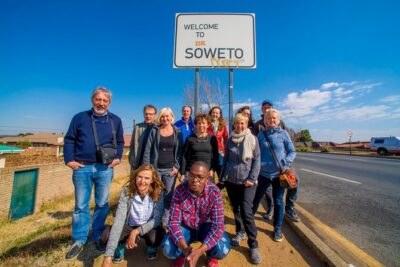
Full-Day Soweto, Apartheid Museum and Lunch Tour
Read our review →
Soweto: Hop-On Hop-Off Bus, City Tour and Apartheid Museum
Read our review →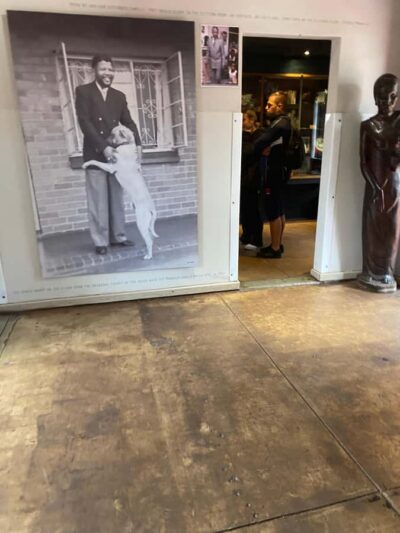
Browse the lists this tour appears in