
Review · JOHANNESBURG
Johannesburg: Full-Day Tour with Soweto and Apartheid Museum
Johannesburg’s past is not tucked away in one museum. It is written into prison walls, city streets, township homes, and memorials. This 10-hour guided tour brings those places together, from Constitution Hill and the old CBD to Soweto and the Apartheid Museum. The day is serious, moving, and packed with useful context.
I like the way the tour joins major sights with living Johannesburg, especially Mandela House and Hector Pieterson Memorial in Soweto. I also like having a guide explain the connections between apartheid, the 1976 uprising, Mandela’s release, and modern South Africa. The main drawback is the pace: you see a lot in one day, but some stops, particularly central Johannesburg and Soweto, can feel brief.
Key points at a glance
- A full history day: Constitution Hill, the old Johannesburg CBD, Soweto, Mandela House, Hector Pieterson Memorial, and the Apartheid Museum fit into one long outing.
- Strong guiding matters: Guides including John, Bob, Advice, Kwanda, and Masese are praised for clear storytelling, patience, and care.
- Soweto is more than a photo stop: You see the Soweto Towers, Mandela’s former home, Tutu House, FNB Stadium, and the memorial to the 1976 uprising.
- Lunch is separate: You stop at a local Soweto restaurant for about an hour, but food and drinks are not included in the $104 price.
- Comfortable transport helps: Hotel pickup, hotel drop-off, and an air-conditioned vehicle make this practical for a first day in Johannesburg.
- Expect an emotional day: The subject is painful at times, and the tour is best for visitors ready to listen, reflect, and ask questions.
Why this tour works as a Johannesburg introduction
Johannesburg can be hard to read from a car window. The city is large, its important places are spread out, and its recent past is tied to streets and neighborhoods that can look ordinary at first glance. This tour gives you a map of the city’s story.
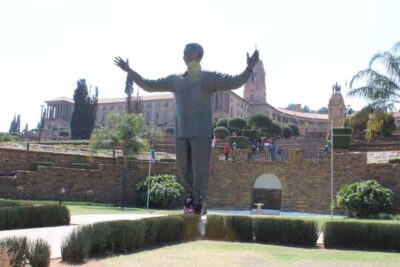
You begin with the structures of power and punishment at Constitution Hill. You then pass through the old CBD, where historic buildings and landmarks show Johannesburg’s growth. Later, Soweto adds the personal side of that history, with homes, memorials, and streets linked to the struggle against apartheid. The Apartheid Museum brings the day together with a sustained presentation of the political system and the people who fought it.
I would choose this tour if I had only one day in Johannesburg and wanted more than a quick city drive. It is not a relaxed sightseeing loop. It is an educational day with considerable time on your feet and a heavy subject. That trade-off is worth understanding before you book.
The $104 price includes hotel pickup and drop-off, transport, a live guide, and entry to the Apartheid Museum and Hector Pieterson Memorial, along with the other listed activities. Since a separate visit to the Apartheid Museum can take a good part of a day, the package offers solid value if you want the main historical sights handled in one route. Lunch and drinks cost extra.
More Museum Tours in Johannesburg
- Soweto /Johannesburg and Apartheid Museum Guided Full Day Tour
★ 5.0 · 932 reviews - Jo’berg in 1 Day: Soweto, Apartheid Museum & City Tour
★ 4.8 · 524 reviews - Full-Day Soweto, Apartheid Museum and Lunch Tour
★ 5.0 · 410 reviews
Constitution Hill: prison walls and a modern court
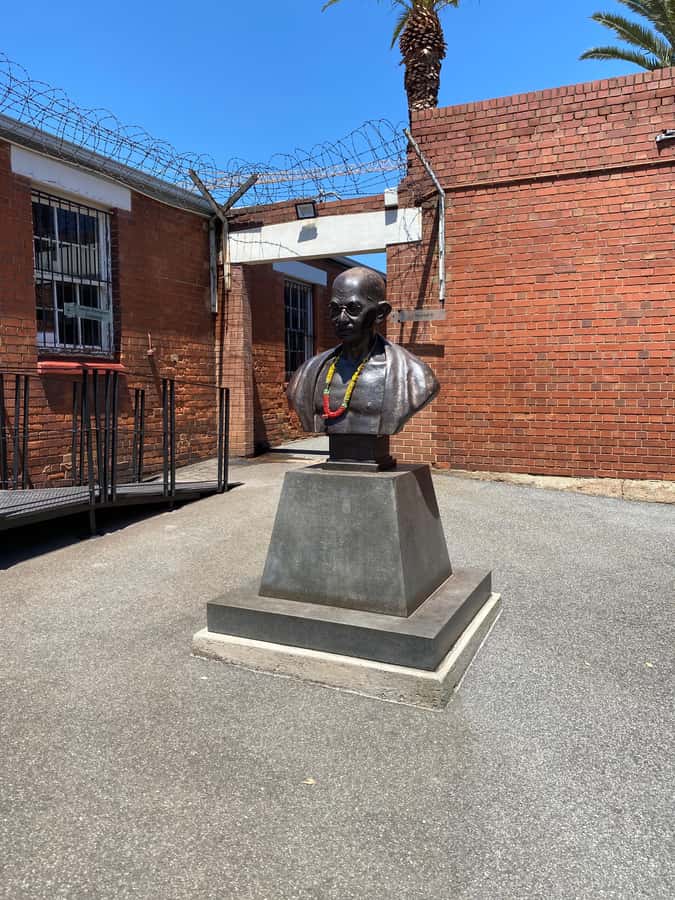
The first major stop is Constitution Hill, where the Old Fort and former prison buildings tell the story of incarceration under earlier South African governments. The site was built under President Paul Kruger and later served as a prison in the early 20th century. Your guide helps place the buildings in the wider story of Johannesburg and the country’s changing political order.
This is not just a quick exterior view. The scheduled visit lasts about an hour and a half, giving you time to walk through the site and hear about its use as a place of confinement. The contrast with the Constitutional Court is the point. One part of the complex represents state punishment, while the modern court represents a democratic South Africa built around human rights.
The Constitutional Court opened on March 21, 2004, South Africa’s Human Rights Day. That detail gives the stop a clear link between the country’s past and its present. I find this pairing more useful than visiting either site alone. You can see how the meaning of law changed, not simply read about it.
This is also one of the places where the guide makes the biggest difference. John, Bob, Advice, and other guides have been praised for explaining difficult material in a way that remains clear and respectful. If you have questions about political prisoners, apartheid law, or the court’s role, this is a good time to ask them.
Old Johannesburg CBD and the city’s changing face
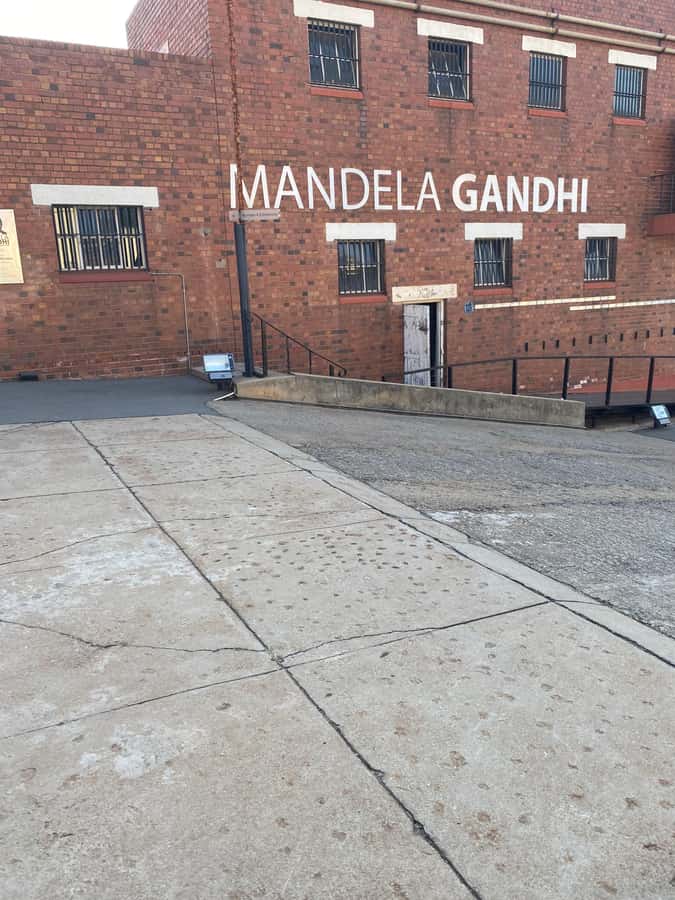
The tour then moves through the old Johannesburg central business district. You see historic buildings and landmarks connected with the city’s growth, including photo stops near Nelson Mandela Bridge, Chancellor House and Newtown, and Gandhi Square.
Do not expect a long walking tour of downtown. The CBD portion includes a visit and sightseeing time, with several short stops of around three to five minutes. That makes it useful for orientation and photographs, but not enough for a detailed architectural tour.
I like this part because it keeps the day from becoming only a museum circuit. Johannesburg’s political story is also an urban story, shaped by mining wealth, migration, segregation, business, and redevelopment. From the vehicle, you get a sense of how the old center fits into the larger city.
The limitation is clear: if you want extended time in central Johannesburg, this itinerary may feel too quick. One visitor specifically wished for a longer walk and more sights in the CBD. Think of this section as context between the major stops, not the main event.
Soweto Towers and a local lunch
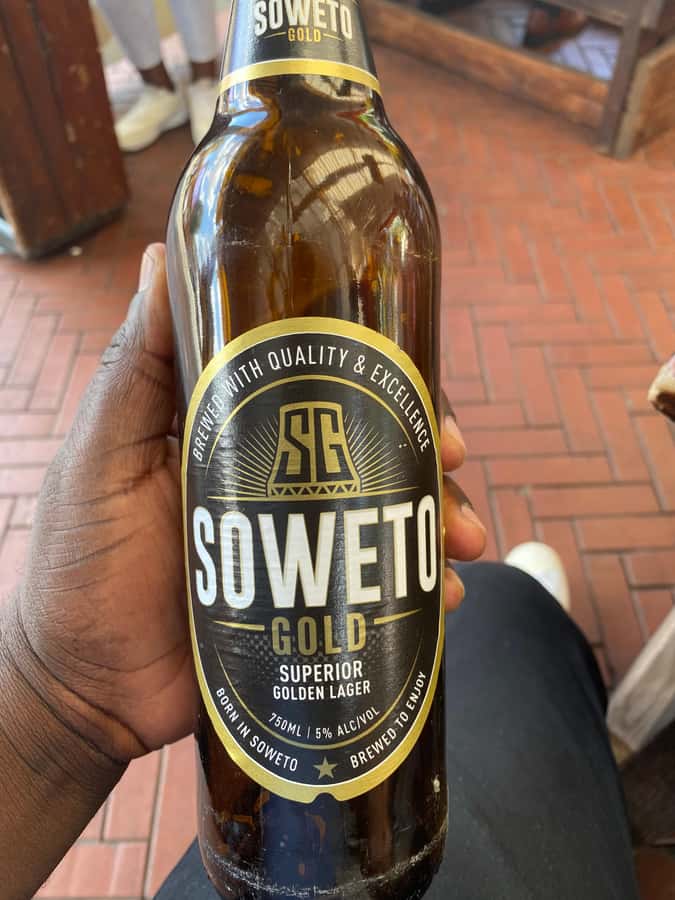
Soweto receives about two hours of guided touring, with a photo stop and free time at the colorful Soweto Towers. The towers are among the area’s most recognizable landmarks, and they provide an easy visual break after the serious material at Constitution Hill.
The route also passes Tutu House, the former home of Archbishop Desmond Tutu, and FNB Stadium. These stops help show that Soweto is not a single attraction. It is a large township with political, cultural, sporting, and everyday importance.
Lunch takes about an hour at a local restaurant. The meal is not included, so bring money for food and drinks. The available information does not promise one fixed menu, but the stop gives you a chance to sample local fare and pause before the afternoon visits.
I see lunch as useful rather than decorative. Ten hours of driving, walking, listening, and reading is tiring, and a proper break improves the rest of the day. At the same time, the lunch stop means less time for additional sightseeing. If you want a slow meal, keep your expectations modest and use the time to recharge.
More apartheid history tours:
- Soweto: Hop-On Hop-Off Bus, City Tour and Apartheid Museum
★ 4.5 · 250 reviews - Johannesburg: Soweto & Apartheid Museum Half-Day Tour
★ 4.9 · 99 reviews - From Johannesburg: Pretoria, Soweto & Apartheid Museum Tour
★ 4.8 · 48 reviews - Soweto & Johannesburg and Apartheid Museum
★ 4.7 · 41 reviews
Mandela House: a personal view of the struggle
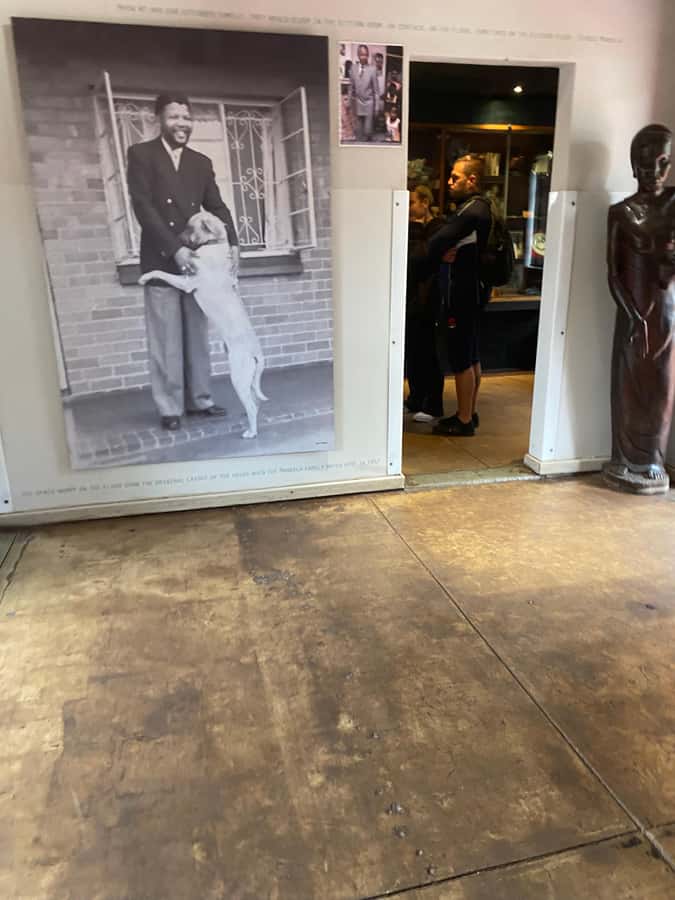
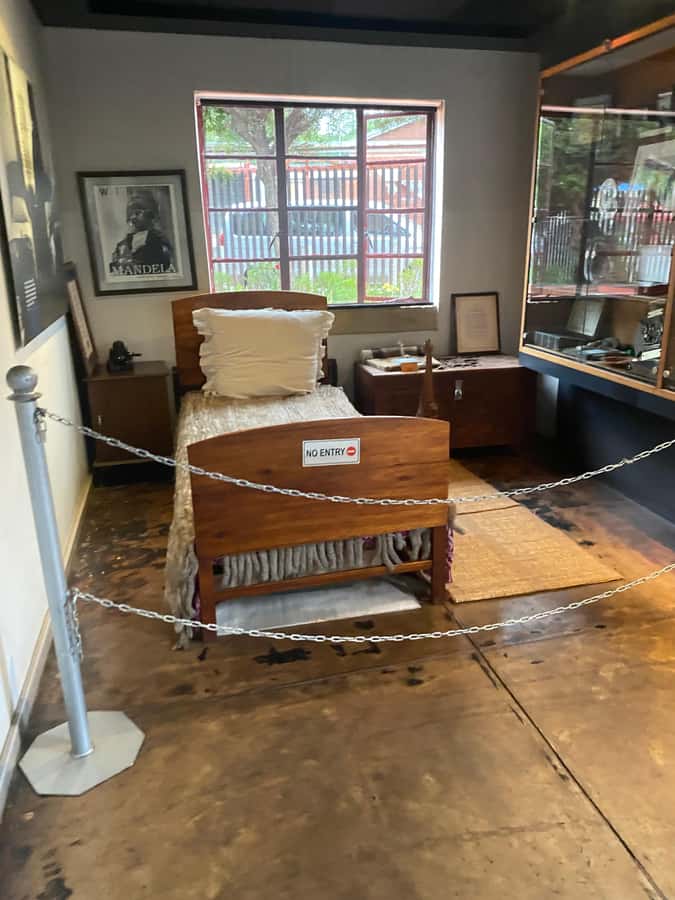
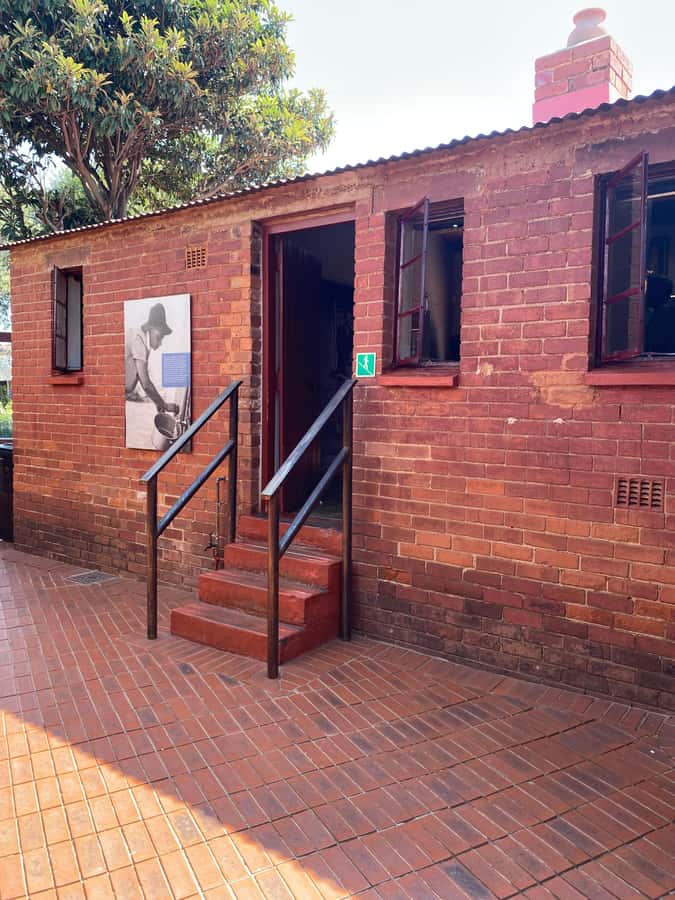
Mandela House is in Vilakazi Street, where Nelson Mandela lived from 1946 to 1962. The visit lasts about 25 minutes and gives the political story a domestic scale. Instead of seeing Mandela only as a president or international symbol, you get a connection to the home where part of his earlier life unfolded.
The short visit works best when your guide supplies the surrounding story. The house is important not only because Mandela lived there, but because Soweto became central to the anti-apartheid movement and to the public memory of that struggle.
You also pass Tutu House, linking Mandela’s story with that of Archbishop Desmond Tutu. The two homes help you understand Vilakazi Street as a place connected with two major South African voices, though the itinerary gives more direct visiting time to Mandela House.
I would not book this tour expecting a long, quiet museum visit at each site. The strength is the sequence: prison, court, city, township, home, memorial, and museum. Each stop adds another angle.
Hector Pieterson Memorial and the 1976 uprising
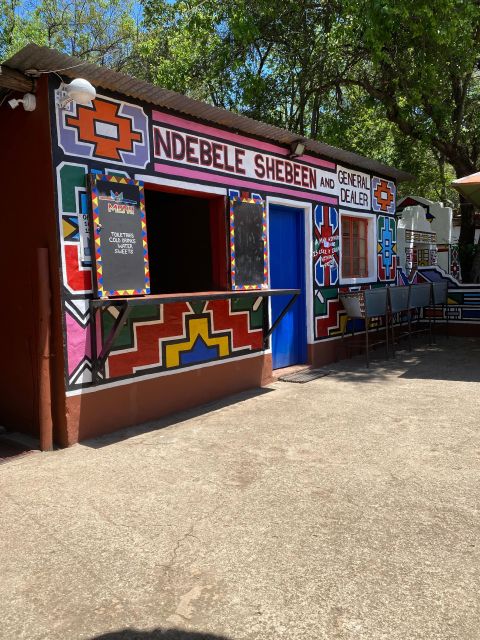
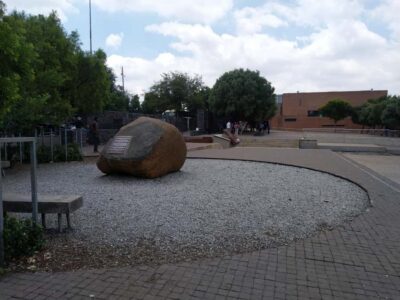
The Hector Pieterson Memorial is one of the day’s most important stops. The memorial and museum preserve the memory of the 1976 Soweto uprisings, when students protested against the apartheid education system and the use of Afrikaans in schools.
Your guided visit lasts about 20 minutes. That is enough for an introduction, but you may wish the schedule allowed longer. The subject deserves care, and the famous photograph associated with Hector Pieterson became one of the defining images of apartheid-era repression.
This is a difficult stop, and the guide’s tone matters. The best guides do not rush past the pain or turn it into a simple tourist story. John, Bob, Advice, Masese, and Kwanda have received repeated praise for being respectful, clear, and willing to answer questions. That human explanation helps you understand why June 16, 1976, remains such a powerful date in South African history.
The memorial also gives Soweto a present-day setting. You are not only looking backward at a textbook event. You are visiting a community where people live, work, and raise families today. Follow your guide’s advice about respectful behavior and photography.
The Apartheid Museum: allow the afternoon to settle in
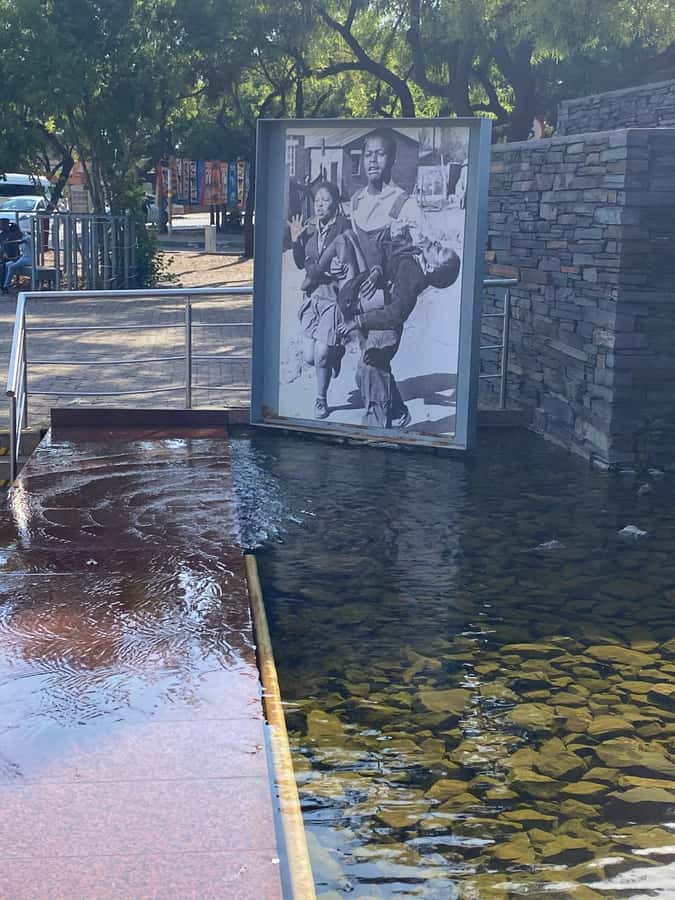
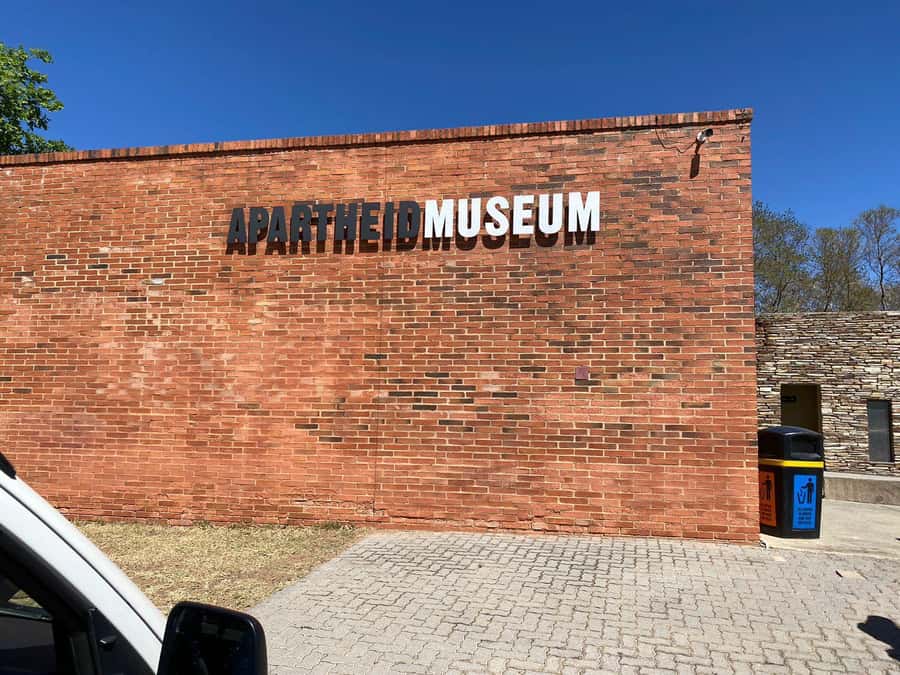
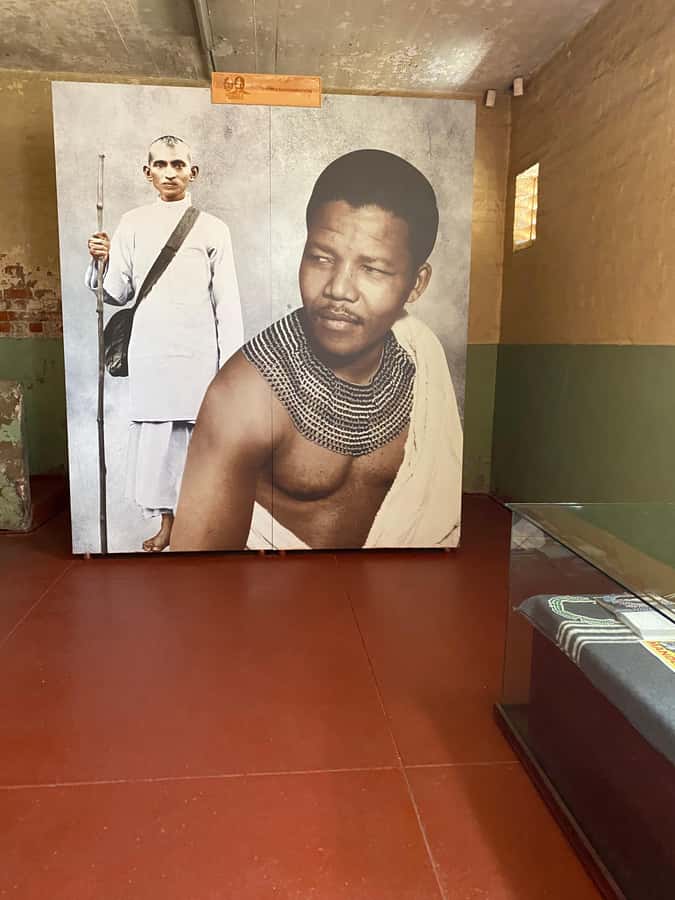
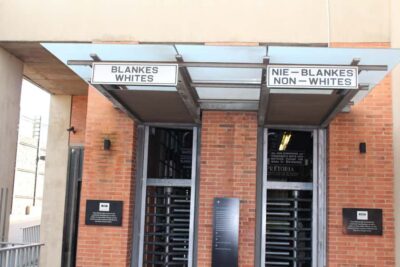
The Apartheid Museum is the main indoor stop and receives about two hours. It traces the rise and fall of apartheid, the machinery of racial segregation, political executions, the 1976 uprising, Mandela’s release from prison, and his election as South Africa’s first Black president.
Two hours is a useful amount of time, but it is not enough to read every panel or absorb every display at length. The museum covers a large and painful subject. You will get more from it if you listen carefully during the earlier stops, then use the museum to place those stories in a wider national framework.
I like the museum at the end of the route because it gives you time to process the day. Constitution Hill shows confinement. Soweto shows the community and people affected by apartheid. The museum then lays out the political system, resistance, violence, and transition in a more organized form.
Some visitors have found the day so full that the museum works best as a final layer rather than a first stop. That makes sense. If the museum came first, later sites might feel repetitive. Here, the earlier places give the exhibits faces and locations.
The museum visit may also be emotionally demanding. You should not expect a light final attraction. It asks you to confront racial classification, forced separation, state violence, and the long path toward democracy.
Guides, vehicles, and the practical rhythm of the day
Pickup is available from hotels and accommodations in areas including Sandton, Rosebank, Melville, Houghton Estate, Eastgate, Parkwood, Melrose, Woodmead, Johannesburg, and near O.R. Tambo. You should wait in the hotel lobby 15 minutes before the scheduled pickup.
The tour ends around 5:00 p.m., followed by hotel drop-off. Traffic can affect the pickup time, and one useful practice is to watch for updates from the operator. The full day is long, so do not schedule a tight evening flight, restaurant booking, or other fixed appointment immediately afterward.
Transport is by air-conditioned vehicle. Several visitors found the vehicle modern, comfortable, and spacious, including one group of five. That matters in Johannesburg, where substantial time is spent moving between sites. Air conditioning is especially welcome during a long day that mixes vehicle time with outdoor stops.
The tour operates in English or French. The guide may be the main reason the experience works. Advice is often praised for engaging storytelling and care, while John is noted for clear explanations and a calm, personable manner. Bob is described as lively and well prepared, and Masese is praised for tying individual stops to present-day Johannesburg. Guides may vary, so do not book on the assumption that you will receive a particular person, but these names give you an idea of the style available.
The tour can suit different ages. One family found that Bob kept the material interesting for adults and people in their 20s. Still, the subject matter is serious, and the amount of walking and sitting may not suit everyone. The activity is listed as unsuitable for pregnant women.
Who should book this Johannesburg day tour?
I would recommend it to you if you are visiting Johannesburg for a short time, want hotel pickup, or prefer a guide to connect the sites. It is especially useful if you are uncertain how to arrange Constitution Hill, Soweto, Mandela House, Hector Pieterson Memorial, and the Apartheid Museum independently.
It also suits anyone who wants history explained in person rather than simply read from exhibit labels. The guides answer questions, adjust explanations for different backgrounds, and help you understand how the sites relate to one another.
I would be more cautious if you prefer slow travel, long museum visits, or extended time in one neighborhood. The CBD stop is brief, the Soweto time is divided among several places, and the Apartheid Museum could easily fill more than two hours on its own.
The emotional weight is another consideration. This is not a cheerful city highlights tour with a little history added. It deals directly with segregation, imprisonment, violence, political executions, and the 1976 uprising. That is precisely why it is valuable, but you should choose it with the right frame of mind.
Should you book it?
For $104, this is a practical and well-filled introduction to Johannesburg’s political history. I like the mix of included transport, major entry fees, a local lunch stop, and guides who are repeatedly praised for clarity, warmth, and care.
Book it if you have one day, want to see Soweto without arranging the logistics yourself, and are ready for a serious subject. Skip it if your priority is leisurely exploring the CBD or spending half a day at one museum. For most first-time visitors with limited time, the route gives you a strong foundation, even if you leave wishing for another day to explore each place properly.
FAQ
How long does the Johannesburg and Soweto tour last?
The tour lasts 10 hours. It ends at about 5:00 p.m., followed by drop-off at your hotel.
What locations offer hotel pickup?
Pickup is available from areas including Sandton, Rosebank, Melville, Houghton Estate, Eastgate, Parkwood, Melrose, Woodmead, Johannesburg, and O.R. Tambo.
Is transportation included?
Yes. Hotel pickup and drop-off are included, along with transportation in an air-conditioned vehicle.
Is lunch included in the price?
No. The tour stops at a local Soweto restaurant for about one hour, but food and drinks are not included.
Which languages are available?
The live tour guide service is available in English and French.
Which museums and historic sites are visited?
The route includes Constitution Hill, the old Johannesburg CBD, Soweto, Mandela House, Hector Pieterson Memorial, and the Apartheid Museum. It also passes sites including Tutu House, FNB Stadium, Nelson Mandela Bridge, Chancellor House, and Gandhi Square.
Are entry tickets included?
Yes. Entry to the Apartheid Museum and Hector Pieterson Memorial is included, along with the listed activity entry tickets.
Is the tour suitable for pregnant women?
No. The activity is listed as unsuitable for pregnant women.
More Full-Day in Johannesburg
- From Dubai: Abu Dhabi Grand Mosque & Louvre Museum Full-Day
★ 4.8 · 6,227 reviews - Full-Day: Colosseum, Vatican Museums & St Peter’s Guided Tour
★ 4.5 · 1,142 reviews - Vatican Museums, Sistine Chapel & 4 Papal Basilicas Full Day Tour
★ 4.5 · 1,068 reviews - Girona and Dali Museum Full Day tour from Barcelona
★ 4.5 · 996 reviews
Just added around Johannesburg
- Soweto & Johannesburg and Apartheid Museum★ 4.7 · 41 reviews
- Private Soweto,Mandela House,Apartheid Museum,Constitution★ 4.6 · 15 reviews
- Johannesburg: Soweto & Apartheid Museum Half-Day Tour★ 4.9 · 99 reviews
- Soweto and Apartheid Museum Tour★ 4.4 · 38 reviews
- Soweto: Hop-On Hop-Off Bus, City Tour and Apartheid Museum★ 4.5 · 250 reviews
- Private Rhino and Lion Park, Cradle Caves or Maropeng Museum★ 4.6 · 25 reviews
- Half Day Private Soweto and Apartheid Museum tour★ 4.6 · 14 reviews
- From Johannesburg: Pretoria, Soweto & Apartheid Museum Tour★ 4.8 · 48 reviews
Museum Tours in Johannesburg, compared.
Soweto /Johannesburg and Apartheid Museum Guided Full Day Tour
Read our review →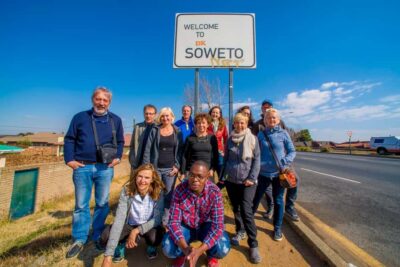
Jo’berg in 1 Day: Soweto, Apartheid Museum & City Tour
Read our review →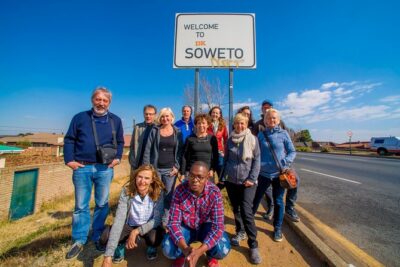
Full-Day Soweto, Apartheid Museum and Lunch Tour
Read our review →
Soweto: Hop-On Hop-Off Bus, City Tour and Apartheid Museum
Read our review →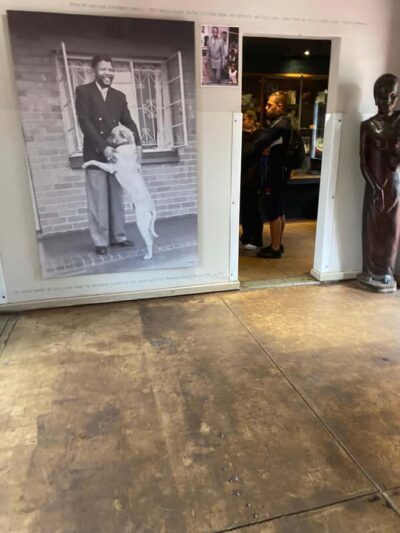
Browse the lists this tour appears in