
Review · SPAIN
Granada: Palacio de los Olvidados and Torture Exhibition
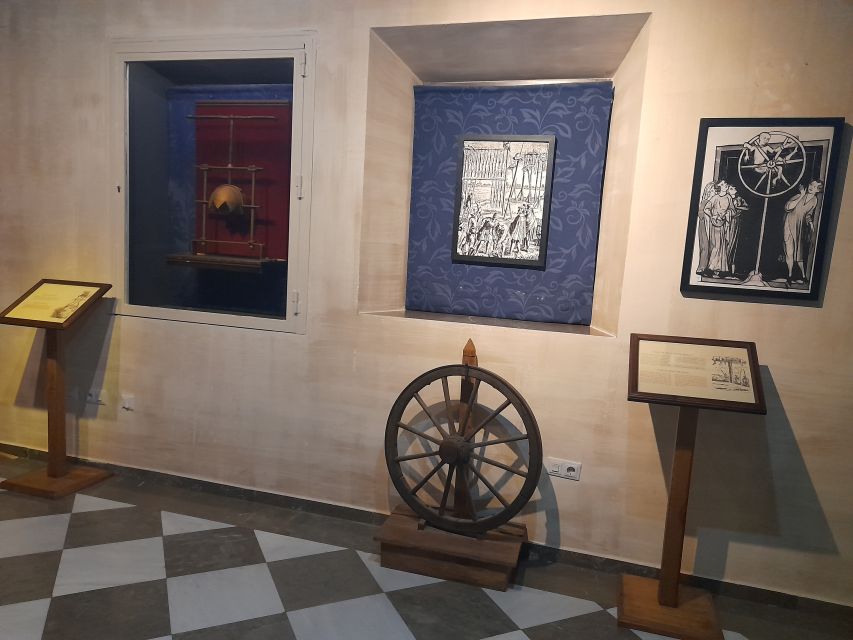
The most striking part of this small museum is its blunt look at more than 70 instruments of torture used by Spanish and European inquisitorial courts. Set in a restored 16th-century palace below the Alhambra, it gives you a dark slice of Spanish history, then sends you upstairs for some of Granada’s finest views.
I like the low price, the three-part layout, and the useful mix of history, flamenco, and scenery. The main drawback is size: you can see the museum in 45 minutes, though careful reading may take closer to an hour. The subject matter is also grim, so this is not a light museum stop.
Key points to know before you go
- More than 70 torture instruments: The second floor focuses on tools used by Spanish and European inquisitorial courts.
- Three floors, three moods: You move from interactive flamenco to grim history, then up to views of the Alhambra and Albaicín.
- A restored 16th-century palace: The building itself adds atmosphere to the visit.
- Small but readable: Most exhibit notes are available in Spanish and English, so you can take your time without needing a guide.
- Excellent value at $8: The admission covers the palace and the exhibitions currently on display.
- Stairs are part of the visit: There is no elevator, and the museum is not suitable for people with mobility impairments.
A small palace below the Alhambra
The Palacio de los Olvidados sits at Cuesta de Santa Inés 6, at the foot of the Alhambra. Its setting matters. You are not entering a modern museum on the edge of town, but a restored 16th-century building in one of Granada’s most atmospheric areas.
The palace is compact, which helps make the visit easy to fit into a day of sightseeing. You can stop in before or after exploring the Alhambra area, the Albaicín, or the narrow streets around the lower hill.
The building does not offer a grand palace circuit with room after room of furnishings. Instead, the restored structure acts as a frame for several focused exhibitions. You get a sense of place without committing half a day to another major attraction.
The museum’s vertical layout is important. There is no elevator, so you should expect stairs between the three floors. If you have difficulty with stairs or need step-free access, this is not a suitable choice.
A few more museum visits around Spain worth comparing
- Madrid: Prado Museum Entry Ticket
★ 4.6 · 20,699 reviews - Barcelona: FC Barcelona Museum “Barça Immersive Tour” Ticket
★ 4.4 · 10,944 reviews - Madrid: Reina Sofía Museum Entrance Ticket
★ 4.5 · 8,788 reviews
Floor one: flamenco before the darker history
The first floor houses Interactive Flamenco, an exhibition designed around the sensations and structure of flamenco. It introduces the music’s past and present, its compases, its cantes, voice types, and dance forms.
That makes this more than a simple collection of photographs or costumes. You are given an introduction to how flamenco is organized and expressed. The subject can seem mysterious when you first hear the terms, so this section may help you understand what to listen and look for during a flamenco show elsewhere in Granada.
The exhibition also gives the museum a useful change of pace. You begin with music, rhythm, voice, and movement before entering the second floor’s much heavier subject. I like that contrast. It prevents the visit from feeling like a single-note display of grim objects.
The available information does not describe a scheduled performance or live flamenco class, so you should treat this as an exhibition rather than a full show. Its purpose is to explain and recreate aspects of flamenco, not replace an evening performance.
If you have limited time, you may be tempted to hurry through this floor because the torture collection is the main draw. I would not skip it. The flamenco section gives the palace a broader connection to Andalusian culture and helps make the visit feel less narrowly focused.
Floor two: the Inquisition collection
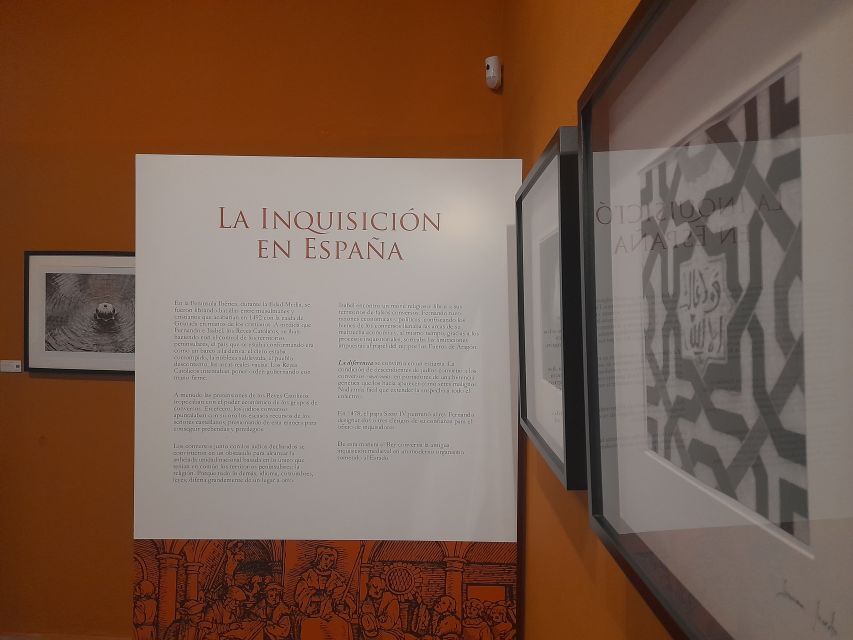
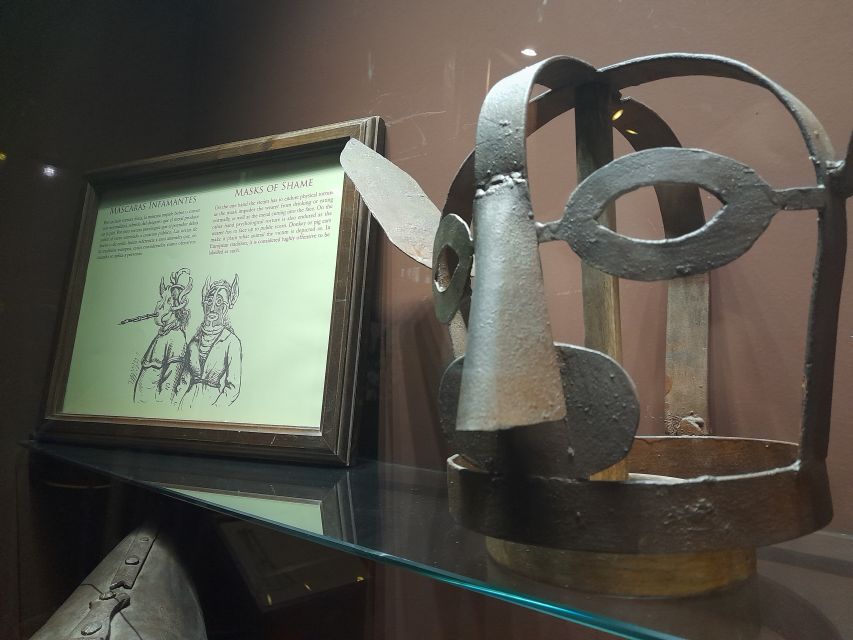
The second floor contains the museum’s central attraction, an exhibition on the Inquisition and ancient instruments of torture. More than 70 objects are displayed, tied to the methods used by Spanish and European inquisitorial courts.
The collection is not presented as a cheerful curiosity cabinet. These instruments are difficult to look at because they represent punishment, fear, and the abuse of power. That is also why the display can be worthwhile. It gives physical form to a part of Europe’s legal and religious past that is often reduced to a few textbook paragraphs.
The museum connects the objects to Spain’s complex history. You are not simply looking at unusual metal or wooden devices. The point is to consider how courts used punishment and intimidation, and how institutions could turn violence into a formal process.
Most of the descriptions are in both Spanish and English. That is a major practical help, especially because the collection depends on context. Without labels, many of the objects would be hard to understand beyond their disturbing appearance.
You should allow enough time to read. A quick walk through the rooms may take around 45 minutes, but careful reading can stretch the visit to about an hour. At $8, that is still a reasonable price for a short museum stop, especially if you want something different from Granada’s better-known monuments.
The presentation may feel thin if you want a long guided explanation for every object. One Spanish-language assessment described the collection as interesting but lacking much explanation. That is the clearest limitation to keep in mind. The objects are the focus, while the amount of interpretation may vary from piece to piece.
This is also a place where your mood matters. If you enjoy unusual historical collections, you may find the subject compelling. If you dislike displays of suffering, the exhibition could feel unpleasant rather than educational. It is perfectly reasonable to visit for the palace, flamenco section, and views, then spend less time on the torture collection.
Floor three: Alhambra and Albaicín views
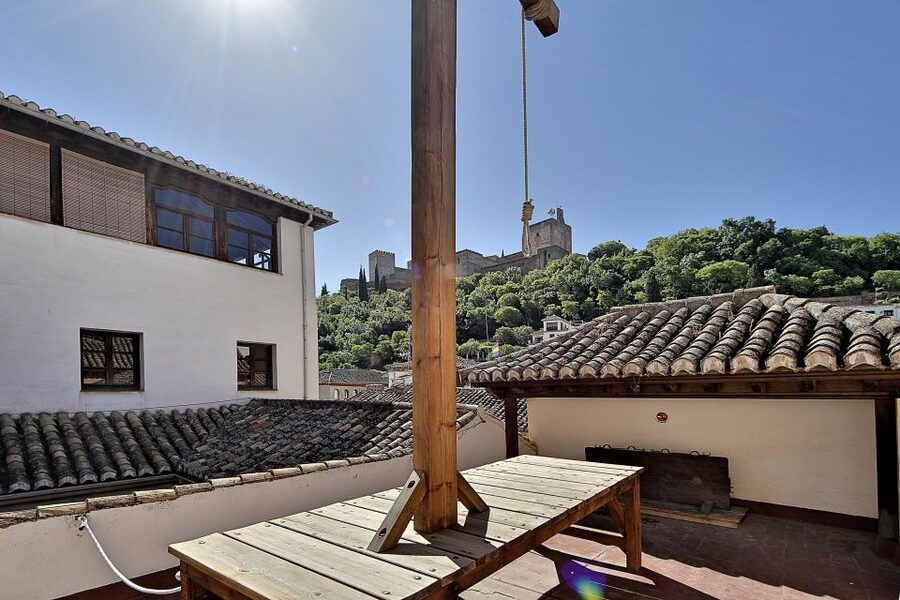
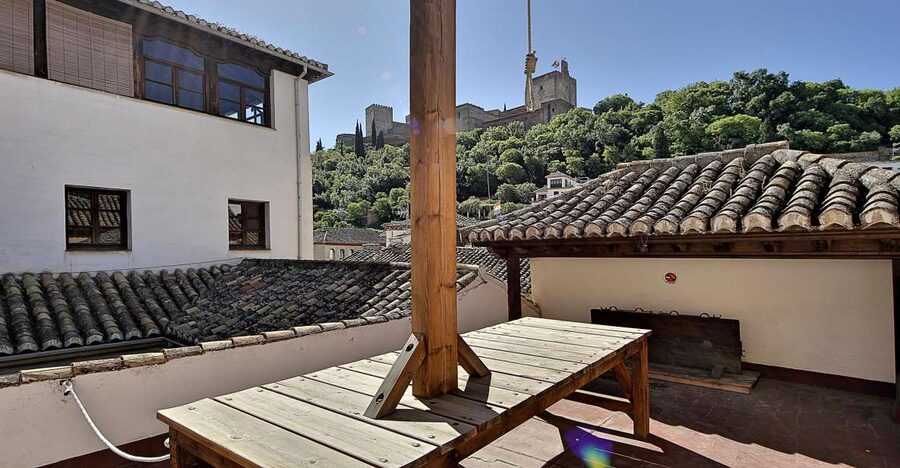
The third floor opens onto panoramic views of the Alhambra and the Albaicín. After the enclosed rooms below, this is a welcome change and one of the best reasons to finish the visit rather than leave after the main exhibition.
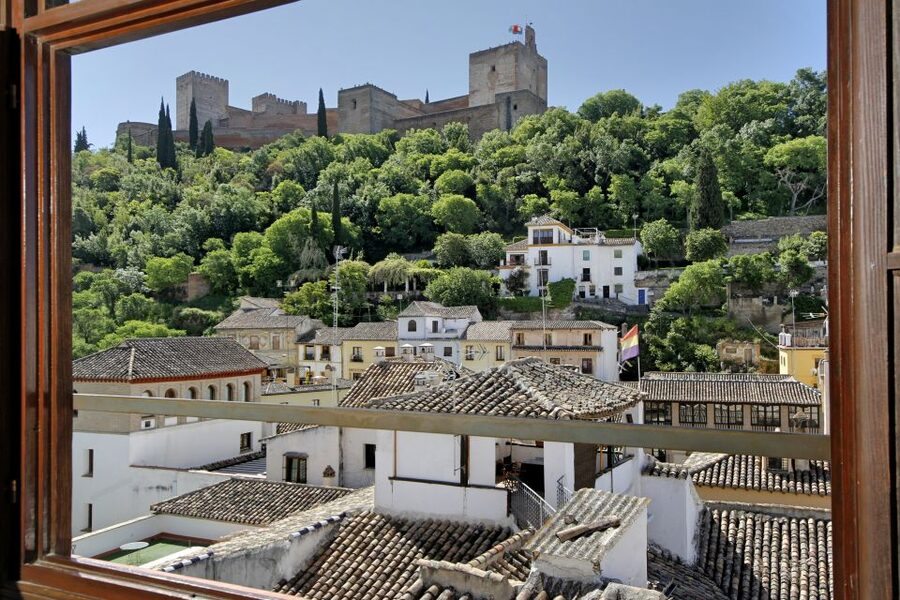
The view gives you a clearer sense of Granada’s setting. You can look across toward the Alhambra and over the Albaicín, the historic hillside district opposite it. The attraction does not promise a full sightseeing terrace with extensive facilities, so think of this as a viewing point attached to the museum, not a replacement for the Alhambra’s own viewpoints.
I like the way this final floor changes the tone of the visit. You begin with flamenco, move through a difficult chapter of European history, and end outdoors with Granada spread before you. That sequence makes the $8 admission feel more useful than the price alone suggests.
The views are also a practical bonus if you are already exploring the area. You get a pause from the narrow streets and a chance to orient yourself. If the Alhambra is on your schedule, the view can help you appreciate its position above the city before or after your main visit.
Same city, a completely different collection:
- Barcelona: Park Güell and Gaudí House Museum Entry Ticket
★ 4.5 · 6,326 reviews - Seville: Puro Flamenco Show with Optional Museum Ticket
★ 4.8 · 6,088 reviews - Barcelona: Picasso Museum Skip-the-Line Guided Tour
★ 4.5 · 3,355 reviews - Moco Museum Barcelona: Modern & Contemporary Art
★ 4.6 · 3,229 reviews
What 45 minutes really means
The advertised duration is 45 minutes, and that is a sensible estimate for a normal visit. The museum is not huge, so you will not need to protect a large part of your day.
Still, timing depends on your habits. If you move quickly and read only a few labels, 45 minutes should be enough. If you stop for the bilingual notes, spend time with the flamenco material, and linger over the view, plan closer to an hour.
That short length makes the museum easy to pair with another activity. You could visit before a meal, while walking through the lower Alhambra area, or as a compact cultural stop between larger Granada sights.
Do not book it expecting a full-day historical program. Its strength is focus. You get three distinct elements in a small space, but none is presented as an exhaustive study.
Is $8 good value?
At $8 per person, the admission is inexpensive by Granada sightseeing standards. The price covers the Palacio de los Olvidados and the exhibitions currently on display, including Interactive Flamenco and the Inquisition collection.
The value is strongest if you appreciate unusual museums and are already near the palace. You receive a restored historic building, a collection of more than 70 instruments, a flamenco exhibition, and Alhambra views without a large time commitment.
The value is weaker if you want a detailed guided lecture or a large museum with extensive historical interpretation. The collection is compact, and the information may not satisfy someone looking for a full academic treatment of the Inquisition.
I would also judge the price by your interest in the subject. At $8, the museum does not need to fill half a day to feel worthwhile. If the torture exhibition sounds intriguing and you want a break from Granada’s major monuments, it is a modest-cost addition. If you are uneasy about the topic, the price alone is not a reason to force yourself through it.
Language, guidance, and reading the displays
The exhibit descriptions are available in Spanish and English for most of the torture instruments. That lets you understand the basic purpose and context of what you are seeing without relying on a translation app.
The supplied information does not identify individual guides, so you should not expect a named guide-led experience. It is best approached as a self-guided museum visit unless your booking specifically includes a guided option.
A guided tour with a student discount requires at least five participants. That detail matters if you are counting on that format or discount. Confirm the arrangement when booking rather than assuming a guided tour will run for a smaller group.
Because the museum is small, labels matter more than usual. Take your time with them. The difference between a quick glance and a thoughtful visit is likely to be the amount of context you take from the displays.
Who will enjoy this museum most
I would recommend the palace to several kinds of visitors:
- You want a short, inexpensive museum near the Alhambra.
- You enjoy unusual historical collections and can handle disturbing subject matter.
- You are curious about flamenco beyond watching a performance.
- You want a viewpoint over the Alhambra and Albaicín.
- You prefer a self-guided stop with information in Spanish and English.
- You have already seen Granada’s major monuments and want a different angle on the city.
Families should use their judgment. The subject is mature and may be upsetting for children, though the provided information does not set a specific age limit. If you are traveling with young children, decide in advance how much of the torture exhibition you want them to see.
The palace is not suitable for people with mobility impairments because there is no elevator. The stairs affect access to the exhibitions and the top-floor viewpoint, so check your needs carefully before booking.
How to fit it into a Granada day
The museum works best as a short stop rather than the main event. Its location makes it practical to combine with other time in the Alhambra and Albaicín area, though the information provided does not specify walking times or transport arrangements.
You can plan it around a 45-minute window, then allow extra time if you want to read the labels. The top-floor view gives you a natural stopping point, so you do not need to rush out after the final display.
I would avoid treating it as a substitute for the Alhambra itself. The palace offers a view toward that famous complex, not admission to it. The two experiences serve different purposes: one is a short museum visit, while the other is a major historic site that needs its own planning.
Free cancellation up to 24 hours before the start also gives you some flexibility, and you can reserve now and pay later. Those terms are useful if your Granada schedule is still changing, though the museum’s small size means you should still check available starting times before you build the day around it.
My recommendation
Book the Palacio de los Olvidados if you want an affordable, unusual stop with three distinct elements: flamenco, Inquisition-era instruments, and Alhambra views. The price is fair, the visit is short, and the bilingual labels make it accessible to many international visitors.
Skip it if you need step-free access, dislike displays of torture, or want a long guided account of Spanish history. For everyone else, this is a useful 45-minute addition to a Granada itinerary, especially when you are already near the Alhambra and want something beyond the standard sightseeing route.
FAQ
Where is the Palacio de los Olvidados?
It is at Cuesta de Santa Inés 6, 18010 Granada, Spain, at the foot of the Alhambra Palace.
How long does the visit take?
The stated duration is 45 minutes. If you read the exhibit notes carefully, you may spend around an hour inside.
What does the admission include?
Admission includes a visit to the Palacio de los Olvidados and the exhibitions currently on display, including Interactive Flamenco and the Inquisition and ancient torture instruments exhibition.
How many torture instruments are displayed?
The museum displays more than 70 instruments associated with Spanish and European inquisitorial courts.
Are the exhibits available in English?
Most descriptions of the torture exhibits are provided in both Spanish and English.
Is there an elevator?
No. The museum has no elevator, and it is not suitable for people with mobility impairments.
Can I cancel my booking?
You can cancel up to 24 hours in advance for a full refund. You can also reserve now and pay later.
Just added around Spain
- Girona, Figueres, Dalí Museum and Cadaqués Tour from Barcelona★ 4.5 · 36 reviews
- Football Club Barcelona Museum Immersive Tour Guided Visit★ 3.5 · 52 reviews
- Erotic Museum Admission Ticket with Audioguide★ 5.0 · 527 reviews
- Dali Museum and Costa Brava Small Group Day Trip from Barcelona★ 5.0 · 77 reviews
- Guitar Legends Hall: Entrance to the Immersive Rock Museum★ 5.0 · 25 reviews
- White Rabbit Museum: The Best Immersive Experience in Catalonia★ 5.0 · 538 reviews
- Madrid by High-Speed Train with Prado Museum Private Tour★ 4.0 · 33 reviews
- Private Dali Museum, Besalú & Girona Tour from Barcelona★ 5.0 · 15 reviews
Museum Tours in Spain, compared.
Park Güell and Gaudí House Museum Entry Ticket
Read our review →
Puro Flamenco Show with Optional Museum Ticket
Read our review →
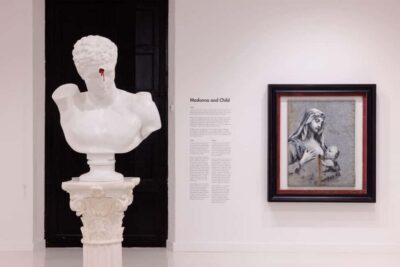
Moco Museum Barcelona: Modern & Contemporary Art
Read our review →
Girona & Dali Museum Small Group Tour with Pick-up from Barcelona
Read our review →
Valencia: Oceanogràfic, Hemisfèric & Science Museum Combo
Read our review →Browse the lists this tour appears in