
Review · THE NETHERLANDS
The Hague: Panorama Mesdag Museum Entry Ticket
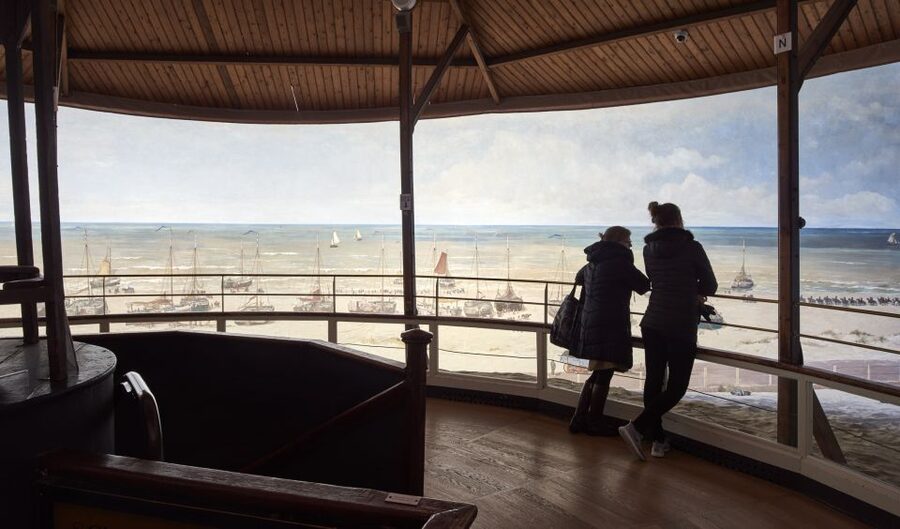
The main attraction here is not a painting you look at from across a room. You stand inside it. Panorama Mesdag wraps the sea, dunes, beach, fishing village, and growing city of The Hague around you in one enormous circular canvas, creating the curious feeling of looking out from a high point over Scheveningen in 1881.
I like two things right away: the changing light makes the view feel different from moment to moment, and the painting gives you more than a pretty seaside scene. It shows a working fishing village, the first signs of fashionable beach life, and the city pressing toward the coast. The only drawback is that the visit is fairly short, usually about one hour, so you need to pay attention if you want time for the panorama, permanent collection, and temporary exhibition.
Key points to know before you go
- The canvas surrounds you: You view Mesdag’s scene from an observation deck at the center of the circular painting.
- Scheveningen appears as it looked in 1881: See fishing boats, dunes, the sea, beach life, and the edge of The Hague before modern development.
- The light keeps changing: Natural light affects the illusion, so the scene can look different during your visit.
- Your ticket covers more than the panorama: You can also see the permanent collection and a temporary exhibition.
- An audio guide is included: Commentary is available in Dutch, English, German, French, and Spanish.
- Allow about an hour: Bring headphones, and note that the museum is not suitable for people with mobility impairments.
Entering Mesdag’s circular seascape
Panorama Mesdag is built around a simple but powerful trick. Instead of placing a painting on one flat wall, the museum surrounds you with a huge circular canvas. From the central observation deck, you look around in every direction and see Scheveningen as an unbroken view.
The effect works because the painting is not presented as an ordinary framed artwork. You are placed inside the scene, with the canvas stretching around you and the viewing platform helping hide the edges. The painted beach, sand, dunes, sea, and village seem to continue beyond the room.
I would give yourself a moment before reaching for the audio guide. Look around slowly first. The best part of this experience is not one famous detail. It is the gradual shift in your sense of place as you connect one section of the view to the next.
This is also why the museum suits people who do not usually spend long in art museums. The basic idea is easy to grasp within seconds, but the scene rewards a slower look. You can study the arrangement of the village, watch how the beach is being used, and notice the contrast between the open coast and the approaching city.
A few more museum visits around the Netherlands worth comparing
- Amsterdam: Van Gogh Museum Ticket
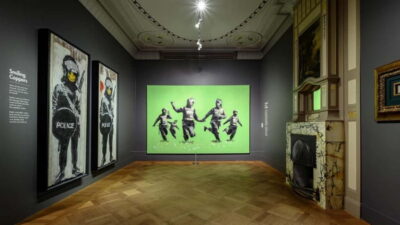
★ 4.7 · 52,054 reviews - Moco Museum Amsterdam Entrance Tickets with Banksy & More
★ 4.4 · 10,088 reviews - Amsterdam: The Upside Down Museum Entrance Ticket
★ 4.4 · 9,506 reviews
Scheveningen before the modern resort
The panorama presents Scheveningen in 1881, when it was still closely tied to fishing. You see an old coastal village rather than the fully developed seaside destination many people picture today.
That date matters. Mesdag’s work captures a place in transition. Fishing boats and the sea remain central, while beach life is beginning to draw a more fashionable crowd. The Hague is also expanding toward the coast, giving the panorama a second story beyond its artistic illusion: it records a village and shoreline at a turning point.
I like this combination of art and social detail. You are not simply admiring a painted sunset or a dramatic ocean. You are looking at how people worked, relaxed, traveled, and built their lives along the shore in the late nineteenth century.
The painting also gives you a sense of distance and openness. The sea occupies much of the view, while the dunes form a natural band between the water and the settlement. The result is peaceful in one direction and quietly urban in another.
Do not expect a modern travel photograph. Mesdag’s view is an artistic interpretation, and its power comes from the way he and his team shaped the entire scene around your viewpoint. It is meant to be experienced as a place, not judged as a perfectly neutral record.
The observation deck and the optical illusion
The observation deck is the heart of the visit. From here, you can turn 360 degrees and examine the painting as one complete panorama. The viewpoint is carefully chosen to make the boundaries between the real viewing area and the painted world less obvious.
The museum explains how the illusion works, which adds useful context. Once you understand the basic method, you can look for the visual decisions that make the scene convincing. Distance, light, painted terrain, and the placement of objects all help your eye accept the canvas as a far-reaching coastal view.
I recommend making two circuits. On the first, simply take in the whole scene. On the second, use the audio guide and stop at details that interest you. This approach keeps the commentary from distracting you before you have formed your own impression.
Light is one of the most interesting parts of the experience. The incidence of light changes from moment to moment, so the atmosphere of the view may shift while you are there. This is not a special timed effect that you need to catch. It is a natural change that gives the painting a slightly different mood as you watch.
That changing light helps explain why the panorama remains more than a technical curiosity. A static image can feel surprisingly alive when the illumination changes across its surface and the surrounding room keeps your attention inside the scene.
What the audio guide adds
An audio guide is included with admission. You can listen in Dutch, English, German, French, or Spanish. Bring your own headphones, since they are specifically listed among the items to bring.
The guide is useful if you want help identifying the museum’s main features and understanding the optical illusion. It also gives structure to a visit that could otherwise be very brief. You can move from first impression to closer observation without needing to read every label on your own.
I would not treat the audio guide as compulsory. If you are visiting with young children, have limited time, or mainly want to enjoy the visual effect, you may prefer to listen only to selected sections. If you care about how panorama painting works, the commentary will make the visit more rewarding.
Because the museum does not provide a named guide for this activity, the audio guide is the main source of interpretation. That is a benefit for independent visitors, but it also means you should arrive ready to manage your own pace.
Same city, a completely different collection:
- Amsterdam: Red Light Secrets Museum Entry Ticket
★ 4.2 · 5,722 reviews - Amsterdam’s Weirdest Museum: Ripley’s Believe It or Not!
★ 4.5 · 4,920 reviews - Amsterdam: Van Gogh Museum Ticket and City Canal Cruise
★ 4.6 · 3,899 reviews - Amsterdam: Rembrandt House Museum Entrance Ticket
★ 4.7 · 3,385 reviews
Beyond the main panorama
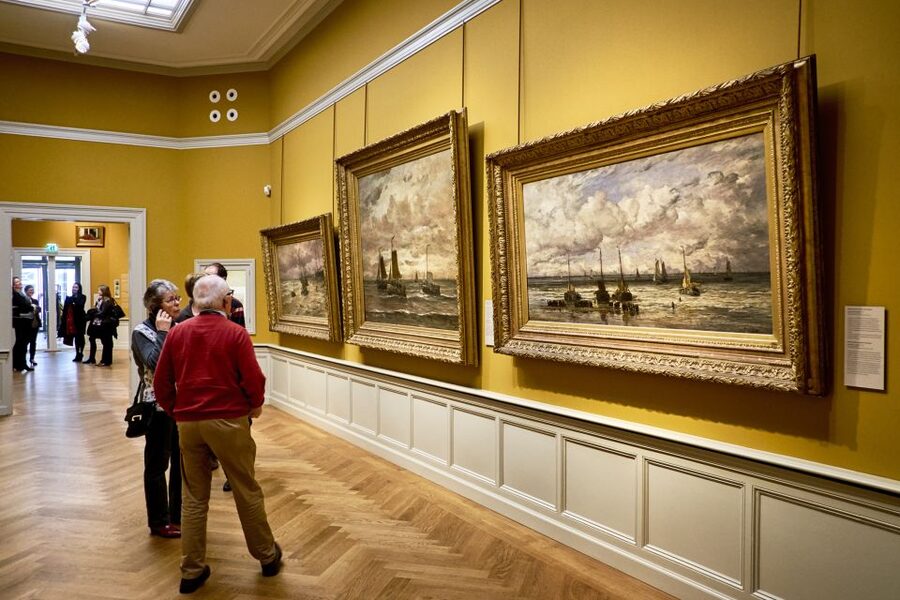
Your ticket includes the permanent collection as well as the temporary exhibition. These sections give you a reason to spend time beyond the central spectacle.
The panorama is the clear focus, but the additional displays help place Mesdag’s work in a wider artistic setting. You can shift from the large-scale illusion to smaller works and then see what the temporary exhibition adds to the museum’s program.
The exact temporary exhibition can change, so it is best to treat that section as an added benefit rather than the main reason to buy this particular ticket. The panorama itself is the part that gives the visit its identity.
If you are working with the one-hour estimate, divide your time with some care. Give the circular canvas enough attention to appreciate its scale, then leave time for the permanent collection and temporary display. You can move quickly through the extra rooms if the panorama is your priority, or use them to make the visit feel more like a small art museum stop.
Why the experience feels personal
The most moving quality of the panorama is its affection for Scheveningen. Mesdag and his wife clearly cared about the village and the coast, and that feeling comes through in the attention given to the setting.
The painting is ambitious, but it is not cold. It presents a particular place with warmth: the shoreline, the fishing community, the dunes, and the early beach culture all matter. That personal connection gives the work more weight than its optical trick alone.
You may arrive because the museum has the largest circular canvas in Europe, which is a good reason to be curious. Yet the experience can become more reflective once you notice that the painting preserves a view of a coastal community at a moment of change.
This is also why families can enjoy it. Children can respond to the simple wonder of being surrounded by a painting, while adults can focus on the social and artistic details. The visit does not require a long background lesson before it makes sense.
Is $18 a fair price for one hour?
At $18 per person, Panorama Mesdag is not the cheapest quick museum stop, but the admission covers three parts: the circular panorama, the permanent collection, and the temporary exhibition. The audio guide is included as well.
The value depends on how you use the hour. If you walk in, glance around for five minutes, and leave, the price may feel high for the length of the visit. If you take time on the observation deck, listen to selected audio commentary, and see the additional exhibitions, the ticket makes more sense.
I see it as a focused cultural stop rather than a full half-day museum. That can be an advantage in The Hague, especially if you want one distinctive experience without committing to a large institution for several hours.
The panorama also offers something difficult to find elsewhere. You are not simply viewing a painting from a fixed distance. You are positioned inside the artist’s chosen world, and the changing light gives the visit a quality that a reproduction cannot provide.
Free cancellation up to 24 hours before the visit and the option to reserve now and pay later add flexibility. Those terms are useful if your plans in The Hague are still shifting, though they do not change the basic question of value: you should enjoy visual art, local history, or unusual museum design enough to spend a full hour with it.
Who will enjoy Panorama Mesdag most?
I would recommend this experience to:
- Art lovers who want to see how a large-scale panorama creates depth and atmosphere.
- Families looking for a visual attraction that is easy to understand without a long lecture.
- History-minded visitors interested in Scheveningen before modern coastal development.
- Short-stay visitors who want a memorable one-hour museum stop.
- People who enjoy unusual formats more than conventional galleries of framed paintings.
It may be less suitable if you need a fully accessible route, since the activity is listed as not suitable for people with mobility impairments. Assistance dogs are allowed, but other pets are not.
The museum also may not satisfy you if you want a long guided tour with a live expert. The included interpretation comes through the audio guide, and no personal guide is named for the experience.
Practical advice for your visit
Check the available starting times when booking, since the experience is arranged around scheduled entry. Plan on about one hour, and bring headphones for the audio guide.
Start with the panorama before deciding how much time to spend elsewhere. The central painting is the reason to come, and it is easy to underestimate how long you will want to look once you are standing on the observation deck.
Try not to rush through the first 360-degree view. Notice the contrast between sea, dunes, village, and city. Then listen to the commentary and make a second pass for details.
If you are visiting with family, consider letting everyone choose one part of the scene to study. One person might focus on the boats, another on the beach, and another on the town. This turns a short museum visit into an active search rather than a quick look around.
The museum’s location in The Hague also makes the experience a useful way to connect the city with its nearby coast. You see Scheveningen not as an abstract seaside name, but as a real village recorded at a specific point in time.
Should you book Panorama Mesdag?
Book it if you want an unusual museum experience that combines optical illusion, art, and a carefully observed view of Scheveningen in 1881. The 360-degree canvas is the main draw, but the changing light and the painting’s affection for the coastal village give it more staying power than a simple novelty attraction.
At $18, I think it is good value for a focused one-hour visit, especially since the permanent collection, temporary exhibition, and audio guide are included. I would skip it only if mobility access is essential, you dislike audio-guided visits, or you want a much longer museum program.
For most visitors with an interest in The Hague’s artistic and coastal past, this is a distinctive stop. Give the panorama time to work before you judge it. The first impression is clever. The second look is where the place begins to feel real.
FAQ
How long does the Panorama Mesdag visit take?
The experience lasts about one hour. Check availability for the starting times when booking.
What does the admission ticket include?
Admission includes entry to Panorama Mesdag, the panorama painting, the permanent collection, the temporary exhibition, and an audio guide.
What languages are available on the audio guide?
The audio guide is available in Dutch, English, German, French, and Spanish.
Should I bring headphones?
Yes. Headphones are listed among the items to bring for the audio guide.
Is Panorama Mesdag suitable for people with mobility impairments?
The activity is listed as not suitable for people with mobility impairments.
Are pets allowed inside the museum?
Pets are not allowed. Assistance dogs are permitted.
Can I cancel my booking?
You can cancel up to 24 hours in advance for a full refund. You can also reserve now and pay later, which keeps your plans flexible.
Just added around the Netherlands
- Van Gogh Museum Entry Ticket and Guided Tour★ 4.5 · 48 reviews
- Van Gogh Museum with Audio Guide★ 3.5 · 80 reviews
- Van Gogh Museum Tour excluding Entrance Tickets★ 5.0 · 16 reviews
- Amsterdam: Explore the Van Gogh Museum & His Masterpieces★ 3.5 · 64 reviews
- Van Gogh Museum Skip the Queue with Audio Guide★ 4.0 · 261 reviews
- Amsterdam Van Gogh Museum with Audio or Guided Tour★ 4.0 · 266 reviews
- Van Gogh Museum, Rijks Museum & Walking Tour – Private Day Tour★ 5.0 · 17 reviews
- Van Gogh Museum Ticket with Audio Guide and Unlimited Access Time★ 5.0 · 25 reviews
Museum Tours in the Netherlands, compared.
Moco Museum Amsterdam Entrance Tickets with Banksy & More
Read our review →

Amsterdam’s Weirdest Museum: Ripley’s Believe It or Not!
Read our review →

Browse the lists this tour appears in