
Review · AMSTERDAM
Amsterdam: Red Light Secrets Museum Entry Ticket
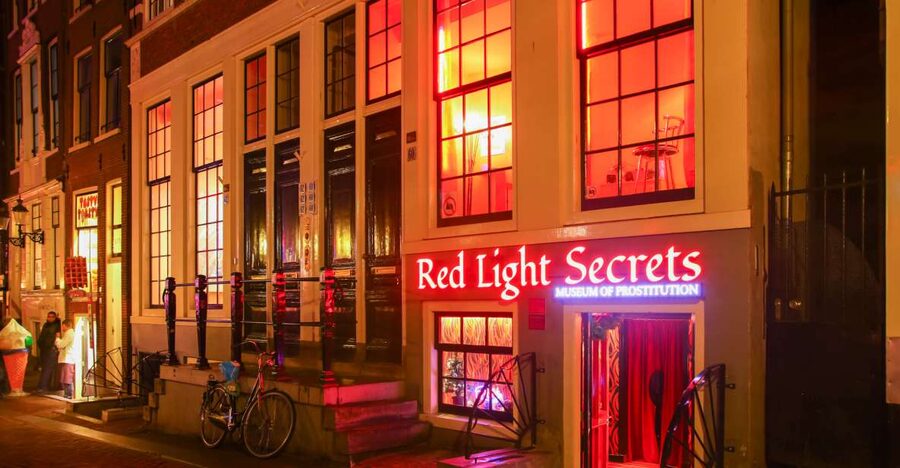
Amsterdam’s Red Light Secrets Museum puts you on the other side of the famous red window. Inside a former brothel, you see the small rooms where sex workers operated, learn how the trade was legalized in the Netherlands in 2000, and hear personal stories told with frankness and humor.
I like the audio guide, which follows the experiences of a former sex worker named Inga rather than giving you a dry list of dates. I also like the chance to sit in a real Red Light District window and read the wonderfully strange Confession Wall at the end. The drawback is size: you may finish in 15 to 30 minutes, and crowded rooms can make the audio and displays harder to follow.
Key points at a glance
- A former brothel in a 17th-century house: The setting gives the museum a direct link to Amsterdam’s oldest profession.
- Inga’s personal audio story: Listen to a former sex worker explain daily routines, choices, and working conditions in her own voice.
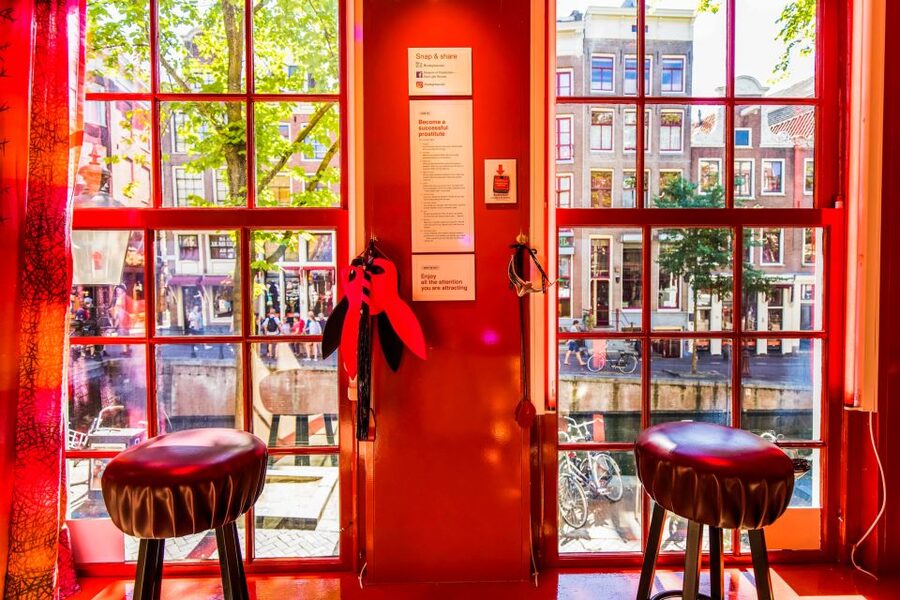
- A seat behind the red window: Sit where a sex worker would sit and see the street from the other side of the glass.
- Legalization explained: Learn how and why sex work became legal in the Netherlands in 2000.
- The Confession Wall: Finish with anonymous admissions from museum visitors, ranging from funny to eye-opening.
- Short, self-guided visit: Plan on roughly 15 to 30 minutes, with the freedom to move at your own pace.
What the museum is really about
This is not a museum of erotic art or a peek show built only for a laugh. Its subject is the business and human side of sex work in Amsterdam. You see the rooms, equipment, working spaces, and written explanations, but the main point is perspective.
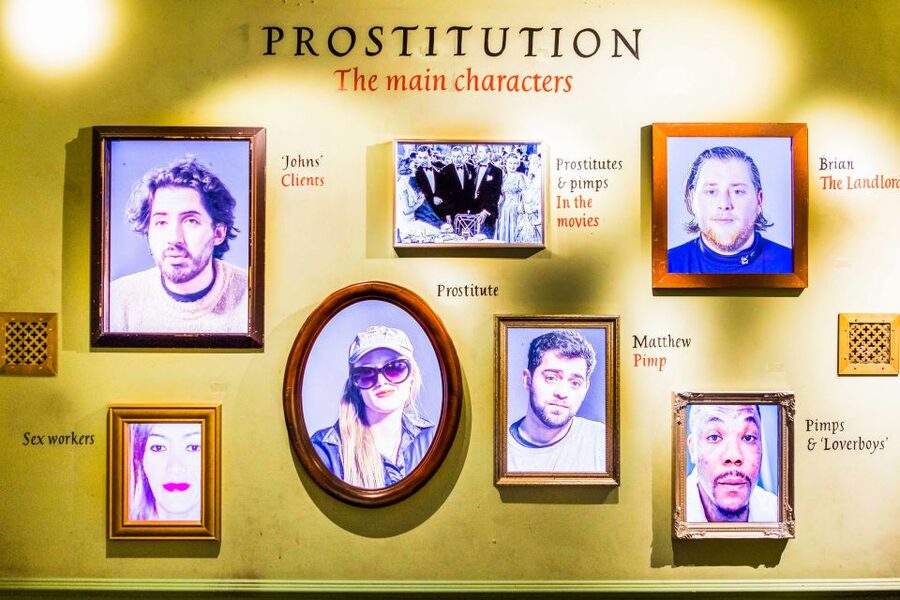
The museum asks you to look past the red lights and tourist jokes. Who works behind the windows? How does the business function? What does legal status change, and what problems remain? The material presents sex work in a direct, sometimes light-hearted way, while also touching on danger, exploitation, and the personal cost of the job.
That balance matters. The Red Light District is easy to treat as a strange outdoor attraction. The museum gives you a little more context before you continue down the narrow streets outside.
More Museum Tours in Amsterdam
- Amsterdam: The Upside Down Museum Entrance Ticket
★ 4.4 · 9,506 reviews - Amsterdam’s Weirdest Museum: Ripley’s Believe It or Not!
★ 4.5 · 4,920 reviews - Amsterdam: Van Gogh Museum Ticket and City Canal Cruise
★ 4.6 · 3,899 reviews
Entering a former brothel on Oudezijds Achterburgwal
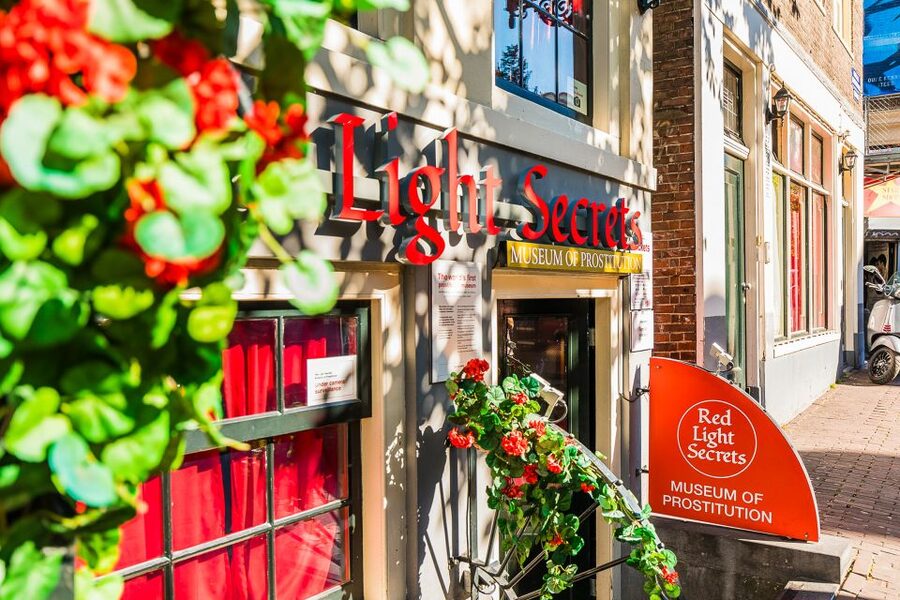
The museum is at Oudezijds Achterburgwal 60h, in the heart of Amsterdam’s Red Light District. Go directly to the entrance with your voucher ready for scanning. You choose a time slot when booking, and entry is tied to that slot, so do not treat the one-day validity as permission to arrive whenever you like.
The address puts you close to the working windows, bars, restaurants, and canals that define this part of central Amsterdam. That location is part of the experience. You are not looking at a detached historical display in a quiet neighborhood. You are learning about the district while standing inside it.
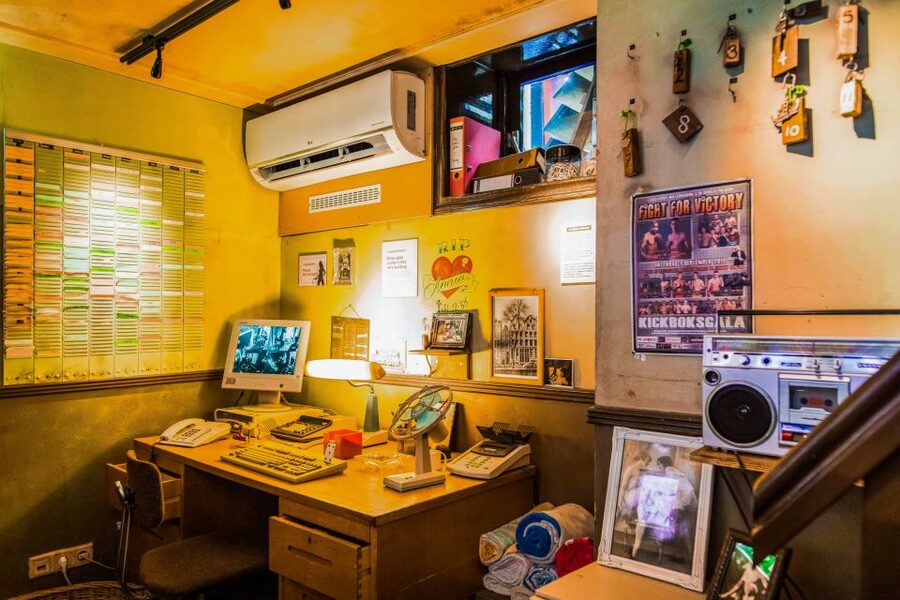
The building is a 17th-century house and former brothel. Its age and narrow layout help explain why the museum feels compact. You move through real rooms rather than a large modern exhibition hall, which gives the visit a more immediate quality but also limits how much can be shown.
You may still have to wait at the entrance, even with a prepaid ticket. The queue system has not always been clear, and booking ahead does not necessarily mean walking straight inside. A timed ticket secures your place, but allow a little patience at the door.
Following Inga’s story through the rooms
The audio guide is the museum’s strongest feature. It is available in Dutch, English, French, German, Italian, and Spanish. The English version follows Inga, a former sex worker, and uses her experiences to explain what a typical working day could involve.
This personal approach works better than a general narration. You hear about the work from the perspective of someone who did it, not only from a historian or museum manager. The tone can be funny and relaxed, but the subject is not reduced to entertainment.
As you walk, the audio points you toward displays and rooms. You can pause, read, and continue at your own speed. That freedom is useful because some sections may interest you more than others. It also means you do not have to keep up with a guide or wait for a group.
The story gives you a clearer idea of the separation between work and private life. One theme presented here is that some people choose this line of work and try to keep it apart from home and family life. The museum also raises harder questions about coercion, safety, violence, and the people who are forced into the trade.
The tone is not solemn at every turn. Humor helps make an uncomfortable subject easier to approach. Still, parts of the material are frank and some scenes may feel graphic. If something is too much, you can move on without holding up the visit.
Sitting behind the famous red glass
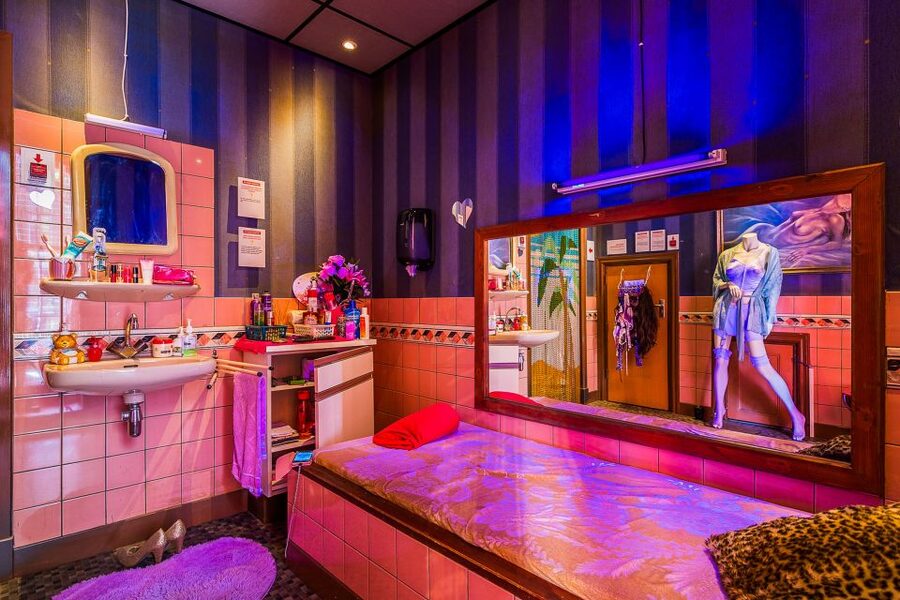
The most memorable physical feature is the window. You take a seat in one of Amsterdam’s famous Red Light District windows and look out from the worker’s side of the glass.
That small change in viewpoint does useful work. From the street, a red-lit window can seem like a theatrical display. From inside, you are placed in the position of the person being watched, approached, and judged. It is a simple idea, but it makes the street outside feel different.
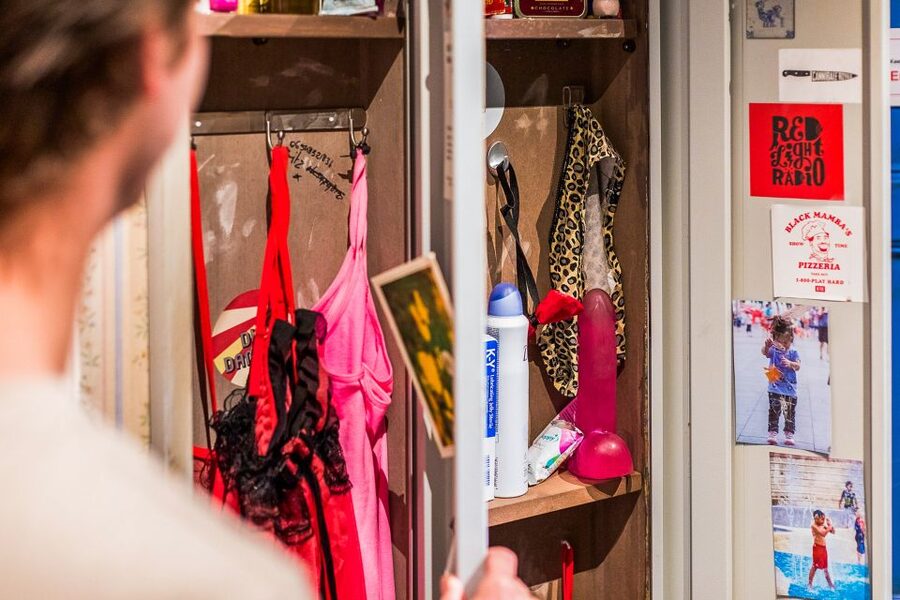
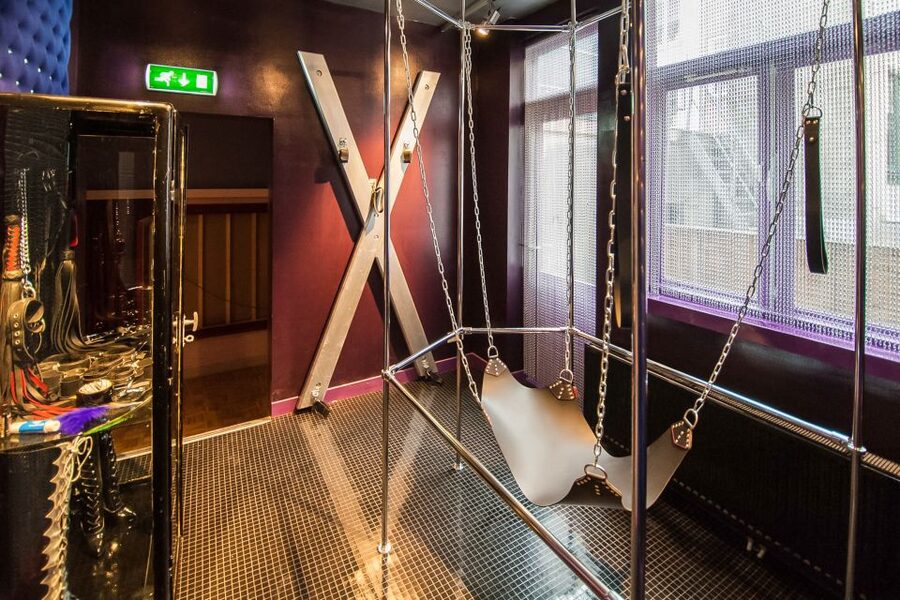
You also see rooms arranged to show how the work took place. The museum presents two working rooms, giving you a sense of the limited space and practical setup behind the public image. This is not a full reconstruction of every part of the business, but it helps connect the audio stories with a physical place.
Photography opportunities are available in parts of the museum, although a photo feature at the end has not always worked. The narrow rooms can also make it difficult to take a clear picture when several people are inside. I would treat photos as a bonus, not the reason to buy the ticket.
A few more museum visits around Amsterdam worth comparing
- Amsterdam: Van Gogh Museum Ticket & Canal Cruise
★ 4.5 · 3,304 reviews - Amsterdam: NEMO Science Museum Ticket
★ 4.4 · 2,979 reviews - Moco Museum Amsterdam Admission Ticket with Banksy and more
★ 4.0 · 1,745 reviews - Amsterdam: Cannabis Museum Entry Ticket
★ 4.2 · 1,244 reviews
Understanding legalization in 2000
A useful part of the visit is the explanation of how Amsterdam became associated with liberal attitudes toward sex work. The museum covers the legalization of prostitution in the Netherlands in 2000 and explains some of the thinking behind regulation.
The point is not that legalization solved every problem. Instead, it gives you a way to understand the Dutch system and the distinction between regulated work and exploitation. The museum also encourages you to think about the gap between public policy and the reality faced by individual workers.
This background is especially helpful if you plan to walk around the Red Light District afterward. Without context, you may see only the windows and crowds. After the museum, you have a better framework for understanding why the area developed as it did and why the subject remains debated.
The museum’s message is generally respectful toward sex workers. It does not ask you to adopt one simple opinion. It gives you personal stories, facts, and questions, then leaves room for your own judgment.
The memorial and the harder side of the story
The lighter sections should not hide the serious material. The museum includes information about murdered sex workers and a memorial that points to the danger some workers have faced.
This is an important counterweight to the jokes and party atmosphere outside. Amsterdam’s Red Light District can look playful, but the people behind the windows are not part of a theme park. They face questions of safety, privacy, harassment, trafficking, and violence.
The presentation can be disturbing, particularly if you arrive expecting a quick novelty attraction. I think that is a strength, provided you approach the museum with respect. It reminds you that a legal industry can still contain vulnerability and abuse.
If you are visiting with friends, agree beforehand that this is not simply a funny stop for photos. The museum works best when you are willing to listen as well as laugh.
The Confession Wall and the final few minutes
Near the end, you reach the Confession Wall, a collection of anonymous notes left by museum visitors. Some are funny. Some are outrageous. Some are more revealing than you might expect.
This is the museum’s comic release after the heavier material. You may find yourself spending as long reading the confessions as you did on the displays. A few notes are clearly written for shock value, so do not expect every one to offer profound insight.
Still, the wall fits the museum’s purpose. Sex work is surrounded by secrecy, curiosity, embarrassment, and fantasy. These anonymous admissions show how many different reactions people bring with them.
It is also a good final stop because it gives you something informal to discuss afterward. The audio guide may make you think about work and regulation, while the wall gives the visit a lighter ending.
How long the visit takes
Plan on about 15 to 30 minutes inside. The shortest visits move quickly through the rooms and listen to only the main audio sections. If you read every panel, pause at the window, and spend time with the Confession Wall, you will need longer.
The short length is both a benefit and a limitation. At about $17 per person, the ticket is reasonable if you want a focused introduction to Amsterdam’s sex-work district and value the personal audio story. It is less convincing if you expect a large museum with several hours of exhibits.
I would place it alongside another nearby activity rather than build an entire afternoon around it. The location makes it easy to combine with a walk through the district, though you should remain respectful around working windows. Do not photograph sex workers or treat the area like a stage set.
The museum is self-guided, so your pace is your own. That is helpful for couples and small groups with different levels of interest. It can be less satisfying if you prefer a live guide who answers questions as you go.
One visitor praised a live guide named Robin for a separate Red Light District tour, describing his approach as respectful, engaging, and balanced. That is worth noting only if you are comparing this museum with a walking tour. Red Light Secrets gives you a private audio narrative and physical rooms. A live tour may give you more conversation and street context, but it is a different experience.
Who will get the most from it
I would recommend this museum if you are curious about the Red Light District but want more than a quick look at the windows. It suits adults who want to understand the history, legal framework, and daily realities of sex work.
It is also a useful introduction for a first visit to Amsterdam. Going early in your trip can give you context for the streets you see afterward. The museum is short enough to fit into a busy schedule and direct enough to make the district less mysterious.
The visit may not suit anyone looking for a long, traditional museum experience. The rooms are small, the route is brief, and some displays are more basic than polished. Crowds can also make it hard to hear the audio or take photos comfortably.
The museum is only for ages 16 and over. It is not suitable for wheelchair users, so check your plans carefully if accessibility is important. The subject matter also calls for maturity, even though parts of the presentation are humorous.
Practical tips for a smoother visit
Book a time slot that fits your day, and arrive with the voucher ready to scan. You may still queue, so do not schedule something immediately afterward.
Use the audio guide. It is included in the ticket, and the personal account is the part that gives the museum its character. If you rush through without listening, you will see the rooms but miss much of the point.
Visit earlier if you want a calmer experience. One early visit was already described as busy, so there is no guarantee that first thing will mean an empty museum. Still, quieter conditions make the small rooms and audio easier to enjoy.
Allow time to read the written panels. The guide carries the main narrative, but the displays add facts about the district, regulation, and working life.
Keep your expectations realistic. This is a compact museum, not a half-day attraction. Its value comes from the subject, setting, and personal viewpoint rather than the number of rooms.
The ticket allows free cancellation up to 24 hours before the visit, and a reserve-now, pay-later option is available. Those terms are useful if your Amsterdam schedule is still shifting, but your chosen entry time remains important.
Should you book Red Light Secrets?
Book it if you want a short, frank, and respectful look at the human side of Amsterdam’s Red Light District. The former brothel setting, Inga’s audio story, the red-window seat, and the Confession Wall give the visit more substance than a simple sightseeing stop.
Skip it if you need a large museum, a long guided tour, or full wheelchair access. At $17, the price feels fair for a compact introduction, especially when you use the audio guide and take time with the displays. Just know that you may finish in half an hour and may encounter a queue despite booking ahead.
For curious adults, it is a worthwhile way to replace easy stereotypes with a clearer view of the work, the laws, and the people behind the glass.
FAQ
Where is Red Light Secrets Museum located?
The museum is at Oudezijds Achterburgwal 60h, 1012 DP Amsterdam, in the Red Light District.
What does the ticket include?
The ticket includes entry to the Red Light Secrets Museum of Prostitution and an audio guide.
How long does the museum visit take?
The visit can take about 15 to 30 minutes, depending on how much time you spend listening and reading.
Is the museum guided by a live person?
The standard experience includes an audio guide rather than a live guide. The audio presentation follows the story of a former sex worker named Inga.
Which audio guide languages are available?
Audio guides are available in Dutch, English, French, German, Italian, and Spanish.
Can I choose when to enter?
You must enter at your selected time slot. Check availability when booking and arrive at the museum with your voucher ready for scanning.
Is the museum suitable for children?
The activity is suitable only for people aged 16 and over.
Is the museum wheelchair accessible?
The activity is not suitable for wheelchair users.
Can I cancel my booking?
You can cancel up to 24 hours in advance for a full refund.
What is the Confession Wall?
The Confession Wall is a collection of anonymous written confessions left by museum visitors. The notes can be funny, surprising, and revealing.
Just added around Amsterdam
- Van Gogh Museum Tour excluding Entrance Tickets★ 5.0 · 16 reviews
- Van Gogh Museum Entry Ticket and Guided Tour★ 4.5 · 48 reviews
- Van Gogh Museum with Audio Guide★ 3.5 · 80 reviews
- Amsterdam: Explore the Van Gogh Museum & His Masterpieces★ 3.5 · 64 reviews
- Van Gogh Museum Skip the Queue with Audio Guide★ 4.0 · 261 reviews
- Amsterdam Van Gogh Museum with Audio or Guided Tour★ 4.0 · 266 reviews
- Van Gogh Museum, Rijks Museum & Walking Tour – Private Day Tour★ 5.0 · 17 reviews
- Van Gogh Museum Ticket with Audio Guide and Unlimited Access Time★ 5.0 · 25 reviews
Museum Tours in Amsterdam, compared.


Amsterdam’s Weirdest Museum: Ripley’s Believe It or Not!
Read our review →


Van Gogh Museum Amsterdam Exclusive Tour w/ Reserved Entry
Read our review →
Moco Museum Amsterdam Admission Ticket with Banksy and more
Read our review →
Van Gogh Museum Tour Reserved Entry Semi Private
Read our review →Browse the lists this tour appears in