Review · ITALY
Tecnoparco Archimede Museum Exhibition Ticket
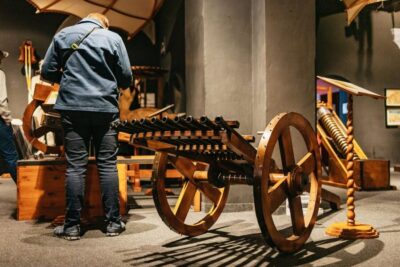
Archimedes is easiest to understand when you can touch the machines he designed. At Tecnoparco Archimede in Sicily, full-scale replicas turn ancient science into something physical: you see how a lever lifts, how a crane works, and how war machines helped Syracuse resist Roman attack.
I like two things right away. First, the six sections give the visit a clear shape instead of presenting a jumble of old inventions. Second, the price is only $9, yet you get a live guide in Italian or English, plus audio guides in six languages. The main thing to consider is that this is a permanent exhibition, not a large archaeological museum, so you should come for hands-on science and demonstrations rather than a long collection of original artifacts.
The visit works especially well for families and curious adults. Guides such as Martina and Erika have been praised for their clear, warm explanations, and the staff take time with children. On hot days, shade matters, so plan your visit with Sicily’s heat in mind.
Key things to know before you go
- Full-scale ancient machines: The replicas are built at 1:1 natural scale, making the levers, cranes, catapults, and other devices easier to grasp.
- Six clear subject areas: You move from basic mechanics to war machines, lifting technology, hydrostatics, burning mirrors, and water clocks.
- A guide adds the missing context: An Italian or English scientific guide explains what each machine does and how it connects to Archimedes.
- Good family appeal: The explanations are designed to be accessible, and the machines give older children something concrete to test and discuss.
- Useful language choice: Live tours are available in Italian and English, with audio guides in English, French, German, Russian, Spanish, and Portuguese.
- Low-cost admission: At $9 per person, this is an easy add-on to a Syracuse sightseeing day, especially if you enjoy science or ancient technology.
Entering Archimedes’ world through working replicas
The central idea at Tecnoparco is simple: ancient engineering makes more sense when you can see its scale. Archimedes lived in the 3rd century BC, and the exhibition uses replicas and scale reproductions of machinery connected with his work and ideas.
That choice changes the mood of the visit. You are not just reading a label about a pulley or catapult. You are looking at a machine large enough to show the practical problem it solved. A scientific guide can then explain the mechanics in plain terms, which is helpful if you remember Archimedes mainly from a school lesson about levers or water displacement.
I would allow enough time to listen rather than rush from object to object. The museum is valid for one day, and you can check the available starting times when booking. The supplied information does not give a fixed visit length, so your actual time will depend on the guide, the size of your private group, and how much you want to ask.
The private-group format is useful here. A family or small party can focus on the machines that interest them instead of following a large crowd at a fixed pace. It also gives children a better chance to ask questions, although the exact group size is not stated.
A few more museum visits around Italy worth comparing
- Vatican: Museums & Sistine Chapel Entrance Ticket
★ 4.5 · 144,003 reviews - Florence: Skip-The-Line Uffizi Gallery Timed Entry Ticket
★ 4.5 · 27,832 reviews - Vatican Museums & Sistine Chapel Skip-the-Line Entry Ticket
★ 4.4 · 13,838 reviews
Section one: levers, pulleys, and winches
The first area covers basic mechanical tools: levers, pulleys, and winches. These may sound elementary, but they provide the foundation for almost everything that follows.
This is where you begin to see the practical meaning of mechanical advantage. A lever can help move a heavy load with less effort. A pulley can redirect force and make lifting easier. A winch uses a rotating mechanism to raise or pull something that would be difficult to handle by hand.
For children, this section gives the visit an immediate starting point. For adults, it helps connect a familiar physics principle to the larger machines ahead. I like that the exhibition begins with tools rather than grand stories. You first understand the small building blocks, then see how they become cranes, siege equipment, and water devices.
The guide is important here because a replica only tells you so much on its own. Ask for an explanation of what changes when the number of pulleys changes, or how a winch controls a load. The live explanation is part of the value of the ticket.
Section two: Archimedes’ war machines
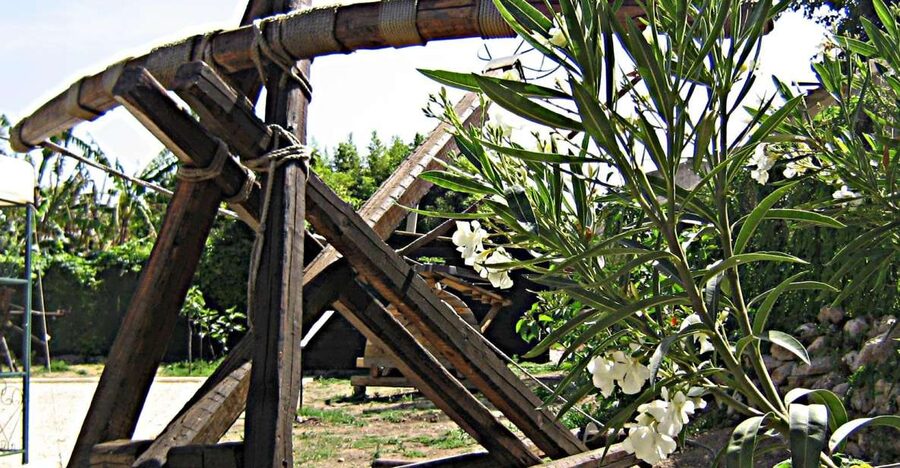
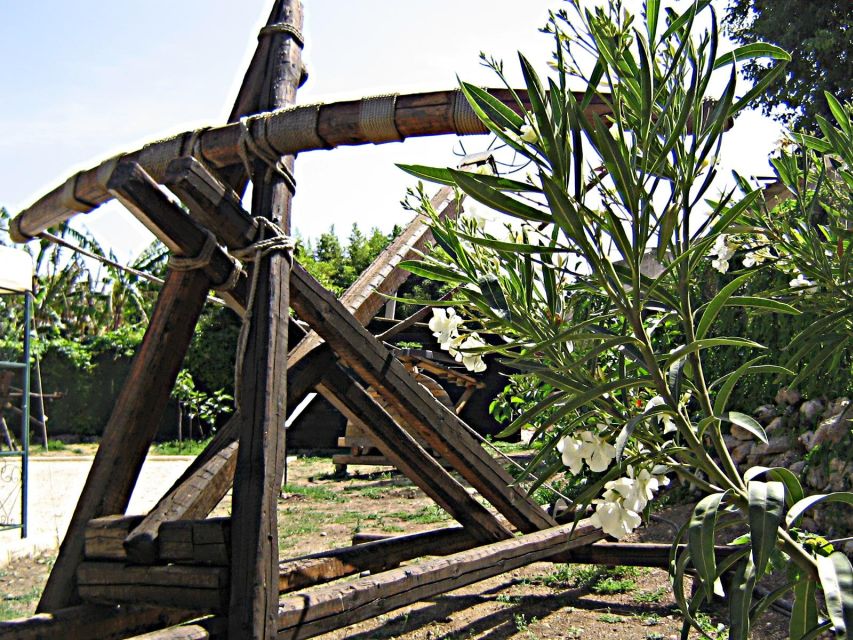
The war-machines area is likely to be the most memorable stop for many visitors. It includes a catapult, ram, crossbow, scorpion, onager, and ballista, all connected with the military technology of the ancient world.
The exhibition links these devices to Syracuse’s defense against the Romans. That gives the machines a clear purpose. You are not looking at weapons as isolated objects. You are seeing how engineering could shape the defense of a city under attack.
The names can be confusing, especially if you do not already know ancient military equipment. This is another place where the guide earns the admission price. A good explanation can separate a catapult from an onager, show the role of a ballista, and explain how a ram was used.
I would pay attention to the difference between size and function. A large machine is not automatically the most effective one. The replicas let you compare ways of projecting force, striking defenses, or attacking from a distance. The exhibition does not only present Archimedes as a mathematician. It shows him as an engineer whose ideas had direct consequences.
The war machines are also a good reason to bring older children. The subject has drama, but it is still tied to mechanics. Staff have been especially effective at explaining and interacting with children, including older kids who may want more than a simple label.
Section three: cranes and the manus ferrea
The lifting-machines section includes two types of cranes and the manus ferrea. This is one of the best areas for understanding how ancient engineers tackled heavy construction and defense problems.
A crane combines several ideas you have already seen: levers, pulleys, ropes, and controlled movement. Seeing those parts together makes the earlier section feel less like a basic introduction and more like preparation for a larger system.
The manus ferrea, or iron hand, is associated with lifting and handling objects. Here, the scale of the replica matters. A small model can show the shape of a device, but a full-size reproduction gives you a better sense of the force and reach involved.
You should listen closely to the guide’s explanation of what each crane does. The supplied details do not promise demonstrations of every machine, so do not assume that you will operate all of them. Still, even a guided explanation beside a natural-scale replica can show why ancient lifting technology was such a major step forward.
This section should appeal to anyone interested in architecture, construction, or practical engineering. It also helps balance the military displays with technology used for lifting and moving.
Same city, a completely different collection:
- Vatican Museums, Sistine Chapel & St. Peter’s Basilica Tour
★ 4.3 · 73,970 reviews - Vatican Museums, Sistine Chapel & St Peter’s Basilica Guided Tour
★ 4.5 · 39,149 reviews - Rome: Vatican Museums, Sistine Chapel and Basilica Tour
★ 4.3 · 16,039 reviews - Rome: Vatican Museums, Sistine Chapel & Basilica Tour
★ 4.7 · 13,217 reviews
Section four: hydrostatics and the Archimedes screw
The hydrostatics area brings together several of the exhibition’s most recognizable ideas. You will find the Archimedes screw, experiments related to Archimedes’ principle, corobats, presses, and worm screws.
The Archimedes screw is particularly easy to appreciate because its purpose is direct: it moves water. The shape of the screw makes the idea visible, and a guide can explain how turning motion helps raise water from one level to another.
The experiments on Archimedes’ principle give the section its scientific heart. This is where a short explanation can turn a famous name into a clear physical idea. You may already know the story connected with buoyancy, but seeing an experiment makes the concept easier to remember.
The corobats add another practical note. Presses and worm screws show that Archimedes’ influence was not limited to one celebrated device. The exhibition presents a range of mechanical solutions, some familiar and some less well known.
This area can be especially useful for school-age children because it links observation with a basic scientific rule. If you are visiting with a family, encourage children to describe what they think will happen before the guide explains it. That small bit of prediction makes the machinery more engaging.
Section five: burning mirrors and a famous defensive idea
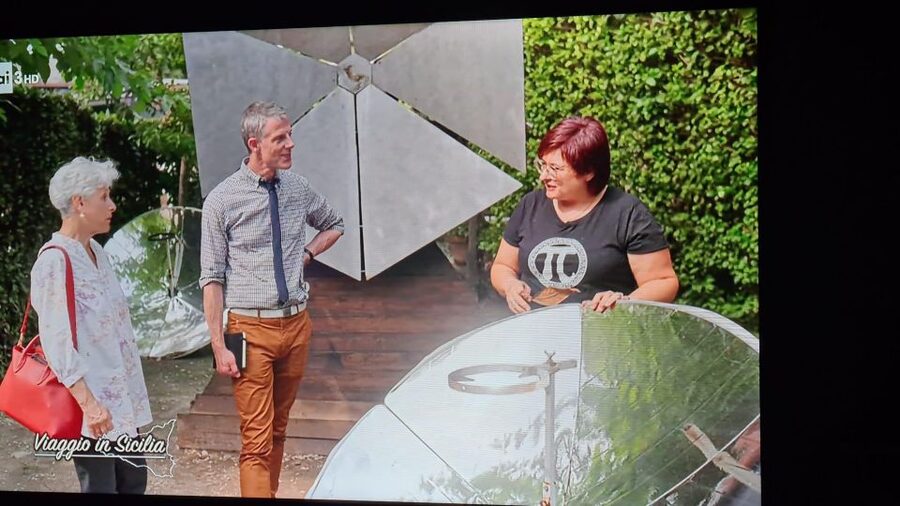
The burning-mirrors area focuses on one of Archimedes’ most famous inventions. You can see two different models of the burning mirror.
The subject has a strong connection to the story of Syracuse’s defense. It also raises an important point about the exhibition: some displays are valuable because they show a device, while others are valuable because they let you consider how an idea might have been used.
Your guide is the best person to explain the models and their place in the larger defense story. The supplied details do not state exactly how the demonstrations are conducted, so I would treat this as an explanatory display rather than assume a dramatic live test.
This section is brief in equipment but large in appeal. Burning mirrors are one of the details people often remember from stories about Archimedes. Seeing two models gives you more than a single illustration and lets you compare how the concept was represented.
It is also a good reminder that the museum mixes proven mechanical principles with famous historical accounts. Pay attention to what the guide explains about the device itself and its role in the defense of Syracuse.
Section six: water clocks and further uses of the screw
The final area covers water clocks and several applications of the Archimedes screw. Water clocks are a fitting way to end because they connect measurement, water flow, and controlled movement.
A clock powered by water turns the passage of time into something visible. Instead of gears driven by modern power, you see how water could be used to regulate a device. That makes the section a useful contrast with the war machines, which rely on sudden force.
The additional screw applications bring the exhibition back to one of its main themes: a simple mechanical idea can serve more than one purpose. By this point, you have encountered the screw in a hydrostatics setting. Seeing other uses helps you understand why such a device mattered.
The water clocks may appeal more to adults than younger children, but a guide can make the basic idea clear. If you are trying to keep a mixed-age group interested, this is a good moment to connect the clock to the earlier water experiments.
What the guide adds to the experience
A live scientific guide is included in Italian or English, and that is a major part of the visit. The exhibition contains enough unusual terms and unfamiliar machines that labels alone would not give you the full picture.
Martina has been described as smiling and well prepared, while Erika has been especially enthusiastic and passionate. Those names are useful when you are choosing among available tours, though the guide assigned to your visit may be different.
The strongest guide-led moments are likely to come in the explanations of the war machines, the Archimedes screw, and the burning mirrors. These displays need context. A guide can explain what a device was meant to do, how it relates to Archimedes, and why it mattered to Syracuse.
You can also use a multilingual audio guide. Options include English, French, German, Russian, Spanish, and Portuguese. This is helpful if your preferred language is not available for the live tour, or if someone in your group wants extra explanation while exploring.
The live guide languages are Italian and English. If you need another language, check that the audio guide option is available for your booking.
Is $9 a good value?
At $9 per person, I consider this a strong-value stop for the right audience. You get access for one day, a guided visit in Italian or English, multilingual audio-guide availability, and six themed areas filled with replicas of ancient machines.
The value comes from the combination of scale and explanation. A standard museum display might show a drawing of a catapult or screw. Here, the natural-scale replicas help you picture how large these devices were and what kind of work they could perform.
I would not compare the ticket with a major archaeological collection. This is a focused permanent exhibition about Archimedes’ inventions and related technology. If you want original statues, mosaics, or a large collection of ancient objects, this is not the right ticket. If you want a practical introduction to ancient engineering, $9 is modest.
Food, drinks, and transport are not included. You will need to arrange your own way to the museum and plan refreshments separately. The information provided does not give transport directions, so check your route before setting out.
Who will enjoy this most?
I would recommend Tecnoparco Archimede to families, science fans, engineering students, and anyone who wants a different kind of cultural stop in Sicily. The machines give children something concrete to look at, while the six sections provide enough variety for adults.
It is also a good choice if you have already seen several traditional archaeological sites and want a change of pace. Instead of standing in front of another case, you can follow the movement of an ancient idea from lever to crane, from screw to water clock, and from mechanics to military defense.
You may enjoy it less if you prefer original artifacts, extensive written interpretation, or a large museum that takes several hours to explore. The attraction is focused, and the exact duration is not specified.
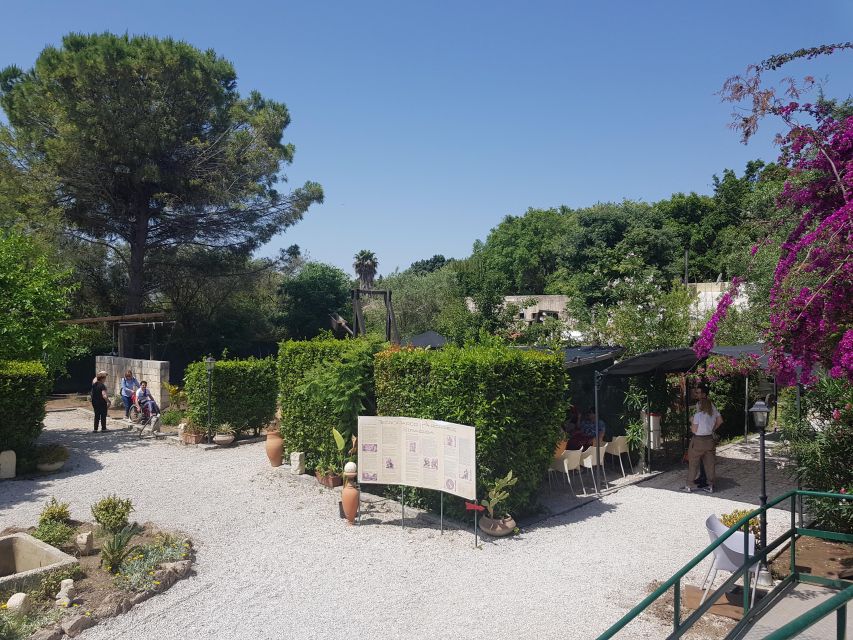
Hot weather is worth planning for. One visit included efforts to find shaded spots during the heat, so wear suitable clothing and avoid treating the museum as a quick stop squeezed into the hottest part of the day.
Booking details that matter
The ticket costs $9 per person and is valid for one day. Starting times depend on availability, so check the schedule before you choose your date.
You can reserve now and pay later, which helps if your Sicily plans are still changing. Cancellation is free up to 24 hours in advance for a full refund.
The activity is wheelchair accessible. It is offered as a private group, and live guiding is available in English and Italian. Audio guides can be rented in English, French, German, Russian, Spanish, and Portuguese.
Because transportation is not included, factor in the time and cost of reaching the museum. Food and drinks are also on your own.
Should you book Tecnoparco Archimede?
Book it if you want hands-on ancient engineering at a low price, especially if you are visiting with children or have an interest in science. The full-scale replicas, clear six-part layout, and enthusiastic guides make Archimedes easier to understand than a textbook does.
Skip it if your priority is a large collection of original ancient objects or a long museum visit. For everyone else, this is a smart, focused addition to a Syracuse itinerary. The $9 price keeps the risk low, and the chance to see cranes, war machines, hydrostatic devices, burning mirrors, and water clocks in one place gives the visit real substance.
FAQ
Where is Tecnoparco Archimede located?
The museum is in Sicily, Italy. Transportation to and from the museum is not included.
How much does the ticket cost?
The ticket costs $9 per person.
How long is the ticket valid?
The ticket is valid for one day. Starting times depend on availability.
Is a guided tour included?
Yes. A live guided tour is available in Italian and English with a scientific guide.
Which audio-guide languages are available?
Audio guides are available in English, French, German, Russian, Spanish, and Portuguese.
Is the tour private?
Yes. The activity is offered for a private group.
What kinds of machines are displayed?
The exhibition includes levers, pulleys, winches, catapults, rams, crossbows, scorpions, onagers, ballistas, cranes, the manus ferrea, the Archimedes screw, water clocks, presses, worm screws, corobats, and burning mirrors.
Are the replicas full size?
The exhibition includes replicas and scale reproductions, with the main replicas described as being at 1:1 natural scale.
Is the museum wheelchair accessible?
Yes, the activity is wheelchair accessible.
Can I cancel for a refund?
Yes. You can cancel up to 24 hours in advance for a full refund. You can also reserve now and pay later.
Just added around Italy
- Oil museum and oil mill in Tuscany: tour and tasting★ 5.0 · 16 reviews
- Enchanted Castle of Sciacca – Museum Tickets★ 3.5 · 63 reviews
- Torino: FIAT Historic Museum and Lingotto District Tour★ 4.9 · 14 reviews
- Torino: The Car Museum Skip-The-Line Tour★ 4.7 · 22 reviews
- Timed Entry Ticket to the Uffizi Gallery★ 4.5 · 498 reviews
- Florence: Accademia Gallery Entry Ticket with Audio Guide★ 4.1 · 88 reviews
- Vatican City: Sistine Chapel, Museums, Basilica Private Tour★ 4.8 · 158 reviews
- Rome: Capitoline Museums and Centrale Montemartini Tickets★ 4.4 · 328 reviews
Museum Tours in Italy, compared.

Vatican: Museums & Sistine Chapel Entrance Ticket
Read our review →
Vatican Museums, Sistine Chapel & St. Peter’s Basilica Tour
Read our review →
Vatican Museums, Sistine Chapel & St Peter’s Basilica Guided Tour
Read our review →
Skip-The-Line Uffizi Gallery Timed Entry Ticket
Read our review →
Vatican Museums, Sistine Chapel and Basilica Tour
Read our review →
Vatican Museums & Sistine Chapel Skip-the-Line Entry Ticket
Read our review →
Vatican Museums, Sistine Chapel & Basilica Tour
Read our review →