
Review · ITALY
San Gimignano Cathedral & Museum of Sacred Art Entry Ticket
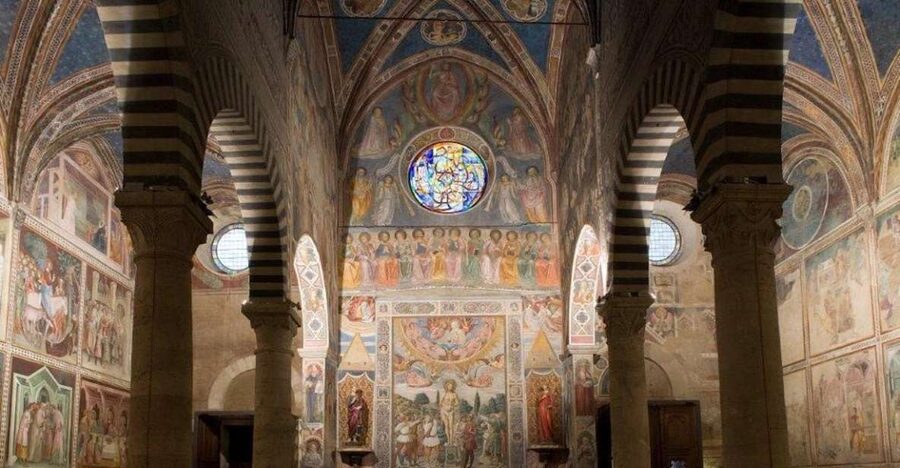
San Gimignano Cathedral is far more than a quick stop for a look at a pretty church. Its walls are covered with enormous 14th-century fresco cycles, while the blue-painted vault and striped arches preserve the unusual color scheme of a medieval Tuscan interior. The nearby Museum of Sacred Art adds another layer to the visit.
I like the freedom of a one-day ticket, and I like having an audio guide to explain the biblical scenes rather than leaving you to guess at them. The main drawback is simple but easy to miss: you must exchange your voucher at the ticket office in Piazza Pecori, on the left side of the cathedral, before entering.
Key points to know
- The frescoes cover both long walls: Lippo and Federico Memmi painted New Testament scenes on the right, while Bartolo di Fredi painted the Old Testament scenes on the left.
- The Chapel of Santa Fina is the artistic highlight: Giuliano da Maiano, Benedetto da Maiano, and Domenico Ghirlandaio all contributed to it.
- The interior has 14 Tuscan stone columns: Ten are round and four are octagonal, giving the church a distinctive rhythm.
- A physical audio guide is included when available: It is offered in English, French, German, Italian, Russian, and Spanish.
- The ticket costs about $11 per person: The listed price includes a €1.50 booking fee, making it a reasonable add-on for an art-focused visit.
- Plan for the voucher exchange: Go first to the ticketing office in Piazza Pecori, then continue to the cathedral.
Why San Gimignano Cathedral deserves your time
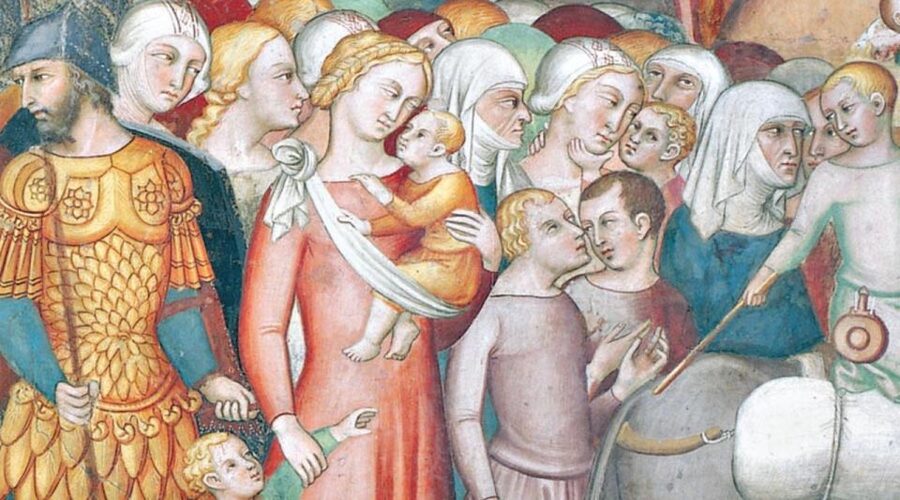
San Gimignano is famous for its stone towers and medieval streets, but the cathedral gives you something the town’s outdoor views cannot: a concentrated look at medieval religious art in its original setting.
The church is known as the Collegiata di Santa Maria Assunta, though you will often hear it called the Duomo or cathedral. Its interior is not plain or softly decorated. Nearly every major wall surface carries painted scenes, so the building feels more like a picture book made of plaster than a conventional church interior.
That is what makes the visit worthwhile. You are not simply entering a historic building, pausing at the altar, and leaving. You can follow whole biblical story cycles across the walls. The audio guide is useful here because it gives structure to what could otherwise become a blur of figures, gestures, and faded color.
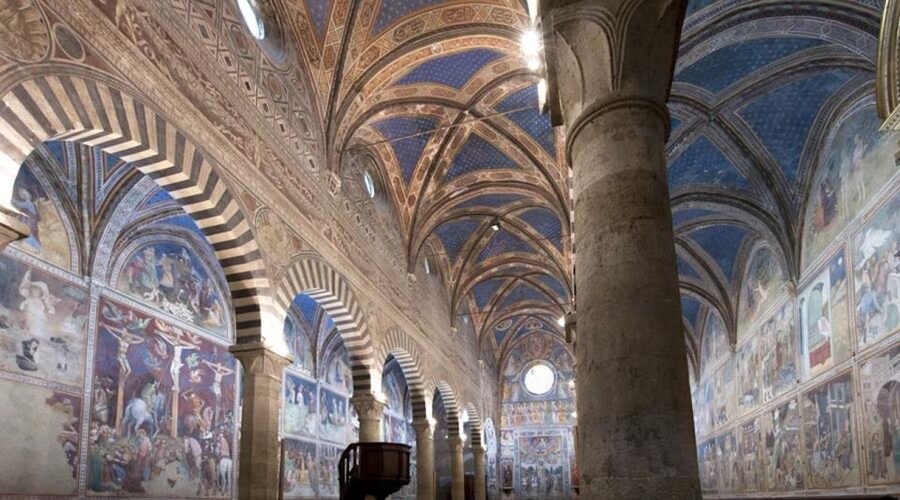
I would allow enough time to look upward and sideways, not just straight ahead. The frescoes reward a slow scan, and the architectural details matter too. The painted blue cross vault, in particular, gives the ceiling a striking medieval character.
More basilicas and cathedrals in Italy:
- Vatican Museums, Sistine Chapel & St. Peter’s Basilica Tour
★ 4.3 · 73,970 reviews - Vatican Museums, Sistine Chapel & St Peter’s Basilica Guided Tour
★ 4.5 · 39,149 reviews - Rome: Vatican Museums, Sistine Chapel and Basilica Tour
★ 4.3 · 16,039 reviews
Start with the 14th-century stone columns
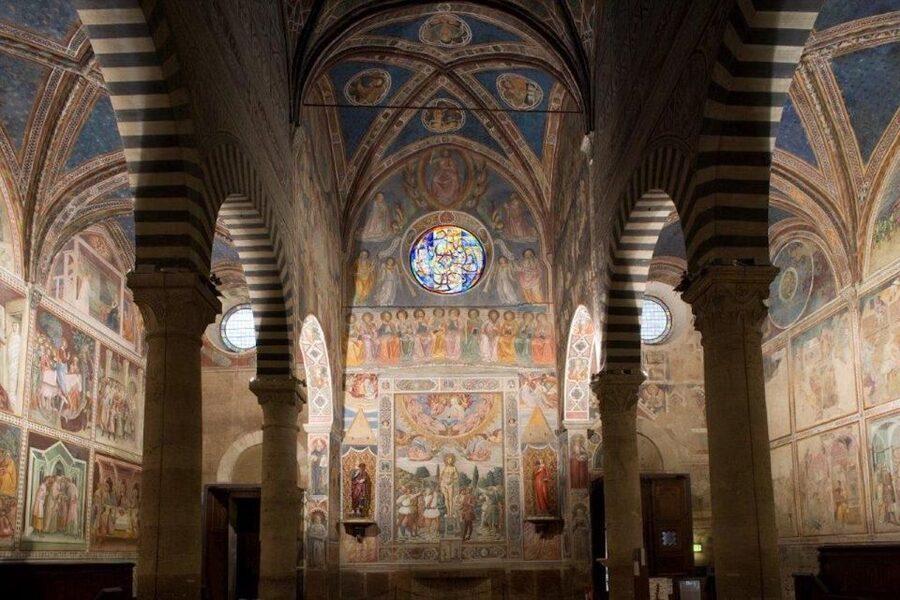
When you enter, notice the 14 Tuscan stone columns dividing the interior. Ten are round, and four are octagonal. It is a small detail, but it helps you read the church’s design and keeps the space from feeling like one large painted box.
The columns separate the central nave from the side aisles. The arches above them have striped decoration on their inner curves, known as the intrados. This pattern reflects a Tuscan taste for strong bands of color and gives the interior a clear visual rhythm.
I like to take in these structural features before focusing on the paintings. They show how the church was built and decorated as one complete work. The frescoes are not loose pictures hung in a neutral gallery. They are part of the building’s identity.
The interior also includes polychrome decoration typical of medieval churches. That means the original visual effect was not simply stone, white plaster, and dark wood. Color played a major role, and the surviving painted details help you picture how lively a medieval church could be.
Follow the New Testament scenes on the right wall
The right wall holds the New Testament cycle painted by Lippo and Federico Memmi. These scenes form one of the most important artistic reasons to visit.
You can use the audio guide to help identify the episodes and understand how the scenes relate to one another. Without that help, you may recognize familiar subjects, but the order and meaning can be harder to follow, especially if you are not used to medieval religious art.
The paintings date from the 14th-century Sienese school, whose artists are known for expressive figures and carefully organized narrative scenes. You will see how the painters used gestures, groupings, and repeated visual patterns to tell stories to a largely pre-literate audience.
Do not rush this wall. Look for the way each scene is framed and how the separate episodes work as a sequence. The overall effect is strongest when you treat the wall as one extended story rather than a series of unrelated panels.
The condition of historic frescoes can vary, and the supplied information does not promise that every scene will be equally clear. Still, the scale of the cycle makes it valuable even when some details have softened with time.
Compare it with Bartolo di Fredi’s Old Testament cycle

On the opposite wall, Bartolo di Fredi painted the Stories of the Old Testament in 1367. Having the two cycles facing each other gives the church a clear narrative balance.
You can compare the treatment of the two sections as you move through the nave. The placement is practical for visitors because it lets you connect the earlier biblical stories with the New Testament scenes across the church.
This is where the audio guide can make a real difference. A short explanation of subject, date, and painter gives you a way to look with purpose. You can pay attention to the story being told, the arrangement of figures, and the relationship between image and architecture.
If you are visiting with children or with someone who does not usually spend long in churches, the story format may help hold attention. The walls are not abstract decoration. They show recognizable events, people, and moments of drama.
I would not expect a modern museum display with extensive labels beside every scene. The experience depends largely on the audio guide and your own pace. If the physical guide is unavailable, you can still see the frescoes, but the visit may feel less organized.
A few more museum visits around Italy worth comparing
- Vatican: Museums & Sistine Chapel Entrance Ticket
★ 4.5 · 144,003 reviews - Florence: Skip-The-Line Uffizi Gallery Timed Entry Ticket
★ 4.5 · 27,832 reviews - Vatican Museums & Sistine Chapel Skip-the-Line Entry Ticket
★ 4.4 · 13,838 reviews - Florence: Leonardo Interactive Museum Entry Ticket
★ 4.5 · 12,957 reviews
Save time for the Chapel of Santa Fina
The Chapel of Santa Fina is the cathedral’s Renaissance highlight. It is dedicated to San Gimignano’s best-loved saint and brings together the work of three major Florentine artists.
Giuliano da Maiano designed the chapel as architect. Benedetto da Maiano created its sculpture, and Domenico Ghirlandaio painted it. That combination makes the chapel especially useful for anyone interested in how architecture, sculpture, and painting work together.
The chapel also gives the visit a change of pace. The long wall frescoes are broad narrative cycles, while Santa Fina’s chapel is a more focused artistic setting. I would look at it after getting a general sense of the main nave, then return to it if one detail catches your eye.
Ghirlandaio’s name is a major draw for art lovers, but you do not need specialist knowledge to appreciate the chapel. Notice the way the painted work relates to the sculpted and architectural parts. The value lies in seeing these elements together rather than treating them as separate objects.
The supplied details do not provide a full description of every scene or object in the chapel, so I would avoid arriving with an exact checklist. Instead, use the audio guide and take time to observe the overall design.
Add the Museum of Sacred Art to the visit
The ticket experience is described as covering the cathedral and Museum of Sacred Art. That makes the visit more than a single-room church stop, though the available information does not give a full inventory of the museum’s objects or a precise route through its rooms.
The museum can help place the cathedral’s art in a wider religious setting. After seeing large fresco cycles in their original location, smaller sacred works and church objects can offer a different scale and a quieter way to look.
I would treat the museum as an important companion to the cathedral, not as a replacement for it. The cathedral supplies the strongest visual impact, especially through the wall paintings and Santa Fina Chapel. The museum adds context and gives you another nearby cultural stop.
The activity also points you toward other churches and convents in San Gimignano. These are not described as included parts of the ticket, so consider them separate stops. Still, the cathedral works well as an anchor for an afternoon of religious art in the town.
How the audio guide changes the visit
A physical audio guide is included in English, French, German, Italian, Russian, and Spanish, subject to availability at the attraction. That final condition matters. You should not assume that a particular language or device will always be ready, even though the listed language range is broad.
I like audio guides in places such as this because the visual information is dense. They can point you toward the main artists, explain the biblical order, and help you distinguish the Old Testament cycle from the New Testament cycle.
At the same time, an audio guide is not a private tour. You move at your own pace, and the experience is self-guided. That is a benefit if you want freedom to stop, replay information, or move on quickly. It is less ideal if you prefer a live guide who can answer questions or adapt the explanation to your interests.
Take the guide in hand before you settle into the frescoes. Begin with the church layout, then follow the right wall and left wall in an organized way. This prevents the common problem of spending all your time on the first painting that catches your eye.
The ticket value at about $11
At roughly $11 per person, this is a fairly modest cultural expense in a major Tuscan town. The listed price includes a €1.50 booking fee, so you are paying for access plus the convenience of arranging it in advance.
The value depends on how much you care about art and interiors. If you only want an exterior view of San Gimignano’s cathedral, the ticket will not be worthwhile. The outside does not reveal the fresco cycles, painted vault, or Santa Fina Chapel.
For anyone interested in medieval art, the price is easier to justify. You receive entry to a major monument, access to the Museum of Sacred Art, and an audio guide when available. The one-day validity also gives you flexibility rather than forcing a narrow visit window.
There is one practical cost in time: you must collect the actual entry ticket at the office in Piazza Pecori. Alicia Coiduras specifically found the need to pick up tickets after prepaying inconvenient. That is fair criticism. The exchange is not difficult, but it is an extra step, so build it into your plan.
The ticket office is on the left of the San Gimignano Duomo. Go there before heading to the entrance. Clara found the voucher exchange easy, which suggests the process can be quick when you know where to go.
Timing, access, and cancellation
The duration is listed as one day, with starting times determined by availability. This is not presented as a fixed guided tour with a named departure. Check the available time before booking, especially if you have several San Gimignano sights planned.
Wheelchair access is listed for the activity. If you need detailed information about individual rooms, routes, or facilities, confirm those points directly before your visit because the supplied details do not describe them.
You can cancel up to 24 hours in advance for a full refund. Reserve now and pay later is also available, which may help if your Tuscany plans are still changing.
Who should book this cathedral visit?
I would recommend it most strongly to:
- Art lovers who want to see 14th-century frescoes in their original church setting
- Visitors interested in the Sienese school and early Renaissance art
- First-time visitors who want an organized way to understand the cathedral
- People who prefer self-guided sightseeing to a fixed group tour
- Anyone already spending time in San Gimignano and looking for a meaningful indoor stop
It may be less suitable if you want a live guide, a short exterior photo stop, or a tour with transportation between Tuscan towns. No transportation or group itinerary is included here. You make your own way to the cathedral and explore independently.
Families can also find value in the story scenes, but the visit works best when you allow time for looking. If your schedule is extremely tight, you may prefer to see only the outside and move on, though that means missing the main reason to enter.
Should you book the San Gimignano Cathedral ticket?
Book it if you want to understand why the cathedral is one of San Gimignano’s key monuments, rather than treating it as another stop on a town walk. The Memmi and Bartolo di Fredi fresco cycles make the interior special, and Santa Fina Chapel adds a strong Renaissance focus.
The ticket is good value at about $11, particularly if the audio guide is available in your language. Just remember the one important chore: exchange your voucher at the office in Piazza Pecori before entering.
I would choose this experience for an art-focused visit, a rainy afternoon, or anyone who enjoys seeing a famous town through its religious buildings rather than only from its streets. If you prefer outdoor scenery and towers, save your money. If medieval painting and carefully decorated interiors interest you, this is one of San Gimignano’s most useful small admissions.
FAQ
What does the San Gimignano Cathedral ticket include?
It includes entry to the cathedral, the Museum of Sacred Art, and a €1.50 booking fee. A physical audio guide is included when available at the attraction.
Is the audio guide available in English?
Yes. The listed audio guide languages are English, French, German, Italian, Russian, and Spanish, subject to availability.
Where do I exchange the voucher?
You exchange it at the ticketing office in Piazza Pecori, on the left of the San Gimignano Duomo, before your visit.
How long is the ticket valid?
The duration is listed as one day. You should check availability for the relevant starting times.
Is the cathedral wheelchair accessible?
Yes, the activity is listed as wheelchair accessible.
Can I cancel the booking?
Yes. You can cancel up to 24 hours in advance for a full refund. Reserve now and pay later is also available.
Just added around Italy
- Oil museum and oil mill in Tuscany: tour and tasting★ 5.0 · 16 reviews
- Enchanted Castle of Sciacca – Museum Tickets★ 3.5 · 63 reviews
- Torino: FIAT Historic Museum and Lingotto District Tour★ 4.9 · 14 reviews
- Torino: The Car Museum Skip-The-Line Tour★ 4.7 · 22 reviews
- Timed Entry Ticket to the Uffizi Gallery★ 4.5 · 498 reviews
- Florence: Accademia Gallery Entry Ticket with Audio Guide★ 4.1 · 88 reviews
- Vatican City: Sistine Chapel, Museums, Basilica Private Tour★ 4.8 · 158 reviews
- Rome: Capitoline Museums and Centrale Montemartini Tickets★ 4.4 · 328 reviews
Museum Tours in Italy, compared.
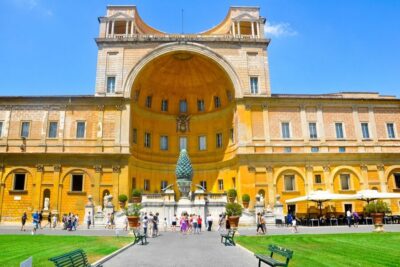
Vatican: Museums & Sistine Chapel Entrance Ticket
Read our review →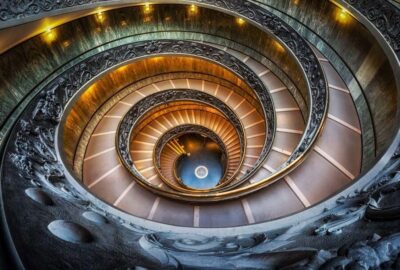
Vatican Museums, Sistine Chapel & St. Peter’s Basilica Tour
Read our review →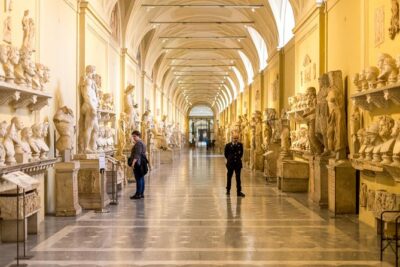
Vatican Museums, Sistine Chapel & St Peter’s Basilica Guided Tour
Read our review →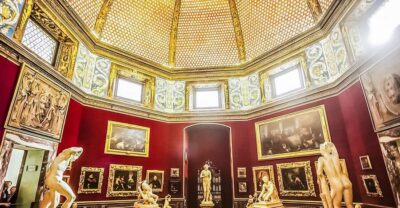
Skip-The-Line Uffizi Gallery Timed Entry Ticket
Read our review →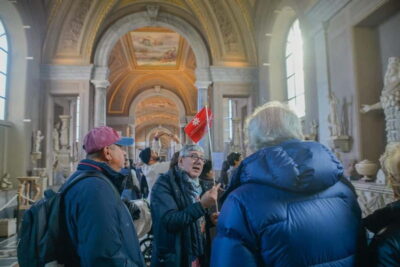
Vatican Museums, Sistine Chapel and Basilica Tour
Read our review →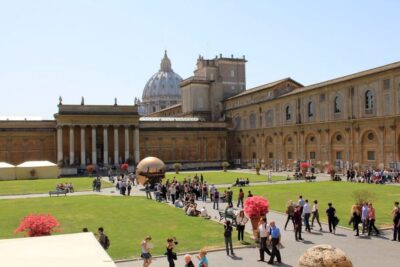
Vatican Museums & Sistine Chapel Skip-the-Line Entry Ticket
Read our review →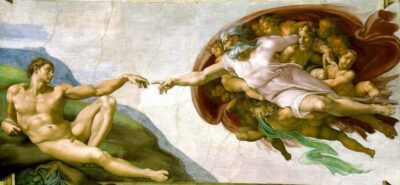
Vatican Museums, Sistine Chapel & Basilica Tour
Read our review →
Browse the lists this tour appears in