
Review · MADRID
Prado Museum (Madrid): Private visit with art expert
The best reason to book this Prado visit is the personal attention. Instead of following a large group from one famous canvas to another, you can tell your guide what interests you, ask questions as they arise, and spend more time with the artists you want to understand. The museum’s collection covers European art from the 12th to the 19th century, so even two hours can give you a useful map of seven centuries.
I like the chance to work with an art specialist rather than a general city guide, and I like the small private format, especially for groups of seven or fewer. Guides such as Amanda, Carlos, Enrique, Juan, Stefy, and Alex have been praised for clear explanations, storytelling, patience, and help with mobility needs. The main drawback is time: two hours passes quickly in a museum this large, so you will see a selection rather than the whole Prado.
Key points to know before you book
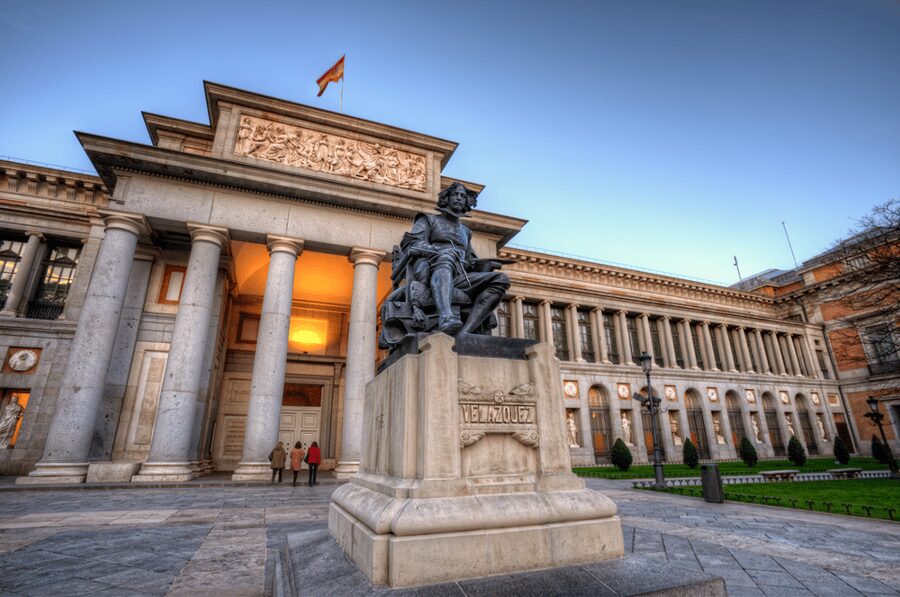
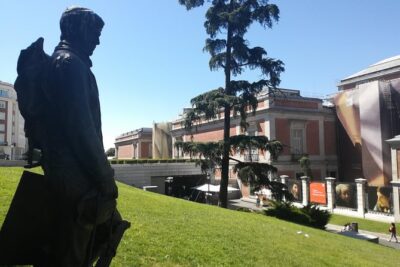
- Meet by Goya’s statue: Your guide waits outside, near the Prado ticket office, at the time you choose.
- See art across seven centuries: The route can include Bosch, Dürer, El Greco, Rubens, Titian, Tintoretto, Velázquez, and Goya.
- Private and adjustable: You can set the pace and ask your guide to focus on particular artists, periods, or questions.
- Skip the ticket line: Groups of up to seven use the quickest available entrance and avoid the queue intended for larger groups.
- Stay afterward: If your party has seven people or fewer, you may remain in the museum after the guided portion.
- A practical two-hour format: The tour gives you a strong introduction, but you should plan to return or stay afterward if you want a fuller visit.
Meeting Goya beneath Madrid’s grand museum district
Your visit begins at the statue of Goya outside the Prado Museum. This is a sensible meeting point, but do not arrive at the last second. The Prado sits in Madrid’s Paseo del Prado area, a broad cultural district created under Carlos III to bring art, science, and nature closer to the public. Your guide will be waiting by the statue, in front of the museum ticket office.
The meeting place also gives you a useful first clue about the museum. Goya was not simply a court painter producing polished royal portraits. His work reaches from elegant eighteenth-century society to war, fear, superstition, and the darker side of human behavior. Starting beside his statue sets up the kind of context an art specialist can provide once you enter.
There is no transportation included, so you need to make your own way to the Prado. The activity takes place entirely at the museum after the meeting. English and Spanish tours are available, and the museum is wheelchair and stroller accessible.
More Museum Tours in Madrid
- Madrid: Prado Museum Entry Ticket
★ 4.6 · 20,699 reviews - Madrid: Reina Sofía Museum Entrance Ticket
★ 4.5 · 8,788 reviews - Madrid: Small Group of Prado Museum Tour & Optional Tapas
★ 4.6 · 2,437 reviews
Entering the Prado without wasting your best energy
Once your group meets, the guide chooses the fastest entrance for the size of your party. A private group of up to seven can skip the ticket line used by larger groups, which matters in a museum where your legs and attention are more valuable than time spent waiting outside.
The entrance arrangement is one reason this experience works better for a small family group, couple, or circle of friends than for a solo visitor on a tight budget. You are paying for the guide, entry, and the ability to move as a private party. The value is less about racing into the building and more about starting the visit with a plan.
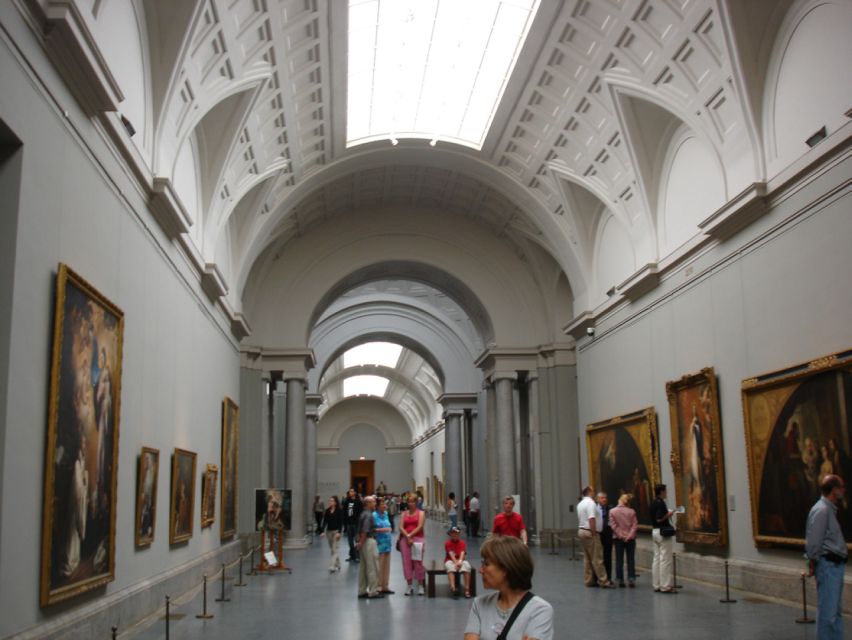
The Prado can feel confusing on a first visit. Its holdings range from medieval religious painting through the Renaissance, Baroque art, and the nineteenth century. Without a clear route, you can spend much of your two hours finding rooms and reading labels. Your guide’s job is to give the visit shape.
Seven centuries of European art in two hours
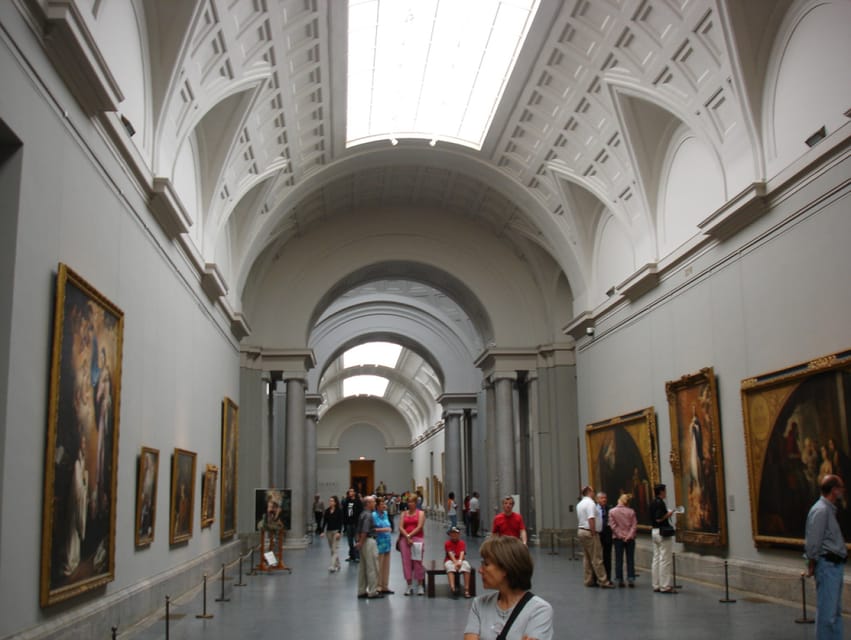
The central strength of the tour is its broad artistic story. The Prado allows you to see how painting changed over more than 700 years, from the Middle Ages to the nineteenth century. Your guide can explain not just what you are looking at, but why the work mattered in its own period and how later artists changed the rules.
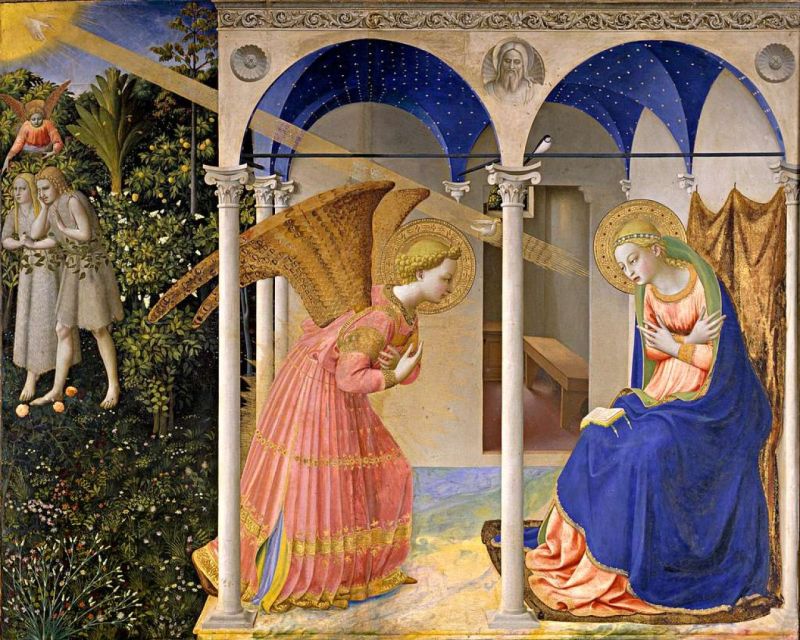
You might begin with early religious works, where paintings served worship and taught biblical stories to people who could not read. From there, the guide can show how artists became more interested in space, anatomy, natural observation, individual expression, and the power of light.
The collection includes major names such as El Bosco, Albrecht Dürer, El Greco, Peter Paul Rubens, Titian, Tintoretto, Diego Velázquez, and Francisco Goya. That list is impressive, but famous names alone do not make a good museum visit. The useful part is seeing connections between them.
El Greco’s elongated figures and intense spiritual mood look very different from the courtly confidence of Velázquez. Rubens brings movement, color, and physical energy to his scenes. Goya later pushes portraiture and history painting toward something more direct and unsettling. A guide can help you notice those changes instead of treating each room as a separate collection of old pictures.
Why a guide changes the way you see the paintings
A painting can look simple until someone points out the details that control your response. The direction of a glance, the position of a hand, an object in the background, or a change in the quality of light may alter the whole meaning of a scene.
That is where this private tour earns its fee. You can ask why a painting was made, who commissioned it, what its symbols mean, or why a certain artist mattered. You are not limited to a fixed speech delivered to a crowd. The guide can spend more time on the questions that hold your attention.
The strongest guide feedback has centered on clear explanations and lively storytelling. Alex was praised for making art and history feel alive. Carlos was described as personable and easy to engage with, while Enrique was noted for explaining a range of artists clearly. Amanda was praised for promptness and for answering a painting question by message after the tour. Those details suggest a service that extends beyond simply walking you through the doors, though you should still regard any follow-up help as a courtesy rather than the main product.
A private guide is especially useful if members of your group have different levels of art experience. One person can ask about technique while another asks about politics, religion, or the artist’s life. You do not need to arrive with background knowledge. You only need a few interests to give the guide a starting point.
More Prado tours and tickets:
- Madrid: Prado Museum Guided Tour with Skip-the-Line Ticket
★ 4.5 · 2,018 reviews - Madrid: Prado Museum Guided Tour With Fast Access
★ 4.8 · 1,785 reviews - Prado Museum Small Group Tour with Skip the Line Ticket
★ 5.0 · 1,738 reviews - Royal Palace & Prado Museum Skip the Line Guided Tour
★ 4.5 · 1,347 reviews
The Prado highlights you are most likely to remember
The exact route is personalized, so no fixed room-by-room path is promised. Still, the main appeal is the chance to encounter the museum’s best-known masters with explanation rather than simply checking off names.
Velázquez is an obvious focus. His paintings reward close attention to the relationship between the figures, the viewer, and the space around them. A guide can show you how his brushwork and visual choices create a sense of presence, and why his work influenced painters long after his lifetime.
Goya offers a different kind of reward. His art can begin with the world of the Spanish court and move toward sharper observations of violence, fear, and social behavior. If you are interested in how art responds to political events and personal change, tell your guide early.
El Greco is useful for understanding how an artist can turn distortion into expression. Titian and Tintoretto help explain the Venetian interest in color, movement, and dramatic composition. Rubens gives you a route into the Baroque taste for energy and spectacle. Bosch and Dürer open different windows onto northern European art, symbolism, and precision.
You will not study every one of these artists in depth during a two-hour visit. That is not a flaw, as long as you choose your priorities. I would tell the guide your three most important interests at the start, then allow room for a few discoveries along the way.
What $136 per person buys you
At $136 per person, this is a premium museum visit. The price includes the art guide, Prado entrance, taxes, and management fees. It does not include transportation, so you must handle your own arrival and departure.
The cost makes the most sense when divided among a private group. A party of several people receives a dedicated guide and can adjust the pace, rather than paying separately for a standard group experience. For two people, the price feels harder to justify unless you value expert explanation, have limited time, or want a quiet visit shaped around specific artists.
I would compare the price with your museum habits. If you enjoy reading labels, researching artists, and wandering without help, you may prefer an ordinary admission and a longer self-guided visit. If the Prado feels intimidating, or if you have only one chance to see it, a specialist can prevent you from spending your time on rooms that matter less to you.
The included time after the tour improves the value for groups of seven or fewer. You can continue looking at works your guide did not cover and use the recommendations offered at the end. That turns the two-hour tour into a starting point rather than a hard stop.
What the two-hour pace feels like
Two hours is long enough for a focused introduction and short enough to fit into a busy Madrid day. You will not leave having seen the entire museum, but you should leave with a clearer idea of how the collection is organized and which artists deserve more of your time.
The private format lets you stop for questions without worrying about holding up a large group. It also allows the guide to move more quickly through familiar material if you already know something about Renaissance or Baroque painting.
The tradeoff is that a personalized route can become too ambitious. If you name every artist on the list, the guide may need to keep each stop brief. For the best result, decide before arrival if you want a broad history of European art, a Velázquez and Goya visit, a tour focused on religious painting, or something else.
Photography is not allowed inside. If taking pictures of artworks is important to you, this restriction may disappoint you. The benefit is that you can give the paintings your full attention, and the guide can point out details that would not always show clearly in a quick snapshot.
Staying on after your guide leaves
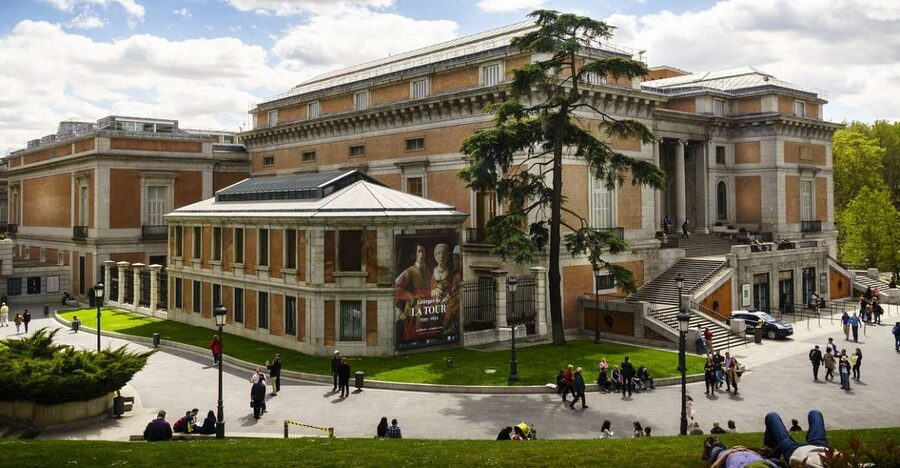
If your party has seven people or fewer, you may remain inside the Prado after the guided tour. This is one of the most useful practical features of the experience. Two hours can introduce the collection, but the extra time lets you revisit a favorite work or find rooms that were not part of the main route.
Ask your guide for recommendations before the tour ends. You might want to see another work by an artist already discussed, compare two different periods, or simply return to a painting that went by too quickly.
If your group has more than seven people, the included option to stay afterward does not apply according to the stated conditions. The private visit itself is designed for a private group, with language options in English or Spanish.
Who will get the most from this Prado visit
I would choose this tour for a first visit to the Prado when you want an intelligent introduction without spending half the day in a large group. It also suits families, mixed-age groups, and friends with different interests because the guide can adjust explanations and pace.
It is a good fit if you are curious about art but unsure how to read a painting. The guide can give you practical ways to look at composition, symbols, technique, and historical setting that remain useful after you leave Madrid.
Visitors with mobility concerns may also appreciate the private arrangement. The museum is wheelchair and stroller accessible, and one guide has been specifically praised for helping with mobility issues. Still, you should communicate any needs when arranging the visit so the guide can plan the route appropriately.
I would hesitate if your main goal is to see every major room. Two hours will not do that. I would also think twice if you prefer complete solitude or dislike guided interpretation. The private format is flexible, but it is still a guided experience.
Booking advice and final verdict
Book this Prado visit if you want the museum to make sense, not merely to see a list of famous paintings. The art specialist, private pacing, queue advantage for small groups, and option to stay afterward give you more control than a standard group tour.
The price is high for a two-hour museum visit, especially for one or two people. It becomes easier to justify for a group of up to seven, for a first-time Prado visit, or for anyone who values expert context more than the lowest admission cost.
Before you arrive, choose a few priorities and tell your guide. If you do that, the visit can turn a vast collection into a clear, memorable introduction to Velázquez, Goya, El Greco, Rubens, Titian, Bosch, and the long story of European painting.
FAQ
How long does the Prado private visit last?
The guided visit lasts two hours.
Where does the tour begin?
Your guide meets you by Goya’s statue, outside the Prado Museum and in front of the ticket office.
What languages are available?
The live guide is available in English or Spanish.
Is the group private?
Yes. This is a private group experience.
How many people can stay in the museum afterward?
Groups of seven people or fewer may stay in the museum after the guided visit.
Are entrance fees included?
Yes. The price includes museum entrance fees, taxes, and management fees.
Is the Prado accessible for wheelchairs and strollers?
Yes. The museum is wheelchair and stroller accessible.
Can I take photographs inside the Prado?
No. Photography is not allowed inside the museum.
Just added around Madrid
- Madrid: Afternoon Prado Museum Tour with Skip-the-Line Entry★ 4.4 · 491 reviews
- Small Group Prado Museum Guided Tour with Skip the Line★ 4.2 · 106 reviews
- Madrid: Reina Sofía Museum Guided Tour, Small Group★ 4.9 · 67 reviews
- Reina Sofía Museum – Guided tour IN ITALIAN with family discount.★ 4.8 · 19 reviews
- Prado Museum Tour with ticket, small group & expert guide★ 5.0 · 13 reviews
- Madrid: Prado Museum Skip-the-Line Guided Tour★ 4.3 · 254 reviews
- Prado Museum for kids & families: Private fun tour★ 5.0 · 32 reviews
- Madrid: Prado Museum guided tour optional Reina Sofía Museum★ 4.8 · 38 reviews
Museum Tours in Madrid, compared.
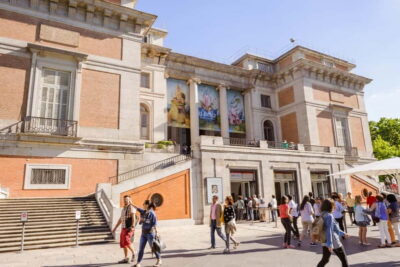
Prado Museum Guided Tour with Skip-the-Line Ticket
Read our review →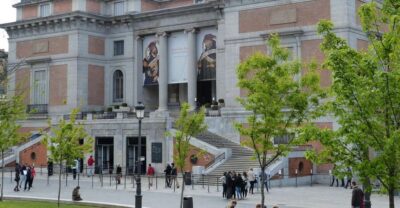
Prado Museum Small Group Tour with Skip the Line Ticket
Read our review →
Royal Palace & Prado Museum Skip the Line Guided Tour
Read our review →
Browse the lists this tour appears in