
Review · ITALY
Padova: Baptistery of the Cathedral & Museum of the Diocese
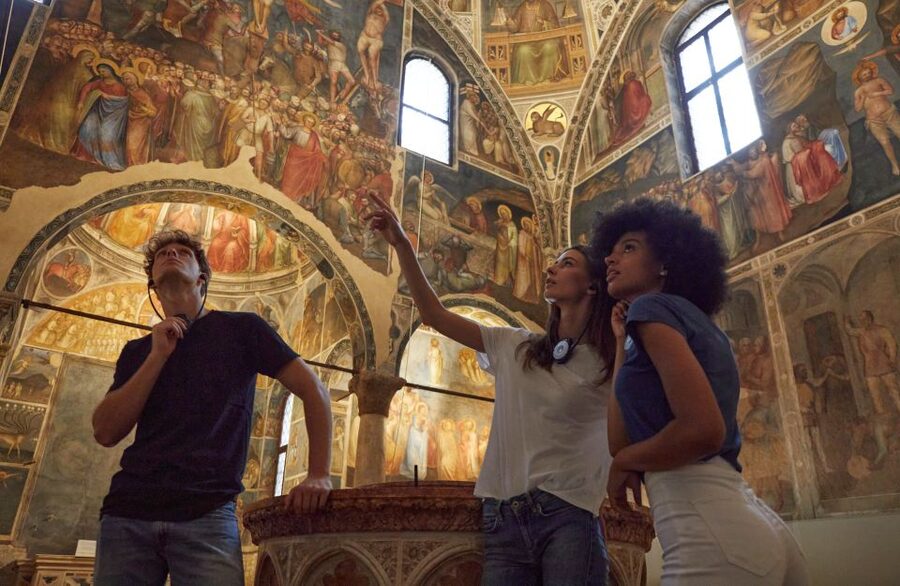
Padua’s Baptistery of the Cathedral is a small building with a huge visual punch. Giusto de’ Menabuoi covered its walls and dome with scenes running from Genesis to Revelation, ending in a crowded Paradise overhead. The result is one of the finest surviving examples of Italian fourteenth-century painting, and the site has been part of Padua’s UNESCO World Heritage designation since 2021.
I like the way the audio tour gives you a clear path through the paintings, and I like that your ticket also includes the Diocesan Museum and its grand Bishops’ Hall. The main caution is value: at $17, this is a short one-hour visit, so it suits art lovers and focused sightseeing better than anyone seeking a long museum outing.
Key points to know before you go
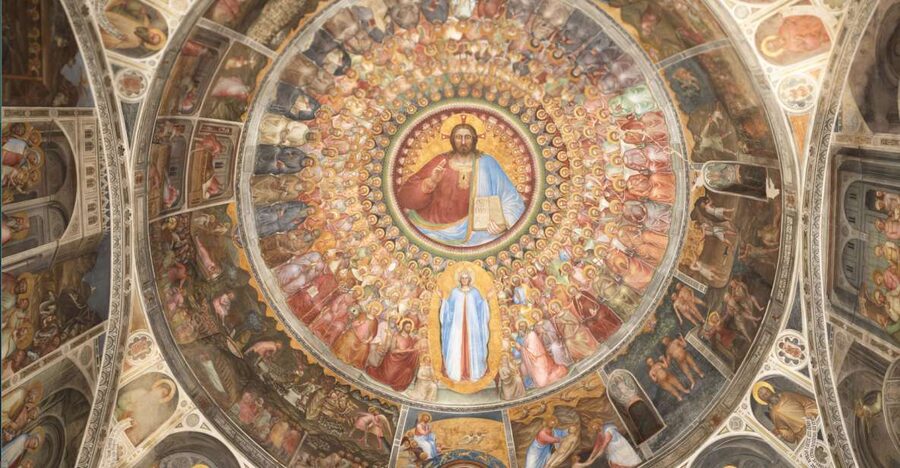
- Fourteenth-century fresco cycle: Follow Giusto de’ Menabuoi’s painted story from the Book of Genesis to the Book of Revelation and the Paradise in the dome.
- UNESCO-listed setting: The Baptistery belongs to Padua’s World Heritage site, alongside other major religious buildings in the city.
- Two connected experiences: Your visit includes the Baptistery and the Museum of the Diocese, including the Bishops’ Hall.
- Multilingual audio tour: Commentary is available in Italian, English, French, Spanish, and German.
- Short, focused visit: Allow about one hour, making this easy to fit into a day of sightseeing in central Padua.
- Important practical tip: Exchange your voucher at the ticket office in Piazza Duomo 12 before entering.
Why the Baptistery deserves your time
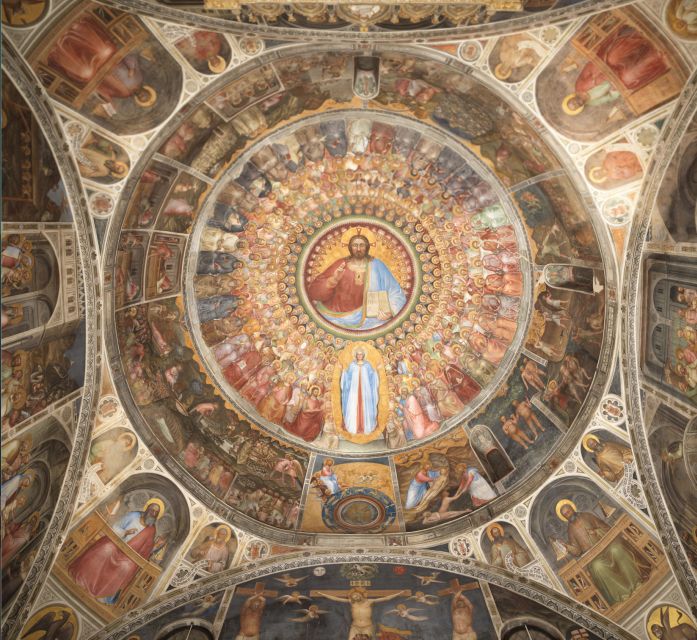
The Baptistery is not simply an old church with a few surviving paintings. It is a carefully planned visual story. As you look around, the frescoes present the Christian account of creation, faith, judgment, and eternal life. The dome draws your eyes upward to Paradise, where the painted figures fill the space above you.
That design matters because medieval and early Renaissance religious art was meant to communicate through images. You do not need a background in theology or art history to follow the broad idea. The audio narration helps explain what you are seeing and gives the paintings a sequence, so you are less likely to wander past important scenes without understanding their place.
I especially like that the visit begins with the art itself rather than with a long museum introduction. The Baptistery has the force of a single, unified artwork. Its walls, arches, and dome work together, and the enclosed setting helps the frescoes feel concentrated rather than scattered across a large gallery.
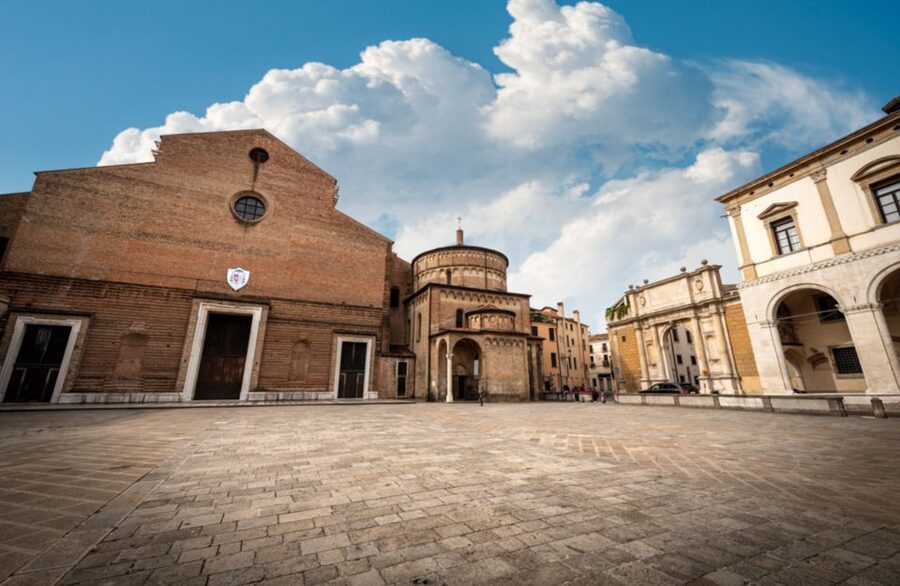
The building also gives you a direct connection to Padua’s religious and civic past. It forms part of the monumental Piazza Duomo complex, which includes the Cathedral and the Bishop’s palace. Together, these buildings reflect the long Christian tradition of the city and the role of the bishop in Padua’s public life.
More basilicas and cathedrals in Italy:
- Vatican Museums, Sistine Chapel & St. Peter’s Basilica Tour
★ 4.3 · 73,970 reviews - Vatican Museums, Sistine Chapel & St Peter’s Basilica Guided Tour
★ 4.5 · 39,149 reviews - Rome: Vatican Museums, Sistine Chapel and Basilica Tour
★ 4.3 · 16,039 reviews
Giusto de’ Menabuoi’s story from Genesis to Paradise
The paintings were commissioned by Fina Buzzaccarini, the wife of Francesco da Carrara, known as il Vecchio, who ruled Padua. That detail gives the Baptistery a political and personal dimension. This was not a plain parish project. It was a major commission connected to one of Padua’s ruling families.
Giusto de’ Menabuoi’s work is often best understood as a complete cycle rather than as a collection of separate pictures. The scenes lead you through the story of Salvation, beginning with the Book of Genesis and continuing to the Book of Revelation. The sequence culminates in the Paradise that dominates the dome.
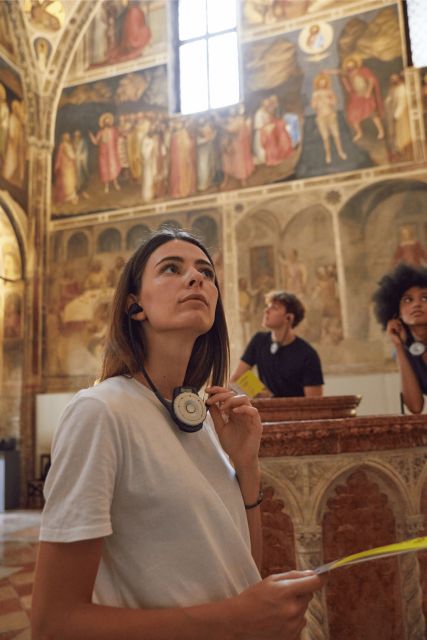
You may find yourself spending more time looking upward than at eye level. The dome is the visual high point, but the surrounding frescoes help explain how the story reaches that final image. Give yourself time to let your eyes adjust to the full arrangement before focusing on individual figures.
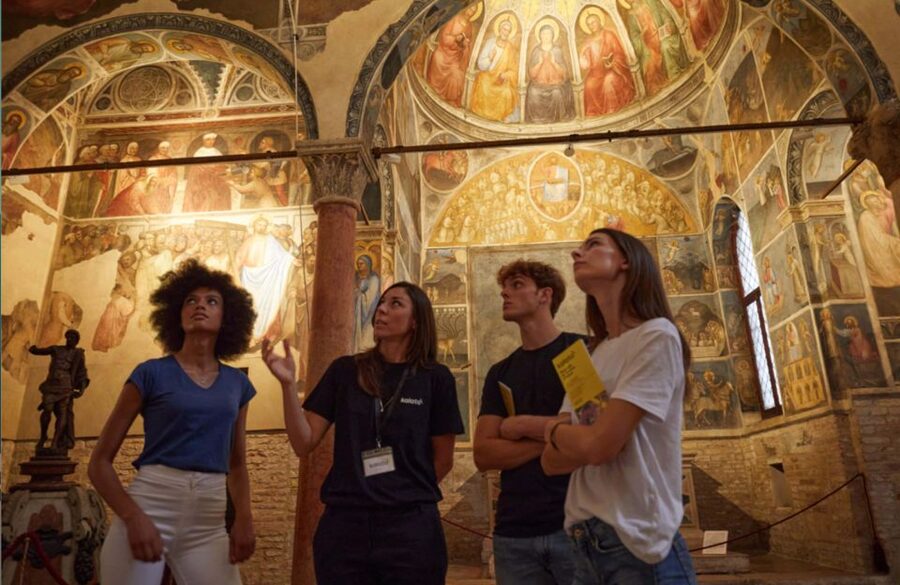
The audio guide is useful here because it can point out the connection between scenes and explain the role of the different sections. Without some direction, the sheer number of painted figures can become confusing. With the narration, you have a better chance of reading the room as an organized whole.
Photography is allowed if your camera has a safety strap. That is a useful rule to know before you arrive. You can record a few details, but the best reason to visit is to look carefully in person, especially at the way the paintings occupy the curved architecture.
The audio tour and the pace of the visit
This is a self-guided audio experience rather than a traditional live tour. You receive headsets and listen to commentary in Italian, English, French, Spanish, or German. A host or greeter is also available in those five languages.
That setup gives you control over your pace. You can pause to study a scene, continue when you are ready, or keep moving if you have a full schedule. For a compact site like the Baptistery, this can work better than trying to stay with a large group.
The one-hour duration is both a strength and a limitation. I like it as a compact cultural stop between other Padua sights. You can see an important work of art without giving up half a day. At the same time, the short visit means you should not expect an extensive museum program or a long guided lecture.
Language planning matters. The audio guide is advertised in five languages, but a Spanish-speaking visitor reported arriving when only other language options were immediately available and being asked to wait for another session. That person chose not to wait and felt the price was high for what was received. If Spanish is essential for your visit, confirm the available starting time at the ticket office before you begin.
What you see at the Museum of the Diocese
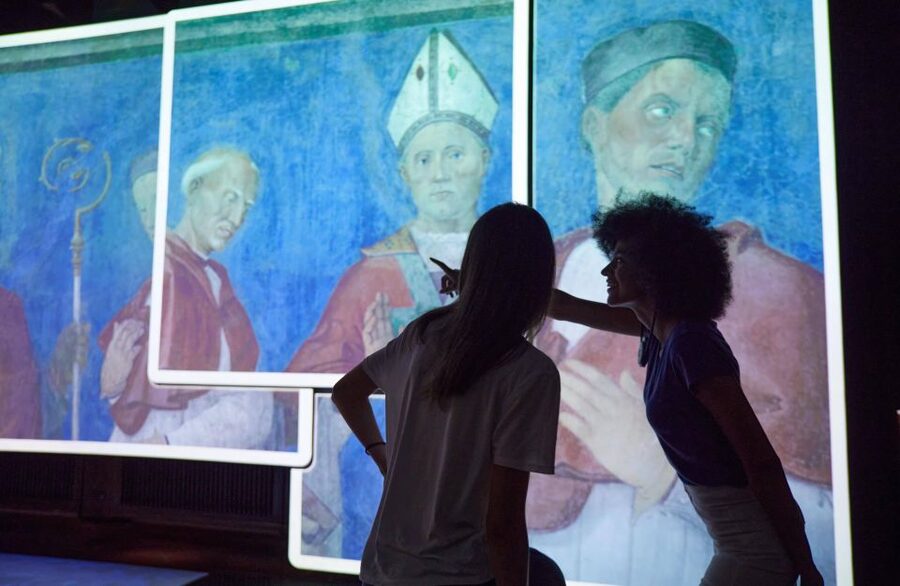
The ticket also takes you into the Museum of the Diocese inside the Bishop’s palace. This adds a second layer to the visit. The Baptistery gives you a concentrated fresco cycle in a worship space, while the museum connects the artwork to the wider religious institution that shaped Padua.
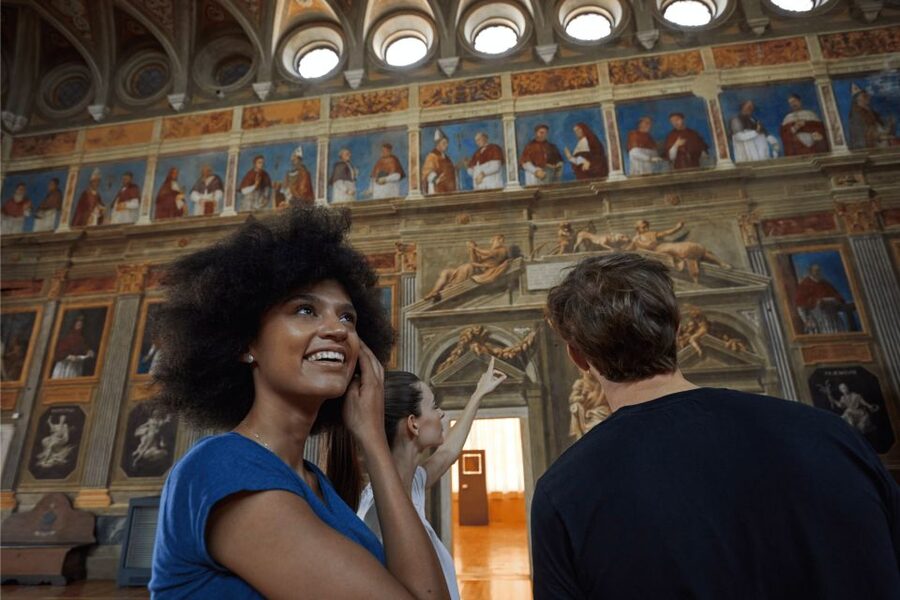
The most notable room mentioned for the museum visit is the Bishops’ Hall. Its scale and ceremonial purpose make it different from the Baptistery. Instead of looking at a painted theological program overhead, you move through a room linked to the public and official life of the diocese.
The museum portion is presented through an unusual guided format, with the audio narration helping you understand the palace and its role. Since the entire experience lasts about an hour, expect an introduction rather than an exhaustive museum visit. If you want to inspect every object in detail, you may need more time than the standard visit allows, if additional access is available.
I see the museum as an important part of the ticket rather than the main reason to book it. The Baptistery contains the unforgettable visual moment. The Diocesan Museum and Bishops’ Hall help complete the setting and show that Piazza Duomo is more than a single church building.
A few more museum visits around Italy worth comparing
- Vatican: Museums & Sistine Chapel Entrance Ticket
★ 4.5 · 144,003 reviews - Florence: Skip-The-Line Uffizi Gallery Timed Entry Ticket
★ 4.5 · 27,832 reviews - Vatican Museums & Sistine Chapel Skip-the-Line Entry Ticket
★ 4.4 · 13,838 reviews - Rome: Vatican Museums, Sistine Chapel & Basilica Tour
★ 4.7 · 13,217 reviews
Is $17 a fair price?
At $17 per person, the cost is reasonable if you value the Baptistery’s frescoes and want clear commentary in your own language. You are paying for access to two related sites, headsets, and a structured audio visit, not just entry into a small church.
The price feels less attractive if you judge the outing only by its length. One hour is a firm point of comparison. A visitor who wants a full museum afternoon may find the ticket expensive, especially if the Spanish audio option is not ready at the chosen time.
For me, the value depends on your Padua priorities. If you are already visiting Piazza Duomo and care about medieval or early Renaissance art, this is a sensible add-on. The paintings are the sort of work that rewards attention, and the audio guide gives you more context than a quick look through the doorway.
If you are choosing between several paid sights, think about how much time you want to spend indoors. This is a compact, focused visit, not a broad survey of Padua. Its strength is quality and concentration.
How to plan your arrival at Piazza Duomo
The meeting point is the ticket office at Piazza Duomo 12 in Padova. You must exchange your voucher at the counter before the tour begins, so do not go straight to the Baptistery expecting to scan a phone and walk in.
Allow a little extra time for that exchange, especially if you have booked a specific starting time. Availability varies by date, and the activity page advises checking the schedule before booking.
The central location makes this easy to add to a walking day in Padua. The Cathedral and Bishop’s palace are part of the same monumental complex, so you can understand the setting better by looking at the surrounding buildings before or after your visit.
The Baptistery is wheelchair accessible. Animals are not permitted inside, with the exception of assistance dogs for people with disabilities. Cameras are allowed only when fitted with a safety strap.
Who will enjoy this visit most
I would choose this for you if you enjoy art with a clear story and prefer a short visit with an audio guide. It is also a good fit if you want to see an important UNESCO-listed part of Padua without committing to a long tour.
Families with older children may find the Genesis-to-Paradise sequence easier to follow than a room full of unrelated paintings. The audio format also lets each person listen at a comfortable pace. Younger children who need lots of movement may find the one-hour visit demanding, since the main activity is standing and looking carefully.
Art history students and visitors interested in religious painting will get the most from the commission by Fina Buzzaccarini and the work of Giusto de’ Menabuoi. You do not need specialist training, but a little patience helps. The paintings are best appreciated when you look at the entire plan of the room, not just one figure at a time.
I would think twice if your only goal is a quick photograph. The Baptistery is compact, but its meaning is layered. The audio tour earns its place when you are willing to listen and look together.
A practical verdict on the Baptistery and Diocesan Museum
Book this experience if you want a concentrated look at one of Padua’s most important fourteenth-century interiors, with the added benefit of the Diocesan Museum and Bishops’ Hall. The fresco cycle is the clear star, and the audio narration helps you understand how the scenes fit together.
Before booking, check the language and starting time you need. The Spanish-language problem reported on one visit is a useful warning, even though the tour officially offers Spanish audio. At $17, the visit makes the most sense for people who value the artwork and the UNESCO setting, not for anyone expecting several hours of museum access.
For a short cultural stop in central Padua, I would recommend it. Go in with realistic expectations, exchange your voucher at Piazza Duomo 12, and give the dome enough time. The Paradise overhead is the part you will remember.
FAQ
Where does the Baptistery and Diocesan Museum visit begin?
You begin at the ticket office at Piazza Duomo 12 in Padova. Exchange your voucher at the ticket counter before the visit starts.
How long does the experience last?
The stated duration is one hour. Check the available starting times when booking.
What languages are available for the audio guide?
The audio guide is available in Italian, English, French, Spanish, and German.
Is a live host included?
A host or greeter is available in Italian, English, French, Spanish, and German. The main commentary is provided through the included audio guide and headsets.
What does the ticket include?
The visit includes the Cathedral Baptistery, the Museum of the Diocese, the Bishops’ Hall, and headsets for the audio guide.
Is the site wheelchair accessible?
Yes, the activity is wheelchair accessible.
Can I take photographs or bring an animal?
Photography is allowed when your camera has a safety strap. Animals are not permitted, except for assistance dogs serving people with disabilities.
Just added around Italy
- Bari Rickshaw Tour with Museum Visits★ 5.0 · 25 reviews
- Oil museum and oil mill in Tuscany: tour and tasting★ 5.0 · 16 reviews
- Enchanted Castle of Sciacca – Museum Tickets★ 3.5 · 63 reviews
- Torino: FIAT Historic Museum and Lingotto District Tour★ 4.9 · 14 reviews
- Torino: The Car Museum Skip-The-Line Tour★ 4.7 · 22 reviews
- Timed Entry Ticket to the Uffizi Gallery★ 4.5 · 498 reviews
- Florence: Accademia Gallery Entry Ticket with Audio Guide★ 4.1 · 88 reviews
- Vatican City: Sistine Chapel, Museums, Basilica Private Tour★ 4.8 · 158 reviews
Museum Tours in Italy, compared.
Vatican: Museums & Sistine Chapel Entrance Ticket
Read our review →
Vatican Museums, Sistine Chapel & St. Peter’s Basilica Tour
Read our review →
Vatican Museums, Sistine Chapel & St Peter’s Basilica Guided Tour
Read our review →
Skip-The-Line Uffizi Gallery Timed Entry Ticket
Read our review →
Vatican Museums, Sistine Chapel and Basilica Tour
Read our review →
Vatican Museums & Sistine Chapel Skip-the-Line Entry Ticket
Read our review →
Vatican Museums, Sistine Chapel & Basilica Tour
Read our review →
Browse the lists this tour appears in