
Review · AMSTERDAM
Our Lord in the Attic Museum Entrance Ticket in Amsterdam
A complete Catholic church sits above the rooms of a narrow Amsterdam canal house. That is the striking idea behind Our Lord in the Attic Museum, where you climb through a 17th-century home to reach a chapel built in secret when public Catholic worship was forbidden.
I like the close look at ordinary domestic life, from kitchens and bedrooms to period furnishings. I also like the freedom to take the audio-guided visit at your own pace, usually in 30 minutes to two hours. The main drawback is practical: there are many narrow stairs, and the upper church can become hot on warm days.
Key points to know before you go
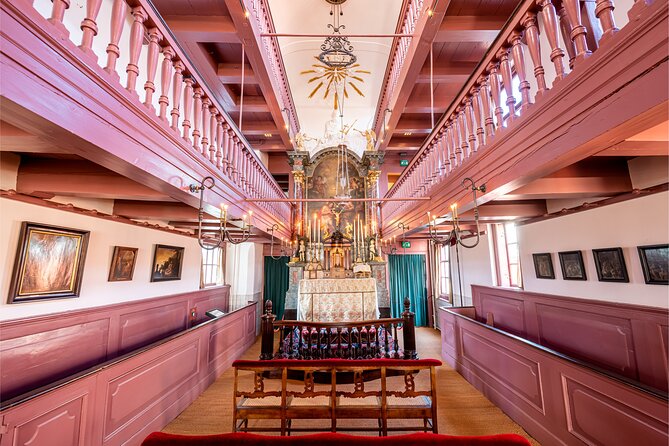
- A full Catholic church hides in the attic: The chapel is not a small prayer room, but a complete place of worship fitted into the top floors.
- You walk through a real 17th-century canal house: Living rooms, kitchens, bedrooms, and furnishings help make the story concrete.
- The English audio guide adds useful context: You can pause and move at your own speed rather than follow a fixed group.
- The newer wing is part of the ticket: An underground passage connects the old house to exhibits in a neighboring building.
- Expect stairs and warm upper rooms: The building’s unusual design is its strength, but it can be tiring for anyone with mobility concerns.
- A central location makes this easy to add to a day in Amsterdam: The museum is near public transportation and close to the Red Light District.
Why a church is hidden above an Amsterdam home
The museum tells a simple story with a surprising setting. In 1663, a Catholic church was built inside the upper levels of a canal house. Catholic worship was prohibited at the time, but local authorities often turned a blind eye to private religious practice.
That tension is the heart of the visit. Amsterdam was not fully open to every form of public worship, yet it developed a reputation for allowing people of different beliefs some room to live and worship. The church is therefore more than an unusual building. It shows how religious rules, daily life, and practical tolerance could exist side by side.
You do not begin in a grand entrance hall. You move through the house itself, climbing from one level to the next. The route helps you understand the challenge of placing a church in a domestic building. Rooms that once served everyday needs lead upward toward a space designed for Mass and community worship.
I find that arrangement more effective than seeing the chapel by itself. If you walked straight into the church, it would be impressive. After passing through the house, it becomes easier to grasp how carefully the building had to be adapted.
More Museum Tours in Amsterdam
- Amsterdam: The Upside Down Museum Entrance Ticket
★ 4.4 · 9,506 reviews - Amsterdam: Red Light Secrets Museum Entry Ticket
★ 4.2 · 5,722 reviews - Amsterdam’s Weirdest Museum: Ripley’s Believe It or Not!
★ 4.5 · 4,920 reviews
Walking through the 17th-century canal house
The first part of the visit focuses on the house. Refurbished rooms give you a look at domestic life in Amsterdam’s Golden Age. You see living spaces, kitchens, and bedrooms decorated with historic furnishings, and the small scale of the rooms makes the old home feel tangible.
This is not a museum where you simply look at objects behind glass. The building itself carries much of the story. You can examine the proportions of the rooms, notice how the floors connect, and see how a canal house functioned before modern plumbing, lifts, and open floor plans.
The audio guide helps fill in the gaps. It explains details that might otherwise pass unnoticed, including the building’s religious purpose and the way its rooms were used. I recommend listening carefully rather than rushing toward the chapel. The house is not just a passage to the main attraction.
You can complete the visit in about 30 minutes if you focus on the central highlights. I would allow around 90 minutes if you want time for the audio guide, furnishings, church, and newer wing. Two hours gives you a relaxed pace, especially if you pause to study the rooms.
The narrow layout means the experience feels intimate, but it also requires patience. You may need to move slowly on stairs or wait briefly in tighter spaces. This is part of the character of an old canal house, not a polished modern museum designed for wide corridors.
Reaching the attic church
The church is the emotional center of the visit. As you climb higher, the setting becomes increasingly unexpected. A private house gives way to a complete Catholic church fitted beneath the roof, with the architecture adapted to the limited space.
The word attic can make the chapel sound makeshift. It is certainly concealed, but it was designed as a functioning place of worship. The result is an extraordinary use of space. A building meant for domestic life was reshaped to support Catholic services during a period when public celebration of Mass was not allowed.
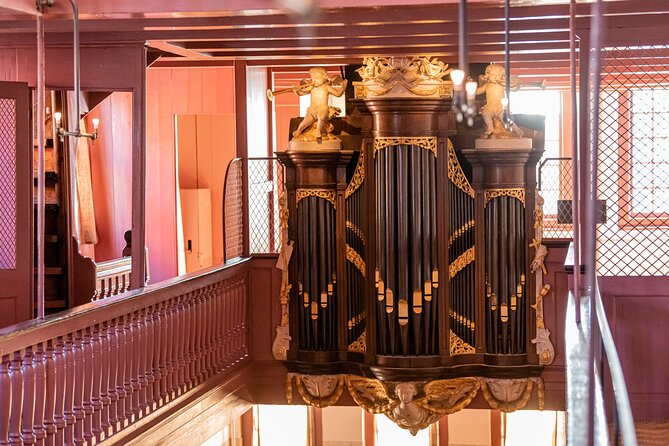
Pay attention to the way the church occupies the upper floors. The pulpit is one detail worth noticing because its storage and placement show how carefully every part of the building had to work. The church was not simply decorated in an empty loft. It had to operate within the limits of the house.
The chapel also gives the museum its quiet, reflective side. Freedom of religion and freedom of conscience are central themes here. You can appreciate the room as an architectural curiosity, but the stronger experience comes from thinking about the people who used it and the risks involved in worshipping outside official policy.
The upper floors may be hot in very warm weather. That matters more than you might expect, since the church is reached by stairs and the visit can require a fair amount of standing and walking. If Amsterdam is having a heat wave, plan a slower visit and avoid treating this as a quick air-conditioned stop.
The 2015 extension and underground passage
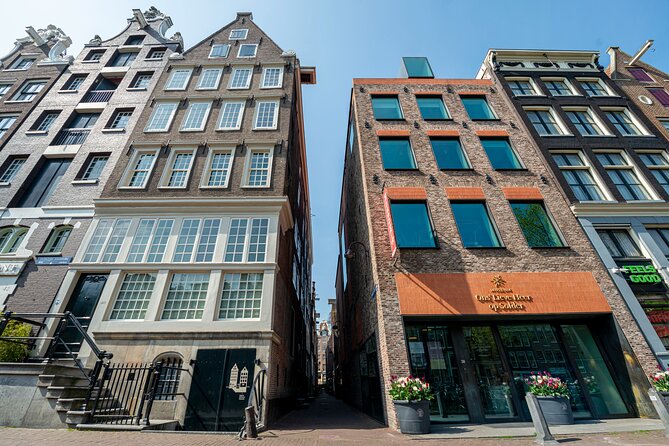
Your ticket also includes the newer wing in the neighboring building at Oudezijds Voorburgwal 38. The two buildings are connected by an underground passage, so you do not need to buy a second admission or leave the museum to continue the visit.
This extension gives the museum more room to explain the building and its place in Dutch society. The old house supplies the physical setting, while the newer section offers displays and exhibits that help connect the story with wider themes.
I appreciate the contrast between the two parts. The historic canal house is the main attraction, with uneven proportions and authentic old spaces. The extension makes it easier to present information in a clear way. Together, they create a more complete visit than the attic chapel alone.
Allow extra time for this section. If you are trying to squeeze the museum into a packed schedule, it is easy to spend all your attention on the church and leave too quickly. The extension helps explain why this particular building has been preserved and why its story still matters.
A few more museum visits around Amsterdam worth comparing
- Amsterdam: Van Gogh Museum Ticket and City Canal Cruise
★ 4.6 · 3,899 reviews - Amsterdam: Van Gogh Museum Ticket & Canal Cruise
★ 4.5 · 3,304 reviews - Amsterdam: NEMO Science Museum Ticket
★ 4.4 · 2,979 reviews - Moco Museum Amsterdam Admission Ticket with Banksy and more
★ 4.0 · 1,745 reviews
What the audio guide adds
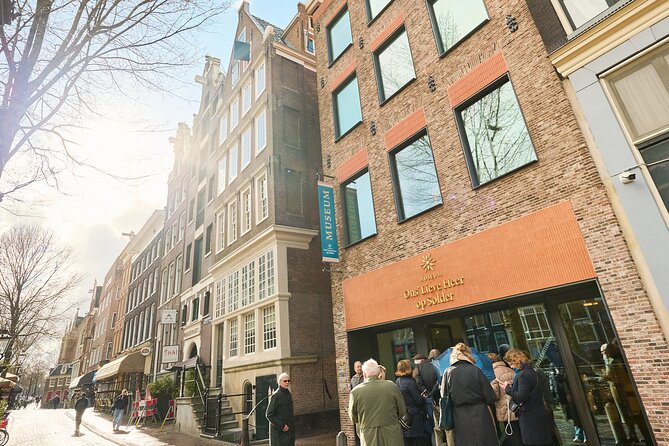
Admission includes an audio guide, offered in English according to the booking information. It is especially useful here because the building contains details that are hard to interpret without explanation.
You can use it as a framework rather than a strict timetable. Listen as you move through the rooms, pause when you want to inspect an object, and continue when the space is free. This works well for solo visits and for mixed groups where people do not all move at the same speed.
The audio guide also gives the museum a more focused feel than simply walking through a historic house. It explains the religious background, the hidden church, and the role of tolerance in Dutch history. I would not skip it unless you have very limited time.
There is no guide’s name listed for this experience, and the visit is self-guided rather than led by a person. Staff can answer questions, but the audio guide provides the main narration.
How long should you allow?
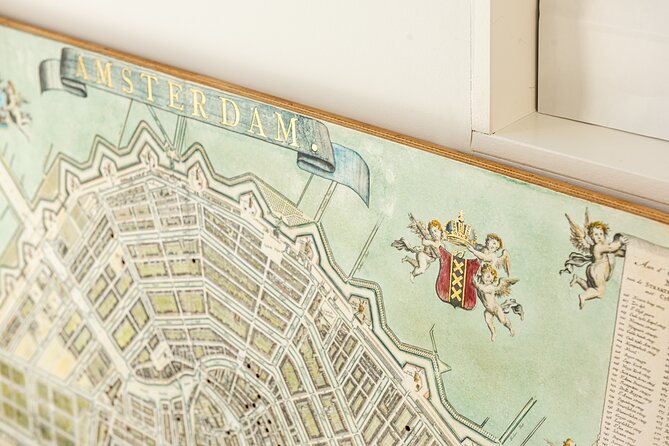
The official estimate ranges from 30 minutes to two hours. That is a wide range because the museum suits both a quick stop and a careful historical visit.
Here is how I would plan it:
- 30 to 45 minutes: See the key rooms, climb to the church, and move through the extension at a brisk pace.
- About 90 minutes: Use the audio guide properly, examine the furnishings, and give the church the attention it deserves.
- Up to two hours: Visit slowly, spend time with the displays, and take breaks if the stairs or warm upper rooms become tiring.
The museum is often booked about 22 days ahead, which suggests that reserving early is sensible during busy periods. A mobile ticket makes entry straightforward, and the ticket is intended for a reserved time. If you arrive late, the museum usually tries to accommodate you, but staying close to your chosen time is wiser because the building can become busy.
Price and practical value at $21.78
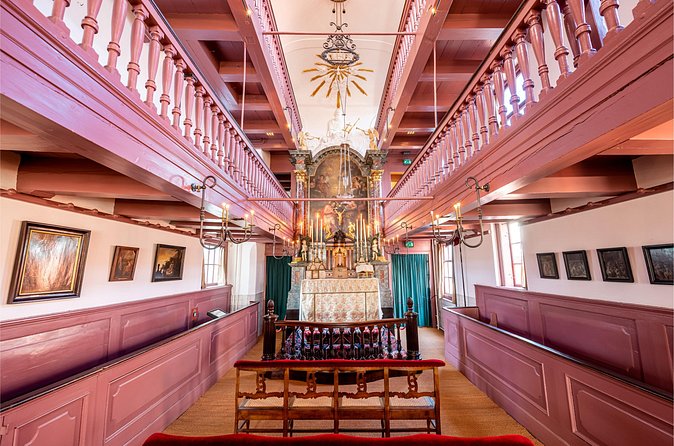
At $21.78 per person, this is not the cheapest short museum visit in Amsterdam. The value depends on what you want from an attraction.
If you only want to see a church interior, the price may feel high for a visit that can be completed in under an hour. If you value architecture, social history, and access to an intact historic home, the ticket makes more sense. You are paying for two connected buildings, an English audio guide, the furnished canal house, and the complete attic church.
I see the strongest value in the combination. Many museums can show you religious objects or domestic furnishings. Fewer let you walk through a preserved house and then discover a functioning church hidden above it.
The price also compares reasonably with the time you can spend inside. Give it 90 minutes and it becomes a substantial central Amsterdam stop, especially if you take time with the audio guide and extension.
There is no food or drink included. A café is available afterward according to the visit details, but you should treat that as a separate stop rather than part of the ticket.
Stairs, bags, location, and comfort
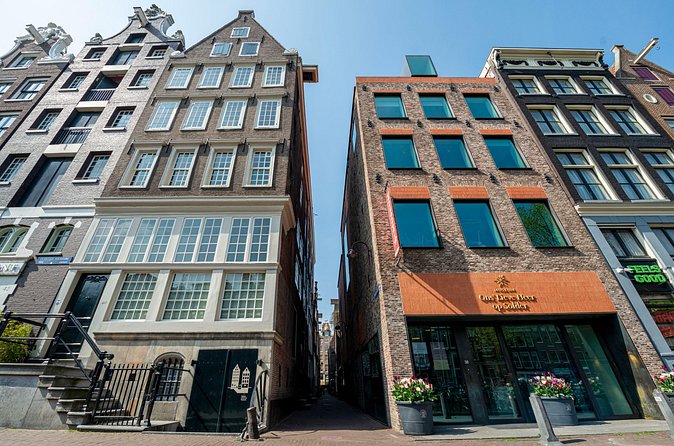
The museum is in central Amsterdam on a historic canal and is close to public transportation. It is easy to combine with other sights in the center, although the surrounding area includes the Red Light District. That is worth knowing if you prefer to plan your route or are visiting with children.
The stairs are the main physical issue. The route through the old house and up to the church is not suited to everyone with mobility limitations. Most people can participate, but you should be realistic about the narrow staircases and the amount of standing involved.
The building has an unguarded cloakroom and free lockers for coats and bags. Backpacks and larger bags cannot be taken into the museum, and handbags must be no larger than A4 size. Pack lightly so you do not have to make decisions at the entrance.
Service animals are allowed. The museum is near public transportation, and confirmation is provided when you book.
Who will enjoy this museum most?
I would recommend it to anyone interested in Amsterdam beyond canals and paintings. It is particularly good for you if you enjoy historic buildings, religious history, domestic interiors, or unusual architecture.
It also works well as an introduction to the religious divisions that shaped the Netherlands. If you are planning a Jewish Quarter walking tour or another history-focused visit, this museum can provide useful context about faith, restriction, and tolerance in Amsterdam.
Families with older children may find the hidden church memorable because the basic idea is easy to grasp: a whole church is concealed in a house. Younger children may have less patience for the audio guide and repeated stairs, so your timing matters.
I would be more cautious if you have difficulty climbing stairs, dislike warm rooms, or want a large museum with broad galleries and many objects. This is a compact, intimate place. Its appeal comes from the building and its story, not from scale.
Cancellation and booking advice
Free cancellation is available if you cancel at least 24 hours before the experience start time. Cancellations made less than 24 hours ahead are not refunded, and changes inside that period are not accepted.
I would reserve ahead if your Amsterdam schedule is tight, particularly since the experience is commonly booked several weeks before the visit. Keep your mobile ticket handy and aim to arrive near your reserved time, even though late arrivals can often be accommodated.
Should you book Our Lord in the Attic Museum?
Book it if you want an authentic Amsterdam building with a strong story rather than another large collection of art. The attic church is genuinely unusual, and the rooms below give it meaning. The English audio guide, underground passage, and included extension make the ticket more useful than a quick look at the chapel alone.
Skip it if stairs are a serious problem or if you have only a few minutes and want a broad survey of Dutch art. For most history-minded visitors, though, this is a worthwhile central stop. Allow about 90 minutes, carry only a small bag, and save enough energy to climb slowly to the church.
FAQ
Where is Our Lord in the Attic Museum located?
The museum is in central Amsterdam on a historic canal, at Oudezijds Voorburgwal 38 for the newer entrance wing. It is near public transportation.
What is included in the admission ticket?
Admission to the museum and an audio guide are included. Food and drinks are not included.
How long does the visit take?
The visit can take about 30 minutes to two hours. A visit of roughly 90 minutes allows time for the audio guide, historic rooms, attic church, and extension.
Is the visit guided by a person?
The experience is self-guided and includes an audio guide. Staff can answer questions, but no named personal guide is provided.
Can I bring a backpack?
Backpacks and larger bags cannot be taken into the museum. A free locker is available, and handbags must be no larger than A4 size. The cloakroom is unguarded.
Are there many stairs?
Yes. The museum occupies several levels of a historic canal house, and you climb narrow stairs to reach the attic church. This may be difficult for anyone with mobility issues.
Can I cancel for a refund?
You can cancel for a full refund up to 24 hours before the experience start time. Cancellations or changes made less than 24 hours before the start time are not accepted for a refund.
Just added around Amsterdam
- Van Gogh Museum Tour excluding Entrance Tickets★ 5.0 · 16 reviews
- Van Gogh Museum Entry Ticket and Guided Tour★ 4.5 · 48 reviews
- Van Gogh Museum with Audio Guide★ 3.5 · 80 reviews
- Van Gogh Museum Skip the Queue with Audio Guide★ 4.0 · 261 reviews
- Amsterdam: Explore the Van Gogh Museum & His Masterpieces★ 3.5 · 64 reviews
- Amsterdam Van Gogh Museum with Audio or Guided Tour★ 4.0 · 266 reviews
- Van Gogh Museum, Rijks Museum & Walking Tour – Private Day Tour★ 5.0 · 17 reviews
- Van Gogh Museum Ticket with Audio Guide and Unlimited Access Time★ 5.0 · 25 reviews
Museum Tours in Amsterdam, compared.


Amsterdam’s Weirdest Museum: Ripley’s Believe It or Not!
Read our review →


Van Gogh Museum Amsterdam Exclusive Tour w/ Reserved Entry
Read our review →
Moco Museum Amsterdam Admission Ticket with Banksy and more
Read our review →Browse the lists this tour appears in