
Review · MADRID
Madrid: Small-Group Prado Museum Guided Tour (Up to 7)
The best part of this Prado visit is its small group of up to seven. In a museum packed with masterpieces, a compact group makes it easier to hear the guide, ask questions, and pause over details that most people walk past. You move from Fra Angelico and Dürer to Bosch, Velázquez, Goya, and Sorolla in two focused hours.
I like the clear sweep through European art, and I like that the guide points out small details you might miss without help. A 10-year-old enjoyed the entire visit, which suggests the pace can work for families as well as adults. The main drawback is time: the Prado is far too large for two hours, so this is an introduction, not a complete museum visit.
Key points at a glance
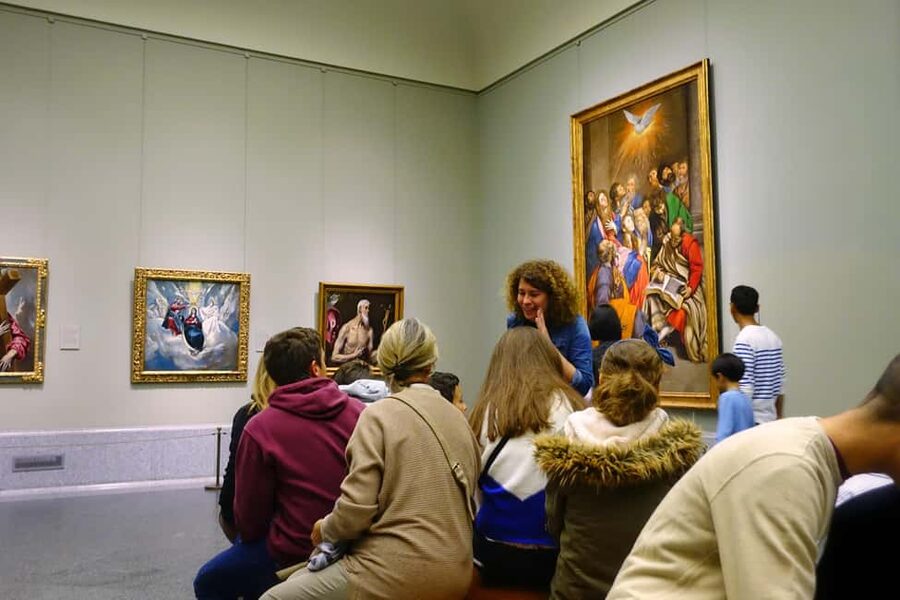
- Up to seven people: A small party keeps explanations audible and makes questions practical.
- Two hours inside the Prado: You get a brisk route through major periods rather than time for every gallery.
- Masterpieces across Europe: Expect Bosch, Dürer, Fra Angelico, Caravaggio, El Greco, Velázquez, Goya, and Sorolla.
- A useful women artists focus: Works by Artemisia and Clara Peeters add needed breadth to the usual list of famous male painters.
- Headphones are included: Helpful when rooms are crowded or the guide is speaking softly.
- Meet at the Goya Monument: The tour begins outside the museum, at the named meeting point, rather than with hotel pickup.
Starting at the Goya Monument
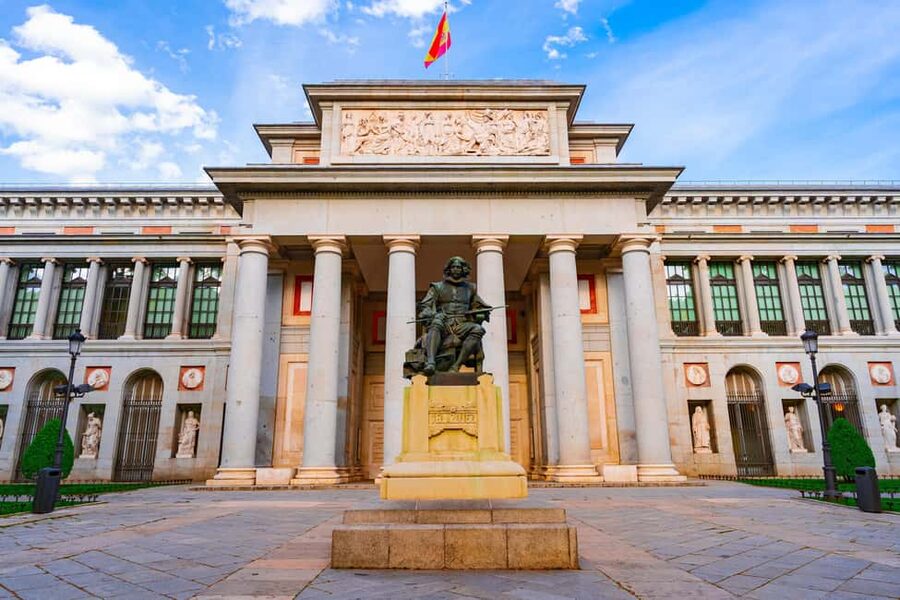
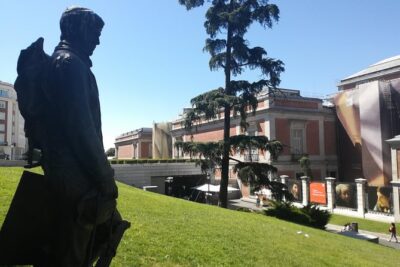
Your meeting point is the Monument to Goya, a simple and memorable place to begin. You are not collected from your hotel, so allow time to reach the Prado area on your own and arrive ready to enter with the group.
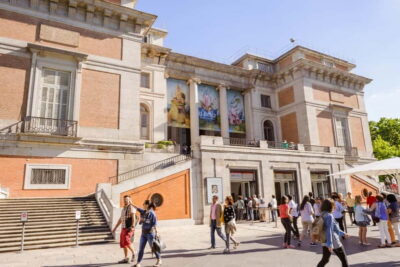
From there, you head toward the Prado through the Puerta de los Jerónimos. This entrance gives the visit a fitting start: you pass from Madrid’s busy streets into one of Europe’s great art museums. The guide leads the walk and handles the museum entry, while headphones help you follow the commentary without needing to stay shoulder to shoulder.
The exact order of rooms can change. Museum security, crowd levels, or operational issues may force a different route, and the museum can sometimes restrict admission. If that happens, the tour may be altered or cancelled with a full refund. That policy matters because the Prado is an active public institution, not a private attraction where every room can be promised at every hour.
More Museum Tours in Madrid
- Madrid: Prado Museum Entry Ticket
★ 4.6 · 20,699 reviews - Madrid: Reina Sofía Museum Entrance Ticket
★ 4.5 · 8,788 reviews - Madrid: Small Group of Prado Museum Tour & Optional Tapas
★ 4.6 · 2,437 reviews
Renaissance works by Dürer and Fra Angelico
The first part of the visit introduces you to Renaissance painting through artists such as Albrecht Dürer and Fra Angelico. These works reward a guide-led approach because their symbols, techniques, and religious references are not always obvious at first glance.
You can expect the guide to explain what you are seeing rather than simply point out famous names. This is where the small group helps. If a detail catches your eye, you can ask about it without trying to interrupt a large crowd.
Fra Angelico offers a quieter, devotional side of the Renaissance. Dürer brings a different precision and attention to line. The contrast gives you a quick lesson in how European art developed across regions and purposes. You will not spend enough time here to study every painting, but you should leave with a clearer sense of why these artists matter.
Bosch and the strange worlds of the Prado

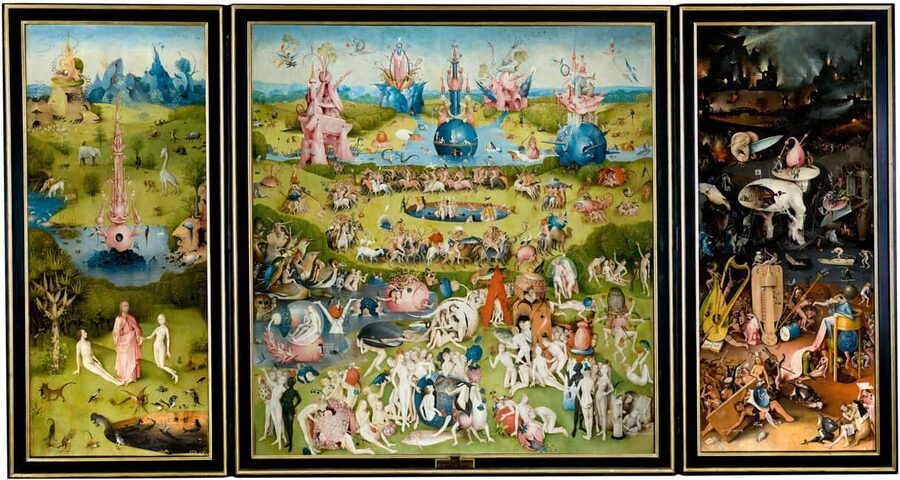
Hieronymus Bosch provides one of the most memorable stops, especially with The Garden of Earthly Delights and The Hay Wain. His scenes are full of odd figures, moral warnings, and tiny actions that can disappear when you look only at the overall image.
This is an ideal place for guided interpretation. A good explanation helps you read the painting from broad themes down to small figures and symbols. One useful feature of the tour is its attention to details that are plainly visible but easy to overlook because you do not yet know how to interpret them.
Do not expect a quiet, leisurely study of every inch of Bosch’s work in a two-hour route. Instead, use the guide’s explanation as a way to decide what deserves a longer look later. If Bosch is your main reason for visiting the Prado, you may want to return on your own with more time.
The first floor, from Strobel to Tintoretto
The route then moves to the first floor, where you might encounter the intensity of Strobel and the elegance of Tintoretto. This portion broadens the visit beyond the most heavily advertised Spanish names.
The contrast is useful. Strobel’s work can feel forceful and theatrical, while Tintoretto brings the sweeping movement and visual drama associated with Venetian painting. You get a quick sense of how artists approached light, gesture, space, and storytelling in different ways.
Because the tour covers a wide range, the guide must keep a steady pace. That can be a plus if you prefer a structured overview, but it may feel fast if you want extended time at each painting. I would treat this part as a carefully chosen sample, not a complete tour of the first floor.
More Prado tours and tickets:
- Madrid: Prado Museum Guided Tour with Skip-the-Line Ticket
★ 4.5 · 2,018 reviews - Madrid: Prado Museum Guided Tour With Fast Access
★ 4.8 · 1,785 reviews - Prado Museum Small Group Tour with Skip the Line Ticket
★ 5.0 · 1,738 reviews - Royal Palace & Prado Museum Skip the Line Guided Tour
★ 4.5 · 1,347 reviews
Artemisia, Clara Peeters, and a wider view of art
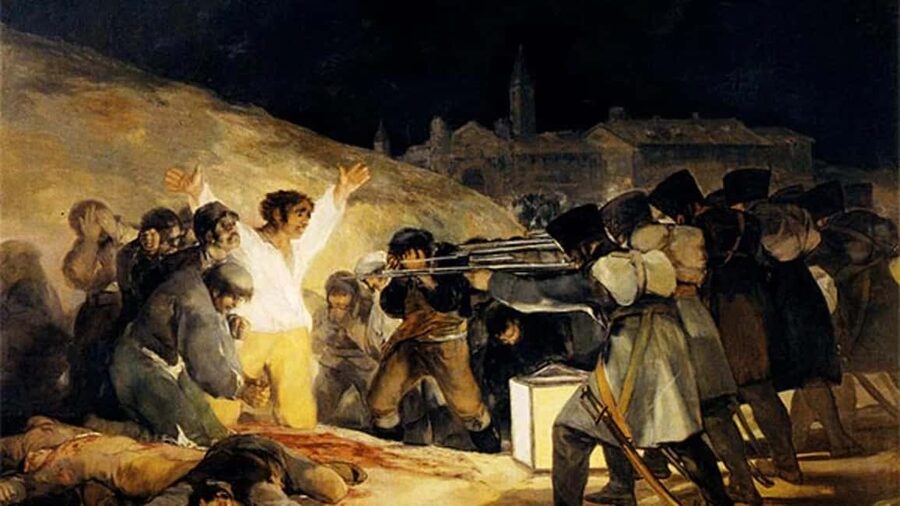
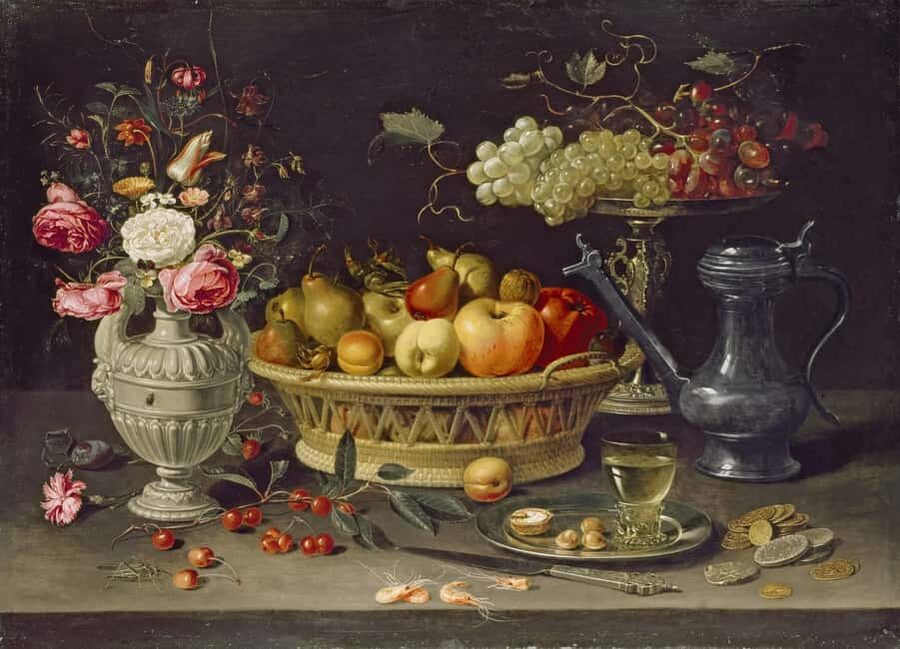
The Prado route gives attention to celebrated women painters, including Artemisia and Clara Peeters. This is more than a brief name check. Their inclusion changes the shape of the visit and gives you a chance to see how women artists worked within periods often presented through a mostly male list.
Clara Peeters is especially associated with still life, where close observation and small objects carry much of the meaning. Artemisia offers a different kind of force and drama. Seeing them within the same museum route helps you compare subjects, technique, and artistic choices rather than placing women artists in a separate category.
The tour also includes mention of the Dolphin Collection, another reminder that the Prado is not only a room of famous masterpieces. Collections often have strange, specialized, or unexpected corners. A guide can connect those less familiar works to the museum’s wider identity.
Baroque drama with Caravaggio, El Greco, and Velázquez
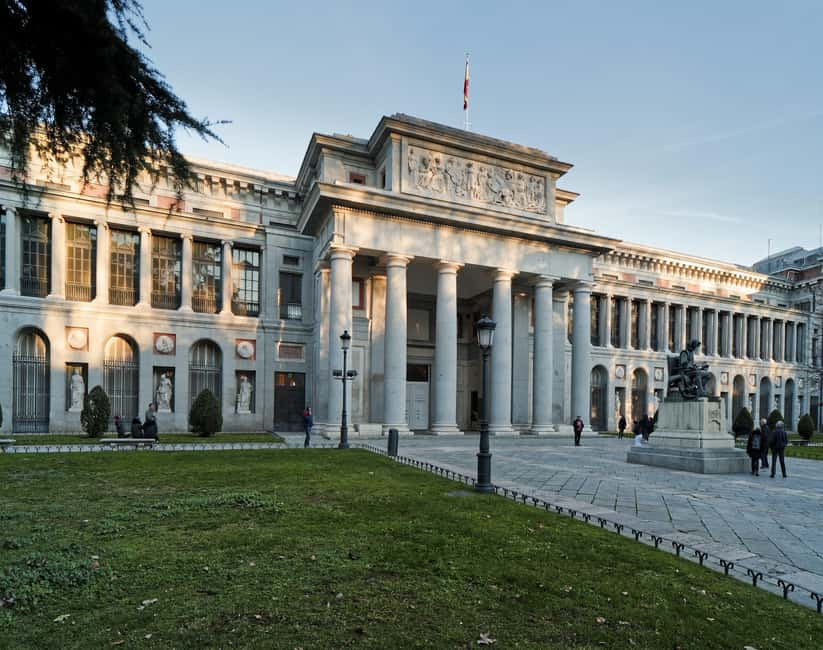
The Baroque section supplies the tour’s strongest run of famous names. Caravaggio brings sharp light and emotional tension. El Greco offers a more elongated, spiritual style. Velázquez provides the Spanish courtly tradition for which the Prado is best known.
This is the point where the value of a guide becomes plain. You are not simply checking off three painters. You are comparing how each artist handles people, space, color, and emotion. A guide can direct your attention to gestures, expressions, and background details that may look incidental until someone explains their purpose.
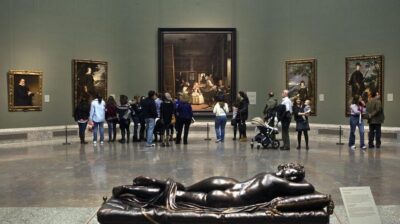
Velázquez deserves special patience, but two hours will not allow a full reading of every major work. If the guide stops at one of his best-known paintings, listen for how the scene is constructed and where your eye is directed. Then make a note of anything you want to revisit after the tour.
Caravaggio and El Greco also benefit from comparison. One can feel immediate and physical, while the other can seem stretched toward the spiritual. These differences make the Baroque section lively even if you know little about art history.
Goya and the darker side of the collection
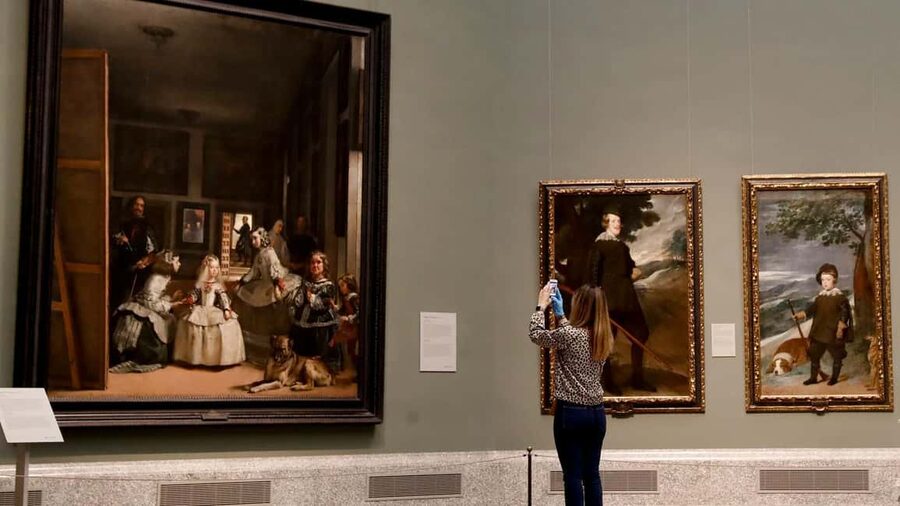
Francisco Goya brings the visit into more troubled territory. His work can be witty, unsettling, political, or bleak, and the tour presents his art as a look into the darker parts of human thought.
This section may be the most challenging for younger children, though the family experience reported for a 10-year-old suggests that a child who enjoys stories and unusual images could follow along well. Parents should still expect some serious and disturbing themes rather than a light art lesson.
Goya is also a strong reason to meet at the monument outside the museum. The starting point creates a direct link between the man and the collection. It gives the tour a sense of direction before you enter the galleries, without requiring a separate introduction to Madrid’s wider history.
Sorolla and the change in mood

After Goya, Joaquín Sorolla can feel like a burst of daylight. His paintings bring sunny beaches, open air, and a bright color range that changes the emotional temperature of the visit.
The contrast is valuable. Museums can become tiring when every room demands intense concentration, and Sorolla offers a visual reset. Look for the way light and color carry the scene. Even with limited time, these works can leave you with a strong final impression of Spanish painting.
This is also a reminder that the Prado is not limited to solemn religious scenes and royal portraits. Its collection covers very different moods and periods. The route makes that range easier to grasp because the paintings are placed into a larger story rather than shown as isolated objects.
The Hall of the Muses
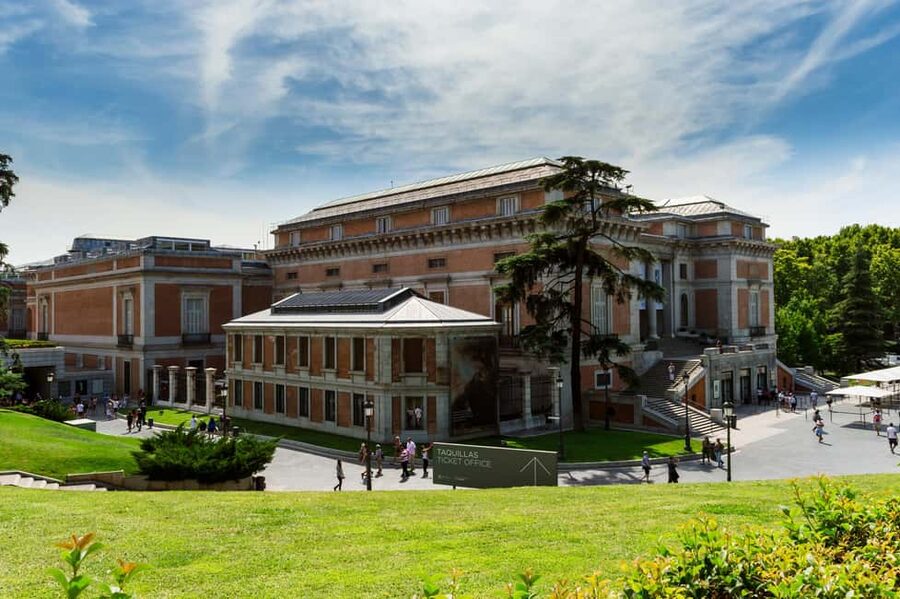
The visit ends in the Hall of the Muses, a fitting place to pause after moving through so many styles. The setting gives the tour a final moment of reflection, with art, myth, and emotion brought together in one space.
Do not expect the Hall of the Muses to function like a separate attraction with a long stop. It is part of the closing movement of the tour. The value is in ending with a room that feels different from the picture galleries and gives you a chance to gather the visit in your mind.
At this point, you should have a practical map of the Prado: Renaissance works, Bosch’s strange scenes, Baroque painting, Spanish masters, women artists, Goya’s darker works, and Sorolla’s light. You will not know every room, but you will know where your interests lie.
What two hours and $46 really buy you
At $46 per person, this tour is not the cheapest way to enter the Prado. The price includes museum admission, a live guide, a walking tour, and headphones. The real question is how much you value direction and interpretation.
If you enter alone, you can spend the same two hours wandering among hundreds of works without knowing which rooms deserve priority. This tour gives you a planned route through major artists and helps you understand details you might otherwise miss. For a first visit, that structure can make the fee worthwhile.
The small group is especially important. With up to seven people, you have a better chance of hearing the guide and asking a question than you would in a large group. The compact format also suits families, couples, and solo visitors who want company without joining a crowd.
The limit is simple: two hours cannot cover the Prado fully. If you already know the collection well, you may prefer a general admission visit that lets you set your own pace. If you are new to the museum, $46 buys a useful orientation and saves you from spending your whole visit guessing where to go.
Practical details before you go
The tour is offered in English or Spanish, and private or small-group options are available. Wheelchair access is listed, but the Prado can still be busy, so it is wise to allow extra time for movement and security.
Leave suitcases and large backpacks behind. The museum may refuse entry to visitors carrying them, and the instructions specifically warn against bringing luggage or large bags. A small, practical day bag is the safer choice, subject to museum rules.
Photography may also be restricted. One recent booking specifically noted a no-photo rule inside the Prado, so do not plan your visit around taking pictures of every painting. Your attention will be better spent listening and looking closely anyway.
Arrive on time at the Goya Monument. A recent visit had a guide arrive about 15 minutes late, so a short delay is possible, but you should not build a tight connection immediately after the tour. Crowds and security can also slow entry even when tickets are arranged.
You can cancel up to 24 hours before the start for a full refund, and you can reserve now while paying later. Starting times vary, so check availability for your date before making other plans.
Who should book this Prado visit
I would choose this tour for a first-time Prado visitor who wants the major artists placed into a clear story. It also suits you if you enjoy asking questions, prefer a small group, or find large museums tiring without a plan.
Families may find the format useful because the route keeps moving and offers a mix of unusual Bosch scenes, dramatic Baroque works, Goya’s intensity, and Sorolla’s sunny paintings. The reported experience of a 10-year-old enjoying the full visit is encouraging, though children’s interest will vary.
Art students and experienced museum visitors may find the route too broad if they want long periods with one artist. You can still use it as an orientation, then return independently to the paintings that caught your attention.
Should you book the two-hour Prado tour?
Book it if you want a focused first look at Madrid’s leading museum and value a guide who explains details, not just names. The group limit, headphones, entry ticket, and wide range of artists make the $46 fee reasonable for many first visits.
Skip it if you already know exactly which rooms you want and prefer to study paintings alone. The two-hour limit is the key compromise. For most people, though, a short, well-directed introduction is better than wandering through the Prado without a plan.
FAQ
Where does the Prado tour begin?
Meet your guide at the Monument to Goya.
How long does the tour last?
The guided visit lasts two hours.
How large is the group?
The experience is offered as a private or small-group tour, with groups of up to seven people for the small-group option.
Which languages are available?
The live tour guide is available in English or Spanish.
Is the Prado admission ticket included?
Yes. Entry to the Prado Museum is included in the tour price.
Are headphones provided?
Yes. Headphones are included.
Is the tour wheelchair accessible?
Yes, the activity is listed as wheelchair accessible.
Can I bring a suitcase or large backpack?
No. Large bags and luggage are not allowed, and the museum may refuse entry to visitors carrying them. Do not bring a suitcase or large backpack.
Can I cancel for a full refund?
Yes. You can cancel up to 24 hours in advance for a full refund. You can also reserve now and pay later.
Just added around Madrid
- Small Group Prado Museum Guided Tour with Skip the Line★ 4.2 · 106 reviews
- Madrid: Afternoon Prado Museum Tour with Skip-the-Line Entry★ 4.4 · 491 reviews
- Madrid: Reina Sofía Museum Guided Tour, Small Group★ 4.9 · 67 reviews
- Reina Sofía Museum – Guided tour IN ITALIAN with family discount.★ 4.8 · 19 reviews
- Prado Museum Tour with ticket, small group & expert guide★ 5.0 · 13 reviews
- Madrid: Prado Museum Skip-the-Line Guided Tour★ 4.3 · 254 reviews
- Prado Museum for kids & families: Private fun tour★ 5.0 · 32 reviews
- Madrid: Prado Museum guided tour optional Reina Sofía Museum★ 4.8 · 38 reviews
Museum Tours in Madrid, compared.
Prado Museum Guided Tour with Skip-the-Line Ticket
Read our review →
Prado Museum Small Group Tour with Skip the Line Ticket
Read our review →
Royal Palace & Prado Museum Skip the Line Guided Tour
Read our review →
Browse the lists this tour appears in