
Review · MADRID
Madrid: Reina Sofía Museum Guided Tour
Picasso’s Guernica is the great pull here, but the real value is seeing how the painting grows out of the art and politics of its time. A guide helps you read its broken bodies, harsh shapes, and limited color range instead of simply walking past one enormous, famous canvas.
I like the clear route through 20th-century art, which gives Cubism, Surrealism, Dadaism, abstraction, and modernism a useful order. I also like that your ticket lets you remain in the museum after the 75-minute tour, so you can return to a favorite work or explore galleries the guide had to skip.
The main consideration is pace. The Reina Sofía is huge, and 75 minutes can feel short, especially if you want time with every painting. The tour is also listed as bilingual, with English and Spanish spoken at the same time, so check the arrangement when booking if language focus matters to you.
Key points to know before you book
- Guernica comes near the end: The tour builds toward Picasso’s anti-war masterpiece rather than showing it first.
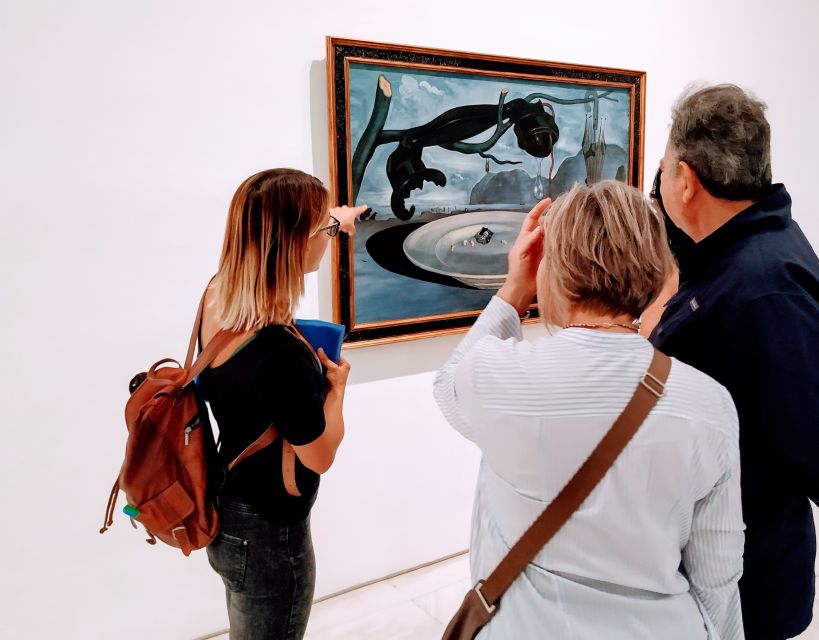
- The guide gives you a usable art map: You move through major 20th-century movements instead of wandering without context.
- English and Spanish are offered: The tour is bilingual, and a private group option is available.
- You can stay after the tour: The guided portion ends after about 75 minutes, but you may continue inside independently.
- The old hospital is part of the experience: Vaulted halls, galleries, and gardens give the museum more character than a standard modern exhibition hall.
- The price buys direction as much as entry: At $38 per person, the tour makes most sense if modern art is not your strong suit or you want help finding the key works quickly.
Why Guernica is worth the trip alone
The Reina Sofía is home to Picasso’s Guernica, a mural-sized painting made in response to the bombing of the Basque town of Guernica during the Spanish Civil War. It is often called one of the most powerful anti-war works ever made, and the scale matters. Reproductions cannot fully prepare you for how much wall the painting occupies.
The guide uses Guernica as the destination of the tour, first explaining the movements and ideas that shaped Picasso’s work. That approach is helpful because the painting can look chaotic when you meet it without preparation. Cubist fragmentation, stark geometry, distorted figures, and repeated symbols begin to make more sense when someone points out how Picasso built the scene.
Expect the painting to be moving rather than merely impressive. Its grieving figures, wounded horse, fallen soldier, and glaring light create a work that feels urgent even without color. A guide can also point out how Picasso uses distortion and repetition to communicate suffering without showing a conventional battle scene.
The timing is smart. By leaving Guernica until last, the tour gives you a short visual history lesson before the emotional high point. One drawback is that you may spend less time with it than you want. If the painting is your main reason for coming, remain afterward and return to the gallery at your own pace.
More Museum Tours in Madrid
- Madrid: Prado Museum Entry Ticket
★ 4.6 · 20,699 reviews - Madrid: Reina Sofía Museum Entrance Ticket
★ 4.5 · 8,788 reviews - Madrid: Small Group of Prado Museum Tour & Optional Tapas
★ 4.6 · 2,437 reviews
Following Cubism, Surrealism, and modernism in order
Modern art can be hard work when every room seems to introduce a new set of rules. This tour gives you a sequence, moving through major styles and showing how artists reacted against older ways of painting.
Cubism is especially important for understanding Picasso. Instead of presenting a subject from one fixed viewpoint, Cubist artists break it into planes and angles, suggesting several views at once. A good guide will help you notice how this changes your sense of space, rather than leaving you with the vague idea that Cubism simply looks fractured.
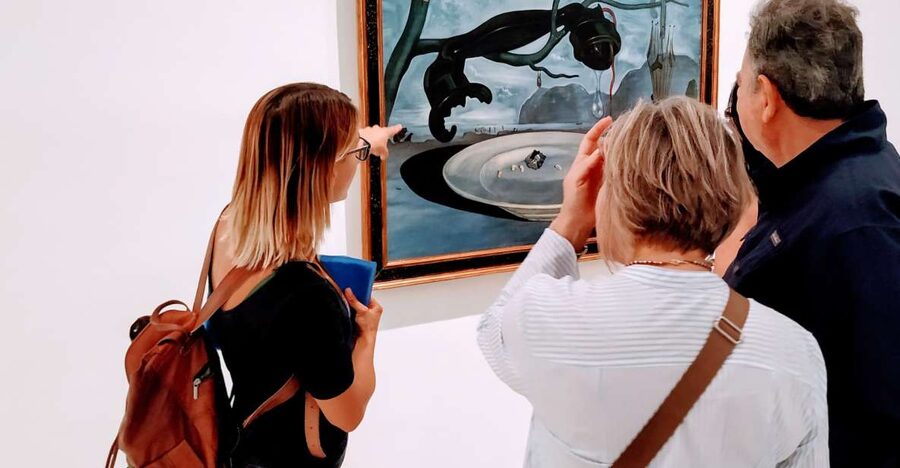
Surrealism brings a different challenge. The movement uses dreams, chance, strange pairings, and the unconscious to unsettle ordinary reality. Salvador Dalí’s work is a natural fit for this part of the visit, and the guide can help separate deliberate symbolism from the simple shock value of unusual images.
The museum also covers abstract art, Dadaism, and modernism. These categories can blur together during a quick visit, so explanations matter. Guides such as Paula, Helena, Alex, Nerea, and Irene have been praised for making difficult ideas easy to follow, often by asking what you notice before giving the formal explanation.
That question-based style is useful. You look first, then learn how the artist’s choices affect your response. It turns the tour into a conversation instead of a string of dates and names.
Picasso, Dalí, and Miró beyond the famous painting
The museum’s Spanish collection centers on Pablo Picasso, Salvador Dalí, and Joan Miró, three artists with very different ways of seeing. Picasso is the obvious star, but the contrast among these artists makes the visit much stronger.
Picasso’s work keeps changing shape across the museum’s story. His experiments with Cubism help explain the fractured visual language of Guernica, while his political work shows how modern art could respond directly to public events.
Dalí offers a more dreamlike route. His images can be precise and almost traditionally painted, yet the scenes behave like dreams. That tension between careful technique and impossible subject matter gives a guide plenty to discuss.
Miró brings another kind of freedom through simplified forms, signs, and bold arrangements. His paintings may look playful at first glance, but the tour can show you how line, color, and empty space carry the composition.
You will not see every important work in 75 minutes. That is not a flaw so much as a limit of the format. The guide selects a manageable group of paintings, which helps prevent the familiar museum problem of staring at too much art until none of it stays with you.
The former hospital building adds a second story
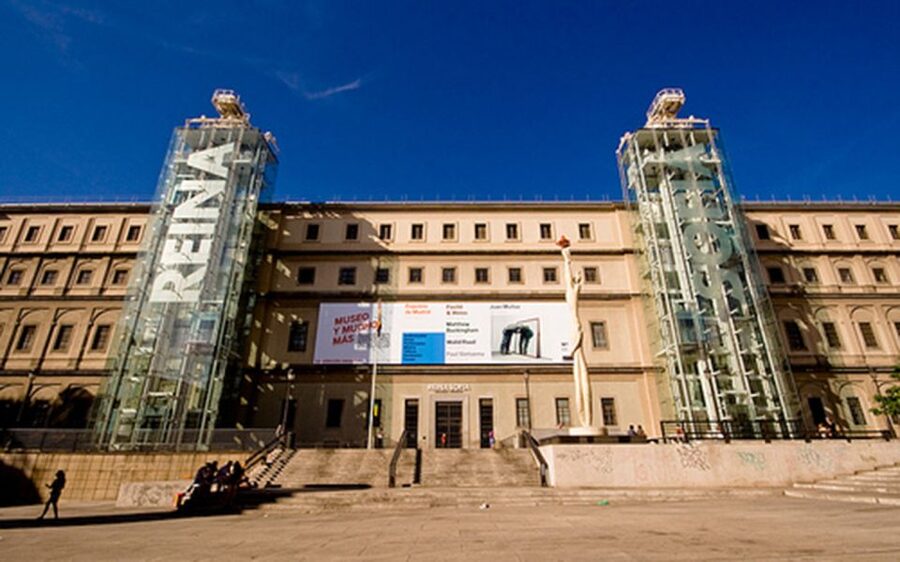
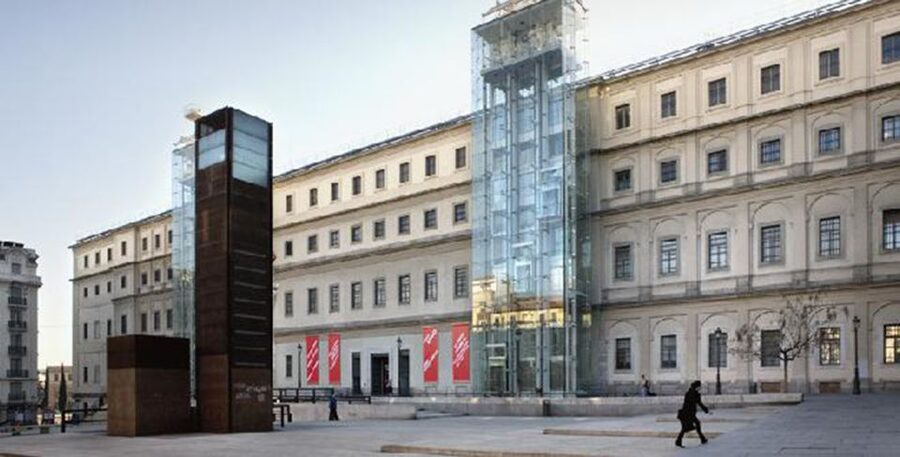
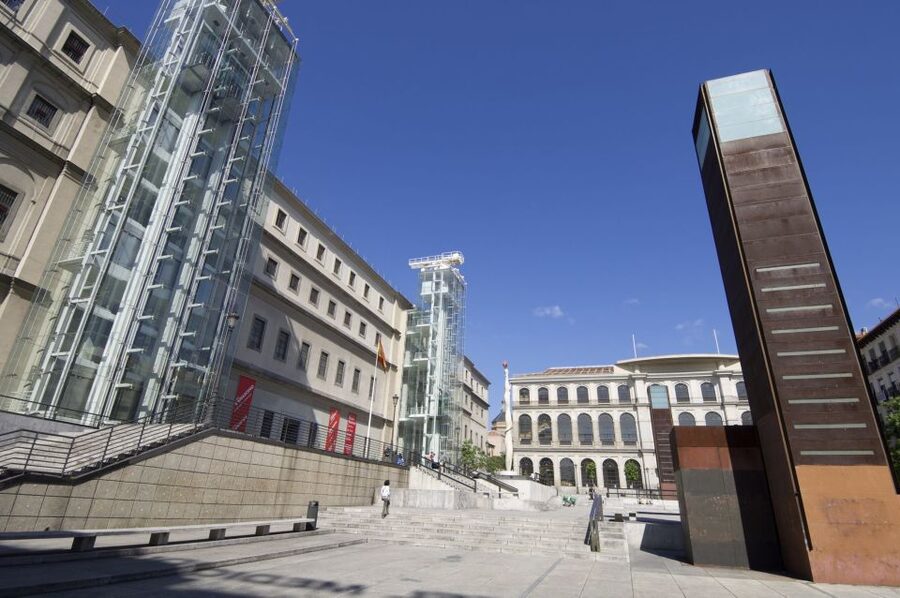
The Reina Sofía occupies a building that was formerly an elegant hospital. That history gives the visit an extra layer before you even reach the art. Vaulted hallways and the building’s older structure create a different mood from a purpose-built contemporary gallery.
The route includes a look at the interior spaces and a walk in the gardens, where you can admire the building from outside. This is a welcome pause between galleries, particularly if you need a moment to reset after Guernica or after concentrating on abstract works.
The building is not just decoration. Its corridors and rooms remind you that museums often grow out of earlier civic uses. Here, old architecture and politically charged 20th-century art sit together, creating a useful contrast between the past and the restless period represented in the collection.
The exact route can depend on gallery access and the guide’s choices. Think of the garden stop as part of the overall visit rather than a separate sightseeing stop. You are not booking a building tour, but the architecture makes the museum experience more memorable.
A few more museum visits around Madrid worth comparing
- Madrid: Prado Museum Guided Tour with Skip-the-Line Ticket
★ 4.5 · 2,018 reviews - Madrid: Prado Museum Guided Tour With Fast Access
★ 4.8 · 1,785 reviews - Royal Palace & Prado Museum Skip the Line Guided Tour
★ 4.5 · 1,347 reviews - Madrid: Prado Museum Ticket with In-App Audio Guide
★ 3.6 · 1,154 reviews
What the 75-minute itinerary feels like
You meet your guide at the Reina Sofía on Calle de Santa Isabel. The meeting point can vary with the option booked, so check your confirmation carefully and allow enough time to reach the museum. Transportation is not included, and the tour begins at the museum rather than from a hotel or city-center pickup point.
The included entrance ticket and skip-the-line access are important parts of the $38 price. You avoid spending part of your Madrid day working out how to enter, then follow a planned route through the major sections.
The first stage sets the context. Your guide introduces the museum and the broad story of Spanish modern art, then connects individual works to Cubism, Surrealism, Dadaism, abstraction, and modernism. The best guides keep the art moving without making the visit feel like a lecture.
The middle section compares artists and styles. This is where you learn to look for symbolism, technique, distortion, color, and composition. Several guides have been praised for using clear language, humor, and questions, which helps if you are new to modern art.
The final stage brings you to Guernica. After the guided portion, you may remain inside and explore by yourself. The museum also presents temporary exhibitions by international artists, so extra time is worthwhile if your schedule allows.
Some tours have lasted a little less than the advertised 75 minutes, while others have run closer to an hour and a half. Plan around the stated 75 minutes, and treat any additional time as a bonus rather than something to count on.
Guide quality and group size
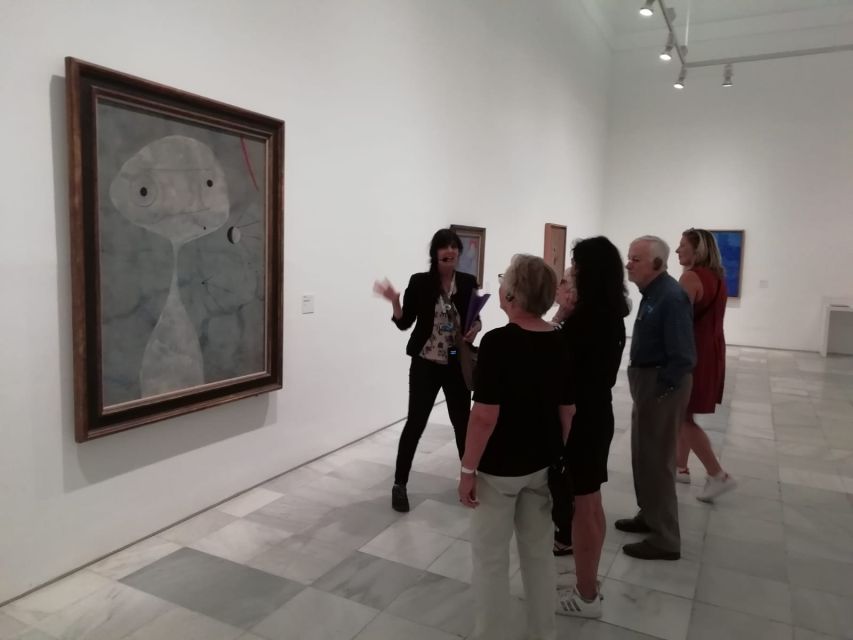
The guide is the heart of this experience. Past guides named in the feedback include Livia, Paula, Helena, Elena, Alex, Ali, Xavier, Nerea, Irene, and Fernando. The strongest descriptions focus on clear explanations, enthusiasm, good pacing, and an ability to make difficult paintings approachable.
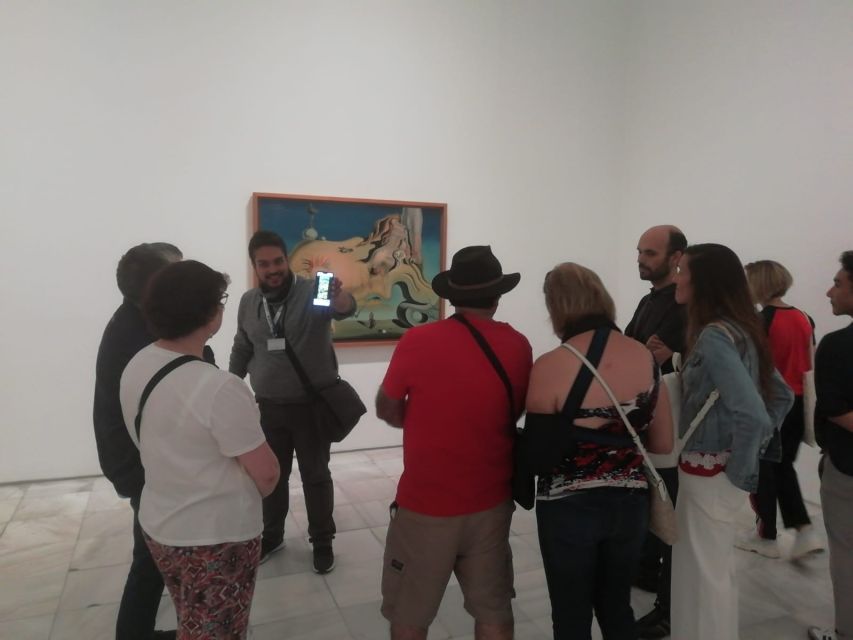
A guide such as Irene has been praised for handling both children and adults, while other guides have used comparisons, iPad images, and questions to make visual details easier to understand. Those small teaching tools can make a real difference when a painting seems confusing at first.
Group size can vary. A private group is available, but the standard option may involve more people. One earlier arrangement split a larger gathering into separate English and Spanish groups, producing a smaller group of five. That is the ideal setup for asking questions and staying close to the guide.
Large groups are not automatically a problem, but they can affect sound and sightlines. One past issue involved a crackly microphone. If you have trouble hearing, move closer and ask the guide to repeat a point. The tour is meant to be interactive, and several guides make time for questions.
Because English and Spanish may be delivered at the same time, the bilingual format can slow the rhythm. If you want the most concentrated English explanation, look closely at the language details when selecting your time and option.
Is $38 a fair price?
At $38 per person, this is more expensive than simply entering a museum and walking around with a map. You are paying for admission, skip-the-line access, and a professional guide who selects the key works and supplies the missing context.
I think the price is fair for a first visit, especially if you have limited time in Madrid or do not often visit modern-art museums. Without a guide, you may recognize Guernica but miss the artistic steps that lead to it. You may also pass through rooms by Picasso, Dalí, and Miró without understanding why their methods differ.
The value is weaker if you already know the Reina Sofía well or want to spend a full day studying individual works. A 75-minute tour cannot offer slow looking. You will cover highlights, then need to explore independently if you want the full museum experience.
The included skip-the-line entry is another practical plus. Madrid’s major museums can become busy, and saving time has real value during a short city break. There is no transportation, so your cost and planning remain focused on the museum itself.
Flexible booking also helps. You can reserve now and pay later, and cancellation is allowed up to 24 hours before the activity for a full refund. Those policies are useful if your Madrid schedule is still taking shape.
Practical rules for a smoother visit
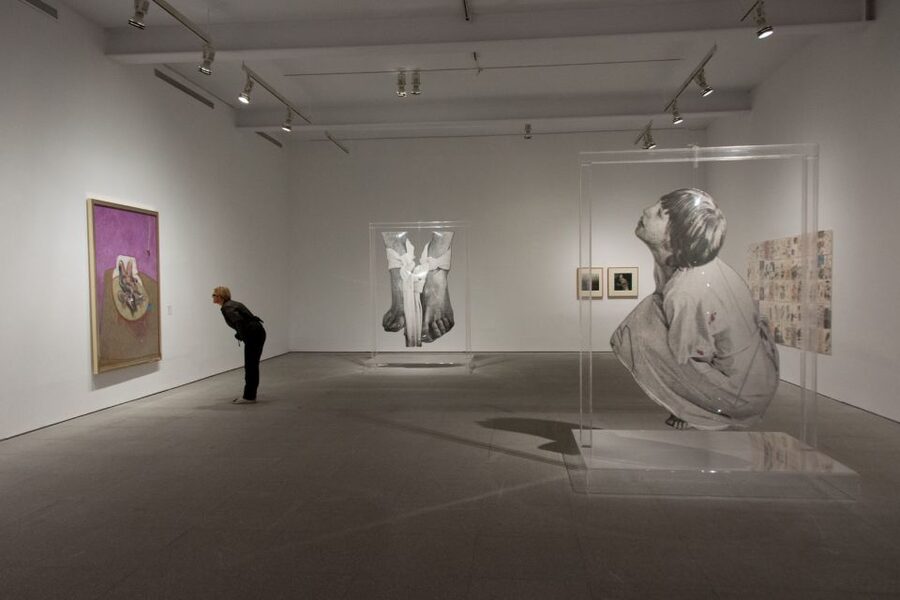
Wear comfortable shoes. The tour involves moving through galleries, corridors, and possibly the gardens, and you will likely want to remain afterward.
Do not bring luggage or large bags. Selfie sticks, tripods, and flash photography are not allowed. Photography is prohibited in some rooms, and where it is allowed, you must use no flash and no camera stabilization.
The museum is wheelchair accessible. If you need a particular meeting arrangement or have mobility concerns, confirm the details of your chosen option before arrival, since the meeting point can vary.
The tour is offered in English and Spanish, with live commentary. A private group option is also available if you want more control over pace and questions.
Who will get the most from this museum tour?
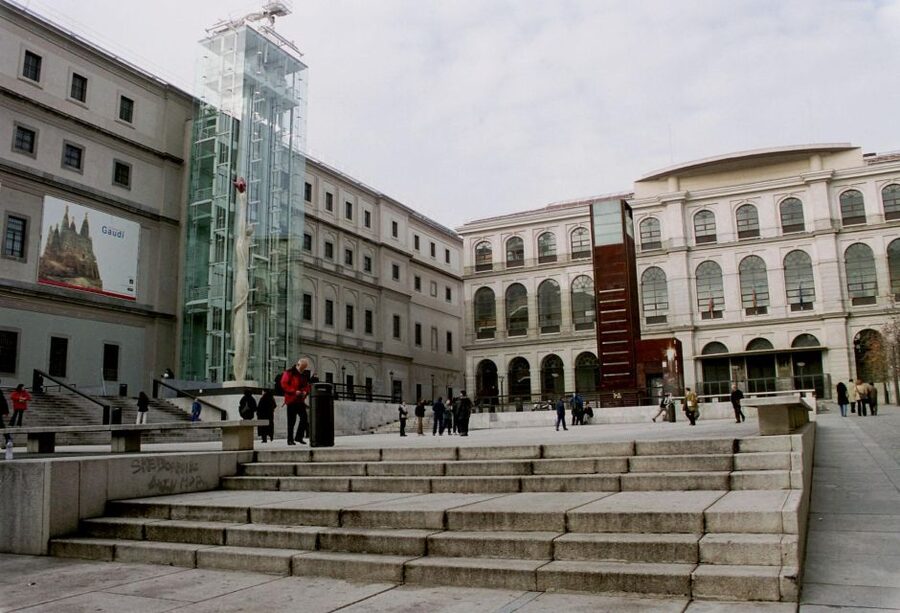
I would choose this for a first-time Reina Sofía visit, a short stay in Madrid, or anyone who finds modern art difficult to approach alone. It also suits families and mixed-age groups because the guide can explain technique and symbolism without relying on specialist terms.
It is a good choice if Guernica is high on your Madrid list but you want more than a quick photograph and a famous name. The tour shows why the painting matters, then leaves you free to continue exploring.
I would think twice if you prefer silent, unhurried museum time. The route is focused and selective, and the bilingual format may not offer the slowest possible experience. In that case, enter independently and set aside several hours.
Should you book the Reina Sofía guided tour?
Book it if you want a strong introduction to Spanish modern art, need to reach the museum’s key works efficiently, or want help making sense of Guernica. The guide’s clear explanations, comparisons among Picasso, Dalí, and Miró, and planned route give you much more than an admission ticket alone.
Skip it if your main goal is to study a small number of paintings for a long time, or if you already know the museum well. For most first-time visitors, though, $38 is a sensible trade for direction, context, and the freedom to stay afterward. Arrive in comfortable shoes, bring no large bag, and save extra time for returning to Guernica once the guided portion ends.
FAQ
How long does the Reina Sofía guided tour last?
The scheduled duration is 75 minutes. Some past tours have finished slightly early, while others have lasted closer to an hour and a half.
Is admission to the Reina Sofía included?
Yes. The price includes entrance to the Reina Sofía Museum and skip-the-line access.
Can I stay inside after the guided tour?
Yes. After the guided portion ends, you may continue exploring the museum independently, including its temporary exhibitions and additional galleries.
Is the tour available in English?
Yes. Live commentary is offered in English and Spanish. The tour may be bilingual, with both languages spoken during the visit.
Can I take photographs inside the museum?
Photography is not allowed in some rooms. Where it is permitted, you must not use flash, selfie sticks, tripods, or other camera stabilization.
Is the Reina Sofía wheelchair accessible?
Yes. The museum is wheelchair accessible.
Just added around Madrid
- Madrid: Afternoon Prado Museum Tour with Skip-the-Line Entry★ 4.4 · 491 reviews
- Small Group Prado Museum Guided Tour with Skip the Line★ 4.2 · 106 reviews
- Madrid: Reina Sofía Museum Guided Tour, Small Group★ 4.9 · 67 reviews
- Reina Sofía Museum – Guided tour IN ITALIAN with family discount.★ 4.8 · 19 reviews
- Prado Museum Tour with ticket, small group & expert guide★ 5.0 · 13 reviews
- Madrid: Prado Museum Skip-the-Line Guided Tour★ 4.3 · 254 reviews
- Prado Museum for kids & families: Private fun tour★ 5.0 · 32 reviews
- Madrid: Prado Museum guided tour optional Reina Sofía Museum★ 4.8 · 38 reviews
Museum Tours in Madrid, compared.
Prado Museum Guided Tour with Skip-the-Line Ticket
Read our review →
Prado Museum Small Group Tour with Skip the Line Ticket
Read our review →
Royal Palace & Prado Museum Skip the Line Guided Tour
Read our review →
Browse the lists this tour appears in