
Review · MADRID
Madrid: Reina Sofia and Prado Museum Tickets and Guided Tour
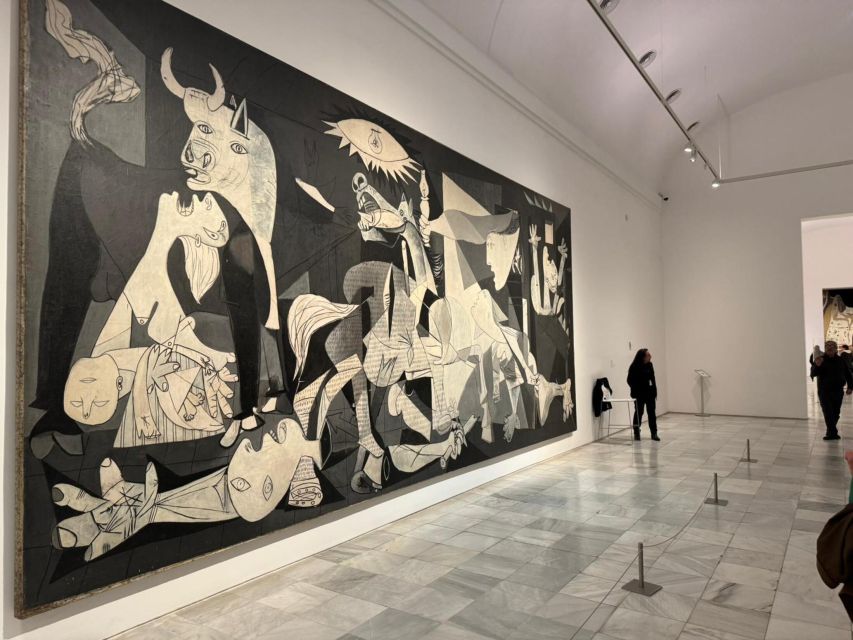
Picasso’s Guernica is the star attraction here, but the real strength of this four-hour outing is the way it links modern Spanish art at the Reina Sofía with older masterpieces at the Prado. You move from Picasso, Dalí, and Miró to Velázquez, Goya, and Bosch in one well-planned museum day.
I like the skip-the-line entry at both museums, since it saves time for the art itself. I also like the guides’ teaching style: Alexandra, Blanca, Juan, Eva, and others have been praised for clear explanations, humor, questions, and a talent for making one painting lead naturally to the next.
The main drawback is the pace. Two major museums in four hours means a focused visit, not a full survey. The tour may also be given in both English and Spanish, so you should check the language arrangement if you prefer a single-language experience.
Key points at a glance
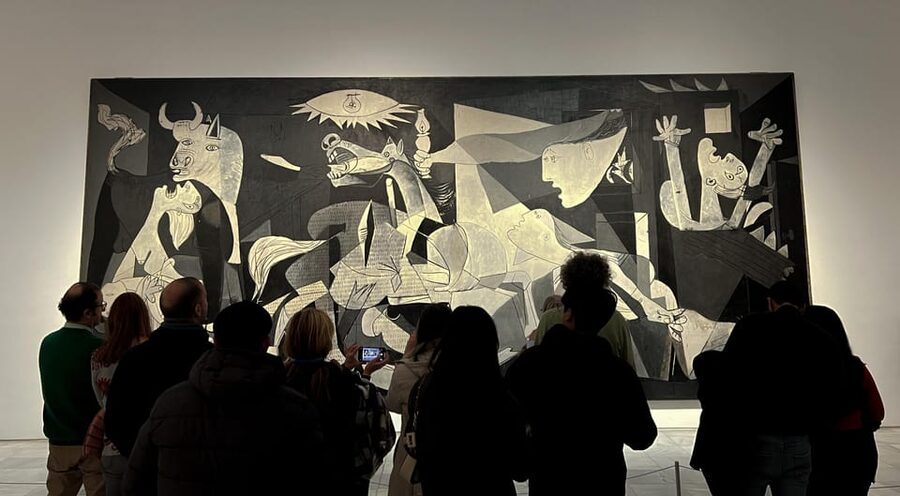
- Picasso’s Guernica: Spend time with Spain’s most famous modern painting and hear the story behind its creation.
- Two very different museums: Compare 20th-century art at the Reina Sofía with centuries of European painting at the Prado.
- About 1.5 hours at the Reina Sofía: This portion includes time to see the key modern works, with the exact balance of guiding and personal viewing set by the group.
- About 2.25 hours at the Prado: Expect a guided walk through major works by Velázquez, Goya, Bosch, and other important artists.
- Strong guide-led learning: Guides use questions, context, and discussion rather than simply reciting dates.
- Good practical value at $68: Skip-the-line access to both museums and four hours of guiding make the price reasonable for first-time visitors who want structure.
Why this pairing works in Madrid
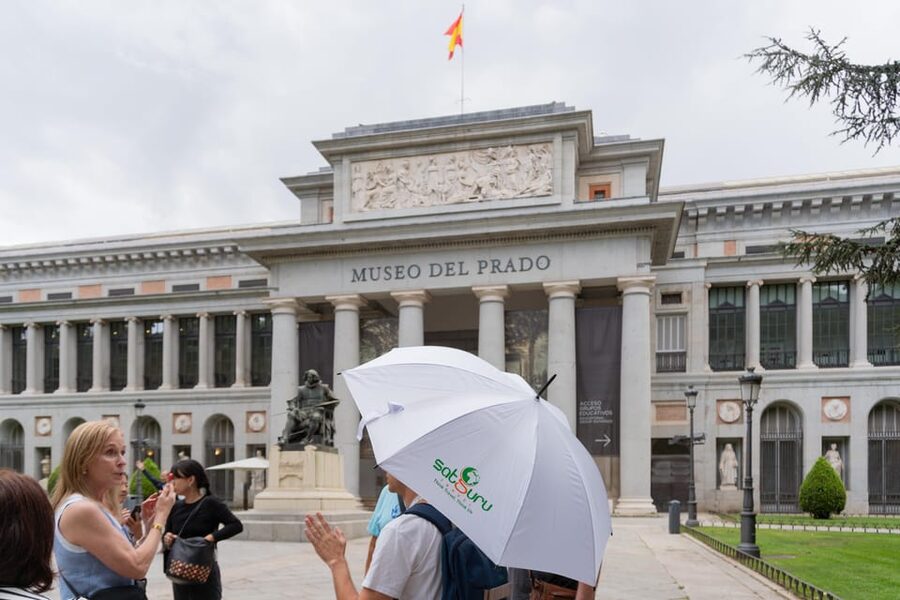
Madrid’s two leading art museums tell different parts of Spain’s artistic story. The Reina Sofía focuses on modern and contemporary art, while the Prado is built around older European painting, with Spanish masters at its heart.
On your own, it is easy to wander through both museums without seeing how the pieces connect. This tour gives you a path through the collections. You begin with the political shock and fractured forms of Picasso, then move toward the royal portraits, religious scenes, and dramatic works that shaped Spain’s earlier artistic identity.
That contrast is useful even if you are not an art specialist. You can see how artists changed their approach to color, perspective, power, religion, and human suffering across the centuries. The tour does not try to show everything. Instead, it focuses on roughly the most important works in each museum, giving you a foundation for exploring more on your own.
The bilingual format deserves attention. The guide language is Spanish and English, and some guides deliver the tour in both. That can work well for mixed-language groups, but explanations may take longer than they would in a single-language tour. If you want the most efficient presentation, confirm the language setup before booking.
More Museum Tours in Madrid
- Madrid: Prado Museum Entry Ticket
★ 4.6 · 20,699 reviews - Madrid: Reina Sofía Museum Entrance Ticket
★ 4.5 · 8,788 reviews - Madrid: Small Group of Prado Museum Tour & Optional Tapas
★ 4.6 · 2,437 reviews
Meeting the guide at the Reina Sofía
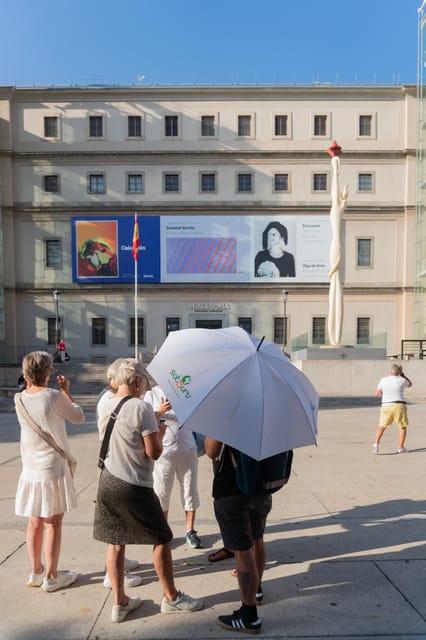
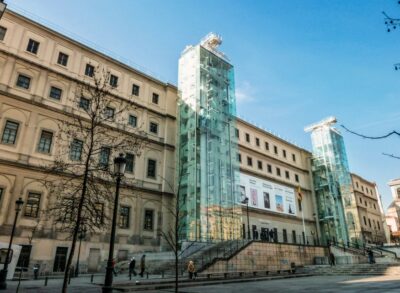
The tour begins at the sculpture by the Reina Sofía’s main entrance, beside the crystal elevators. Look for a white umbrella. That detail matters because a large museum entrance can be confusing, especially when several groups are gathering nearby.
Transportation to the meeting point is not included. You will need to reach the museum yourself, so leave enough time to arrive before the scheduled start. The starting time can change, and the minimum group size is four participants. If that number is not reached, the guide contacts you with a refund or another option.
The activity ends back at the same meeting point. That makes the tour easier to fit into a day of sightseeing, since you do not need to arrange a second pickup location. It also gives you a clear place to continue your plans after the Prado portion.
Wear comfortable shoes. You will spend several hours walking and standing indoors, and the museums are large enough that a tiring pair of shoes can spoil an otherwise excellent art day. Bring water and a jacket as well.
Seeing Guernica at the Reina Sofía
The Reina Sofía portion lasts about 1.5 hours. The central moment is Picasso’s Guernica, a huge, unsettling painting created in response to the bombing of the Basque town of Guernica during the Spanish Civil War.
A guide adds real value here. The painting is famous, but fame alone does not explain its jagged forms, distorted bodies, stark palette, or crowded composition. A good explanation helps you look at the painting in stages: first the overall impact, then the figures, signs of pain, and the way Picasso avoids a simple heroic scene.
The guide may also connect Guernica to the political and artistic climate of its time. That context helps you understand why this is not simply a painting about one event. It is also a work about civilians, war, fear, and public memory.
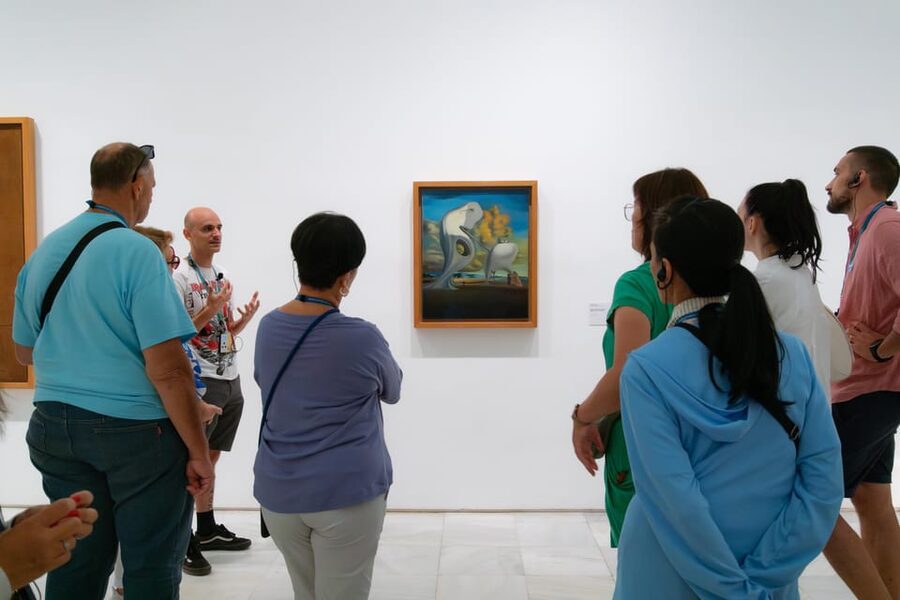
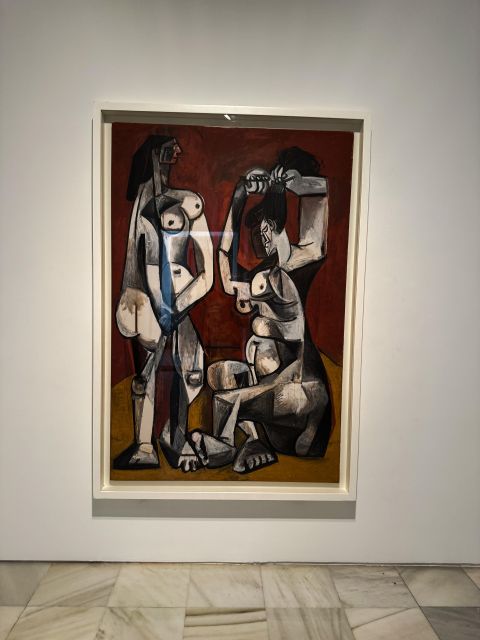
The Reina Sofía collection gives you a wider frame around Picasso. You can expect attention to other Spanish modernists, including Salvador Dalí and Joan Miró. Their work helps show that modern Spanish art was not one single style. Surrealism, abstraction, dream imagery, political art, and experimental forms all appear in different ways.
This part of the visit is especially useful if modern art sometimes leaves you cold. The guide’s job is not to tell you what to like. The best guides, including Alexandra and Blanca in particular, have been praised for asking what you see and encouraging personal reactions. That turns the museum from a silent parade of difficult images into a conversation.
There is one practical limit. The Reina Sofía is a large museum, and 1.5 hours is enough for selected works, not every room. If you already have a long list of favorite artists, you may need to return on your own. Think of the guided visit as an introduction to the museum’s main ideas.
Walking from modern art to old masters
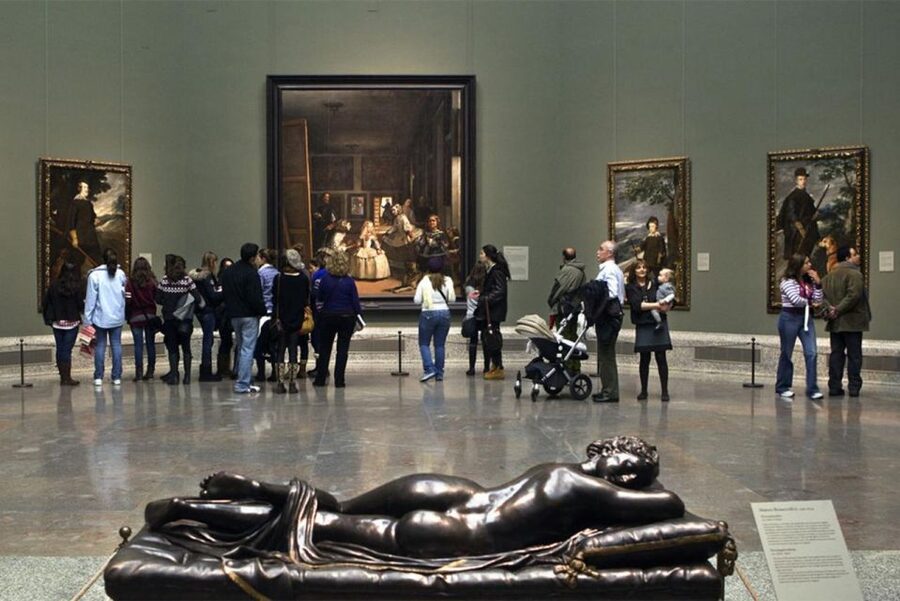
The activity then moves to the Prado Museum. The itinerary describes about 2.25 hours here, including a guided walk. The transition from the Reina Sofía to the Prado is the intellectual heart of the experience.
At the Reina Sofía, you have seen artists break with older conventions. At the Prado, you encounter painters who refined those conventions, used them to serve kings and churches, or challenged them through mood and subject matter. The change in setting reinforces the change in art.
The Prado’s collection can feel overwhelming. It is full of rooms, names, and famous paintings, and a first visit can easily become a march from one masterpiece to another. The guide helps you slow down and look carefully at a manageable group of works.
Skip-the-line entry is particularly useful here. You avoid spending part of your museum time in an admission queue, leaving more energy for the galleries. Entry does not make the museum quiet, though. Crowds can gather around major paintings, especially later in the day. One guide advised taking a morning tour because the museums tend to become more crowded in the afternoon.
More Prado tours and tickets:
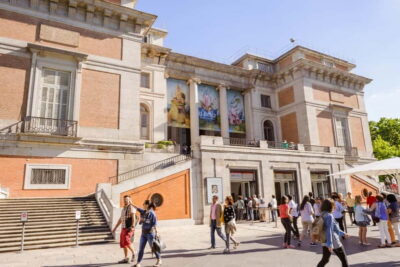
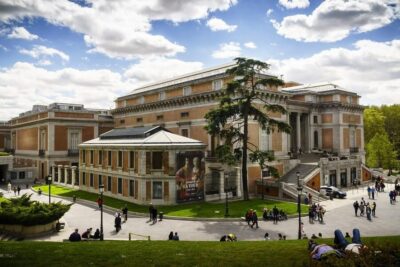
- Madrid: Prado Museum Guided Tour with Skip-the-Line Ticket
★ 4.5 · 2,018 reviews - Madrid: Prado Museum Guided Tour With Fast Access
★ 4.8 · 1,785 reviews - Prado Museum Small Group Tour with Skip the Line Ticket
★ 5.0 · 1,738 reviews - Royal Palace & Prado Museum Skip the Line Guided Tour
★ 4.5 · 1,347 reviews
Velázquez, Goya, and Bosch in context
Velázquez is one of the Prado’s essential artists, and the tour gives his work a central place. His paintings reward close attention to space, posture, light, and the way people present themselves. A guide can help you notice why his portraits feel more complex than formal records of royal figures.
You should expect the conversation to go beyond the artist’s name and the painting’s date. Guides have been praised for discussing composition, the artist’s purpose, sources of inspiration, and the historical setting. Those details make it easier to understand how a painting worked in its own time, not just how it looks on a museum wall today.
Goya provides a sharp contrast. His paintings can shift from courtly portraiture to scenes of violence, fear, and social criticism. Seeing Goya after Velázquez gives you a sense of continuity and change within Spanish art. The same country and royal tradition appear, but the mood and artistic concerns have shifted.
Hieronymus Bosch adds yet another kind of experience. His strange figures and crowded scenes invite careful looking, and his work can be difficult to read without help. The guide can offer a framework for the symbols and visual details, though you will still have plenty of room for your own interpretation.
One useful point from the tour’s focus is that it does not claim to cover every essential Prado artist. El Greco, for example, may not receive the same attention as Velázquez, Goya, or Bosch. If you particularly want to see El Greco, ask the guide where to find his work or remain afterward to seek it out.
How the guides shape the experience
The guide is the difference between this being a ticket package and being a proper museum tour. Names associated with especially strong sessions include Alexandra or Alejandra, Blanca, Juan, Eva, Lisa, and Ayla. Your guide will depend on the date and availability, so you should not book expecting one specific person unless the provider confirms it.
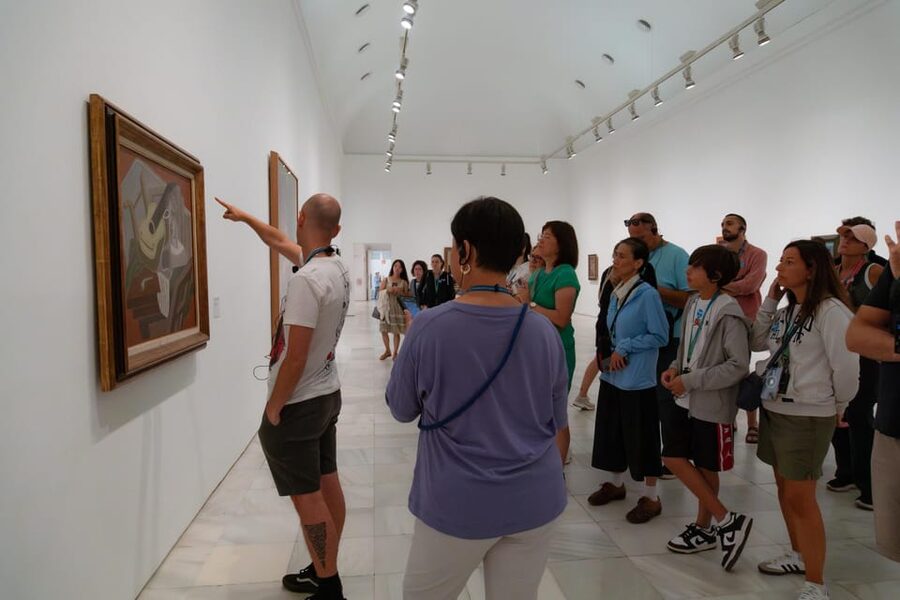
The strongest teaching approach reported from the guides is interactive. Instead of speaking nonstop, the guide may ask what you notice, how a figure’s pose affects the scene, or what emotion a painting creates. That works well for adults who want to think aloud and for older children who lose interest during long lectures.
The guides are also praised for being funny, warm, and attentive to questions. Juan, for example, is noted for connecting with solo visitors and making the art easier to approach. Alexandra has been praised for combining historical facts with a friendly atmosphere, while Blanca is known for focusing on around ten major works in each museum and explaining each one through composition, context, inspiration, and purpose.
Audio equipment may be used when crowds make it hard to hear. That is an important comfort, particularly in front of Guernica or other popular paintings. Still, a headset cannot solve every crowd problem. Stay close to the guide and keep your attention on the group as you move between rooms.
Is four hours the right amount of time?
Four hours sounds generous until you remember that it covers two major museums. The stated schedule allows about 1.5 hours at the Reina Sofía and 2.25 hours at the Prado, with the remaining time used for movement and organization.
This is a good length for a first introduction. You get enough time to understand the museums and see major works without spending an entire day in galleries. It also suits a packed Madrid schedule, especially if you want to reserve part of the afternoon or evening for other sights.
It is not the right format if you want a slow, room-by-room visit. You may feel ready for a coffee break between museums, and there is no food or drink included. Plan a pause before or after the tour rather than expecting one as part of the activity.
Families should consider the pace carefully. The tour has worked well for children aged nine and twelve when the guide keeps the discussion lively, asks questions, and uses humor. Younger children or anyone who tires quickly from standing may find the schedule demanding.
What $68 buys you
At $68 per person, the cost is reasonable if you want both admission and expert direction. You are paying for skip-the-line tickets to the Reina Sofía and Prado, plus four hours with a live Spanish and English-speaking guide.
The value is strongest for first-time visitors. The museums are big, the famous works are spread across different rooms, and it can take time to understand what deserves your attention. A guide saves research time and gives you a useful route through collections that can otherwise feel chaotic.
Independent art lovers may calculate the price differently. If you already know the museums well, want to spend hours with a single artist, or prefer to move at your own pace, buying admission separately may suit you better. The tour gives you focus, not unlimited freedom.
The flexible booking terms also help. You can reserve and pay later, and cancellation is free up to 24 hours before the activity for a full refund. The minimum of four participants and the possibility of a changed starting time mean you should keep an eye on the final schedule.
Who should book this museum tour?
I would choose this experience if you are visiting Madrid for the first time and want the main artistic landmarks explained without spending days doing research. It is also a strong choice for solo visitors, couples, and families who prefer a clear plan inside very large museums.
It suits you especially well if Guernica is high on your list, if you want help reading modern art, or if you enjoy hearing how artists and movements relate to one another. The guides’ use of questions and discussion makes the experience less formal than a lecture.
I would hesitate if you dislike group tours, need a long café break during museum visits, or want complete control over every room you enter. You should also check the bilingual format if listening to two languages would frustrate you.
Should you book it?
Book this tour if you want a focused introduction to Madrid’s two great art museums, with entry lines handled and a guide to keep you moving toward the major works. The best part is the contrast between Guernica and the Prado’s older Spanish masters, supported by guides who explain art in plain language and invite your response.
Do not book it expecting an exhaustive visit. You will see selected highlights, then need extra time if you want El Greco, more Dalí, additional Goya, or quieter rooms at your own pace. For many first-time visitors, that is a sensible trade: four organized hours, a strong start, and enough direction to continue exploring by yourself.
FAQ
How long does the activity last?
The activity lasts four hours. The schedule includes about 1.5 hours at the Reina Sofía and about 2.25 hours at the Prado, with time for walking and organization.
Where does the tour begin?
The meeting point is at the sculpture by the Reina Sofía’s main entrance, beside the crystal elevators. Look for a white umbrella.
Where does the tour end?
The activity ends back at the Reina Sofía meeting point.
Are museum tickets included?
Yes. Skip-the-line tickets for both the Reina Sofía and the Prado Museum are included.
Is transportation included?
No. You are responsible for reaching the meeting point and arranging your own transportation.
Is food included?
No. Food and drinks are not included.
What languages are available?
The live guide speaks Spanish and English. Some tours may use both languages, so confirm the language arrangement when booking.
Is the activity wheelchair accessible?
Yes, the activity is listed as wheelchair accessible.
Can I cancel for a refund?
You can cancel up to 24 hours in advance for a full refund.
What happens if there are fewer than four participants?
The activity requires at least four participants. If that minimum is not met, the guide contacts you and offers a refund or an alternative.
Just added around Madrid
- Small Group Prado Museum Guided Tour with Skip the Line★ 4.2 · 106 reviews
- Madrid: Afternoon Prado Museum Tour with Skip-the-Line Entry★ 4.4 · 491 reviews
- Madrid: Reina Sofía Museum Guided Tour, Small Group★ 4.9 · 67 reviews
- Reina Sofía Museum – Guided tour IN ITALIAN with family discount.★ 4.8 · 19 reviews
- Prado Museum Tour with ticket, small group & expert guide★ 5.0 · 13 reviews
- Madrid: Prado Museum Skip-the-Line Guided Tour★ 4.3 · 254 reviews
- Prado Museum for kids & families: Private fun tour★ 5.0 · 32 reviews
- Madrid: Prado Museum guided tour optional Reina Sofía Museum★ 4.8 · 38 reviews
Museum Tours in Madrid, compared.
Prado Museum Guided Tour with Skip-the-Line Ticket
Read our review →
Prado Museum Small Group Tour with Skip the Line Ticket
Read our review →
Royal Palace & Prado Museum Skip the Line Guided Tour
Read our review →
Browse the lists this tour appears in