
Review · ITALY
Lucca: Musical Walking Tour with Puccini Museum Visit
Lucca’s music story reaches from Puccini and Boccherini to David Bowie, Elton John, Joe Cocker, Ray Charles, and The Rolling Stones. This two-hour walk links opera houses, churches, medieval streets, concert squares, and the Puccini Museum, giving you a better sense of how music fits into the city itself.
I like the mix of classical music and modern performers, and I like that the guide uses musical excerpts instead of giving you a string of dry dates. The main drawback is cost: the $34 tour price does not include museum admission, so plan on an additional €5 for the entry tickets sold by the guide.
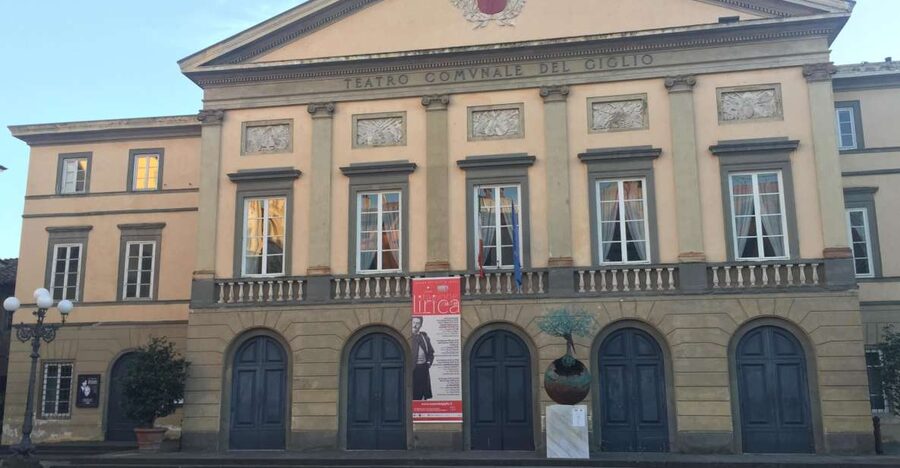
- Teatro del Giglio interior: Begin with a guided look inside Lucca’s historic theater, unless it is closed.
- A wide musical range: Connect Puccini and Paganini with The Rolling Stones, Elton John, and Ray Charles.
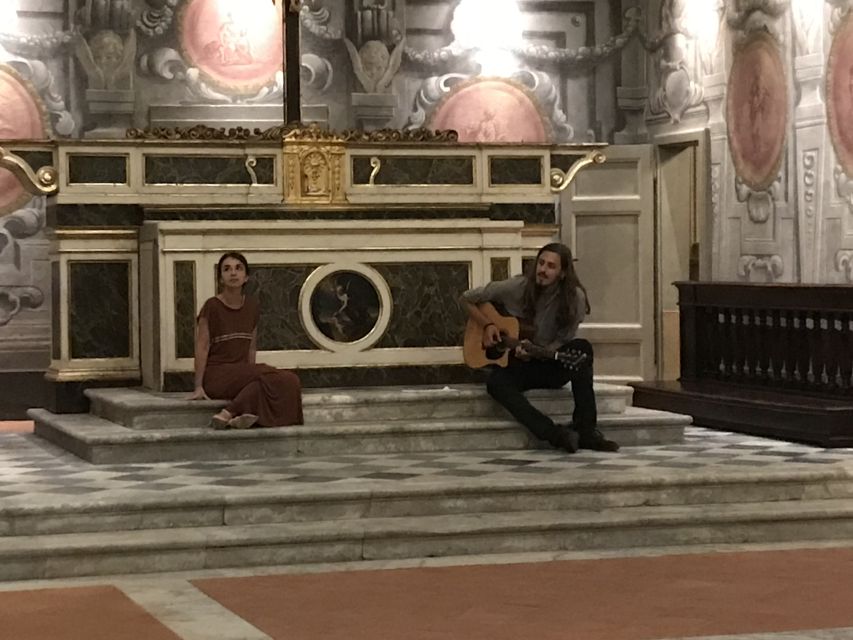
- Live musical context: Hear excerpts during the walk, including music linked to Paganini’s time in Lucca.
- Puccini’s birthplace: Finish at the museum dedicated to Lucca’s most famous composer.
- Compact city walk: Cover key stops in two hours, with no transport needed between them.
- English or Italian guiding: Ask for the language you want when checking available departures.
Why Lucca’s music story works so well on foot
Lucca is compact enough that its music history can be read in the streets. You begin at the Teatro del Giglio, cross open public squares, pass the cathedral, follow narrow medieval lanes, and finish at Puccini’s birthplace. The route gives you a physical sense of how close the city’s important venues are to one another.
That matters because this is not simply a museum tour with a few extra facts added on. The guide uses the city as the setting. A theater explains performance traditions, a cathedral points to centuries of musical training, and a Roman amphitheater turned public square shows how Lucca still welcomes major performers today.
The musical range is the tour’s best feature. You may be more interested in Puccini than pop concerts, or you may know The Rolling Stones better than Boccherini. Either way, the route gives you several entry points. Classical music is not treated as a sealed-off subject, and modern concert history is not tacked on as a gimmick.
The tour is led in English or Italian and lasts two hours. That is long enough to build a clear story without taking over your entire day in Lucca. You return to the starting point, making it easy to continue sightseeing, stop for lunch, or collect anything you left near the theater.
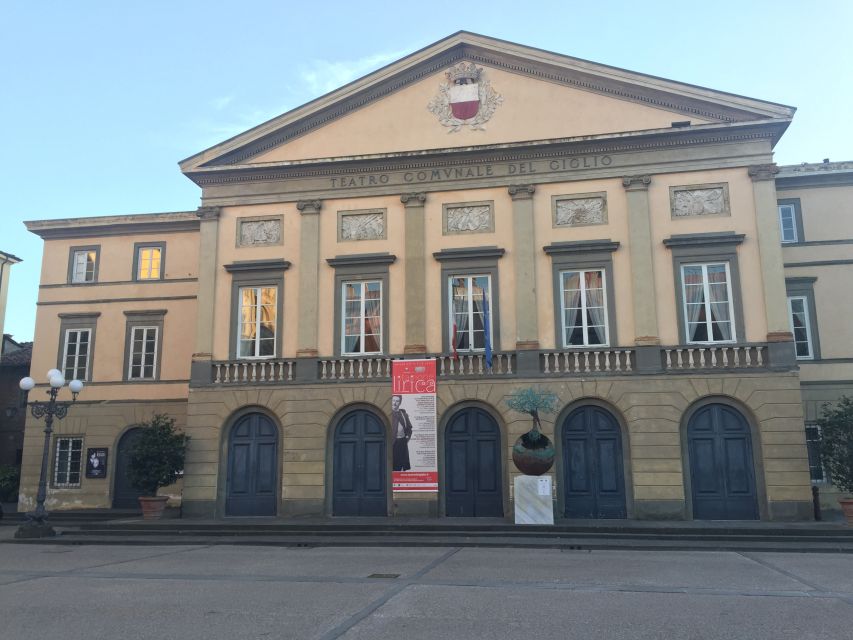
Inside Teatro del Giglio at the starting point
Meet at the ticket office of the Teatro del Giglio. The theater is an important opening stop because it puts you inside a working cultural setting rather than beginning with a general city introduction.
Your guide leads you through the interior and adds musical performances during the visit. That combination should make the building easier to understand. Instead of only looking at balconies and decorative details, you get a sense of the theater as a place built for sound, musicians, and audiences.
The theater visit also sets up the Puccini connection. Lucca’s most famous composer belongs to a larger local tradition, and the opening stop gives the tour a stage on which to place that tradition.
The theater is not included in the tour price. The supplied details also say that museum entrance fees are separate and can be purchased from the guide on the day for €5. Since the wording groups the paid cultural visits together, ask the guide exactly which admission tickets are needed when you meet. The listed price is $34 per person, so the final cost is higher if you enter both paid sites.
If Teatro del Giglio is closed, the tour substitutes a place of equal musical interest. That protects the basic shape of the experience, though the replacement will not be the same as seeing the theater interior. If the building is the main reason you are booking, check the departure date and opening conditions before paying.
A few more museum visits around Italy worth comparing
- Florence: Walking Tour with David, Duomo & Uffizi Gallery
★ 4.7 · 414 reviews - Siena Walking Tour with Cathedral and Crypt & Museum Option
★ 4.9 · 380 reviews - Florence: Walking Tour with Skip-the-Line Accademia Gallery
★ 4.6 · 148 reviews
Piazza Napoleone and Lucca’s modern concert life
From the theater, the walk reaches Piazza Napoleone. This broad square is tied to a very different side of Lucca’s music story: large outdoor concerts by artists such as David Bowie, Elton John, and The Rolling Stones.
This stop helps correct a common picture of Lucca as only a medieval or opera-minded city. The old walls, churches, and stone streets may suggest an earlier age, but the city’s public spaces also host major modern acts. Your guide uses the square to place those concerts on the map, so you can picture the scale and setting of a performance here.
I like this contrast because it keeps the tour from becoming too narrow. Puccini receives the final focus, but he is not presented as the only musician who matters. You get a wider look at the city’s cultural life, from nineteenth-century composers to international rock and pop performers.
The square is also a useful change of pace after the theater. You move from an enclosed performance hall into a large civic space, then continue toward the cathedral and smaller streets. The route feels like a walk through different kinds of listening spaces, not just a series of plaques.
San Martino Cathedral and centuries of musicians
The route pauses outside San Martino Cathedral. The tour does not promise an interior visit here, so you should expect to admire the facade and hear about the musicians associated with the cathedral and Lucca.
Churches were central to musical education and performance for centuries, and this stop gives that older tradition a place in the story. The cathedral helps explain why a city of Lucca’s size could produce or attract musicians of high quality. It also adds architectural context without turning the tour into a standard cathedral sightseeing visit.
This is a good point to pay attention to the guide’s musical excerpts. Hearing a short piece while standing near a historic religious building can make the connection between place and sound clearer than a spoken explanation alone.
The stop is brief enough that you will still have time for the main Puccini sites. If you want a full tour of San Martino Cathedral, you will need to arrange that separately. Here, the value is the link between the building, local musical training, and the city’s wider story.
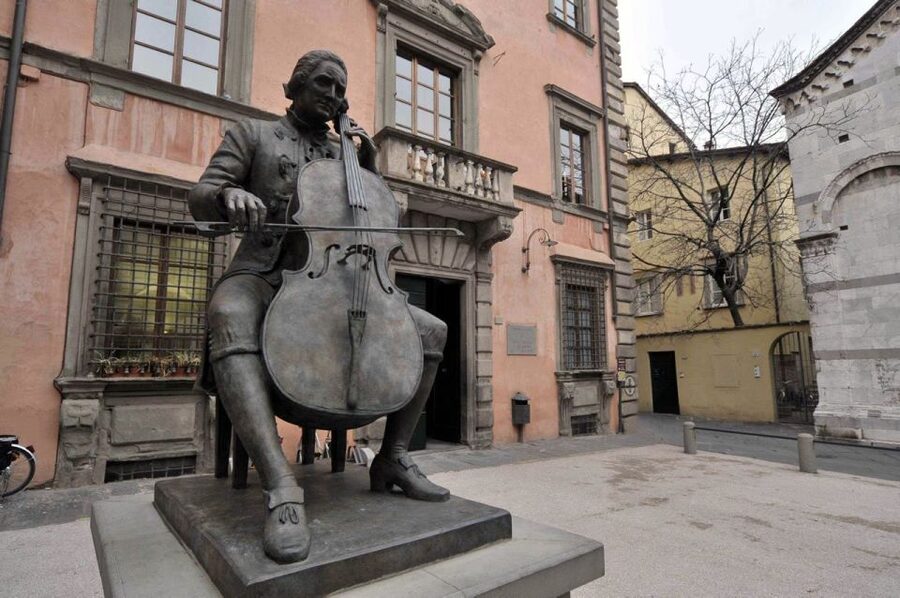
Boccherini’s Lucca and the conservatory
Next, you walk through Lucca’s narrow medieval streets toward the Luigi Boccherini Conservatory. It is named for Luigi Boccherini, the cellist and composer born in Lucca.
This section gives you a more personal connection to the city. Rather than discussing Boccherini as a distant name in a music textbook, the route places his legacy in the neighborhood around an active center for musical study. The walk also lets you see how easily Lucca’s musical landmarks fit into the old town.
You should wear comfortable shoes. The route uses narrow streets and includes several stops, and the activity is not recommended for people with mobility impairments. The listing also describes it as wheelchair accessible, which is a useful but conflicting detail. If you use a wheelchair or have limited mobility, contact the provider before booking to confirm the exact route, surfaces, and access at each stop.
The conservatory is not described as an extended interior visit, so expect the guide to use it as a point of explanation rather than as a full school tour. That keeps the walk moving and preserves time for the amphitheater and Puccini Museum.
Same city, a completely different collection:
- Vatican: Museums & Sistine Chapel Entrance Ticket
★ 4.5 · 144,003 reviews - Vatican Museums, Sistine Chapel & St. Peter’s Basilica Tour
★ 4.3 · 73,970 reviews - Vatican Museums, Sistine Chapel & St Peter’s Basilica Guided Tour
★ 4.5 · 39,149 reviews - Florence: Skip-The-Line Uffizi Gallery Timed Entry Ticket
★ 4.5 · 27,832 reviews
Piazza dell’Anfiteatro, from gladiators to Joe Cocker
The next major stop is Piazza dell’Anfiteatro, Lucca’s distinctive oval-shaped square. Its shape follows the footprint of the Roman amphitheater that once occupied the site, when gladiatorial contests took place here.
The square later became a setting for modern music, including performances by Joe Cocker and Ray Charles. That makes it one of the clearest examples of the tour’s central idea: places change purpose, but they can keep their power as gathering spaces.
You will likely find this stop especially useful if you want more than a list of famous names. The guide can show how a Roman arena became a medieval and modern urban space, then connect that physical setting to live performance today. The music story becomes part of Lucca’s civic story.
Piazza dell’Anfiteatro is also one of the most recognizable places on the walk. The oval plan is easy to read from ground level, and the stop gives you time to appreciate the unusual shape rather than rushing past it on a general city walk.
Do not expect a concert here during the tour. The point is to understand the square as a performance setting and to hear about the artists connected with it. The guide’s musical excerpts supply the sound that the empty space cannot.
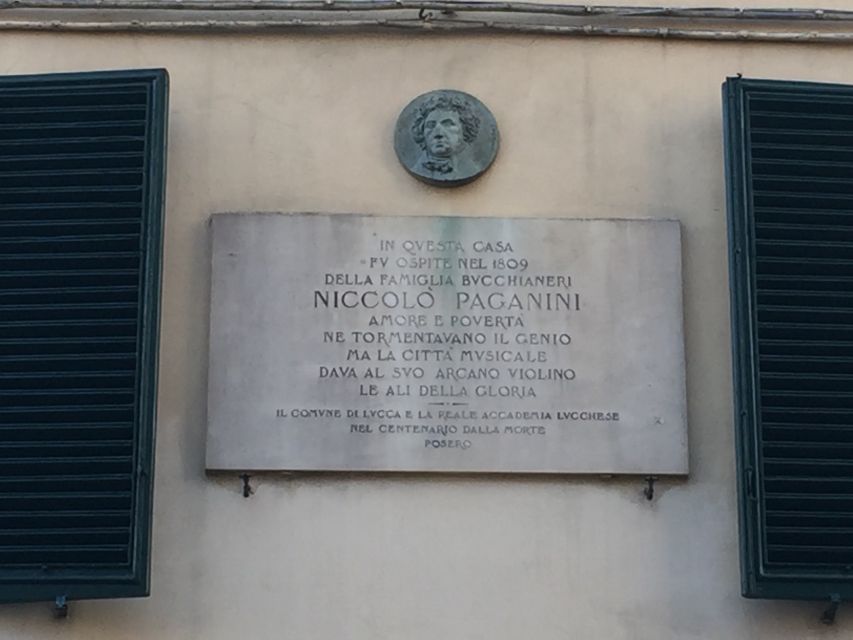
Paganini’s Lucca serenade
The walk then reaches the residence where Niccolò Paganini lived while he was in Lucca. Paganini is best known as a virtuoso violinist, but the musical detail attached to this stop is more unusual: you hear the languid notes of one of his famous guitar and violin serenades composed in Lucca.
That small detail adds texture to the tour. Paganini is often reduced to a dramatic violin image, while this stop points to another side of his work and to his time in the city. The music gives you a direct way to connect the composer to Lucca rather than treating him as just another name on a timeline.
This may be one of the tour’s most distinctive moments for music fans. You are not only told where Paganini lived. You hear a piece connected with his local period, then continue toward Puccini, creating a gradual movement from one important figure to another.
The stop is also a reminder that Lucca’s music story includes people who passed through the city, not only those born there. That broader view gives the tour more range than a single-composer museum visit.
The Puccini Museum and the final stop
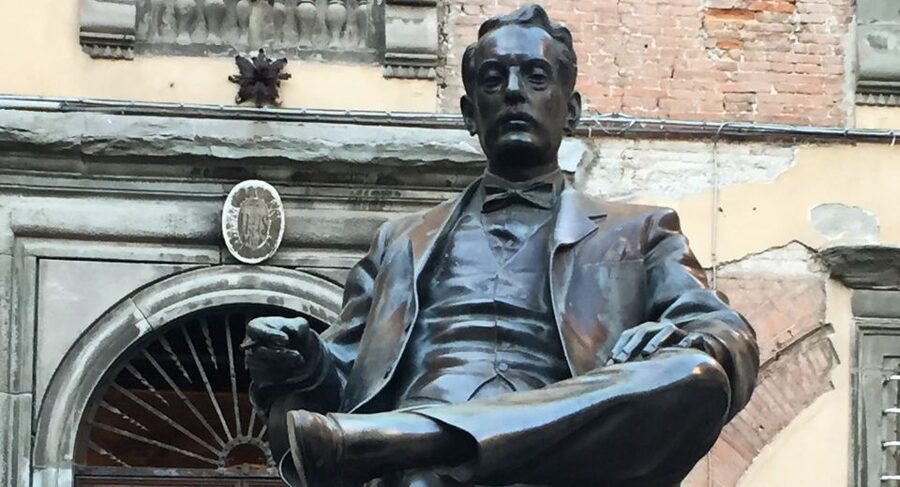
The tour finishes at the birthplace of Giacomo Puccini, now the Puccini Museum. Puccini is Lucca’s most famous composer and public figure, so ending here gives the walk a clear destination.
The museum is housed in the place where he was born. That makes the visit different from seeing a general collection in a purpose-built gallery. The address itself is part of the story, and the guide can connect Puccini’s early life to the city streets you have just walked.
The museum entrance fee is not included. Tickets can be bought on the day from the guide for €5, and children under 15 go free on the walking tour but still need to pay the museum admission. You should budget for that extra charge if you want the complete experience.
The provided details describe the tour as ending at Puccini’s birthplace, while the meeting information says the activity ends back at the starting point. Treat the practical arrangement as something to confirm with the guide on the day. The key point is that the route’s final musical focus is Puccini and his birthplace, not an additional city transfer.
If Puccini is your main interest, you may want to allow extra time around the museum beyond the two-hour tour. The walking experience gives you context and a guided introduction, but it is not designed to cover every detail of Puccini’s life or music.
What the $34 price really covers
At $34 per person, this is priced above a basic orientation walk but below a full private cultural tour. You are paying for a themed route, a live guide in English or Italian, access to the theater when open, musical excerpts, and the connections between several performers and places.
The value depends on your interests. If you already plan to visit the Puccini Museum, this tour adds useful context by showing you Lucca’s wider musical network first. If you only want a quick photograph outside Puccini’s birthplace, the price may feel high, especially after adding the €5 museum admission.
The tour is a better buy for people who enjoy both classical and modern music. You get Puccini, Boccherini, and Paganini, but also Bowie, Elton John, The Rolling Stones, Joe Cocker, and Ray Charles. That variety is unusual for a two-hour city walk.
The four-and-a-half rating from 21 submitted reviews and repeated praise for the guides’ passion point to a strong guiding style. Vitoria is singled out by name for being passionate and well informed, and one especially positive assessment calls the tour a perfect mix of classical and modern music with city history. Guide quality matters a lot here because the musical excerpts and transitions carry much of the experience.
Who will enjoy this walk most
I would choose this tour if you like music enough to shape part of your sightseeing around it. It suits Puccini fans, classical listeners, people curious about the connection between place and performance, and anyone who would rather take a themed walk than a standard list of churches and towers.
It also works well for a first visit to Lucca. You see several central locations while gaining a story that helps organize the old town. Since the walk returns to its meeting point, you can use it early in your stay and then revisit the places that caught your attention.
Families can join, and children under 15 do not pay for the walking tour. They still pay the museum entrance fee. The musical range may help hold a child’s attention, though the value depends on how interested they are in guided cultural visits.
I would skip it if you dislike scheduled walking, have significant mobility limits, or want a long, detailed museum visit. The route moves through narrow medieval streets, and the activity information both calls it wheelchair accessible and says it is not suitable for people with mobility impairments. Confirm the conditions directly before booking.
For flexible planning, you can cancel up to 24 hours before the tour for a full refund, and you can reserve now and pay later. Those policies are useful if your Lucca schedule is still changing.
Should you book the musical walking tour?
Book it if you want Lucca to make sense through music rather than only monuments. The strongest reason is the balance: you move from Teatro del Giglio and cathedral traditions to Boccherini, Paganini, Puccini, and the modern concert history of Lucca’s public squares.
The musical excerpts are important. They turn the route into more than a lecture, while the compact two-hour format keeps the experience manageable. Add the separate €5 museum admission to your budget, wear comfortable shoes, and confirm the theater schedule and mobility details.
If you are a serious Puccini enthusiast, pair the walk with extra time at the Puccini Museum. If you are simply looking for a general introduction to Lucca, a standard city walk may cover more monuments. For music fans, though, this is a smart way to hear the city as well as see it.
FAQ
How long does the musical walking tour last?
The tour lasts two hours. Check the available dates for the specific starting times.
Where does the tour begin?
The meeting point is at the ticket office of the Teatro del Giglio.
Where does the tour end?
The activity information says the tour ends back at the meeting point. The route itself finishes with the Puccini birthplace and museum visit, so confirm the exact arrangement with your guide.
Is museum admission included in the $34 price?
No. Museum entrance fees are separate. Tickets can be purchased from the guide on the day for €5.
Do children under 15 pay for the tour?
Children under 15 go free on the walking tour. They still need to pay the museum entrance fee.
What languages are available?
The tour is offered in English and Italian.
What happens if Teatro del Giglio is closed?
If the theater is closed, the tour visits another place of equal musical interest.
Is the tour wheelchair accessible?
The activity information describes it as wheelchair accessible but also says it is not suitable for people with mobility impairments. Contact the provider before booking to confirm access for your particular needs.
Just added around Italy
- Oil museum and oil mill in Tuscany: tour and tasting★ 5.0 · 16 reviews
- Enchanted Castle of Sciacca – Museum Tickets★ 3.5 · 63 reviews
- Torino: FIAT Historic Museum and Lingotto District Tour★ 4.9 · 14 reviews
- Torino: The Car Museum Skip-The-Line Tour★ 4.7 · 22 reviews
- Timed Entry Ticket to the Uffizi Gallery★ 4.5 · 498 reviews
- Florence: Accademia Gallery Entry Ticket with Audio Guide★ 4.1 · 88 reviews
- Vatican City: Sistine Chapel, Museums, Basilica Private Tour★ 4.8 · 158 reviews
- Rome: Capitoline Museums and Centrale Montemartini Tickets★ 4.4 · 328 reviews
Museum Tours in Italy, compared.
Vatican: Museums & Sistine Chapel Entrance Ticket
Read our review →
Vatican Museums, Sistine Chapel & St. Peter’s Basilica Tour
Read our review →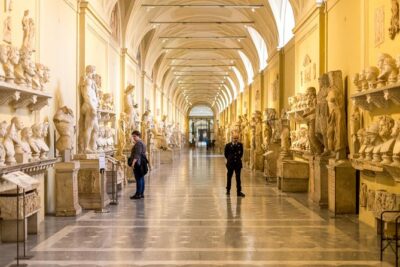
Vatican Museums, Sistine Chapel & St Peter’s Basilica Guided Tour
Read our review →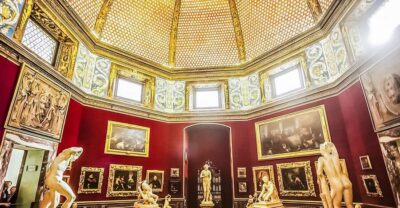
Skip-The-Line Uffizi Gallery Timed Entry Ticket
Read our review →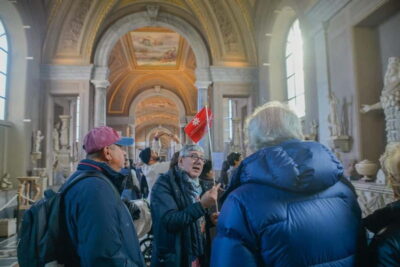
Vatican Museums, Sistine Chapel and Basilica Tour
Read our review →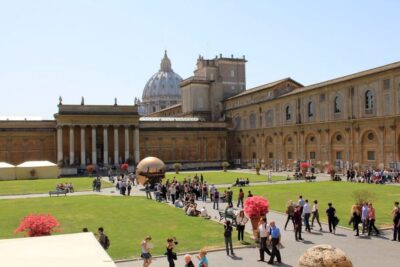
Vatican Museums & Sistine Chapel Skip-the-Line Entry Ticket
Read our review →
Vatican Museums, Sistine Chapel & Basilica Tour
Read our review →
Browse the lists this tour appears in