
Review · THE NETHERLANDS
Gouda: Museum Gouda Entry Ticket
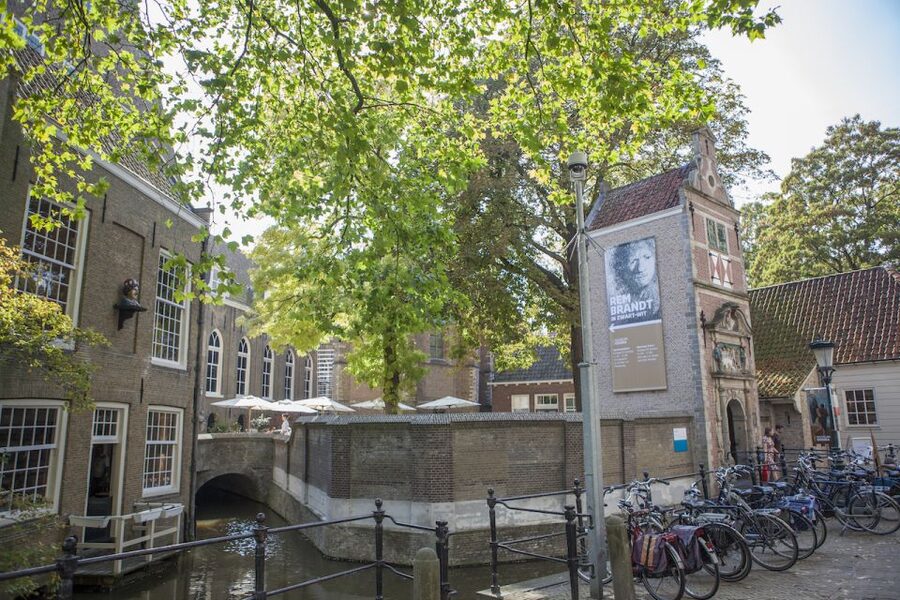
Museum Gouda is more than a place to look at old paintings. Inside a 14th-century guest house, you move through the story of Gouda itself, from religious art that survived the 16th-century iconoclasm to the pottery that gave the city an international name. The interactive model of Gouda in 1562 is a real highlight because it gives the rest of the collection a clear setting.
I like the mix of big-name art and local material culture. You can admire paintings connected with Ferdinand Bol, Isaac Israels, Vermeer, and Rembrandt, then turn to clay pipes and Gouda plateel, the colorful decorative pottery made in the city. The main drawback is that this is admission only, with no guide or audio guide included, so some works may need more explanation than the labels provide.
Key points at a glance
- A 14th-century setting: Museum Gouda occupies a historic guest house, giving your visit a sense of place before you even reach the galleries.
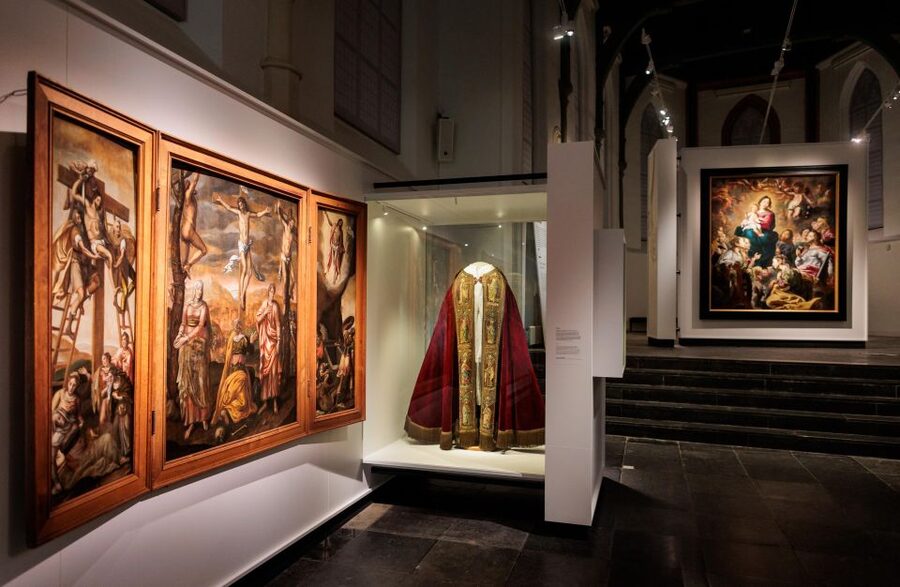
- Art spared from iconoclasm: See rare altar paintings and a 16th-century triptych that survived the destruction of religious images in the Netherlands.
- Gouda in 1562: Study a large interactive maquette showing how the city looked before the modern era.
- From civic guards to painters: The collection moves from 17th-century militia portraits to French and Dutch art from the 19th century.
- Gouda pottery: Learn how decorative plateel became one of the city’s best-known products.
- Self-guided and flexible: Your ticket is valid for one day, and you can take your time with both permanent and temporary exhibitions.
Entering Gouda’s 14th-century guest house
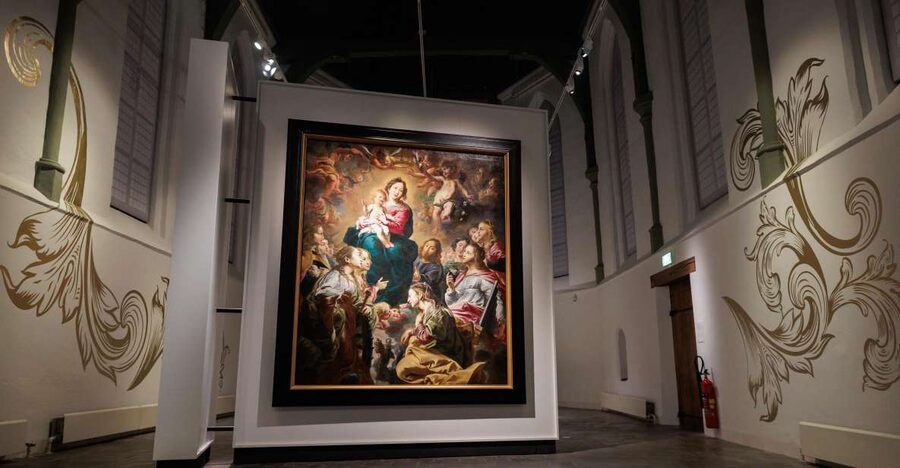
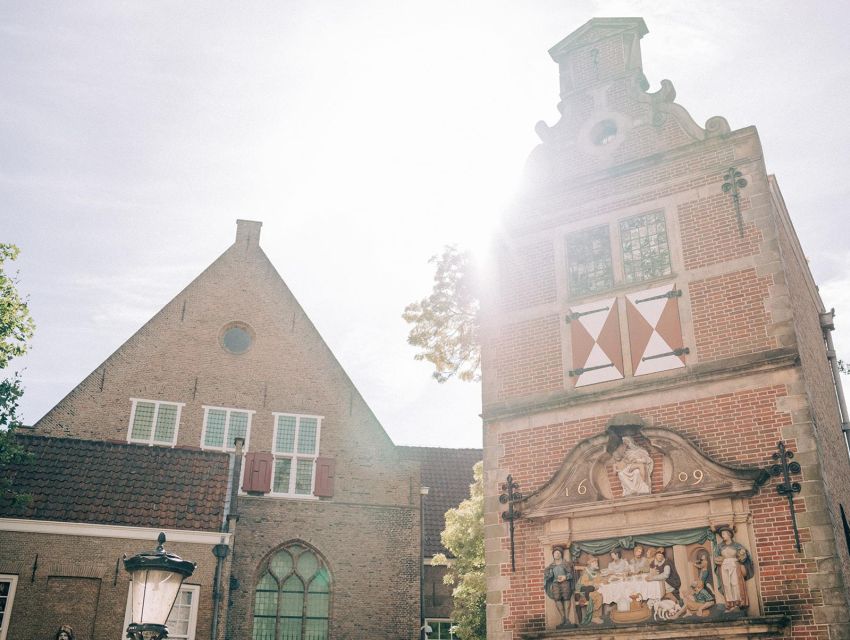
The building is part of the experience. Museum Gouda is housed in a 14th-century guest house, so the visit begins with old walls and a sense of the city’s past rather than a neutral modern gallery. That matters here. The museum is not simply showing art made in Gouda. It is explaining how the city changed, what its citizens valued, and how local industry shaped its identity.
The permanent collection and temporary exhibitions together cover about 600 years. You may begin with religious art, move into civic life, then finish with 19th and 20th-century painting and pottery. The route gives you a broad picture of Gouda without requiring a full day.
This is a good museum for visitors who like local context. If you only want a quick parade of famous Dutch masterpieces, the collection may feel less focused than a national art museum. But if you want to understand the city beyond its cheese market and handsome central square, the material here fills in important gaps.
A few more museum visits around the Netherlands worth comparing
- Amsterdam: Van Gogh Museum Ticket
★ 4.7 · 52,054 reviews - Moco Museum Amsterdam Entrance Tickets with Banksy & More
★ 4.4 · 10,088 reviews - Amsterdam: The Upside Down Museum Entrance Ticket
★ 4.4 · 9,506 reviews
The altar paintings that survived the iconoclasm
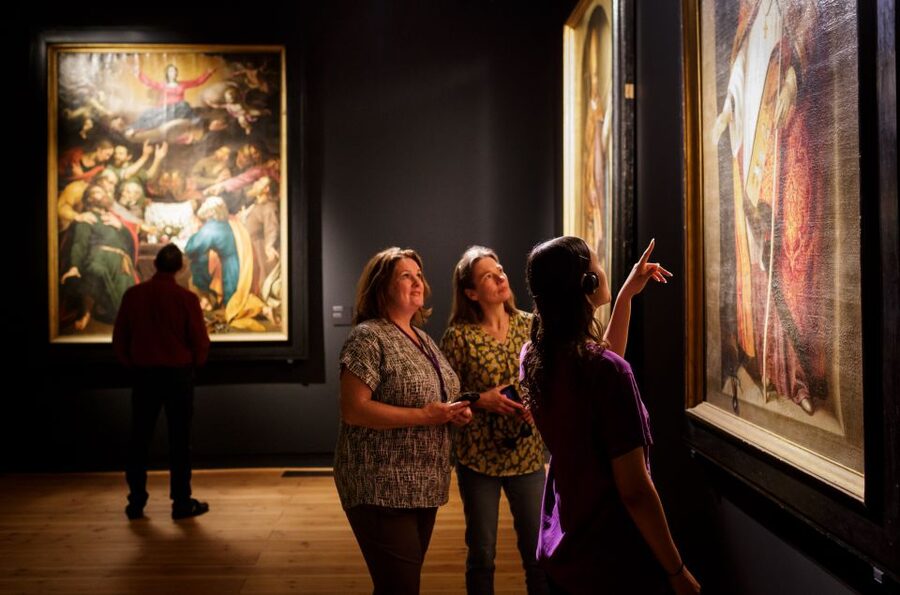
The oldest and most unusual part of the collection is the religious art. During the iconoclasm that swept through the Netherlands in the 16th century, many church images and altar pieces were destroyed. The works preserved at Museum Gouda are therefore more than attractive paintings. They are survivors of a major religious and political upheaval.
You will see altar paintings by master artists, including a 16th-century triptych. A triptych is a three-panel work, often designed for a church altar. Its format gives you several scenes to read at once, and the survival of such a piece makes it especially valuable in a city museum.
I like this section because it rewards patience. The paintings are not only about technique or decoration. They show what religious art meant before the upheavals of the Reformation and how much of that visual world disappeared. Without a guide, you may need to read the labels carefully, and the lack of an audio guide can make this part harder to appreciate fully.
Seeing Gouda as it looked in 1562
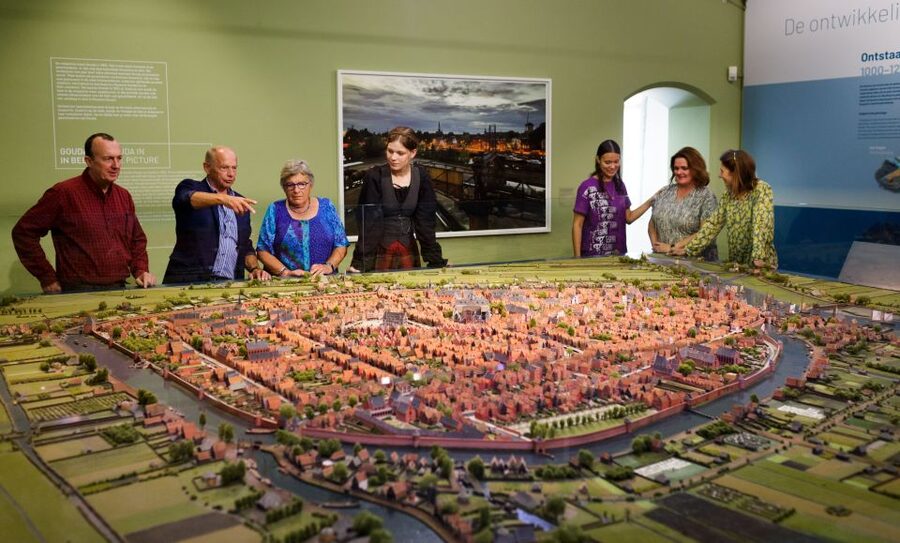
The large interactive maquette of Gouda in 1562 is one of the most useful stops in the museum. It shows the city at a specific moment, allowing you to see the streets, buildings, and urban shape that form the background to the collection.
A model like this helps when paintings and objects begin to feel disconnected. After studying the maquette, a civic guard portrait becomes part of a real city rather than an isolated group of stern-looking men. The model also gives you a better sense of how compact historic Gouda was and how much daily life depended on the city’s central institutions.
Because it is interactive, you can spend a little time examining different parts instead of simply walking past a static display. This is especially helpful for families and for anyone who prefers maps, models, and physical objects to long blocks of text.
The maquette does not replace a walking tour of Gouda, but it prepares you for one. If you visit the museum early in your day, you may look at the streets outside with a sharper sense of how the old city developed.
Civic guards, militia portraits, and public life
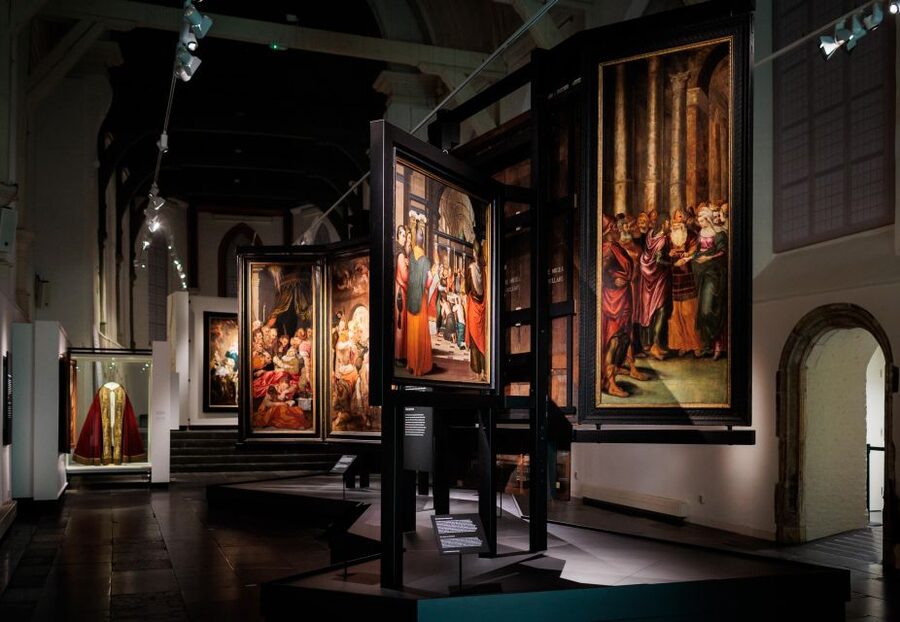
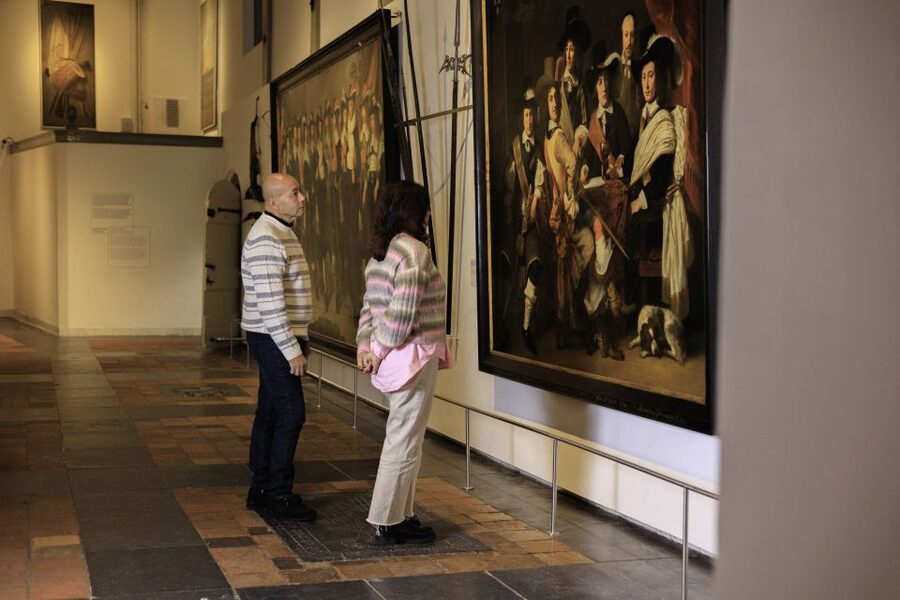
The 17th-century civic guard pieces and militia group portraits shift the mood from church to city government and public life. These works record the people who helped protect or represent the city, and they show how portraiture could serve a civic purpose.
Group portraits can be difficult if you do not know the people shown. Faces may blur together, particularly when the museum does not provide much extra interpretation. Still, the paintings are valuable because they show how Gouda’s civic identity was presented. These were not private family portraits tucked away in a home. They represented organized groups and public responsibility.
This is also where you can connect the museum’s art to the broader Dutch tradition of civic painting. The collection includes work associated with Ferdinand Bol, giving you a chance to see an artist linked to the great 17th-century painting tradition while remaining within the setting of a local museum.
Some visitors find the works connected with Vermeer and Rembrandt especially memorable. The supplied museum information specifically highlights Ferdinand Bol and Isaac Israels, so you should treat the collection as broader than a single famous-name checklist. The point is the range, from old religious panels to portraits and later paintings.
Same city, a completely different collection:
- Amsterdam: Red Light Secrets Museum Entry Ticket
★ 4.2 · 5,722 reviews - Amsterdam’s Weirdest Museum: Ripley’s Believe It or Not!
★ 4.5 · 4,920 reviews - Amsterdam: Van Gogh Museum Ticket and City Canal Cruise
★ 4.6 · 3,899 reviews - Amsterdam: Rembrandt House Museum Entrance Ticket
★ 4.7 · 3,385 reviews
Ferdinand Bol, Isaac Israels, and later Dutch art
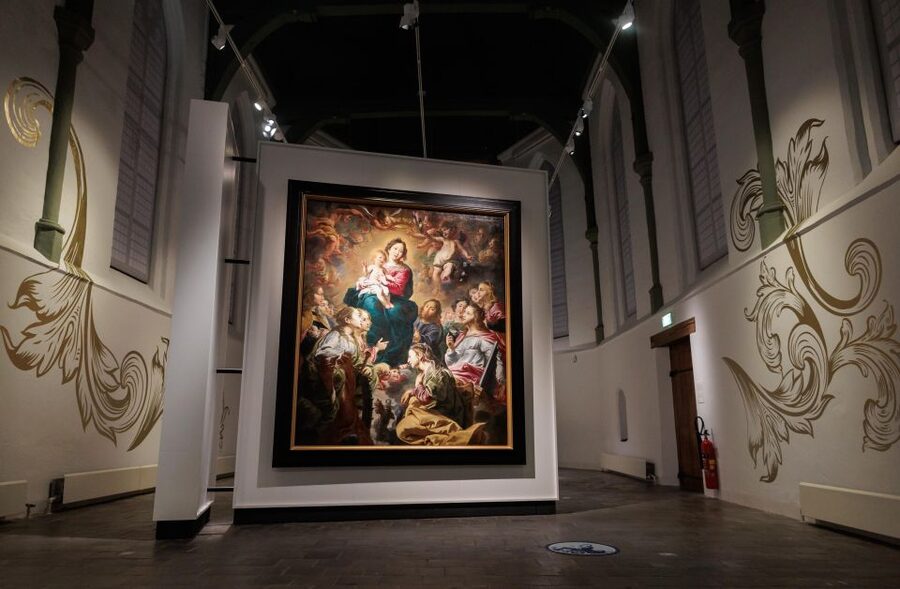
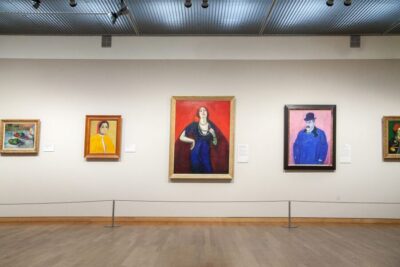
Museum Gouda’s collection continues into the 19th and 20th centuries, with French and Dutch works that show how painting changed after the age of civic portraits and altar panels. Isaac Israels is an important name here, and his presence helps connect the museum to modern Dutch art.
This later material prevents the visit from becoming a narrow lesson in medieval and 17th-century Gouda. You get a longer view of changing taste, subject matter, and artistic style. The museum’s story is not frozen in the city’s past. It follows Gouda into more recent centuries.
I would give yourself time to adjust between sections. The move from religious panels to civic group portraits and then to later French and Dutch painting is part of the museum’s appeal, but it can also feel like several museums in one. The variety is a strength if you enjoy browsing across periods. It is less useful if you want a single tightly focused artist exhibition.
The famous names help draw you in, but the local connection is what gives the visit its character. You are not simply ticking off a painter. You are seeing how Gouda’s public and artistic life fit into wider Dutch culture.
Gouda plateel and the city’s decorative pottery
The pottery section explains one of Gouda’s most recognizable contributions to decorative art. Gouda plateel refers to the decorative pottery made in the city, particularly the colorful pieces associated with its 20th-century reputation.
This material adds welcome texture to the museum. Paintings ask you to look at a flat surface. Pottery lets you consider shape, glaze, use, and decoration at the same time. It also shows how a city’s identity can be built through an industry rather than through a single monument or artist.
You can learn why Gouda became famous for this type of pottery and see how decorative design became part of its public image. The section is a good reminder that art history is not only about church commissions and wealthy collectors. Workshops, factories, craftsmen, and buyers also shape a city’s story.
If you are buying Gouda pottery elsewhere in the city, this section gives you useful background. You will have a better idea of why the objects matter and how they fit into local production. It is one of the museum’s most distinctly Gouda subjects.
Temporary exhibitions add a reason to return
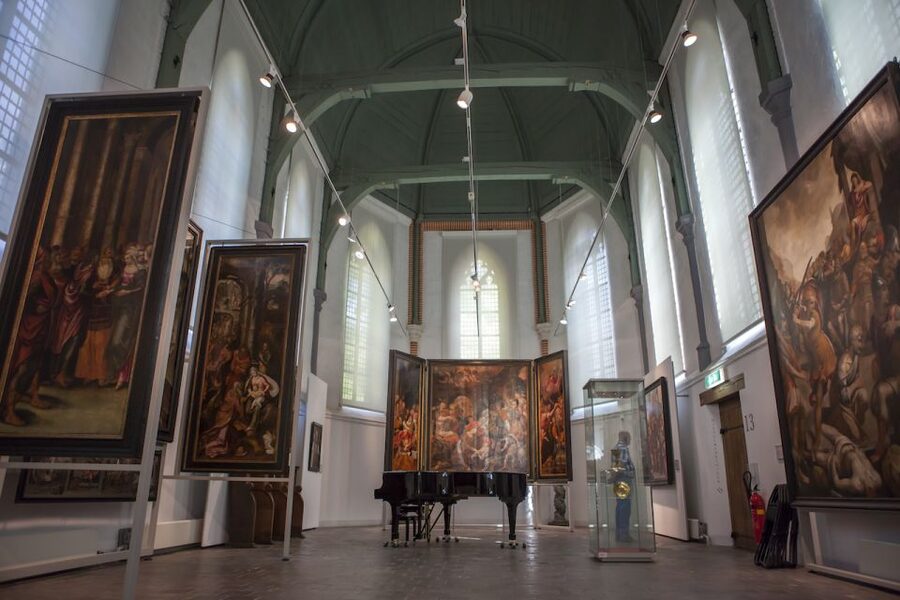
Do not skip the temporary exhibitions. The permanent collection provides the main structure, but changing displays can give repeat visitors a new reason to enter the museum and can add detail to a period or theme that the permanent galleries only introduce.
The exact content changes, so I cannot promise what you will see on a particular date. Check the current exhibition information before booking if a temporary show is a major reason for your visit. The ticket includes museum entry, but food, drinks, and parking are not included.
A changing exhibition also affects how long you need. With only the permanent galleries, you might make a focused visit. If a temporary show catches your interest, plan more time. The ticket is valid for one day, so you do not need to rush through the collection in a fixed time slot.
How much time and money should you allow?
The listed price is $19 per person. That is fair if you enjoy museums that combine paintings, objects, city history, and changing exhibitions. You are paying for more than a room of artworks. The historic building, the city model, the surviving altar pieces, civic portraits, and pottery make the visit varied.
Value depends on your museum style. If you want a guided explanation of every major work, the price may feel less satisfying because the entry does not include a guide or audio guide. One booking experience specifically found the lack of explanatory support disappointing, and I think that is a reasonable concern for first-time visitors who do not know Dutch art.
You can improve the value by reading the labels carefully and allowing yourself enough time to make connections between sections. The ticket is valid for one day, and the experience has no stated fixed duration. That flexibility suits a day in Gouda, where you can place the museum between other city sights rather than treating it as a long guided excursion.
There is no parking included. Since parking arrangements are not specified here, do not assume that your ticket covers it. Food and drinks are also not included, so plan those separately.
Who will enjoy Museum Gouda most?
I would recommend this museum to you if you like local museums with a wide time span. It suits anyone interested in Dutch religious art, civic portraits, decorative pottery, or the way a city changes over centuries.
It is also a good choice for families and mixed-interest groups. The interactive 1562 maquette gives non-art specialists something concrete to explore, while the paintings and pottery offer more depth for serious museum fans.
You may want to reconsider if you need a fully guided experience. The ticket does not include a guide, and an audio guide is not available as part of the experience. Visitors who prefer spoken interpretation may find some of the collection’s stories difficult to follow from labels alone.
The museum is wheelchair accessible, which is useful for planning a comfortable visit. English and Dutch are the stated languages, and the host or greeter support is also listed in those languages.
Booking flexibility and practical planning
You can cancel up to 24 hours in advance for a full refund, and reserve now while paying later. That is useful if your Gouda day depends on weather or on a changing Netherlands itinerary.
Availability includes starting times, so check the date you want before assuming that any arrival time will work. The admission itself is valid for one day, giving you more breathing room once you enter.
For the smoothest visit, I would go in with a simple plan:
- Start with the maquette so you understand the city’s shape.
- Give the surviving altar works and triptych unhurried attention.
- Look for the civic guard and militia portraits as records of public life.
- Leave time for the later French and Dutch works.
- Finish with Gouda plateel and check the temporary exhibition.
That order is not required, but it creates a clear story from city layout to religious life, civic identity, modern painting, and local industry.
Should you book this museum ticket?
Book it if you want Gouda explained through its own art and objects, not just admired from the outside. The best reasons are the surviving altar pieces, the large 1562 city model, and the pottery section that connects art with local industry.
Think twice if you expect a guided tour or a polished audio narrative. This is a self-guided museum visit, and some works may feel under-explained without extra context. At $19, it offers solid value for a broad, thoughtful visit, especially if you take time with the temporary exhibitions and the interactive maquette.
For a first visit to Gouda, I would include Museum Gouda when you want more than the famous cheese and historic streets. It gives you the city’s story in pictures, objects, and surviving fragments, with enough variety to suit both dedicated art lovers and curious first-time museum visitors.
FAQ
Where is Museum Gouda located?
Museum Gouda is in South Holland, Netherlands, in a 14th-century guest house in the city of Gouda.
What does the Museum Gouda ticket include?
The ticket includes entry to Museum Gouda.
How much does admission cost?
The listed price is $19 per person.
How long is the ticket valid?
The ticket is valid for one day.
Is a guide included?
No. The ticket is for entry only. A guide is not included.
Is an audio guide available?
An audio guide is not included, and the experience information does not list an audio guide as part of the visit.
Is Museum Gouda wheelchair accessible?
Yes. The experience is listed as wheelchair accessible.
Can I cancel my booking?
Yes. You can cancel up to 24 hours in advance for a full refund.
Just added around the Netherlands
- Van Gogh Museum Tour excluding Entrance Tickets★ 5.0 · 16 reviews
- Van Gogh Museum Entry Ticket and Guided Tour★ 4.5 · 48 reviews
- Van Gogh Museum with Audio Guide★ 3.5 · 80 reviews
- Amsterdam: Explore the Van Gogh Museum & His Masterpieces★ 3.5 · 64 reviews
- Van Gogh Museum Skip the Queue with Audio Guide★ 4.0 · 261 reviews
- Amsterdam Van Gogh Museum with Audio or Guided Tour★ 4.0 · 266 reviews
- Van Gogh Museum, Rijks Museum & Walking Tour – Private Day Tour★ 5.0 · 17 reviews
- Van Gogh Museum Ticket with Audio Guide and Unlimited Access Time★ 5.0 · 25 reviews
Museum Tours in the Netherlands, compared.
Moco Museum Amsterdam Entrance Tickets with Banksy & More
Read our review →

Amsterdam’s Weirdest Museum: Ripley’s Believe It or Not!
Read our review →
Browse the lists this tour appears in