

Review · THE NETHERLANDS
Garderen: Sandsculpture Exhibition Entry Ticket
Amsterdam’s story takes an unusual form here: carefully shaped sand. At De Beeldentuin Garderen, you walk through scenes covering 750 years, from a small fishing settlement to the canal city and trade center known today. The scale and detail make this more than a quick display of sand castles.
I like the clear historical arc and the fact that your ticket also opens the wider garden. I also like the easy pace: you can spend about three hours with the sculptures, then take your time around the park. The main drawback is that the exhibition may feel less rewarding if you want a conventional Amsterdam sightseeing day, since this is an indoor-style art and history experience rather than a visit to the city itself.
Key points to know before you go

- Amsterdam in sand: Follow the city’s growth from fishing village to modern capital through scenes, landmarks, and moments from daily life.
- About three hours inside: The exhibition has enough detail to reward a slow walk, especially if you stop to read the facts and study each scene.
- Garden access included: Your ticket also covers De Beeldentuin and its gardens, giving you more than the sand exhibition alone.
- Useful for mixed-age groups: The visual scenes work for children, while the historical setting gives adults plenty to discuss.
- Three languages available: Host or greeter support is offered in Dutch, English, and German.
- Wheelchair friendly: The full park is described as wheelchair accessible, not just the exhibition area.
Amsterdam’s story begins as a fishing village

The exhibition gives you a simple way to understand Amsterdam’s long development. Rather than presenting a collection of unrelated sculptures, it moves through key stages in the city’s past, beginning with its origins as a fishing village.
That starting point matters. Amsterdam can seem like a fully formed city of canals, bridges, and grand buildings, but this first chapter shows that its story began on a much smaller scale. The sand format also helps make the transition visible. You are not just reading that the city grew. You can look from one detailed scene to the next and see how its role changed.
This section should work well for children because the basic idea is easy to grasp: small settlement, growing town, major center. Adults can use it as a quick refresher before the exhibition moves into the city’s period of trade and expansion.
Do not rush through the early scenes. The smaller details may be easier to miss than the large landmarks, and the point of the display is as much the activity around the city as the buildings themselves. Look for scenes of ordinary life, not only the famous views.
A few more museum visits around the Netherlands worth comparing
- Amsterdam: Van Gogh Museum Ticket
★ 4.7 · 52,054 reviews - Moco Museum Amsterdam Entrance Tickets with Banksy & More
★ 4.4 · 10,088 reviews - Amsterdam: The Upside Down Museum Entrance Ticket
★ 4.4 · 9,506 reviews
Trade, canals, and the Golden Age
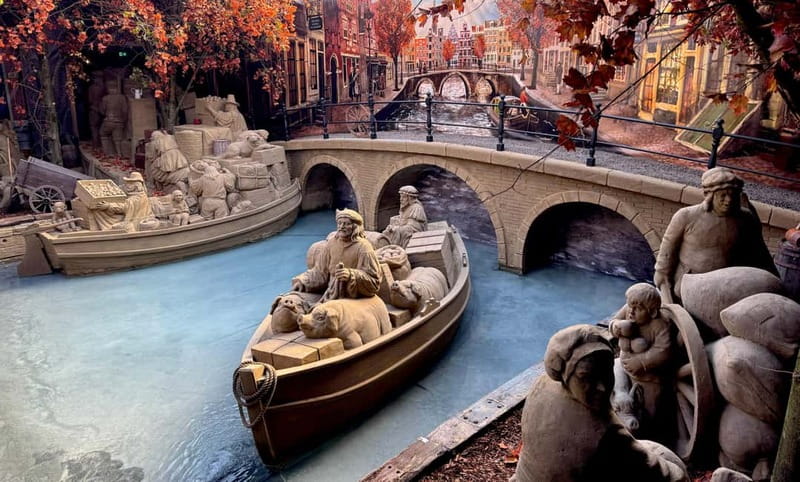
The exhibition then turns to Amsterdam as a thriving trade hub, including the city’s Golden Age and the construction of its iconic canals. These are the sections likely to hold the most immediate appeal for anyone who has visited Amsterdam and remembers its waterways and historic center.
The sand sculptures give you a broad view of this change. Grand scenes show the city at important moments, while smaller details suggest how people lived and worked around them. That mix keeps the display from becoming a line of famous buildings with no context.
The canal story is especially useful because Amsterdam’s waterways are often treated as scenery. Here, they form part of the city’s growth. The exhibition connects the canals to the way Amsterdam developed into a major center of trade and urban life.
If you are taking children, this is a good place to pause and ask them to find differences between the earlier village scenes and the later city scenes. You can make the visit more active without needing a formal guide. The visual changes do much of the teaching.
The sculptures are designed to be admired at close range. You will want to look for faces, tools, buildings, and small pieces of daily activity. That close viewing is also the one limitation of the format: sand can show a great deal, but it cannot replace seeing the actual canals or historic streets in Amsterdam.
Wartime scenes and the city’s resilience

The exhibition also covers Amsterdam’s wartime experience and the city’s ability to recover. This gives the visit a more serious turn after the grand trade and canal scenes.
The information provided does not specify individual events or dates within this section, so expect a broad historical treatment rather than a full museum-style account. Still, including wartime moments helps keep the city’s story from becoming a string of pretty views. Amsterdam’s past includes hardship as well as prosperity, and the exhibition gives both a place.
For adults, these scenes may be the most useful part of the historical sequence because they add weight to the display. For younger children, you may want to decide how much detail to discuss based on their age. The overall format remains accessible, but the subject itself is more serious than the earlier scenes of trade and city growth.
The sculptures turn history into something you can study from several angles. You may first notice the central structure, then spot the people and smaller actions around it. Give yourself time before moving on. A fast walk will show you the main shapes, but a slower visit reveals why the exhibition takes about three hours for many people.
Art and history in the Beeldentuin
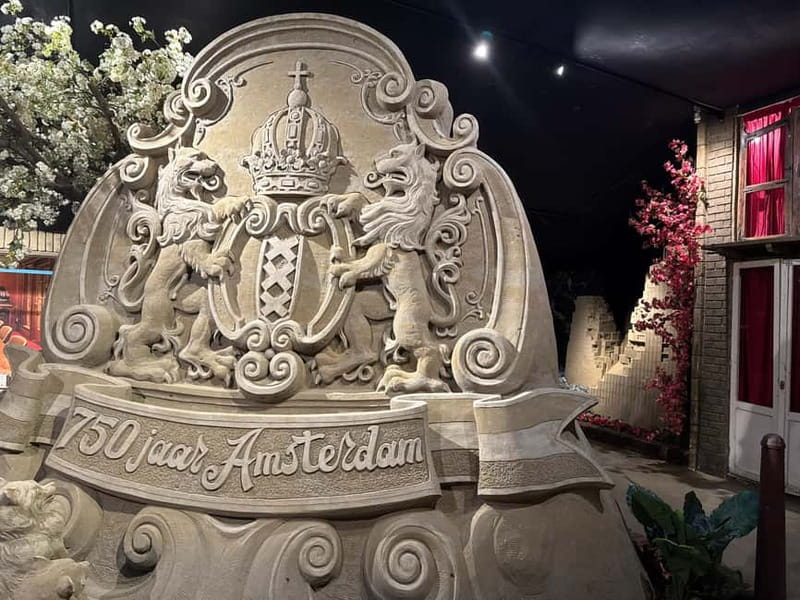
The setting at De Beeldentuin Garderen is part of the value. Your ticket includes free entry to the wider park and garden, so you are not paying only for a single exhibition room or short indoor stop.
That extra access makes the outing easier to plan. You can treat the sand display as the main event, then spend time in the garden without needing another admission ticket. It also gives children room for a change of pace after the historical scenes, while adults can continue enjoying the art setting.
The available information does not give a detailed garden route or list individual outdoor works, so I would not book this expecting a specific sculpture trail or named collection. Instead, think of the garden as included time around the main exhibition. The combination is useful because it turns a three-hour art visit into a fuller day out.
The full park is wheelchair friendly, which is a practical strength for anyone planning with a wheelchair or mobility needs. The experience is not limited to one accessible section. You can use the park as a whole, although it remains sensible to allow extra time and move at your own pace.
Same city, a completely different collection:
- Amsterdam: Red Light Secrets Museum Entry Ticket
★ 4.2 · 5,722 reviews - Amsterdam’s Weirdest Museum: Ripley’s Believe It or Not!
★ 4.5 · 4,920 reviews - Amsterdam: Van Gogh Museum Ticket and City Canal Cruise
★ 4.6 · 3,899 reviews - Amsterdam: Rembrandt House Museum Entrance Ticket
★ 4.7 · 3,385 reviews
What the visit feels like for families

This is a family-friendly experience without being designed only for small children. The subject is visual, the route is self-paced, and the sculptures give you plenty to point out together.
Young visitors may respond first to the unusual material and the size of the scenes. Older children can follow the basic timeline and look for changes in clothing, buildings, transport, and work. Adults get the pleasure of close inspection and the chance to connect the display with places they may know from Amsterdam.
I would plan on three hours for the sand exhibition rather than trying to squeeze it into a quick stop. You can go faster, but the detail rewards patience. If you are visiting as a group, the open format lets different people pause at different points without forcing everyone to move at the same speed.
One group arrival included a musical welcome. That suggests the reception can have a bit of warmth and occasion, but music should not be treated as a guaranteed part of every visit. The more dependable feature is the multilingual support in Dutch, English, and German.
Bring a camera. The exhibition is made for close-up photographs, and the small details are easy to forget once you leave. Check the rules while you are there and be considerate of other people when taking pictures.
A practical look at the $16 price
At $16 per person, the ticket is reasonable if you use both parts of what it includes: the sand exhibition and the wider Beeldentuin. The value is weaker if you arrive expecting a short attraction that takes only half an hour.
The three-hour average visit gives the admission fee some weight. You are paying for a substantial display with a clear theme, not just a handful of decorative sculptures. The garden access adds useful extra time and makes the outing easier to justify for families or groups.
The strongest value comes when you already want an art-and-history activity in Gelderland. This is not a substitute for a day in Amsterdam, and it does not place you beside the real canals or historic buildings. It offers a carefully made interpretation of them in a quieter setting at Garderen.
The rating is 4.8 out of 5 from 32 ratings, with especially strong responses describing the exhibition as impressive and very enjoyable. That matches the experience’s main strength: it offers a distinctive subject in a form that is easy to appreciate without specialist art knowledge.
Timing, language, and access

The ticket is valid for one day, with starting times based on availability. Since the average exhibition visit takes about three hours, leave enough room for the garden rather than booking yourself tightly around another activity.
A host or greeter may assist in Dutch, English, or German. That is useful if you want basic help getting oriented or understanding practical information, but the supplied details do not describe a guided tour with a named historian. You should expect the sculptures and displays to carry most of the experience.
The park is wheelchair accessible, including the wider grounds. That is more helpful than access limited to the main exhibition because you can use the full ticket without having to skip the garden.
You can cancel up to 24 hours before the visit for a full refund. A reserve-now, pay-later option is also available, which helps if your plans for Gelderland are still changing. Alcohol and drugs are not allowed, and nudity is prohibited.
Who should book this experience

I would recommend it to families looking for an activity with both visual appeal and a clear educational thread. It also suits adults who enjoy model-making, historical scenes, or unusual forms of public art.
It works well for a mixed group because not everyone has to engage with the history in the same way. One person can study the craftsmanship, another can read the background facts, and children can search the scenes for small details.
It is less suitable if your main goal is a guided walk, a hands-on workshop, or an authentic canal-side experience. No named guide or detailed walking route is provided, and the subject is Amsterdam while the attraction is in Garderen. You will be seeing the city through art rather than visiting the city itself.
The three-hour average also means you should avoid treating this as a quick photo stop. The exhibition is most worthwhile when you accept its slower pace and let the scenes unfold from one period to the next.
Should you book the Garderen sand exhibition?
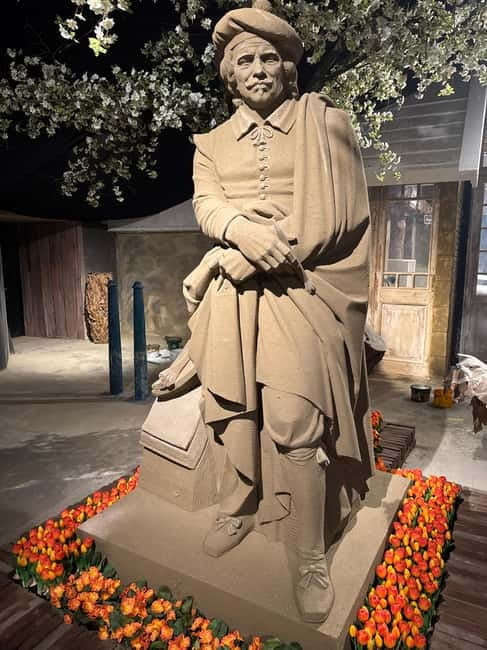
Book it if you want a distinctive, family-friendly art outing with a strong historical theme. The combination of Amsterdam’s 750-year story, detailed sand scenes, three-hour viewing time, and included garden access gives the $16 admission solid value.
Skip it if you are looking for the real Amsterdam, a formal guided tour, or a brief attraction between other plans. For everyone else, especially families and visitors already exploring Gelderland, this is an easygoing way to spend part of a day and see familiar city history in an unexpected form.
FAQ
Where is the sand sculpture exhibition located?
The exhibition is at De Beeldentuin in Garderen, in Gelderland, Netherlands.
How long does a visit usually take?
The sand sculpture exhibition takes about three hours on average. The ticket is valid for one day, so you can also allow time for the wider park and garden.
What does the ticket include?
It includes entry to the sand sculpture exhibition, De Beeldentuin, and the garden.
What languages are available?
Host or greeter support is available in Dutch, English, and German.
Is the park wheelchair accessible?
Yes. The full park is described as wheelchair friendly.
Can I cancel the booking?
Yes. You can cancel up to 24 hours in advance for a full refund.
What should I bring?
Bring a camera. Alcohol and drugs are not allowed, and nudity is prohibited.
Just added around the Netherlands
- Van Gogh Museum Tour excluding Entrance Tickets★ 5.0 · 16 reviews
- Van Gogh Museum Entry Ticket and Guided Tour★ 4.5 · 48 reviews
- Van Gogh Museum with Audio Guide★ 3.5 · 80 reviews
- Amsterdam: Explore the Van Gogh Museum & His Masterpieces★ 3.5 · 64 reviews
- Van Gogh Museum Skip the Queue with Audio Guide★ 4.0 · 261 reviews
- Amsterdam Van Gogh Museum with Audio or Guided Tour★ 4.0 · 266 reviews
- Van Gogh Museum, Rijks Museum & Walking Tour – Private Day Tour★ 5.0 · 17 reviews
- Van Gogh Museum Ticket with Audio Guide and Unlimited Access Time★ 5.0 · 25 reviews
Museum Tours in the Netherlands, compared.

Moco Museum Amsterdam Entrance Tickets with Banksy & More
Read our review →


Amsterdam’s Weirdest Museum: Ripley’s Believe It or Not!
Read our review →

Browse the lists this tour appears in