
Review · FLORENCE
Florence: Uffizi Gallery Reserved-Entry VIP Tour
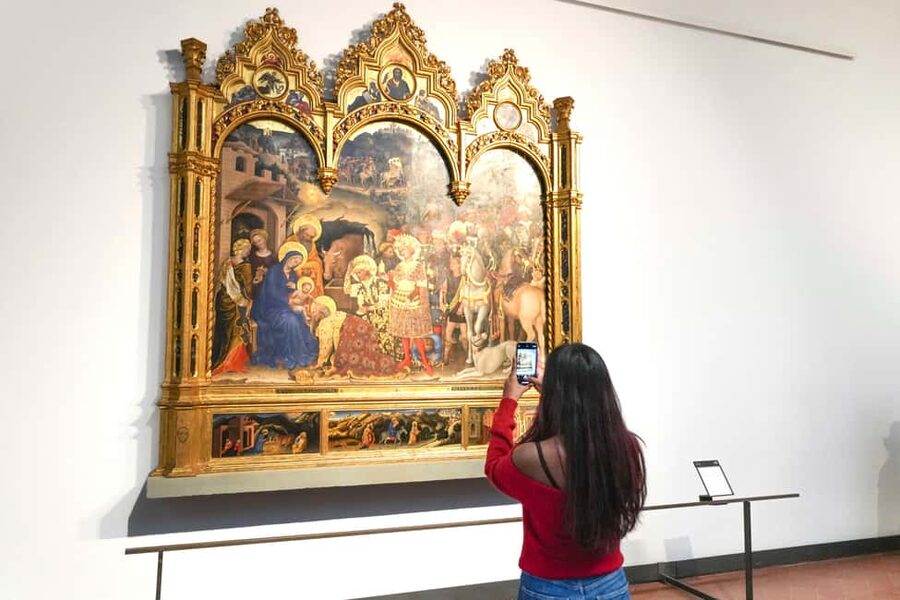
The Uffizi makes more sense when someone helps you connect the paintings to Florence’s politics, religion, and changing ideas about beauty. This tour takes you straight to major works such as Botticelli’s Birth of Venus, Michelangelo’s Doni Tondo, Leonardo’s drawings, and Caravaggio’s Medusa, rather than leaving you to wander past them with only a floor plan.
I like the small group of up to nine, which makes it easier to hear and ask questions. I also like the reserved entrance, especially when the museum is crowded and the regular queue stretches outside. The main tradeoff is time: 90 minutes is enough for the best-known works, but not enough for a slow look at every room.
Key points to know before booking
- Meet at Leonardo’s statue: Find the guide outside the Uffizi ticket office, holding a white flag marked ENJOY ROME.
- The focus is the Renaissance: Botticelli, Michelangelo, Leonardo da Vinci, and the development of painting receive the most attention.
- Small groups make a difference: The maximum of nine helps you stay close to the guide in crowded rooms.
- Security still takes time: Even with reserved entry, allow around 15 to 20 minutes for checks during busy periods.
- You can stay afterward: Once the guided portion ends, you may continue through the gallery at your own pace.
- Bring your passport or ID: Your full, correct name must be used when booking, and identification is mandatory.
Why the Uffizi is better with a guide
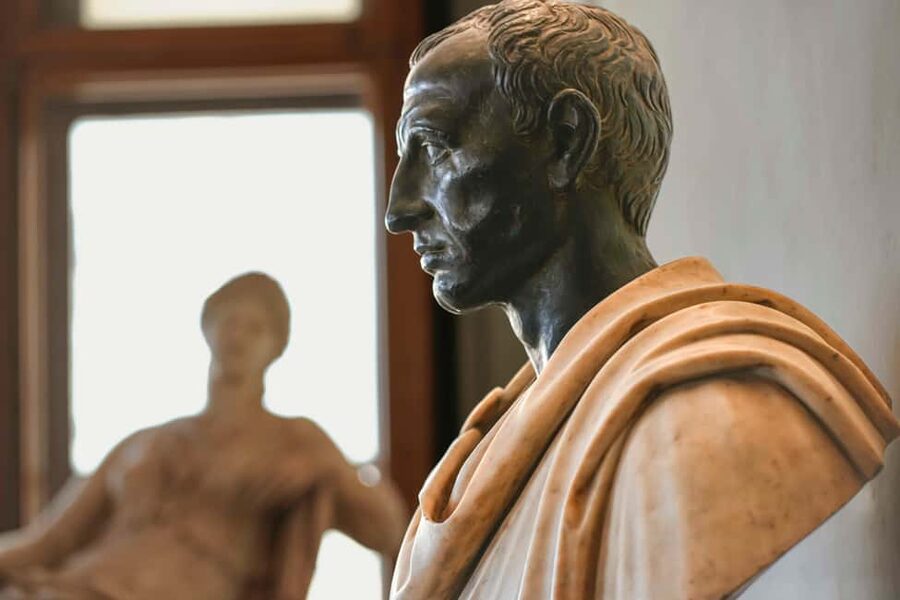
The Uffizi is not simply a room full of famous pictures. It is a record of how European art changed, from solemn medieval religious panels to the human figures, perspective, movement, and emotion of the Renaissance.
That change can be hard to see on your own. You may admire Botticelli’s Birth of Venus, for example, without noticing how unusual its subject and elegant, flowing lines were. A good guide gives you a way to look, not just a list of names and dates.
This tour is built around that kind of explanation. Guides such as Hillary, Hilaria, Silvia, Anna, Claudia, and Anastasia have been praised for connecting art with Florentine politics and the lives of the artists. The quality naturally depends on who leads your departure, but the format gives the guide time to explain rather than rush through a long catalog.
You receive a radio and headset, so you can hear while standing a short distance from the guide. That matters in a busy museum. Without a headset, you may spend more time trying to stay beside the guide than looking at the painting.
More Museum Tours in Florence
- Florence: Skip-The-Line Uffizi Gallery Timed Entry Ticket
★ 4.5 · 27,832 reviews - Florence: Leonardo Interactive Museum Entry Ticket
★ 4.5 · 12,957 reviews - Florence Accademia Gallery Tour with Entrance Ticket Included
★ 4.5 · 6,148 reviews
Meeting at Leonardo’s statue
The meeting point is in front of Leonardo da Vinci’s statue, outside the Uffizi ticket office. Look for the guide carrying a white flag with ENJOY ROME printed on it.
This is a busy part of central Florence, so arrive early enough to find the statue and identify the group. The name on your booking must match your passport or ID. Incorrect names may cause trouble at entry, and your passport or identification is mandatory.
The reserved entrance does not mean you walk directly into the galleries with no delay. Everyone must pass through a security check, and during peak periods that can take 15 to 20 minutes. A medical emergency or another museum disruption can also slow the entrance process.
That is worth knowing before you judge the 90-minute duration too literally. The actual discussion inside may be shorter if the group loses time at security. One departure was reported to last about an hour after entry delays and a group restroom stop. The guide can be excellent and still have little control over that part.
What you see in the first galleries
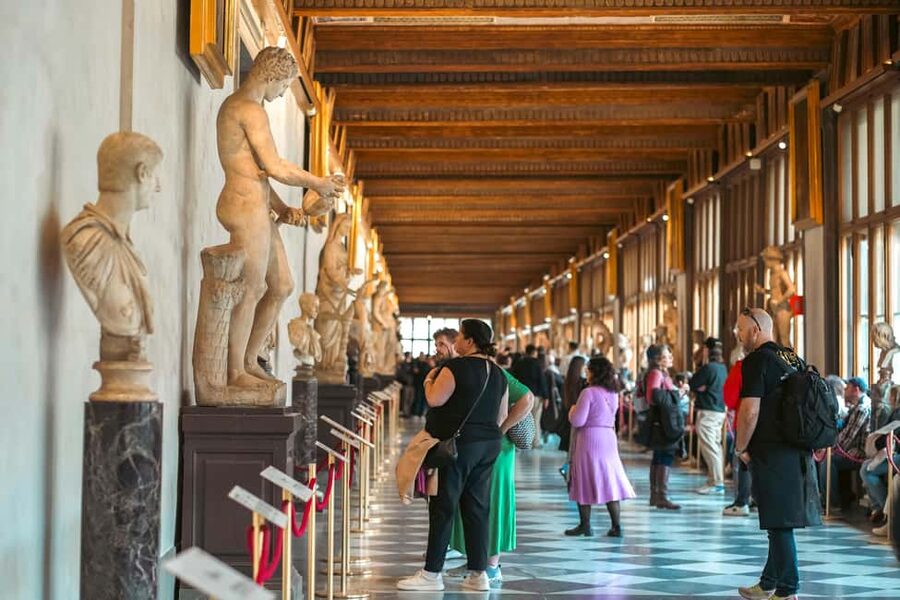
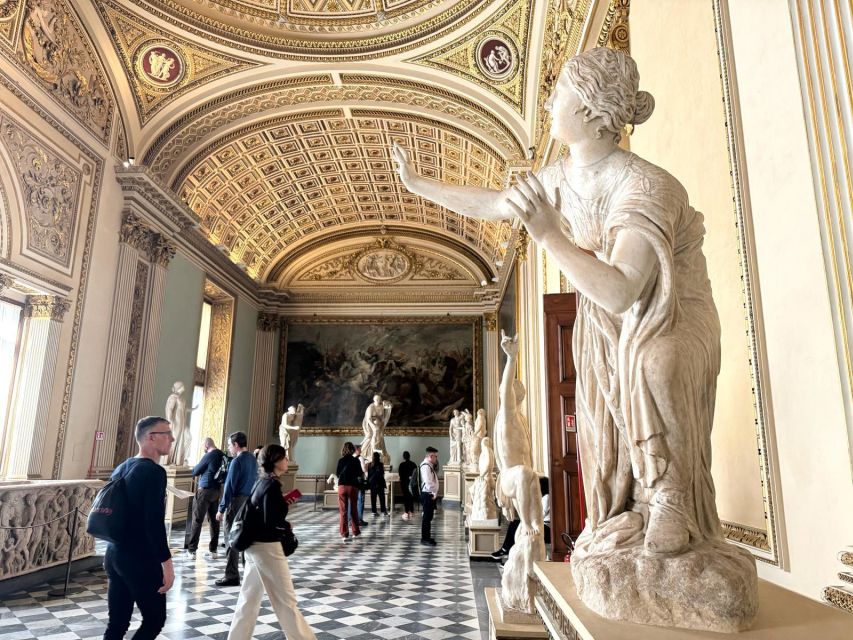
The Uffizi occupies a building designed in part by Giorgio Vasari, and the architecture sets the tone before you reach the most famous paintings. Long corridors, decorated ceilings, large windows, and ancient statues create a formal route through the collection.
The statues lining the corridors are easy to treat as decoration when you are eager to reach Botticelli. A guide can help you notice how these ancient forms shaped later Italian artists. Still, do not expect this short tour to give equal attention to every sculpture. The program leans toward major paintings and the development of Renaissance art.
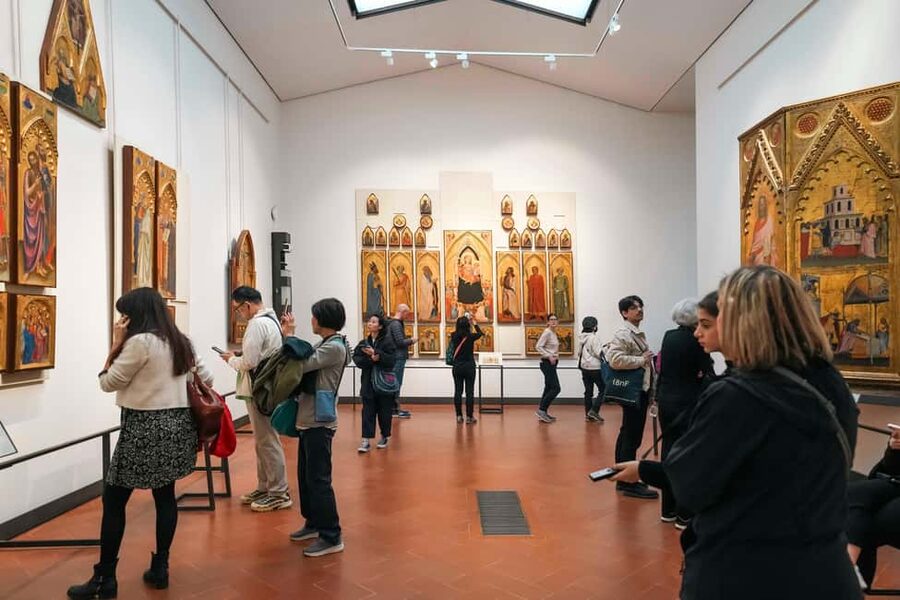
The guided route generally concentrates on the gallery’s most important works. You might begin with earlier medieval and Renaissance pieces, then follow the changes in composition, anatomy, light, and storytelling. This progression is useful because the famous paintings become part of a larger story instead of isolated masterpieces.
The pace is usually brisk but manageable. Several families found the 90 minutes long enough to keep children and teenagers engaged without turning the visit into an exhausting art lecture. If you want to stop for ten minutes in front of one painting, this may not be the right format.
Botticelli’s Birth of Venus
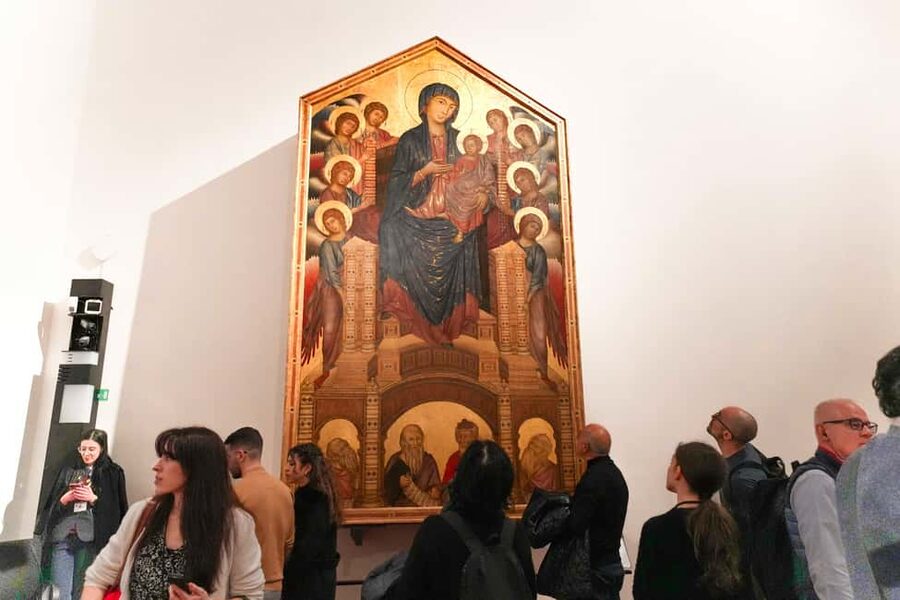
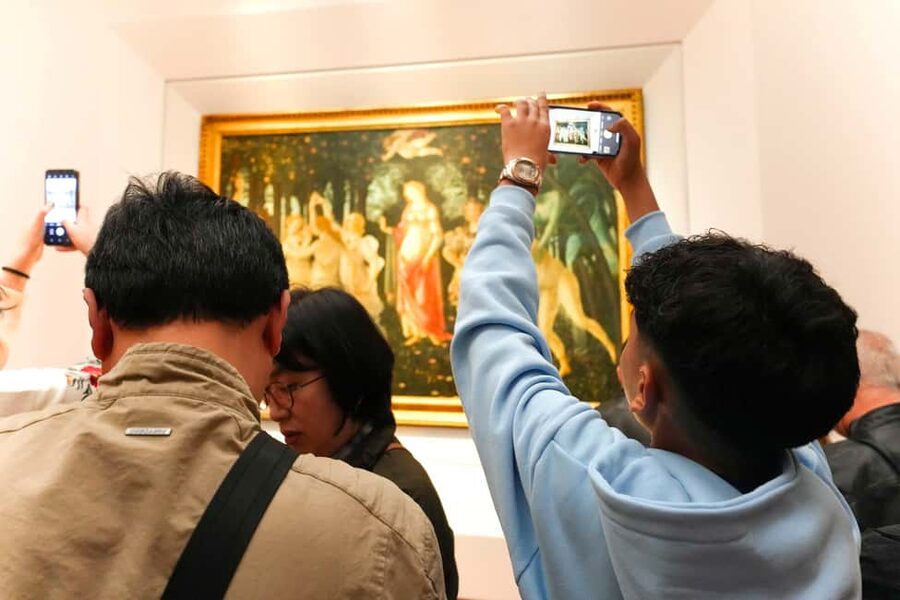
Botticelli’s Birth of Venus is one of the tour’s main attractions. The painting’s pale figures, windblown hair, and delicate colors are instantly recognizable, but a guide can point out details that a quick photograph misses.
You can expect discussion of the painting’s subject, symbols, style, and place in Florentine culture. The work is not presented only as a pretty image. You learn how its unusual mythological theme and graceful figures fit the interests of Renaissance Florence.
This is often the kind of stop where a guide’s storytelling makes the biggest difference. One guide, Sylvia, was praised for describing the act of painting itself, including color, water, and light. That approach gives you something practical to watch for in the brushwork and composition.
The room can be crowded, especially around the most famous works. People may stop directly in front of the painting for photographs, and the guide has to find a workable position for the group. A small party helps, but it cannot remove the crowds entirely.
More Uffizi tours and tickets:
- Uffizi Gallery: Renaissance Masterpieces Guided Tour
★ 4.6 · 6,070 reviews - Uffizi Gallery Small Group Tour with Guide
★ 4.5 · 4,923 reviews - Florence: Uffizi Gallery Timed Entry Ticket & Audio Guide
★ 4.2 · 2,794 reviews - Florence: Uffizi Gallery and Accademia Gallery Guided Tour
★ 4.8 · 2,028 reviews
Leonardo da Vinci and Michelangelo
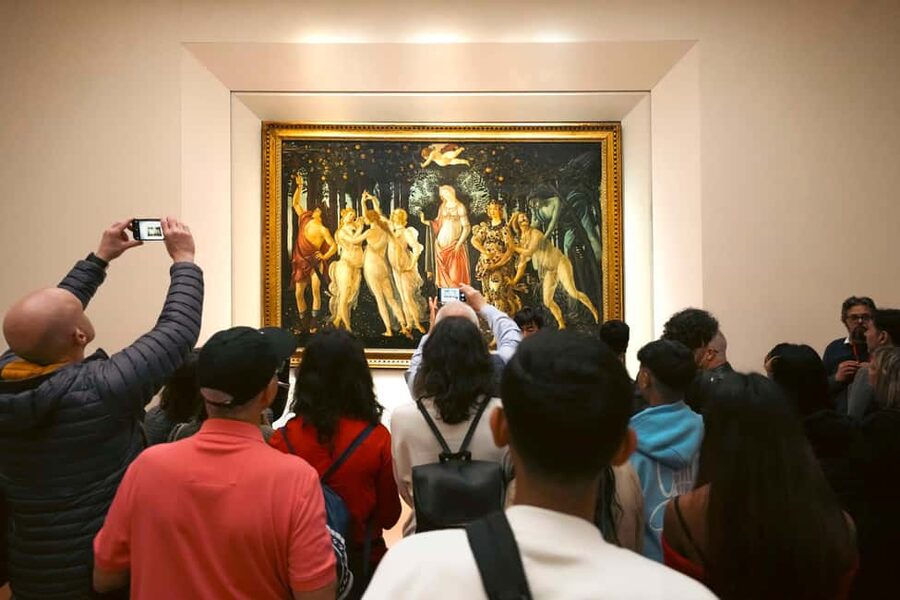
Leonardo’s drawings and paintings offer a useful contrast to Botticelli’s elegant, decorative style. You will hear about Leonardo’s working methods and the way he studied the natural world, the human figure, and the effects of light.
The Uffizi’s Leonardo material is not a separate workshop visit. You are seeing works within a large public collection, with other groups moving around you. The guide’s explanation helps you slow down and understand what makes the drawings important.
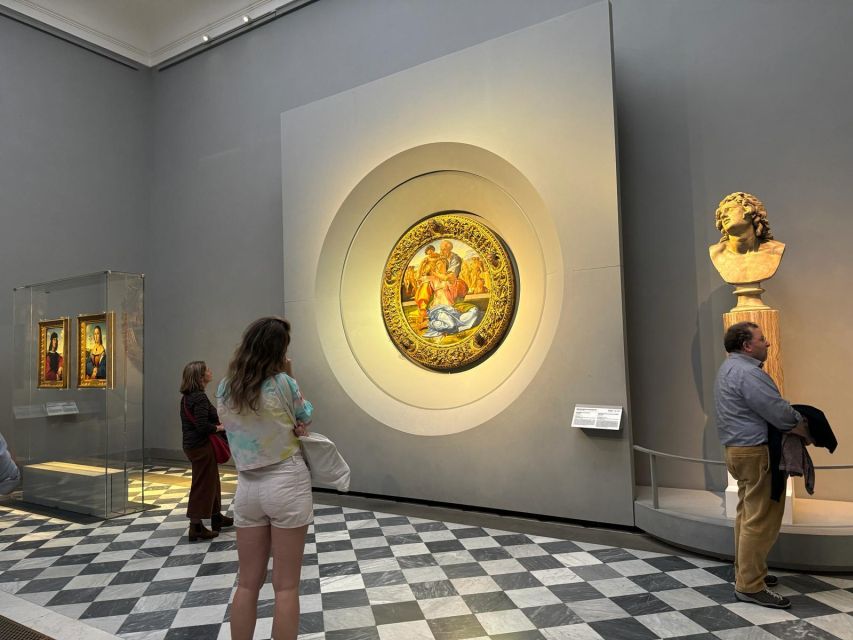
Michelangelo’s Doni Tondo gives the tour another strong anchor. The painting shows Michelangelo’s interest in sculptural bodies and powerful forms, even though it is a panel painting. It also lets the guide explain how artists crossed between painting and sculpture rather than working in neat modern categories.
This stop is especially helpful if you are not confident with art history. You do not need to arrive knowing technical terms. The guide explains enough about technique and subject matter to help you see why the work matters.
Caravaggio’s Medusa and the limits of 90 minutes
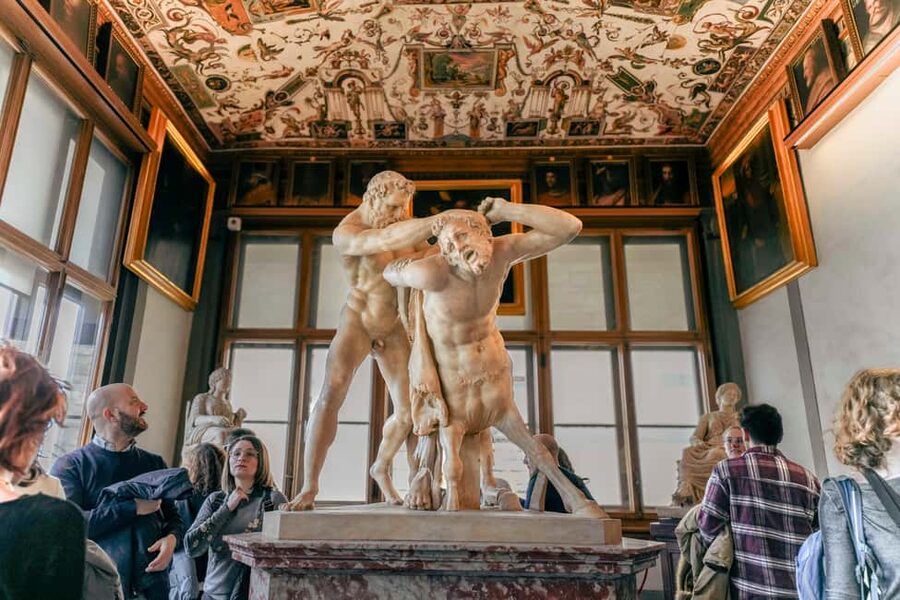
Caravaggio’s Medusa is among the works included in the tour’s stated highlights. Its dramatic expression and forceful use of light offer a sharp change from the earlier Renaissance paintings.
The contrast helps you understand that the Uffizi is not only about Botticelli and Michelangelo. You can see the movement from balanced, idealized forms toward a more theatrical style built around strong emotion and shadow.
Still, you should set your expectations carefully. The visit does not promise a detailed tour of every Caravaggio work or an extended examination of the gallery’s sculptures. One especially useful description of the format is a cliff notes visit: the best-known works, explained clearly, in a compact route.
That is a strength if you have limited time in Florence. It is a weakness if you already know the highlights and want obscure rooms, long periods of quiet viewing, or specialist-level discussion.
The value of the reserved entrance
At $82 per person, this is not the cheapest way to enter the Uffizi. You are paying for more than admission. The price covers a reserved ticket, a live guide, the small-group format, and the chance to keep exploring after the guided portion.
The value depends on your plans. If you are happy to read labels and move through the museum alone, you may prefer a standard ticket and a slower self-guided visit. If you have only one chance to see the Uffizi, the guide can help you avoid spending your energy on rooms that do not match your interests.
The reserved entry is most useful on busy days. One group found a long line already waiting at the museum and considered the group entrance a major advantage. Remember, though, that reserved entry does not bypass security. You still need patience at the checkpoint.
After the tour, you are free to continue inside the gallery for as long as you like. This is an important part of the deal. You can return to a favorite Botticelli, look more closely at the sculptures in the corridors, or visit works not covered during the guided route.
How the group size affects the experience
The maximum group size is nine people. That is small enough for the guide to answer questions and notice if someone is falling behind. It also helps when the group needs to gather around a painting in a crowded room.
The headsets are useful for families and older visitors. One group traveling with an 89-year-old found that the guide kept everyone included despite different walking speeds. Another family with children aged 10 to 13 appreciated the compact route and the ability to keep moving.
A small group is not a private tour. Other museum visitors remain around you, and popular rooms can feel packed. The guide may need to shift position, wait for space, or explain a work from an angle rather than directly in front of it.
The format works best when you stay with the group and follow the guide’s pace. If you wander off for a closer look during the explanation, you may miss the next stop.
Guides, languages, and the human element
The tour is offered in English, Italian, French, German, and Spanish. The guide assigned to your departure may vary, but the strongest descriptions point to an engaging, personal style rather than a dry recital of facts.
Hillary was praised for linking the art to Florentine politics. Hilaria used humor and made good use of an unexpected entry delay. Silvia was noted for making technical details understandable to people with little art background. Francesca adjusted her pace for an older visitor, and Anna was described as clear and well paced.
These examples suggest what to look for from the format: a guide who can tell a story, answer questions, and adjust when the room or group changes. The experience is not fully uniform. One departure received criticism for a guide who seemed unenthusiastic, and another participant felt the visit ran longer than expected.
The guide’s personality matters because the Uffizi can be visually tiring. After dozens of paintings, a clear explanation and a little humor help you keep looking.
Practical advice for your visit
Bring your passport or ID, and enter your full legal name carefully when booking. You should also arrive at the meeting point with time to spare, since finding the statue and flag takes longer when the square is crowded.
Plan for security delays, especially during peak hours. A 15 to 20 minute wait is possible even with a reserved ticket. If you have a train, meal, or another timed activity immediately afterward, leave extra space.
Wear shoes suitable for standing and walking through the gallery. The tour lasts 1.5 hours, but you may remain afterward, and many people will want to continue through the collection.
Use the guided portion to learn the structure of the museum and identify the works you want to revisit. Once the guide leaves, you can slow down. That second look is where the reserved entry and short guided route become especially useful.
The tour is wheelchair accessible. Hotel pickup and drop-off are not included, so you must make your own way to the Uffizi meeting point.
Who should book this Uffizi tour?
I would choose this tour for a first visit, a short stay in Florence, or anyone who wants the major works explained without committing to a half-day museum lecture. It also suits families, couples with different levels of art interest, and people who want a clear route through a crowded gallery.
It is a good match if you want Botticelli, Michelangelo, Leonardo, and a selection of other important works, then time to continue alone. It is less suitable if your main goal is sculpture, Caravaggio, lesser-known rooms, or long, quiet study of individual paintings.
The 90-minute length is both the attraction and the limitation. You get a focused introduction, not an exhaustive museum visit. With the freedom to stay afterward, that balance works well for many people.
Final decision: is $82 worth it?
I think the tour is worth considering if the Uffizi is high on your Florence list and you value a guide who can explain what you are seeing. The combination of reserved entry, a group capped at nine, headsets, and free time afterward gives you a useful structure for a difficult museum.
Book it if you want the famous works, clear art-historical context, and help getting through a busy entrance. Skip it if you prefer complete freedom, already know the collection well, or want to spend most of your time with sculpture and lesser-known paintings.
The safest expectation is simple: you will see the Uffizi’s main artistic story in 90 focused minutes, then choose your own second act.
FAQ
How long does the Uffizi tour last?
The guided tour lasts 1.5 hours. Afterward, you may continue exploring the gallery for as long as you like.
What works are included in the tour?
The tour includes major works such as Botticelli’s Birth of Venus, Caravaggio’s Medusa, Michelangelo’s Doni Tondo, and drawings and paintings by Leonardo da Vinci.
Where is the meeting point?
Meet in front of Leonardo da Vinci’s statue, outside the Uffizi ticket office. Your guide will hold a white flag marked ENJOY ROME.
Is the entrance completely free of waiting?
No. The tour uses a separate reserved entrance, but all visitors must pass through security. During busy periods, the security wait can be around 15 to 20 minutes.
What should I bring?
Bring your passport or ID card. Identification is mandatory, and your full, correct name must be used when booking.
What languages are available?
The live tour is offered in English, Spanish, German, Italian, and French.
Just added around Florence
- Timed Entry Ticket to the Uffizi Gallery★ 4.5 · 498 reviews
- Florence: Accademia Gallery Entry Ticket with Audio Guide★ 4.1 · 88 reviews
- Florence: Skip-the-Line Tour of Uffizi & Accademia Galleries★ 4.4 · 14 reviews
- Florence: Skip-the-Line Accademia Gallery Entry Tickets★ 4.3 · 44 reviews
- Florence: Walking Tour with Skip-the-Line Accademia Gallery★ 4.6 · 148 reviews
- Florence: David’s Accademia Gallery Guided Tour★ 4.2 · 207 reviews
- Florence: Uffizi Gallery Private Tour w/ Skip-the-Line Entry★ 4.9 · 24 reviews
- Florence: 2-Hour Private Guided Visit to the Uffizi Gallery★ 4.8 · 15 reviews
Museum Tours in Florence, compared.
Skip-The-Line Uffizi Gallery Timed Entry Ticket
Read our review →
Florence Accademia Gallery Tour with Entrance Ticket Included
Read our review →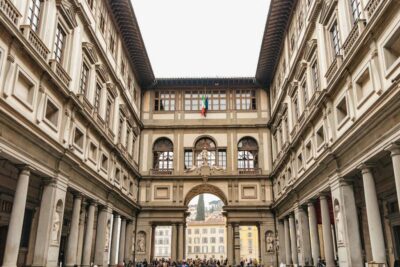
Uffizi Gallery: Renaissance Masterpieces Guided Tour
Read our review →
Uffizi Gallery Timed Entry Ticket & Audio Guide
Read our review →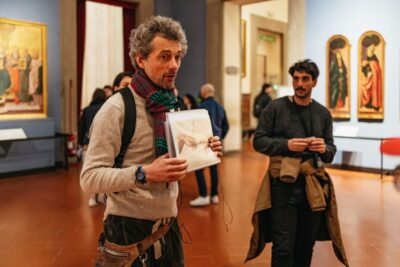
Browse the lists this tour appears in