
Review · FLORENCE
Florence: Private Accademia Gallery Tour
Michelangelo’s David is the reason most people enter Florence’s Accademia Gallery, and it earns its fame. This private two-hour visit gives you time to look beyond the famous statue, from Michelangelo’s unfinished Slaves to rare Stradivari violins and Lorenzo Bartolini’s grand plaster models.
I like the private format, since your guide can adjust the pace and explain the works that catch your eye. I also like the range of the collection: this is not only a Michelangelo stop, but a museum of Medici art, medieval gold-ground painting, musical instruments, and Florentine sculpture.
The main drawback is the price, $229 per person. That can make sense for a small group that wants a focused art lesson and reserved entry, but it is a steep charge if you mainly want a quick look at David. Meeting instructions also deserve care, since one booking ended with the guide and customer waiting at different addresses.
Key points to know before you book
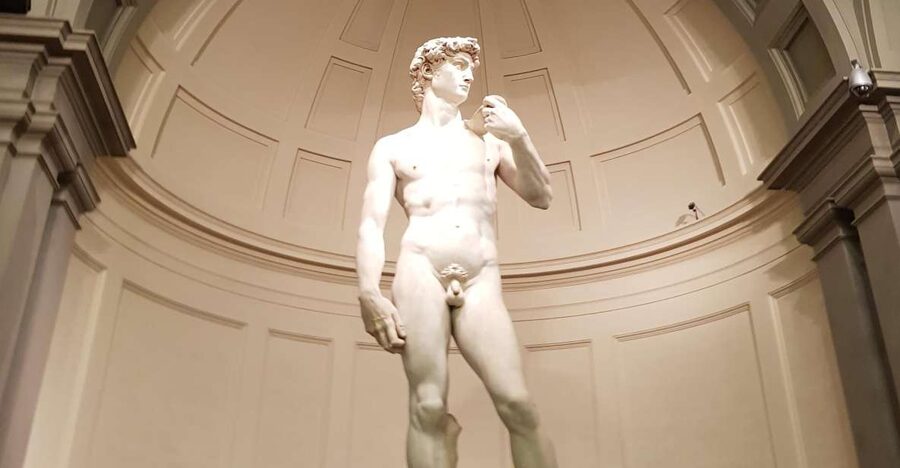
- David gets 30 focused minutes: The tour gives Michelangelo’s most famous statue proper attention instead of treating it as a quick photo stop.
- The private guide covers much more than Michelangelo: You’ll see Botticelli, Ghirlandaio, Pontormo, Andrea del Sarto, Giambologna, Lorenzo Monaco, and Giotto.
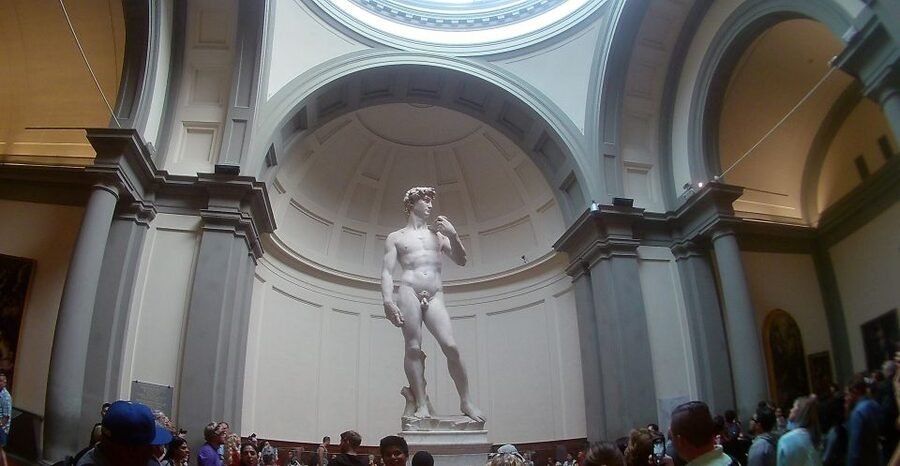
- Three Stradivari violins are on display: The Music Instruments Collection also includes the first piano ever made.
- The Plaster Models Room has a special setting: It occupies the former workshop of Neoclassical sculptor Lorenzo Bartolini.
- You skip the ticket line, not every delay: Security metal detectors can still cause a short wait.
- The tour suits art-focused visitors: A local guide, reserved admission, and a private group make the high price easier to justify.
Why David deserves more than a quick photograph
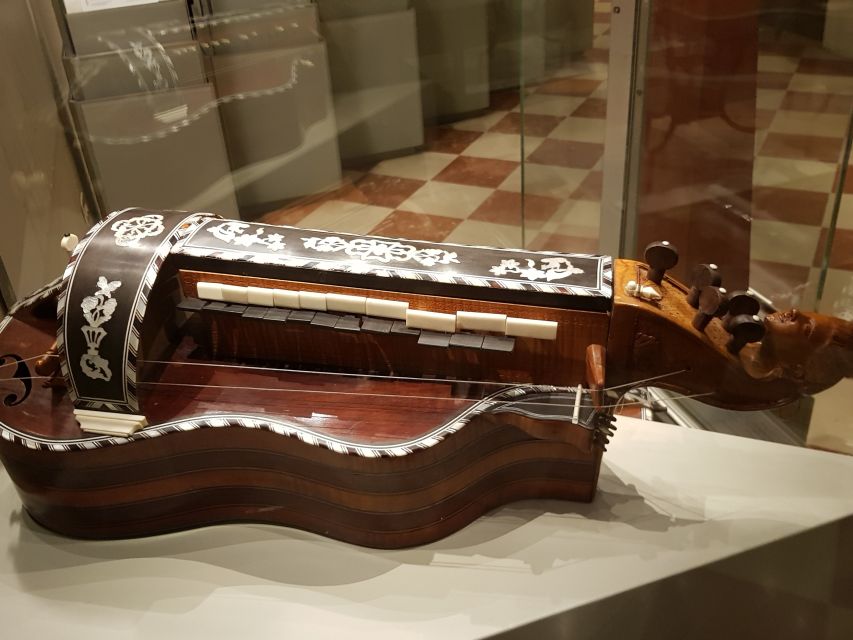
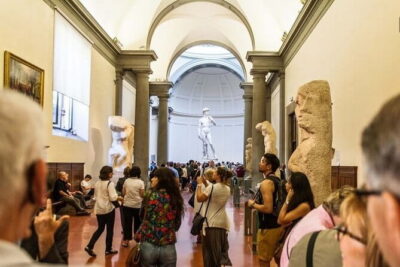
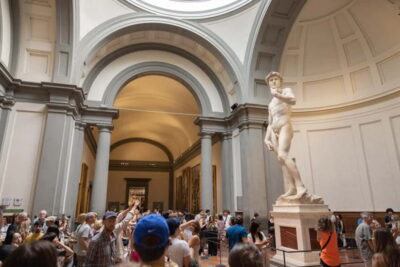
Your visit begins at the Accademia, on Via Ricasoli near the gallery entrance. Once inside, the itinerary gives about 30 minutes to Michelangelo’s David, the work that draws the largest crowd and dominates the museum’s central Tribuna.
The statue is often treated as a simple must-see checkmark. I think you get much more from it when a guide points out how Michelangelo used the pose, expression, and scale to create tension. David is not shown after the battle. He is shown before it, alert and ready, which gives the figure its unusual sense of thought and pressure.
A private guide can help you notice the details that are easy to miss when you are looking up at a 17-foot marble figure. You can ask why the hands seem so large, how the body is balanced, or what makes the face feel both calm and watchful. The value here is not just access. It is having someone turn a familiar image into a work you can actually read.
Do not expect the room to feel quiet or empty. David is the museum’s main attraction, and even a reserved group may spend a little time moving through security and the gallery entrance. If you want a clear view, listen closely to the guide’s meeting instructions and arrive at the correct location early.
More Museum Tours in Florence
- Florence: Skip-The-Line Uffizi Gallery Timed Entry Ticket
★ 4.5 · 27,832 reviews - Florence: Leonardo Interactive Museum Entry Ticket
★ 4.5 · 12,957 reviews - Florence Accademia Gallery Tour with Entrance Ticket Included
★ 4.5 · 6,148 reviews
Michelangelo’s unfinished Slaves and the Pietà
After David, the tour continues through the Accademia’s Michelangelo rooms. The Slaves are especially useful for understanding the artist’s process. These figures appear to struggle out of the marble, with sections that remain unfinished. You can see the contrast between the stone that has been shaped and the stone that has not.
I find unfinished sculpture more revealing than a polished statue because it lets you think about the act of carving. The bodies seem caught between material and human form. A guide can explain how that unfinished quality affects the way you see the figures, rather than leaving you with the mistaken idea that they are simply incomplete decorations.
The gallery also displays Michelangelo’s Pietà and San Matteo. The Pietà brings a different mood from the force of David and the Slaves. Instead of youthful confidence, you get a work tied to grief, devotion, and the weight of the human body. San Matteo adds another chance to see how Michelangelo worked with a block of marble and how his figures create movement within a rigid material.
The supplied tour information identifies this Pietà as one of Michelangelo’s major works in the museum. If seeing several works by one artist matters to you, this concentration is a strong reason to choose a guided visit. You are not crossing Florence to see separate pieces in different churches and museums. The Accademia puts several important sculptures in one compact route.
Paintings from the Medici world
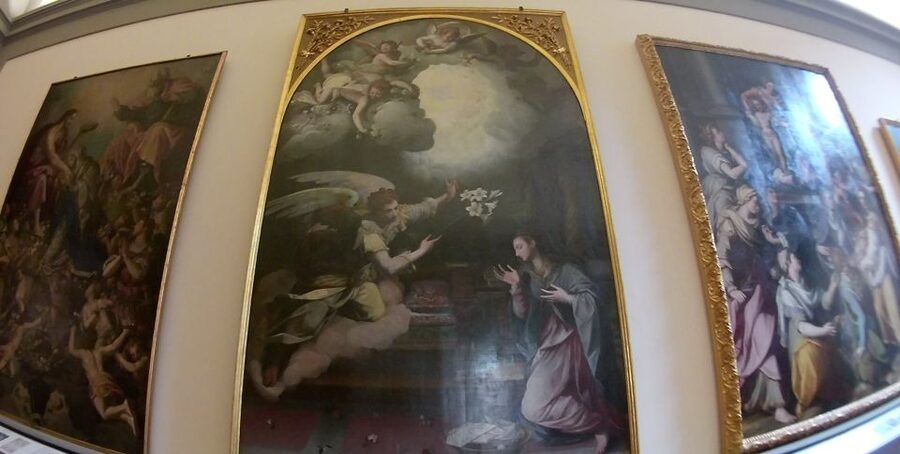
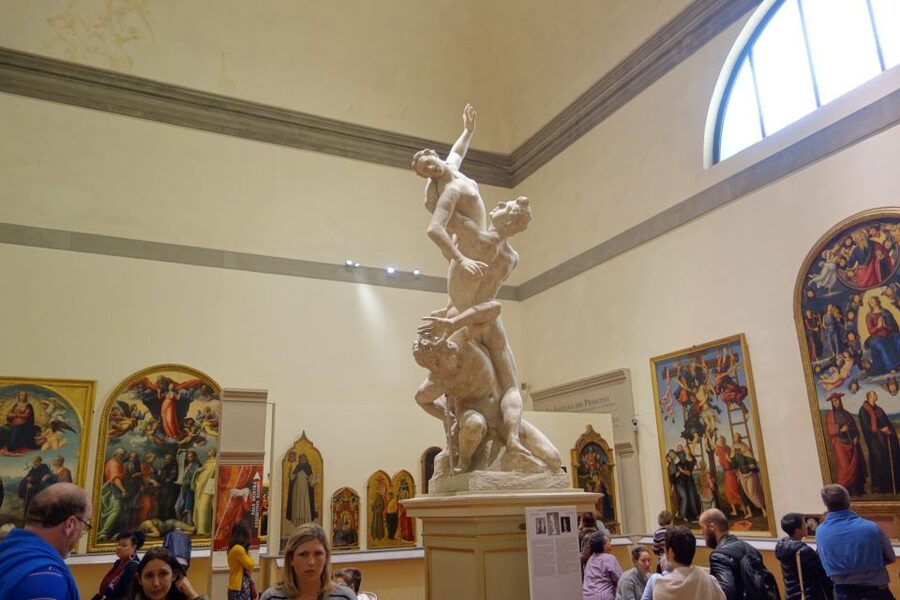
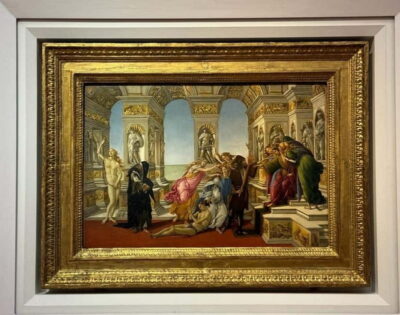
The Accademia’s main rooms also hold paintings and sculptures by major Italian artists, including Sandro Botticelli, Domenico Ghirlandaio, Pontormo, Andrea del Sarto, and Giambologna. Many pieces were commissioned by or collected by the powerful Medici family.
This section helps you place Michelangelo within Florence’s larger artistic culture. The city’s famous art did not appear in isolation. Wealthy families, religious institutions, and political patrons paid for paintings, sculpture, and architecture, shaping what artists made and where it was displayed.
I would pay particular attention to the paintings even if sculpture is your main reason for booking. Botticelli and Ghirlandaio give you a different sense of line and storytelling. Pontormo and Andrea del Sarto help show the range of Florentine painting after the height of the early Renaissance. Giambologna brings sculpture back into the picture with a later, more dynamic style.
A guide’s explanation matters here because the gallery can otherwise feel like a parade of famous names. The strongest guides on this tour have been described as taking time with the background of each artwork and explaining its details carefully. Eleonora, also identified as Eleanor in one booking, received particular praise for explaining the story behind the art. Sonia was also praised for taking time with individual details.
That does not guarantee that every guide will teach in exactly the same way. One booking reported a meeting problem and felt the guide’s depth did not match the price. For a private tour at this cost, you should expect clear communication, a punctual meeting, and a guide who welcomes questions.
Bartolini’s Plaster Models Room
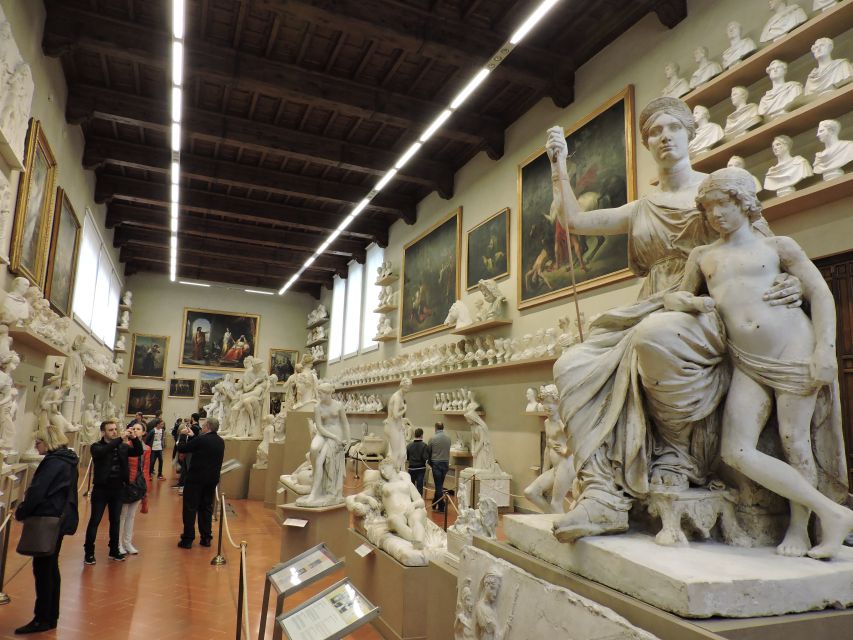
The Plaster Models Room is one of the more unusual stops. It contains 18th-century casts connected with Lorenzo Bartolini, a major Neoclassical sculptor, and occupies his former workshop.
Plaster models can seem less impressive than finished marble until you understand their purpose. They show how sculptors planned large works, tested poses, and transferred ideas into final pieces. The room gives you a look at the working side of sculpture, not only the polished result placed in a palace or public square.
This stop also broadens the museum’s time span. Michelangelo belongs to the High Renaissance, while Bartolini represents a later Neoclassical taste. Seeing their work in the same visit helps you compare changing ideas about the body, ideal beauty, movement, and finish.
The room may appeal most to you if you like process and technique. If your only goal is David, it may feel like a side trip. That is where the private format helps: you can ask the guide to explain the models in detail or keep the discussion shorter if the Michelangelo works matter more to you.
More ways to see the David:
- Florence: Accademia Gallery Guided Tour
★ 4.6 · 4,156 reviews - Florence: Accademia Gallery Skip-the-Line Guided Tour
★ 4.8 · 3,044 reviews - Florence: Art Tour, Accademia Gallery and David
★ 4.5 · 2,407 reviews - Florence: Accademia Gallery Guided Tour with Entry Ticket
★ 4.6 · 2,253 reviews
Stradivari violins and the first piano
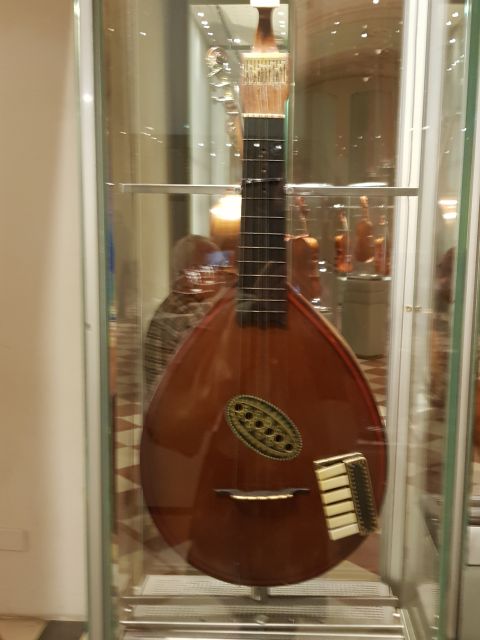
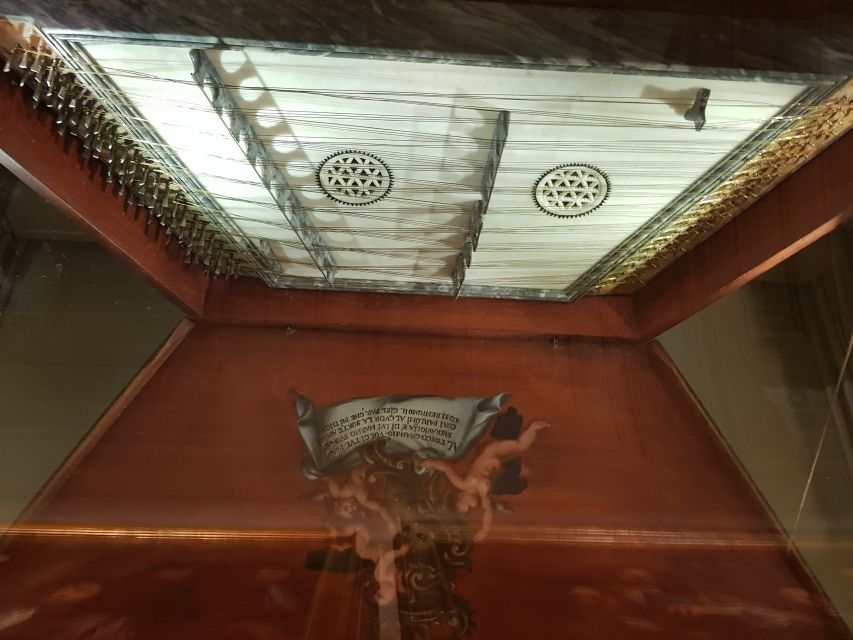
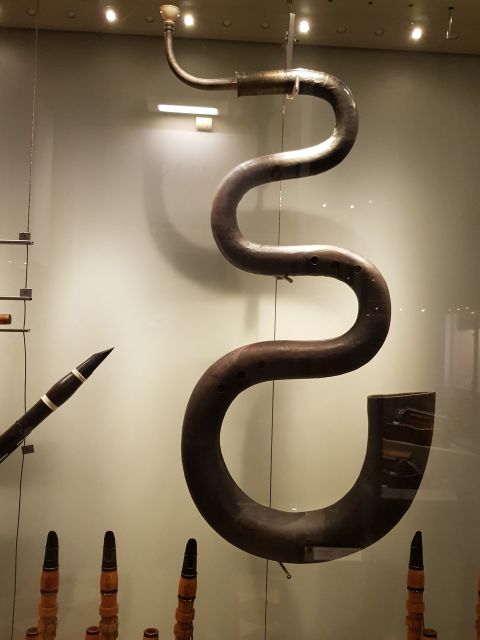
The Music Instruments Collection adds a surprising turn to the visit. You’ll see three rare Stradivari violins and the first piano ever created in the world, according to the museum information provided for this experience.
These objects make the Accademia feel less predictable. Florence is often sold through paintings, churches, and sculpture, yet music played a major role in courtly and cultural life. The instruments connect art with sound, craft, patronage, and technical change.
I would not book the tour only for the instruments, since the visit is centered on the gallery’s art collection and Michelangelo. Still, if you enjoy design or music, this section gives the tour extra value. Ask your guide to explain what makes the Stradivari instruments important and how the early piano changed musical life. The exact amount of time spent here can depend on your group and guide, so mention your interest at the start.
Lorenzo Monaco, gold leaf, and Giotto
The upper level contains the museum’s most complete collection of paintings by Lorenzo Monaco, a 14th-century artist. His works use gold leaf and lapis lazuli, materials linked with the expense and prestige of medieval Florentine art.
This is a useful counterpoint to Michelangelo’s marble. The paintings do not aim for the same physical realism. Their gold surfaces and devotional imagery belong to an earlier visual language, one that valued sacred presence and precious materials as much as naturalistic space.
The tour information also notes a fresco by Giotto, described as an early example of painting with a perspective concept. That detail gives you a chance to connect the Accademia with the long shift toward more convincing space and human form in Italian art.
I like this part because it keeps the museum from becoming a single-artist shrine. You can see Florence before Michelangelo, Florence during the Renaissance, and later developments in sculpture and music within two hours. A guide is especially useful on the upper level, where the visual language can feel less familiar than David’s strong silhouette.
How the two-hour route works
The scheduled experience lasts two hours. The outline assigns about 30 minutes to David and about 75 minutes to the wider Accademia Gallery, with the remaining time covering entry, movement, and the return to the meeting point.
The route begins at Via Ricasoli 60/R, while the stated meeting point is Galleria Accademia, Via Ricasoli 68, Florence. These addresses are close, but the difference matters. Confirm the exact meeting instructions before you go, and do not assume that being somewhere on Via Ricasoli is enough.
The guide takes you back to the area where the tour begins. Hotel pickup is not included, so you need to make your own way to the gallery. Because this is central Florence, allow time to arrive without rushing, especially if you are coming from another part of town.
Reserved admission means you skip the regular ticket line, but it does not remove every wait. Security metal detectors can still slow entry for a few minutes. Bring your passport or another ID card, and travel light because the gallery has no cloakroom.
The tour is wheelchair accessible. It is offered in English, Spanish, French, German, Italian, Portuguese, and Russian. Since this is a private group, you avoid being folded into a large mixed party, and your guide can spend more time on your interests.
Is $229 per person a fair price?
At $229 per person, this is not a budget museum visit. You are paying for reserved admission, a professional local guide, a private group, and a concentrated two-hour explanation of one of Florence’s most important collections.
The price makes the most sense for a small group that values personal attention. If two or three people split the cost of a private booking and care about Renaissance art, the guide’s context can turn a 30-minute David stop into a much fuller museum visit. It is also useful if you have limited time in Florence and want to make sure the Accademia’s main rooms do not get lost behind the crowd around David.
The value is weaker if you only want to see the statue and leave. You could spend much less on a standard museum admission and look at David on your own. The private tour earns its price through explanation, pacing, and the chance to ask questions about the Slaves, Pietà, paintings, instruments, and plaster models.
Guide quality is central to that calculation. Joshua described a guide who explained the fine points of the art and showed clear interest in Italian art. Sonia was praised for careful explanations, and Eleonora was singled out for explaining the background of the works. Those strengths are exactly what you need to make a private visit worthwhile.
There was also a clear warning from one dissatisfied booking: a meeting mix-up, no apology, and a guide whose approach did not seem worth the cost. I would treat that as a practical reminder to confirm the meeting point and expect professional communication, not as a reason to dismiss the entire experience.
Who will get the most from this Accademia visit?
I would choose this tour if you want to understand why David matters, not simply stand in front of it. It suits first-time Florence visitors who want a clear introduction, art lovers who want several Michelangelo works in one place, and families or small groups who prefer a private pace.
It also suits you if you are curious about the less famous rooms. The Stradivari violins, first piano, Bartolini models, Lorenzo Monaco paintings, and Giotto fresco give the gallery more range than its headline attraction suggests.
You may want another plan if your schedule is tight enough that $229 feels uncomfortable. A self-guided visit can work if you are happy to read labels and focus on David. The private option is mainly about interpretation and convenience, not about seeing a larger physical area.
You should also be ready for a museum visit rather than a general Florence walking tour. The activity does not include hotel pickup or a city walk, and the two hours are spent at the Accademia. Plan your arrival and your next stop separately.
Practical details before you go
Bring a passport or ID card. Security checks can still create a short wait even with reserved admission, and the gallery has no cloakroom, so avoid bringing bags or coats that you cannot comfortably keep with you.
The tour allows free cancellation up to 24 hours before the start time, and you can reserve now and pay later. Starting times vary, so you need to check availability for your date.
The first Sunday of each month has free museum admission, but tickets cannot be reserved ahead of time on that day, so entry is not guaranteed. If seeing David is important to your Florence plan, a reserved visit on another day offers more certainty.
Should you book it?
Book this private Accademia tour if you want a focused art lesson, reserved entry, and a guide who can connect David with Michelangelo’s other sculptures, Medici collections, medieval painting, musical instruments, and Bartolini’s workshop.
I would be more cautious if you are traveling on a tight budget or only want a quick look at David. At $229 per person, the tour needs a strong guide and good meeting coordination to earn its price. Confirm the Via Ricasoli meeting details, bring ID, and choose it for the explanation, not just the ticket shortcut.
FAQ
Where does the Accademia tour meet?
The meeting point is Galleria Accademia, Via Ricasoli 68, Florence. The itinerary also lists Via Ricasoli 60/R as the starting location, so confirm the precise meeting instructions before arrival.
How long does the private Accademia tour last?
The tour lasts two hours. About 30 minutes are assigned to Michelangelo’s David, with about 75 minutes for the wider Accademia Gallery visit.
Is admission included?
Yes. Entrance tickets with reservation and a professional local guide are included.
Does the tour include hotel pickup?
No. Pickup from your hotel is not included, so you need to reach the meeting point yourself.
What languages are available?
The live guide is available in Spanish, English, French, German, Italian, Portuguese, and Russian.
Is the Accademia tour wheelchair accessible?
Yes, the activity is listed as wheelchair accessible.
Can I cancel the booking?
You can cancel up to 24 hours in advance for a full refund. You can also reserve now and pay later.
Just added around Florence
- Timed Entry Ticket to the Uffizi Gallery★ 4.5 · 498 reviews
- Florence: Accademia Gallery Entry Ticket with Audio Guide★ 4.1 · 88 reviews
- Florence: Skip-the-Line Tour of Uffizi & Accademia Galleries★ 4.4 · 14 reviews
- Florence: Skip-the-Line Accademia Gallery Entry Tickets★ 4.3 · 44 reviews
- Florence: Walking Tour with Skip-the-Line Accademia Gallery★ 4.6 · 148 reviews
- Florence: David’s Accademia Gallery Guided Tour★ 4.2 · 207 reviews
- Florence: Uffizi Gallery Private Tour w/ Skip-the-Line Entry★ 4.9 · 24 reviews
- Florence: 2-Hour Private Guided Visit to the Uffizi Gallery★ 4.8 · 15 reviews
Museum Tours in Florence, compared.
Skip-The-Line Uffizi Gallery Timed Entry Ticket
Read our review →
Florence Accademia Gallery Tour with Entrance Ticket Included
Read our review →
Uffizi Gallery: Renaissance Masterpieces Guided Tour
Read our review →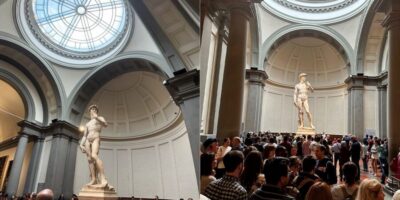
Uffizi Gallery Timed Entry Ticket & Audio Guide
Read our review →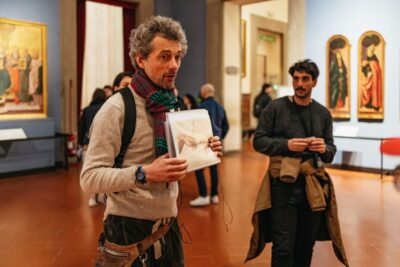
Browse the lists this tour appears in