
Review · FLORENCE
Florence: Bargello Museum Guided Tour with Entry Ticket
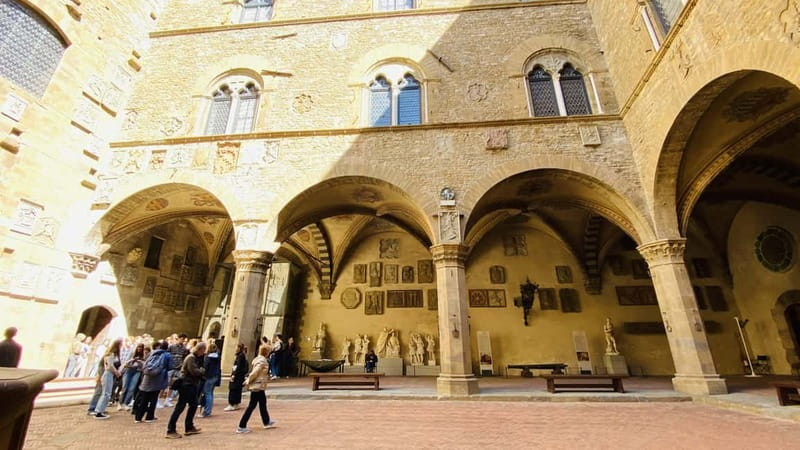
Florence’s Bargello Museum is where sculpture takes the spotlight. Inside a former police headquarters, prison, and medieval seat of power, you’ll see Donatello’s David and St. George beside Michelangelo’s Bacchus and Tondo Pitti. The building itself gives the art a strong sense of place.
I like the reserved entry, which saves you from dealing with the museum line. I also like the focused route: the guide explains the major works without asking you to spend half a day trying to make sense of every room.
The main thing to check is timing. The activity is advertised as about one hour, while the description also refers to two hours and one booking reported a two-hour visit. Ask at the start how long your guide plans to stay.
Key points to know
- Michelangelo and Donatello lead the visit: You see Bacchus, Tondo Pitti, David, and St. George among the museum’s key works.
- The building is part of the story: It served as a civic palace, police headquarters, and prison before becoming a museum.
- A guide adds real value: The collection includes sculpture, bronzes, ivories, and glazed terracotta that can be hard to read on your own.
- The route moves across two floors: The ground floor features sixteenth-century Tuscan art, while the second floor focuses on Andrea and Giovanni Della Robbia.
- English is one of several tour languages: French, Italian, Spanish, German, and English are available.
- The tour is short but flexible: After the guided portion, you can return to works you want to see again.
Why the Bargello is a different Florence museum
The Bargello is not Florence’s biggest or most famous museum, and that is part of its appeal. You are not walking through room after room of paintings. The focus is sculpture, decorative art, and the way artists shaped hard materials into expressive figures.
That makes the visit feel different from the Uffizi or Accademia. Instead of moving through a broad survey of Renaissance painting, you can look closely at marble, bronze, terracotta, ivory, and wood. A good guide helps you notice the choices behind each piece: a turn of the head, the position of a hand, the treatment of fabric, or the way a figure occupies space.
The palace adds weight to the experience. It once housed the Capitano del Popolo, then the Podesta, the city’s leading official. Later, it became the residence of the head of the police and was used as a prison. You are not simply entering a white-walled gallery. You are walking into a building that played several roles in Florence’s public life.
That background is useful because it changes how you see the collection. The art is not isolated from the city’s politics and power. Much of Florence’s early Renaissance art was made for public buildings, churches, wealthy families, and civic institutions. The setting helps explain why sculpture mattered so much.
More Museum Tours in Florence
- Florence: Skip-The-Line Uffizi Gallery Timed Entry Ticket
★ 4.5 · 27,832 reviews - Florence: Leonardo Interactive Museum Entry Ticket
★ 4.5 · 12,957 reviews - Florence Accademia Gallery Tour with Entrance Ticket Included
★ 4.5 · 6,148 reviews
Meeting at the Bargello in central Florence
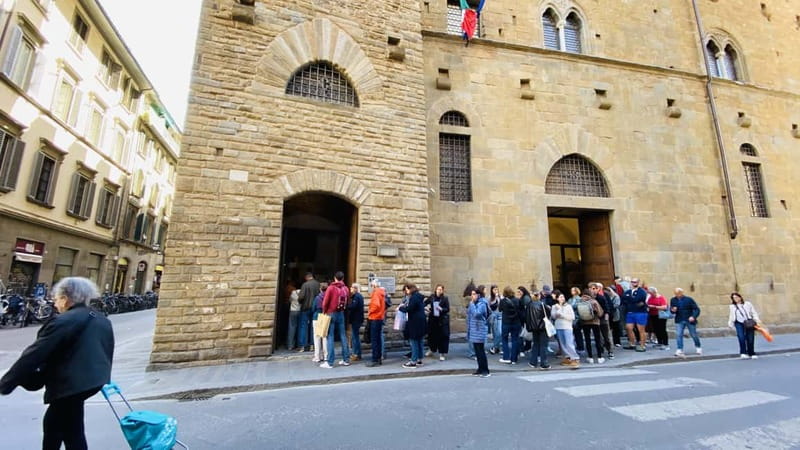
The listed meeting points are at the Bargello National Museum or near the equestrian statue of Cosimo I de’ Medici. Your exact meeting point depends on the option you book, so read the confirmation carefully before setting off.
The museum is in central Florence, and the tour does not include hotel pickup, transportation, food, or drinks. You make your own way there and return to the same general area after the visit. This is easy enough if you are already exploring the historic center, but allow time to find the guide and get through the start of the visit.
Wear comfortable shoes. The tour is mostly a walk through the museum, and you will get more from it if you are not distracted by sore feet. Bring a passport or ID card, as these are listed among the required items.
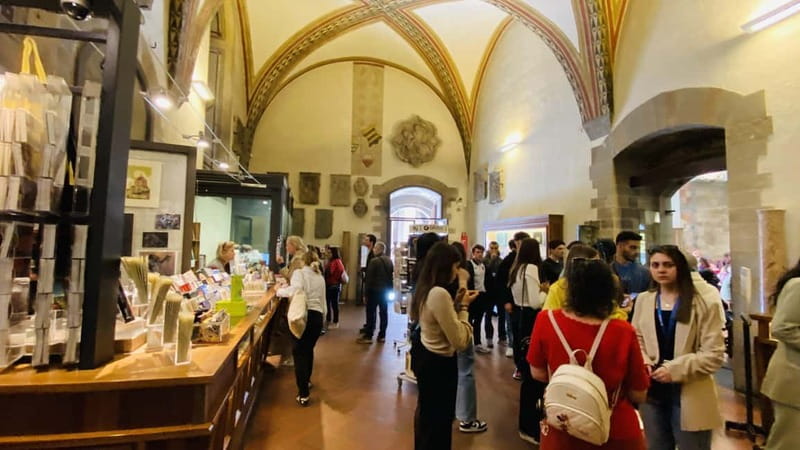
A radio system is included, which matters in a museum with groups moving between rooms. You do not have to stand shoulder to shoulder with the guide to hear the explanation. That small detail can make the difference between catching the story and missing half of it.
The ground floor and sixteenth-century sculpture
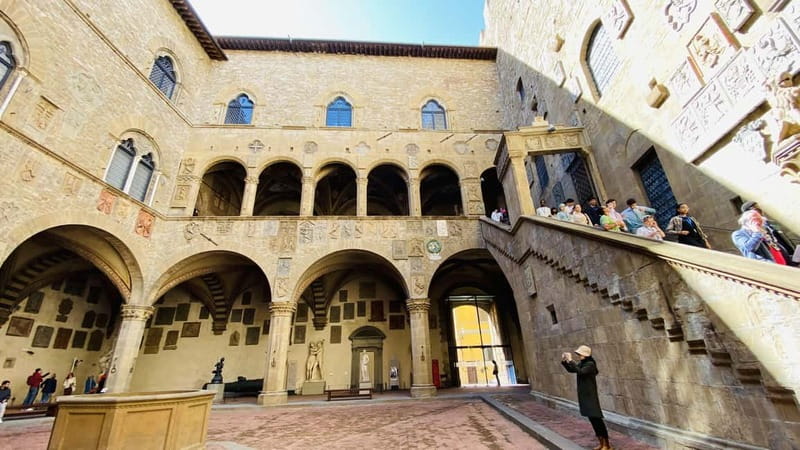
The first section focuses on Tuscan works from the sixteenth century. This is where the guide gives you the basic shape of the collection and points out the museum’s most important works.
Michelangelo receives special attention, with four of his masterpieces included in the route. Two named highlights are Bacchus and the Tondo Pitti. Bacchus shows Michelangelo working with the human figure in a way that is both classical and unusual, while the Tondo Pitti lets you see how he handled a circular composition in relief.
You will not get the same experience as standing in front of a giant wall painting. Sculpture asks you to look from different angles, even when museum conditions limit how far you can move around a piece. Your guide can direct your attention to details that are easy to miss in a quick pass.
The route also includes works by Bartolomeo Ammannati, Benvenuto Cellini, and Giambologna. These names give you a useful sense of the range on display. You move beyond the few famous works linked to Michelangelo and see how later artists developed Tuscan sculpture in different ways.
This is one of the strongest reasons to book a guide. If you only know Michelangelo and Donatello, the other names can blur together. A professional local guide can give each artist a place in the story instead of leaving you with a room full of impressive but disconnected objects.
Donatello’s David and St. George
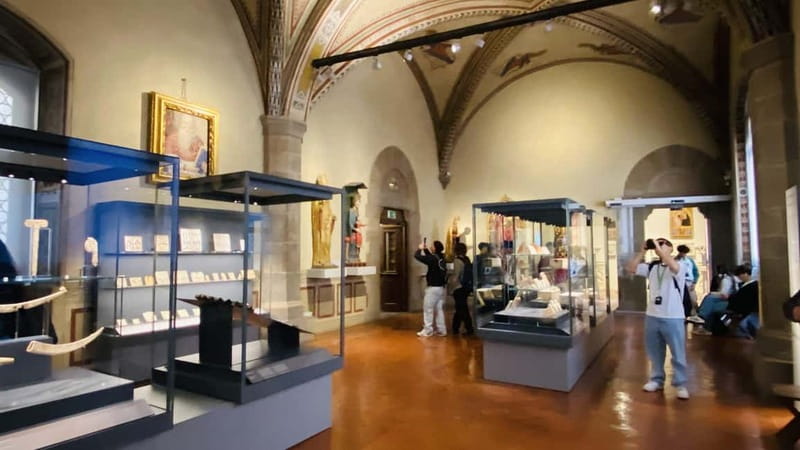
Donatello is one of the central reasons to visit the Bargello. His David and St. George are specifically highlighted, and the guide places them in the setting of the early Renaissance.
David is especially important because it shows Donatello working with a subject that artists returned to again and again. Rather than treating the sculpture as just another famous statue, listen for the explanation of its pose, surface, and relationship to earlier medieval art. Those details help you see why Donatello is regarded as a major turning point in Renaissance sculpture.
St. George offers a different look at his work. The figure has a strong presence, and the piece helps show how Renaissance artists gave religious and heroic subjects a more direct human force. You do not need a degree in art history to appreciate the contrast. The guide’s job is to point out what your eyes are already beginning to notice.
The museum also includes work connected with Verrocchio. Seeing Donatello and Verrocchio in the same visit gives you a better sense of how ideas passed between artists and workshops. This is more useful than seeing one isolated masterpiece and then leaving with only a famous name in your notes.
A few more museum visits around Florence worth comparing
- Florence: Uffizi Gallery Timed Entry Ticket & Audio Guide
★ 4.2 · 2,794 reviews - Florence: Accademia Gallery Guided Tour with Entry Ticket
★ 4.6 · 2,253 reviews - Florence: Uffizi Gallery Small-Group Guided Tour with Ticket
★ 4.7 · 2,003 reviews - Florence: Accademia Gallery & David Skip-the-Line Ticket
★ 4.6 · 1,905 reviews
Bronzes, ivories, and smaller works
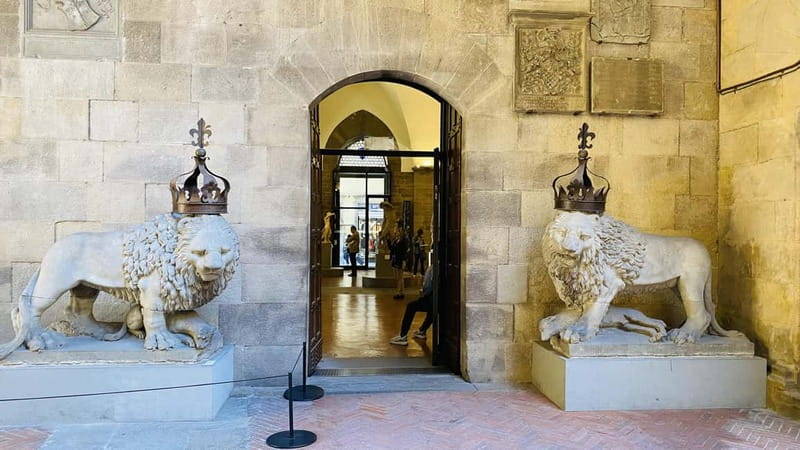
The Bargello is not only about large marble figures. The collection includes precious ivories and bronzes, with Roman and Byzantine examples among them.
These smaller objects change the pace of the tour. After the major sculptures, you are asked to look at craft on a more intimate scale. Bronze can show a different kind of movement and surface than marble. Ivory allows for tiny details that would be impossible in a monumental figure.
This part may appeal most to you if you like close looking. It may also be the section that benefits most from a guide, since smaller works can be easy to walk past. Without context, a compact bronze or carved ivory may seem less important than a famous statue. With an explanation, you begin to see the skill, age, and purpose behind it.
The Roman and Byzantine examples also widen the story beyond Florence. The museum is rooted in Tuscan art, but the collection reaches into earlier traditions. That helps you understand that Renaissance artists were not working from nothing. They studied, borrowed, adapted, and argued with the art that came before them.
The second floor and Della Robbia terracotta
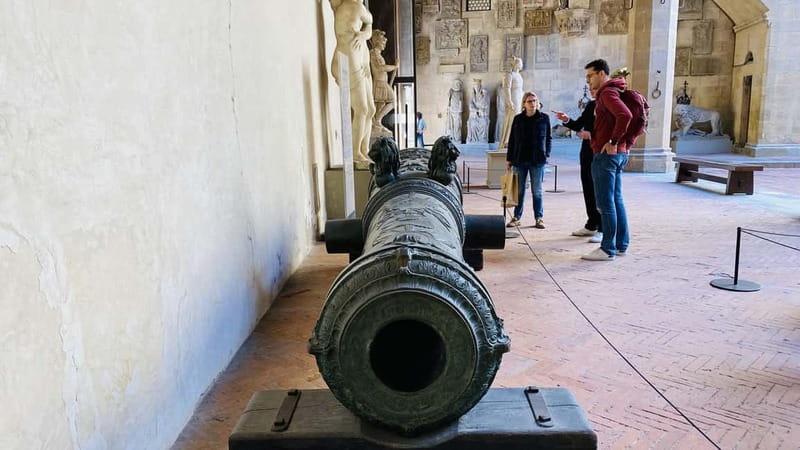
The route then moves upstairs to the collection of glazed terracotta by Andrea and Giovanni Della Robbia. This is a useful change in color and material after the darker, weightier feel of many sculptures below.
The Della Robbia family became known for glazed terracotta, a technique that gave religious and decorative sculpture a bright, durable surface. The second floor is dedicated to this work, so you get a clear look at the family’s style rather than a quick example tucked into a mixed room.
You may find this section especially rewarding if you want to see more than the usual Renaissance stars. Michelangelo and Donatello draw the headlines, but the Della Robbia works show how a material could be used for repeated devotional and decorative forms. Ask your guide to explain how the glazing affects the appearance and preservation of the pieces.
The upstairs stop also gives the tour a natural ending. You begin with the palace and major Tuscan sculpture, move through the early Renaissance and decorative arts, then finish with a distinct family tradition. The route has enough variety to keep a one-hour visit from feeling like a list of names.
One hour, or closer to two?
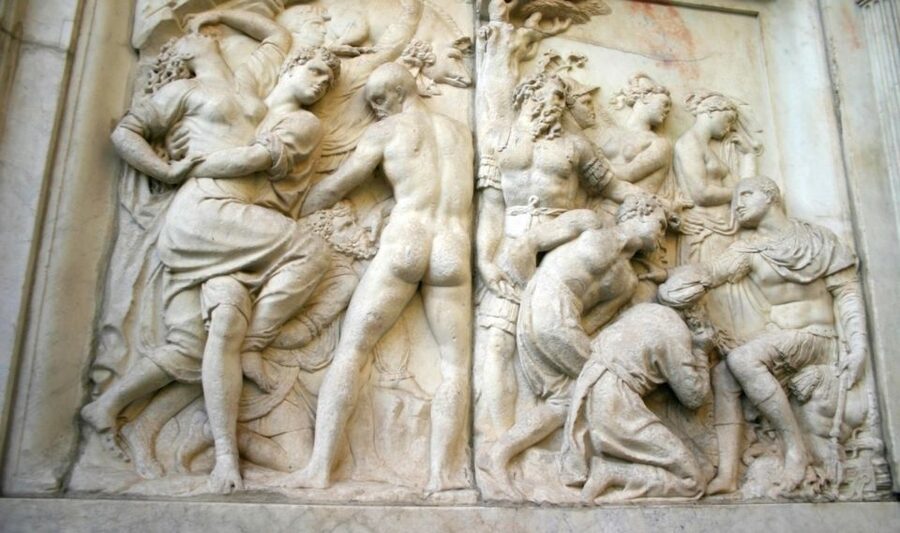
The official duration is one hour, and that is a sensible length if you want an introduction without filling your entire day. Florence has many major sights packed into a small area, so a compact Bargello tour can fit neatly between other plans.
At the same time, the tour description refers to two hours, and one booking reported a full two-hour visit. That may reflect a longer guiding style, a private group, or the pace of that particular morning. Do not assume every departure will last exactly the same amount of time.
The short format is a benefit if you are new to sculpture or have limited time. You get a clear path through the museum and enough background to make the collection readable. The drawback is that you may need to move along when you want to linger over every piece.
The good news is that you can return to anything you want to see again after the guided portion, according to the activity details. That makes the tour work in two stages: use the guide to get your bearings, then spend extra time with the works that caught your eye.
What the guide adds
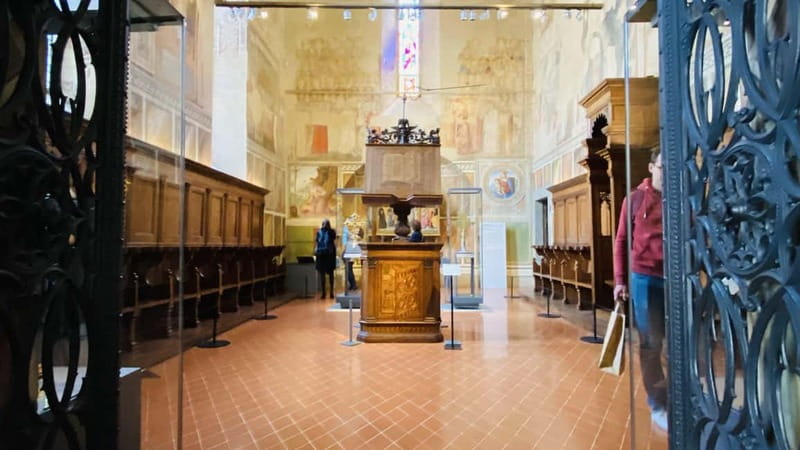
A guide matters here more than it does in a museum with simple labels and a small collection. The Bargello brings together several periods, artists, materials, and traditions. A well-planned explanation helps you understand why one room leads to the next.
The guide begins with the history of the palace, then takes you through the art rather than leaving you to find the major works alone. The route includes Michelangelo, Donatello, Verrocchio, Ammannati, Cellini, Giambologna, and the Della Robbia family, along with bronzes, ivories, and earlier examples.
Several guides have been singled out by name in individual bookings, including Larissa and Jenny. Larissa was described as thorough and personable, with a strong command of the museum and its major works. Jenny was praised for being well prepared and engaging. Another visitor appreciated a Florentine guide who mixed art and history with personal views.
The main caution is language clarity. One English-language booking praised the guide’s learning but found the English difficult to understand. The tour is offered in English, French, Italian, Spanish, and German, so choose the language that gives you the easiest listening experience. If you are unsure, confirm it when booking.
Is $46 a fair price?
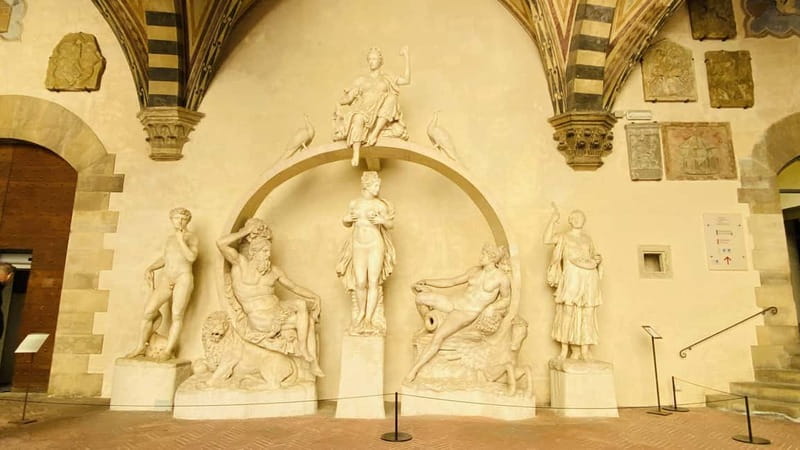
At $46 per person, you are paying for reserved museum entry, an official certified guide, and the radio system. You are not paying for transport, refreshments, or hotel service.
The value depends on how you use the visit. If you already know Renaissance sculpture and enjoy reading museum labels, you may prefer buying entry on your own and setting your own pace. If the names Donatello, Verrocchio, and Della Robbia are new to you, the guide can make the ticket feel much more useful.
Reserved access also has practical value during busy periods. The activity guarantees skip-the-line entry except when delays or strikes affect museum management. That does not remove every possible wait, but it reduces the risk of wasting a good part of your Florence day outside.
For a private group, the price may make more sense if you want a more personal pace. For a shared group, the short format keeps the cost and time under control. Either way, compare the fee with the price of losing time in a queue or walking through the collection without knowing what deserves your attention.
Who should book this Bargello tour?
I would recommend it to first-time Florence visitors who want a clear introduction to Renaissance sculpture. It also suits you if you enjoy art but do not want a long academic lecture. The route is focused, and the building supplies plenty of atmosphere without requiring a full day.
Families and mixed-interest groups may also find the one-hour format helpful. You get the major works and a story to follow, then you can move on before younger visitors lose patience.
Art history students and serious sculpture fans may want more time than the standard visit allows. You can still use the guide as a starting point, but plan to return to the museum’s works on your own after the tour if the schedule permits.
The tour is wheelchair accessible. It does not allow pets or smoking. A minimum number of participants is required for the tour to run, so a cancellation is possible if that number is not reached. In that case, an alternative or full refund is offered. You can also cancel up to 24 hours ahead for a full refund, and reserve now while paying later.
Should you book it?
Book this tour if you want the Bargello’s best-known sculptures explained in a short, organized visit. The combination of reserved entry, a local guide, and a route through Michelangelo, Donatello, Verrocchio, bronzes, ivories, and Della Robbia terracotta gives you more than a quick look at a famous palace.
Skip it if you prefer silent, unhurried museum time or already have a strong command of Renaissance sculpture. For most first-time visitors, though, the $46 fee is reasonable because the guide turns a compact but complex museum into a collection you can actually follow. Confirm the tour language and expected duration, then leave room to revisit your favorite work once the guided portion ends.
FAQ
How long does the Bargello guided tour last?
The stated tour duration is one hour. The activity description also refers to two hours, and one booking reported a two-hour visit, so the exact length may vary by departure or guide.
What artworks will I see?
The route includes Donatello’s David and St. George, Michelangelo’s Bacchus and Tondo Pitti, and works by Ammannati, Cellini, Giambologna, Verrocchio, and the Della Robbia family. It also includes Roman and Byzantine bronzes and precious ivories.
Is museum entry included?
Yes. The price includes an entrance ticket with reservation to the Bargello Museum.
What languages are available?
Live guiding is available in English, French, Italian, Spanish, and German.
Is the tour wheelchair accessible?
Yes. The activity is listed as wheelchair accessible.
What happens if the tour is canceled?
The tour requires a minimum number of participants. If that number is not reached, an alternative or full refund is offered. You can also cancel up to 24 hours before the activity for a full refund.
Just added around Florence
- Timed Entry Ticket to the Uffizi Gallery★ 4.5 · 498 reviews
- Florence: Accademia Gallery Entry Ticket with Audio Guide★ 4.1 · 88 reviews
- Florence: Skip-the-Line Tour of Uffizi & Accademia Galleries★ 4.4 · 14 reviews
- Florence: Skip-the-Line Accademia Gallery Entry Tickets★ 4.3 · 44 reviews
- Florence: Walking Tour with Skip-the-Line Accademia Gallery★ 4.6 · 148 reviews
- Florence: David’s Accademia Gallery Guided Tour★ 4.2 · 207 reviews
- Florence: Uffizi Gallery Private Tour w/ Skip-the-Line Entry★ 4.9 · 24 reviews
- Florence: 2-Hour Private Guided Visit to the Uffizi Gallery★ 4.8 · 15 reviews
Museum Tours in Florence, compared.
Skip-The-Line Uffizi Gallery Timed Entry Ticket
Read our review →
Florence Accademia Gallery Tour with Entrance Ticket Included
Read our review →
Uffizi Gallery: Renaissance Masterpieces Guided Tour
Read our review →
Uffizi Gallery Timed Entry Ticket & Audio Guide
Read our review →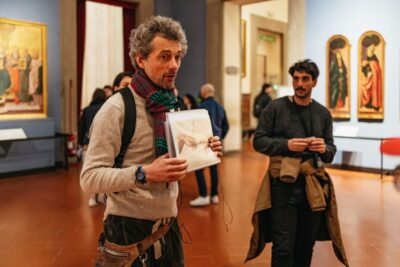
Browse the lists this tour appears in