
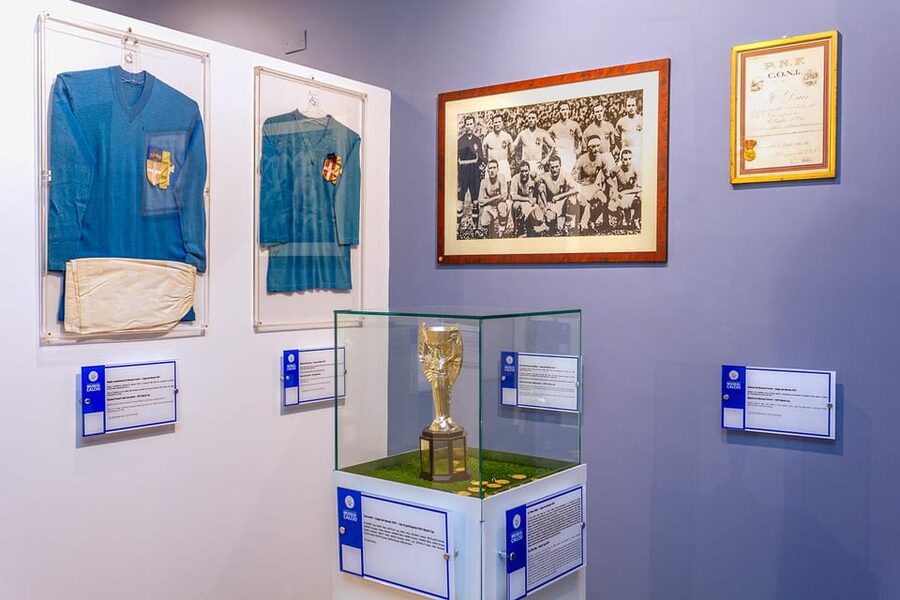
Review · FLORENCE
Firenze: Italian Football Museum
The Italian Football Museum gives you a close look at Italy’s national teams without asking you to spend half a day indoors. Its biggest draw is the chance to see all four Italian World Cups, won in 1934, 1938, 1982, and 2006, alongside the European Championship trophies from 1968 and 2021.
I like the clear national focus and the setting at Coverciano, the technical center where Italy’s teams train and prepare. I also like the free audio guide app, which lets you move at your own speed and hear extra material without paying for a private guide. The main drawback is size: at about one hour, this is a small museum, not a full stadium tour or a large football hall.
Key points to know before you go

- Four World Cups are on display: See Italy’s titles from 1934, 1938, 1982, and 2006.
- Coverciano adds a special setting: You visit the home of Italy’s national teams and can view the pitch used for training.
- The story runs from 1898 to today: The museum covers both the Azzurri and the Azzurre.
- A free audio guide fills in the details: Download it to your phone before or during the visit.
- The visit takes about one hour: It works best as a focused stop for football fans.
- The $14 price depends on your interest: It is reasonable for access to major trophies, but less appealing if you expect a large stadium-style museum.
Entering Coverciano, home of the Italian teams

The museum is located at the Coverciano Technical Centre in Florence. That matters because you are not simply visiting a display in a city-center building. You are going to the training center connected with Italy’s national teams, where the Azzurri and Azzurre prepare for major matches.
You should keep your expectations in check. The museum does not include a guided tour of the full training center. You can admire the pitch where the national teams train, but the ticket is for the museum itself, not an escorted behind-the-scenes visit through every part of the facility.
That distinction is important when comparing this experience with a stadium tour. A stadium tour usually leans heavily on architecture, dressing rooms, stands, and match-day operations. The Italian Football Museum takes a different route. Its subject is the national shirt and the long story of Italy’s teams.
For a football fan, that setting gives the visit extra meaning. You are looking at trophies and shirts in the place where current squads prepare, rather than treating them as isolated objects in a general sports collection.
More Museum Tours in Florence
- Florence: Skip-The-Line Uffizi Gallery Timed Entry Ticket
★ 4.5 · 27,832 reviews - Florence: Leonardo Interactive Museum Entry Ticket
★ 4.5 · 12,957 reviews - Florence Accademia Gallery Tour with Entrance Ticket Included
★ 4.5 · 6,148 reviews
Following Italy from 1898 to the modern team
The museum traces the Italian national team from 1898 to the present. That broad timeline helps you see football as an ongoing national story rather than a display devoted only to Italy’s best-known victories.
The collection covers both men’s and women’s national teams. The description specifically refers to the Azzurri and the Azzurre, so the visit is not limited to the men’s side. That makes the museum more useful for families and fans who want a fuller picture of Italian international football.
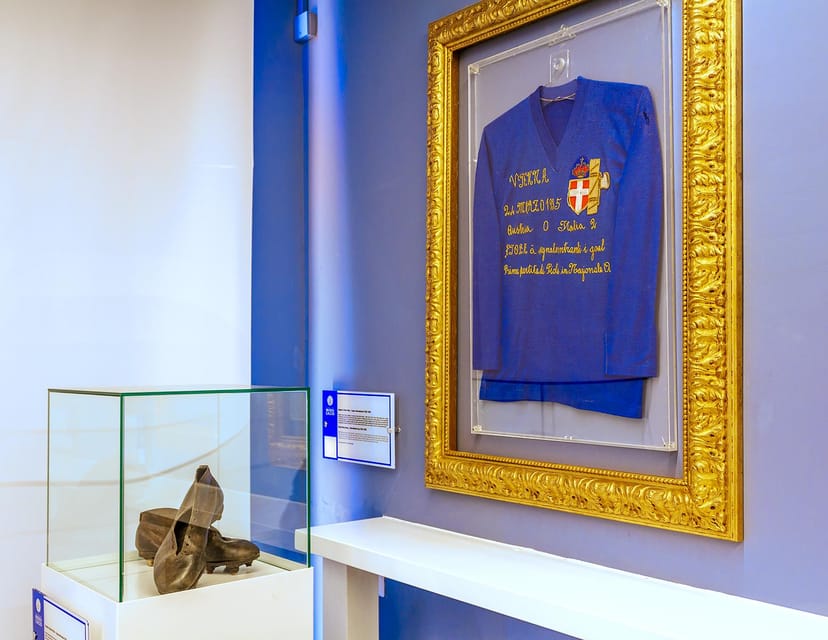
You will find jerseys, awards, and other memorabilia tied to important moments. The exact arrangement and amount of material can vary, but the central idea is clear: Italy’s football identity is presented through objects connected to the teams, tournaments, and players who carried the national colors.
The timeline also gives the trophies some context. A World Cup on its own is impressive. A World Cup placed within a sequence beginning in 1898 shows how much the national team has changed over more than a century.
The four World Cups and two European titles
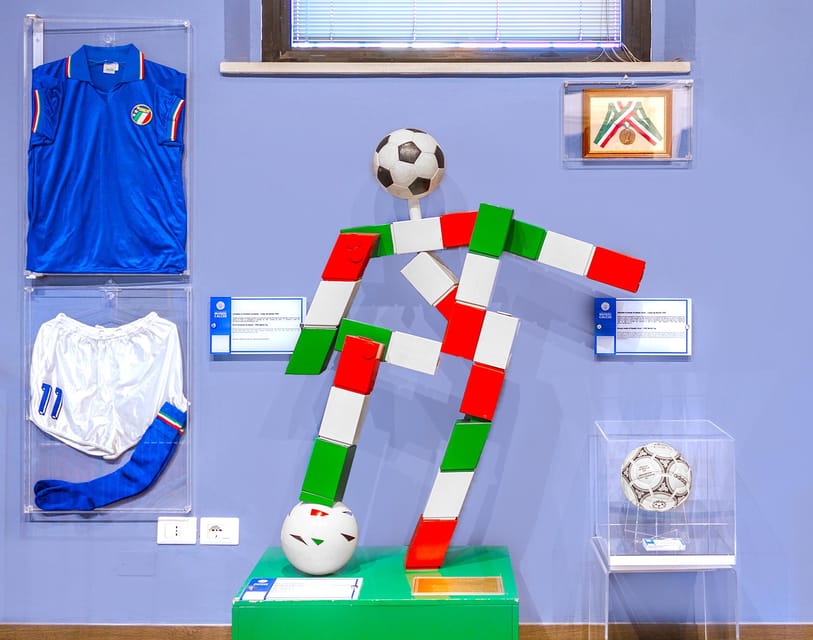
The most important stop is the trophy display. Italy won the World Cup in 1934, 1938, 1982, and 2006, and all four victories are represented. You can also see the European Championship trophies from 1968 and 2021.
These dates give the visit a useful rhythm. The 1934 and 1938 titles belong to Italy’s early period of World Cup success. The 1982 victory is tied to one of the country’s most famous football generations, while 2006 is still a recent memory for many fans. The European titles from 1968 and 2021 add another layer, showing that the national team’s major successes are not limited to the World Cup.
I would allow extra time around this display, even though the full museum visit lasts roughly an hour. It is the part most likely to make the ticket feel worthwhile. If you have followed Italy in international tournaments, these are not generic sports awards. They are the physical markers of specific campaigns and national celebrations.
The museum’s scale means you should not expect rows of trophies from every club competition or a large collection from football leagues around the world. The focus is narrower, and that is also its strength. Almost everything points back to Italy’s national teams.
Shirts, memorabilia, and the visual record
The museum includes a large collection of memorabilia, including jerseys and awards from major victories. For many visitors, shirts do more work than plaques. A shirt can show a period, a design, a sponsor, or a particular tournament in a way that a written label cannot.
You might find the memorabilia especially useful if you enjoy football history through physical objects. The collection gives you a chance to look closely at the symbols associated with the national teams, not just read a list of results.
At the same time, one practical point is worth noting. A small museum can feel quick if you are mainly interested in modern shirts or one particular player. A German visitor described the collection as small, with only a few shirts and trophies, and felt that a stadium tour or another football museum offered more. That is a fair warning if you are paying for a large, packed exhibition.
I would book this for its key pieces and national focus, not because you expect an endless display. The four World Cups and two European Championship trophies give the visit substance, but the museum is still a compact stop.
A few more museum visits around Florence worth comparing
- Uffizi Gallery: Renaissance Masterpieces Guided Tour
★ 4.6 · 6,070 reviews - Uffizi Gallery Small Group Tour with Guide
★ 4.5 · 4,923 reviews - Florence: Accademia Gallery Guided Tour
★ 4.6 · 4,156 reviews - Florence: Accademia Gallery Skip-the-Line Guided Tour
★ 4.8 · 3,044 reviews
Videos that bring famous moments back
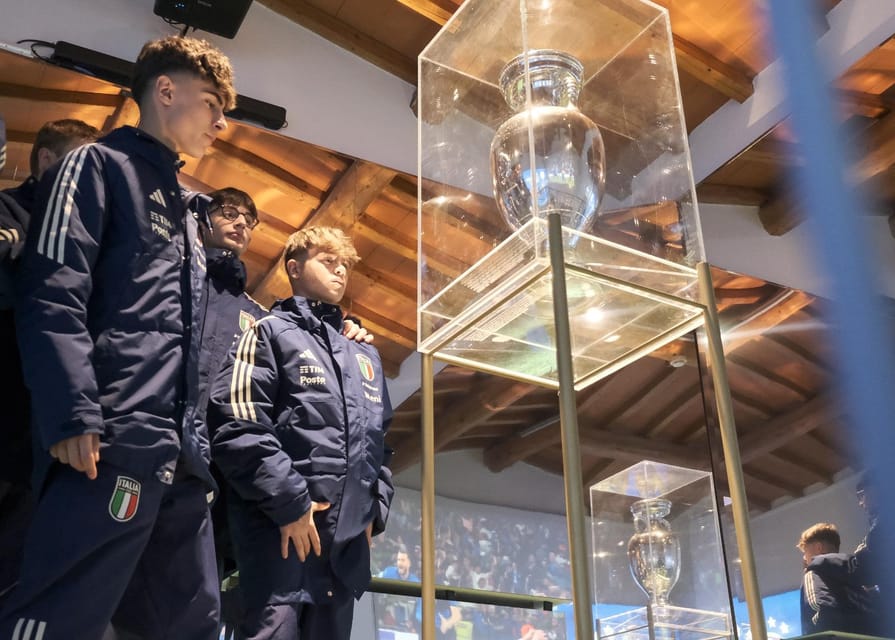
Video material helps the museum move beyond static displays. You can watch footage of iconic moments involving the Italian national team, giving the trophies and shirts a match-day setting.
This is useful because football history can look flat when it is reduced to dates and silverware. A video can remind you that each title came with pressure, drama, and a particular generation of players. It also helps children and casual fans connect with periods they did not experience themselves.
The videos are likely to matter most if you are not already familiar with Italy’s tournament story. For a dedicated fan, they may work as a pleasant reminder. For everyone else, they provide a quick way to understand why certain trophies and jerseys matter.
The museum does not promise a full film program or a long multimedia show. Treat the videos as part of the display, not as the main event. Your visit remains centered on the collection and the trophy cases.
Using the free audio guide app
Your entrance includes an audio guide app that you can download to your mobile phone. This is a useful feature for a compact museum because it gives you more explanation without requiring a scheduled group tour.
I like this arrangement for two reasons. First, you can pause and continue at your own pace. Second, the app includes exclusive content, which may add background that is not obvious from the objects themselves.
Bring a charged phone and make sure you are comfortable using an app during the visit. The supplied information does not specify the exact language options, so check the current booking details if language access is important to you.
There is no named live guide attached to this experience. The audio app is the main interpretive tool included with your ticket. If you prefer asking questions and hearing stories from a person, this may feel less satisfying than a guided museum visit.
How long the one-hour visit feels
The stated duration is one hour. That is long enough to see the main displays, look at the trophies, watch some video material, and use the audio guide without rushing too badly.
I would plan this as a focused football stop, not as a full morning outing. The short duration is helpful if you are fitting the museum into a busy Florence schedule. It also makes the experience easy to combine with other activities, though the museum’s location at Coverciano means you should consider the time needed to reach the training center.
The one-hour format suits you if you want a clear overview. It may feel too brief if you read every label, listen to every audio segment, and spend a long time with each video. Football fans who like to study shirts and tournament details should not assume they will be finished exactly at the one-hour mark.
The lack of a training-center tour also keeps the visit compact. You see the pitch used by the national teams, but you are not signing up for an extended facility visit.
Is $14 a fair price?
At $14 per person, the ticket is priced like a modest specialist attraction rather than a major Florence museum. I think the value is solid if you care about Italy’s national team or want to see the four World Cups in one place.
The ticket includes the museum entrance and the audio guide app. You are also getting access to a collection tied to the official Italian national teams, plus the setting at Coverciano. Those details make the price easier to justify than a simple display of football souvenirs.
Still, value depends heavily on your interest. If you are a serious Italy fan, the trophies alone may make the visit worthwhile. If you are only mildly interested in football, $14 could feel high for a museum that takes about an hour and has a relatively small collection.
One useful comparison is purpose. This is not the best pick if you want a large sports museum packed with interactive exhibits. It is a better choice if you want a focused look at Italy’s international record and a chance to see major national-team awards.
The FIGC Store and the friendly service
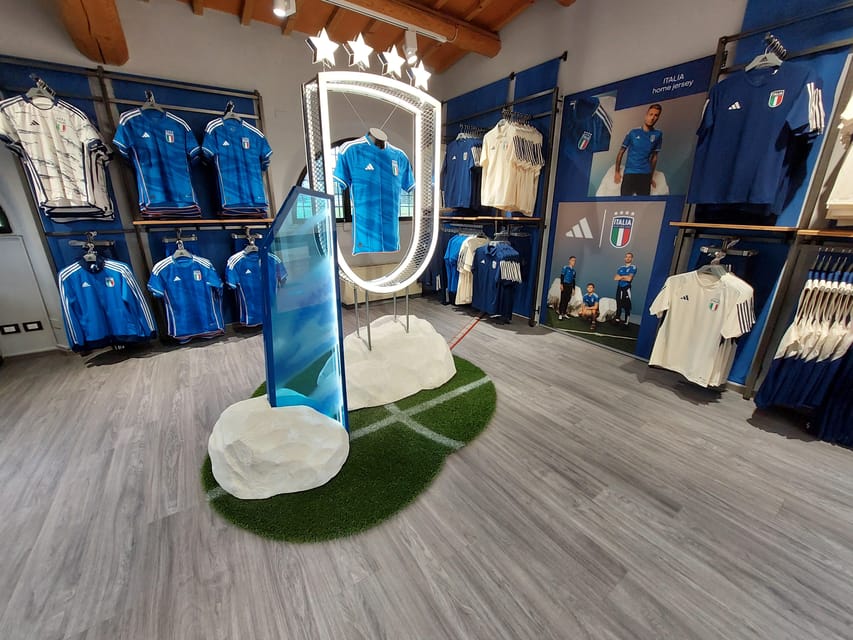
The museum has a FIGC Store selling official Italian national-team merchandise by adidas. That gives you a simple final stop after the exhibition, especially if you want a shirt, scarf, or other item connected to the Azzurri.
The store is not included as a separate attraction, but it adds practical value for fans who want something more lasting than photographs. A particularly friendly store attendant was singled out by one visitor, which is worth noting because good service can make a small museum feel more welcoming.
Do not treat the store as a reason to buy the ticket on its own. Think of it as a useful extra attached to the visit. The central value remains the museum collection and the Coverciano setting.
Who should book this experience?
I would recommend the museum to Italy supporters, football-history enthusiasts, and families with at least one committed fan. The clear subject and one-hour duration make it manageable, and the trophies give the visit a strong central focus.
It also suits anyone who has already seen Florence’s major art museums and wants a different side of the city. You will not get Renaissance paintings here. You will get national colors, tournament memories, shirts, video clips, and the place where Italy’s teams prepare.
I would be more cautious if you expect a large stadium tour, extensive interactive technology, or a huge object count. The criticism that the museum feels small is reasonable. The experience works best when you know you are visiting a specialist collection with a narrow purpose.
The museum is wheelchair accessible, which makes it easier for visitors who need step-free access. Pets are not allowed. Free cancellation up to 24 hours before the activity and the option to reserve now and pay later also make it easier to fit into changing plans, though those booking terms should still be checked before purchase.
Should you book the Italian Football Museum?
Book it if the words Italy, World Cup, and national team already catch your attention. Seeing four World Cups, two European Championship trophies, historic shirts, video highlights, and the Coverciano training pitch is a good package for $14.
Skip it if you want a large football attraction or a guided tour of the entire training center. The museum is compact, and its appeal comes from a few important objects rather than a huge number of rooms.
For the right visitor, the small size is not a problem. You can get the main story in about an hour, use the free audio guide for extra context, and leave with a sharper sense of what the Italian national shirt represents.
FAQ
Where is the Italian Football Museum located?
The museum is located at the Coverciano Technical Centre in Florence, Tuscany. Coverciano is the home and training center of the Italian national teams.
How long does the museum visit take?
The stated duration is one hour. You can use the time to view the collection, trophies, videos, and training pitch, with the audio guide available on your phone.
How much does admission cost?
The listed price is $14 per person.
Which World Cups can I see at the museum?
You can see Italy’s four World Cups, won in 1934, 1938, 1982, and 2006.
Are European Championship trophies included?
Yes. The museum displays Italy’s European Championship trophies from 1968 and 2021.
Is an audio guide included?
Yes. A free audio guide app is included with admission and can be downloaded to your mobile phone.
Does the ticket include a guided tour of Coverciano?
No. A guided tour of the Coverciano training center is not included. You can see the pitch where the national teams train and prepare.
Is the museum wheelchair accessible and are pets allowed?
The museum is wheelchair accessible. Pets are not allowed.
Just added around Florence
- Timed Entry Ticket to the Uffizi Gallery★ 4.5 · 498 reviews
- Florence: Accademia Gallery Entry Ticket with Audio Guide★ 4.1 · 88 reviews
- Florence: Skip-the-Line Tour of Uffizi & Accademia Galleries★ 4.4 · 14 reviews
- Florence: Skip-the-Line Accademia Gallery Entry Tickets★ 4.3 · 44 reviews
- Florence: Walking Tour with Skip-the-Line Accademia Gallery★ 4.6 · 148 reviews
- Florence: David’s Accademia Gallery Guided Tour★ 4.2 · 207 reviews
- Florence: Uffizi Gallery Private Tour w/ Skip-the-Line Entry★ 4.9 · 24 reviews
- Florence: 2-Hour Private Guided Visit to the Uffizi Gallery★ 4.8 · 15 reviews
Museum Tours in Florence, compared.
Skip-The-Line Uffizi Gallery Timed Entry Ticket
Read our review →
Florence Accademia Gallery Tour with Entrance Ticket Included
Read our review →
Uffizi Gallery: Renaissance Masterpieces Guided Tour
Read our review →
Uffizi Gallery Timed Entry Ticket & Audio Guide
Read our review →
Browse the lists this tour appears in