
Review · THE NETHERLANDS
Delft: Vermeer Centrum Delft Museum Entry Ticket
Johannes Vermeer left behind only 37 known paintings, and this compact Delft museum brings every one of them together in full-size reproduction. You will not see the original canvases, but you will get something an original-only museum cannot offer: a clear look at Vermeer’s complete body of work in one place.
I like the hands-on displays, especially the camera obscura, 17th-century lenses, and goggle boxes that show how Vermeer may have studied light and perspective. I also like the friendly, informative welcome and the included audio guide, which makes a short visit feel purposeful rather than rushed.
The main drawback is simple: this is a reproduction museum, not a gallery of original Vermeer paintings. The visit also takes about one hour, so art lovers wanting a large, traditional museum may find it too brief.
Key points to know before you go
- See all 37 Vermeer paintings together: Full-size reproductions let you compare his subjects, colors, and compositions in one visit.
- Start below street level: A short film introduces Vermeer and Delft during the 17th century.
- Try the tools of his world: Lenses, goggle boxes, and a camera obscura turn painting theory into something you can test.
- Look for coded affection: The exhibition Love messages from Vermeer explains how objects and details can suggest romance.
- Use the audio guide: It is included in Dutch, English, German, French, Spanish, Italian, Japanese, and Chinese.
- Allow about an hour: This is a focused stop that fits neatly into a day of sightseeing in central Delft.
Why this small Delft museum works
The Vermeer Centrum Delft is best understood as an introduction, study center, and visual guide to Vermeer rather than a conventional art museum. Its purpose is to help you see how the painter worked and what his pictures may mean.
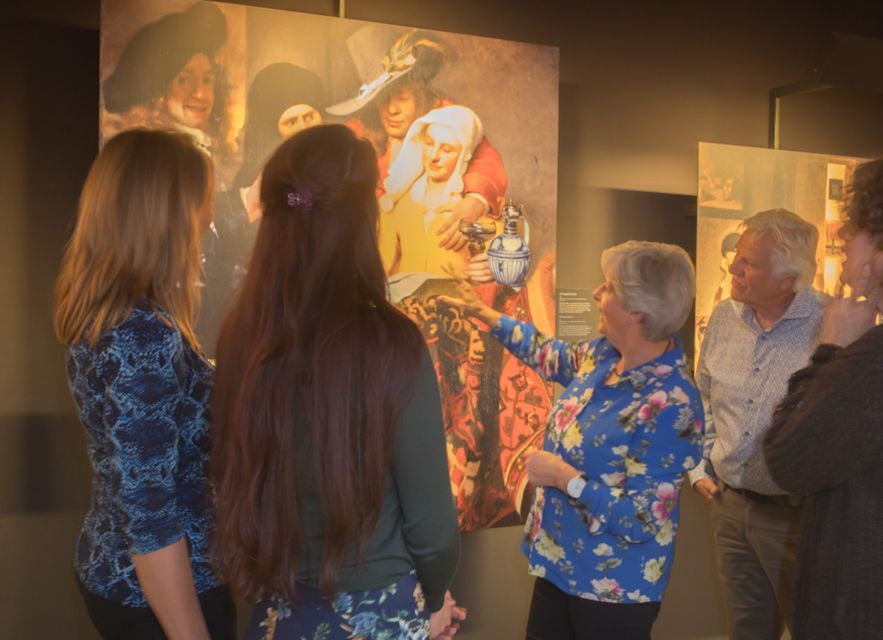
That distinction matters. The museum does not display original Vermeer canvases. Instead, it presents full-size reproductions of all 37 paintings associated with him. For many people, this is the only practical way to compare the complete group in one room and one afternoon.
I find that useful because Vermeer’s paintings are often seen one at a time in major museums around the world. Here, you can consider the full arc of his work: domestic interiors, quiet figures, maps, musical instruments, letters, and carefully placed objects.
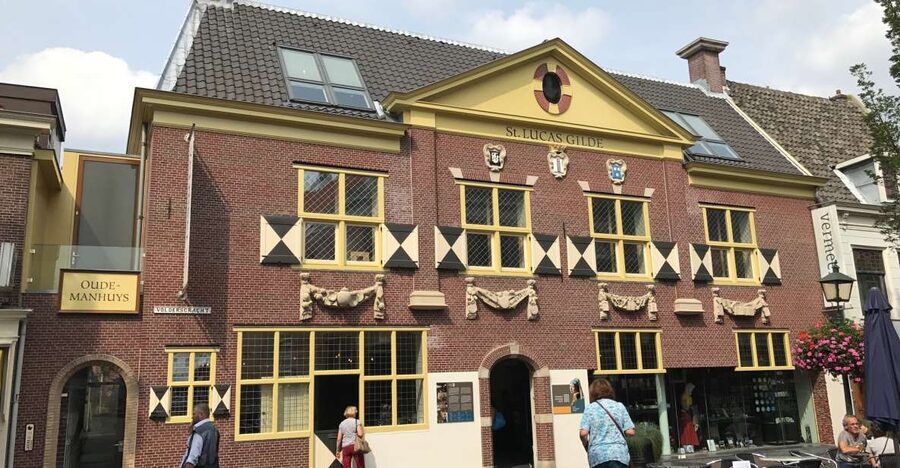
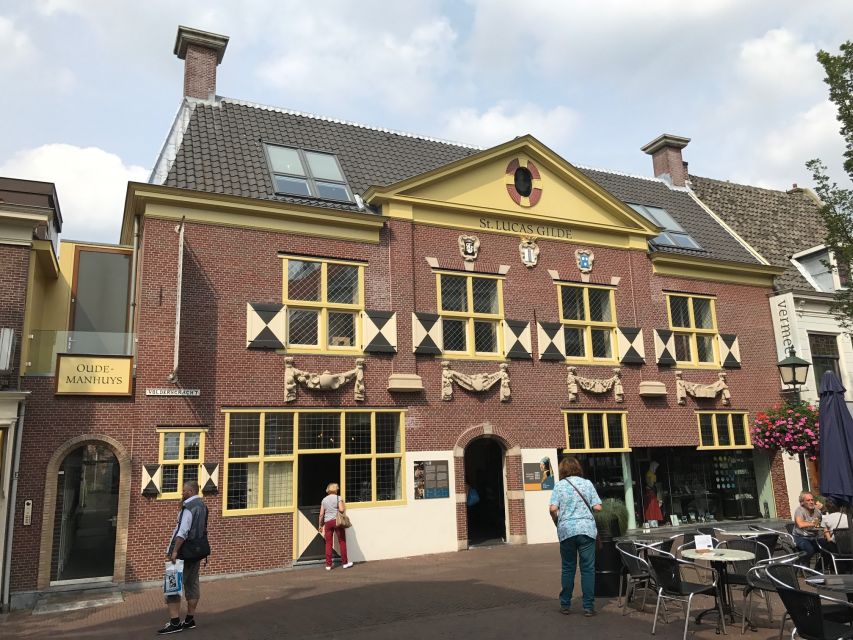
The setting adds local context. The museum occupies a former Guild of St. Luke building, linking the visit to the professional world of painters and craftsmen in Delft. You are not simply looking at images on a wall. You are also learning about the city in which Vermeer lived and worked.
The museum’s compact size is both a strength and a limit. You can cover the main displays without spending half a day indoors, but you should not expect the scale, silence, or number of rooms found at a major national museum.
A few more museum visits around the Netherlands worth comparing
- Amsterdam: Van Gogh Museum Ticket
★ 4.7 · 52,054 reviews - Moco Museum Amsterdam Entrance Tickets with Banksy & More
★ 4.4 · 10,088 reviews - Amsterdam: The Upside Down Museum Entrance Ticket
★ 4.4 · 9,506 reviews
Begin with Delft and Vermeer in the basement film
Your visit begins at the museum entrance, where a volunteer welcomes you and helps you get oriented. You receive the audio guide before moving down to the basement for a short film about Vermeer and Delft in the 17th century.
This opening is useful because Vermeer’s pictures make more sense when you know something about their setting. The film gives you a starting point for understanding Delft as the city connected to his life, family, and career.
I recommend paying attention here instead of treating the film as a quick box to check. The rest of the museum refers back to Vermeer’s city and period, so this short introduction helps organize what follows.
The basement format also gives the visit a clear rhythm. You begin with place and time, then move upstairs to the paintings and artistic method. It is a sensible arrangement for a museum that aims to teach as much as display.
Compare all 37 paintings on the reproduction floor

The central part of the visit presents 37 full-size reproductions of Vermeer’s paintings. This is the museum’s main attraction, and it is where the value of the ticket rests.
Seeing the entire group together allows you to compare recurring ideas. Look at the way Vermeer handles interior light, the placement of a figure near a window, and the quiet activity taking place inside a room. Small objects often carry weight, from letters and musical instruments to domestic tools and maps.
A reproduction cannot give you the same experience as standing before an original painting. You will miss the material surface, the age of the canvas, and the direct presence of the artist’s actual work. Still, full-size copies let you study composition without needing to visit several cities or wait for a temporary loan.
The display is especially helpful if you know only one or two famous Vermeer paintings. Instead of viewing him as the painter of a single celebrated portrait, you can see the repeated choices that define his work.
Use the audio guide as you move through this section. It is included with admission and available in eight languages: Dutch, English, German, French, Spanish, Italian, Japanese, and Chinese. You can choose the language that lets you spend less time translating and more time looking.
The audio guide also makes the museum more accessible to independent visitors. You do not need to arrive with a specialist’s background in art. The material covers Vermeer’s life, family, city, techniques, and paintings in a structured way.
The strongest praise this museum receives is tied to how informative the visit feels and how welcoming the staff are. That combination matters in a small museum. A friendly introduction can make the space easier to navigate, while the audio guide fills in the detail.
See how a camera obscura changes a picture
The first floor focuses on Vermeer’s working method. This is where the museum moves beyond biography and asks how the paintings may have been made.
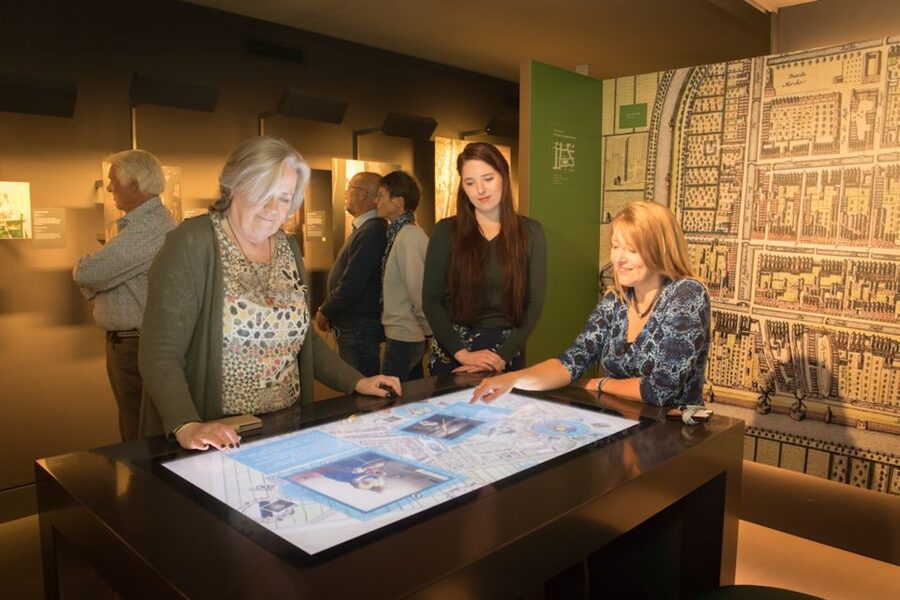
You can experiment with a camera obscura, use 17th-century lenses, and look through goggle boxes. These displays turn a technical subject into a physical activity. Instead of only hearing that lenses can alter a view, you can watch colors and perspectives shift in front of you.
The camera obscura is the key attraction for many people. It helps you consider how an image might be framed, enlarged, or transformed before it becomes a finished painting. The museum does not require you to be an art historian to understand the point. You can simply look, adjust, and compare.
The phrase step into a Vermeer painting is especially apt here. The displays are designed to help you understand the arrangement of space and light from the inside of the scene, not only from the outside as a finished picture.
Families and curious adults will probably get the most from this section because it gives you something to do. It also breaks up the listening and looking that make up much of the rest of the museum.
You should keep your expectations measured. These are educational displays, not a full laboratory or a long workshop. Their value is that they make Vermeer’s methods easier to picture during a short museum visit.
Same city, a completely different collection:
- Amsterdam: Red Light Secrets Museum Entry Ticket
★ 4.2 · 5,722 reviews - Amsterdam’s Weirdest Museum: Ripley’s Believe It or Not!
★ 4.5 · 4,920 reviews - Amsterdam: Van Gogh Museum Ticket and City Canal Cruise
★ 4.6 · 3,899 reviews - Amsterdam: Rembrandt House Museum Entrance Ticket
★ 4.7 · 3,385 reviews
Read the symbols in Love messages from Vermeer
The second floor presents the special exhibition Love messages from Vermeer. This section looks at the possible meaning of objects and details in his paintings.
Vermeer’s scenes can appear calm and ordinary at first glance. A letter, musical instrument, household object, or gesture may suggest something more personal. This exhibition gives you a way to look again and ask why a particular item appears where it does.
I like this part because it encourages careful looking without pretending that every image has one simple answer. Symbolism can be suggestive rather than certain. The exhibition helps you notice patterns and possible meanings, then leaves room for your own judgment.
This is also a good reason to revisit the reproductions after seeing the display. Details that seemed decorative may now feel more deliberate. The experience works best when you carry those questions back to the earlier paintings.
The title focuses on love, but the section is also about visual language. Vermeer’s interiors are not just pretty rooms. Objects, glances, and arrangements can help tell a story without an obvious action scene.
If you are visiting with a partner, this can be a pleasant section to discuss together. If you are on your own, the audio guide and explanatory material provide enough structure for a thoughtful stop.
How much time should you allow?
The museum takes approximately one hour to visit. That estimate is realistic for a steady visit through the film, reproductions, working-method displays, love-message exhibition, and gift shop.
You can move faster if you only want to see the paintings. You can also spend longer with the camera obscura and explanatory sections if you enjoy visual experiments or art technique.
The one-hour length makes the museum easy to fit between other Delft sights. It works well as a focused stop rather than the main event of an entire day. You can visit, then continue exploring the historic part of Delft without giving up a large block of time.
There are a few practical limits. Food and drinks are not allowed inside, and luggage or large bags are not permitted. Plan to arrive without bulky belongings so the visit stays simple.
The museum is wheelchair accessible. That makes the compact layout useful for visitors who need an easier indoor stop, although the supplied information does not provide further details about specific facilities.
Is the $14 ticket good value?
At $14 per person, the ticket is fairly priced for a short, specialized museum visit. The value depends on what you want from Vermeer.
I think it is good value if you want to understand the painter as a whole, enjoy audio interpretation, or like museums that explain technique through objects and activities. The chance to see all 37 paintings in full-size reproduction is the main reason to pay admission.
The price is less compelling if your priority is seeing original masterpieces. This museum cannot replace a visit to a collection that owns Vermeer paintings. It can, however, give you a useful framework for recognizing his style and choices before or after seeing an original elsewhere.
The included audio guide strengthens the ticket. You are not paying only for wall displays. You receive a structured explanation in one of eight languages, plus access to the film and interactive sections.
The gift shop comes at the end, but you do not need to buy anything to complete the visit. Think of it as a natural exit point rather than a major part of the experience.
Flexible booking also helps. You can reserve now and pay later, and cancellation is available up to 24 hours in advance for a full refund. Availability and starting times should still be checked for your chosen date.
Who will enjoy this visit most?
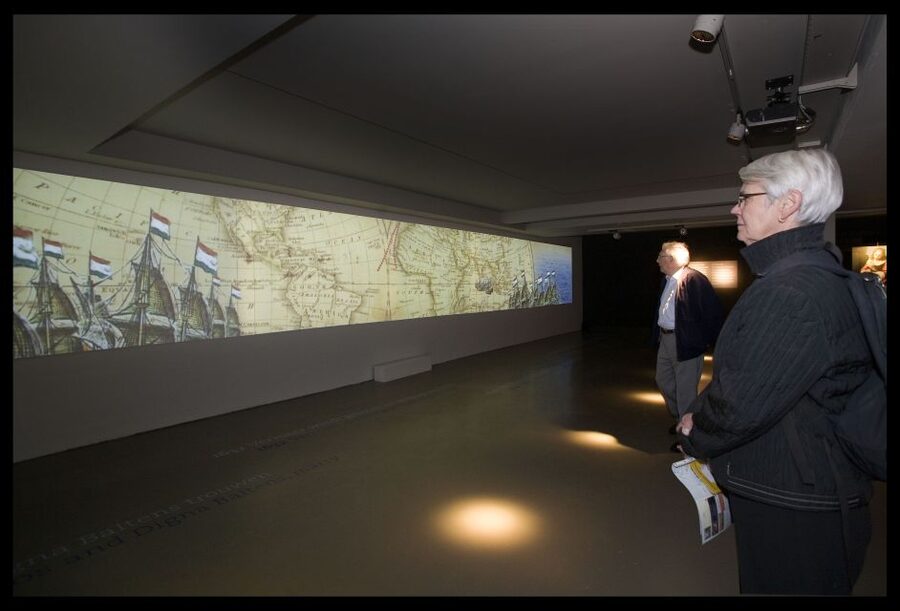
I would recommend the Vermeer Centrum Delft to several kinds of visitors:
- First-time Vermeer viewers: You get a clear introduction to his life, city, subjects, and methods.
- Art lovers with limited time: One hour gives you a focused look at his complete known output.
- Families and curious children: The camera obscura, lenses, and goggle boxes provide more action than a standard picture gallery.
- Visitors already seeing Vermeer originals elsewhere: The museum helps you compare themes and techniques across his work.
- Independent visitors: The multilingual audio guide provides structure without requiring a scheduled tour.
- People exploring Delft: The former Guild of St. Luke building and the 17th-century setting connect the art to the city around you.
I would hesitate if you expect original paintings, a large collection, or several hours of gallery space. The museum is educational and compact, not grand or exhaustive in the traditional museum sense.
The strong welcome is worth noting, too. A helpful volunteer sets the tone, and the museum’s clear route means you do not need to figure out where to begin. That is a small thing, but it matters when your day is already full of stops.
My advice before booking
Book this museum if you want context, comparison, and a practical explanation of Vermeer’s art. The full-size reproductions, audio guide, and hands-on optical displays give you more than a quick look at famous images.
Skip it if only original paintings will satisfy you. In that case, put your museum time and money toward a collection with Vermeer canvases.
For most people spending time in Delft, I think the visit earns its place as a one-hour cultural stop. It is friendly, accessible, reasonably priced, and focused. Just arrive knowing exactly what it offers: a thoughtful study of Vermeer and his world, not a room full of original masterpieces.
FAQ
Are original Vermeer paintings displayed at the museum?
No. The museum presents full-size reproductions of Vermeer’s 37 paintings.
How long does the visit take?
The museum takes approximately one hour to visit.
Is an audio guide included?
Yes. An audio guide is included with admission.
Which languages are available for the audio guide?
The audio guide is available in Dutch, English, German, French, Spanish, Italian, Japanese, and Chinese.
Is the museum wheelchair accessible?
Yes. The museum is wheelchair accessible.
Can I bring food, drinks, or large luggage?
No. Food and drinks are not allowed, and luggage or large bags cannot be brought into the museum.
Just added around the Netherlands
- Van Gogh Museum Tour excluding Entrance Tickets★ 5.0 · 16 reviews
- Van Gogh Museum Entry Ticket and Guided Tour★ 4.5 · 48 reviews
- Van Gogh Museum with Audio Guide★ 3.5 · 80 reviews
- Amsterdam: Explore the Van Gogh Museum & His Masterpieces★ 3.5 · 64 reviews
- Van Gogh Museum Skip the Queue with Audio Guide★ 4.0 · 261 reviews
- Amsterdam Van Gogh Museum with Audio or Guided Tour★ 4.0 · 266 reviews
- Van Gogh Museum, Rijks Museum & Walking Tour – Private Day Tour★ 5.0 · 17 reviews
- Van Gogh Museum Ticket with Audio Guide and Unlimited Access Time★ 5.0 · 25 reviews
Museum Tours in the Netherlands, compared.
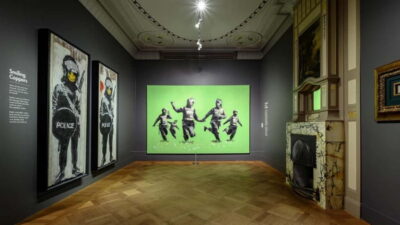
Moco Museum Amsterdam Entrance Tickets with Banksy & More
Read our review →

Amsterdam’s Weirdest Museum: Ripley’s Believe It or Not!
Read our review →


Browse the lists this tour appears in