
Review · ITALY
Classis Museum & Basilica of Sant’Apollinare Entry Ticket
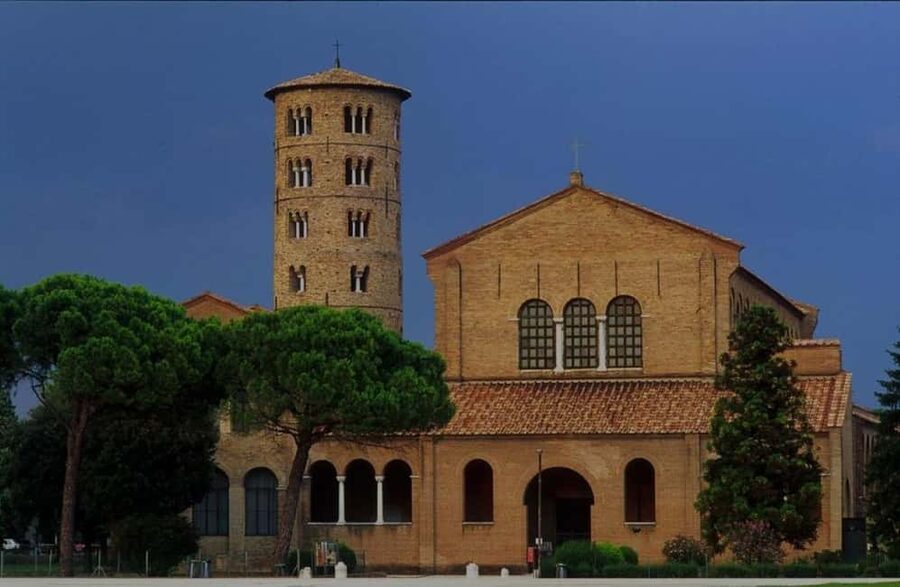
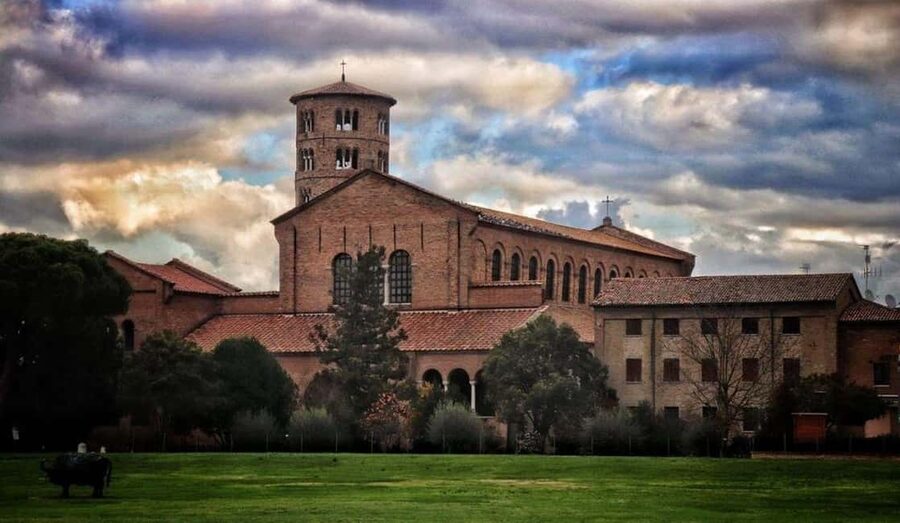
Ravenna saves one of its finest sights for the edge of town: the Basilica of Sant’Apollinare in Classe, where a glowing apse mosaic turns a church visit into a lesson in Byzantine art. Pair it with the Classis Museum, housed in a former sugar factory, and you get both the grand monument and the story behind Ravenna’s rise as a port city.
I like the ticket’s simple two-part design. The basilica delivers the visual drama, while the museum explains the city’s Roman, religious, and maritime past in a clear, modern way. I also like the price: at about $11 per person, it offers strong value for a full day of access.
The main catch is transport. The basilica and museum are not in Ravenna’s central sightseeing cluster, and no transfer or guide is included. You need to arrange the short trip between them yourself, and the museum’s 10 a.m. to 3 p.m. hours require more planning than the basilica’s longer opening window.
Key points to know before you go
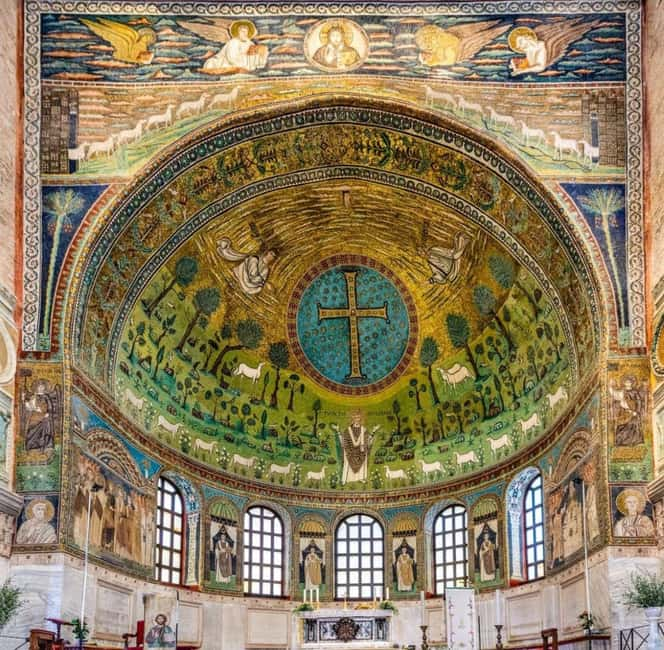
- Sant’Apollinare’s apse mosaic is the star attraction: Look for Christ’s Transfiguration, Sant’Apollinare in prayer, and the symbolic lambs.
- The basilica preserves more than mosaics: Side aisles contain ancient marble sarcophagi, while fragments of the original floor survive nearby.
- Classis Museum explains Ravenna’s connection to the sea: Its large central mosaic and historical timeline give useful context for the basilica.
- The museum occupies a former sugar factory: The unusual setting adds a physical reminder of how the area has changed.
- Plan around separate opening hours: The basilica opens earlier and stays open later, while the museum closes at 3 p.m.
- Bus number 4 can help: One visit took the number 4 bus from Ravenna, with a journey of about 20 minutes.
Why this ticket works well in Ravenna
Ravenna can feel like a city of separate masterpieces. You walk into one church for mosaics, then another for a tomb, then another for a different style of decoration. That can be thrilling, but it can also leave you with a box of beautiful images and no clear sense of how the city developed.
This ticket fills in that missing connection. Sant’Apollinare in Classe gives you one of Ravenna’s great sacred interiors. Classis Museum gives you the wider story, from early settlement and Roman power to religious life and the city’s long relationship with the sea.
The two sites also offer a useful change of pace. The basilica is quiet, spacious, and visually focused. The museum is more explanatory, with timelines, reconstructions, objects, and modern display tools. I would not treat the museum as an optional extra if you have the time. It helps the basilica make more sense.
At $11, the pairing is especially appealing for independent visitors. You are not paying for a guide, private transport, or a long organized program. You are paying for access to two important sites and setting your own pace. That keeps the cost down, but it also means you must handle the route and schedule.
More basilicas and cathedrals in Italy:
- Vatican Museums, Sistine Chapel & St. Peter’s Basilica Tour
★ 4.3 · 73,970 reviews - Vatican Museums, Sistine Chapel & St Peter’s Basilica Guided Tour
★ 4.5 · 39,149 reviews - Rome: Vatican Museums, Sistine Chapel and Basilica Tour
★ 4.3 · 16,039 reviews
Reading the mosaics at Sant’Apollinare in Classe
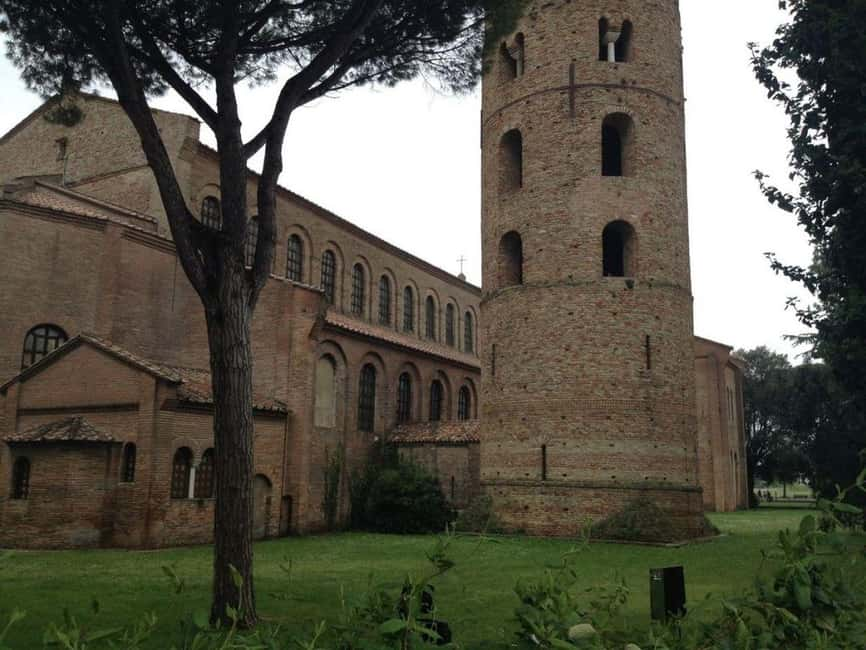
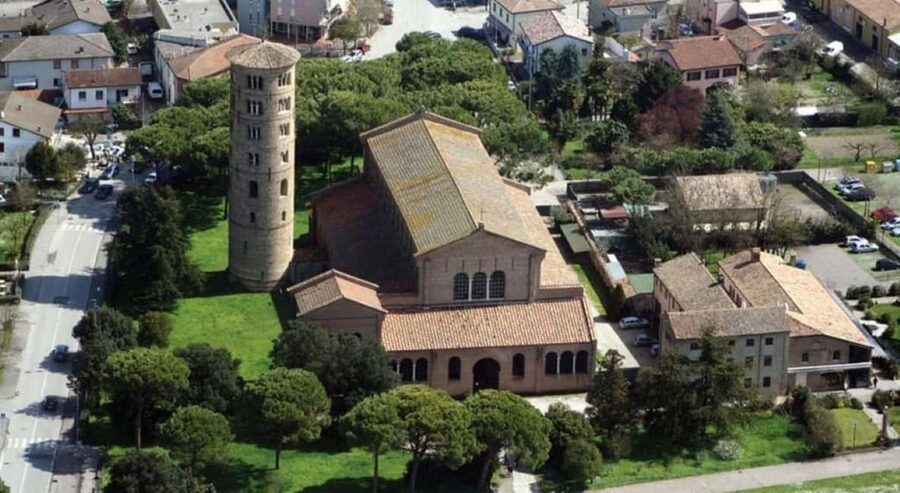
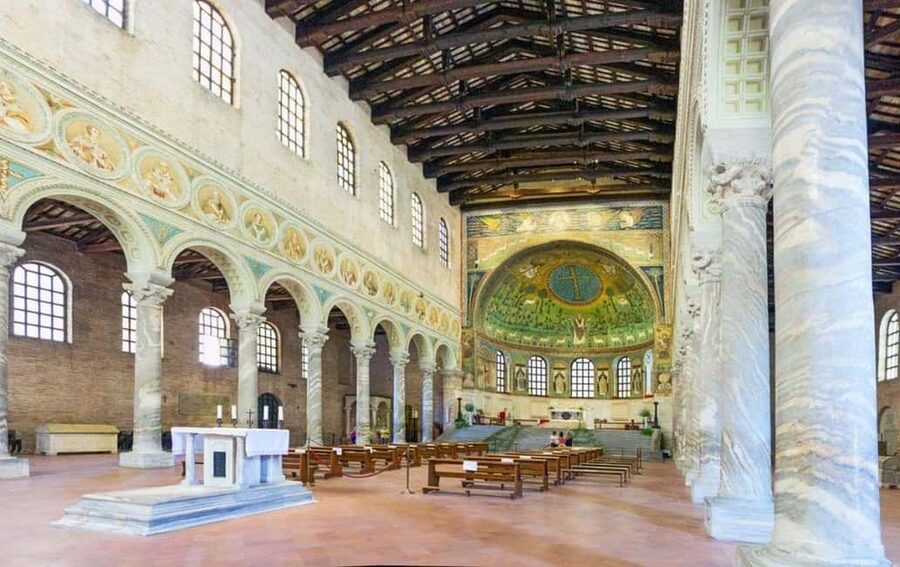
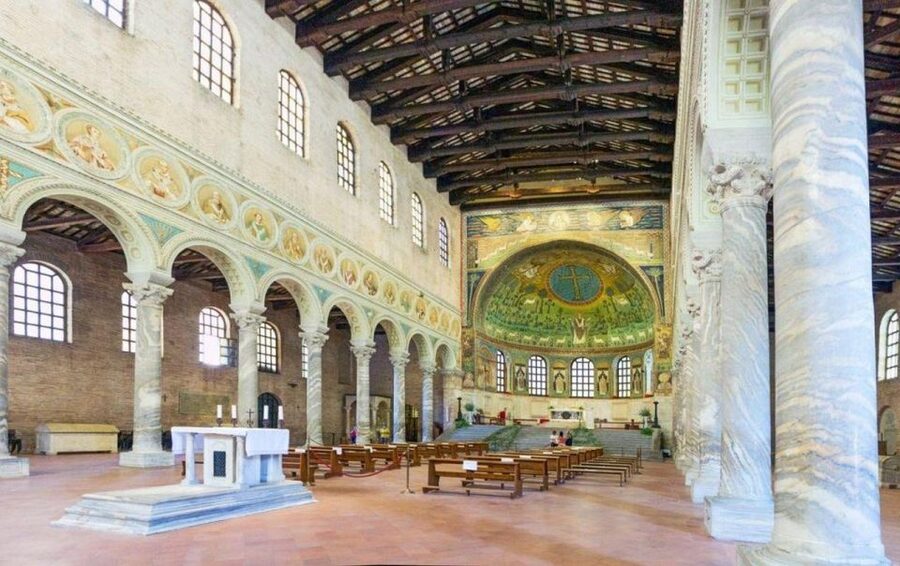
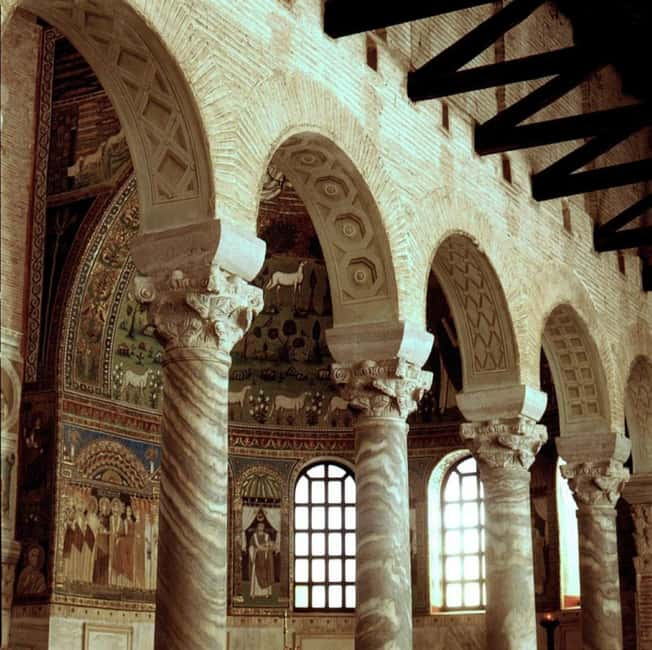
The basilica dates from the 6th century, and its scale is part of the experience. Once inside, your eyes move down the long nave toward the apse, where the decoration gathers into a carefully arranged religious scene.
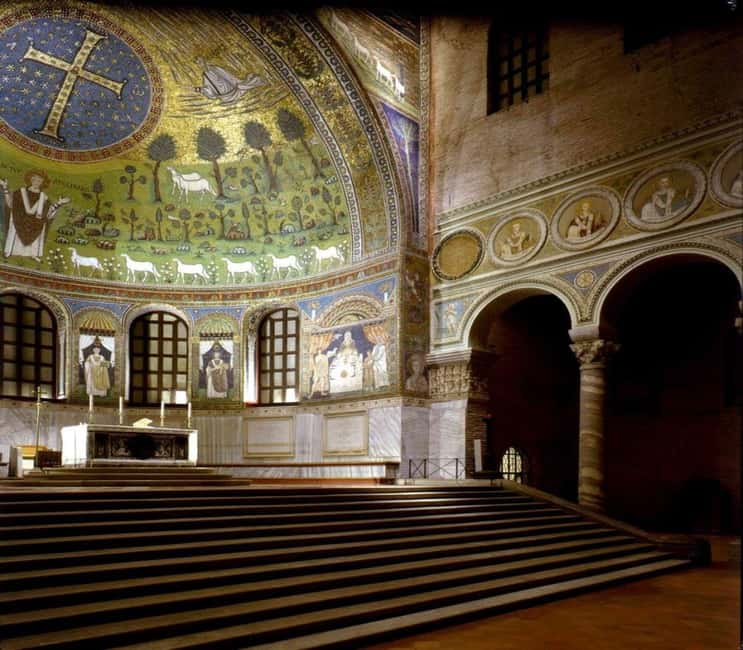
The apse mosaic shows the Transfiguration of Jesus in symbolic form. Christ appears within a celestial setting, while Sant’Apollinare raises his hands in prayer below. Twelve lambs represent the apostles, creating a visual link between the saint, Christ, and the early Christian community.
This is not a quick glance-and-leave church. Give yourself time to study the balance of the image. The bright colors, repeated symbols, and formal poses reflect a world where religious pictures were meant to teach as well as decorate. Even if you are not an art specialist, the basic story is easy to follow once you know what to look for.
The side aisles add another layer. Ancient marble sarcophagi line the space, and fragments of original mosaic flooring offer clues about how the building looked in its earlier years. These pieces are less flashy than the apse, but they help you picture the basilica as a working place of worship rather than a single famous wall.
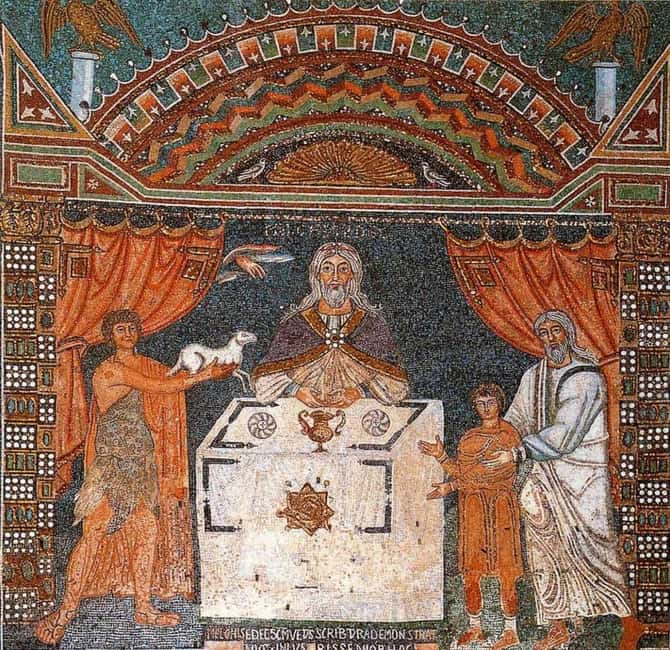
Look also for the 7th-century panels showing Byzantine Emperor Constantine IV. Biblical scenes involving Abraham, Abel, and Melchizedek add to the church’s record of religious imagery and imperial connections.
The basilica is particularly rewarding if you have already seen other Ravenna mosaics. You can compare the decoration here with the city’s other UNESCO monuments, but this visit has a quieter feel because it is outside the main center. A recent visit shortly before closing found no queues and very few people inside, which is useful if you prefer time to look upward without being pushed along.
The church is still a sacred place, so dress and behave accordingly. The ticket gives you entry, not a guided explanation. If you know little about Byzantine art, read any available information panels before entering or use a guidebook so the symbols do not pass you by.
What the Classis Museum adds
The Classis Museum is devoted to Ravenna and its surrounding territory. Its subject is broad, but the presentation is designed around key periods and turning points rather than a room-by-room pile of objects.
A large mosaic presents the lasting link between Ravenna and the sea. That idea matters because Classe was not simply a religious suburb. Its name is tied to the port area, and the museum helps you see Ravenna as a place shaped by water, trade, military power, and movement.
The timeline is one of the most useful parts of the visit. It marks the major stages in the city’s development and gives you a framework for the objects on display. I like this kind of arrangement because it answers the basic question many museum visitors have: What happened first, and why did the city change?
Displays on daily life bring the story down to human scale. Instead of focusing only on emperors, bishops, and grand buildings, the museum looks at homes, worship, and ordinary routines. Reconstructions of places of worship and residences help you imagine how Ravenna’s people used their city.
The collection includes archaeological finds connected with the area and the Roman site of Classis. Information is available in Italian and English, making it easier for international visitors to follow the displays without a guide.
The building itself is part of the story. The museum occupies a former sugar factory, an industrial setting that contrasts with the ancient objects inside. This is a nice reminder that historic places are not frozen scenes. A site can move from port activity to industry, then become a place for public learning.
Modern technology supports the museum displays. The goal is not simply to put old objects behind glass, but to show how the territory changed and how the pieces fit together. The museum also offers educational activities, though the basic entry ticket does not include a special workshop or guide.
A practical route from Ravenna
You need to plan this visit as two connected stops, not as one central Ravenna attraction. The ticket includes entry to both places, but it does not include transport between them.
One useful option is bus number 4 from Ravenna. A recent journey took about 20 minutes. The supplied information does not give a full timetable, so check the current departure details before setting out rather than assuming buses run at the exact time you need.
You could visit the museum first, but its hours make the order important. Classis Museum is open every day from 10 a.m. to 3 p.m., with last entry 30 minutes before closing. Sant’Apollinare in Classe is open Monday through Saturday from 8:30 a.m. to 7 p.m. On Sundays and bank holidays, it opens from 1:30 p.m. to 7 p.m.
For most visitors, I would put the museum first on a weekday or Saturday, then go to the basilica. That protects your museum visit from a late arrival. If you visit on Sunday or a bank holiday, the basilica cannot be your morning stop because it opens at 1:30 p.m., so the schedule needs extra care.
Do not arrive at either site right at closing time. Last entry is 30 minutes before the listed closing hour, and you will want more than a rushed look at the mosaics or museum displays.
There is no included guide, and no guide’s name is provided because this is an entry ticket rather than a guided tour. That suits independent visitors who like to read and move at their own speed. If you want background stories, pair the ticket with your own guidebook or a separate guided visit in central Ravenna.
A few more museum visits around Italy worth comparing
- Vatican: Museums & Sistine Chapel Entrance Ticket
★ 4.5 · 144,003 reviews - Florence: Skip-The-Line Uffizi Gallery Timed Entry Ticket
★ 4.5 · 27,832 reviews - Vatican Museums & Sistine Chapel Skip-the-Line Entry Ticket
★ 4.4 · 13,838 reviews - Florence: Leonardo Interactive Museum Entry Ticket
★ 4.5 · 12,957 reviews
How much time should you allow?
The ticket is valid for one day, but the exact visit length is up to you. A quick visit could cover the main highlights, yet I would not squeeze both sites into a narrow gap between other appointments.
Sant’Apollinare deserves enough time to sit or stand quietly beneath the apse and study the details. The museum needs time for its timeline, sea connection, archaeological displays, and reconstructions. Allow extra time for transport, finding each entrance, and any pauses you naturally take.
The museum’s limited afternoon window is the real scheduling issue. If you reach it too late, you may see only part of the display before last entry. The basilica gives you more flexibility because it opens earlier and closes later on most days.
Some visitors may also want to check the condition of nearby attractions before planning a longer visit around Classe. One recent visit found the old port closed, so do not assume every nearby historical feature will be accessible on the same day. The ticket itself covers the museum and basilica.
Value at about $11
This is one of the better low-cost ways to add an important out-of-center sight to a Ravenna visit. The price covers two substantial places, not a single small exhibit. The basilica alone would justify the outing for anyone interested in early Christian art, and the museum gives the ticket more substance.
The value is strongest if you are already planning to see Ravenna’s central mosaics and want context. You get the famous visual experience at Sant’Apollinare, but you also learn why the port area mattered and how the city changed over time.
The value is less certain if you have only a few hours in Ravenna and want to focus on the city center. Since transport is not included, the ticket costs you both money and time beyond the entry price. In that case, compare it with central attractions or a Ravenna pass, depending on your wider plan.
There are no queues reported at either site during a quiet September visit, and the museum can feel almost private late in the day. That is a practical advantage, though you should not count on identical crowd levels in every season or at every hour.
The museum staff have been welcoming, and a small gift shop is available. Those are modest details, but they make the visit easier, especially if you are traveling independently and want a simple place to ask for basic help or take home a small reminder.
Who should choose this experience?
I would choose this ticket if you care about mosaics, Roman and Byzantine history, archaeology, or the way cities change over time. It is also a good fit if you prefer self-guided sightseeing and do not need a host to lead you from room to room.
Families with older children may find the museum’s timeline and reconstructions easier to follow than a church visit based only on visual detail. The basilica itself is wheelchair accessible, and the experience is not built around a strenuous walk.
Art lovers should make the apse mosaic the center of the day. History fans should give the museum equal weight. Visitors who mainly want food, shopping, and quick sights in central Ravenna may find the extra transport less convenient.
The ticket is also useful for repeat visitors. If you have already seen Ravenna’s central churches, Sant’Apollinare in Classe gives you a less crowded setting and a different sense of the city. The museum then supplies the background that a second visit often needs.
Should you book the Classis Museum and basilica ticket?
Book it if you can spare a half day or more and want something beyond Ravenna’s central monuments. The 6th-century mosaics are the main reason to go, but the Classis Museum turns the visit into a fuller explanation of Ravenna’s development and sea connection.
Skip it if your schedule is so tight that arranging transport will make the day stressful. Also think twice if you want a guided experience, since no guide or transfer is included.
For most independent visitors, the low price, English and Italian information, lack of queues at quieter times, and strong combination of art and history make this a sensible addition to Ravenna. Plan the museum early, confirm your route, and leave the basilica enough time for its apse to work its quiet magic.
FAQ
What does the ticket include?
It includes entry to the Classis Museum and the Basilica of Sant’Apollinare in Classe.
How much does the experience cost?
The listed price is $11 per person.
How long is the ticket valid?
The ticket is valid for one day.
Is transport between the museum and basilica included?
No. You must arrange transport between the two sites independently.
What are the basilica’s opening hours?
From Monday to Saturday, the basilica is open from 8:30 a.m. to 7 p.m. On Sundays and bank holidays, it is open from 1:30 p.m. to 7 p.m.
What are the Classis Museum’s opening hours?
The museum is open every day from 10 a.m. to 3 p.m.
When is the last entrance?
Last entrance is 30 minutes before closing.
Is the experience wheelchair accessible?
Yes, the activity is listed as wheelchair accessible.
Can I cancel for a full refund?
Yes. You can cancel up to 24 hours in advance for a full refund.
Just added around Italy
- Oil museum and oil mill in Tuscany: tour and tasting★ 5.0 · 16 reviews
- Enchanted Castle of Sciacca – Museum Tickets★ 3.5 · 63 reviews
- Torino: FIAT Historic Museum and Lingotto District Tour★ 4.9 · 14 reviews
- Torino: The Car Museum Skip-The-Line Tour★ 4.7 · 22 reviews
- Timed Entry Ticket to the Uffizi Gallery★ 4.5 · 498 reviews
- Florence: Accademia Gallery Entry Ticket with Audio Guide★ 4.1 · 88 reviews
- Vatican City: Sistine Chapel, Museums, Basilica Private Tour★ 4.8 · 158 reviews
- Rome: Capitoline Museums and Centrale Montemartini Tickets★ 4.4 · 328 reviews
Museum Tours in Italy, compared.
Vatican: Museums & Sistine Chapel Entrance Ticket
Read our review →
Vatican Museums, Sistine Chapel & St. Peter’s Basilica Tour
Read our review →
Vatican Museums, Sistine Chapel & St Peter’s Basilica Guided Tour
Read our review →
Skip-The-Line Uffizi Gallery Timed Entry Ticket
Read our review →
Vatican Museums, Sistine Chapel and Basilica Tour
Read our review →
Vatican Museums & Sistine Chapel Skip-the-Line Entry Ticket
Read our review →
Vatican Museums, Sistine Chapel & Basilica Tour
Read our review →
Browse the lists this tour appears in