
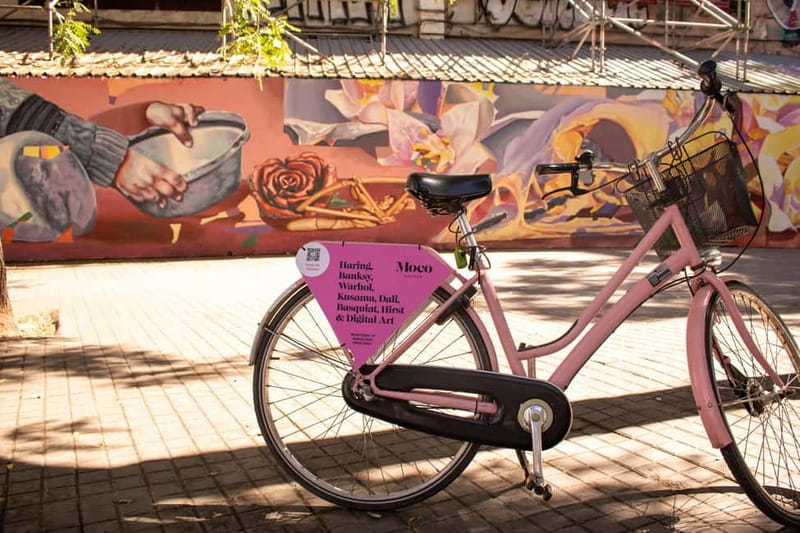
Review · BARCELONA
Barcelona | StreetArt Bike Tour Moco Museum
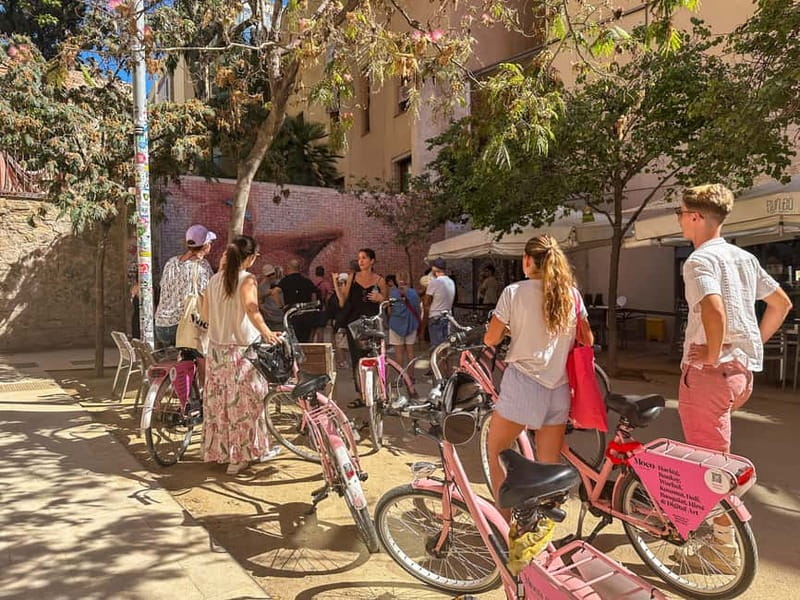
Barcelona’s street art is not confined to one gallery. It spreads through the old center, along former industrial sites, beside contemporary museums, and across busy avenues. This 2.5-hour electric-bike tour links those places with murals, sculptures, and public art that are easy to miss on foot.
I like the way the route mixes famous pieces, such as the Keith Haring mural and El Beso photomosaic, with smaller works by local artists. I also like the guide-led storytelling. Guide Eirini, mentioned by name in the tour feedback, was praised for her energy and for sharing good food tips after the ride. The main drawback is simple: this is not a slow art walk. You cover a lot of ground by bike, and some stops are brief.
Key points before you book
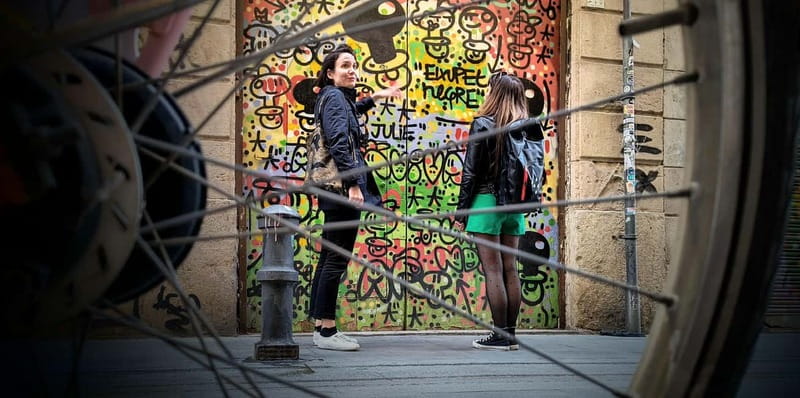
- Keith Haring’s AIDS mural: See one of Barcelona’s most important modern public artworks near MACBA.
- A long ride through several districts: The route connects Sant Jordi, Raval, the port, the Gothic Quarter, and Passeig de Gràcia.
- Electric bikes included: You get one bike, a handlebar bag, and a bottle of water.
- Street art keeps changing: The exact art lineup may shift as murals disappear, get painted over, or are replaced.
- English guide with local context: The guide explains the artists, symbols, and messages instead of simply pointing at walls.
- Rain or shine: A free poncho is provided if the weather turns wet.
Why a bike is the right way to see Barcelona’s street art
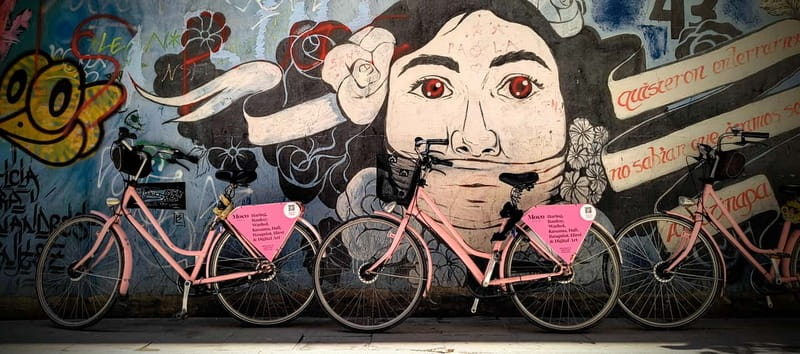
Barcelona is spread out enough that a walking street-art tour can feel chopped into small pieces. The electric bike solves that problem. You can move from the Centre de Cultura Contemporània de Barcelona, or CCCB, to MACBA, then down through Raval and toward the port without spending the whole outing on foot.
The electric assist matters most on the longer stretches. You still need to ride and pay attention, but the bike helps you cover ground without making the tour a fitness test. You also get a quick safety briefing before setting off. Children up to age 16 must wear helmets, and helmets are available for adults if requested in advance for an added cost.
I would not choose this tour if you cannot ride a bike comfortably. It is also not suitable for wheelchair users. Barcelona traffic, pedestrians, and narrow streets require attention, so keep your headphones at home. They are not allowed on the tour.
The meeting point is at Carrer dels Tallers 45, at Barcelona Ciclo Tour. Look for the palm tree and enter the passage, where the staff will meet you. Arrive about 10 minutes early. The listed start is 11 am, but check availability for the current departure time.
More Museum Tours in Barcelona
- Barcelona: FC Barcelona Museum “Barça Immersive Tour” Ticket
★ 4.4 · 10,944 reviews - Barcelona: Park Güell and Gaudí House Museum Entry Ticket
★ 4.5 · 6,326 reviews - Barcelona: Picasso Museum Skip-the-Line Guided Tour
★ 4.5 · 3,355 reviews
From El Gat de Botero to CCCB
The ride begins near El Gat de Botero, the large cat sculpture by Colombian artist Fernando Botero. It is a useful first stop because it gives you an immediate lesson in Barcelona’s public-art culture: this city is comfortable placing bold, modern work in ordinary streets and public spaces.
From there, you head toward the CCCB. The center is known for exhibitions about contemporary culture, but here it functions mainly as a gateway into the city’s modern-art side. You get time for photographs and an introduction to the Sant Jordi Sculpture and Skyline reference included in the route.
This opening section should help you understand how the tour works. The guide is not simply taking you to a list of photo spots. You are shown how art fits into the buildings, plazas, old streets, and former industrial spaces around it.
The CCCB stop is short, around 10 minutes. That is enough for an explanation and pictures, but not for a museum visit. Your ticket is for the bike tour, not admission to the CCCB or any other museum along the route.
MACBA and the Keith Haring mural
The Museu d’Art Contemporani de Barcelona, usually called MACBA, is one of the city’s key modern-art landmarks. The museum building brings a clean, white contemporary shape into the older Raval district, and its surrounding plaza is a popular gathering place.
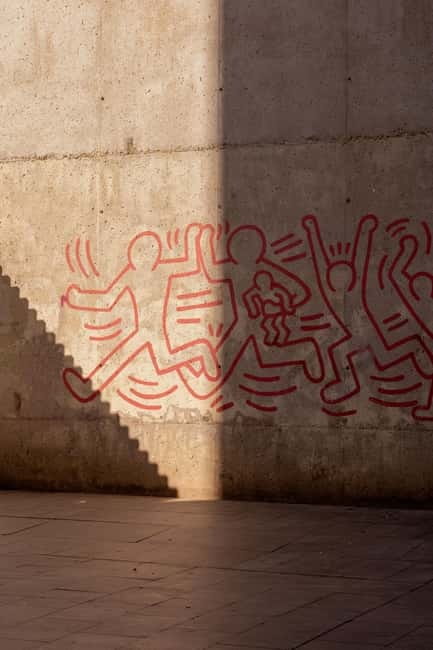
The important art stop here is the Keith Haring mural, known as Mural del Sida. Haring created the original work in Barcelona in 1989, and its subject is the AIDS crisis. The imagery is direct and forceful, using Haring’s familiar figures and signs to communicate urgency, fear, solidarity, and the need for awareness.
The tour also points out Colp One Dog in this area. Your guide explains what makes each work different, then places them within Barcelona’s broader street-art scene. That context is useful because the pieces are not just colorful backdrops. They carry messages, and some are tied to specific moments in the city’s recent past.
The stop itself is listed at about five minutes, so expect a focused explanation rather than an extended art lecture. If the Keith Haring mural is your main reason for booking, you will see it, but you should not expect a long private viewing.
Raval’s walls, from Xupet Negre to the Feminist wall
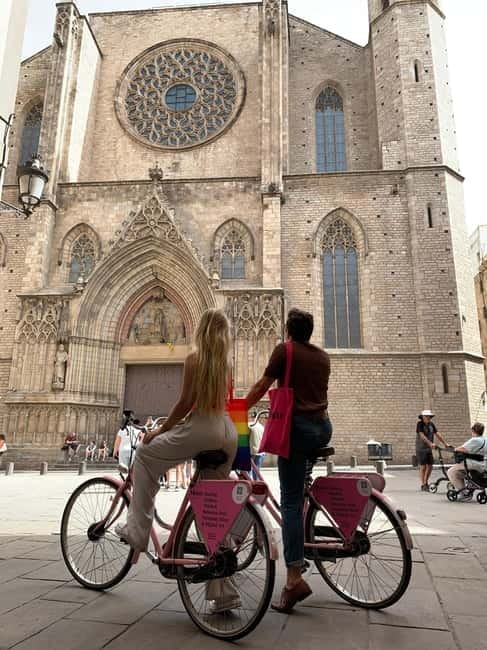
The ride continues through streets such as Carrer de Joaquín Costa, Carrer de Ferlandina, Carrer de la Lluna, Carrer de la Riereta, and Carrer de Sant Pau. This is one of the best parts of the route for seeing how street art lives alongside daily city life.
El Xupet Negre, also known as Negrelab, is especially notable. The artist’s logo is regarded as one of Barcelona’s earliest graffiti works. Its simple, recognizable form shows how graffiti can begin with a small mark and grow into a lasting part of a city’s visual language.
You also see Birdie Al Awan and work connected with Ana Eliza. On Rambla del Raval, the route includes the Feminist wall and a Space Invader piece. These works offer different kinds of expression. Some are large and public, some are compact and easy to overlook, and some make their point through a repeated symbol rather than a detailed scene.
I like this part because it is not polished into a single art district. You pass shops, apartments, public spaces, and walls that may be changed later. The guide’s explanation gives you a better way to look at street art after the tour: notice the artist’s mark, the scale of the work, the wall chosen, and the message being sent.
The tradeoff is that you cannot count on every piece remaining exactly as shown. The tour adapts to Barcelona’s changing walls, which is a strength, but it also means the route can shift. Street art is temporary by nature.
A few more museum visits around Barcelona worth comparing
- Frida Kahlo VIP [Museum Tickets Included] Bike, Markets & Churros
★ 5.0 · 1,072 reviews - Paris: Street Art Open-Air Museum Bike Tour
★ 4.8 · 51 reviews - Geneva Countryside And Art Museum At A Castle Wine By E-Bike
★ 3.8 · 16 reviews
Àgora Benítez and the old industrial edge
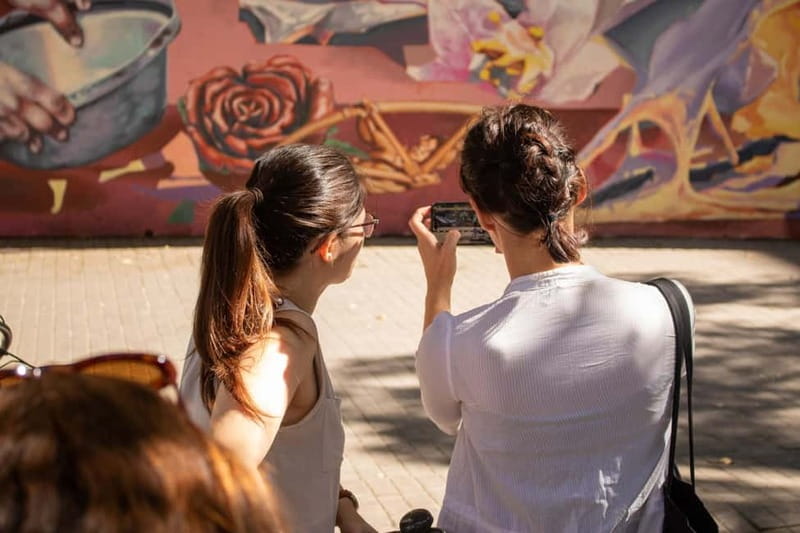
At Àgora Juan Andrés Benítez, the route turns toward a different kind of public art setting. The area connects with the work of Ágora Benítez and gives the guide room to explain how art, neighborhood life, and public space meet.
The bike then moves toward Av/ Paral·lel and the Galería Arnau. The old Arnau Theater is an important visual marker on this stretch. You see how Barcelona’s modern art scene is not limited to museums. Theater buildings, vacant or repurposed spaces, walls, and plazas all form part of the city’s cultural story.
Next comes the Jardins de les Tres Xemeneies. The name refers to the three chimneys left from Barcelona’s industrial past. The garden shows the city changing around old infrastructure. Instead of removing every trace of the factories that once shaped this part of town, Barcelona has kept a striking piece of that industrial character in a public setting.
This is a good photo stop and one of the more unusual places on the ride. The chimneys give the art a strong backdrop, while the open space provides a break from narrow streets. The stop is roughly 10 minutes, so take your pictures promptly and stay close to the group.
Down to the port: La Gamba and El Cap de Barcelona
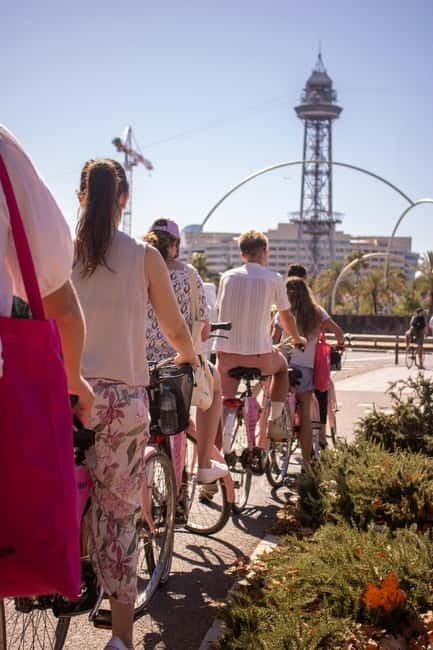
The route heads toward the waterfront and the Columbus Monument. This section gives you a change of pace. After the dense walls of Raval, you get wider views and larger public sculptures.
La Gamba, or the shrimp sculpture, is one of Barcelona’s most playful pieces. Designed by Mariscal, it was created for a restaurant and became a lasting part of the port area. Its cartoon-like shape shows that public art in Barcelona is not always solemn or political. Sometimes it is simply witty and memorable.
Near the water, you also pass El Cap de Barcelona, a large head sculpture by Roy Lichtenstein. Its bold lines and strong colors make it easy to recognize from a distance. Together, La Gamba and El Cap show two very different approaches to public art: one playful and rounded, the other graphic and monumental.
The route also includes BCNs Head by Leinceshtain, as well as the Columbus Monument. The listed timing allows about 15 minutes around La Gamba and shorter stops elsewhere. You will have enough time for photos and a guide’s explanation, but the tour keeps moving.
This port section is useful if you want more than graffiti. The experience includes murals, stickers, sculptures, design, and public monuments. That broader definition makes the ride more varied, though someone seeking only spray-painted walls may find the sculpture stops less central.
El Beso, the Cathedral, and the Gothic Quarter
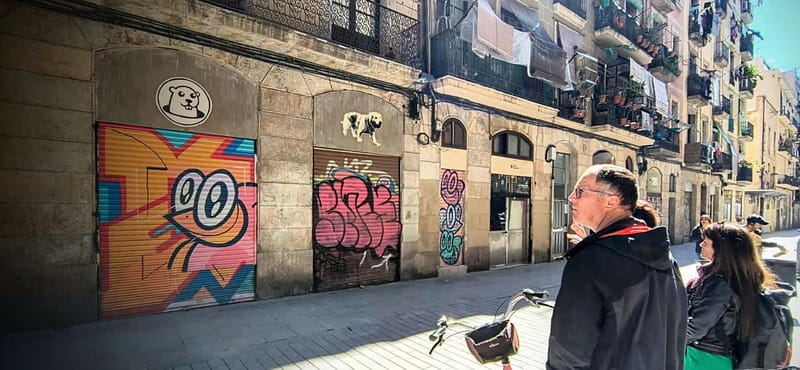
Near Barcelona Cathedral, you see El Mural del Petó, usually called El Beso. The photomosaic is made from individual photographs contributed by people connected with Barcelona. From close up, it looks like a field of separate images. From farther away, the pictures form a large kiss.
This is one of the tour’s strongest examples of art tied to public feeling and city identity. It also makes an excellent photograph, but the guide’s explanation gives it more meaning than a quick stop would on your own.
The Cathedral itself is passed rather than toured. That distinction matters. You will not go inside for a formal visit, and admission is not included. Instead, the cathedral provides a historic setting for the modern work nearby.
The route then continues toward the Palau de la Música Catalana, another major city landmark. You pass through streets where older architecture and current public art share the same tight urban space. The tour does not replace a proper visit to the Palau, but it gives you a look at the building as part of the wider city route.
Passeig de Gràcia and Casa Batlló
The final major stretch reaches Passeig de Gràcia and Casa Batlló. This broad avenue is famous for its Modernisme architecture, and Casa Batlló is one of Barcelona’s most recognizable buildings.
Here, the tour connects street art with the city’s better-known architectural identity. The point is not that a mural and a Gaudí building are the same kind of work. It is that Barcelona keeps placing different eras of creativity side by side.
You get a photo stop at Casa Batlló, but interior admission is not part of the tour. If you want to go inside, plan that as a separate visit on another day or before the bike ride, depending on your schedule.
After this final section, you return to Carrer dels Tallers 45. The full route includes many stops, but most are brief. Expect a moving overview rather than long periods at a few selected works.
What the $34 price gets you
At $34 per person, the value depends on how you use the tour. You receive an electric bike, an English-speaking guide, a bottle of water, a handlebar bag, and picture stops across a wide section of central Barcelona. Renting a bike alone would not provide the route planning or explanations.
The biggest value is time. In two and a half hours, you connect the Raval, port, Gothic Quarter, Passeig de Gràcia, and several art sites. Doing the same route independently would take more planning, and you could easily miss works that are tucked into side streets.
The price is less compelling if you prefer to linger over every mural or visit museums along the way. You are paying for range and interpretation, not for entry tickets or long gallery visits. The route also changes with the street-art scene, so the exact selection is not fixed.
A free bottle of water is provided, and the handlebar bag is useful for small personal items. Bring your own charged smartphone for pictures, along with sunglasses, a hat, sunscreen, comfortable clothing, and weather-appropriate layers. The tour runs in rain or shine, and a free poncho is supplied if needed.
Who will enjoy this ride most
I would recommend this for a first or second visit to Barcelona, especially if you want a quick orientation to several central districts. It suits people who like art but do not want to spend the morning indoors.
Families can also find it appealing. The tour feedback specifically notes that children enjoyed the ride, and the helmet rule gives families a clear safety guideline. Still, parents should be honest about each child’s cycling ability and comfort around city streets.
You will get the most from the tour if you listen to the guide’s stories and stay curious about different forms of art. It is a good choice for someone who wants local recommendations too. Eirini was praised for sharing food suggestions after the ride, though guide assignments can vary.
This is not the best fit for someone who cannot ride, uses a wheelchair, dislikes cycling in urban areas, or wants a private museum-style art lesson. The tour has a lively pace and a broad route.
Practical details that affect your day
The experience is offered in English with a live guide. The meeting point and return point are both Carrer dels Tallers 45, which makes planning easier. You do not need to arrange a separate ride back from the end.
Cancellation is free up to 24 hours before the tour for a full refund. You can also reserve and pay later, useful if your Barcelona schedule is still shifting. Bring a passport or ID card, or a copy, as requested in the tour information.
The start time shown is 11 am, but availability should be checked before booking. Since the route passes through several busy areas, arriving 10 minutes early is sensible. Adults who want a helmet should request one in advance and note that an additional cost may apply. Children up to 16 receive helmets free of charge.
Should you book the Barcelona StreetArt Bike Tour?
Book it if you want to cover a lot of ground, hear the stories behind Barcelona’s public art, and see major pieces such as the Keith Haring mural and El Beso without planning the route yourself. The electric bike, guide, water, and handlebar bag make the $34 price reasonable for a two-and-a-half-hour outing.
Skip it if your priority is long, quiet time with individual artworks, museum interiors, or a fully accessible experience. For most active visitors, though, this is a practical way to see a creative side of Barcelona that can be hard to find from the main sightseeing path. Go early in your visit, then use the rest of your stay to return to the works that caught your eye.
FAQ
Where does the Barcelona StreetArt Bike Tour begin?
It begins at Carrer dels Tallers 45 in Barcelona, at Barcelona Ciclo Tour. Enter the passage by the palm tree, where the tour team will meet you.
Where does the tour end?
The tour returns to Carrer dels Tallers 45, the same place where it begins.
How long does the tour last?
The tour lasts about 2.5 hours. Check availability for the current starting times.
What language is the tour in?
The tour is conducted in English with a live English-speaking guide.
Is an electric bike included?
Yes. One bike per person is included, along with a free bottle of water and a handlebar bag for belongings.
Are helmets provided?
Helmets are provided free for children up to age 16, and helmets are mandatory for them. Adults can request a helmet in advance for an additional cost.
What happens if it rains?
The tour operates rain or shine. A free poncho raincoat is provided if the weather is wet.
Can I cancel the booking?
Yes. You can cancel up to 24 hours in advance for a full refund. You can also reserve now and pay later.
More Street Art in Barcelona
- Barcelona: Street Art & Visit to Galleries Tour
★ 4.7 · 30 reviews - Barcelona Art & Wine: Galleries, Studios & Street Art
★ 5.0 · 26 reviews - Amsterdam: Streetart Museum STRAAT Entrance Ticket
★ 4.8 · 2,137 reviews - STRAAT Museum – Museum for Street Art Amsterdam Admission Ticket
★ 5.0 · 192 reviews
Just added around Barcelona
- Girona, Figueres, Dalí Museum and Cadaqués Tour from Barcelona★ 4.5 · 36 reviews
- Football Club Barcelona Museum Immersive Tour Guided Visit★ 3.5 · 52 reviews
- Erotic Museum Admission Ticket with Audioguide★ 5.0 · 527 reviews
- Dali Museum and Costa Brava Small Group Day Trip from Barcelona★ 5.0 · 77 reviews
- Madrid by High-Speed Train with Prado Museum Private Tour★ 4.0 · 33 reviews
- Guitar Legends Hall: Entrance to the Immersive Rock Museum★ 5.0 · 25 reviews
- White Rabbit Museum: The Best Immersive Experience in Catalonia★ 5.0 · 538 reviews
- Private Dali Museum, Besalú & Girona Tour from Barcelona★ 5.0 · 15 reviews
Museum Tours in Barcelona, compared.
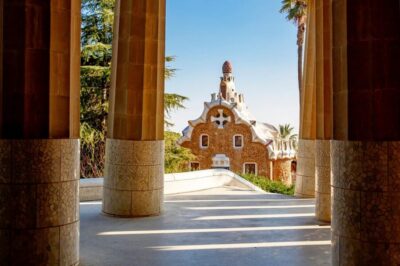
Park Güell and Gaudí House Museum Entry Ticket
Read our review →
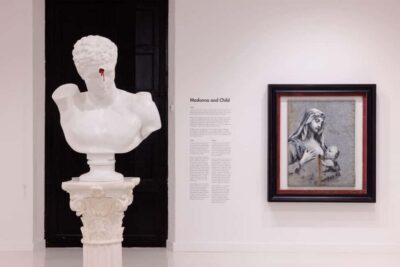
Moco Museum Barcelona: Modern & Contemporary Art
Read our review →
Girona & Dali Museum Small Group Tour with Pick-up from Barcelona
Read our review →
Barcelona Card: 25+ Museums and Free Public Transportation
Read our review →
Dali Museum, House & Cadaques Small Group Tour from Barcelona
Read our review →Browse the lists this tour appears in